

raccoon under deck: 7 Powerful Ways to Safely Remove in 2025
Unwanted Tenants: The Raccoon Under Deck Problem
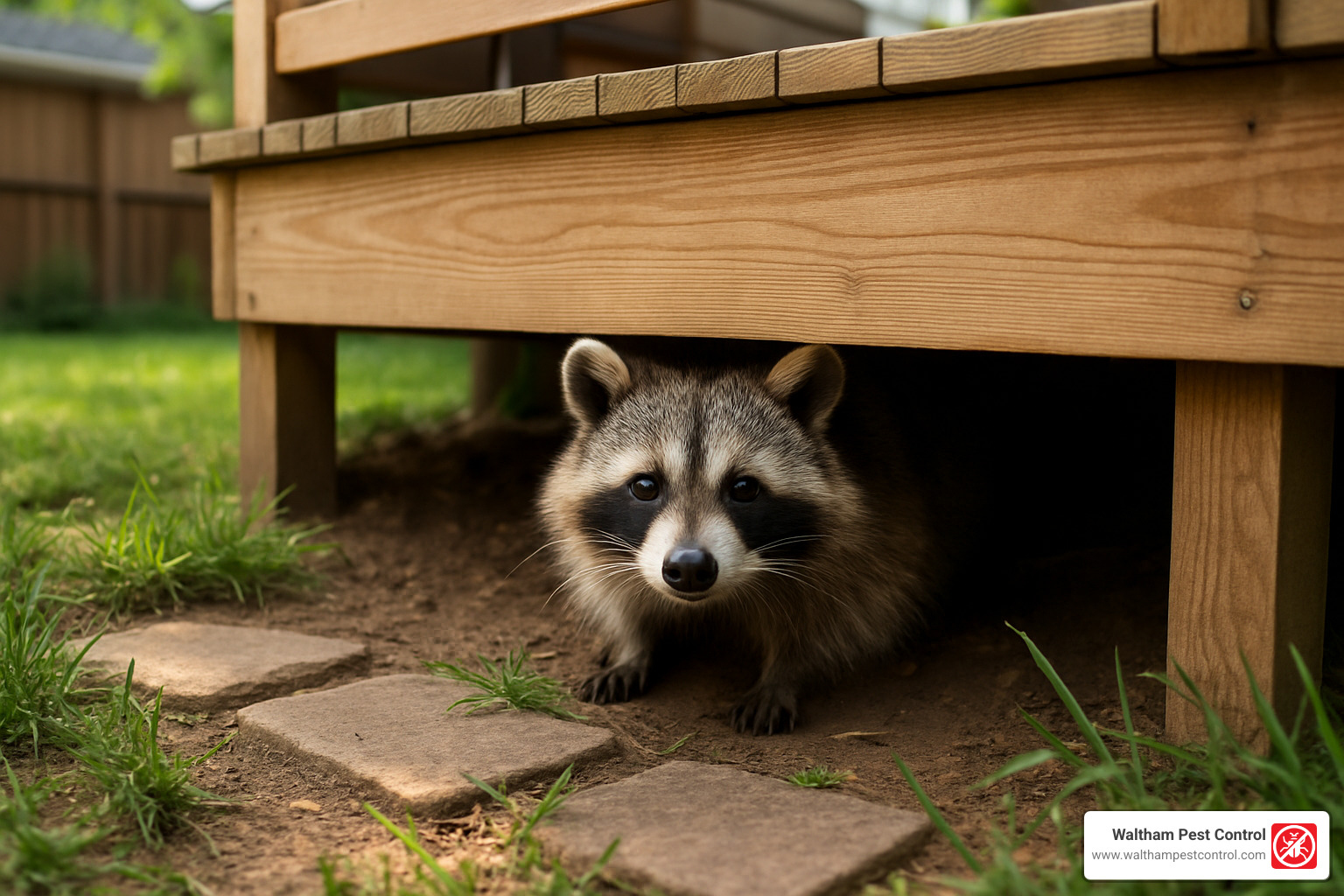
If you have a raccoon under deck, here’s how to safely remove them:
- Identify presence – Look for tracks, droppings, or noises at night
- Check for babies – Assume mothers with kits from January to September
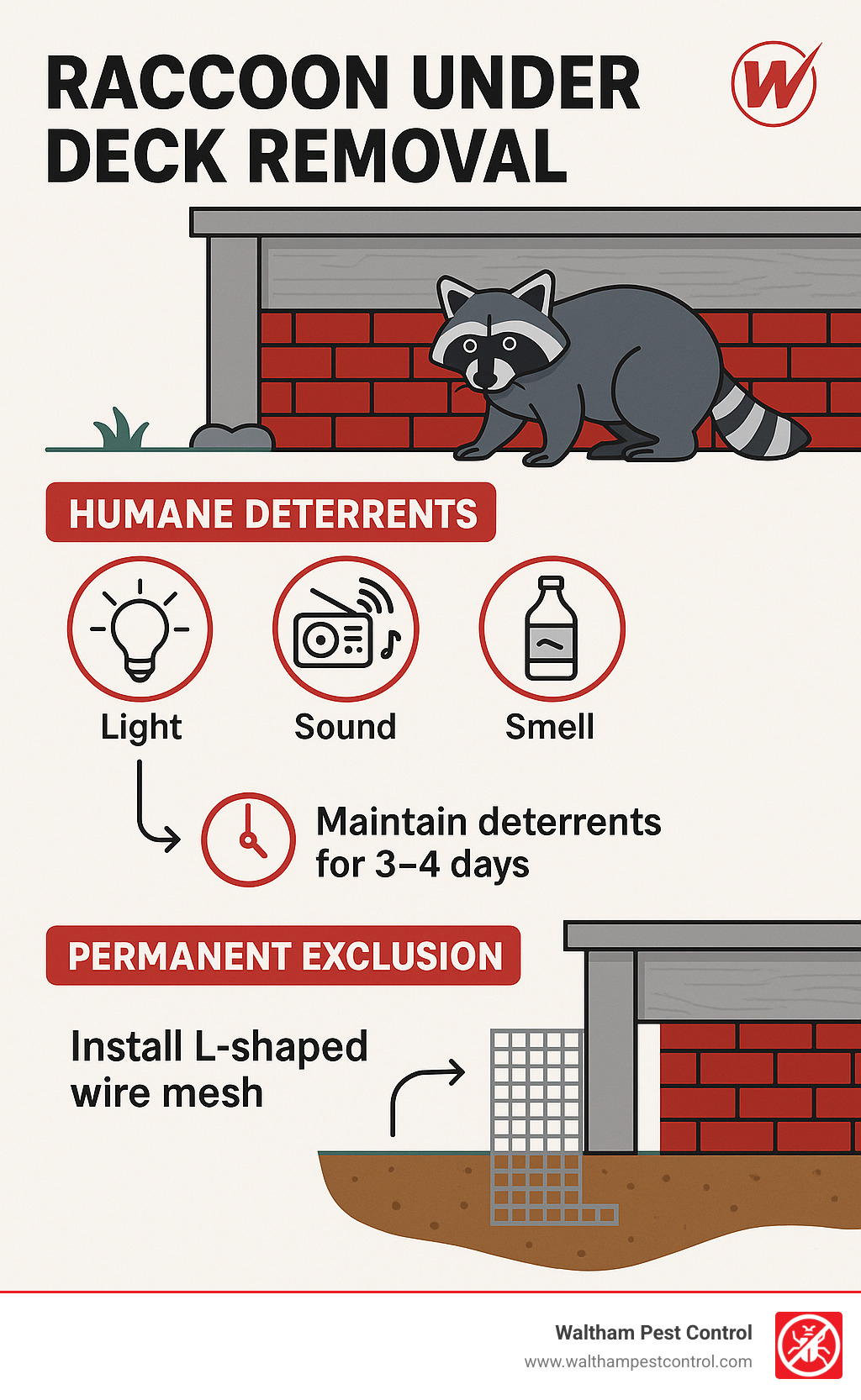
- Use humane deterrents – Bright lights, talk radio, and vinegar-soaked rags
- Apply continuously – Maintain deterrents for 3-4 days without interruption
- Verify vacancy – Use the “paper test” (place newspaper at entrances)
- Seal all entry points – Install ¼” wire mesh in an L-shape, buried 12-24″ deep
A raccoon under deck is one of the most common wildlife problems homeowners face. These clever masked bandits seek out the dark, sheltered space beneath your deck as an ideal den site, especially during nesting season between January and September. While they may look cute, raccoons can cause significant damage to your property, contaminate areas with disease-carrying feces, and potentially become aggressive when protecting their young.
The space under your deck provides everything a raccoon needs: protection from predators, shelter from the elements, and often easy access to food sources like garbage cans, pet food, or bird feeders. Unlike many pests, raccoons are highly intelligent and adaptable, making them particularly challenging to evict once they’ve settled in.
I’m Waltham Pest Control, President of Waltham Pest Control, and I’ve personally overseen hundreds of successful raccoon under deck removal projects throughout Eastern Massachusetts over my 40-year career in nuisance wildlife management. My team has developed a proven, humane approach that ensures complete removal without harming these animals or orphaning their young.
Glossary for raccoon under deck:
– are raccoons dangerous
– professional raccoon removal
– raccoon in chimney
Raccoon Under Deck: Why They Move In
After four decades of coaxing unwanted wildlife from Eastern Massachusetts homes, I’ve learned that a raccoon under deck isn’t just a random occurrence—it’s a calculated real estate decision by one of nature’s smartest opportunists.
Think about what your deck offers from a raccoon’s perspective: a perfect dark sanctuary hidden from predators, sheltered from rain and snow, and wonderfully undisturbed by humans. It’s essentially premium raccoon real estate!
“I remember one Lexington homeowner who couldn’t figure out why raccoons kept choosing her deck over her neighbors’,” shares our senior wildlife technician. “Turns out, her bird feeder, unsecured trash cans, and the water dish she left out for stray cats created a raccoon paradise—shelter with all-you-can-eat dining just steps away.”
These masked bandits are particularly drawn to deck spaces during their denning season, which spans from January through September. During this critical period, mother raccoons are either preparing to give birth, actively raising their young, or teaching nearly-grown kits survival skills before they venture out on their own.
What many homeowners don’t realize is that raccoons maintain multiple den sites throughout their territory—typically five or six different locations in suburban areas. They’ll rotate between these sites based on food availability, disturbances, or simply their own mysterious preferences. Your deck might be just one stop in their real estate portfolio!
Typical Nesting Season & Family Structure
When you find a raccoon under deck during the January to September window, you should always assume you’re dealing with a mother and her babies. This extended breeding period is when female raccoons are most desperate for secure, sheltered locations.
Mother raccoons are fiercely protective parents. Without a father in the picture (male raccoons don’t participate in child-rearing), she’s solely responsible for her kits’ survival. This makes her particularly determined to defend her chosen den site—and potentially aggressive if she perceives a threat to her young.
A typical raccoon family includes a single mother with 3-5 kits born in spring, usually April or May. These adorable but demanding babies remain completely dependent on mom for 8-12 weeks. By late summer, these juveniles begin exploring independently, though they may continue denning with mom until fall dispersal.
Understanding this lifecycle helps us plan effective and humane removal strategies. While raccoon families will eventually leave naturally as kits mature, waiting isn’t always practical when they’re causing damage, creating health hazards with their latrines, or keeping you awake with nighttime racket.
According to scientific research on raccoon behavior from the Ontario SPCA’s raccoon fact sheet, urban raccoons have become remarkably adaptable to human environments—growing larger than their rural cousins thanks to abundant food and developing specialized skills for navigating our neighborhoods. This adaptation makes them particularly challenging, but not impossible, to evict once they’ve decided your deck makes the perfect nursery.
Telltale Signs a Raccoon Family Has Settled In
When a raccoon under deck decides your property is home sweet home, they might not introduce themselves formally, but they’ll definitely leave their calling cards. As nocturnal creatures, you might miss seeing your masked visitors, but their evidence is unmistakable once you know what to look for.
“After 40 years in this business, I can spot raccoon activity from a mile away,” says our senior technician. “Most homeowners just know something’s off, but can’t quite put their finger on what’s happening until the evidence becomes overwhelming.”
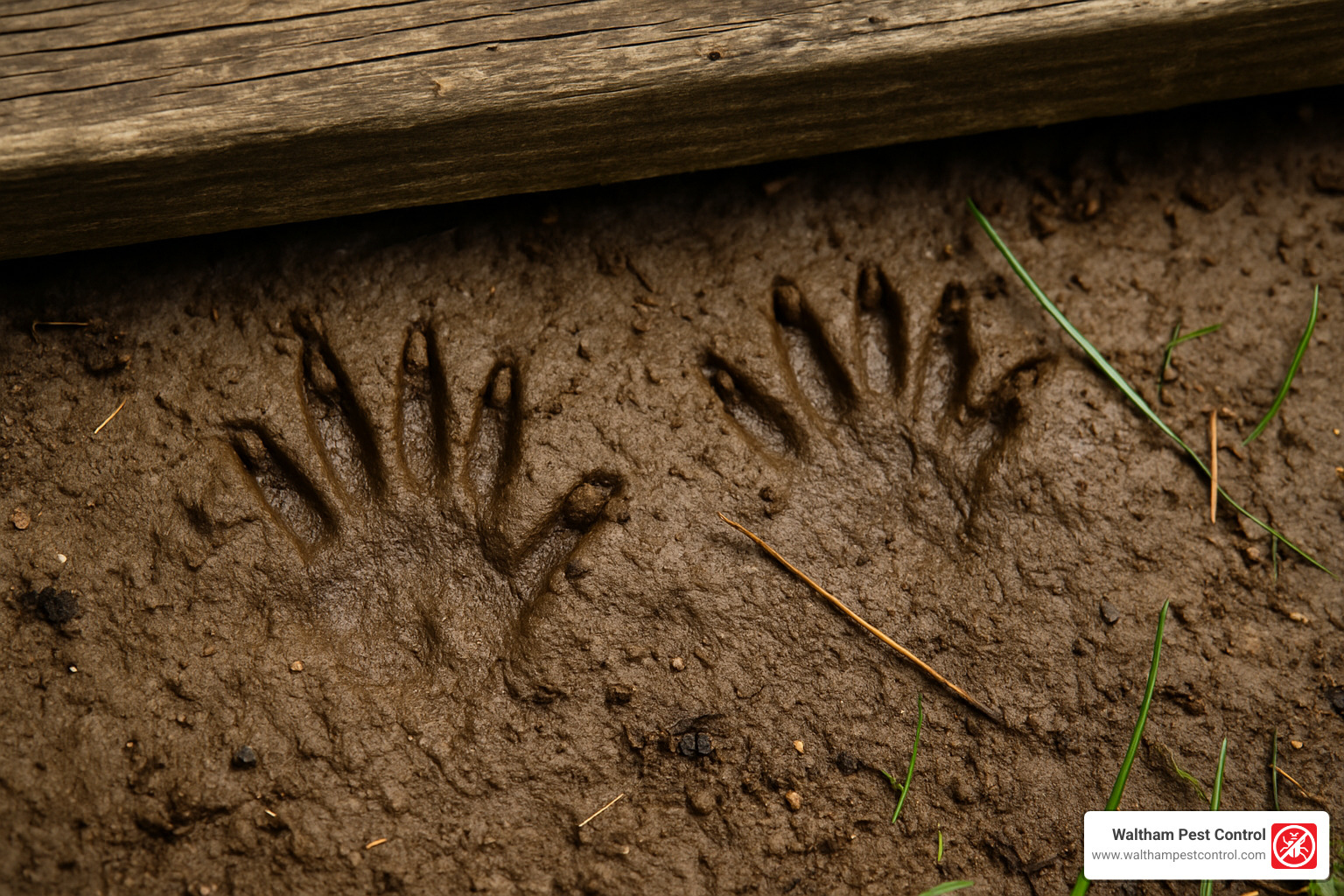
Those distinctive paw prints in the soft soil around your deck are often the first clue. Unlike other wildlife visitors, raccoon tracks look eerily human – like tiny handprints with five long fingers splayed out. After a rain is the perfect time to check for these telltale impressions.
Your peaceful nights might also be interrupted by unusual sounds after dark. Raccoons are surprisingly vocal, with a repertoire of chittering, purring, growling and scratching that carries through floorboards. One Winchester homeowner called us after weeks of what she described as “someone rearranging furniture at 3 AM” beneath her bedroom floor.
Perhaps the most unpleasant sign is the distinctive odor that develops from raccoon latrines. Unlike other animals, raccoons designate specific bathroom areas, often near den entrances or at the bases of trees. These concentrated areas of droppings have a pungent, unmistakable smell that intensifies over time.
Your garbage cans might also be telling a story. Tipped-over trash with specific items removed (raccoons are notoriously picky eaters) suggests those nimble paws have been at work. Unlike other wildlife, raccoons can manipulate complex objects – unscrewing jars, opening coolers, and defeating simple latches with surprising dexterity.
If you have a vegetable garden or lawn, look for systematic digging in patterns. Raccoons methodically search for grubs and earthworms, leaving behind small, conical holes or patches of turned-up turf. They’re particularly fond of freshly watered lawns where the soil is soft and the hunting easy.
“Is That Really a Raccoon Under Deck?” Checklist
Before calling in professionals, confirm you’re dealing with a raccoon under deck rather than another wildlife visitor with this simple investigation process:
The paper test is our tried-and-true method for confirming active entry points. Simply stuff crumpled newspaper loosely into suspected openings around your deck. Check back in 24-48 hours – if the paper has been pushed aside or disturbed, you’ve got confirmation of an active pathway. This passive technique doesn’t harm wildlife but provides clear evidence.
Motion-activated cameras have become a homeowner’s best friend for wildlife identification. One Natick client was convinced she had skunks until her new camera revealed a mother raccoon under deck with four kits in tow, making nightly trips to raid her bird feeder.
Fresh droppings near entry points are another confirmation. Raccoon scat is typically tubular, about 2-3 inches long, with blunt ends, and often contains visible food remnants like berry seeds or crab apple fragments – a wildlife CSI that tells the tale of their recent meals.
“What surprises most of our clients,” explains our wildlife specialist, “is how raccoons can squeeze through openings as small as 4 inches wide. That tiny gap in your deck skirting? It’s practically an engraved invitation to a raccoon family looking for prime real estate.”
Health, Property & Legal Risks You Can’t Ignore
Let’s talk straight about what you’re really facing with a raccoon under deck situation. While these masked visitors might look adorable, my 40 years in wildlife management have taught me they bring serious concerns that deserve your immediate attention.
Health Risks
When raccoons move in, they don’t come alone – they bring potential diseases that can affect your family and pets:
Rabies is perhaps the most feared raccoon-associated disease. Though human cases are rare (the CDC has documented only one human rabies fatality from raccoons), these animals remain primary rabies vectors in the Northeast. Any unusual daytime activity or strange behavior should put you on high alert.
Raccoon roundworm (Baylisascaris) is actually more concerning in many ways. These microscopic eggs are shed in raccoon droppings and can cause devastating neurological damage if accidentally ingested – especially by curious children playing in contaminated areas. What makes this particularly troubling is their resilience; these eggs resist most disinfectants and can remain viable in your soil for years after the raccoons have left.
“I’ve seen homeowners underestimate the persistence of raccoon roundworm,” our chief biologist often tells clients. “Those eggs can survive harsh Massachusetts winters and still pose infection risks the following summer.”
According to the CDC’s research on raccoon roundworm, proper cleanup of raccoon latrines requires specific protocols that most homeowners aren’t aware of, making professional assistance particularly valuable.
Leptospirosis bacteria spread through raccoon urine that contaminates water or soil. This infection can cause serious liver and kidney damage in both humans and pets. Additionally, raccoons may carry salmonella, E. coli, and giardia – all transmissible through their waste.
Property Damage
Beyond health concerns, a raccoon under deck can turn into an expensive home repair nightmare:
Those clever paws that can open jars can also pull apart your home’s infrastructure. Raccoons frequently chew through electrical wiring, creating dangerous fire hazards. They’ll tear up insulation for nesting material, damage HVAC ducts, and create entry holes that lead to water intrusion and structural damage.
A client in Framingham learned this lesson the hard way when raccoons caused over $2,000 in damage to her deck’s support structure and electrical wiring after just one nesting season. “They completely destroyed the wiring for my outdoor lighting system,” she told me. “And the support beams had to be replaced because they’d been chewed so extensively.”
Legal Considerations
Many homeowners don’t realize there’s a legal dimension to wildlife removal. In Massachusetts, wildlife management is strictly regulated:
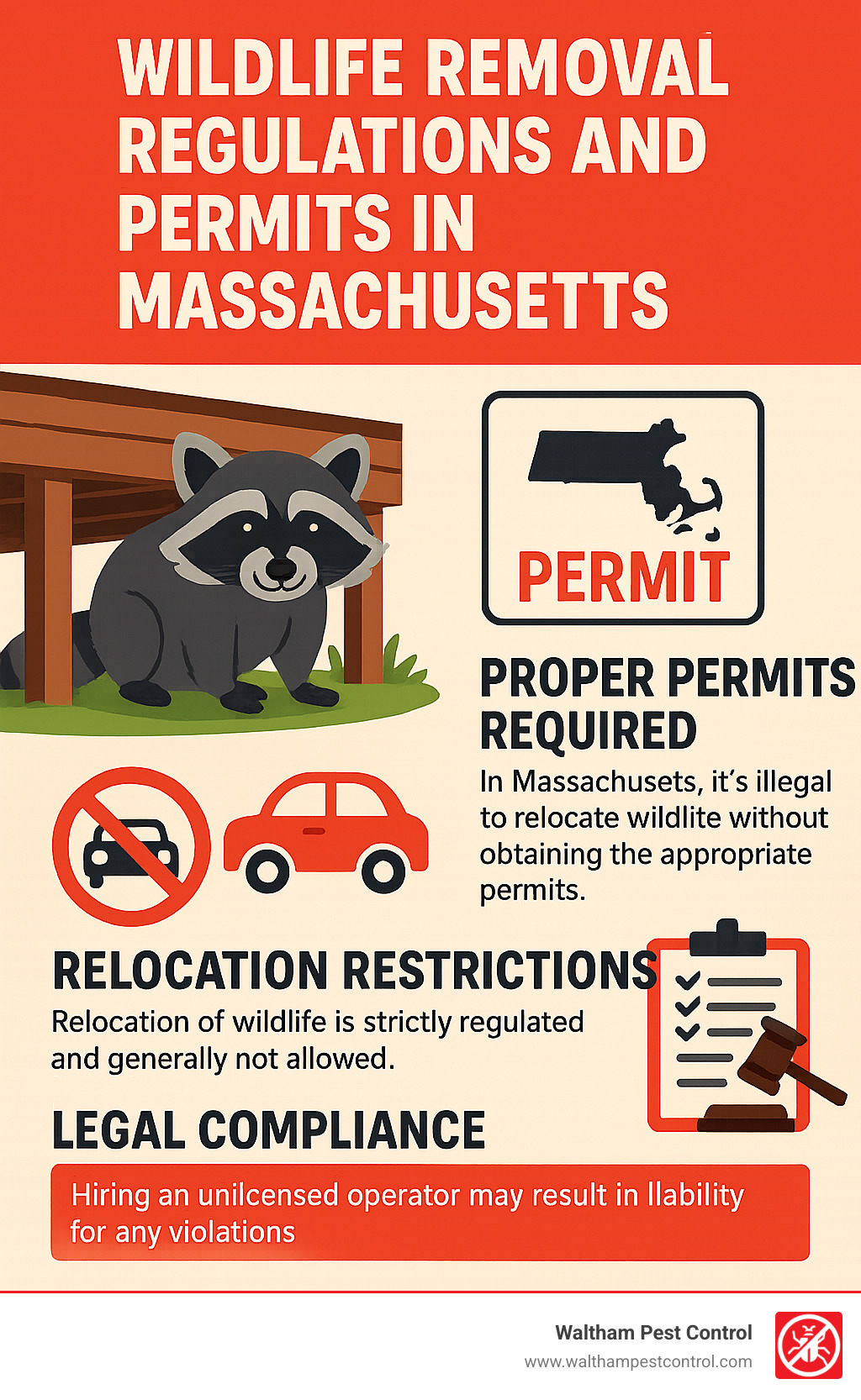
It’s illegal to relocate wildlife without proper permits, and certain removal methods may violate animal cruelty laws. If you hire an unlicensed operator for removal (often advertising suspiciously low prices), you could be personally liable for any violations they commit on your property.
Relocation Laws & Ethical Standards
The ethics and legality of raccoon relocation deserve special attention. In Massachusetts, wildlife relocation laws exist for good reasons:
Wildlife cannot be relocated without proper permits, and even with permits, animals must be released within a certain distance of capture. This isn’t just bureaucratic red tape – relocated raccoons often have poor survival rates in unfamiliar territories. They may starve, be killed by predators, or invade other raccoons’ territories, leading to deadly conflicts.
Perhaps most heartbreaking is when well-meaning homeowners relocate a mother raccoon without realizing she has babies, effectively orphaning the young ones. I’ve seen this tragedy play out too many times, and it’s completely preventable with proper knowledge.
At Waltham Pest Control, we adhere to strict ethical standards that balance effective removal with animal welfare. Our approach focuses on humane eviction methods that keep families together while ensuring they leave your property for good.
“The goal isn’t just to solve your immediate problem,” as I tell my technicians, “but to do it in a way that respects wildlife while permanently protecting the homeowner’s property.”
Humane Eviction: Proven 72-Hour “Harassment” Formula
After four decades of wildlife management, I’ve learned that the most effective raccoon under deck solutions are often the gentlest ones. Our team at Waltham Pest Control has perfected what we fondly call our “72-Hour Harassment Formula” – a humane approach that encourages raccoon families to relocate themselves, keeping mothers and babies together.
The beauty of this method is its simplicity. Rather than trapping or physically removing the animals (which can separate families and create more problems), we make their chosen den site uncomfortable enough that the mother decides to move her kits elsewhere.
“Raccoons are excellent mothers,” explains our senior wildlife technician. “They maintain multiple den sites within their territory and will relocate their babies if one site becomes unsuitable. We’re simply giving them a gentle nudge to use one of their backup homes instead of your deck.”
Raccoon Under Deck Eviction Step-by-Step
The key to successful eviction lies in creating an unwelcoming environment using a strategic combination of deterrents:
First, identify the main entrance point where the raccoons come and go. Our paper test works wonders here – simply place crumpled newspaper in suspected openings and check back the next day to see which ones show signs of disturbance.
Once you’ve located their entry point, it’s time to deploy our three-pronged approach:
Bright light is your first ally in this effort. Raccoons are nocturnal creatures who strongly prefer darkness for their dens. Position a waterproof, fire-safe light directly at their entrance point. Solar-powered flood lights work well, or you can use a mechanic’s drop light if you have a safe outdoor outlet.
Sound deterrents form the second part of our strategy. A portable radio tuned to a talk station (not music) placed near the entrance creates an unsettling environment. “Human voices specifically make raccoons nervous,” notes our wildlife specialist. “They quickly tune out music, but conversation makes them feel like humans are constantly present.”
Smell deterrents complete our trifecta. Soak some old rags in apple cider vinegar or ammonia, place them in plastic bags with holes punched in them, and position these near the entrance. A raccoon’s sensitive nose finds these odors particularly offensive.
“I was skeptical about this approach,” shares Melissa from Newton, “but after setting up the lights, radio, and vinegar-soaked rags, the family of raccoons under my deck was gone within three days. And the best part? I knew the babies weren’t orphaned.”
How Long Will It Take?
Patience truly is a virtue when implementing this method. The deterrents must remain in place continuously – 24 hours a day – for a minimum of three days without interruption. This consistency is absolutely crucial; even a short break allows the raccoons to return and get comfortable again.
Most raccoon under deck situations resolve within 3-4 nights of persistent harassment. However, mothers with very young kits (under 8 weeks old) might take up to a week to relocate their family. The process may also take longer during periods of bad weather or if the raccoons have limited alternative den options nearby.
“The most common mistake homeowners make is giving up too soon,” our technician emphasizes. “They’ll try the deterrents for one night, see the raccoon return, and assume it’s not working. But raccoons are stubborn creatures – you need to be more stubborn than they are!”
This approach works best between October and December, when raccoons aren’t actively raising young. During the January-September nesting season, extra caution is needed to ensure all babies are old enough to be moved by their mother.
When done correctly, this humane eviction method boasts a success rate of over 90% in our experience. The remaining cases typically involve unusual circumstances or very determined raccoon mothers who may require professional intervention from our Humane Raccoon Control specialists.
Verify Vacancy, Then Seal & Proof the Deck
After a few days of your humane harassment strategy, you’re probably eager to seal up your deck and put this whole raccoon trip behind you. But hold on! There’s a critical step you can’t skip: making absolutely certain your unwanted tenants have actually moved out.
The Paper Test
The simplest verification method is often the most reliable. The paper test has never let our team down in four decades of wildlife management:
- Loosely place newspaper sheets over all potential entry points
- Check the paper daily for 2-3 consecutive days
- Undisturbed paper? Great news—your raccoon under deck situation is likely resolved
- Paper moved or torn? You’ve still got company underneath
“I can’t tell you how many homeowners skip this crucial step,” says our wildlife specialist. “Five minutes of newspaper placement can save you from sealing in animals—and dealing with the unfortunate consequences.”
One-Way Door Option (October-December Only)
During the non-nesting season (October through December), a one-way door provides an excellent exclusion option:
“Think of it as a raccoon exit-only turnstile,” explains our technician. “They can leave to find food, but when they try to return home—surprise!—they can’t get back in.”
The door remains in place for 3-5 days, giving any remaining raccoons plenty of opportunity to exit. Then verify with the paper test before permanent sealing.
Important: Never use one-way doors between January and September. You could separate nursing mothers from their babies, creating both an animal welfare issue and a new problem as the mother desperately tries to reach her kits.
Permanent Exclusion
Once you’ve confirmed all raccoons have departed, it’s time for the long-term solution. This isn’t a job for flimsy materials or halfway measures—raccoon under deck problems often recur when exclusion isn’t done properly.
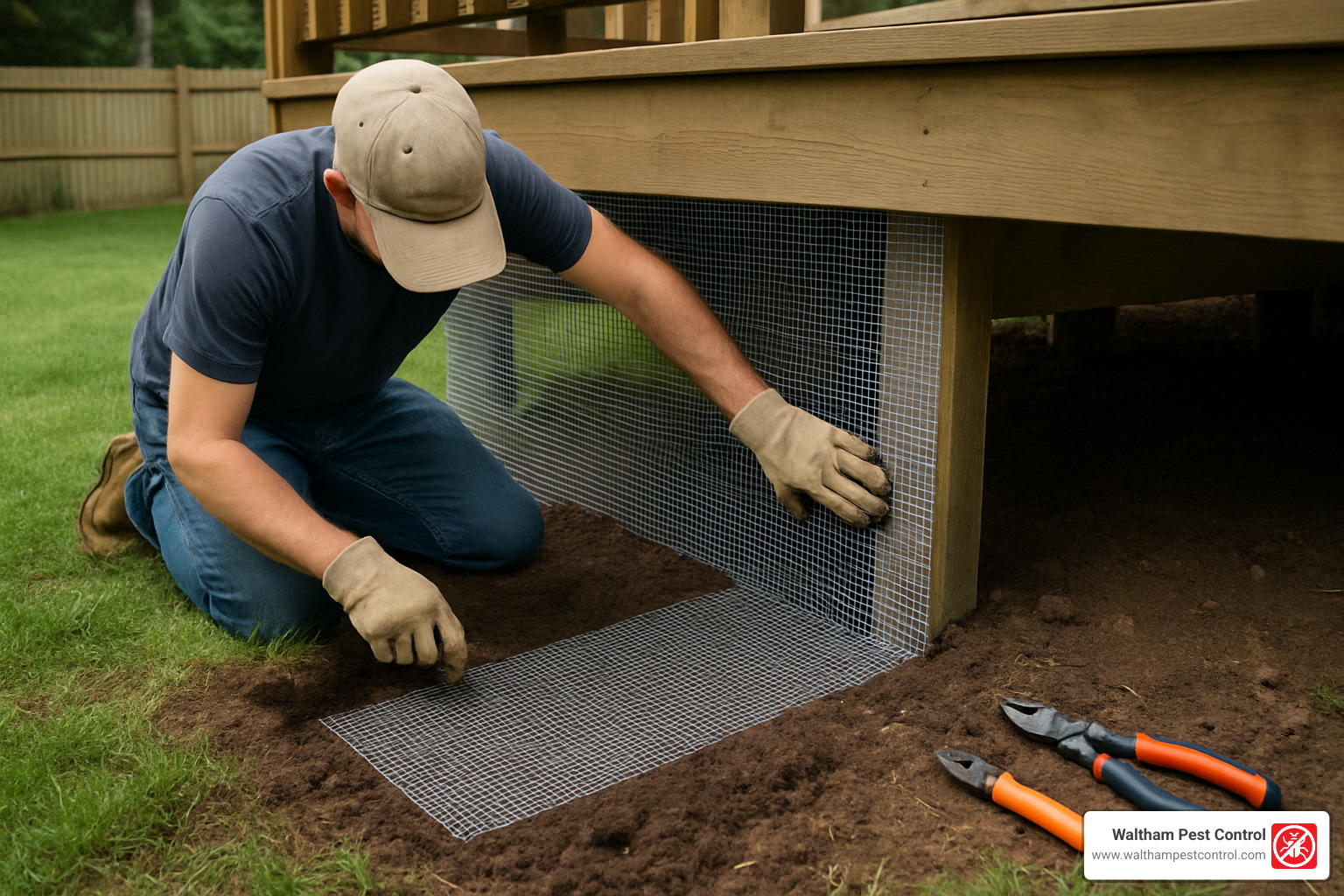
Start by digging a 12″-24″ deep trench around your entire deck perimeter. This depth is crucial because raccoons are excellent diggers who will attempt to burrow under shallow barriers.
Next, install ¼” galvanized hardware cloth in an L-shape configuration. The vertical portion attaches directly to your deck, while the horizontal section extends outward underground. This L-shape is the secret to success—raccoons may try to dig down, but they won’t think to dig out.
Pro tip: Don’t substitute chicken wire for hardware cloth. I’ve seen determined raccoons tear through chicken wire like it’s tissue paper. Hardware cloth, with its welded construction and galvanized finish, provides the durability needed for permanent exclusion.
Secure the mesh with heavy-duty staples or screws, and carefully seal any additional openings. Raccoons can squeeze through gaps as small as 4 inches, so no opening larger than 1″ should remain.
“All Clear” Baby Safety Check
Before completing your exclusion work, perform one final safety check for baby raccoons. Even the most attentive mother might leave a kit behind during the moving process.
Use a powerful flashlight to inspect every accessible area. Listen carefully for the distinctive chittering sounds of baby raccoons. For hard-to-see areas, a mirror on an extendable pole works wonders. Some of our technicians even use thermal imaging cameras to detect the body heat of hidden kits in particularly large or complex spaces.
If you do find baby raccoons, stop all exclusion work immediately. You have two options: wait for the mother to return and move them herself (she’s likely out foraging and will come back), or contact us for professional assistance. We use specially designed “reunion boxes” that safely allow the mother to retrieve her babies.
“The most rewarding part of our job,” shares our senior wildlife manager, “is watching a mother raccoon carry her babies to safety after we’ve set up a reunion box. It’s a win for everyone—the raccoons stay together, and your raccoon under deck problem gets solved humanely.”
What NOT to Do
When facing a raccoon under deck situation, good intentions can sometimes lead to harmful outcomes. After four decades of wildlife management, I’ve witnessed well-meaning homeowners make mistakes that caused unnecessary suffering or created bigger problems.
Don’t Use Live Trapping During Nesting Season
From January through September, live trapping is something we strongly advise against. This critical period is raccoon nesting season, and trapping can have heartbreaking consequences.
“I’ll never forget the call from a Lexington homeowner,” our senior technician recalls. “He had trapped what he thought was a single raccoon, only to find days later that she had babies under the deck. By then, the hungry, crying kits were too weak to save.”
Live trapping during nesting season typically results in:
- Mother raccoons desperately trying to return to their babies
- Orphaned kits slowly starving to death
- Unnecessary animal suffering that could violate animal welfare laws
Even if your intentions are humane, separating raccoon families is anything but.
Avoid Dangerous Chemical Repellents
Your safety matters as much as effective raccoon removal. Some DIY methods found online pose serious risks to you, your family, and your pets.
Mothballs might seem like a simple deterrent, but they release naphthalene gas that’s toxic to humans and animals alike. One Newton client developed persistent headaches after placing mothballs under her deck, not realizing the fumes were entering her home through floor vents.
Similarly, road flares and smoke bombs create fire hazards, especially in the dry, confined space under a deck. And commercial poisons? They’re both illegal for raccoon control and cause a slow, painful death that no animal deserves.
Don’t Attempt DIY Removal Without Proper Protection
If you decide to handle a raccoon under deck situation yourself, proper safety equipment isn’t optional—it’s essential. Raccoon latrines contain roundworm eggs that can remain viable for years and cause serious neurological disease if accidentally ingested.
Always wear disposable gloves, respiratory protection, and coveralls when cleaning up after raccoon removal. One Waltham homeowner learned this lesson the hard way when he developed a persistent infection after cleaning up raccoon waste without proper protection.
Never Block All Exits Without Confirming Vacancy
“Seal them in and forget about them” might seem like a simple solution, but it creates more problems than it solves. Trapping raccoons by blocking exits without verifying the space is empty is both cruel and counterproductive.
“I sealed up what I thought was an abandoned den,” a Burlington client told us, “only to have the raccoon tear through my deck boards to escape. I ended up with more damage and the raccoon came right back in through the new hole.”
Trapped raccoons will cause extensive damage trying to escape, potentially leading to:
- Destroyed deck boards, siding, or flooring
- Severe odor problems if animals die inside
- Potential violations of animal cruelty laws
- More expensive repairs than proper removal would have cost
At Waltham Pest Control, we believe in effective, humane solutions that respect both wildlife and our clients’ properties. The right approach might take a little more time and patience, but the results are better for everyone involved.
Clean-Up & Disinfection After Departure
After successfully evicting your unwelcome tenants and securing your deck against future invasions, there’s one critical step remaining: thorough cleanup and disinfection. This isn’t just about tidiness—it’s about protecting your family’s health.
“Many homeowners think once the raccoons are gone, the problem is solved,” says our lead wildlife technician. “But what they leave behind can actually pose a greater health risk than the animals themselves.”
The space where a raccoon under deck family has been living contains droppings, urine, food remnants, and possibly nesting materials contaminated with parasites. Most concerning are raccoon latrines—designated bathroom areas that concentrate dangerous pathogens.
Latrine Sanitation Protocol
Raccoon droppings require special handling due to Baylisascaris procyonis (raccoon roundworm) eggs, which can cause serious neurological disease in humans. These microscopic eggs are incredibly resilient—they resist most disinfectants and can remain viable in soil for years.
“I always tell clients this isn’t a job for standard household cleaners,” our sanitation specialist explains. “Those roundworm eggs laugh at bleach. They need specialized treatment.”
For safe and effective cleanup, follow this protocol:
First, gear up properly. Always wear disposable gloves, an N95 respirator or better, and disposable coveralls. This PPE isn’t optional—raccoon roundworm eggs can become airborne during cleanup, and inhalation is a primary infection route.
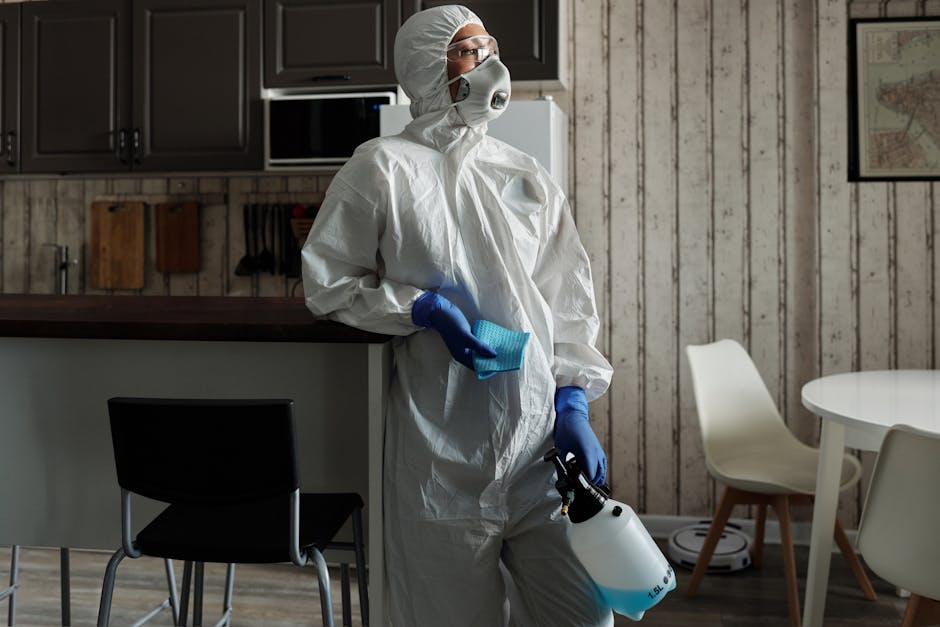
Next, carefully remove all visible droppings using a shovel or similar tool to minimize dust. Double-bag everything in heavy-duty plastic bags and seal them tightly. Avoid sweeping, which can send particles airborne.
Then comes the most crucial step: heat treatment. While roundworm eggs resist chemicals, they cannot survive high temperatures. Apply boiling water or steam to all contaminated surfaces. For wooden deck understructures, a commercial steam cleaner works best. For soil areas, saturating with boiling water may be necessary.
“One Wellesley client was shocked when I explained the cleanup process,” recalls our technician. “She had planned to just spray some disinfectant and call it done. That approach would have left her family at risk.”
For heavily contaminated soil, complete removal and replacement may be your safest option. Dig out soil to a depth of at least 3-4 inches and replace with fresh material.
Finally, properly dispose of all waste according to local regulations. In some Massachusetts municipalities, raccoon waste must be treated as hazardous material. Call your local health department if you’re unsure about disposal requirements.
Don’t forget to thoroughly disinfect all tools used during cleanup. Submerge metal tools in boiling water for at least 20 minutes or clean them with a propane torch (with appropriate fire safety precautions).
While this process might seem extensive, it’s essential for making your property truly safe again. As one Newton client told us after professional cleanup: “The peace of mind knowing my grandchildren can play safely in the yard again was worth every penny.”
For particularly extensive contamination or if you have health concerns, our professional Wildlife Control Services team can handle the entire cleanup process safely and thoroughly, using industrial-grade equipment and following strict biohazard protocols.
Long-Term Prevention Tips
After successfully evicting raccoons from under your deck, you’ll want to make sure they don’t return. In my 40+ years of wildlife management, I’ve found that prevention is infinitely easier than dealing with an established raccoon family. Let me share some practical strategies that have worked for thousands of our Massachusetts clients.
Food Source Management
Nothing attracts raccoons like an easy meal. These intelligent creatures remember reliable food sources and will return night after night if they find something worth eating.
Secure your trash cans with wildlife-proof containers or add bungee cords to standard cans. One of our Newton clients laughed when describing how her raccoon visitor would “pop the lid off like he was opening a cookie jar” before she upgraded to locking containers.
Never leave pet food outdoors overnight. Those kibble bowls on your porch might as well be neon signs saying “Raccoons Welcome!” Feed pets indoors or remove uneaten food before sunset.
Bird feeders are raccoon magnets too. Either bring feeders in at night or position them away from structures. Raccoons are excellent climbers and can access feeders you might think are out of reach.
I’ve seen countless raccoon under deck situations start because homeowners didn’t harvest garden vegetables promptly. Fallen fruit and ripe vegetables are irresistible to these opportunistic foragers.
Don’t forget your compost bin. Use a wildlife-proof model with a locking lid, as the decomposing food scraps emit odors that raccoons can detect from surprising distances.
Habitat Modification
Beyond food management, you can make your property less appealing to raccoons through strategic habitat modifications.
Treat your lawn for grubs if you notice raccoons consistently digging in your yard. Those perfectly round divots in your lawn are signs that raccoons are feasting on protein-rich grubs just below the surface.
“After treating our lawn for grubs, the raccoons stopped visiting altogether,” shared one Lexington homeowner. “They had been digging up our entire backyard for weeks!”
Fix leaky outdoor faucets and ensure proper drainage around your foundation. Raccoons, like most wildlife, are drawn to water sources, especially during dry spells.
Those beautiful shade trees might be providing raccoons with easy access to your deck or roof. Keep branches trimmed back at least 8 feet from structures to limit raccoon highways to your home.
Motion-activated deterrents can be surprisingly effective. Install motion-sensing sprinklers or lights in problem areas. The sudden burst of water or light startles raccoons and discourages them from establishing territory near your home.
Deck & Yard Upgrades That Keep Raccoons Out
Making your property raccoon-resistant often requires some structural modifications, but these one-time investments save tremendous headaches down the road.
The most effective preventive measure is to install hardware cloth skirting around your deck. Even if you don’t currently have a raccoon under deck problem, this L-shaped barrier of ¼” galvanized hardware cloth creates a fortress that raccoons simply cannot breach.
Raccoons have nimble, dexterous paws that can manipulate simple latches. Use multi-step locks for outdoor storage areas, chicken coops, and gates. One client showed me how a raccoon had learned to open her shed’s twist-latch in less than 15 seconds!
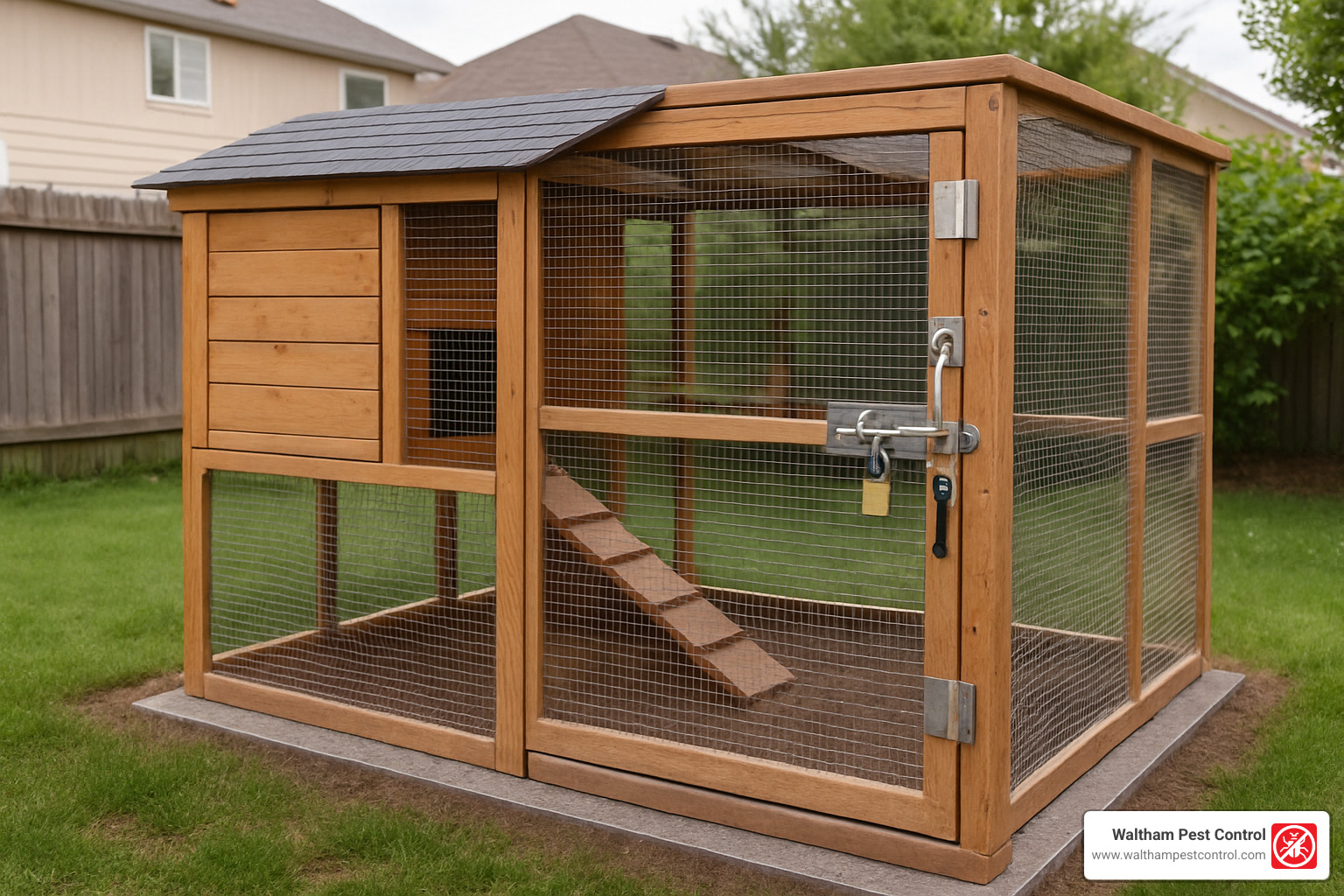
If you have vegetable gardens, protect them with proper fencing. Standard chicken wire won’t stop a determined raccoon – use hardware cloth buried at least 12″ deep with an outward-facing L at the bottom.
Backyard chicken keepers face special challenges with raccoons. “Secure chicken coops thoroughly with hardware cloth, not chicken wire,” advises our wildlife specialist. “Raccoons can easily bend or tear through regular chicken wire and are notorious for their chicken-stealing abilities.”
Don’t overlook the hiding places in your yard. Prune dense shrubs, especially near your deck, to reduce potential sheltering spots. Raccoons prefer areas where they can quickly duck into cover if threatened.
“After we had raccoons removed from under our deck, we followed all the prevention recommendations,” shared a satisfied Newton client. “It’s been three years without any wildlife problems. The hardware cloth skirting was the best investment we made.”
With these preventive measures in place, you’ll dramatically reduce the chances of dealing with another raccoon under deck situation. For more comprehensive solutions, visit our Wildlife Control Services page.
Frequently Asked Questions about Raccoons Under Decks
Why do deterrents need to run 24/7 for three days?
If you’ve ever tried to outsmart a raccoon, you know these critters are both persistent and remarkably intelligent. When dealing with a raccoon under deck situation, consistency is absolutely crucial to success.
“Half-measures simply don’t work with raccoons,” explains our senior wildlife technician Mark. “If you only run deterrents at night or take breaks, the raccoon will simply wait out the uncomfortable period and return when things quiet down.”
The continuous 72-hour approach works because it convinces the mother raccoon that her chosen den site has permanently become unsuitable for her family. Rather than a temporary inconvenience, she perceives it as a fundamental change to her environment.
Most homeowners don’t realize that raccoons typically maintain multiple den sites throughout their territory—usually 5-6 different locations within a residential neighborhood. Our deterrent strategy takes advantage of this behavior.
“We’re not trying to make raccoons homeless,” Mark adds with a smile. “We’re just encouraging them to choose one of their other pre-established homes instead of yours.”
Is it legal to relocate raccoons myself in Massachusetts?
The short answer is no—and for good reason.
Massachusetts wildlife regulations prohibit homeowners from trapping and relocating raccoons without proper permits and licensing. Even if you have the best intentions, DIY relocation attempts can lead to:
- Separated raccoon families (particularly devastating during nesting season)
- Poor survival rates for relocated animals in unfamiliar territories
- Potential spread of diseases to new areas
- Significant fines if caught by environmental authorities
One Lexington client learned this lesson the hard way: “I thought I was doing the humane thing by trapping and releasing a raccoon miles away in a wooded area. I ended up with a $300 fine and a stern lecture from the conservation officer.”
If your raccoon under deck situation has reached the point where removal seems necessary, please contact a licensed wildlife professional like us. We hold all required permits and follow state regulations for humane wildlife management.
How much does professional raccoon removal cost?
When homeowners call us about a raccoon under deck problem, this is often their first question—and understandably so. Professional wildlife removal is an investment, but one that typically saves money in the long run.
The cost varies based on several important factors:
- Complexity of the infestation: A single raccoon versus a mother with multiple kits
- Accessibility issues: How difficult it is to reach the affected areas
- Extent of exclusion work needed: The size and design of your deck
- Cleanup requirements: Whether extensive latrine removal and sanitation are necessary
- Season: Nesting season removals (January-September) require more careful approaches
Many of our clients initially attempted DIY methods before calling us. As one Winchester homeowner told me, “I spent over $200 on various repellents and deterrents that didn’t work, damaged my deck trying to install exclusion materials incorrectly, and still had raccoons. Professional help would have been cheaper from the start.”
For an accurate assessment of your specific situation, we’re happy to provide a free, no-obligation inspection and estimate. Every raccoon under deck situation is unique, and we tailor our approach accordingly.
Proper removal isn’t just about getting rid of the current visitors—it’s about ensuring they don’t return and preventing the health and property risks associated with raccoon infestations.
Conclusion
Dealing with a raccoon under deck situation isn’t just about getting rid of unwanted visitors—it’s about finding a balance between protecting your home and respecting wildlife. Throughout my 40 years in pest control, I’ve seen how the humane approach isn’t just the right thing to do—it’s also the most effective long-term solution.
These masked bandits are simply mothers looking for a safe place to raise their families. With the methods we’ve outlined, you can encourage them to relocate without causing harm or creating orphans.
The key takeaways from our guide are straightforward but powerful:
Timing is everything. From January through September, always assume you’re dealing with a mother and her babies. Rushing the process or using the wrong methods during this critical period can lead to tragic outcomes for the raccoons and bigger headaches for you.
The 72-hour deterrent method works wonders. By consistently applying the combination of bright lights, talk radio, and unpleasant scents, you’re speaking a language raccoons understand: “This home is no longer safe or comfortable for your family.” Give the method time to work—your patience will pay off.
Never seal without confirming. The paper test is simple but crucial. Accidentally trapping raccoons inside isn’t just inhumane—it creates new problems with odors and desperate animals causing additional damage trying to escape.
Proper exclusion prevents future problems. That L-shaped hardware cloth barrier might seem like overkill now, but it’s far easier to install it correctly once than to deal with recurring raccoon tenants year after year.
Health safety isn’t optional. Those droppings can contain dangerous parasites, so always use appropriate protective gear during cleanup. Your family’s health isn’t worth the risk of cutting corners.
At Waltham Pest Control, we understand that wildlife situations can sometimes feel overwhelming. What seems straightforward in an article can become complicated when you’re facing a determined mother raccoon or finding evidence of babies under your deck. That’s why our team of licensed wildlife specialists is always ready to help Eastern Massachusetts homeowners steer these challenges.
We’ve developed our humane raccoon management techniques through decades of field experience throughout Burlington, Cambridge, Lexington, Waltham, and surrounding communities. Our approach protects both your property and the animals—because we believe effective pest control doesn’t have to be cruel.
If you’ve tried DIY methods without success, or if you’d simply prefer to leave wildlife management to the professionals, we’re here to help with humane raccoon solutions. After all, peace of mind is worth investing in—for both you and the raccoons.
