
Raccoon in Chimney? Top 5 Safe Removal Tips 2025
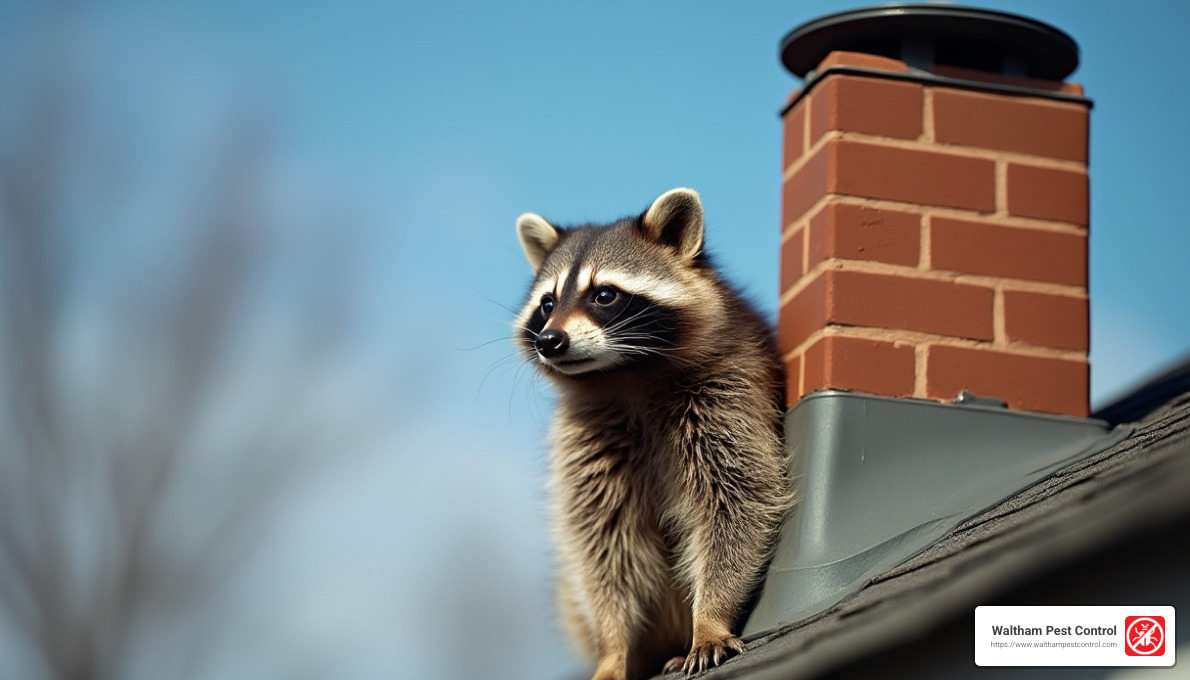
Raccoon in chimney issues are a common nuisance for many homeowners. Raccoons are skilled climbers, and chimneys offer them warmth, safety from predators, and a place to raise their young. Here’s how to identify and manage this situation quickly:
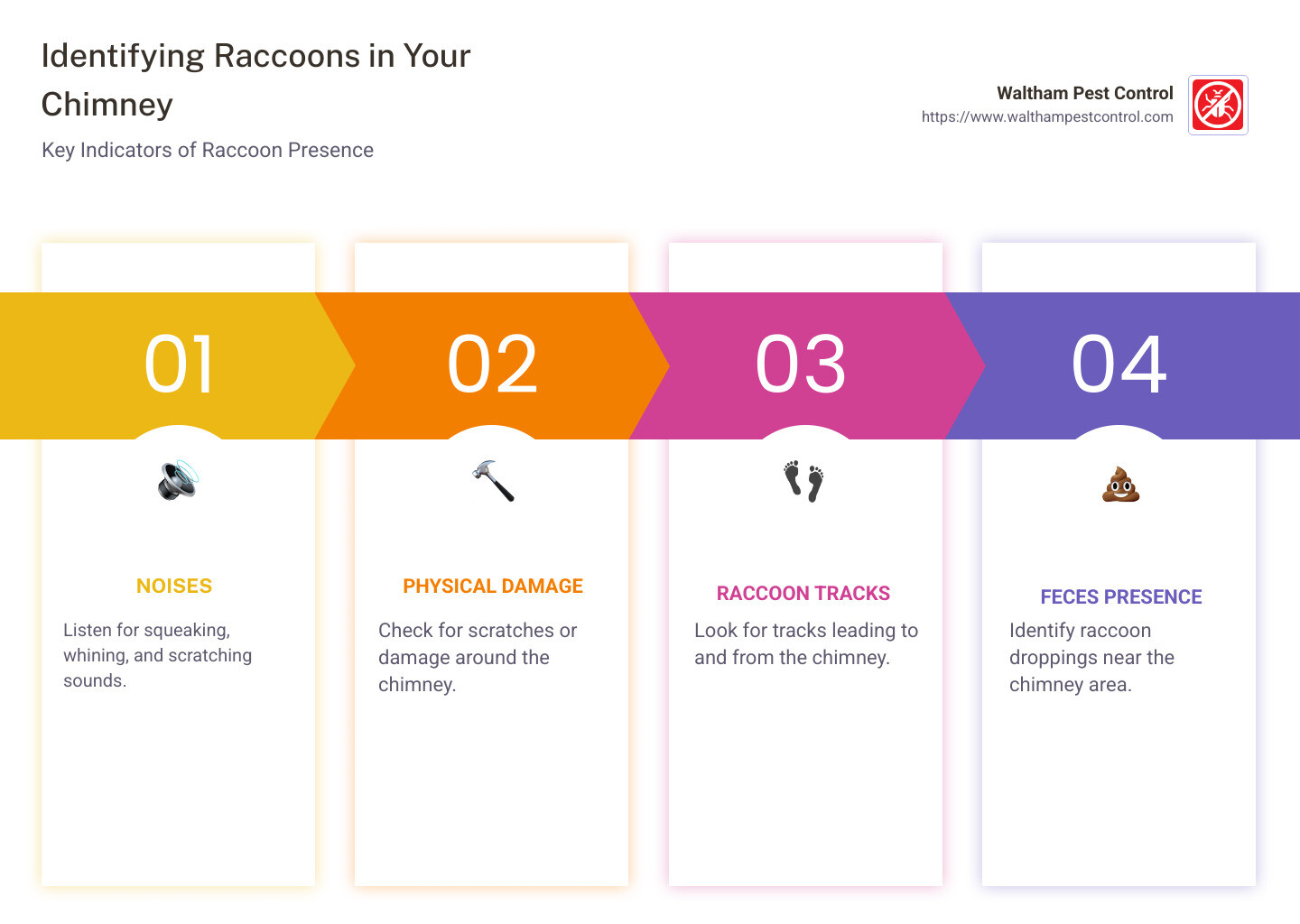
- Look for signs: Noises, damages, tracks, and feces are clear indicators.
- Listen to sounds: Squeaking, whining, and scratching often mean raccoons.
- Avoid direct contact: Raccoons can carry diseases; contact professionals for help.
Dealing with a raccoon in your chimney requires urgent attention due to the risk of property damage and disease spread. Quick identification and action are vital to prevent costly repairs and health hazards.
I’m Waltham Pest Control, with over 40 years in pest control, handling numerous cases of raccoons in chimneys across Massachusetts. Let’s dive deeper into understanding why raccoons invade chimneys and how you can effectively manage them.
Basic raccoon in chimney terms:
– are raccoons dangerous
– professional raccoon removal
– professional raccoon latrine removal
Understanding Raccoons in Chimneys
Raccoons are more than just cute bandits of the night—they’re also expert climbers and opportunistic denners. When it comes to making a home, chimneys are a top choice for these critters. But why do they favor chimneys?
Raccoon Behavior
Raccoons are nocturnal creatures, meaning they’re most active at night. They travel up to six miles each night in search of food. Their nimble hands and strong claws make them excellent climbers, allowing them to easily scale buildings and enter chimneys.
Denning Habits
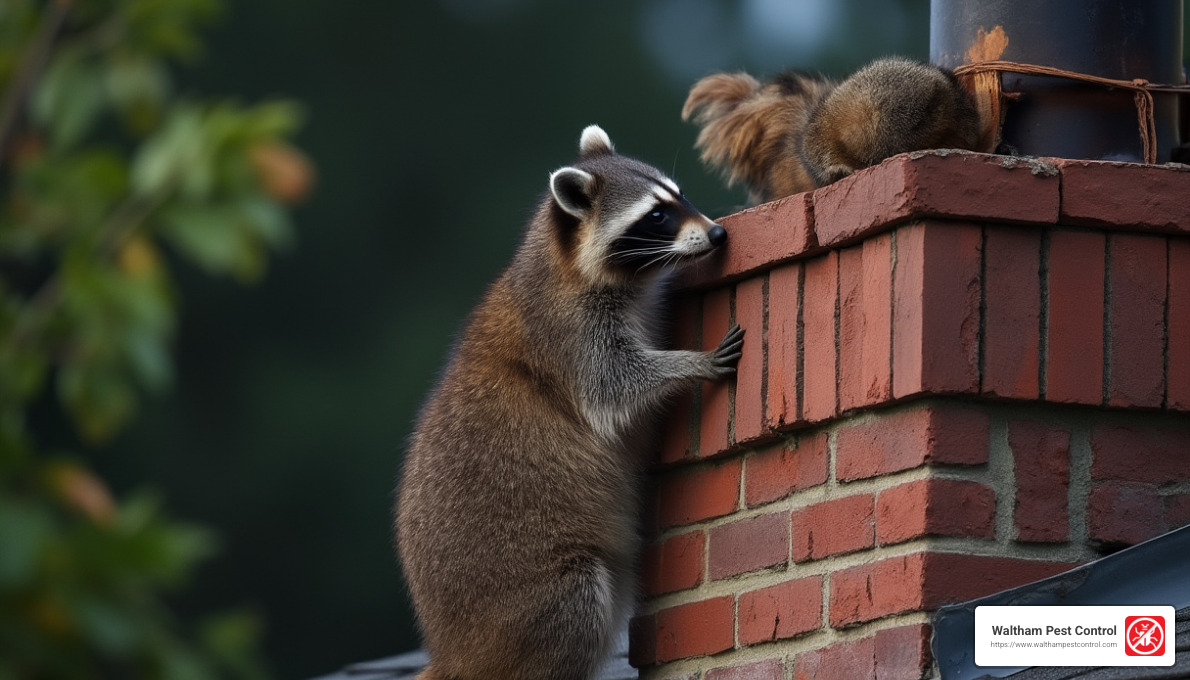
A chimney offers raccoons a perfect den site. It’s warm, safe from predators, and provides a cozy place to give birth and raise their young. Raccoons are known to twist, turn, and even remove chimney caps to gain entry. Once inside, they find the enclosed space ideal for a den, especially during colder months.
Chimney Attraction
Several factors make chimneys appealing to raccoons:
- Warmth: Chimneys provide a warm environment, especially when the fireplace is in use.
- Safety: Liftd and enclosed, chimneys protect raccoons from predators.
- Proximity to Food: Being close to human homes means easy access to food sources like garbage cans and pet food.
The combination of these factors makes chimneys an attractive option for raccoons looking for shelter. However, their presence can lead to significant damage and health risks, making it crucial to address the issue promptly.
Understanding these behaviors and habits can help homeowners take preventive measures and seek professional help when needed.
Signs of a Raccoon in Your Chimney
Spotting a raccoon in your chimney can be tricky, but there are telltale signs that can give it away. Knowing what to look for can help you act fast and prevent further damage.
Noises
Raccoons are quite vocal. If you hear strange sounds coming from your chimney, it might be raccoons. Listen for:
- Chattering: Raccoons often make chattering noises, especially when communicating with their young.
- Scratching: Their strong claws make a distinct scratching sound as they climb in and out.
- Whining: This can be a sign of pups, indicating a mother raccoon has made your chimney her nursery.
Physical Damage
Raccoons are not gentle house guests. They can cause noticeable damage around your chimney, such as:
- Broken chimney caps: Raccoons can twist and remove these to gain entry.
- Scratched or torn siding: As they climb, raccoons may scratch the exterior of your home.
- Dented soffits or gutters: Their weight and movement can cause dents and other damage.
Feces
Raccoon feces is a clear sign of their presence. Look for:
- Feces in or around the chimney: This not only indicates their presence but also poses health risks due to parasites like raccoon roundworm.
- Greasy smudge marks: These can appear on your siding as raccoons climb in and out.
Sightings
Seeing raccoons near your home, especially around dusk or dawn, is a strong indicator they’re using your chimney. Look for:
- Foot tracks near the chimney base: These can be visible in dirt or snow.
- Raccoons entering or exiting the chimney: Direct sightings are a clear sign of their presence.
If you notice any of these signs, it’s crucial to address the issue quickly. Raccoons can cause extensive damage and pose health risks, so early detection and action are key.
How to Safely Remove Raccoons from Your Chimney
Dealing with a raccoon in your chimney can be stressful, but there are safe and effective methods to encourage them to leave on their own. Here are some strategies you can try:
Bright Lights
Raccoons prefer dark, quiet places to nest, so introducing bright lights can make your chimney less inviting. Use a motion-activated light or a flashlight aimed up the chimney to disturb their comfort.
Loud Noises
Raccoons are sensitive to sound. Playing a radio or using a motion-activated sound system can make the environment unpleasant for them. Choose a station with human voices or loud music to keep them away.
Predator Urine
The scent of predators like foxes or coyotes can deter raccoons. Predator urine, available at garden stores, can be applied around the chimney to create a natural barrier. Be cautious and use it sparingly, as the smell can be strong.
Rope Escape
If a raccoon is trapped, offering an escape route can help them leave safely. Lower a thick rope or cloth from the top of the chimney, ensuring it reaches the bottom. Raccoons are excellent climbers and can use this to climb out.
While these methods can be effective, they are not foolproof. If the raccoons are stubborn or if there are babies involved, it’s best to call in professional help. Wildlife control experts can ensure the raccoons are removed humanely and safely.
Professional Raccoon Removal Services
When dealing with a raccoon in your chimney, professional wildlife control services can be your best ally. Here’s why:
Wildlife Control Experts
Wildlife control professionals are trained to handle raccoons safely and humanely. They have the right tools and knowledge to assess the situation and choose the best removal strategy. This not only ensures the safety of the animal but also protects you from potential risks like bites and scratches, which can transmit diseases such as rabies and leptospirosis.
Humane Trapping Methods
Professionals use humane trapping systems that comply with local laws. These traps are designed to be safe for both adult raccoons and their young. The traps are the right size and use the correct bait to lure the raccoons without causing harm. Once trapped, the animals are relocated to a suitable habitat, far from residential areas, ensuring they don’t return to your chimney.
Legal Considerations
Trapping and relocating raccoons involves various legal requirements. In many areas, you need a permit to trap raccoons, and there are strict guidelines on where and how they can be relocated. Professional services are well-versed in these legalities, ensuring that all actions are compliant with state and local wildlife laws. This prevents any legal issues that might arise from DIY attempts.
Professional raccoon removal is not just about getting the raccoons out; it’s about doing it safely, legally, and humanely. By choosing experts, you ensure peace of mind and protect your home from future infestations.
Preventing Future Raccoon Infestations
Once you’ve successfully removed a raccoon in your chimney, it’s crucial to take steps to prevent future invasions. Here’s how you can protect your home:
Chimney Caps
A chimney cap is your chimney’s first line of defense against raccoons. Think of it as a sturdy hat that keeps unwanted guests out. Stainless-steel chimney caps are highly recommended because they are durable and resistant to harsh weather. They not only block animals but also prevent debris and rain from entering, ensuring your chimney functions properly.
Sealing Entry Points
Raccoons are clever and can squeeze through surprisingly small spaces. Inspect your home for any openings the size of a softball or larger, as these are potential entry points for raccoons. Seal these openings with materials like metal mesh or hardware cloth, which are difficult for raccoons to chew through.
Exclusion Methods
To keep raccoons at bay, consider implementing various exclusion methods:
- Secure Garbage and Compost: Raccoons are attracted to easily accessible food sources. Use tightly sealed containers for garbage and compost to deter them.
- Remove Bird Feeders: Birdseed can be a tempting snack for raccoons. If you have bird feeders, ensure they are raccoon-proof or remove them altogether.
- Eliminate Standing Water: Raccoons need water, so removing any standing water around your property can make your home less appealing.
- Install Roof and Tree Barriers: Trim tree branches that are close to your roof and install barriers to prevent raccoons from climbing onto your roof.
By taking these preventive measures, you can significantly reduce the chances of raccoons making your chimney their next home. Prevention is key to avoiding the stress and expense of dealing with another raccoon in your chimney.
Frequently Asked Questions about Raccoons in Chimneys
What sounds do raccoons make in chimneys?
When a raccoon in your chimney is active, you might hear a variety of sounds. Raccoons are quite vocal and can make over 200 different sounds! Here are some common noises you might notice:
- Chattering: This is often heard when raccoons communicate with each other, especially if there are babies involved.
- Scratching: Raccoons have strong claws and nimble hands, which they use to climb and maneuver in tight spaces. This can result in scratching sounds as they move around.
- Whining: This sound is typically associated with young raccoons or when raccoons are in distress.
Hearing these noises is a clear sign that you need to address the situation quickly.
How much does it cost to remove raccoons from a chimney?
The cost to remove a raccoon in your chimney can vary widely based on several factors, including the complexity of the removal and the location of your home. On average, professional raccoon removal services can range from a few hundred dollars to over a thousand dollars. These are average costs based on internet data and not actual costs for Waltham Pest Control.
Hiring professionals ensures the job is done safely and humanely. They are equipped with the right tools and knowledge to handle raccoons effectively, minimizing the risk of injury to both the animals and your family.
Can smoke be used to remove raccoons?
Using smoke to remove raccoons from your chimney is not recommended and can be dangerous. While it might seem like a quick fix, smoke can cause harm to the raccoons, especially if there are babies involved. It can also pose a risk to your home, potentially leading to fires or smoke damage.
Moreover, relying on smoke is an ineffective method as raccoons might not leave immediately or at all, leading to more complications. Instead, it’s best to use safe and humane methods or hire professionals to handle the situation. They can ensure that the raccoons are removed without harm and that your chimney is properly secured to prevent future invasions.
Conclusion
Dealing with a raccoon in your chimney can be a challenging and stressful experience. At Waltham Pest Control, we understand the importance of resolving wildlife issues safely and effectively. With over 40 years of experience in Eastern Massachusetts, our team is committed to providing quality pest management solutions that are both humane and cost-effective.
Professional Services
Choosing professional raccoon removal services is crucial for ensuring the safety of both your family and the animals. Our experts are licensed and insured, equipped with the right tools, and knowledgeable about local and state laws. We follow a comprehensive three-step process:
- Inspection: We conduct a thorough inspection to identify any wildlife presence, assess damages, and determine necessary repairs.
- Removal: Our team uses safe and humane methods to remove raccoons, ensuring minimal stress for the animals and preventing harm to your home.
- Prevention: We implement exclusion methods to prevent future raccoon invasions, including sealing entry points and assisting with necessary repairs.
Prevention Tips
Preventing raccoons from entering your chimney in the first place is the best strategy. Here are some tips to keep in mind:
- Install a Chimney Cap: A stainless-steel chimney cap acts as a protective barrier, preventing animals and debris from entering.
- Seal Entry Points: Ensure all potential entry points are sealed. Raccoons can squeeze through spaces the size of a softball.
- Remove Attractants: Secure your garbage, remove bird feeders, and store pet food indoors to reduce the likelihood of attracting raccoons.
By taking these preventive measures, you can protect your home and avoid the hassle of dealing with raccoons in your chimney.
For more detailed information or assistance, don’t hesitate to reach out to us at Waltham Pest Control. We’re here to help you keep your home safe and raccoon-free.
Learn more about our humane raccoon control services.