
Professional Raccoon Removal: Top 5 Effective Solutions

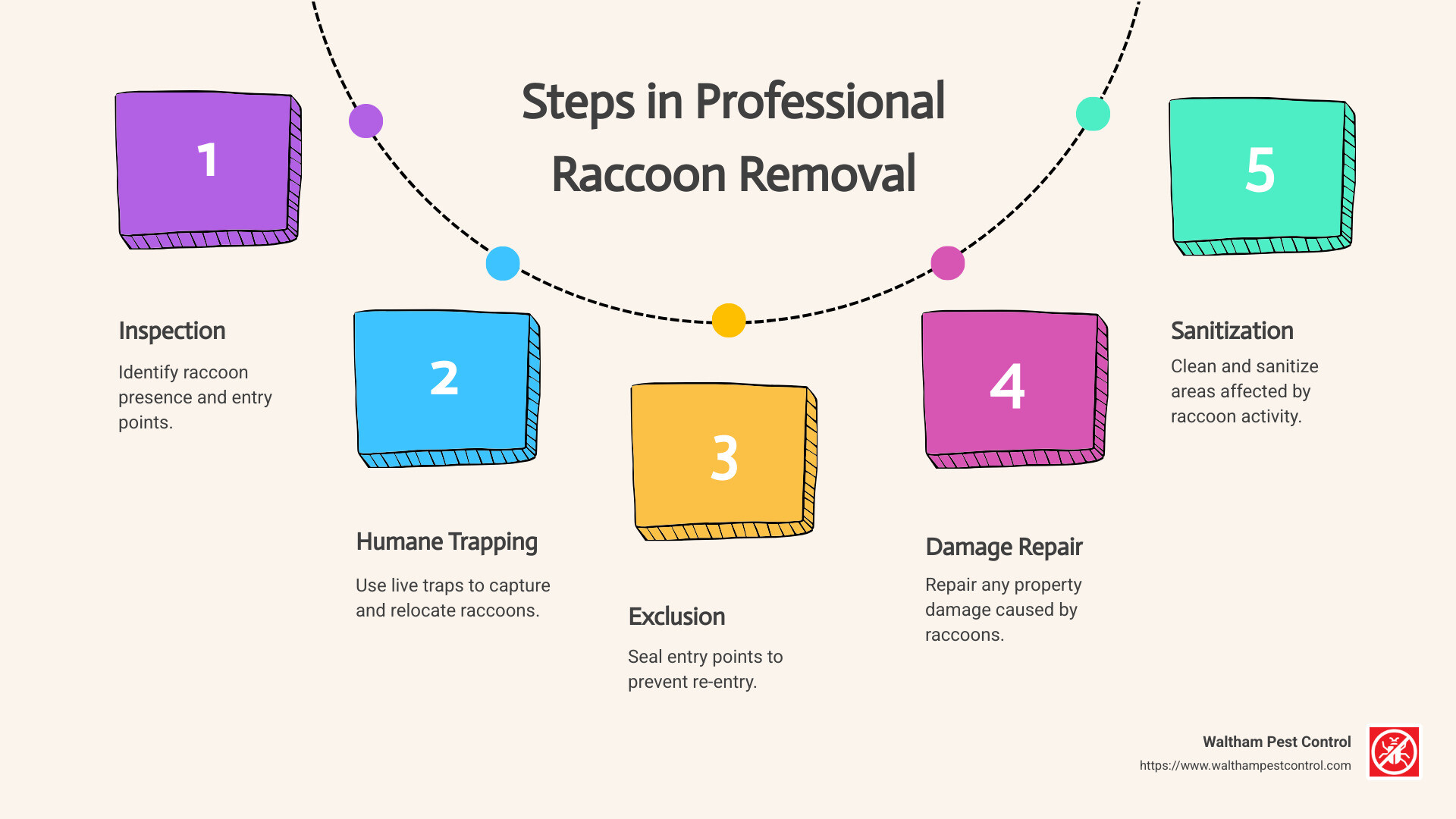
Professional raccoon removal is essential for homeowners and business owners in Massachusetts facing the challenges posed by these clever nocturnal creatures. Raccoons, known for their mischievous nature, can cause significant property damage and health risks, making professional intervention crucial. Here’s a quick overview of steps involved in professional raccoon removal:
- Inspection and Identification – Determine the presence and entry points of raccoons.
- Humane Trapping – Use live traps to safely capture and relocate them.
- Exclusion Techniques – Seal entry points to prevent future intrusion.
- Damage Repair and Cleanup – Fix damages and sanitize affected areas.
Raccoons are notorious for damaging roofs and insulation and spreading diseases like raccoon roundworm. Addressing these issues swiftly with professional raccoon removal can save you from costly repairs and potential health hazards. As Waltham Pest Control, the President & CEO of Waltham Pest Control, I bring over 40 years of experience in providing expert, humane, and effective raccoon removal services across Eastern Massachusetts. Our team’s commitment ensures your property remains safe and raccoon-free.
Professional raccoon removal word roundup:
– are raccoons dangerous
– professional raccoon latrine removal
– wildlife removal near me
Understanding Raccoon Behavior
Raccoons are fascinating creatures with unique behaviors that can often lead to conflicts with humans. Understanding their habits and preferences can help in managing and preventing these issues effectively.
Nocturnal Habits
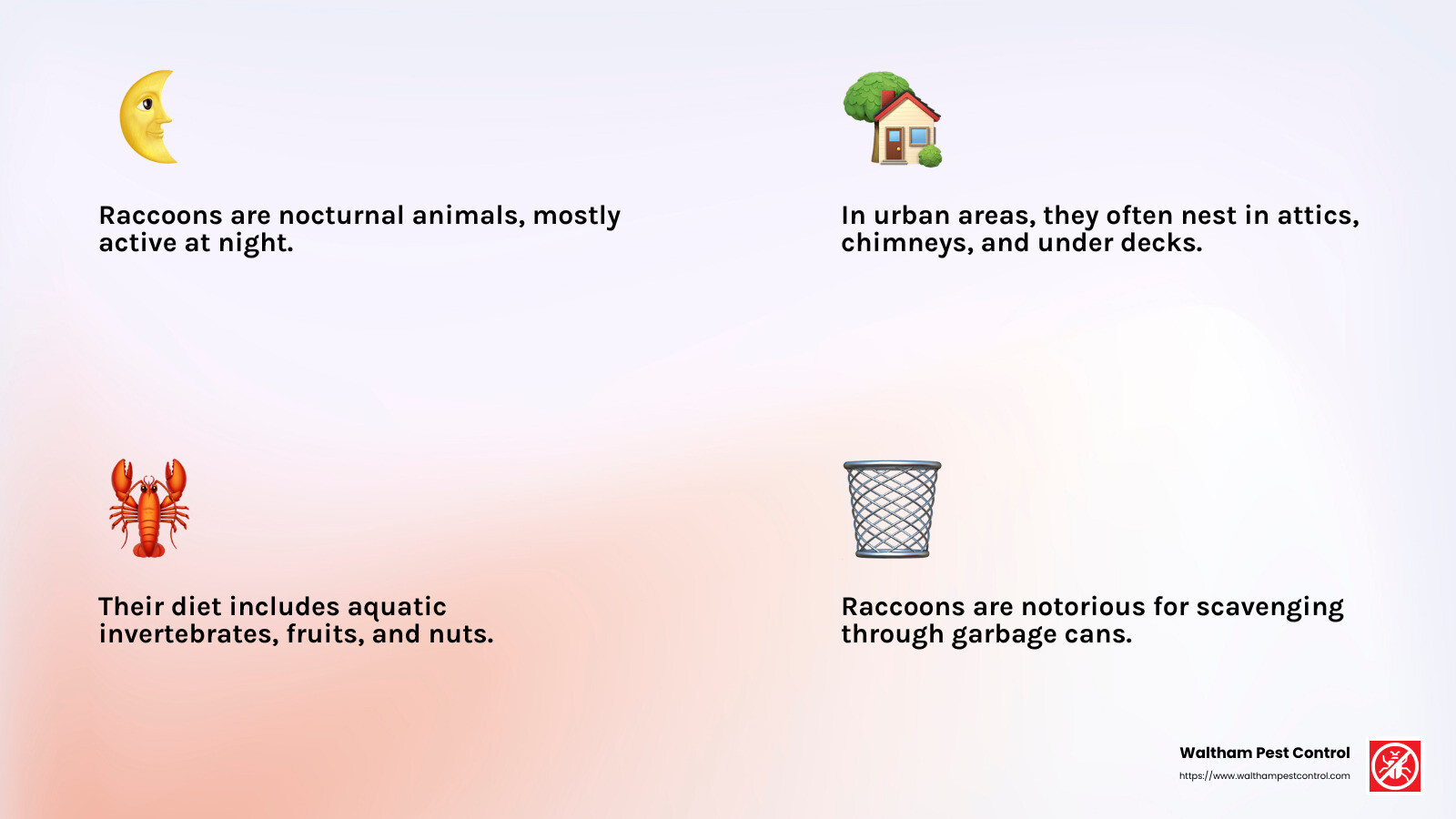
Raccoons are primarily nocturnal animals, meaning they are most active at night. This is when they forage for food and explore their surroundings. Homeowners often hear rustling noises in the attic or around the property during nighttime, which can be a clear sign of raccoon activity. Their nocturnal nature allows them to go unnoticed, making it crucial to pay attention to these subtle signs.
Nesting Sites
Raccoons are highly adaptable and can make their homes in a variety of places. In the wild, they prefer tree cavities, rock crevices, and underground burrows. However, in urban and suburban areas, they often seek shelter in attics, chimneys, and under decks or porches. Female raccoons, especially, might choose these sites for raising their young, making it essential to secure these areas to prevent nesting.
Diet
Raccoons have an omnivorous diet, which means they eat both plants and animals. Their diet includes aquatic invertebrates like clams and crayfish, as well as fruits, vegetables, nuts, and corn. In urban settings, raccoons are notorious for scavenging through garbage cans and gardens. They are opportunistic feeders and will eat almost anything available, which often leads them to human dwellings in search of food.
Understanding these behaviors is the first step in addressing any raccoon-related issues on your property. By recognizing their habits, you can take proactive measures to prevent conflicts and ensure a raccoon-free environment.
Next, we’ll dig into professional raccoon removal methods, focusing on humane trapping and effective exclusion techniques.
Professional Raccoon Removal
Raccoons might be cute from a distance, but when they invade your home, it’s time to act. Professional raccoon removal focuses on humane methods to ensure both your safety and the well-being of the raccoons. Let’s explore how this is done.
Raccoon Inspection
Before any removal takes place, a thorough inspection is crucial. Professionals look for telltale signs of raccoon activity, such as:
- Footprints: Raccoons have distinct, hand-like footprints with five fingers. These can often be found in soft soil or dusty areas.
- Entry Points: Common entry points include chimneys, vents, or any small openings in your attic or roof. Identifying these helps in planning an effective removal strategy.
- Droppings: Raccoon droppings are another indicator. They are typically dark and tubular, often found near entry points or nesting sites.
Raccoon Trapping
Once the inspection is complete, the next step is humane trapping. Here’s how it’s done:
- Live Traps: These are specially designed to capture raccoons without harming them. They are typically cage-like, allowing for safe capture and transport.
- Baiting: To lure raccoons into the traps, professionals use bait that mimics their natural diet. This could include fruits, nuts, or even pet food.
- Relocation: After being trapped, raccoons are relocated to a suitable habitat away from urban areas. This ensures they can continue their lives without causing trouble to humans.
Exclusion Techniques
The final step in professional raccoon removal is exclusion. This involves:
- Sealing Entry Points: All identified entry points are sealed with durable materials to prevent re-entry. This is crucial for long-term prevention.
- Habitat Modification: Removing food sources like unsecured trash cans or pet food left outside can make your property less attractive to raccoons.
- Prevention Measures: Installing motion-activated lights or sprinklers can deter raccoons from returning.
By following these steps, you can ensure a raccoon-free home while treating the animals humanely. Next, we’ll discuss effective exclusion techniques in more detail to keep raccoons out for good.
Effective Exclusion Techniques
After professional raccoon removal, keeping these critters out for good is the next big step. Let’s explore some effective exclusion techniques that can help you maintain a raccoon-free home.
Entry Sealing
Sealing entry points is the first line of defense in preventing raccoon re-entry.
- Identify Vulnerable Areas: Start by checking common raccoon entry points such as chimneys, vents, and any small openings in the attic or roof.
- Use Durable Materials: Materials like metal mesh or heavy-duty wire can effectively block these access points. Make sure the materials are sturdy enough to withstand raccoon tampering.
- Professional Sealing: For the best results, consider hiring professionals who know exactly how to seal these areas effectively. This ensures a long-lasting solution.
Habitat Modification
Raccoons are opportunistic creatures. Altering their environment can make your property less appealing.
- Secure Food Sources: Keep trash in tightly closed containers. Take out the trash on the morning of pickup rather than the night before. Also, avoid leaving pet food or birdseed outside.
- Remove Shelter Options: Close off openings under porches and buildings. Seal any gaps that could serve as potential denning sites for raccoons.
- Maintain a Tidy Yard: Regularly clean up fallen fruits, nuts, or any other potential food sources. A clean yard is less attractive to raccoons.
Prevention
Prevention measures are key to ensuring raccoons don’t return.
- Motion-Activated Devices: Install motion-activated lights or sprinklers. These can startle raccoons and discourage them from lingering around your property.
- Natural Repellents: Use natural deterrents like predator urine or ammonia-soaked rags in areas you want to keep raccoon-free.
- Community Efforts: Encourage your neighbors to adopt similar practices. A community-wide effort can significantly reduce raccoon presence in the neighborhood.
Implementing these exclusion techniques can help you maintain a raccoon-free environment while ensuring these animals are treated humanely. Next, we’ll explore the impact of raccoon presence on property and how to repair any damage they might cause.
Raccoon Damage and Repair
Raccoons might look cute, but they can cause significant damage to your property. Let’s explore what kind of wreckage they can cause and how to fix it.
Property Damage
Raccoons are notorious for tearing up roofs, siding, and even chimneys to find shelter. Their agile paws and strong claws make it easy for them to pull apart shingles or fascia boards. Once inside, they can destroy insulation and electrical wiring, leading to costly repairs.
Insulation Repair
If raccoons get into your attic, they can wreak havoc on your insulation. They tend to nest in it, leaving behind feces and urine that saturate and ruin the material. This not only affects your home’s energy efficiency but also poses health risks.
Steps for Insulation Repair:
- Remove Contaminated Insulation: Carefully remove any insulation that has been soiled by raccoons. This helps eliminate odors and potential health hazards.
- Clean and Disinfect: Thoroughly clean and disinfect the area to remove any bacteria or parasites left by the raccoons.
- Replace Insulation: Install new insulation to restore energy efficiency and comfort in your home.
Contamination Cleanup
Raccoon droppings can carry raccoon roundworm, a serious health threat. Their waste can also attract other pests, like flies and cockroaches.
Contamination Cleanup Process:
- Protective Gear: Always wear gloves and masks when handling raccoon waste to avoid exposure to harmful pathogens.
- Dispose of Waste Properly: Seal raccoon droppings in a plastic bag before disposing of them to prevent contamination.
- Professional Cleanup: Consider hiring professionals for thorough decontamination, especially if the infestation was severe. They have the tools and expertise to ensure your home is safe.
By addressing raccoon damage promptly and effectively, you can restore your home to its former glory and prevent future infestations. In the next section, we’ll answer some frequently asked questions about raccoon removal and what you can do if you find one in your attic.
Frequently Asked Questions about Raccoon Removal
How much does professional raccoon removal cost?
The cost of professional raccoon removal can vary widely. Factors influencing the price include the raccoon’s location (such as an attic or chimney), the condition of the animal (whether it’s sick or aggressive), and the time of year. Generally, prices are higher if baby raccoons are present, as this requires more careful handling and possibly assistance from a wildlife rehabilitation center.
While it’s challenging to provide a specific cost without an inspection, it’s important to note that most companies charge a fee for this service. However, a reputable company will apply this inspection fee toward the total cost of removal if you choose to proceed with their services.
Are raccoons dangerous to humans?
Yes, raccoons can pose several dangers to humans. One of the primary concerns is that they are a rabies vector species. Rabies is a severe neurological disease that can be transmitted to humans through bites or scratches. Although not all raccoons carry rabies, any raccoon acting unusually—such as being active during the day—should be treated with caution.
Raccoons can also carry raccoon roundworm, a parasite found in their feces. This can be harmful if ingested, making it crucial to handle raccoon droppings with care and always wear protective gear.
What should I do if I find a raccoon in my attic?
Finding a raccoon in your attic can be alarming, but there are steps you can take to address the situation safely and effectively.
- Stay Calm and Avoid Confrontation: Do not attempt to handle the raccoon yourself. Raccoons can become aggressive if they feel cornered or threatened.
- Inspect for Signs of Entry: Look for footprints, droppings, or damaged areas where the raccoon might have entered. This will help professionals assess the situation.
- Call for Professional Help: Reach out to a wildlife removal expert. They have the tools and experience to safely remove the raccoon and prevent future entries. Professionals use humane methods, such as live traps and exclusion techniques, to ensure the raccoon is relocated without harm.
By understanding the risks and taking appropriate action, you can protect your home and family from the potential dangers associated with raccoon infestations. In the next section, we’ll explore more about exclusion techniques to keep raccoons out for good.
Conclusion
At Waltham Pest Control, we understand the challenges homeowners face with raccoon invasions. Our professional raccoon removal services are custom to address these issues with a focus on safety, efficiency, and humane practices. Serving Eastern Massachusetts, our team is committed to delivering top-quality service that ensures your home remains raccoon-free.
With over 40 years of experience, our licensed and insured experts are equipped to handle any raccoon problem, big or small. We employ a comprehensive approach that includes inspection, trapping, and exclusion techniques to remove raccoons and prevent their return. Our methods are designed to minimize stress on the animals while ensuring your property is secure.
Choosing Waltham Pest Control means choosing a partner dedicated to quality and customer satisfaction. We take pride in our work and strive to offer cost-effective solutions without compromising on the high standards we set for ourselves.
If you’re dealing with a raccoon issue, don’t hesitate to reach out. Let us help you restore peace to your home. For more information on our services, visit our humane raccoon control page.
Our commitment to quality service makes us a trusted choice for residents across Eastern Massachusetts. Together, we can keep your home safe and wildlife-free.
