

Pest Control for Ticks: 3 Smart Steps for Safety
Why Ticks Are More Than Just a Nuisance
Pest control for ticks is essential for Massachusetts homeowners because these tiny arachnids pose serious health risks beyond simple annoyance. Here are the key solutions for effective tick control:
Immediate Actions:
- Remove leaf litter and tall grass from your property
- Create a 3-foot barrier of wood chips between lawn and woods
- Use EPA-registered repellents when outdoors
- Perform daily tick checks on family and pets
Professional Solutions:
- Property inspection and species identification
- Targeted barrier treatments around your home
- Seasonal applications (spring and fall timing)
- Ongoing monitoring and prevention plans
Ticks are blood-feeding arachnids – not insects – that can transmit dangerous diseases like Lyme disease, anaplasmosis, and Powassan virus. What makes them particularly concerning is that an estimated 75% of tick bites occur during normal home activities like gardening, playing with pets, or entertaining outdoors.
These parasites don’t jump or fly. Instead, they wait patiently on grass blades and low vegetation for hosts to brush past them. Once attached, their bites are often painless, meaning you might not notice them for hours or days.
The real danger comes from disease transmission. Bacteria in a tick’s saliva transfers to the host at the moment of biting. Over 80% of ticks stay within the outer 9 feet of a lawn, making your own backyard the most likely place for encounters.
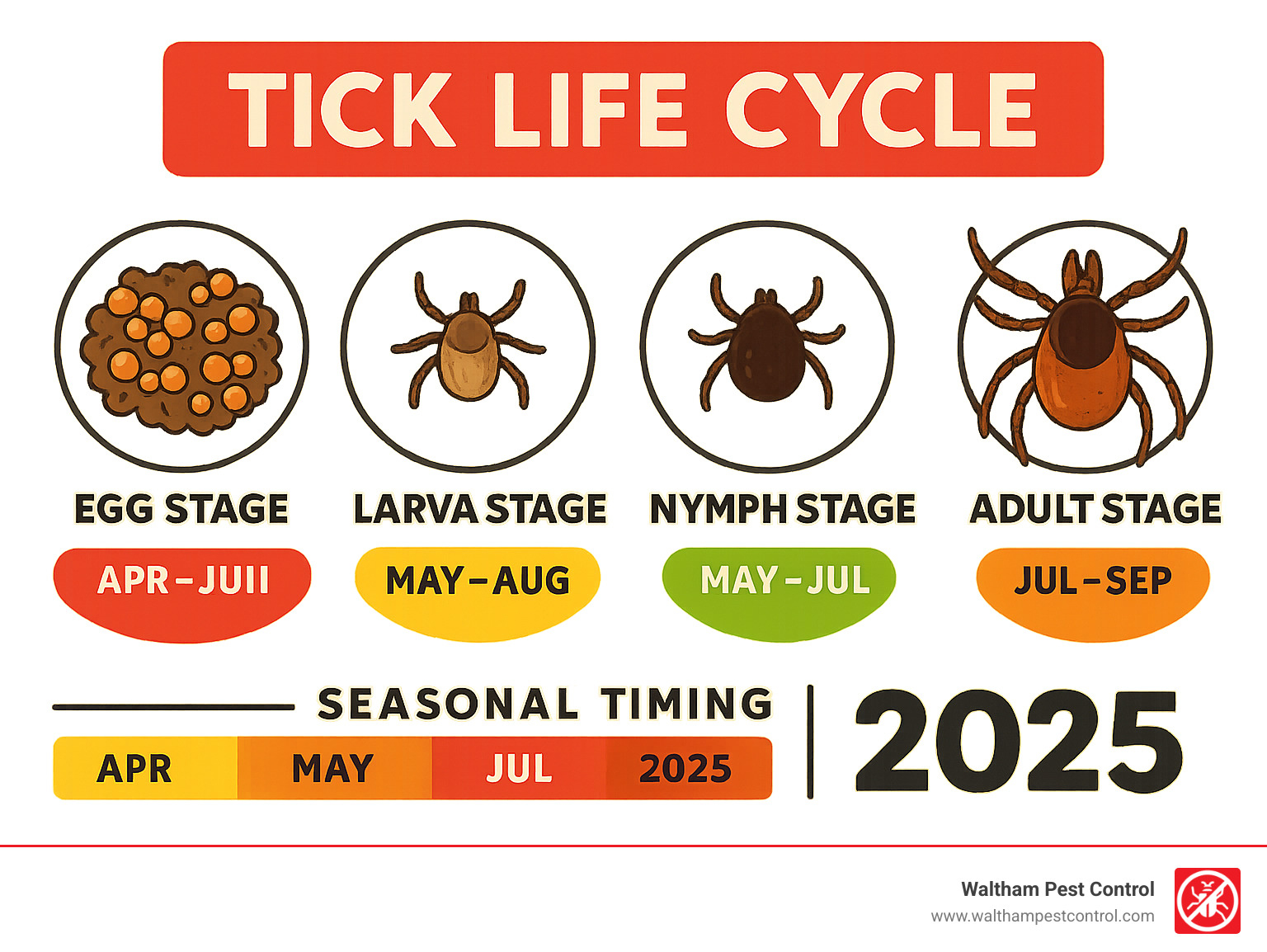
Ticks are most active from April through September, with nymph activity peaking from May through July. These immature ticks, called nymphs, are responsible for approximately 98% of all tick bites and are particularly dangerous because they’re tiny and hard to spot.
I’m Waltham Pest Control, President & CEO of Waltham Pest Control, with over 40 years of experience protecting Eastern Massachusetts families from tick-borne diseases through comprehensive pest control for ticks programs. Our integrated approach combines property assessment, targeted treatments, and ongoing prevention strategies custom to each property’s unique needs.
Know your pest control for ticks terms:
Understanding the Enemy: Common Ticks and Their Habits
Think of ticks as nature’s most patient hitchhikers. These tiny arachnids – yes, they’re related to spiders, not insects – have perfected the art of waiting. They’ll sit motionless on a blade of grass for months, just hoping you’ll walk by so they can grab onto your clothing or skin for their next blood meal.
What makes ticks such formidable opponents in pest control for ticks is their incredible survival strategy. Unlike mosquitoes that buzz around looking for victims, ticks practice what scientists call “questing.” They climb up on vegetation, extend their front legs, and wait. And wait. And wait some more.
Ticks have very specific real estate preferences. They love tall grass, leaf litter, wooded areas, and anywhere that’s shady and humid. These spots help them stay moist while they wait for their next meal to walk by.
Here’s something that might surprise you: over 80% of ticks stay within the outer 9 feet of a lawn. That means they’re not deep in the woods – they’re right at the edge of your property where your manicured lawn meets the wild areas. This is why so many tick encounters happen during everyday activities like gardening, walking the dog, or letting kids play in the yard.
Common Tick Species in Massachusetts
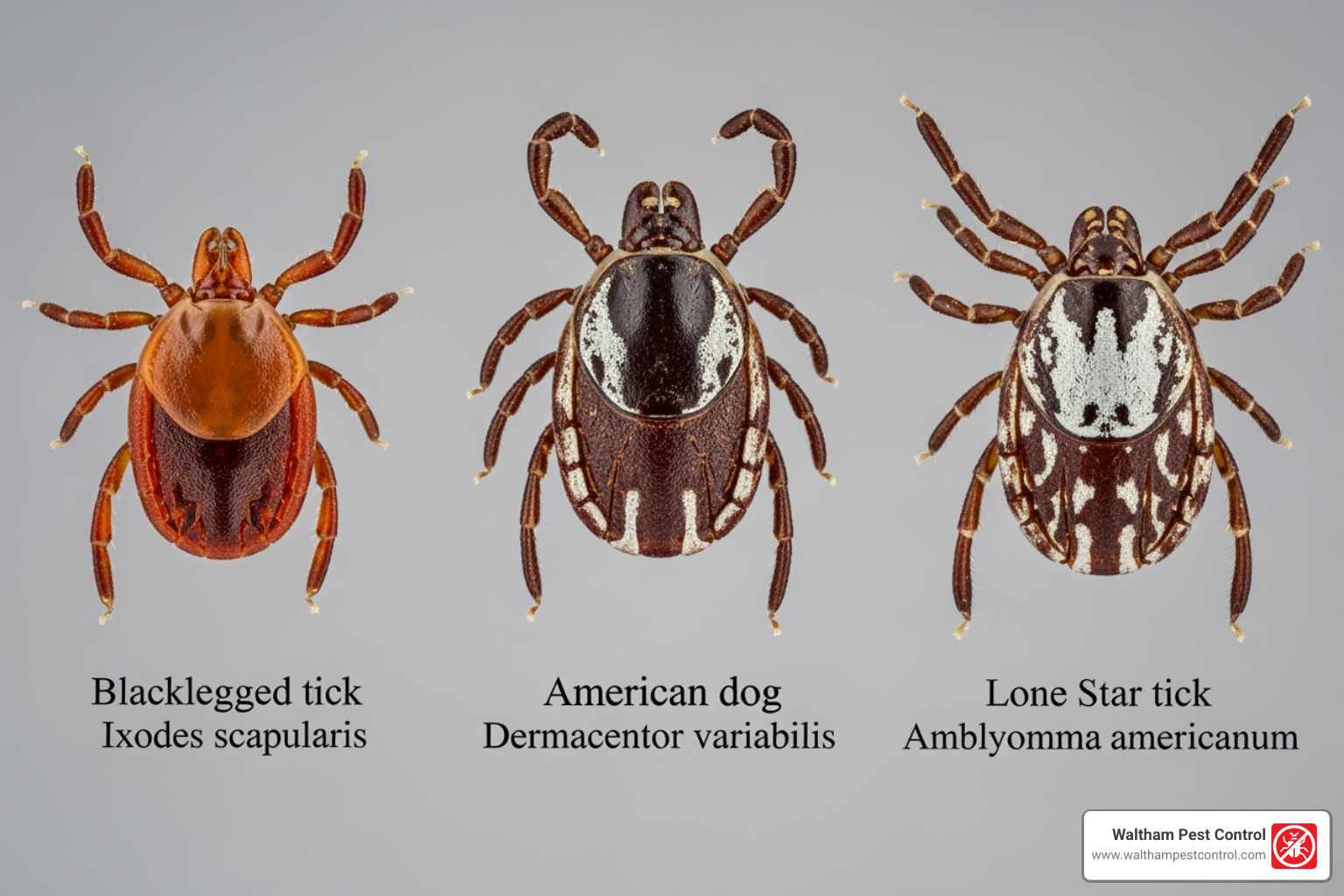
In our corner of New England, we deal with four main troublemakers. Each one has its own personality and health risks, which is why identifying them correctly is crucial for effective pest control for ticks.
The black-legged tick (also called the deer tick) is public enemy number one around here. These tiny vampires are the main carriers of Lyme disease in Massachusetts. The nymphs are about the size of a poppy seed, making them nearly impossible to spot until it’s too late.
The American dog tick is much larger and easier to see, which is both good and bad news. While they don’t carry Lyme disease, they can transmit Rocky Mountain spotted fever. These are the ticks most people picture when they think “tick” – brown, oval, and about the size of a small bead.
Then there’s the brown dog tick, which has a rather annoying superpower: it’s the only tick that can complete its entire life cycle indoors. If you have pets, this species can turn your home into their personal breeding ground.
Finally, the lone star tick gets its name from the distinctive white spot on the female’s back. These aggressive biters are expanding their range northward and can cause alpha-gal syndrome – a condition that makes people allergic to red meat. Yes, a tick bite can make you allergic to hamburgers.
For more detailed information about these species, the CDC’s guide on ticks provides excellent photos and identification tips.
When Are Ticks Most Active?
Ticks are fair-weather friends of the worst kind. They become active whenever temperatures climb above freezing, but their prime time runs from April through September. This is when they’re most hungry, most active, and most likely to find you.
The danger zone peaks during May through July when tiny nymphs are out in full force. These pinhead-sized youngsters are responsible for about 98% of all tick bites. They’re so small that many people mistake them for freckles or specks of dirt.
Even as temperatures drop in fall, adult ticks don’t completely disappear. They’ll emerge during those surprisingly warm October afternoons or mild winter days. This means your pest control for ticks strategy needs to account for nearly year-round activity in Massachusetts.
The key takeaway? Ticks are incredibly adaptable survivors that have turned waiting into an art form. Understanding their habits and preferences is the first step in protecting your family and property from these persistent parasites.
The Dangers of Tick Bites: Health Risks and Diseases
Let’s be honest – the thought of a tick latched onto your skin is enough to make anyone’s skin crawl. But beyond the “ick factor,” these tiny parasites pose genuine health threats that every Massachusetts homeowner should understand. What makes ticks particularly sneaky is that their bites are often completely painless. You might not even realize you’ve been bitten until days later when you spot an engorged tick or start feeling unwell.
The real danger lurks in tick saliva, which can harbor dangerous bacteria and viruses. When a tick bites, these pathogens transfer directly into your bloodstream. Even worse, improper tick removal can squeeze infected fluids into the bite wound, increasing your risk of disease transmission. This is why effective pest control for ticks focuses heavily on prevention rather than just removal.

Common Tick-Borne Diseases
The diseases ticks carry read like a medical textbook of misery. Lyme disease tops the list as the most common tick-borne illness in our region. Transmitted primarily by black-legged ticks (deer ticks), Lyme disease accounts for 95% of all reported vector-borne illnesses in the United States. The telltale bullseye rash appears in about 70% of cases, often accompanied by fever, headache, and fatigue.
Here’s what makes Lyme disease particularly concerning: it typically takes 36 to 48 hours of tick attachment before transmission occurs. Left untreated, the infection can spread to joints, the heart, and the nervous system, causing severe long-term complications. The CDC tracks reported cases of Lyme disease, showing steady increases in many northeastern states.
Anaplasmosis presents another serious threat, also transmitted by black-legged ticks. Patients often experience fever, headache, muscle aches, and general malaise that can be mistaken for the flu. Babesiosis, caused by parasites rather than bacteria, creates similar symptoms but adds chills, sweats, and fatigue to the mix.
Perhaps most frightening is Powassan virus, a rare but potentially deadly disease. Unlike other tick-borne illnesses, Powassan can transmit within 15 minutes of tick attachment. Symptoms escalate quickly from fever and headache to confusion, seizures, and memory loss. The virus can cause encephalitis or meningitis, making rapid medical attention crucial.
Rocky Mountain spotted fever rounds out our local concerns, transmitted by American dog ticks. Despite its name, this disease occurs throughout the eastern United States. The characteristic rash usually appears several days after fever begins, but don’t wait for the rash – early antibiotic treatment is essential.
Personal and Pet Protection
Protecting your family and pets requires a strategic approach that starts before you step outside. Using EPA-registered insect repellents provides your first line of defense. Products containing DEET, picaridin, or oil of lemon eucalyptus offer proven protection when applied according to label directions.
Wearing light-colored clothing isn’t just a fashion choice – it’s a practical safety measure. Ticks show up clearly against white or light backgrounds, making them easier to spot before they find skin. Long sleeves and pants tucked into socks create additional barriers, though we know this isn’t always practical during hot Massachusetts summers.
Performing tick checks after outdoor activities becomes second nature once you establish the routine. Focus on hidden areas where ticks love to hide: behind ears, along the hairline, under arms, around the waist, and behind knees. Don’t forget to check between toes and in the belly button – ticks are surprisingly good at finding warm, protected spots.
Showering within two hours of coming indoors serves a dual purpose. The water pressure can wash away unattached ticks, while the process naturally includes a visual inspection of your body. This simple habit significantly reduces disease transmission risk.
Your pets need equal attention since they often venture into prime tick habitat. Checking pets for ticks should happen daily during peak season. Run your hands through their fur, feeling for small, hard bumps that might indicate an attached tick. Pay special attention to areas around the ears, neck, and between toes where ticks commonly attach.
When you do find an attached tick, proper removal technique matters enormously. The CDC provides detailed instructions on safe tick removal, emphasizing the use of fine-tipped tweezers and steady upward pressure. Avoid folk remedies like nail polish or matches – these can actually increase disease transmission risk.
The key message here is simple: pest control for ticks works best when it combines professional yard treatments with consistent personal protection habits. Neither approach alone provides complete protection, but together they create a comprehensive defense system for your family’s health.
Creating a Tick-Safe Zone: Landscaping and Prevention
Your backyard should be a place where your family can relax and play without worrying about tick encounters. The good news? You have more control over tick populations than you might think. Smart landscaping choices and consistent yard maintenance form the foundation of effective pest control for ticks.
Think of ticks as tiny vampires who prefer their environment cool, damp, and shady. They absolutely love hanging out in leaf litter, tall grass, and dense vegetation where they can maintain their moisture levels while waiting for their next meal to walk by. By making your yard less appealing to these unwelcome guests, you’re taking a huge step toward protecting your family.

One often overlooked aspect of tick prevention is discouraging wildlife hosts. Deer might look graceful wandering through your yard, but they’re basically tick delivery services. A single deer can carry hundreds of ticks, dropping them off like unwanted party guests as they browse through your landscaping.
Rodents present an even bigger challenge because they’re harder to spot and control. Mice and chipmunks don’t just carry ticks – they help spread them throughout your entire property. These small mammals love cluttered areas, wood piles, and overgrown vegetation, which coincidentally are also perfect tick habitats.
Simple Steps for a Tick-Safe Yard
Creating a tick-unfriendly environment doesn’t require a complete yard makeover. Small, consistent changes can make a dramatic difference in tick populations around your home.
Mowing frequently is your first line of defense. Keep grass at 3 inches or shorter to reduce humidity levels that ticks need to survive. Think of it as creating a mini-desert that ticks simply can’t handle.
Removing leaf litter might seem like never-ending work, but it’s incredibly effective. Those cozy piles of fallen leaves are like five-star hotels for ticks. Rake them up regularly, especially around lawn edges and garden beds where ticks love to congregate.
Clearing tall grass and brush eliminates tick highways. These areas along fence lines and property edges are where ticks wait for passing hosts. By keeping these zones trimmed and tidy, you’re cutting off their main travel routes.
Your firewood storage strategy matters more than you might expect. Stacking wood neatly in a dry area prevents it from becoming a rodent magnet. Damp, messy wood piles attract mice and other small mammals that carry ticks right to your doorstep.
The most effective landscape modification is creating a 3-foot barrier of wood chips or gravel between your lawn and any wooded areas. This dry zone acts like a moat that ticks struggle to cross. It’s one of those simple solutions that works surprisingly well.
Placing play equipment away from woods keeps your family’s favorite gathering spots out of prime tick territory. Position decks, patios, and playground equipment in sunny, well-maintained areas rather than near dense vegetation or property edges.
For homeowners who want to dive deeper into landscape-based tick management, the Tick Management Handbook offers comprehensive strategies developed by pest management experts. These techniques, combined with professional pest control for ticks services, create the most effective protection for your property.
Professional Pest Control for Ticks: When and Why to Call the Experts
Sometimes your best efforts at DIY tick prevention just aren’t enough. When you’re dealing with heavy infestations, recurring tick problems, or you simply want complete peace of mind for your family and pets, it’s time to bring in the professionals.
Here’s the reality: ticks are incredibly resilient creatures. They can survive harsh weather, hide in the tiniest crevices, and reproduce at alarming rates. What looks like a manageable tick problem in spring can quickly spiral into a full-blown infestation by summer. And with serious diseases like Lyme disease on the line, this isn’t the time to take chances.
At Waltham Pest Control, we’ve been protecting Eastern Massachusetts families for over 40 years. We understand the local tick species, their seasonal patterns, and exactly where they like to hide on your property. More importantly, we have access to professional-grade products and expertise that simply aren’t available to homeowners.
Think of it this way: you wouldn’t perform surgery on yourself, so why tackle a serious tick infestation alone? Professional pest control for ticks gives you the confidence that comes from knowing the job is done right the first time.
What to Expect from Professional Pest Control for Ticks
When you call Waltham Pest Control, we don’t just show up and start spraying. Our approach is thorough, scientific, and custom specifically to your property’s unique challenges.
Property inspection is where everything starts. Our licensed technicians walk every inch of your property, looking for tick hotspots you might never notice. We’re trained to spot the subtle signs – the slightly damp area under your deck where nymphs love to hide, the overgrown fence line that’s become a tick highway, or the woodpile that’s attracting the rodents that bring ticks into your yard.
Identification of tick species is crucial because different ticks require different strategies. The black-legged tick that carries Lyme disease behaves very differently from the brown dog tick that can live indoors. Knowing exactly what we’re dealing with allows us to choose the most effective treatment approach.
We also focus on identifying conducive conditions – those environmental factors that make your property attractive to ticks. This might include areas of standing water, dense vegetation, or wildlife corridors that funnel tick-carrying animals onto your property.
From there, we develop a customized treatment plan that addresses your property’s specific needs. No cookie-cutter approaches here – every yard is different, and every treatment plan should be too.
Application timing is absolutely critical for effective tick control. We typically recommend spring and fall treatments to target ticks when they’re most vulnerable. Spring treatments catch emerging ticks before they can establish themselves, while fall treatments address adult populations before they can overwinter and reproduce.
Types of Professional Treatments
Our professional pest control for ticks arsenal includes several powerful tools that aren’t available to homeowners.
Professional-grade tick control products are significantly more effective than anything you can buy at the hardware store. These specialized acaricides are formulated specifically for ticks and provide longer-lasting protection. They’re also applied at precise concentrations that maximize effectiveness while maintaining safety for your family and pets.
Targeted applications mean we’re not just blanket-spraying your entire yard. Our technicians focus on high-activity areas where ticks actually live and travel. This includes barrier treatments around your property’s perimeter, along fence lines, and in transition zones between your lawn and wooded areas.
We pay special attention to vegetation up to 2-3 feet high, since this is where ticks wait for their next meal. Shrubs, ornamental grasses, and low-hanging branches all get targeted treatment.
Safety for family and pets is always our top priority. While our products are highly effective against ticks, they’re applied with careful consideration for beneficial insects, children, and pets. We time applications when pollinators are less active and use products that break down safely in the environment.
The difference between professional and DIY treatment isn’t just about stronger products – it’s about knowledge, experience, and precision. We know exactly where to look, when to treat, and how to create a comprehensive defense against ticks.
Frequently Asked Questions about Tick Control
When it comes to pest control for ticks, we hear the same concerns from homeowners across Eastern Massachusetts. These questions reflect real worries about family safety, and we’re here to provide clear, honest answers based on our four decades of experience in the field.
Do all ticks carry Lyme disease?
This is probably our most common question, and the answer might surprise you. Not all ticks carry Lyme disease – not even all black-legged ticks (deer ticks), which are the primary carriers in our region.
The infection rate varies dramatically depending on where you live. In some areas of Massachusetts, up to 50% of black-legged ticks test positive for the Lyme disease bacteria, while other locations see rates as low as 1%. This geographic variation is why we always recommend treating every tick bite seriously, regardless of the species.
Even American dog ticks, brown dog ticks, and lone star ticks don’t transmit Lyme disease at all, though they can carry other serious illnesses like Rocky Mountain spotted fever or ehrlichiosis. The uncertainty is exactly why proper identification and professional pest control for ticks becomes so important for your family’s protection.
Can ticks survive indoors?
Most tick species struggle to survive inside your home, and that’s actually good news. The majority of ticks require high humidity levels – typically above 65% – to stay alive. Since most homes maintain lower humidity, especially during winter months, these ticks will dehydrate and die within days or weeks.
However, there’s one troublesome exception: the brown dog tick can complete its entire life cycle indoors. This species has adapted to indoor environments and can establish thriving populations in your home, particularly around pet bedding, in cracks and crevices, and other hidden areas.
If you’re finding ticks inside your house regularly, especially if you have dogs, you’re likely dealing with brown dog ticks. This situation calls for immediate professional intervention, as these indoor infestations can quickly spiral out of control without proper treatment.
How often should my yard be treated for ticks?
The treatment frequency for effective pest control for ticks isn’t one-size-fits-all. It depends on your property’s specific conditions, the severity of local tick populations, and environmental factors like rainfall and vegetation density.
For most Eastern Massachusetts properties, we typically recommend treatments every 30 to 60 days during peak season, which runs from April through September. Properties with heavy infestations, lots of wildlife activity, or those bordering wooded areas often benefit from more frequent applications.
Weather plays a big role too. Heavy rainfall can wash away treatment residues, requiring more frequent reapplication. Similarly, properties with automatic sprinkler systems or frequent watering may need adjusted schedules.
During our initial inspection, we assess your property’s unique risk factors and develop a customized treatment calendar. Some homeowners find that two strategic applications – one in early spring and another in late summer – provide adequate protection, while others in high-risk areas prefer consistent monthly treatments throughout the active season.
Secure Your Yard with Professional Tick Control
Creating an effective pest control for ticks strategy means combining smart prevention with professional expertise when needed. Throughout this guide, we’ve walked through the essential building blocks: understanding how ticks behave, protecting yourself and your pets during outdoor activities, and changing your landscape into a less welcoming environment for these unwanted guests.
The reality is that ticks are persistent, adaptable creatures. While maintaining a well-groomed yard, removing leaf litter, and creating those important 3-foot barriers of wood chips can dramatically reduce tick populations, sometimes the problem requires a more comprehensive approach. This is especially true here in Eastern Massachusetts, where tick activity remains high throughout much of the year.
Professional intervention becomes your best ally when DIY methods aren’t enough. At Waltham Pest Control, we’ve spent over four decades perfecting our approach to tick management in our local area. We understand the specific challenges that Eastern Massachusetts properties face – from the dense woodlands that harbor deer ticks to the varying microclimates that can create perfect tick breeding conditions.
Our pest control for ticks services go beyond simple spraying. We start with a thorough property assessment, identifying not just where ticks are currently active, but also the conditions that attract them in the first place. This comprehensive approach means we’re not just treating the symptoms – we’re addressing the root causes that make your property appealing to ticks and their animal hosts.
The peace of mind that comes with professional tick control is invaluable. You can host that backyard barbecue, let your kids play on the swing set, or take evening walks around your property without constantly worrying about tick encounters. Your family’s health and your ability to truly enjoy your outdoor spaces are worth protecting.
Don’t let tick concerns keep you indoors during the beautiful months when you should be enjoying your yard the most. For comprehensive protection and peace of mind in Eastern Massachusetts, explore our residential pest control services.
