

Pavement Ant Infestation: Top 10 Proven Removal Tips 2024
Battling Pavement Ants? Here’s Your Ultimate Guide to Removal
Pavement ant infestation is a common problem faced by homeowners in Massachusetts. These ants are small, dark brown to black insects that love to make nests in pavement cracks, sidewalks, and driveways. If you’ve noticed tiny mounds of dirt or ant trails winding their way through your kitchen, you’re likely dealing with these persistent pests.
Quick answers for pavement ant infestation:
- Identify: Look for small, dark brown to black ants about 2.5 to 3 mm in length.
- Common Nesting Sites: Pavement cracks, concrete slabs, wall voids, and areas near heat sources.
- Prevention: Keep your home clean, seal cracks, manage moisture, and trim nearby plants.
I’m Waltham Pest Control, the President & CEO of Waltham Pest Control. With over 40 years of experience, I’ve seen the nuisances caused by pavement ant infestations and am committed to providing effective solutions to keep your home pest-free.
Understanding Pavement Ants
What Are Pavement Ants?
Pavement ants, also known as Tetramorium caespitum, are tiny but persistent pests that often invade homes. These ants are dark brown to blackish in color and measure about 2.5 to 3 mm in length. Their bodies are divided into three sections: the head, thorax, and abdomen. The head and thorax feature parallel grooves and are darker compared to their lighter legs and antennae, which have 12 segments.
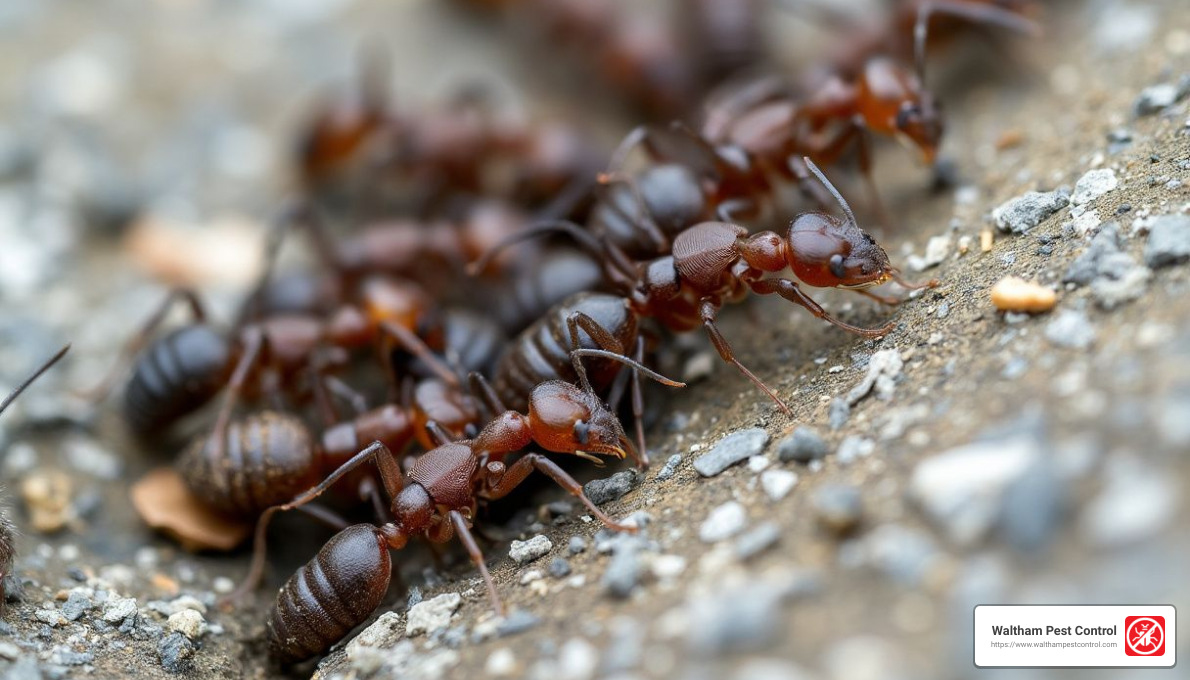
These ants get their name from their habit of nesting in cracks in pavements, sidewalks, and driveways. They are also known for their preference for sweet foods, earning them the nickname “sugar ants.”
Pavement Ant Lifecycle
Understanding the lifecycle of pavement ants can help in controlling their infestation. A typical colony consists of:
- Queens: The reproductive females responsible for laying eggs.
- Eggs: Hatch into larvae, which are cared for by worker ants.
- Worker Ants: Small, non-reproductive females that forage for food and maintain the nest.
- Reproductive Males and Winged Females: These ants are responsible for starting new colonies and are often seen swarming in the spring.
Pavement ant colonies can be quite large, housing up to 4,000 members and multiple queens. Winged ants, or swarmers, are commonly seen in the spring but can appear indoors at any time of year if the colony is inside.
Common Nesting Sites
Pavement ants are versatile nesters, often found in various locations both outdoors and indoors:
Outdoors:
– Sidewalks and Driveways: They nest in cracks and crevices, often displacing soil around these areas.
– Concrete Slabs: They prefer the gaps and stress cracks in concrete.
– Under Stones and Bricks: Pavement ants often build nests under objects lying on the ground.
Indoors:
– Wall Voids: Particularly in humid areas near heat sources like radiators or heating ducts.
– Around Water Heaters and Plumbing: They are attracted to moisture and warmth.
– Under Floors and Carpets: Displaced soil may appear in small piles under carpets or along baseboards.
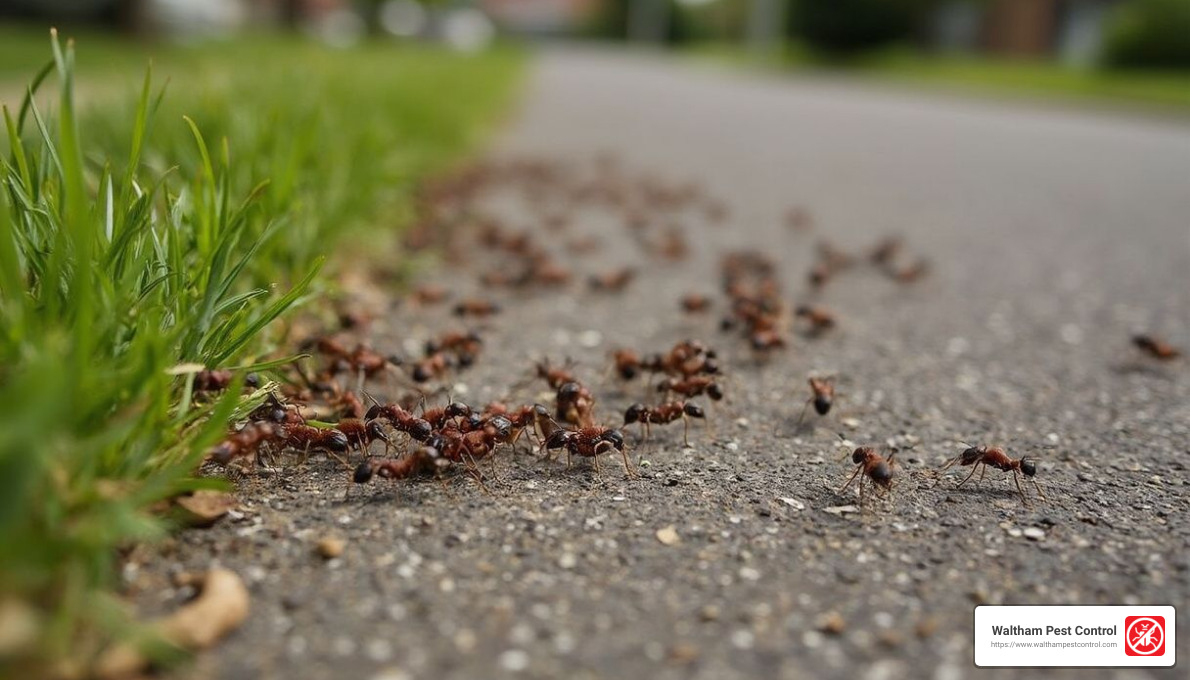
By understanding these nesting habits, you can better locate and eliminate these pesky invaders from your home.
Next, we’ll dive into the signs of a pavement ant infestation and how to identify them in your home.
Signs of a Pavement Ant Infestation
Knowing the signs of a pavement ant infestation can help you tackle the problem before it becomes a bigger issue. Here are key indicators to look out for:
Identifying Pavement Ant Trails
Pavement ants are foragers and create well-established trails. You can often spot these trails in various places in and around your home:
- Kitchen Floors: Pavement ants are attracted to grease spots and food crumbs. You might see them trailing across your kitchen floor, particularly in areas where food is prepared or consumed.
- Picnic Blankets and Patios: Outdoors, you might notice them crawling across picnic blankets or around BBQ areas, following the scent of food.
- Entry Points: Look for ant trails near doors, windows, and other entry points. They often enter through cracks and crevices in search of food.
Recognizing Ant Mounds
Pavement ants build distinctive mounds that can help you identify a colony:
- Small Cone-Shaped Mounds: These mounds are made of displaced soil and are usually found on sidewalks, driveways, and other paved surfaces. The ants push the soil up through the cracks, creating these small hills.
- Soil Displacement: You might also see soil displaced around the foundations of your home, especially near cracks or expansion joints in concrete.
- Indoor Soil Piles: Inside your home, look for small piles of soil under carpets, along baseboards, or behind furniture. These piles indicate that ants are tunneling and displacing soil from their nests.
Food Contamination and Indoor Colonies
Pavement ants are not just a nuisance; they can also contaminate your food:
- Food Contamination: These ants are known to invade kitchens and pantries, contaminating food with bacteria and pathogens they carry. They are particularly attracted to sweet and greasy foods.
- Indoor Colonies: If you notice a consistent presence of ants indoors, it might indicate an indoor colony. These colonies can be hidden in wall voids, under floors, or near heat sources like radiators and water heaters.
By identifying these signs early, you can take the necessary steps to eliminate pavement ants from your home.
Next, we’ll explore effective methods to get rid of pavement ants and keep them from returning.
How to Get Rid of Pavement Ants
Baiting Pavement Ants
Baiting is one of the most effective ways to eliminate pavement ants. The idea is simple: attract the ants to a bait that they will carry back to their colony, which will eventually kill the entire colony.
Types of Baits:
– Sweet Baits: Pavement ants love sugary foods. You can use commercial bait traps that contain sweet substances mixed with poisons like boric acid or hydramethylnon. Place these traps where you’ve seen ant activity.
– Protein Baits: Sometimes ants are more attracted to protein-rich foods. Mixing boric acid with peanut butter can be an effective bait for these times.
Pro Tip: Be sure to place baits in areas where you’ve noticed ant trails. This ensures the ants will find the bait quickly and take it back to their nest.
Using Insecticide Sprays
Insecticide sprays can be a quick way to reduce the number of visible ants. However, for long-term control, you should pair sprays with baiting.
Recommended Sprays:
– Ortho® Home Defense® Insect Killer: This spray can be used around cracks, fissures, and ant mounds. It creates a barrier that kills ants on contact and continues to work for weeks.
– Fipronil-Based Sprays: Products like Taurus SC are non-repellent, meaning ants won’t detect them and will carry the poison back to the colony, ensuring a broader kill.
Application Tips:
– Focus on cracks and crevices where ants enter your home.
– Spray directly on ant mounds outside to target the nest.
Applying Insecticide Dust
Insecticide dusts are another effective tool, especially for hard-to-reach areas like wall voids and under appliances.
Types of Dust:
– Diatomaceous Earth: This natural substance pierces the ants’ exoskeletons, causing them to dehydrate and die. It’s safe for humans and pets, making it a great option for indoor use.
– Boric Acid: Sprinkle boric acid dust along baseboards, doorways, and thresholds. It works similarly to diatomaceous earth by damaging the ants’ exoskeletons.
Pro Tip: Use a duster to apply a thin layer of dust in areas where you’ve seen ant activity. Too much dust can repel ants rather than attract them.
Natural Remedies
If you prefer a natural approach, there are several household items that can help deter pavement ants.
Lemon Juice and Water Mixture:
– Lemon Juice: Mix lemon juice with water and spray the mixture in problem areas. The acid in the lemon juice is toxic to ants and disrupts their scent trails.
– Application: Focus on entry points and areas where you’ve seen ants.
Vinegar:
– Vinegar Spray: A mixture of equal parts vinegar and water can be sprayed on ant trails. This not only kills the ants but also disrupts their pheromone trails, making it harder for them to find their way back.
Cayenne Pepper:
– Pepper Barrier: Sprinkle cayenne pepper around the perimeter of your home. The strong scent deters ants from crossing.
Maintaining a Clean Space:
– Tidy Up: Keep your home clean and free of crumbs. Ants are attracted to food, so regular cleaning can help keep them at bay.
– Limit Moisture: Fix leaks and use dehumidifiers in damp areas. Pavement ants are attracted to moisture, so reducing humidity can make your home less inviting.
By combining these methods, you can effectively eliminate a pavement ant infestation and prevent future invasions.
Next, we’ll discuss how to prevent pavement ants from coming back and what steps you can take to keep your home ant-free.
Preventing Pavement Ant Infestations
Exclusion Techniques
Exclusion is your first line of defense against pavement ants. Think of it as creating a fortress around your home that ants can’t penetrate.
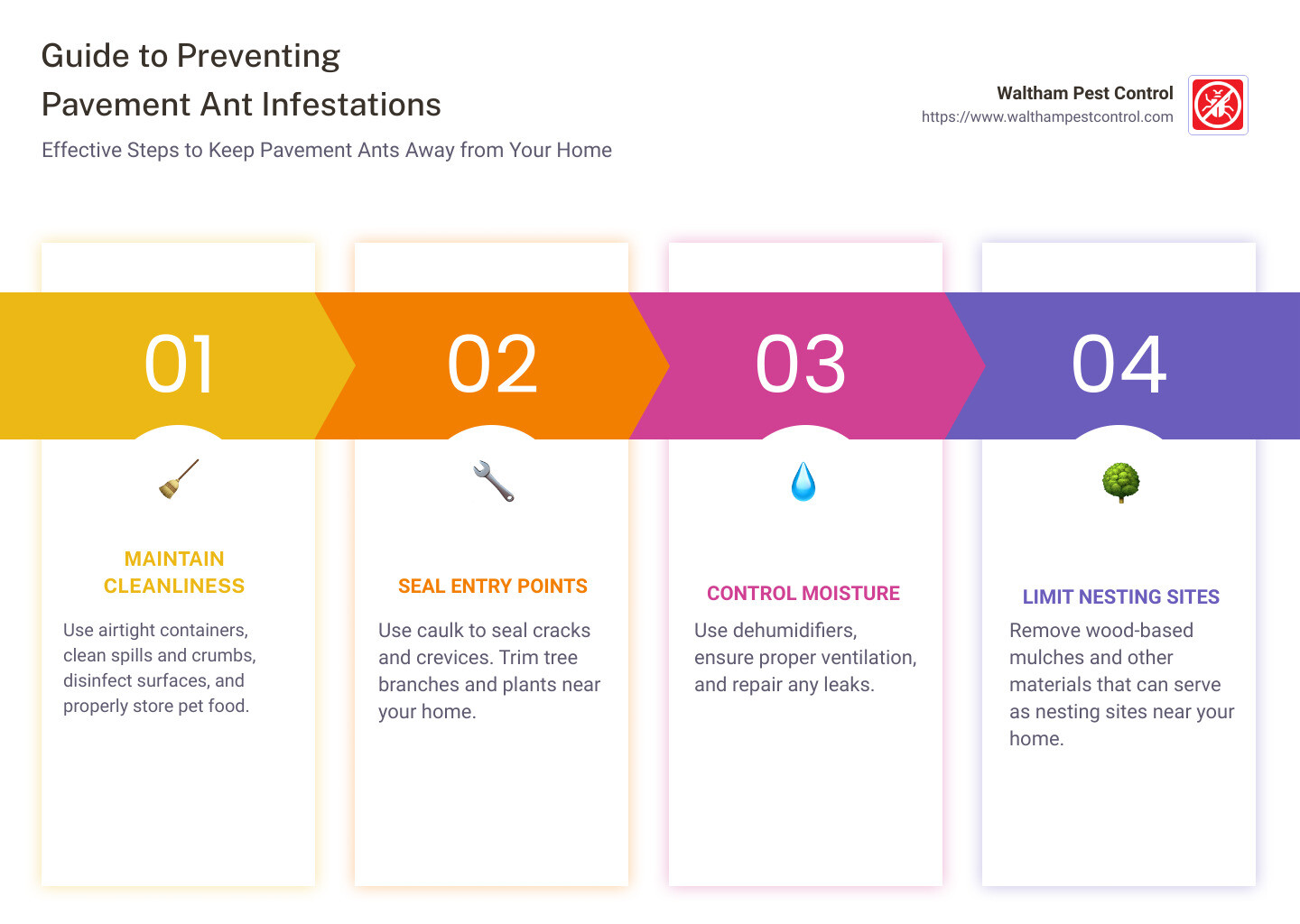
- Seal Cracks and Crevices: Use caulk to seal any cracks or crevices in your floors, doors, and windows. Pavement ants can squeeze through tiny openings, so be thorough.
- Trim Tree Branches and Plants: Keep tree branches and plants from touching your home’s exterior. Ants use these as bridges to gain entry.
- Avoid Wood-Based Mulches: Instead of wood mulch, use gravel around your home’s foundation. This creates a less inviting environment for ants.
Maintaining Cleanliness
Keeping your space clean is crucial. Ants are always on the lookout for food, and a clean home offers them fewer opportunities.
- Store Food in Airtight Containers: This prevents ants from getting into your pantry items.
- Clean Up Spills and Crumbs Immediately: Don’t give ants a reason to stick around.
- Take Out Trash Regularly: A trash can full of food scraps is a feast for ants.
- Disinfect Surfaces: Regularly clean kitchen counters and floors. This removes scent trails that attract ants.
- Wash Dishes Promptly: Don’t leave dirty dishes sitting out.
- Clean Up Pet Food: Don’t let pet food sit out for too long.
Controlling Moisture
Pavement ants love moist environments. Reducing moisture in your home can make it less appealing to them.
- Get Rid of Free-Standing Water: Check for and eliminate any standing water.
- Use a Dehumidifier: This can help reduce humidity levels in your home.
- Improve Ventilation: Good ventilation helps keep areas dry.
- Repair Leaks: Fix any leaks in your plumbing as soon as possible.
- Invest in Moisture-Reducing Insulation: This can help keep your home dry.
- Replace Wet Structures: If you have any wet or rotting wood, replace it.
By focusing on these prevention techniques, you can keep a pavement ant infestation from becoming a problem in the first place.
Next, we’ll answer some frequently asked questions about pavement ants to give you even more insight into dealing with these pesky invaders.
Frequently Asked Questions about Pavement Ant Infestation
How do I identify pavement ants in my home?
Identifying a pavement ant infestation is relatively straightforward if you know what to look for. Here are some clear indicators:
- Mounds: Look for small, cone-shaped mounds of soil, especially around cracks in pavements, driveways, and the foundation of your home.
- Ant Trails: Pavement ants often form visible trails as they march to and from food sources. You might see these trails on your kitchen floor, near grease spots, or even outside on your patio.
- Crevices and Entry Points: Pavement ants can enter through tiny crevices in floors, doors, and windows. Check these areas for any signs of ant activity.
Do pavement ants bite or sting?
Pavement ants do have the ability to sting, but they are not generally aggressive. Their stings are so small that most people won’t even feel them. However, some individuals may have allergic reactions to their stings. If you or someone in your home experiences an allergic reaction, seek medical attention immediately.
Can pavement ants cause damage to your home?
Pavement ants are more of a nuisance than a destructive force. Here are a few ways they can impact your home:
- Food Contamination: Pavement ants are attracted to sweet and greasy foods. If they get into your pantry or kitchen, they can contaminate your food.
- Nuisance: While they won’t cause structural damage, having ants crawling around your home is certainly bothersome.
- Indoor Colonies: If they establish colonies inside your home, especially in humid areas near heat sources, they can become a persistent problem.
By understanding these key points, you can better identify and manage a pavement ant infestation. Next, we’ll dig into some effective strategies for eliminating these pests from your home.
Conclusion
Battling a pavement ant infestation can feel overwhelming, but you don’t have to do it alone. At Waltham Pest Control, we specialize in providing professional extermination services custom to your specific needs. With over 40 years of experience, our team is equipped with the expertise and tools to ensure your home is free from these pesky invaders.
Why Choose Professional Extermination?
While DIY methods can sometimes manage small infestations, they often fall short when dealing with larger colonies. Professional extermination offers several advantages:
- Comprehensive Solutions: We use a variety of strategies, including bait traps, insecticide sprays, and insecticide dust, to target pavement ants at their source.
- Expert Identification: Our trained professionals can accurately identify the species and extent of the infestation, ensuring the most effective treatment.
- Long-Term Prevention: We don’t just eliminate the current problem; we also provide guidance on how to prevent future infestations.
Prevention Tips
Preventing a pavement ant infestation is just as important as eliminating one. Here are some tips to keep your home ant-free:
- Seal Entry Points: Use caulk to seal cracks and crevices in floors, doors, and windows.
- Maintain Cleanliness: Store food in airtight containers, clean up spills immediately, and take out the trash regularly.
- Control Moisture: Repair leaks, use dehumidifiers, and ensure proper ventilation to reduce moisture levels in your home.
Schedule a Consultation
If you’re dealing with a persistent ant problem, it’s time to consult the experts. At Waltham Pest Control, we offer personalized pest management solutions to fit your needs. Our team is licensed, insured, and committed to providing cost-effective services that bring peace back to your home.
Schedule a consultation with us today to learn more about how we can help you battle pavement ants and other common pests.
By choosing Waltham Pest Control, you’re opting for quality, commitment, and peace of mind. Let us handle your pest problems so you can focus on what truly matters.
