

Large Red Ants in House: 5 Powerful Solutions for 2025
Spotting Red Invaders: What You Need to Know
Large red ants in house problems typically involve carpenter ants, which can cause structural damage if left untreated. Here’s what you need to know immediately:
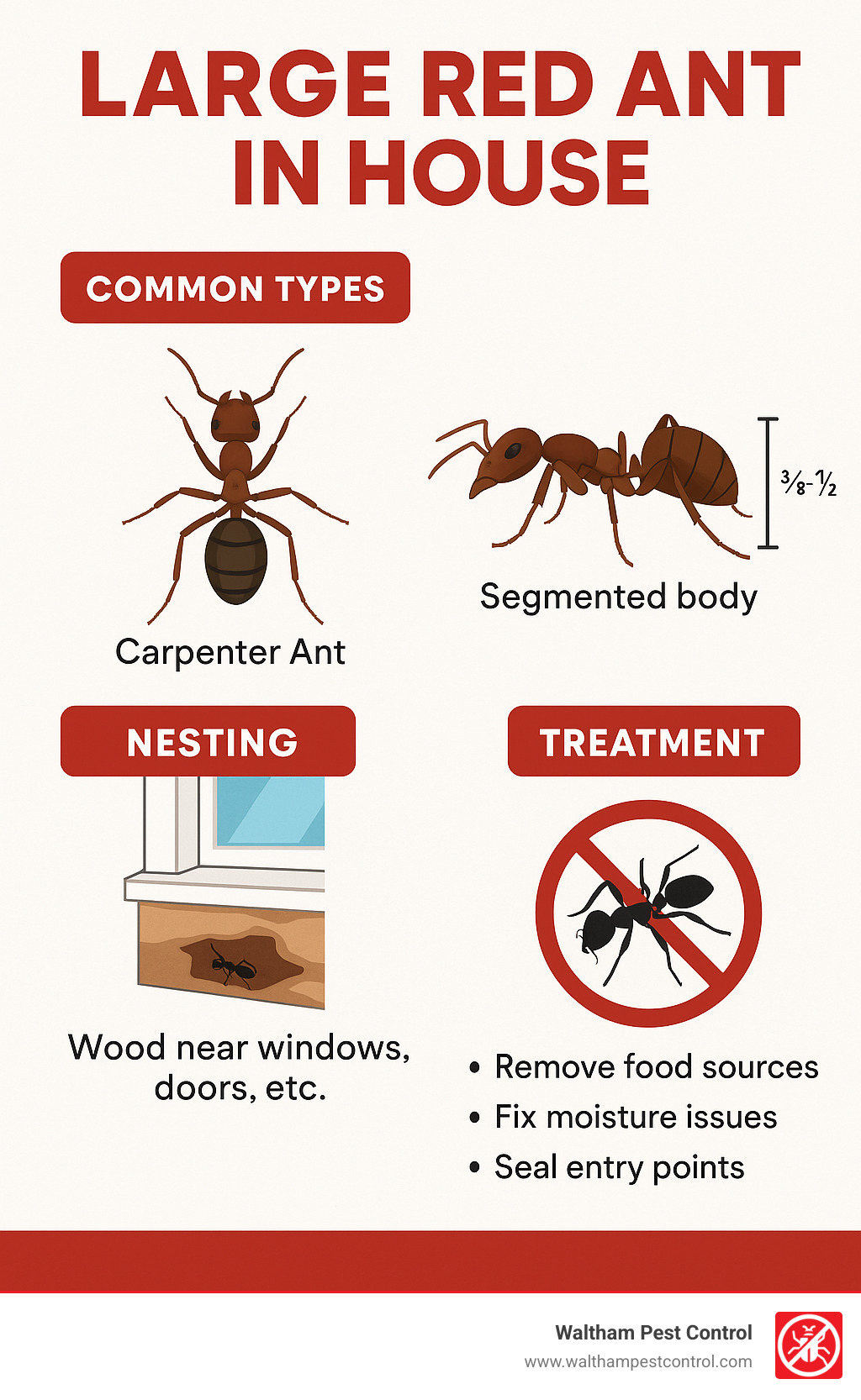
- Identification: Large red ants (⅜ to ½ inch) with segmented bodies, often reddish-brown to black
- Warning signs: Sawdust-like material (frass), hollow-sounding wood, and ants visible at night
- Common locations: Moist areas near windows, doors, bathrooms, and kitchens
- Immediate action: Remove food sources, fix moisture issues, and seal entry points
Finding large red ants in house settings can be alarming, especially when they appear in significant numbers. These unwelcome guests are typically carpenter ants, which unlike termites, don’t eat wood but excavate it to build their nests. This distinction is important, but don’t be fooled – carpenter ants can still cause substantial structural damage to your home over time if left unchecked.
The presence of these ants often indicates underlying moisture issues that need addressing. They’re attracted to damp, decaying wood and can establish satellite colonies inside your walls, ceiling voids, or under floors. Once established, they create pathways between food sources and their nests, making them a persistent problem that requires thorough treatment.
I’m Waltham Pest Control, President & CEO of Waltham Pest Control with over 40 years of experience dealing with large red ants in house infestations throughout Eastern Massachusetts. Our team has successfully eliminated countless carpenter ant colonies using integrated pest management techniques that address both the immediate infestation and underlying causes.
Large red ants in house terminology:
– carpenter ants outside house
– large ants in kitchen
Identifying Large Red Ants in Your House
Spotting large red ants in house settings can be concerning, but knowing exactly what you’re dealing with is the first step toward effective control. Carpenter ants stand out from their smaller cousins by their impressive size – typically measuring between ⅜ to ½ inch in length. Their bodies have a distinctive segmented appearance with a narrow “waist” that gives them an almost athletic look compared to other household ants.
Here in Eastern Massachusetts, we commonly encounter carpenter ants with reddish-brown to black coloration. The Black Carpenter Ant (Camponotus pennsylvanicus) might appear mostly black at first glance, but look closer and you’ll notice subtle reddish legs that give them away. Their cousins, the Red Carpenter Ants (Camponotus noveboracensis), are more flamboyant with prominent red coloration across their thorax.
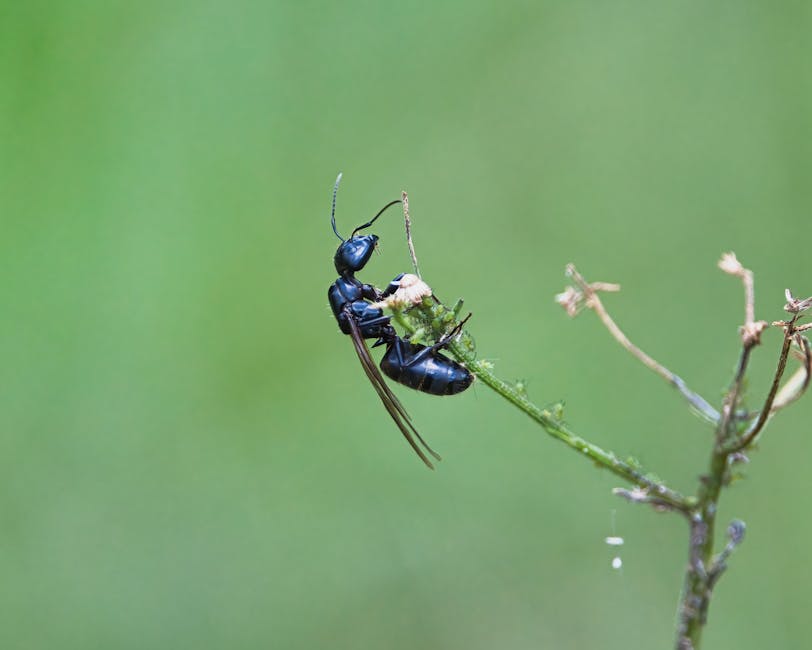
We’ve also been seeing more Florida carpenter ants in recent years – climate change bringing unwanted neighbors north! These distinctive invaders sport a reddish head and thorax paired with a black abdomen, creating a two-toned appearance that makes them easier to identify even for the untrained eye.
When you’re trying to confirm whether those large red ants in house areas are indeed carpenter ants, look for these telltale signs:
- A single node (small bump-like structure) between the thorax and abdomen
- Smoothly rounded thorax profile when viewed from the side
- “Elbowed” antennae with 12 segments
- Workers of varying sizes within the same colony – some might be twice as large as others!
Unlike termites (which cause similar damage but look quite different), carpenter ants have clearly defined body segments and distinctly elbowed antennae. If you happen to spot winged reproductive ants (often called “swarmers”) around your windows in spring or summer, check their wings – carpenter ants have unequal wing pairs, with the front wings noticeably larger than the hind wings.
Correctly identifying these wood-excavating invaders is crucial for effective treatment. At Waltham Pest Control, we’ve been helping homeowners identify and eliminate large red ants in house problems for over four decades, and we’ve seen how easily they can be confused with other pests. When in doubt, it’s always worth getting a professional opinion – what looks like a simple ant problem could be the warning sign of moisture issues or structural concerns that need addressing.
Why Large Red Ants Invade Homes
Finding large red ants in house settings can feel like a mystery—why did they choose your home? As it turns out, carpenter ants aren’t random invaders; they’re looking for specific conditions that your home might unfortunately provide.
Moisture Problems
Water is like a magnet for carpenter ants. These insects are naturally drawn to damp environments, which is why moisture issues in your home can quickly become an invitation for an ant invasion.
Have you noticed a leaky pipe under your sink? That small drip might seem insignificant to you, but it’s creating the perfect environment for carpenter ants. Similarly, poor ventilation in bathrooms or basements creates humid conditions these ants love. Even something as simple as clogged gutters can lead to water seeping into wooden structures around your home’s exterior, creating an ant paradise.
Many homeowners don’t realize that condensation on windows and pipes provides enough moisture to attract these pests. It’s these seemingly minor moisture issues that often lead to major ant problems.
Nesting Habits
Carpenter ants are fascinating in how they organize their colonies—and understanding this can help you tackle an infestation more effectively.
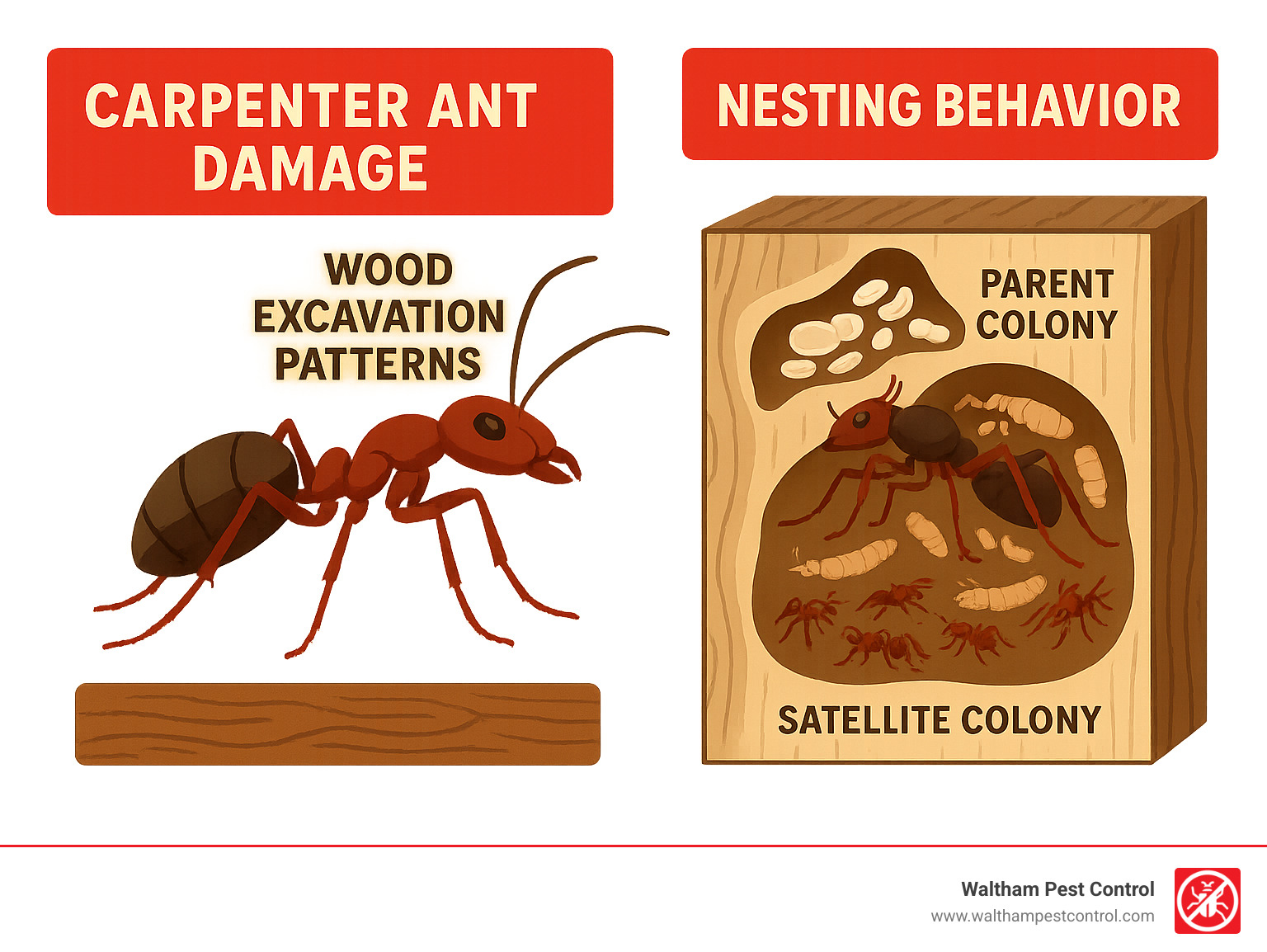
These industrious insects create two distinct types of nests: parent colonies and satellite colonies. The parent colony houses the queen, eggs, and young ants, while satellite colonies contain worker ants and older larvae. This dual-colony system allows them to expand their territory throughout your home.

Their preferred nesting spots? Large red ants in house settings typically make their homes in moist, decaying wood—think window frames, door frames, and roof eaves. They’re also fond of wall voids (especially near water sources), hollow doors, insulation, and even the spaces behind bathroom tiles. Areas with foam insulation can be particularly appealing to them as well.
What makes carpenter ants especially tricky to eliminate is their networking ability. A single home might host multiple interconnected colonies, creating an extensive ant highway system hidden within your walls. Without professional intervention, you might address one colony while missing several others.
Food Sources
Unlike termites, carpenter ants don’t actually eat wood—they just excavate it to create their homes. These ants are omnivores with quite the diverse palate.
Their sweet tooth draws them to sugary substances like honey, syrup, and fruit juice spills in your kitchen. They’re equally attracted to protein sources, happily feasting on other insects, meat scraps, or that pet food you left out overnight. Even tiny crumbs and food residue that you might not notice can provide a feast for these industrious insects.
Carpenter ants are primarily nocturnal foragers, becoming most active after dark. If you’ve ever flipped on your kitchen light in the middle of the night and spotted a line of large ants scurrying away, you’re likely witnessing carpenter ants on their nightly food run.
Understanding these three key attractants—moisture, shelter, and food—helps explain why these unwanted guests have chosen your home. More importantly, this knowledge forms the foundation for effective prevention and treatment strategies we’ll explore in the following sections.
Effective Strategies for Managing Large Red Ants in House
Finding large red ants in house settings can feel like a losing battle, but don’t worry—you’ve got options! While calling in the professionals offers the most thorough solution (more on that later), there are several approaches you can take right now to start addressing the problem.
DIY Solutions
When it comes to tackling carpenter ants yourself, moisture control is your best friend. These pests are absolutely drawn to damp environments, so start by fixing those leaky pipes under the sink or in the bathroom. Improving ventilation in naturally humid areas like basements can make a huge difference too. I’ve seen countless homes where simply installing a dehumidifier transformed previously ant-friendly spaces into environments they avoid.
Next, focus on eliminating what’s drawing them in—food! Carpenter ants have quite the sweet tooth, so wiping up spills promptly and storing sugary items in airtight containers can reduce their interest in your kitchen. Don’t forget about pet food either—that bowl of kibble left out overnight is like a 24-hour buffet for foraging ants.
Creating physical barriers might sound obvious, but it’s often overlooked. Those tree branches touching your roof? They’re essentially ant highways leading directly into your home. Trim them back! Sealing cracks around windows and door frames not only improves your energy efficiency but blocks tiny entry points these determined insects use to invade.
Borax Solution
If you’re looking for a more direct approach, a simple borax solution can work wonders for smaller infestations. By mixing 1 part borax with 3 parts sugar and adding just enough water to create a syrupy consistency, you create a tempting treat that worker ants will happily carry back to their colony.
Place small amounts near ant trails—but please keep it well away from curious pets and children! This method requires patience, as it may take weeks to see results, and it won’t necessarily reach all satellite colonies hidden within your walls. Consider it a supplemental approach rather than a complete solution.
Integrated Pest Management
For truly effective control, nothing beats an integrated pest management (IPM) approach. This comprehensive strategy combines habitat modification (fixing those moisture issues), exclusion techniques (sealing entry points), and targeted treatments.
One helpful tip many homeowners don’t know: carpenter ants are primarily nocturnal. Grab a flashlight after dark and follow their trails—you might be surprised to find exactly where they’re coming from and going to. This nighttime detective work can help you target your efforts more effectively.
While DIY methods can help manage minor infestations, carpenter ants are persistent creatures with complex colony structures. When satellite colonies are established throughout your home, professional intervention often becomes necessary for complete elimination. At Waltham Pest Control, we’ve seen even the most diligent DIY efforts fall short against well-established carpenter ant colonies—but don’t worry, that’s where we come in with specialized tools and expertise!
Professional Pest Control Solutions
While DIY methods can help with minor infestations, established large red ants in house problems typically require professional intervention. At Waltham Pest Control, we’ve been eliminating carpenter ant infestations in Eastern Massachusetts homes for over four decades.
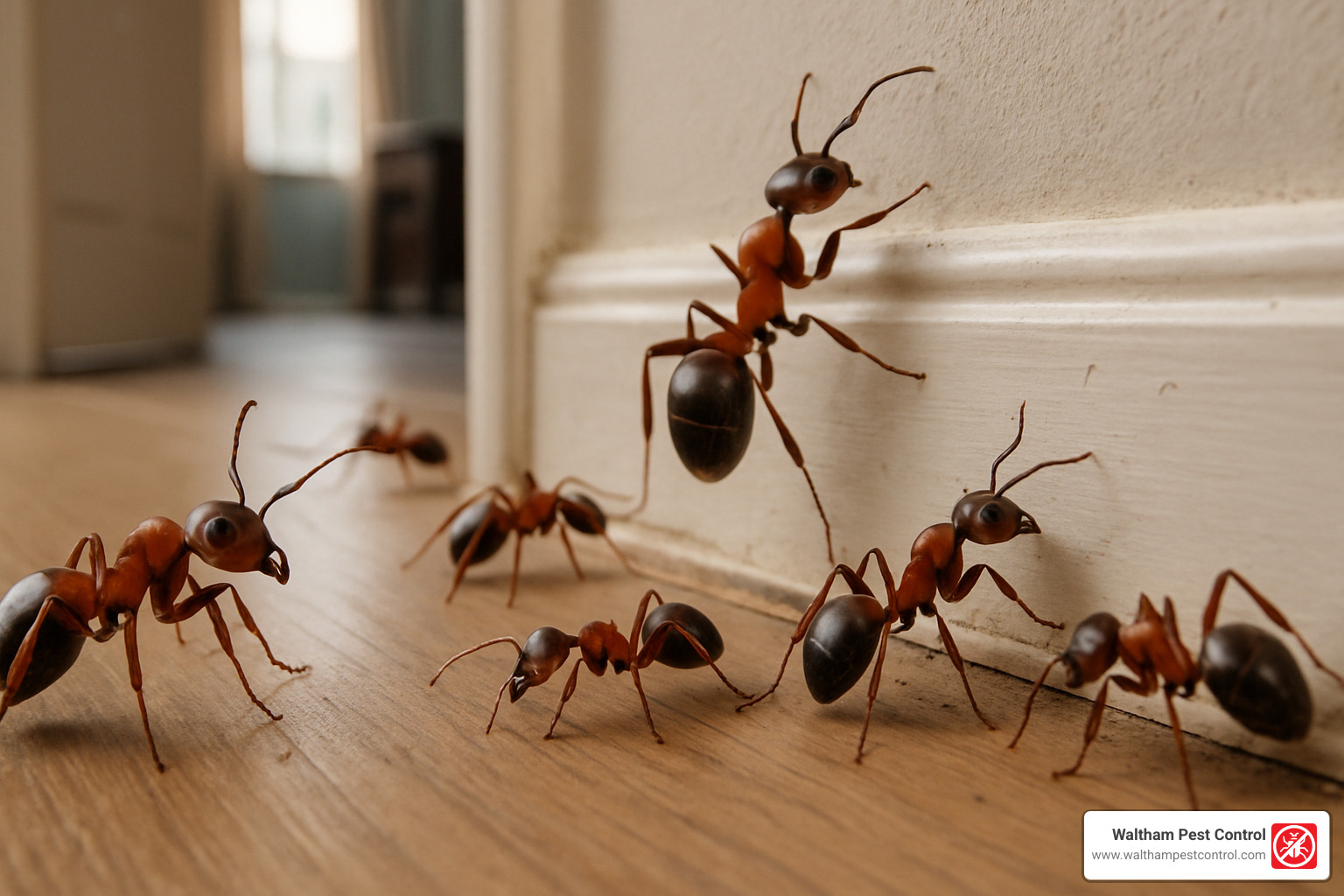
When you’re dealing with persistent carpenter ants, our team brings something DIY approaches simply can’t match: experience and specialized tools. We’ve seen it all—from simple trail-following workers to complex multi-colony infestations hiding deep within wall voids.
Our carpenter ant control process starts with a comprehensive inspection. This isn’t just a quick walk-through—our technicians carefully examine your entire property, looking for the subtle signs most homeowners miss. We use specialized equipment to detect ant activity inside walls and other hard-to-reach areas where satellite colonies often hide.
Based on what we find, we develop a customized treatment plan custom to your specific situation. No two infestations are exactly alike, which is why cookie-cutter approaches often fail. We might use precision applications of residual insecticides along ant trails, apply non-repellent barriers that hitchhiking ants carry back to their colonies, or place professional-grade bait stations for long-term control.
What truly sets our approach apart is our attention to the underlying causes. We provide structural recommendations to address the moisture issues and damaged wood that attracted the ants in the first place. Without fixing these problems, even the best treatments will only offer temporary relief.
Carpenter ant control isn’t a one-and-done proposition. That’s why our service includes follow-up monitoring to ensure complete elimination of all colonies. These persistent pests can rebound if even a small satellite colony remains untreated.
As licensed pest management professionals serving communities throughout Middlesex County, Essex County, Merrimack Valley, and Norfolk County, we bring specialized knowledge and access to professional-grade products that simply aren’t available to consumers.
Our technicians understand the behavior patterns of the specific carpenter ant species found in Massachusetts homes. This local expertise allows for more precise and effective treatment strategies that address the unique challenges of large red ants in house situations in our region.
The peace of mind that comes from knowing your home is protected by licensed, insured professionals makes professional treatment the cost-effective choice for most homeowners facing carpenter ant problems.
Frequently Asked Questions about Large Red Ants
Do large red ants bite?
Yes, carpenter ants can definitely bite when they feel threatened. Their powerful mandibles are strong enough to break skin, and they often spray formic acid into the wound, which creates that distinctive burning sensation many people describe. While certainly uncomfortable, large red ants in house bites aren’t typically dangerous unless you happen to have an allergic reaction.
Unlike their fiery cousins (fire ants), carpenter ants don’t have stingers. That painful feeling comes from a one-two punch: first the pinch from their strong mandibles, then the formic acid they squirt into the tiny wound. If you’ve been bitten, you’ll likely experience a sharp initial pain, some redness at the bite site, mild swelling, and a burning sensation that might stick around for 30 minutes to an hour.
For most folks, carpenter ant bites heal up just fine without any special treatment. Simply washing the area with soap and water and applying a cold compress can help take the edge off the discomfort while it resolves.
How to prevent large red ants from entering your home?
An ounce of prevention is worth a pound of carpenter ant treatment! Here’s how you can keep those large red ants in house problems from happening in the first place:
Moisture control is absolutely essential since dampness is like a welcome mat for carpenter ants. Fix leaky roofs, pipes, and faucets promptly before they create the moist environment these ants love. Ensure proper ventilation in naturally humid areas like attics, crawl spaces, and basements. Consider using dehumidifiers in particularly damp spaces, and keep your gutters and downspouts clean so water moves away from your foundation rather than pooling around it.
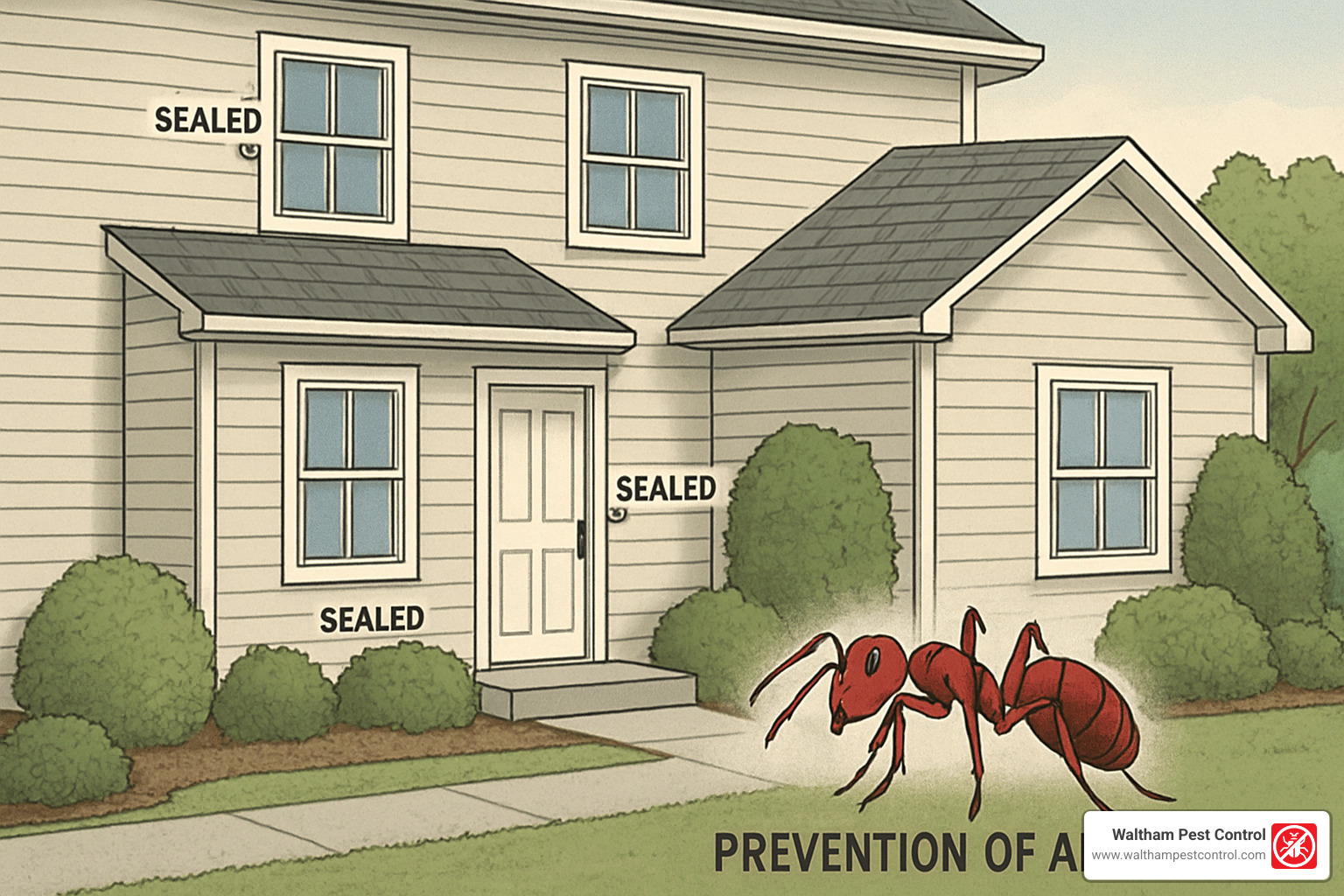
Sealing entry points shuts the door on ant invasions before they start. Take time to caulk cracks and gaps around windows, doors, and utility penetrations. Install door sweeps on exterior doors to eliminate those under-door gaps. Repair damaged screens on windows and vents, and carefully seal openings around pipes and wires that enter your home.
Your landscape management practices can make a big difference too. Keep tree branches trimmed at least 6 feet from your roof to eliminate natural bridges. Remove dead stumps and logs from your property since they make perfect natural nesting sites. Store firewood liftd and away from your house, and maintain a vegetation-free zone of about 12-18 inches around your foundation.
Regular inspections can catch problems early. Take a walk around your home’s exterior seasonally, looking for signs of ant activity. Pay special attention to areas with known moisture issues, and keep an eye out for that sawdust-like frass, which is a telltale sign that carpenter ants have moved in.
Are large red ants dangerous?
While not as immediately threatening as some household pests, large red ants in house situations do raise several legitimate concerns.
First, there’s the structural damage aspect. Over time, carpenter ants can cause significant damage to wooden structures in your home. Unlike termites, they don’t actually eat the wood—they excavate it to create their nesting galleries. This hollowing-out process can eventually weaken structural elements if left unchecked for too long.
There’s also the impact on property value to consider. Extensive carpenter ant damage might require costly repairs and can definitely affect your home’s value when it comes time to sell. Home inspectors are trained to look for signs of these wood-destroying insects.
The moisture issues that attract carpenter ants often lead to secondary problems too. Where there’s excess moisture, there’s potential for mold growth, and those damp conditions can attract other unwelcome pests as well.
And yes, those defense mechanisms we mentioned earlier come into play when carpenter ants feel threatened. While rarely serious, their bites can be quite painful and uncomfortable, especially for children or those with sensitivities.
People often confuse carpenter ants with fire ants, which are more aggressive and deliver truly painful stings. True fire ants are less common in Massachusetts but can be found in some areas. If you’re not sure exactly what kind of ant has moved into your home, our experienced technicians at Waltham Pest Control can provide accurate identification and custom treatment recommendations.
For more detailed information about carpenter ants and their biology, you can visit the University of Minnesota Extension website, which provides excellent scientific resources about these pests.
Conclusion
When it comes to dealing with large red ants in house problems, taking a comprehensive approach is essential. These unwelcome visitors aren’t just a momentary annoyance—they’re often a sign of underlying moisture issues that need addressing. While those DIY solutions we discussed might help with minor infestations, let’s be honest: established carpenter ant colonies are stubborn and typically require professional expertise to fully eliminate.
I’ve seen how these persistent pests can establish multiple satellite colonies throughout homes, making complete elimination challenging without specialized knowledge and tools. That’s where we at Waltham Pest Control shine. For over 40 years, we’ve been helping homeowners throughout Eastern Massachusetts solve their carpenter ant problems with lasting results.
Our licensed technicians don’t just treat the symptoms—we identify and address the root causes of your ant problem. We’ll conduct a thorough inspection, develop a customized treatment plan, and provide practical recommendations to prevent future infestations. Plus, we use professional-grade products that simply aren’t available to consumers.
From the historic homes of Cambridge to the coastal properties of Quincy, from Burlington to Salem, and throughout Middlesex County, Essex County and beyond, we’ve helped countless homeowners reclaim their spaces from these wood-excavating invaders.
Large red ants in house situations are more than just a nuisance—they’re a warning sign. Those carpenter ants could be quietly causing structural damage within your walls while indicating moisture issues that could lead to mold and other problems down the road.
Don’t wait until you’re facing costly repairs. If you’re spotting these large red invaders in your home, give us a call. Our team at Waltham Pest Control is ready to provide the expert, cost-effective pest management solutions you need, all backed by our unwavering commitment to quality and customer satisfaction.
After all, your home deserves the same level of protection and care that we’d want for our own families. Let us help you create an ant-free environment where you can truly relax and enjoy your space.
