

How to Treat Yard for Ticks: 7 Powerful Ways in 2025
Why Massachusetts Homeowners Must Take Tick Control Seriously
How to treat yard for ticks requires a strategic approach combining chemical treatments, habitat modification, and ongoing maintenance to protect your family from dangerous tick-borne diseases.
Quick Answer: Essential Steps to Treat Your Yard for Ticks
- Inspect your property – Use tick drags and flashlight checks to identify problem areas
- Apply perimeter treatments – Spray EPA-registered acaricides along yard edges and shady areas in May-June
- Modify the landscape – Keep grass short, remove leaf litter, create 3-foot wood chip barriers
- Target tick hosts – Use tick tubes for mice, install deer fencing, relocate bird feeders
- Reapply seasonally – Treat again in fall and after heavy rain for 6-8 weeks of protection
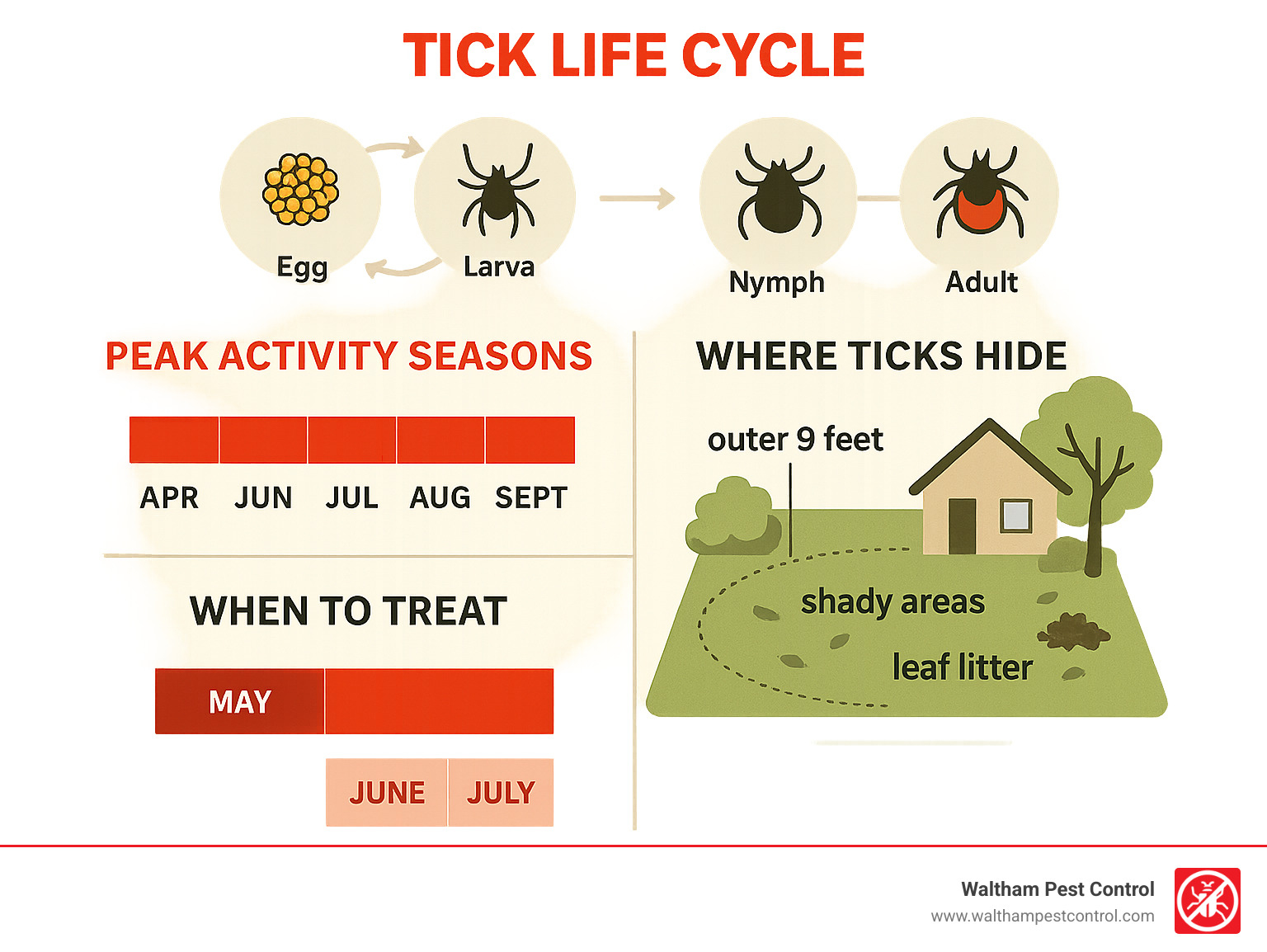
The statistics are alarming for Massachusetts residents. Immature ticks called nymphs cause 98% of all tick bites, and 75% of tick encounters happen during normal home activities like gardening or playing with pets. Even more concerning – over 80% of ticks stay within the outer 9 feet of your lawn, making your property’s perimeter the critical battleground.
Ticks aren’t just a nuisance – they’re disease vectors carrying Lyme disease, Rocky Mountain spotted fever, and Powassan virus. With tick activity peaking from April through September, the window for effective treatment is narrow but crucial.
The good news? A single well-timed spray application in May or early June can reduce tick populations for 6-8 weeks when combined with proper landscaping techniques. Professional-grade treatments targeting yard perimeters, shady beds, and woodland edges prove most effective.
I’m Waltham Pest Control, President & CEO of Waltham Pest Control, and over my 40+ years in Eastern Massachusetts pest management, I’ve seen how to treat yard for ticks effectively using integrated approaches that protect families while preserving beneficial insects.
Basic how to treat yard for ticks glossary:
– best tick repellent for yard
– tick and mosquito
– flea and tick control services
Why Controlling Ticks Matters & When to Act
Living in Massachusetts means sharing our beautiful outdoors with some unwelcome guests. Ticks in our region carry serious diseases that can change lives – Lyme disease, Rocky Mountain spotted fever, and Powassan virus are all real threats lurking in our backyards.
Here’s what really gets my attention after four decades in pest control: 98% of tick bites come from tiny nymphs that are barely the size of a poppy seed. You literally can’t see them coming. Even more surprising? A whopping 75% of tick encounters happen right at home – not on hiking trails or camping trips, but while you’re gardening, playing with the kids, or walking the dog.
The science behind preventing ticks in the yard shows us something encouraging though. More than 80% of ticks hang out within the outer 9 feet of your property, especially around low shrubs and ground cover. This clustering makes how to treat yard for ticks much more manageable – you don’t need to spray your entire acre, just focus on these high-traffic zones.
Creating that famous 3-foot barrier between your lawn and wooded areas isn’t just old wives’ wisdom. It’s a proven strategy that acts like a moat around your castle, giving you a clear visual boundary and making ticks think twice about crossing into your space.
When Ticks Are Most Active
Timing is everything when it comes to tick control. These little vampires follow a predictable schedule that smart homeowners can use to their advantage.
Spring brings the nymph invasion – and this is when you need to be ready. From late April through June, millions of hungry nymphs emerge from their winter hideouts. This is your golden window for treatment, particularly May through early June, when a single well-timed spray can protect your family for 6-8 weeks.
Fall delivers a second wave as adult ticks make their final push before winter. August through October sees another surge, though these adults are easier to spot than their spring cousins.
The magic number is 45°F – when soil temperatures hit this mark consistently, ticks wake up and start hunting. In our neck of the woods, that usually means late April is go-time.
Where Ticks Hide in Yards
After treating thousands of Massachusetts properties, I can tell you exactly where ticks love to hang out. They’re creatures of habit, and once you know their favorite spots, how to treat yard for ticks becomes much more strategic.
The outer edge of your lawn is tick central – especially that transition zone where your nice grass meets the wild world of woods or overgrown areas. Shady perennial beds with thick ground cover are like five-star hotels for ticks, offering the perfect combination of humidity and protection.
Leaf litter is their winter resort – anywhere leaves pile up under decks, along fence lines, or around tree bases becomes tick real estate. Those charming stone walls that define so many New England properties? The gaps between stones create perfect humidity pockets that ticks adore.
Don’t forget about low-hanging shrubs and bushes – anything that might brush against you, your kids, or pets as you walk by. The good news? Ticks hate the center of sunny, well-maintained lawns.
How to Treat Yard for Ticks: Step-By-Step Action Plan
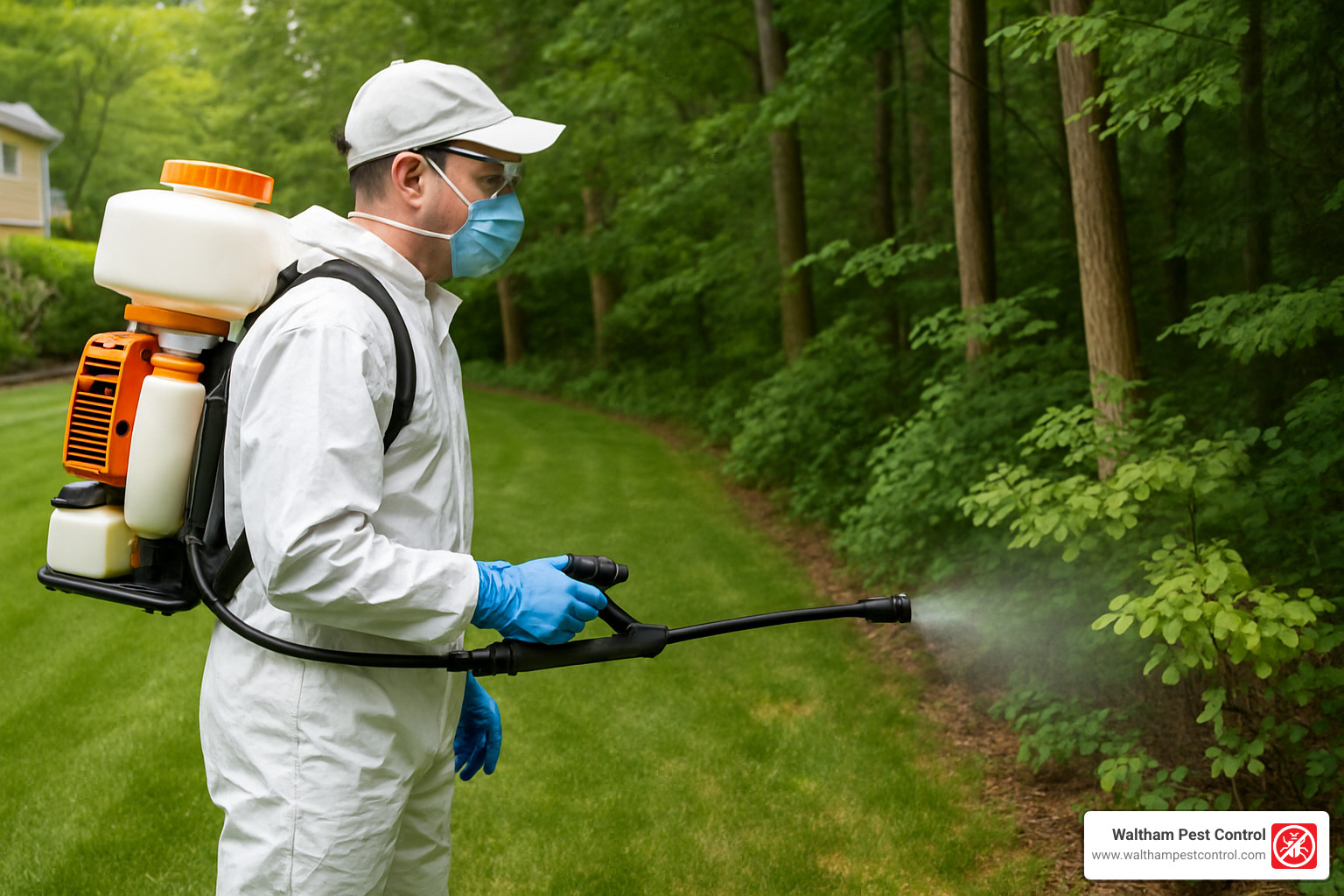
Now that you understand when and where ticks hide, let’s get into the practical steps for how to treat yard for ticks effectively. The key is targeting the right areas with the right products at the right time – not just spraying everywhere and hoping for the best.
The most effective approach combines targeted perimeter spraying with habitat modification. Think of it like creating a protective shield around your family’s outdoor spaces rather than carpet-bombing your entire property. This focused strategy is both more effective and environmentally responsible.
Professional treatments typically rely on EPA-registered acaricides applied to the outer perimeter and known tick hotspots. However, biological options like Metarhizium fungi and natural deterrents like cedar oil are gaining popularity among families seeking gentler alternatives.
The Tick Management Handbook PDF provides detailed technical information, but I’ll walk you through the practical steps that actually work in real Massachusetts backyards.
Step 1: Inspect – how to treat yard for ticks starts with scouting
You wouldn’t paint a house without looking at it first, and the same logic applies to tick control. Smart scouting saves you time, money, and prevents unnecessary chemical applications in areas where ticks don’t actually live.
The tick drag method is surprisingly simple and effective. Take a light-colored piece of flannel cloth – an old pillowcase works perfectly – and attach it to a long stick or pole. Drag this slowly through your grass and vegetation, especially along edges and shady spots. Check the cloth every few yards, and you’ll be amazed at what you find.
Flashlight inspections work best during evening hours when ticks are actively “questing” – that’s the technical term for how they perch on vegetation with their front legs extended, waiting for a host to brush by.
Don’t forget to inspect your pets after they’ve been outside. Dogs and cats are excellent tick detectors because they explore all the same areas where your family spends time.
Map your findings using your phone’s camera or a simple sketch. This creates a targeted treatment plan instead of guessing where to spray.
Step 2: Choose Your Treatment Arsenal
The beauty of modern tick control is having options that fit different comfort levels and situations. There’s no single “best” approach – the right choice depends on your family’s needs, environmental concerns, and the severity of your tick problem.
EPA-registered acaricides remain the gold standard for effectiveness. Products containing pyrethroids like bifenthrin or permethrin provide excellent control with a 6-8 week residual effect. These synthetic compounds break down naturally in soil while delivering reliable tick knockdown.
For families preferring biological approaches, Metarhizium fungi offers fascinating possibilities. This naturally occurring soil fungus specifically targets ticks and other arthropods without harming beneficial insects or pollinators. The downside? It works more slowly and requires more frequent applications than chemical options.
Natural alternatives like cedar oil sprays work by suffocating ticks on contact, while diatomaceous earth creates microscopic cuts that dehydrate them. These options require more frequent reapplication but provide peace of mind for families with young children or sensitive pets.
Tick tubes deserve special mention as one of the cleverest innovations in tick control. These cardboard tubes filled with permethrin-treated cotton target mice – the primary hosts for juvenile ticks. Mice collect the cotton for nesting material, which then kills ticks feeding on them.
For detailed comparisons of available products, our guide on best tick repellent for yard covers the pros and cons of each option for Massachusetts homeowners.
Step 3: Reapply – how to treat yard for ticks through the seasons
Here’s where many DIY efforts fall short – understanding that how to treat yard for ticks requires consistent follow-through. Even professional-grade treatments don’t last forever, and seasonal tick cycles demand strategic timing.
Proper sprayer calibration makes the difference between success and disappointment. Most effective treatments require about 4 gallons of finished solution per 1,000 square feet. Too little coverage leaves gaps where ticks survive; too much wastes product and increases environmental impact.
The May-June treatment window targets nymphs when they’re most vulnerable and before peak disease transmission begins. This single well-timed application often provides protection through the worst of tick season.
Fall treatments in August or October catch adult ticks as they become active again. While adults are easier to spot and remove, they still carry diseases and lay eggs for next year’s population.
Weather resets the clock on your treatments. Heavy rainfall – anything over an inch – can wash away residual protection and require reapplication.
Safe Application Around Kids, Pets & Pollinators
When you’re learning how to treat yard for ticks, safety comes first. EPA-registered products work well, but only when you respect the label.

Must-Do Safety Basics
- Read the entire label before mixing.
- Wear long sleeves, pants, chemical-resistant gloves and eye protection.
- Treat on wind-free days (under 10 mph) with no rain in the 24-hour forecast.
- Keep children, pets and toys indoors until sprays are dry.
The EPA Citizen’s Guide to Pesticide Safety is a quick, plain-language reference every DIYer should bookmark.
Re-entry Time
Most labels require people and pets to stay off treated areas until completely dry—usually 12–24 hours. High humidity lengthens, warm breezes shorten, that drying window. Wait the full day before mowing so you don’t clip off product you just applied.
Protecting Pollinators
- Apply in the evening when bees have returned to hives.
- Skip flowering plants; focus on leaf litter and shady edges where ticks live.
- Consider Metarhizium fungi or cedar oil in sensitive pollinator gardens.
Quick PPE & Cleanup Checklist
- Label read? ✔️
- Weather checked? ✔️
- Gloves, long sleeves, goggles on? ✔️
- Toys, bowls, furniture removed? ✔️
- Equipment cleaned and leftover product stored in original container? ✔️
Following these simple steps turns a potentially risky chore into a safe, family-friendly routine.
Tick-Proof Landscaping & Non-Chemical Barriers
Good landscaping forces ticks to look elsewhere for a meal.

Simple Yard Tweaks That Matter
- Mow to 3 in. or less. Sunlight and short grass dry out ticks.
- Rake leaves weekly. Leaf litter is prime real estate for nymphs.
- Trim shrubs under 8 in. More airflow, less humidity.
- Install a 3-ft chip or gravel strip where lawn meets woods; ticks seldom cross it.
- Use 8-ft deer fencing around gardens or playscapes to stop four-legged couriers.
Shut Down the Tick Taxi Service
- Seal gaps in stone walls with mortar or foam.
- Stack firewood 20 ft from the house on a pallet in a sunny spot.
- Move bird feeders 50 ft from patios so mice aren’t dining where you relax.
- Deploy tick tubes each spring. Mice carry the treated cotton, ticks die—mice live.
- Secure trash cans with tight lids to deter raccoons and opossums.
Year-Round Maintenance Snapshot
- Spring (Mar–May): First mow, rake, perimeter spray, place tick tubes.
- Summer (Jun–Aug): Mow bi-weekly, trim shrubs, spot-check with tick drags.
- Fall (Sep–Nov): Second spray, final mow, heavy leaf cleanup.
- Winter: Plan upgrades, service equipment.
Need help with larger projects? Our integrated flea and tick control services combine these landscape tactics with targeted treatments for maximum impact.
Frequently Asked Questions about How to Treat Yard for Ticks
Do yard treatments lower Lyme disease risk?
They lower the number of ticks in treated areas for 6–8 weeks, reducing bites during everyday yard use. You still need personal protection when you leave your property.
How often should I spray?
- Chemical acaricides: 2× per season (May/Jun & Aug/Sep). Reapply sooner if an inch of rain falls within 24 hours.
- Metarhizium fungi: Monthly during active season.
- Tick tubes: Once a year in early spring.
- Natural repellents (cedar oil, diatomaceous earth): Every 2–3 weeks or after rain.
What kills ticks but spares bees?
- Metarhizium fungi target ticks, not pollinators.
- Evening-only spraying keeps bees out of harm’s way.
- Cedar oil suffocates ticks and is bee-safe after it dries.
- Tick tubes affect only mice and the ticks on them.
Focus treatments on shaded borders and leaf litter rather than flowering plants, and you’ll protect both your family and your pollinator friends.
Conclusion
Mastering how to treat yard for ticks isn’t about finding one magic solution – it’s about creating a comprehensive defense system that works year after year. Think of it like building layers of protection around your family, where each layer makes the others more effective.
The science backs up what we’ve seen in over four decades of protecting Eastern Massachusetts families: combining targeted perimeter treatments with smart landscaping choices delivers the most reliable tick control. When you spray those outer 9 feet where ticks concentrate, maintain short grass, and create physical barriers, you’re addressing the problem from multiple angles.
Here’s what makes the difference between occasional tick encounters and serious infestations: consistency. The homeowners who succeed with tick control are the ones who treat it like brushing their teeth – a regular habit rather than a crisis response. Two well-timed treatments per year, combined with ongoing landscape maintenance, can dramatically reduce your family’s tick exposure.
Safety never takes a backseat in our approach. Whether you’re mixing up a pyrethroid spray or deploying tick tubes around your property, following label directions and using proper protective equipment isn’t optional – it’s essential. Most treatments need 12-24 hours to dry completely before kids and pets can safely return to treated areas.
After helping hundreds of families from Lexington to Lynnfield protect their properties, we’ve learned that every yard has its own personality. Some properties battle heavy deer pressure, others deal with mouse populations that seem to multiply overnight. The most effective tick control programs adapt to these unique challenges rather than applying one-size-fits-all solutions.
The investment you make in proper tick control pays dividends that extend far beyond avoiding itchy bites. With Lyme disease and other tick-borne illnesses becoming increasingly common throughout New England, protecting your property is really about protecting your family’s long-term health and quality of life.
If you’re feeling overwhelmed by all the options or just want the peace of mind that comes with professional expertise, that’s exactly why we’re here. Our team understands the specific challenges of Massachusetts tick control – from the timing of nymph emergence to the landscape features that create tick highways into your yard.
Ready to take the next step? Our comprehensive tick control services near me page explains how we customize tick management programs for each property’s specific needs and your family’s lifestyle.
The best tick control program is one that fits seamlessly into your life. Start with what feels manageable – maybe that’s a spring perimeter treatment and keeping your grass shorter. Build confidence with small wins, then expand your approach as you see results.
Your family deserves to enjoy your yard without worrying about dangerous tick encounters. With the right combination of knowledge, timing, and consistent effort, you can make that happen.
