

The Safe Way to Eliminate Wasp Nests
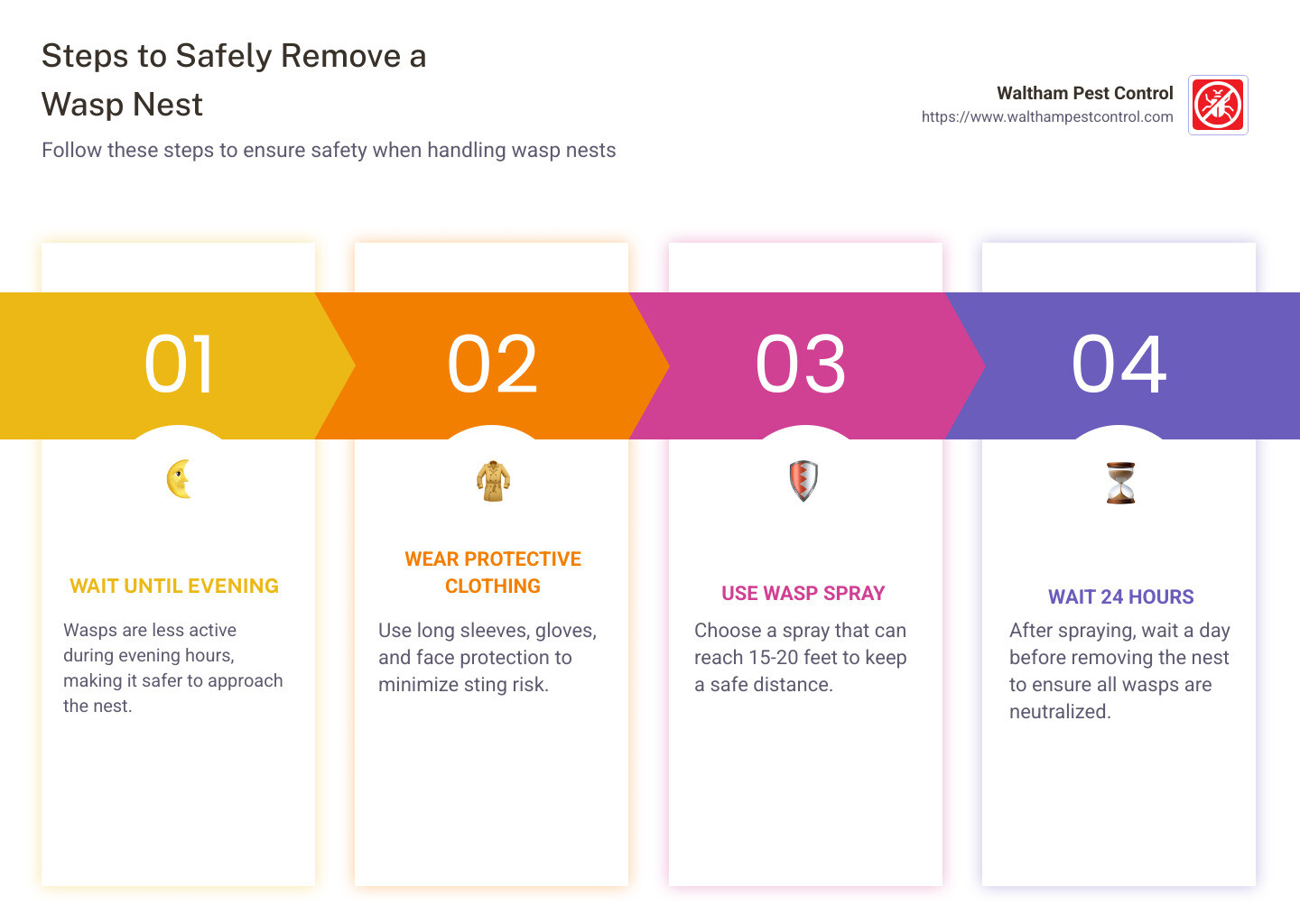
How to get rid of wasp nests safely and effectively:
- Wait until evening when wasps are less active
- Wear protective clothing including long sleeves, gloves, and face protection
- Use wasp spray designed to reach 15-20 feet away from a safe distance
- Apply insecticide directly to the nest entrance
- Wait 24 hours before removing the dead nest
- Call professionals for large nests, high locations, or if you’re allergic
Few things can ruin a peaceful summer day like finding a wasp nest on your property. How to get rid of wasp nests is a common concern for homeowners, and for good reason. These defensive insects can deliver painful, sometimes dangerous stings when they feel their colony is threatened.
While DIY removal might seem tempting, it’s important to understand the risks involved. Wasps can become extremely aggressive when their nest is disturbed, and they can sting multiple times, unlike honeybees. Some species, like yellowjackets, may even pursue a perceived threat for up to 500 meters!
Safety should always be your primary concern when dealing with wasps. Improper removal attempts using fire, water, or physical force can not only provoke attacks but also cause property damage. If you have allergies to wasp stings, are dealing with large nests, or if the nest is in a difficult-to-reach location, professional removal is strongly recommended.
I’m Waltham Pest Control, President & CEO of Waltham Pest Control with over 40 years of experience in safely eliminating wasp nests and other pest infestations throughout Eastern Massachusetts, and I’ve personally overseen thousands of professional how to get rid of wasp nests operations using our integrated pest management approach. Our trained technicians know exactly how to address these situations safely and effectively.
Must-know how to get rid of wasp nests terms:
– hornet nest removal
– wasp pest control
– clearing wasps nests
Understanding Wasps and Their Nests
Ever walked outside to enjoy a beautiful summer day only to hear that distinctive buzzing sound that sends shivers down your spine? That’s the moment you realize you’re sharing your property with wasps. Before you panic, let’s take a moment to understand these misunderstood (but admittedly intimidating) insects that might have taken up residence around your home.
Types of Wasps in Massachusetts
If you’re dealing with wasps in Eastern Massachusetts, you’re likely encountering one of three main types:
Paper Wasps are the more laid-back members of the wasp family (though I’d still keep my distance!). They build those distinctive open, umbrella-shaped nests that look like they’re made of paper—because they actually are! Their colonies are relatively small, usually housing just a few dozen workers. You can spot paper wasps by their slender bodies measuring about ½ to ¾ inch long and their distinctive dangling legs during flight.
Yellowjackets are the wasps with attitude problems. These more aggressive insects build enclosed nests that can become massive—housing between 1,000 and 5,000 wasps when the colony peaks. About ½ inch long with bright yellow and black markings, yellowjackets are the uninvited guests at your summer picnic. They’re particularly troublesome because they often build nests in hidden locations like underground rodent burrows, inside wall voids, or tucked away in attics.
Bald-Faced Hornets might sound like a different insect altogether, but they’re actually a type of yellowjacket. These impressive architects build large, football-shaped paper nests that can house up to 700 wasps. They stand out with their black bodies and distinctive white markings on their face and body, measuring ½ to ⅝ inch in length.
Wasp Lifecycle and Behavior
Understanding how wasps live can help you know when and how to get rid of wasp nests effectively. According to entomologist Justin Schmidt (yes, the guy who created the insect sting pain index by letting insects sting him—talk about dedication!), wasp colonies follow a predictable annual pattern:
In spring, new queens emerge from hibernation, shaking off their winter slumber to begin building nests. By early summer, these queens are laying eggs, and the first worker wasps develop. Late summer sees the colony reaching its peak population, which unfortunately coincides with wasps becoming more aggressive as they compete for food. When fall arrives, new queens are produced; they mate and find cozy places to hibernate. As winter sets in, the original queen, workers, and males die, and the nest is abandoned until the cycle begins again.
“Wasp nests are seasonal and are abandoned in the fall, meaning removal may not be necessary if the risk is low and winter is approaching,” notes Scott McCombe, a pest control specialist. This timing information is crucial when deciding whether immediate action is needed.
Why do wasps seem more aggressive in August and September? It’s not just your imagination. Late summer is when their populations are highest and food sources become scarcer, leading to more human-wasp encounters as they scavenge around picnics, garbage cans, and other human food sources.
Differences Between Wasps and Bees
Before you wage war on every buzzing insect in your yard, it’s important to know whether you’re dealing with wasps or bees. Bees, especially honeybees, are beneficial pollinators that may be protected, so proper identification is key.
Wasps sport slender, smooth bodies with a distinctive narrow waist—think of that classic “hourglass” figure. Bees, on the other hand, are the plumper, fuzzier cousins with hairy bodies designed to collect pollen. While both insects may have yellow and black coloring, wasps typically have brighter, more distinctive markings.
Behaviorally, they couldn’t be more different. Wasps are the predators of the insect world, hunting other insects and scavenging for proteins and sugars. Bees are peaceful plant-lovers, focusing on collecting nectar and pollen from flowers. Perhaps most importantly for anyone who’s been stung: wasps can sting multiple times (ouch!), while most bees can only sting once.
Their homes look different too. Wasp nests are architectural marvels made from chewed wood pulp, creating a papery material. Honeybee nests contain wax combs filled with honey, while bumblebees nest in small colonies in the ground or in dense grass.
If you find what appears to be a honeybee colony, consider contacting a local beekeeper for removal rather than extermination. It’s better for the environment and for our food supply!
Understanding the Differences Between Hornets, Wasps, and Bees for Safe Removal
Why Wasps Build Nests Near Homes
Ever wonder why wasps seem particularly fond of building nests around human dwellings? It’s not because they enjoy your company (sorry!). Your home offers several attractive amenities for wasp real estate:
Shelter is a top priority for wasps, and your home’s eaves, attics, and wall voids provide excellent protection from rain, wind, and extreme temperatures. Food sources abound around human homes—open garbage, pet food, bird feeders, and fallen fruit are all-you-can-eat buffets for hungry wasps. Water access is essential for nest building and survival, making leaky faucets, bird baths, and pools very attractive. Your property likely offers abundant building materials like wood sources for nest construction, and wasps may return to previous nest sites year after year. While they don’t reuse old nests, they may build new ones in the same favorable locations.
“Wasps leave chemical signals when attacked, which can attract more wasps to defend their nest,” explains a pest management expert. This chemical alarm system is one reason why proper removal techniques are essential—and why trying to knock down a nest with a broom is never a good idea!
According to scientific research on wasp behavior, understanding these attraction factors is the first step in both removal and prevention. By identifying what’s drawing wasps to your property, you can take steps to make your home less appealing to these stinging insects.
Understanding wasps isn’t just fascinating—it’s the foundation for safely and effectively dealing with them. Armed with this knowledge, you’re better prepared to assess the situation and determine whether professional help is needed to solve your wasp problem.
Dangers of DIY Wasp Nest Removal
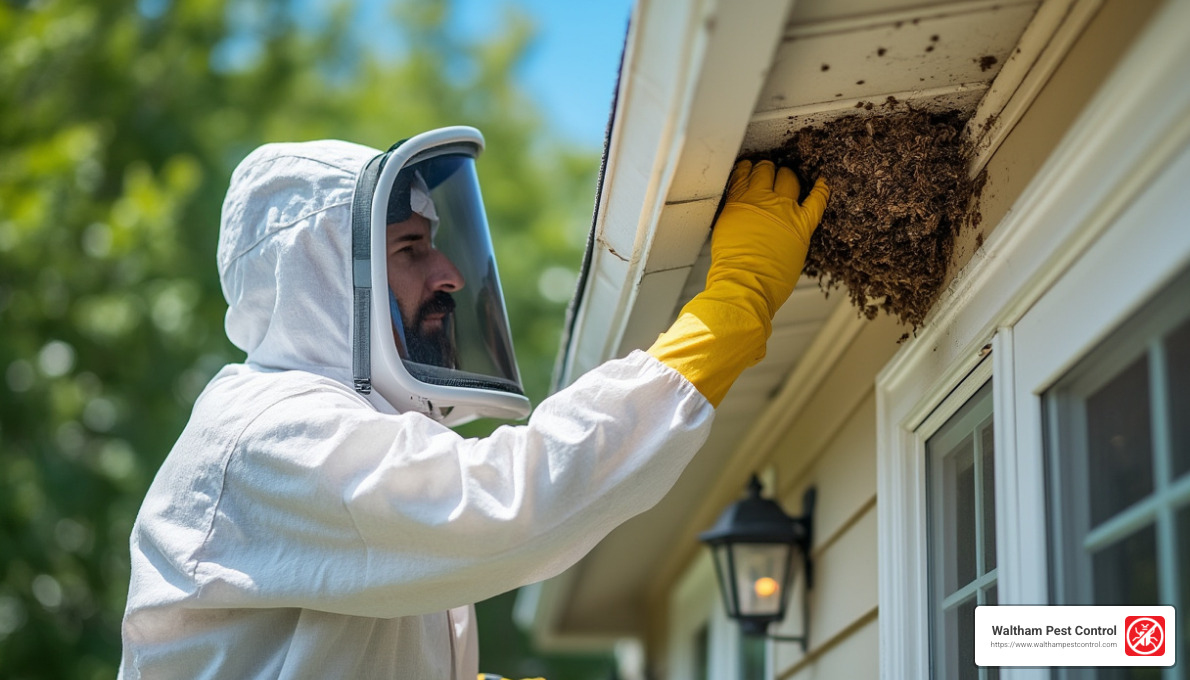
That innocent-looking wasp nest under your eaves might seem like something you can handle yourself. I get it – we all love a good DIY project that saves a few dollars. But when it comes to how to get rid of wasp nests, taking matters into your own hands can quickly turn into a painful lesson you won’t soon forget.
Aggressive Wasp Behavior and Sting Risks
Wasps aren’t just territorial – they’re fiercely protective of their homes. Unlike our fuzzy bee friends who sacrifice themselves with a single sting, wasps can jab you repeatedly without any consequence to themselves. Talk about an unfair fight!
The pain is no joke either. Entomologist Justin Schmidt, who famously allowed himself to be stung by various insects to create the Schmidt Pain Index, rates paper wasp stings a whopping 3 out of 4. He colorfully describes it as “caustic and burning, with a distinctly bitter aftertaste – like spilling hydrochloric acid on a paper cut.” Yellowjacket and bald-faced hornet stings aren’t much better, ranking a solid 2 on his scale.
What makes wasp encounters truly terrifying isn’t just the individual sting, but their coordinated attack strategy. When one wasp feels threatened, it releases alarm pheromones – essentially sending out an “all hands on deck” emergency broadcast to the entire colony. Within seconds, what started as an encounter with a single wasp can escalate into facing dozens or even hundreds of angry defenders.
Yellowjackets take this protective instinct to another level. These striped warriors have been known to chase perceived threats for up to 500 meters – that’s over 1,600 feet of persistent pursuit! As one of our customers memorably put it: “It’s like trying to escape from fighter squadrons—they’ll chase you around obstacles and won’t give up easily.”
Allergic Reactions and Medical Emergencies
For about 5-7% of people, a wasp sting isn’t just painful – it’s potentially deadly. Anaphylactic reactions can develop frighteningly quickly, changing a backyard nuisance into a race to the emergency room.
Even if you’ve never had an allergic reaction before, that doesn’t mean you’re in the clear. First-time reactions can occur, and multiple stings can overwhelm anyone’s system, causing toxic reactions that require immediate medical attention.
The warning signs of a severe reaction include difficulty breathing, facial swelling (especially around the throat), dizziness, nausea, and widespread hives. If you notice these symptoms after being stung, don’t wait – seek emergency care immediately.
Property Damage Risks
The dangers of DIY wasp nest removal go beyond personal injury – your home could suffer serious damage too. I’ve seen well-intentioned homeowners make costly mistakes when attempting to handle wasp problems themselves.
Setting fire to nests might seem effective in theory, but wasp nests are essentially paper – highly flammable paper. One spark can quickly spread to surrounding structures, potentially causing catastrophic damage to your home. We’ve seen small “controlled” fires turn into insurance claims faster than you can say “bad idea.”
Flooding nests with water creates its own problems, especially for nests hidden in attics or wall voids. Water damage to attic beams, insulation, and ceiling drywall can easily cost thousands to repair. Even worse, this method rarely eliminates the entire colony, leaving you with soggy home repairs and angry surviving wasps.
Physical destruction attempts bring you dangerously close to the colony. Larry from Burlington learned this lesson the hard way: “I thought I could knock down the small nest under my deck with a broom handle. Within seconds, I was running across my yard being chased by dozens of angry wasps. I ended up with eight painful stings and still had to deal with the remaining wasps.”
The reality is that effective how to get rid of wasp nests strategies require specific knowledge, proper equipment, and careful timing. Without these elements, you’re risking your health, safety, and property. After 40 years of handling wasp nests throughout Eastern Massachusetts, we’ve seen countless DIY attempts gone wrong – and they almost always end up costing more in the long run than professional removal would have in the first place.
When to Call a Professional: Signs Your Hornet and Wasp Nest Removal Requires Expert Attention
How to Get Rid of Wasp Nests Safely
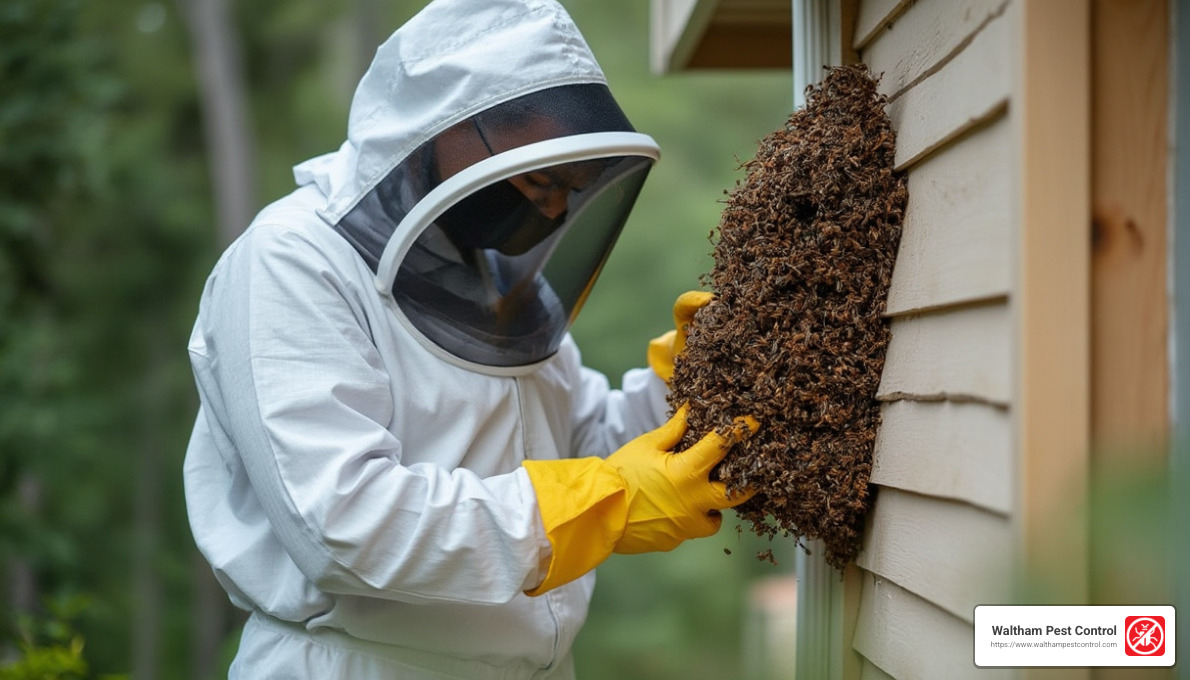
When it comes to how to get rid of wasp nests, safety should always be your number one priority. I’ve seen too many DIY attempts go wrong over my years in the pest control industry. At Waltham Pest Control, we’ve refined our wasp removal techniques through 40+ years of hands-on experience throughout Eastern Massachusetts neighborhoods.
The Professional Approach to Wasp Nest Removal
Think of professional wasp removal as a carefully choreographed dance rather than a chaotic battle. Our technicians don’t just show up and spray—we follow a thoughtful process that begins well before any treatment.
First, we conduct a thorough inspection to identify exactly what we’re dealing with. Is it paper wasps building under your eaves? Yellowjackets nesting in your wall void? Each species requires a different approach. We’ll assess the nest size, location, and potential challenges before developing a plan.
“I remember a particularly tricky removal in Lexington last summer,” shares one of our senior technicians. “The homeowners thought they had a small nest by their back door, but our inspection revealed a massive yellowjacket colony that had expanded through an entire section of their wall. Finding the primary entry points made all the difference in successful elimination.”
Risk assessment comes next—we consider nearby structures, people (especially those with allergies), and pets that might be affected by our treatment plan. Then we select the most appropriate removal method and schedule it during periods of low wasp activity, typically at dusk or dawn when most wasps have returned to the nest.
Our technicians arrive with specialized equipment and protective gear designed specifically for wasp control. Unlike store-bought products, our commercial-grade treatments provide more effective, longer-lasting results with precise application that minimizes environmental impact.
After treatment, we’ll safely remove the nest once we’ve confirmed the colony has been eliminated, and we’ll provide guidance to help prevent future infestations. It’s this comprehensive approach that makes professional removal so much more effective—and safer—than DIY attempts.
Professional Removal Methods
The method we choose depends entirely on your specific situation. For exposed nests like those built by paper wasps or some hornets, we typically use residual insecticides applied with extended reach applicators, allowing our technicians to maintain a safe distance. We target the nest entrance during low activity periods and carefully remove the nest after confirming the colony has been eliminated.
Concealed nests present a different challenge. When yellowjackets build inside wall voids or underground, we might use insecticidal dusts applied directly into nest entrances. These dusts cling to wasps as they enter and exit, gradually eliminating the colony from within. Our specialized equipment can reach nests in difficult locations, and in some cases, we may need to make minor structural modifications to access deeply hidden nests.
We also offer preventative treatments, applying residual barriers around eaves and potential nesting sites before wasps establish colonies. We’ll identify and seal entry points to prevent access to wall voids and suggest habitat modifications to reduce attractants around your property.
Best Time for Wasp Nest Removal
Timing can make or break a wasp nest removal operation. Early morning or evening are ideal times for treatment, when temperatures are cooler and most wasps are inside the nest. Research shows wasp activity significantly decreases when temperatures drop below 50°F (10°C), making these cooler periods safer for removal.
Seasonally speaking, early summer is the sweet spot for nest removal. Colonies are smaller and less established, making the job safer and more straightforward. By August and September, some nests can house thousands of wasps, dramatically increasing the risk and complexity of removal.
“If you find a nest in late fall, sometimes patience is your best strategy,” advises our operations manager. “After the first hard frost, the colony will naturally die off, with only the fertilized queens surviving to hibernate elsewhere. The abandoned nest won’t be reused next year, so you can safely remove it during winter without any risk of stings.”
Eco-Friendly Wasp Control Options
Many of our clients are concerned about environmental impact, and I’m happy to say that effective wasp control doesn’t have to mean drenching your property in chemicals. At Waltham Pest Control, we balance effectiveness with environmental responsibility through several approaches.
We believe in targeted treatments that minimize insecticide use by applying products precisely where needed—and nowhere else. When appropriate, we offer low-toxicity options that have minimal environmental impact while still getting the job done. For certain nest types, we can even employ non-chemical alternatives and physical removal methods.
Our integrated pest management approach combines multiple strategies for long-term control with reduced chemical reliance. This might include not just treating the immediate nest problem but also addressing conditions that attracted wasps in the first place—like uncovered garbage cans or food sources.
“More and more families are asking about eco-friendly options,” notes our environmental specialist. “They’re relieved to learn we can effectively handle their wasp problem while still being mindful of their garden, pets, and the local ecosystem.”
When to Call a Professional: Signs Your Hornet and Wasp Nest Removal Requires Expert Attention
When Should You Call a Professional to Get Rid of Wasp Nests?
While that tiny new nest under your deck might seem manageable, there are clear situations where calling in the pros isn’t just advisable—it’s essential for your safety.
Large established nests should always be professionally handled. As a rule of thumb, anything larger than a softball contains enough wasps to pose a significant danger if disturbed. I’ve seen nests the size of basketballs that housed thousands of defensive wasps—not something anyone should tackle without proper training and equipment.
Nests in hard-to-reach locations require specialized techniques. Whether it’s 20 feet up in a tree, tucked inside a wall void, or buried underground, these situations demand professional equipment and expertise. As one of our technicians puts it, “Balancing on a ladder while angry wasps are swarming isn’t the time to realize you’re in over your head.”
If anyone in your household has known allergies to insect stings, the risk of DIY removal is simply too great. Even a single sting can trigger a life-threatening reaction in sensitive individuals.
The presence of multiple nests indicates a significant infestation that requires comprehensive treatment. Similarly, recurring infestations where wasps repeatedly build in the same area despite removal attempts suggest underlying attractants that need professional assessment.
Yellowjacket or hornet nests should generally be left to professionals. These species are particularly aggressive and their colonies can contain thousands of wasps, making them dangerous for untrained individuals to approach.
Sarah from Cambridge learned this lesson the hard way: “I thought I could handle what looked like a small nest near my garden shed. I didn’t realize yellowjackets can be so aggressive—or that they’d chase me all the way to my back door! After getting multiple stings, I called Waltham Pest Control. Their technician not only removed the nest safely but finded another one I hadn’t even noticed in my compost bin.”
Precautions When Getting Rid of Wasp Nests
Whether you’re assisting one of our professionals or simply observing from a safe distance, understanding proper safety protocols is important for everyone involved in wasp nest removal.
Professional technicians wear specialized protective gear including full-body coveralls, sealed gloves, veiled helmets or face shields, and closed-toe footwear with pant legs secured over them. This comprehensive protection is far more effective than the improvised coverings many homeowners attempt to use.
We follow strict safety protocols that include informing neighbors about planned wasp treatments, keeping pets and children indoors during and after treatment, having emergency response plans in case of unexpected reactions, and working with partners when possible for added safety. These precautions help ensure not just our safety, but yours as well.
After successful removal, proper disposal methods are equally important. Dead wasps and nest materials should be sealed in heavy-duty plastic bags, and equipment thoroughly cleaned after use to prevent cross-contamination. We always follow local regulations for insecticide-treated waste disposal to protect the environment.
“Even after treatment, approach the area cautiously,” warns our safety coordinator. “Some foraging wasps may return to the nest site for several days, and disturbing nest remains can still pose risks. When in doubt, give the area a wide berth until you’re certain all activity has ceased.”
By trusting professionals with your wasp problem, you’re not just buying a service—you’re investing in safety, effectiveness, and peace of mind. And really, when it comes to how to get rid of wasp nests, isn’t that what matters most?
Preventing Future Wasp Infestations
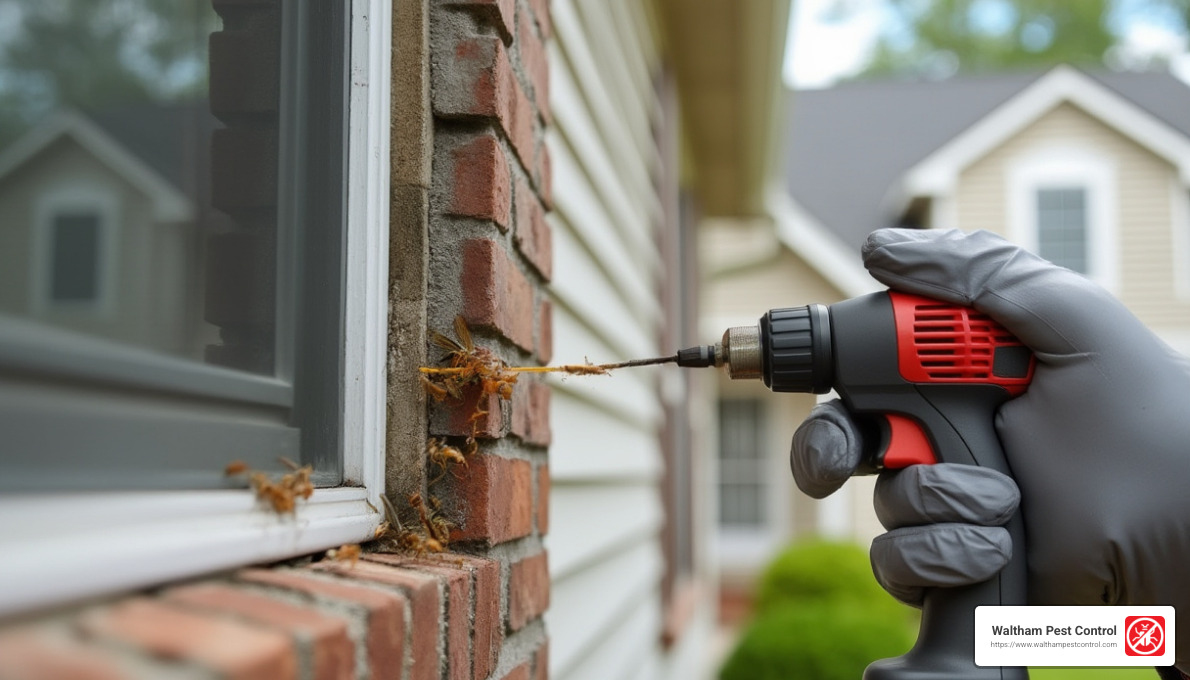
After dealing with a wasp nest, the last thing you want is a repeat performance next season. As we often tell our clients at Waltham Pest Control, an ounce of prevention is worth a pound of cure—especially when that cure involves angry, stinging insects!
Removing Attractants
Wasps don’t choose your property at random—they’re looking for food, water, and shelter. By eliminating these attractants, you’ll make your home much less appealing to these unwanted guests.
Think of your outdoor living space from a wasp’s perspective. That forgotten soda can? It’s a sugar buffet. The overflowing trash bin? A protein feast. Even that cute hummingbird feeder can become a wasp magnet if the sugar water ferments.
“I couldn’t figure out why wasps kept swarming our deck until a Waltham technician pointed out our recycling bin,” shares Maria from Lexington. “We weren’t rinsing our cans and bottles thoroughly, and it was like ringing the dinner bell for wasps!”
Regular cleaning of outdoor eating areas immediately after meals can dramatically reduce wasp interest. Secure garbage bins with tight-fitting lids and consider washing them monthly during summer to remove attractive residues. If you have fruit trees, don’t let fallen fruit rot on the ground—it’s essentially a wasp invitation.
Pet owners should be especially vigilant, as pet food left outdoors is highly attractive to protein-hunting wasps. Either feed pets indoors or remove uneaten food promptly. The same goes for bird feeders—keep the area below them clean of scattered seeds.
Sealing Entry Points
Your home might be offering five-star accommodations for wasps without you realizing it. Small cracks and openings around your property serve as perfect entry points for queens looking to establish new colonies.
Take a slow walk around your home’s exterior, paying close attention to areas where different materials meet—these junctions often develop gaps over time. Seal cracks and crevices in siding, foundations, and around windows with quality caulk. Check vents and utility entries for gaps that need mesh screens or sealant.
“The eaves of your home are particularly attractive to paper wasps,” explains our senior technician, Tom. “They love those protected overhangs for building their umbrella-shaped nests. Sealing gaps in these areas can prevent them from gaining a foothold.”
Don’t forget to inspect window screens for tears and ensure door sweeps fit tightly. Wasps can squeeze through surprisingly small openings, especially when they’re motivated to find shelter.
One client in Newton finded wasps entering her attic through a quarter-inch gap where her roof met the chimney. A simple application of expanding foam sealed the entry point and prevented further intrusion.
Regular Inspections and Maintenance
Creating a seasonal inspection routine is one of the most effective preventative measures you can take. Early detection means dealing with smaller colonies and less risk.
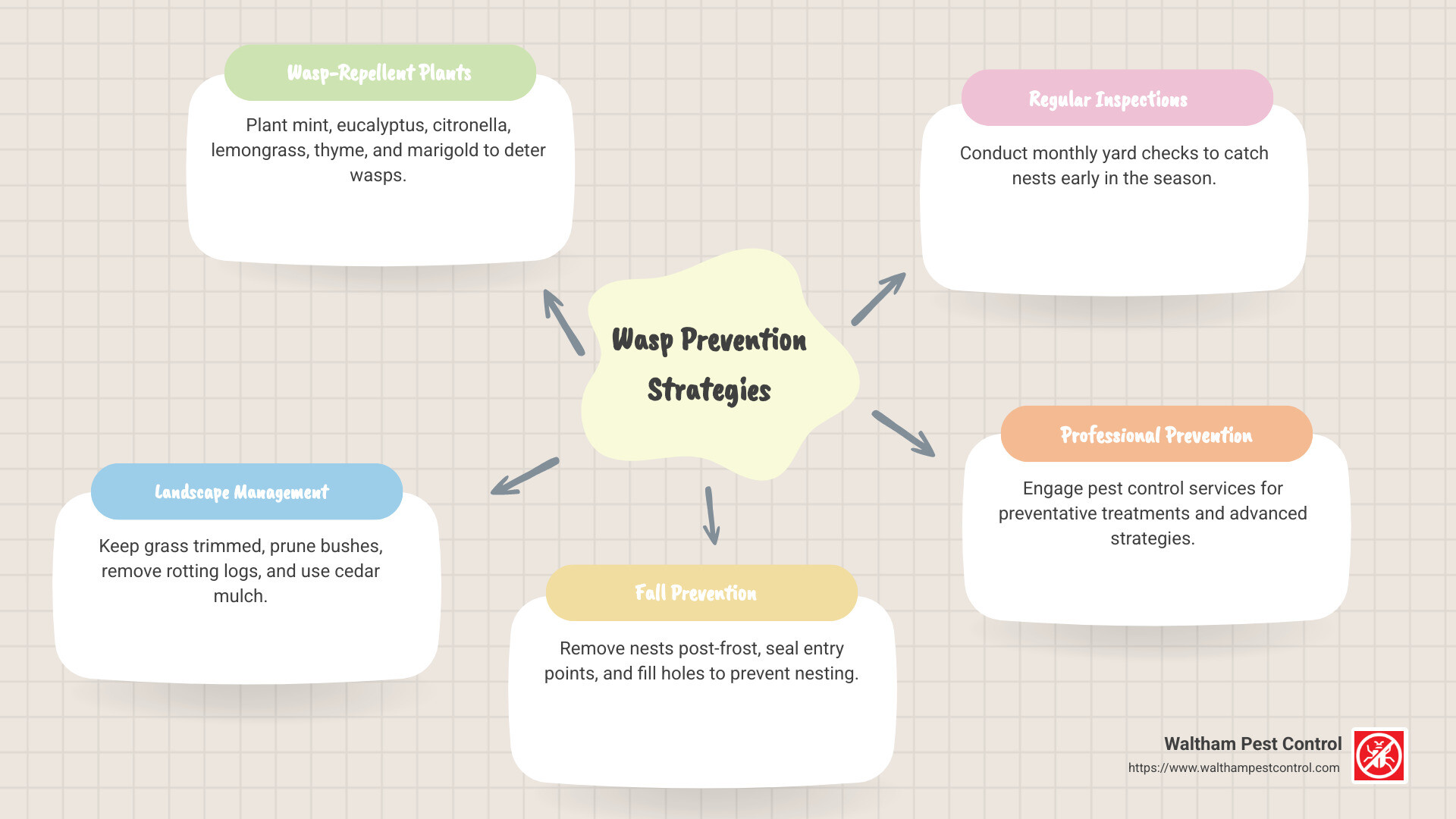
Spring is the perfect time for your first thorough inspection. As temperatures warm in April and May, overwintered queens emerge to start new colonies. Their initial nests are small—about the size of a golf ball—making them much easier to address safely.
Focus your attention on sheltered areas: under eaves, inside play equipment, beneath deck railings, and around outdoor light fixtures. These are prime real estate in the wasp world.
During summer months, continue with monthly checks of your property. Watch for wasp traffic patterns—if you notice several wasps repeatedly entering and exiting the same spot, you’ve likely found a nest location.
By fall, most wasp activity begins to decline. This is an excellent time to remove abandoned nests after the first hard frost and seal any entry points you’ve finded during the active season.
“I mark my calendar every year for an April inspection,” says Robert from Arlington. “After finding three small starter nests last spring and having them professionally removed, we enjoyed a wasp-free summer for the first time in years.”
Wasp-Repellent Landscaping
Your garden choices can actually help deter wasps from setting up shop on your property. Certain plants contain natural compounds that wasps find unpleasant, creating a beautiful barrier against these stinging insects.
Mint family plants top the list of wasp deterrents. Their strong scent repels not just wasps but many other insects as well. Consider planting peppermint, spearmint, or lemon balm around patios and outdoor dining areas. Just be aware that mint can spread aggressively, so container planting might be your best option.
Eucalyptus and citronella are other excellent choices, releasing oils that mask the scents wasps use to locate food. Marigolds not only add cheerful color to your garden but also help keep wasps at bay with their distinctive fragrance.
Beyond plant selection, how you maintain your landscape matters too. Keep grass trimmed short, especially in areas where ground-nesting yellowjackets might establish colonies. Regular pruning of bushes and shrubs eliminates dense hiding spots that wasps favor for nesting.
“Cedar mulch has been a game-changer for our clients with persistent wasp problems,” notes our landscaping consultant. “Its natural oils repel many insects, and it looks beautiful in garden beds while helping to retain moisture.”
Professional Prevention Services
While DIY prevention measures can be effective, sometimes you need the expertise and specialized products that only professionals can provide—especially if you’ve had recurring wasp problems.
At Waltham Pest Control, we’ve developed comprehensive prevention programs based on our 40+ years of experience with Massachusetts wasp species. Our preventative treatments target common nesting areas with long-lasting residual products that create an invisible barrier against wasps.
Our technicians are experts at structural exclusion, identifying and sealing potential entry points that even the most diligent homeowner might miss. We know exactly where wasps prefer to build their nests and can focus preventative measures on these high-risk areas.
“Our seasonal protection plan costs far less than emergency removal services,” says Waltham Pest Control, our President. “Plus, our clients sleep better knowing they’re protected against unexpected wasp encounters.”
Many of our customers opt for quarterly inspections that catch potential problems early. Our technicians can spot the subtle signs of wasp activity that untrained eyes might miss, allowing for intervention before colonies become established.
“After three summers of battling wasps around our pool, we finally called Waltham for their prevention program,” shares the Johnson family from Belmont. “The technician treated our property in early spring, and we enjoyed our first wasp-free swimming season in years. It was worth every penny for the peace of mind alone.”
For more information about eco-friendly approaches to wasp management, check out our guide on Natural and Eco-Friendly Methods for Hornet and Wasp Nest Removal.
The best way to deal with wasps is to prevent them from establishing nests in the first place. With some thoughtful prevention strategies and professional support when needed, you can enjoy your outdoor spaces without the constant worry of unwanted stinging guests.
Frequently Asked Questions About How to Get Rid of Wasp Nests
After four decades of helping homeowners across Eastern Massachusetts deal with wasp problems, we’ve heard just about every question imaginable. I’ve gathered the most common questions people ask us, along with straightforward answers that might help you too.
Can I Remove a Wasp Nest Myself?
I’ll be honest with you – while it’s technically possible to remove very small, newly formed paper wasp nests yourself, I rarely recommend it. There’s a good reason professional removal services exist.
Most DIY attempts I’ve witnessed over the years have ended poorly. Even those tiny nests can house dozens of wasps ready to defend their home with multiple painful stings. Store-bought sprays often fail to eliminate the entire colony, and common DIY approaches like burning, flooding, or knocking down nests typically make the situation worse – not to mention the property damage they can cause.
One of our clients in Wellesley learned this lesson the hard way: “I thought the tiny nest under my porch light would be easy to remove. One YouTube video and a can of spray later, I had eight stings and an angry colony that was very much still active. Should have called the professionals first.”
If you absolutely must tackle a very small nest yourself, wait until evening when wasps are less active, wear full protective clothing (covering every inch of skin), use a commercial wasp spray with at least 15-20 foot reach, and spray directly at the nest entrance for a good 10-15 seconds. Only remove the nest after confirming zero activity for 24-48 hours.
But please, if you have any known or suspected allergies, if the nest is bigger than a softball, if you’re dealing with yellowjackets or hornets, if the nest is hard to reach, or if it’s inside your walls – call us. Your safety is worth more than the cost of professional removal.
What Are the Costs Associated with Professional Wasp Nest Removal?
“How much will this cost me?” is naturally one of the first questions we hear. While I can’t list Waltham Pest Control’s specific pricing here, I can help you understand what affects the cost and what you might expect in the industry.
Professional how to get rid of wasp nests services typically range from $100 to $1,300, with that wide variation depending on several factors. Larger nests or more aggressive species require more time and resources to remove safely. If the nest is tucked away inside a wall or 30 feet up in a tree, that’s going to be more challenging than one that’s easily accessible. Multiple nests will obviously increase the cost, and different removal techniques have varying costs based on materials and time required.
One thing many homeowners don’t consider is the true cost comparison between DIY and professional approaches:
| Factor | DIY Approach | Professional Service |
|---|---|---|
| Initial cost | Lower (products: $10-50) | Higher (service fee) |
| Success rate | Often incomplete | Typically complete |
| Safety risk | High | Minimal |
| Time investment | Significant | Minimal for homeowner |
| Long-term solution | Rarely | Often includes prevention |
| Property damage risk | Significant | Minimal |
| Medical costs (if stung) | Potentially high | Unlikely to occur |
Martha from Bedford shared her experience: “After spending $30 on sprays that didn’t work and ending up in the ER with multiple stings, I wish I’d just called Waltham Pest Control from the beginning. Their service was thorough, and the technician even pointed out ways to prevent future nests—worth every penny.”
How Can I Prevent Wasps from Building Nests Around My Home?
The best way to deal with wasps is to prevent them from setting up shop in the first place. Prevention is always less expensive and less stressful than removal.
Regular maintenance is your first line of defense. I recommend monthly inspections of your property during spring and summer – just take a walk around your home looking at eaves, porch ceilings, and other sheltered spots. While you’re at it, seal any cracks and gaps in your home’s exterior, repair damaged screens and vents, and make sure doors and windows are properly screened.
Modifying your outdoor space can make a huge difference. Wasps are attracted to food sources, so keep outdoor dining areas clean, use trash cans with tight-fitting lids, pick up fallen fruit promptly, and keep compost covered. I’ve seen many cases where simply moving a bird feeder or securing a garbage can solved a recurring wasp problem.
Some strategic deterrents can be surprisingly effective. Hanging fake wasp nests can work because wasps are territorial and avoid nesting near other colonies. Natural repellents like peppermint oil mixture (1 tablespoon oil to 16 ounces water) sprayed around potential nesting sites can help. Many of our clients have had success planting wasp-repellent species like mint, eucalyptus, and citronella around their patios and decks.
Here’s an interesting fact: old wasp nests are never reused, but leaving them can actually deter new nests from being built in the same area. That said, we generally recommend removing old nests during winter to eliminate potential hiding spots for other pests.
The most reliable approach is professional prevention. Many of our clients schedule annual preventative treatments before wasp season begins. A thorough professional inspection can identify and address risk factors you might not notice.
Susan in Newton implemented our prevention recommendations with excellent results: “After having Waltham treat around our eaves and porch ceiling in early spring, we’ve gone two full summers without a single wasp nest. Before that, we were dealing with 3-4 nests every year.”
When it comes to how to get rid of wasp nests, preventing them in the first place is always the safest and most cost-effective solution.
Conclusion
When it comes to how to get rid of wasp nests, I’ve seen how professional pest management makes all the difference. Throughout my 40+ years at Waltham Pest Control, I’ve helped countless homeowners across Eastern Massachusetts safely resolve wasp problems that had them practically held hostage in their own homes.
Yes, wasps do serve an important ecological purpose. They’re nature’s pest controllers, hunting down many insects that damage gardens. But when they build their papery fortresses too close to your patio, doorway, or children’s play area, the risks simply outweigh the benefits.
Understanding wasp behavior has been key to our success. These aren’t mindless stinging machines – they’re highly organized social insects with complex behaviors and defensive instincts. When their home feels threatened, they respond with coordinated defense that can quickly turn your backyard barbecue into an emergency room visit.
I cannot emphasize enough how dangerous DIY wasp nest removal can be. I’ve heard too many stories from clients who tried handling it themselves only to end up with multiple painful stings, allergic reactions, and even property damage from misguided removal attempts. One client in Lexington tried using a garden hose to flood a nest in his eaves, only to cause water damage to his ceiling while angering the wasps – a costly lesson in every sense.
Our trained technicians bring specialized knowledge, proper protective equipment, and years of experience to every job. We know exactly how to approach different species and nest locations for safe, effective removal. More importantly, we understand how to prevent future problems through thoughtful, targeted interventions.
Prevention truly is your best strategy. Simple steps make a huge difference – keeping food covered outdoors, sealing structural gaps, removing fallen fruit promptly, and conducting regular property inspections. Many clients tell us they haven’t seen a single wasp nest since implementing our prevention recommendations.
If you’re dealing with wasps anywhere in our service area – from Boston to Lowell, Cambridge to Framingham, and throughout Eastern Massachusetts – don’t risk your safety with DIY approaches. At Waltham Pest Control, we’ve refined our integrated pest management techniques over four decades to provide solutions that are effective, environmentally responsible, and custom to your specific situation.
Don’t let wasps cast a shadow over your outdoor enjoyment or put your family at risk. Summer in New England is too precious to spend worrying about stinging insects. Contact us today, and let’s restore peace to your outdoor spaces with professional wasp nest removal and prevention.
More info about hornet and wasp nest removal services
