

How to find bed bugs: Stop the 2025 Nightmare
Why Early Detection Is Your Best Defense Against Bed Bugs
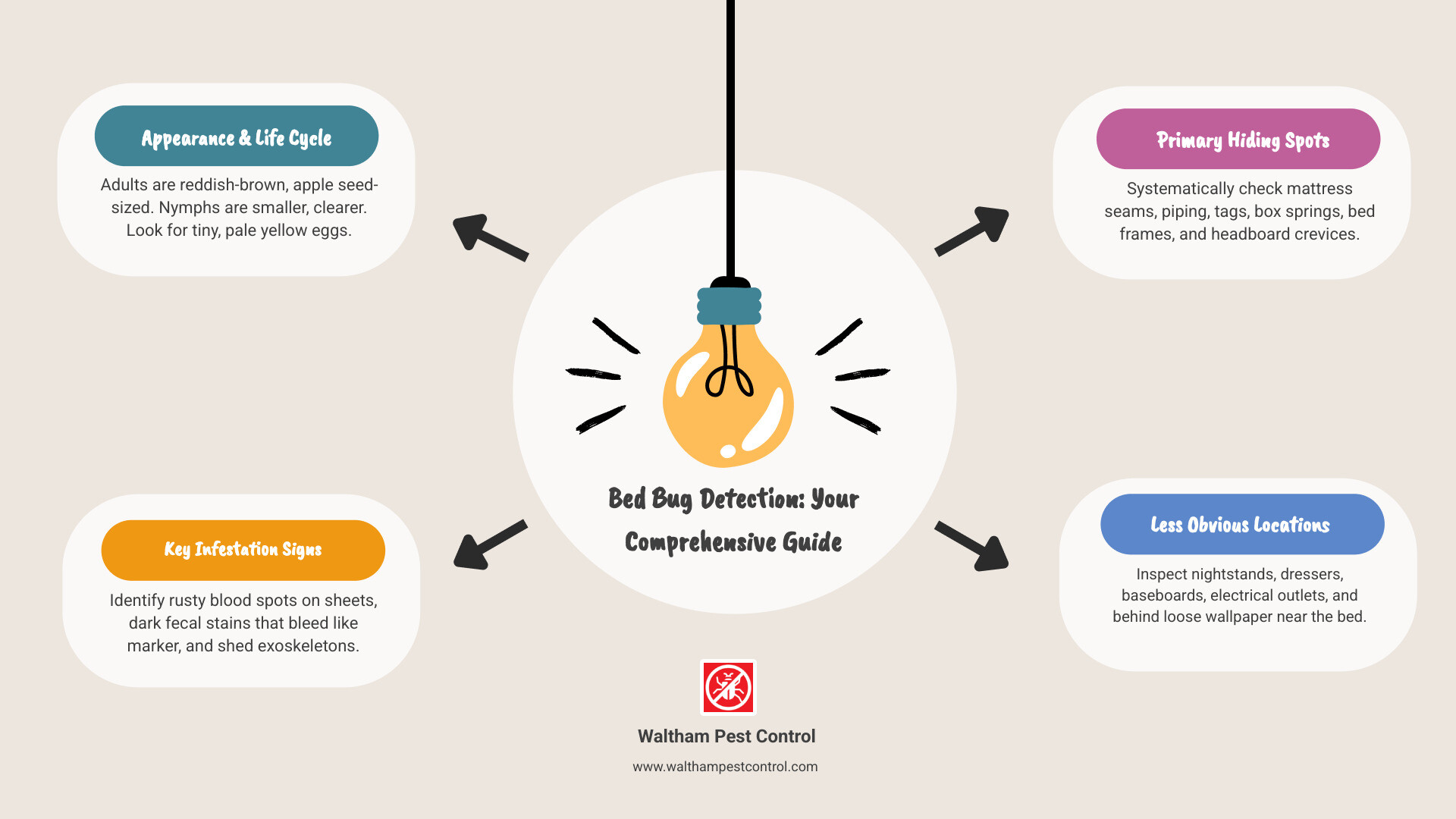
How to find bed bugs starts with knowing what to look for and where to search. Here’s your quick reference guide:
Key Signs to Look For:
- Live bugs – reddish-brown, apple seed-sized insects
- Blood stains – rusty or reddish spots on sheets
- Dark spots – bed bug excrement that bleeds on fabric like a marker
- Eggs and shells – tiny, pale yellow remnants
- Sweet musty odor – especially in large infestations
Where to Search First:
- Mattress seams, piping, and tags
- Box springs and bed frame joints
- Headboard cracks and screw holes
- Furniture within 5-20 feet of the bed
- Baseboards and electrical outlets
If you consistently wake up with small, itchy red marks on your body, it’s time to thoroughly check your bedding for other signs. Even when bugs are active, low-level infestations are hard to detect – most people see signs of bed bugs rather than the actual insects.
The key is systematic inspection. Bed bugs are experts at hiding in spaces as narrow as a credit card’s width. They can survive for months without feeding, making early detection crucial before an infestation spreads throughout your home.
As Waltham Pest Control, President & CEO of Waltham Pest Control with over 40 years of experience, I’ve helped countless Massachusetts homeowners learn how to find bed bugs before infestations become overwhelming. My team has seen how proper identification techniques can save families thousands of dollars in treatment costs.
Glossary for how to find bed bugs:
- how to get rid of bed bugs fast
- bed bug heat treatment
- how much does it cost to exterminate bed bugs
The Telltale Signs: What to Look For
When you’re learning how to find bed bugs, you’re looking for the clues these pests leave behind. You’re more likely to find their mess than the bugs themselves.
Adult bed bugs are about the size of an apple seed: a quarter-inch long, reddish-brown, and wingless. Their flat, oval bodies allow them to slip into narrow cracks. After feeding, they become swollen and turn a deeper red.
Nymphs (immature bed bugs) are smaller, translucent or pale yellow, and darken as they mature. They are just as hungry but much harder to see.
Bed bug eggs are tiny white specks, the size of a salt grain, found in clusters in deep crevices. They can look like scattered rice grains in mattress seams.
Fecal spots are a key clue: tiny, dark dots that look like black pepper. If you dab them with a damp cloth, they will bleed into the fabric like a marker.
Rusty or reddish blood stains on your sheets are another clear sign, often caused by crushing a recently-fed bug in your sleep.
As bed bugs grow, they leave behind pale yellow, translucent shed skins. You’ll find these casings near their hiding spots.
Large infestations can produce a musty odor, sometimes described as sweet and sickly. This comes from their alarm pheromones.
The EPA’s guidance on how to find bed bugs emphasizes looking for these physical signs rather than relying solely on bites, and for good reason.
Distinguishing Bed Bug Bites
Bed bug bites are often the first sign people notice, but they are unreliable for confirmation. Reactions vary widely: some people get itchy red welts, while others show no reaction at all.
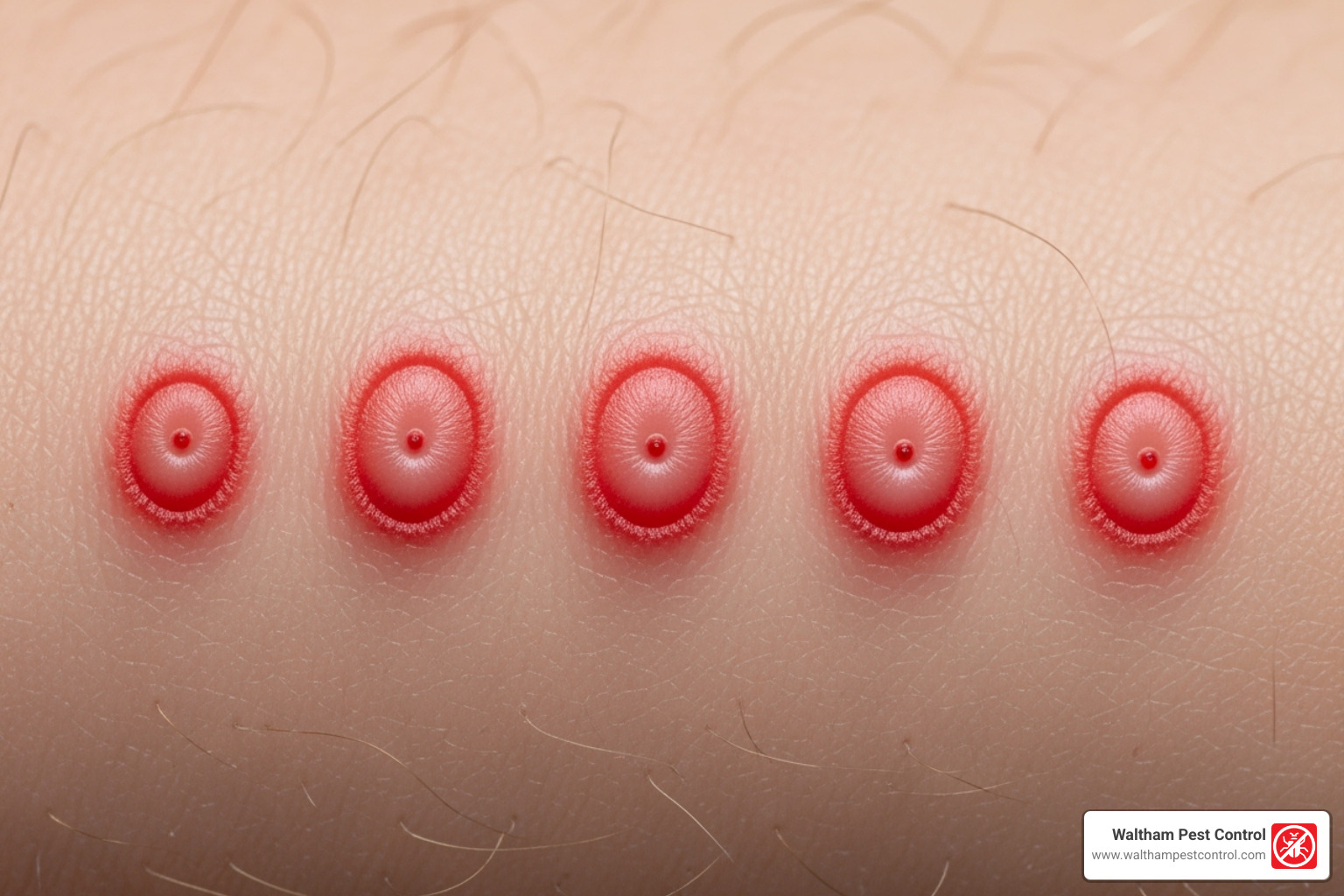
Bites typically appear as itchy red welts on exposed skin like the face, neck, and arms. A telltale sign is their pattern: often in clusters or lines, sometimes in a zigzag, as the bug moves while feeding.
You might hear about the “breakfast, lunch, and dinner” pattern – three bites in a neat row. While this can happen, don’t count on it as your only clue.
Delayed reactions are another curveball, as bites can take up to two weeks to appear, making it nearly impossible to pinpoint when or where you encountered the bugs.
| Characteristic | Bed Bug Bites | Flea Bites | Mosquito Bites |
|---|---|---|---|
| Appearance | Red, itchy welts; often inflamed | Small red bumps with red halo | Red, puffy welts |
| Pattern | Clusters, lines, or zigzag | Random, around ankles/warm areas | Random, individual |
| Location | Exposed skin during sleep | Lower legs, ankles, waistline | Anywhere exposed |
| Timing | Can appear days/weeks later | Almost immediate | Almost immediate |
For persistent skin reactions, consult a dermatologist through the American Academy of Dermatology.
Bites alone don’t confirm bed bugs. You need physical evidence; think of bites as a clue, not a conclusion.
Your Step-by-Step Guide on How to Find Bed Bugs
Now that you know what to look for, it’s time for the inspection. How to find bed bugs effectively requires the right tools and a systematic approach.
Before you start, gather your tools: a bright flashlight (bed bugs hate light), a magnifying glass for identifying tiny evidence, and a credit card or thin tool to probe seams. Also have gloves for protection, plastic bags for sealing suspect items, and wet wipes to test dark spots (they’ll bleed like ink if it’s bed bug feces).
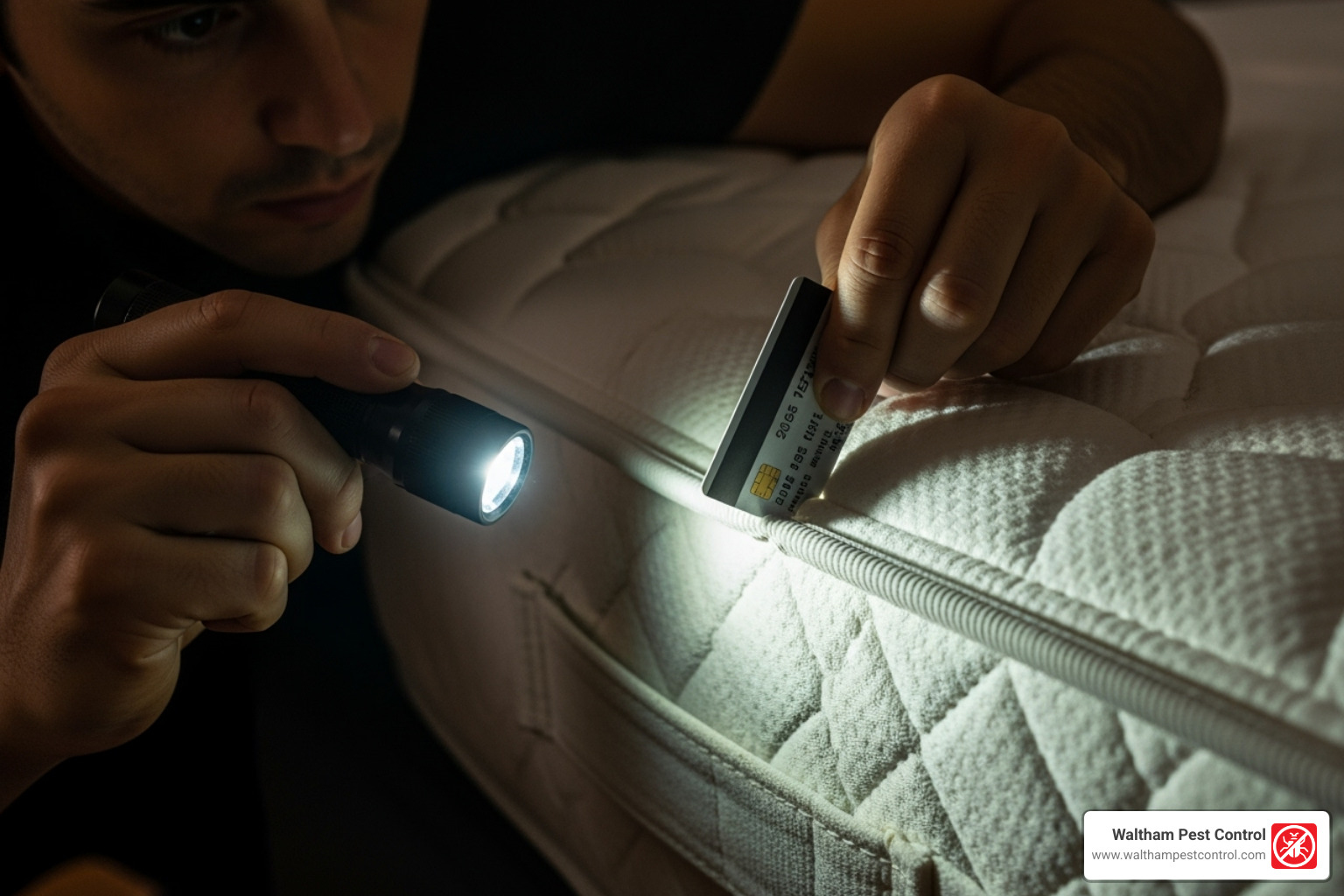
Follow a logical pattern: start at the bed and work outwards. Since bed bugs stay within 5-20 feet of their host, the bedroom is your primary focus. Gradually expand your search to nearby furniture and other hiding spots.
Managing clutter is crucial. Clutter provides endless hiding spots for bed bugs. Before you inspect, carefully check each item as you clear the area, sealing anything suspicious in plastic bags. This makes inspection easier and prevents spreading the pests.
Best Practices for How to Find Bed Bugs on a Mattress
Your mattress is bed bug headquarters, so it requires the most thorough attention. They hide in its seams and crevices to stay close to their food source.
First, strip the bed. Remove all bedding, scan for signs like blood stains or fecal spots, and seal everything in plastic bags for a hot water wash.
Next, inspect the mattress seams, piping, and tags. Use your flashlight and magnifying glass to examine every inch of the seams, piping, and any tags where bugs cluster. Use a credit card to probe these tight spaces.
Box spring inspection is equally important. Lift your mattress and examine the entire box spring, looking for tears in the fabric where bugs might be hiding inside.
Flipping the mattress allows you to inspect the underside with the same thoroughness. This step is tedious but critical for successful detection.
The Sleep Foundation’s guide on how to check your mattress for bed bugs provides additional detailed techniques for this critical inspection phase.
Inspecting the Bed Frame and Furniture
After the mattress and box spring, inspect the bed frame and other bedroom furniture.
If possible, remove the headboard from the bed and wall. Examine both sides, focusing on cracks, screw holes, and joints where bugs hide.
Inspect all bed frame joints, slats, and screw holes methodically, as these tight spaces are perfect hiding spots.
Nightstands and dressers near the bed are also prime real estate. Pull out drawers and inspect all runners, undersides, joints, and cracks. Check the back panel, an often-overlooked hiding spot.
Upholstered furniture like couches and chairs can also harbor bed bugs. Lift every cushion and examine all seams, tufts, folds, and the furniture’s underside.
Expanding your search to all bedroom furniture is essential. If you find signs, consider consulting our professional Bed Bug Exterminator services for comprehensive treatment options.
Beyond the Bed: Less Obvious Hiding Spots
You’ve checked the mattress, inspected the bed frame, and examined nearby furniture. But here’s the thing about bed bugs – they’re like tiny escape artists who can squeeze into spaces you’d never imagine. If they can fit a credit card into it, a bed bug can call it home.
After 40 years in pest control here in Massachusetts, I’ve found bed bugs in places that would surprise even seasoned homeowners. These little hitchhikers are incredibly resourceful when it comes to finding the perfect hideaway.
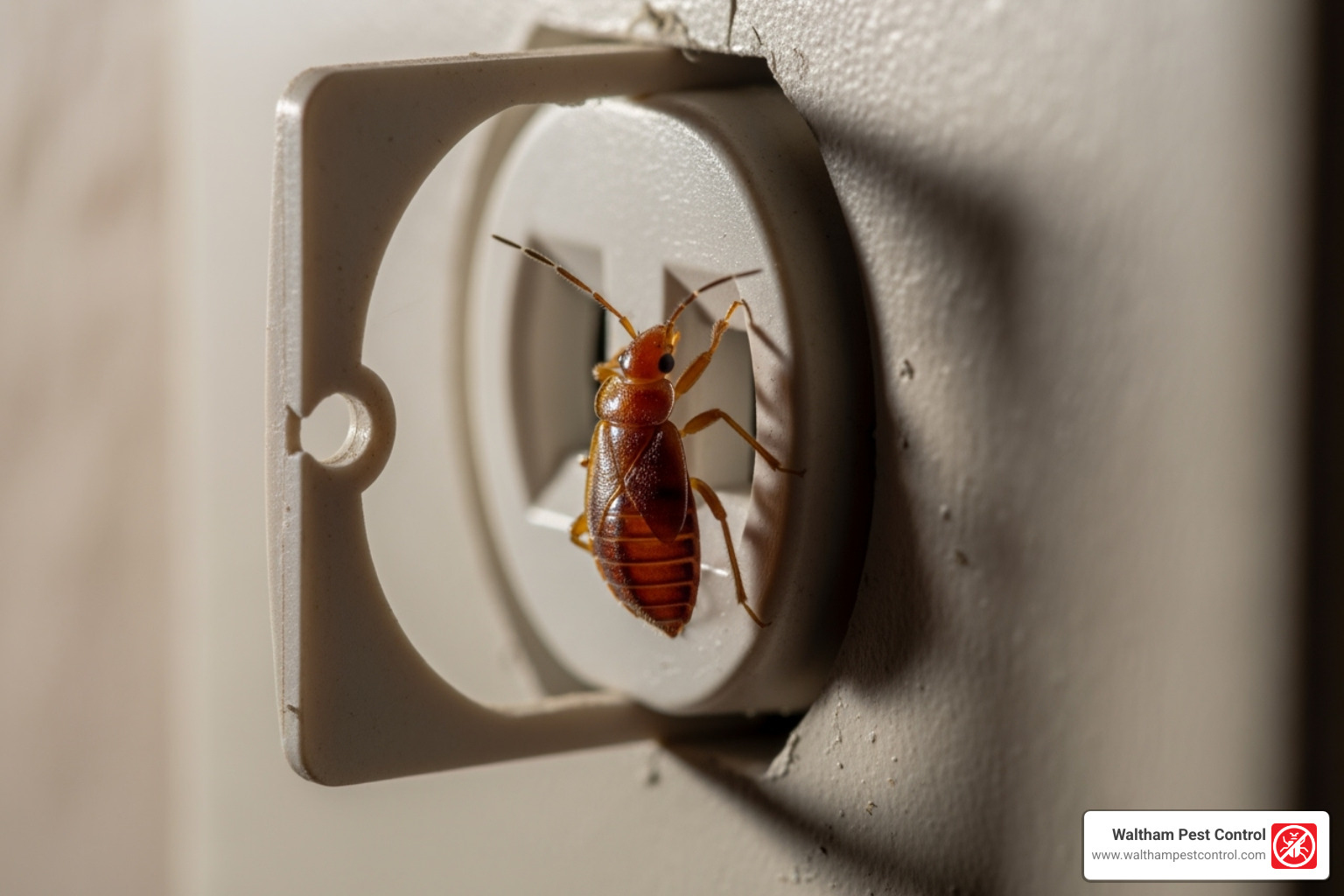
Let’s start with your baseboards. These innocent-looking strips of wood or plastic often have tiny gaps where they meet the wall or floor. Run your flashlight along every inch, looking for those telltale dark spots or actual bugs scurrying away from the light. Your credit card tool becomes invaluable here for probing suspicious cracks.
Don’t forget to look up! The wall-ceiling junction might seem like an odd place, but bed bugs are surprisingly good climbers. Check those corners and edges, especially if you notice any cracks or peeling paint. They love undisturbed spots where they won’t be bothered.
Speaking of peeling, any loose wallpaper is like a bed bug bed-and-breakfast. Gently lift any torn or peeling sections and peer underneath. These hidden pockets provide perfect protection from disturbances.
Your wall decor deserves attention too. Remove picture frames, mirrors, and other hangings from the walls. Check the back of frames, the hanging hardware, and the wall space behind them. Bed bugs appreciate the darkness and stability these spots offer.
Here’s one that catches many people off guard: electrical outlets and light switches. Yes, really! Bed bugs can actually use the wiring pathways inside walls to travel between rooms. If you’re comfortable doing so (and please turn off the power first), carefully remove outlet covers to inspect inside. This is where we often find evidence of larger infestations spreading through a home.
Your curtains and drapes provide countless hiding spots in their folds, seams, and hems. Pay special attention to areas where fabric gathers near the floor or window sill. The consistent darkness and undisturbed nature make them attractive real estate.
Book lovers, take note: bed bugs can hide in books, especially those stored on nightstands or bedroom bookshelves. Check spines, flip through pages, and examine covers. Used books from yard sales or online purchases are common culprits for bringing these pests into your home.
If you’ve traveled recently, your luggage needs immediate attention. Inspect every seam, zipper, and pocket of your suitcases, particularly if they were stored near hotel beds. This is one of the most common ways bed bugs hitch rides into Massachusetts homes.
Finally, those clutter piles we mentioned earlier aren’t just inconvenient – they’re bed bug havens. Any stack of clothes, boxes, or miscellaneous items provides excellent cover. Take the time to inspect each item individually before relocating it.
The key to how to find bed bugs in these hidden spots is methodical patience. These pests have had millions of years to perfect their hiding skills, so don’t feel discouraged if your first sweep doesn’t reveal everything. Sometimes it takes multiple inspections to catch all the evidence.
When You Can’t Find a Bug: Confirmation Methods
Here’s the scenario that keeps so many people up at night: you’re waking up with mysterious bites, you’re itchy and uncomfortable, but despite your best detective work, you just can’t find a single bed bug. Take a deep breath – you’re not going crazy, and you’re definitely not alone in this frustration.
The truth is, even when bed bugs are actively feeding on you, low-level infestations are incredibly difficult to detect. These tiny vampires are absolute masters of hide-and-seek, especially the young nymphs that are practically invisible to the naked eye. Most homeowners only find the signs of bed bugs rather than the actual insects themselves.
When your how to find bed bugs search comes up empty but you’re still suspicious, it’s time to get strategic with confirmation methods. Think of this as setting traps for evidence rather than actively hunting.
Passive monitoring is your secret weapon here. Instead of tearing apart your bedroom every night, you’re essentially letting the bed bugs come to you – or more accurately, letting them reveal themselves over time. This approach requires patience, but it’s often much more effective than endless visual searches.
Bed bug interceptor traps are simple but brilliant devices that work like tiny moats around your bed legs. Picture a shallow dish with a rough outer surface that bed bugs can easily climb up, but once they fall into the smooth inner well, they’re stuck like they’ve tumbled into a slippery pit. These traps are widely available, and many of our clients have used them successfully.
These interceptors catch bed bugs attempting to climb onto your bed for their nightly feast, or trying to return to their hiding spots after feeding. Check them each morning – you might be surprised by what you find.
Active monitors take things a step further by actually luring bed bugs out of hiding. These clever devices mimic the signals that attract bed bugs to humans – carbon dioxide that mimics your breath, heat that simulates body warmth, or even pheromones. While they’re typically more expensive than simple interceptors, they can be incredibly effective at drawing out even the most stubborn hidden populations.
These monitoring tools won’t solve your bed bug problem, but they’re excellent at answering that burning question: “Do I actually have bed bugs, or am I imagining things?”
The Role of Professional and Canine Inspections
If you’ve tried everything and still can’t get a definitive answer, or if you’ve found evidence but want to understand the full scope of your situation, it’s time to call in the cavalry. This is where professional expertise makes all the difference.
Here’s a sobering reality: even trained pest control professionals conducting visual inspections only achieve accuracy rates of 40-60% when relying on sight alone. That’s barely better than flipping a coin! The reason is simple – bed bugs are incredibly small and can squeeze into spaces that are virtually impossible for humans to access or see clearly.
This is where our four-legged partners shine. Canine inspections represent a quantum leap in bed bug detection, with well-trained dogs achieving accuracy rates greater than 95%. These remarkable animals can detect the scent of live bed bugs and viable eggs even when they’re hidden deep within walls, inside furniture, or tucked away in other completely inaccessible areas.
The dogs aren’t just randomly sniffing around – they undergo rigorous training to distinguish bed bug scents from other insects and household odors. When working with canine detection, we always ensure our teams are certified by reputable organizations like the National Entomology Scent Detection Canine Association, which maintains strict standards for both dogs and handlers.
At Waltham Pest Control, we work with certified canine units to provide our Eastern Massachusetts clients with the most accurate detection services available. It’s particularly valuable when you’re experiencing bites but can’t locate the source, or when you want to confirm that a treatment has been completely successful.
Professional inspection also means getting a comprehensive assessment of your situation. We don’t just tell you “yes, you have bed bugs” – we help you understand the extent of the infestation, identify all affected areas, and develop a strategic treatment plan custom to your specific circumstances.
Wondering if professional treatment is worth it? Absolutely. Learn more about how an exterminator can get rid of bed bugs and why professional intervention often saves time, money, and sanity in the long run.
Frequently Asked Questions about Finding Bed Bugs
After helping countless Massachusetts families deal with bed bug concerns over the past four decades, I’ve noticed the same questions come up again and again. Let me share some straight answers to help put your mind at ease.
Are bed bug bites a reliable sign of an infestation?
Here’s something that might surprise you: bed bug bites are actually a poor indicator of whether you have an infestation. I know that sounds backwards, but let me explain why.
Everyone’s body reacts differently to bed bug bites. Some people develop those telltale itchy, red welts within hours. Others might not show any reaction at all – they could be getting bitten nightly without ever knowing it. I’ve even seen cases where it took two full weeks for bite marks to appear, making it nearly impossible to connect them to the actual feeding.
Then there’s the identification challenge. Bed bug bites look remarkably similar to mosquito bites, flea bites, or even reactions to certain skin conditions. I can’t tell you how many times families have spent weeks treating for bed bugs based on mysterious bites, only to find the real culprit was something entirely different.
The good news? While bed bug bites are certainly annoying and can lead to secondary infections from scratching, the CDC confirms that diseases are not spread by bed bugs. They’re a nuisance, not a health hazard.
Physical evidence is always more reliable than bites alone. Those dark fecal spots, blood stains on sheets, or shed skins tell a much clearer story than any skin reaction ever could.
How does bed bug behavior affect finding them?
Understanding how bed bugs behave is crucial when you’re trying to find bed bugs in your home. These little creatures are incredibly sneaky, and their survival instincts make them masters of hide-and-seek.
Bed bugs are nocturnal by nature. They’ve evolved to feed when we’re most vulnerable – while we’re sleeping soundly. During the day, they retreat to their hiding spots and stay put. However, if they’re really hungry or the infestation is large, they’ll venture out even in broad daylight.
Here’s what makes them so tricky to spot: they’re photophobic, meaning they hate light. The moment your flashlight hits them, they’ll dart for the nearest shadow faster than you can blink. It’s like they have a built-in alarm system.
Their flat, oval bodies allow them to squeeze into spaces as narrow as a credit card’s width. I’ve found them hiding in screw holes, between mattress tags, and even inside electrical outlets. They prefer staying within 5 to 20 feet of their food source – that’s you – which is why we always start inspections at the bed and work outward.
Perhaps most frustrating is their ability to survive for months without feeding. This means they can stay hidden and dormant for extended periods, only emerging when conditions are perfect. A female bed bug can live 6 to 12 months and lay up to 500 eggs in her lifetime, which explains how small problems become big ones so quickly.
This survival skill is exactly why acting fast matters so much once you confirm their presence. For guidance on rapid response, check out our article on how to get rid of bed bugs fast.
Can I have bed bugs even if my house is clean?
This is probably the question I hear most often, usually followed by, “But my house is spotless!” Let me put this myth to rest once and for all: cleanliness has absolutely nothing to do with bed bug infestations.
Bed bugs don’t care about crumbs on your counter or dust under your couch. They’re not attracted to dirt or grime like some other pests. They only care about one thing: blood. A five-star hotel can have bed bugs just as easily as any other location.
These are hitchhiking pests. They travel by clinging to your belongings, and they’re incredibly good at it. You might pick them up from a hotel during vacation, bring them home in your luggage, and never realize it until weeks later. Used furniture is another common way they enter homes – that beautiful antique dresser or “barely used” mattress from an online marketplace could come with some unwanted passengers.
If you live in an apartment building or condo, bed bugs can travel between units through wall voids, electrical conduits, or plumbing. Your neighbor’s problem can quickly become yours, regardless of how clean either of your homes might be.
Now, while cleanliness doesn’t prevent bed bugs, managing clutter definitely helps with detection. A tidy space makes inspections easier and gives bed bugs fewer places to hide. But please don’t let embarrassment about housekeeping prevent you from seeking help if you suspect an infestation – we’ve seen it all, and we’re here to solve problems, not judge.
Conclusion: You’ve Found Them, Now What?
Finding bed bugs in your home feels overwhelming, but confirming a bed bug infestation is actually the crucial first step toward getting your life back to normal. Take a deep breath – you’ve successfully played detective and gathered the evidence you need.
Here’s where many people make a costly mistake: rushing into DIY treatments they found online. I get it – when you’re dealing with bugs that bite you in your sleep, you want them gone immediately. But here’s the reality: bed bugs are incredibly resilient survivors. They can live for months without a meal, squeeze into cracks thinner than a dime, and reproduce faster than you can say “pest control.”
Those store-bought sprays and home remedies? They often just scatter the bugs to new hiding spots, making your problem bigger and much harder to treat later. It’s like playing whack-a-mole, except the moles keep multiplying.
Professional expertise makes all the difference when you’re dealing with bed bugs. At Waltham Pest Control, we’ve seen it all in our 40+ years serving Eastern Massachusetts families. From Acton to Woburn, and throughout Middlesex, Essex, and Norfolk Counties, we’ve helped countless homeowners reclaim their bedrooms from these persistent pests.
Our comprehensive treatment plans target bed bugs at every life stage – from those tiny eggs you can barely see to the adult bugs that have been keeping you awake. We customize our approach based on your specific situation because no two infestations are exactly alike.
Peace of mind is what we’re really selling here. Yes, we eliminate bed bugs, but what we’re truly giving you back is the ability to sleep soundly in your own bed without wondering what’s crawling around in the dark.
Don’t let bed bugs hold your home hostage any longer. If you’ve spotted the signs we’ve discussed – or even if you just have that nagging suspicion – it’s time to bring in the experts. Get a professional bed bug inspection in the Boston area and let us help you sleep tight again, knowing those uninvited guests are gone for good.
