

Hornets Nest Removal: 7 Proven Tips for Safe, Easy Success 2025
Why Professional Hornets Nest Removal Protects Your Massachusetts Property
Hornets nest removal requires careful planning, proper equipment, and expert knowledge to protect your family and property from aggressive stinging insects. When you find a hornet nest on your Massachusetts property, quick action can prevent dangerous encounters and costly damage.
Here’s what you need to know about safe hornets nest removal:
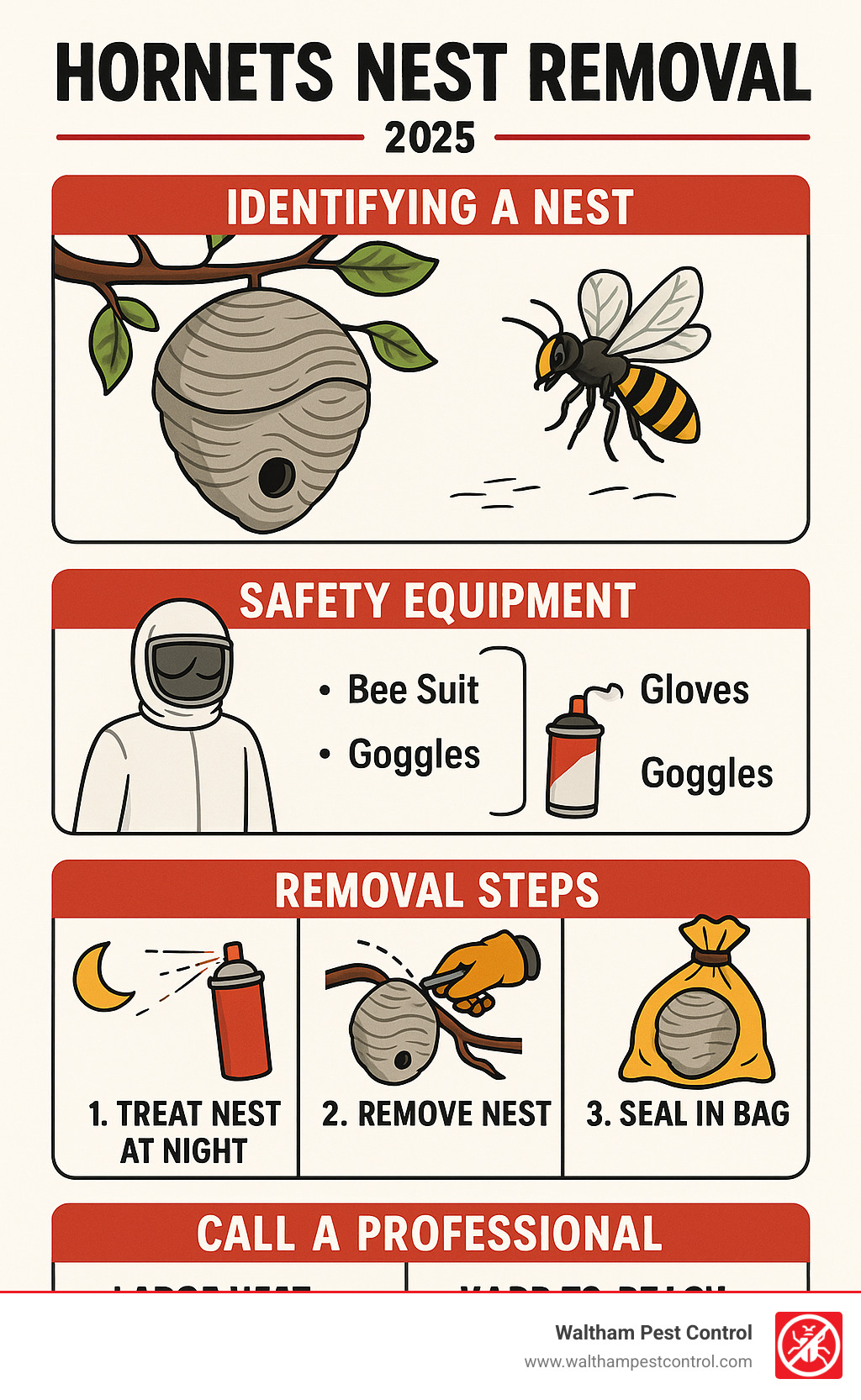
- Best timing: Remove nests at night when hornets are less active, or in winter when colonies are abandoned
- Safety gear: Full protective clothing, including bee suit, gloves, and eye protection are essential
- Professional costs: Average removal ranges from $100-$1,300 based on internet data (not Waltham Pest Control pricing)
- DIY risks: Hornet colonies can contain 400-700 workers capable of multiple stings with potent venom
- When to call pros: Large nests (bigger than a tennis ball), hard-to-reach locations, or if anyone has sting allergies
Hornet nests grow rapidly during summer months and can reach the size of a basketball or larger. These paper-like structures house hundreds of aggressive defenders who will chase intruders across your property. The key is acting before small spring nests become dangerous summer colonies.
Massachusetts homeowners face two main species: European hornets (up to 1.5 inches long) and bald-faced hornets (smaller but more aggressive). Both build distinctive paper nests from chewed wood fibers mixed with saliva.
I’m Waltham Pest Control, President & CEO of Waltham Pest Control, with over 40 years of experience protecting Eastern Massachusetts properties from stinging insects. Our licensed team has safely handled thousands of hornets nest removal cases, from small backyard nests to complex commercial infestations.
Hornets nest removal further reading:
– are black and yellow wasps dangerous
– big black flying bug that looks like a wasp
– wasp pest control
Hornet 101: Spotting and Understanding the Enemy
Think of hornets as the heavyweight champions of the stinging insect world. Before you even consider hornets nest removal, you need to know exactly what you’re up against – and trust me, these aren’t your garden-variety wasps.
Hornets create some of nature’s most impressive architectural projects. Their nests look like oversized paper lanterns, built from a papery material that’s surprisingly sophisticated. These busy builders chew up wood fibers and mix them with their saliva to create a gray, cardboard-like substance that’s both lightweight and weather-resistant.
The European hornet is the only true hornet species we deal with in North America, and their nests can grow to impressive sizes – sometimes reaching two feet in length and housing up to 700 workers. That’s a lot of angry insects in one place!
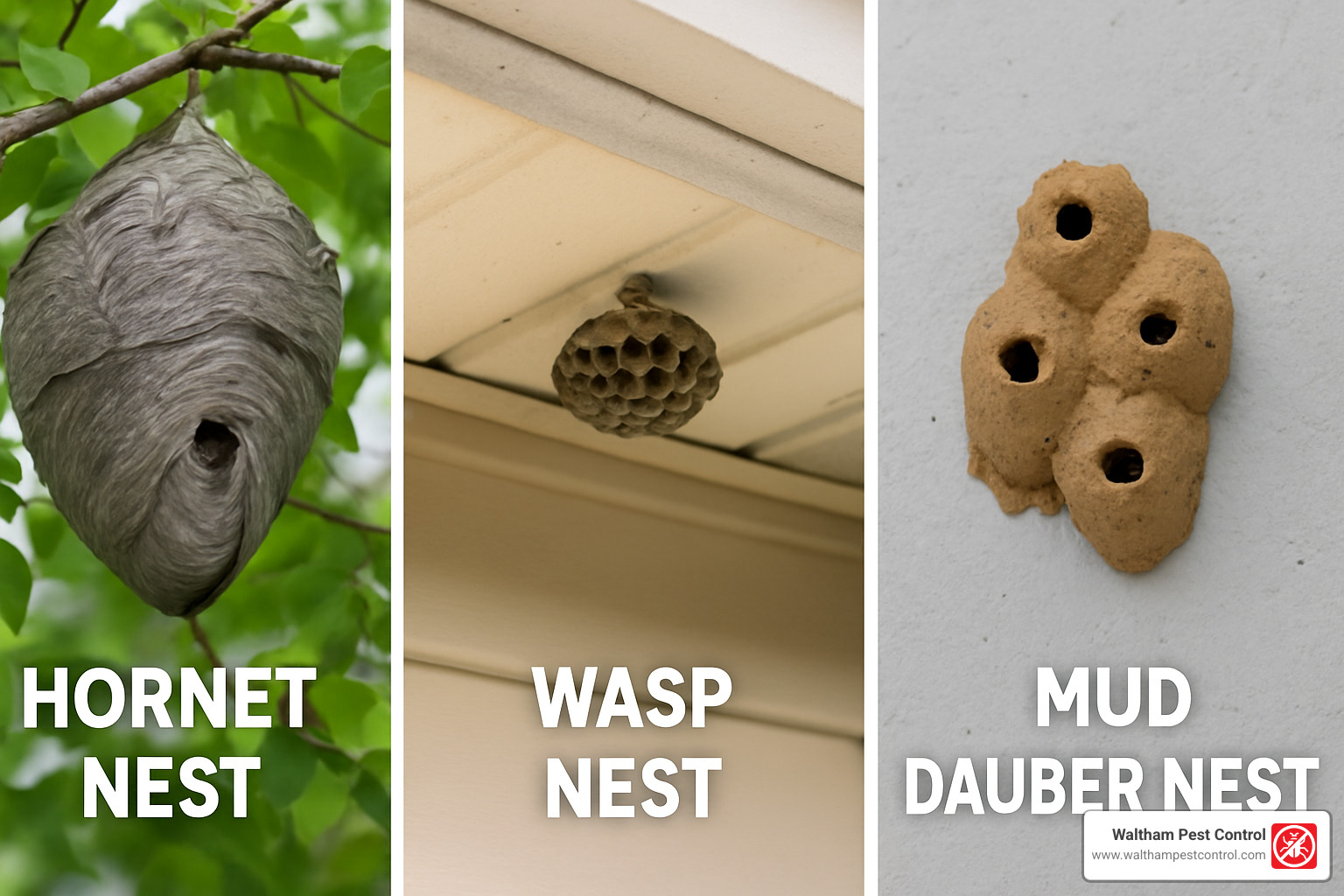
You’ll typically find these aerial cities hanging in high tree branches and tucked into dense shrubs. They love to build under roof eaves and soffits where they’re protected from the elements. Sometimes they’ll move indoors, setting up shop in attics and wall voids or boldly attaching their homes to building exteriors.
Here’s where many homeowners get confused: not all large stinging insects are hornets. Hornets are much bigger and more aggressive than regular wasps, with European hornets reaching up to 1.5 inches – that’s almost as long as your thumb! Unlike honeybees that die after one sting, hornets have smooth stingers that work like tiny swords, allowing them to sting you multiple times.
More info about safe identification
Clues You’ve Found a Hornet Nest
Spotting a hornet nest isn’t rocket science once you know the warning signs. The nest itself has a distinctive pear-shaped or round appearance with that telltale papery shell that looks like someone crafted it from recycled cardboard.
The most important feature to look for is the single entrance hole at the bottom of the nest. This is their main highway, and during active hours, you’ll see a steady parade of worker traffic flowing in and out.
Your ears can be just as helpful as your eyes. Active nests produce a low, constant humming that gets louder as you get closer. When that buzzing suddenly intensifies, consider it nature’s way of telling you to back off – immediately.
Common Massachusetts Hornets & Stinging Cousins
In Massachusetts, we deal with several species that homeowners lump together as “hornets,” though technically only one earns that title.
European hornets are the real deal – the only true hornets in North America. These reddish-brown giants with yellow markings can reach 1¼ inches long. Despite their intimidating size, they’re actually less aggressive than their smaller relatives.
Bald-faced hornets are nature’s false advertising – they’re actually oversized yellowjackets wearing a black and white disguise. At ½ to ¾ inch long, they’re smaller than European hornets but make up for it with attitude.
Yellowjackets are the most common troublemakers we encounter. These ½-inch insects sport bright yellow and black racing stripes and love to nest in wall voids and ground cavities where you least expect them.
Each species requires a different approach for safe hornets nest removal, which is why getting the identification right is your first line of defense.
When to Act: Risks, Dangers, and Best Timing
Timing is everything when it comes to hornets nest removal. The wrong approach at the wrong time can turn a manageable situation into a dangerous swarm attack that sends you running for cover.
Hornets are fiercely protective of their homes, maintaining an aggressive defense radius that typically extends 6-10 feet from their nest. When they sense danger, they release alarm pheromones that basically sound the battle cry for the entire colony. Unlike honeybees that sacrifice themselves with a single sting, hornets can sting you repeatedly, each time injecting potent venom that causes intense pain and swelling.
The health risks are nothing to brush off. Research shows that approximately 5% of the population faces severe allergic reactions to hornet stings. Even if you’re not allergic, multiple stings can be dangerous – more than 40 stings on an adult or 20 on a child can potentially be life-threatening due to venom toxicity.
The best time for hornets nest removal is at night when these aggressive insects are less active and mostly tucked inside their nest. Their activity drops dramatically after sunset, making nighttime removal significantly safer than attempting it during their busy daytime hours.
Thinking seasonally, early summer provides the safest removal window when colonies are still small and manageable. Late fall and winter offer another excellent opportunity after worker populations die off and nests become abandoned following the first hard frost.
Scientific research on insect color vision reveals that hornets have limited night vision, which explains why professional removal teams often work in darkness using specialized red-filtered lighting.
Deciding Whether to Remove or Leave the Nest
Not every hornet nest needs to become a removal project. Sometimes the safest and most environmentally responsible choice is to leave the nest alone, especially if it’s tucked away from your family’s daily activities.
Hornets actually provide ecological benefits by controlling populations of other insects, including many garden pests. A single hornet colony can consume thousands of pest insects during the summer season.
Safe distances matter when making this decision. Consider leaving the nest if it’s located high in a tree away from walkways, no one in your household has sting allergies, or it’s late in the season when the colony will naturally die off.
However, removal becomes necessary when the nest sits within 10 feet of doors, windows, or outdoor living spaces. Vulnerable residents like children, elderly family members, or anyone with known sting allergies make removal a priority regardless of location.
Active vs. Abandoned Nest Check
Before attempting any hornets nest removal, you absolutely must determine whether the nest is active or abandoned. This critical assessment can mean the difference between a safe removal and a trip to the emergency room.
The sound test is your first detective tool. Active nests produce a noticeable humming or buzzing sound, especially during warm daytime hours. Stand at least 15 feet away and listen carefully.
Visual patrol reveals the truth about nest activity. Watch for worker traffic during daylight hours, as active nests show steady movement of hornets entering and leaving through the main entrance hole.
The first hard frost indicator serves as nature’s alarm clock in Massachusetts. When temperatures drop below 28°F, worker hornets typically die off, leaving only next year’s queens to overwinter elsewhere. After this point, nests become generally safe to remove without full protective equipment.
Time of year tells its own story. Nests found in late fall or winter are likely abandoned and safe, while those found from spring through early fall are probably active and require extreme caution during removal.
DIY vs Professional Hornets Nest Removal: Costs, Gear, and Step-by-Step Safety
Deciding between DIY and professional hornets nest removal feels a bit like choosing between performing your own dental work or visiting a dentist. You might save money upfront, but the potential consequences can be painful – literally.
Based on internet averages, professional hornet nest removal typically ranges from $100 to $1,300, depending on factors like nest size, location accessibility, and complexity. These are general market averages, not specific pricing for any particular company.
The DIY route might look cheaper at first glance, but the hidden costs pile up faster than hornets defending their nest. A complete safety kit including a proper bee suit, gloves, spray equipment, and disposal materials can easily cost $200-$400. Then factor in potential medical bills from stings, property damage from panicked reactions, or the embarrassing need to call professionals after your DIY disaster.
Professional hornets nest removal brings licensed, insured technicians with specialized training and commercial-grade equipment. You get guaranteed removal with follow-up treatments if needed, plus liability coverage for any complications.
DIY removal works best for small, easily accessible nests when you’re comfortable with significant safety risks. However, there’s no guarantee of complete removal, and incomplete treatment often leads to re-infestation.
Essential Tools for Safe Hornets Nest Removal
If you’re determined to tackle DIY hornets nest removal, skimping on safety equipment is like bringing a water gun to a firefight. Hornets don’t appreciate uninvited guests, and they’re not shy about expressing their displeasure.
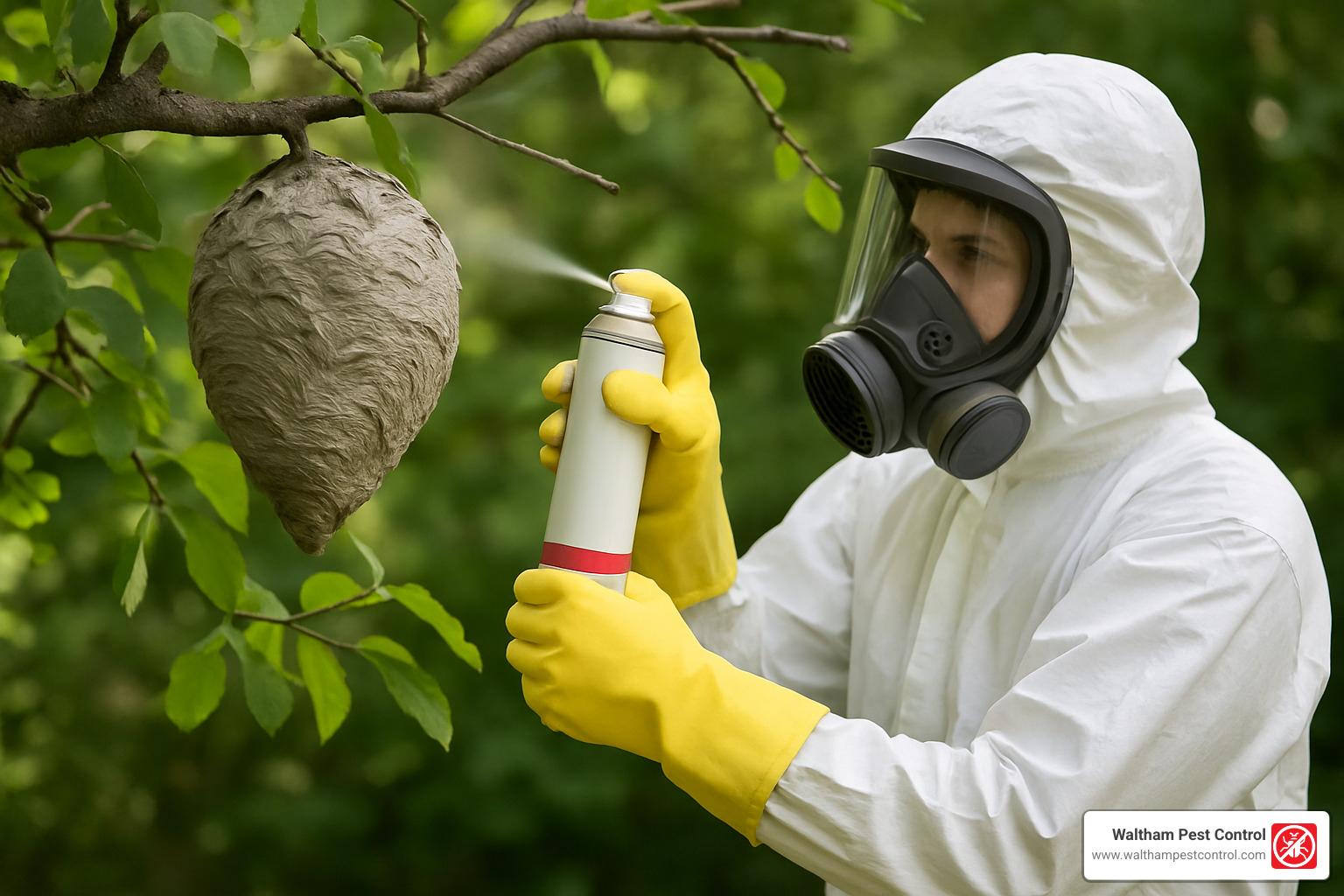
Your personal protective equipment forms your first and most critical line of defense. A full bee suit with attached veil and elastic cuffs creates a barrier between you and hundreds of potential stings. Leather gloves protect your hands, while closed-toe boots with pants tucked inside prevent hornets from finding their way up your legs.
Removal tools require careful selection for both effectiveness and safety. An extension pole measuring 8-12 feet helps maintain safe distance from the nest, while heavy-duty contractor-grade trash bags and duct tape ensure secure disposal. A red-filtered flashlight enables nighttime work without alerting the hornets, and insecticidal spray with 15-20 foot reach capability provides the distance you need for safe application.
Your safety equipment should include a first aid kit stocked with antihistamines, a fully charged cell phone for emergency calls, and pre-planned escape routes with clear pathways.
DIY Hornet and Wasp Nest Removal Techniques: Tips and Tricks
Step-By-Step Hornets Nest Removal at Night
Nighttime hornets nest removal offers your best chance for DIY success, but proper technique separates successful removal from emergency room visits.
Pre-removal planning happens during daylight hours when you can see clearly without alerting the hornets. Mark your approach path, clear obstacles and plan two separate escape routes. Identify the nest entrance hole and overall structure, measure distances to ensure your spray reaches effectively.
The night removal process begins with donning full protective equipment 30 minutes before starting. Approach the nest quietly using only red-filtered light, since regular flashlights agitate hornets. Position yourself 6-10 feet from the nest, then direct continuous spray into the entrance hole for a full 10 seconds.
Retreat immediately after spraying – back away quickly but calmly to a safe distance. Allow 24 hours minimum before approaching the nest again. After confirming no remaining activity, use your extension pole to knock the nest into a heavy trash bag, then double-bag and seal tightly.
Critical safety points include never using regular flashlights since white light agitates hornets, spraying continuously for the full 10 seconds, and absolutely refusing to attempt removal if you see any hornet activity after treatment.
Why Pros Win: Guaranteed Hornets Nest Removal & Long-Term Safety
Professional hornets nest removal delivers advantages that extend far beyond simply eliminating the visible nest. After decades in the pest control business, we’ve seen countless DIY attempts that miss critical details, leading to recurring problems.
Hidden satellite nests represent one of the biggest oversights in DIY removal. Large hornet colonies sometimes establish secondary nests nearby, and professionals know how to identify and locate these satellite colonies that homeowners typically miss.
Ladder and height safety becomes a serious concern since many nests require specialized equipment to reach safely. Professional technicians use commercial-grade ladders, safety harnesses, and extensive training to work at heights without risking falls or injuries.
Complete treatment involves multiple application methods that work together for maximum effectiveness. Professionals combine sprays for immediate knockdown, dusts for residual control, and follow-up inspections to ensure complete elimination.
Re-treatment warranties offer something DIY methods can’t match – guaranteed results. Most professional services include warranties covering re-treatment if hornets return to the same location.
When to Call a Professional: Signs Your Hornet and Wasp Nest Removal Requires Expert Attention
Keep Them Away: Long-Term Hornet Nest Prevention
After successful hornets nest removal, your next mission is keeping these unwanted guests from returning. Think of prevention as your property’s insurance policy against future hornet encounters – it’s much easier than dealing with angry colonies later.
The secret to long-term success lies in making your property less appealing to nest-building queens. These resourceful insects scout for perfect real estate in early spring, looking for protected spots with nearby food sources and building materials.
Sealing up your home’s weak spots is your first line of defense. Those small gaps in soffits and eaves might look insignificant, but they’re luxury condos to overwintering hornet queens. Walk around your property with a tube of exterior caulk and seal any openings larger than a quarter-inch.
Your landscape needs attention too. Pruning shrubs and trees eliminates the dense branching that hornets prefer for nest construction. Dead trees and large branches are particularly attractive, so remove them promptly.
Food source control plays a huge role in prevention. Hornets are attracted to sweet substances and protein sources, so secure trash can lids tightly and clean containers regularly. That fallen fruit under your apple tree? Remove it promptly, along with any outdoor pet food left sitting around.
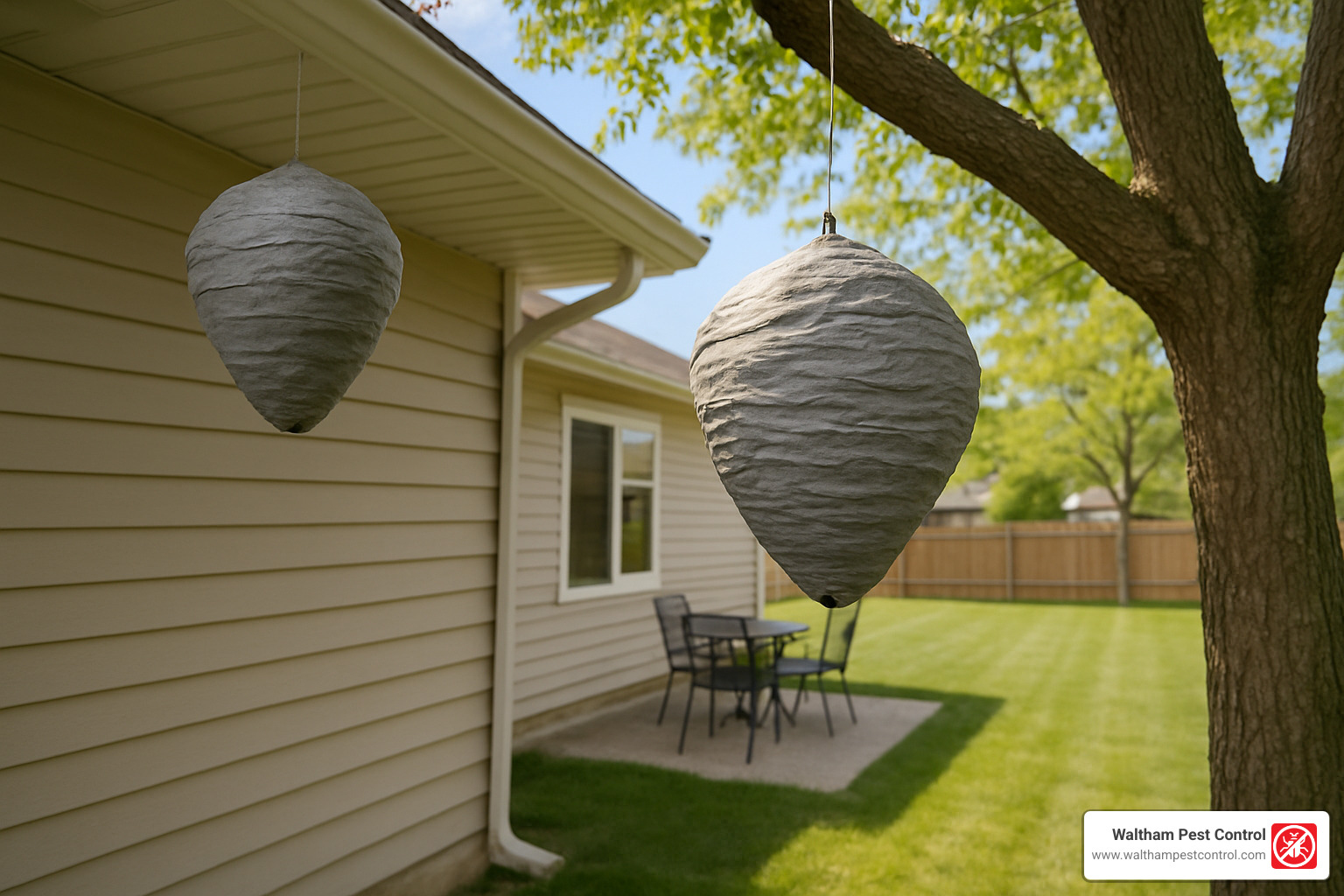
Here’s a clever trick many homeowners don’t know about: decoy nests actually work. Installing artificial wasp nests in early spring takes advantage of hornets’ territorial nature. They typically won’t establish colonies near existing nests, making decoys an effective deterrent.
Natural repellents can provide additional protection without harsh chemicals. Essential oil sprays made from peppermint, clove, or lemongrass create scent barriers that hornets prefer to avoid.
Natural and Eco-Friendly Methods for Hornet and Wasp Nest Removal
Property Maintenance Checklist
Regular property inspections are like routine health checkups – they catch problems while they’re still small and manageable. Early detection makes hornets nest removal infinitely safer and more effective than waiting until colonies reach full strength.
Weekly walk-arounds from April through October should become part of your routine. Focus on property perimeters, checking eaves, overhangs, and tree branches for new papery structures. Pay special attention to areas where nests appeared in previous years.
Your monthly deep inspections require more detective work. Use binoculars to safely examine high areas and tree canopies without getting dangerously close. Check attic spaces for signs of nesting activity.
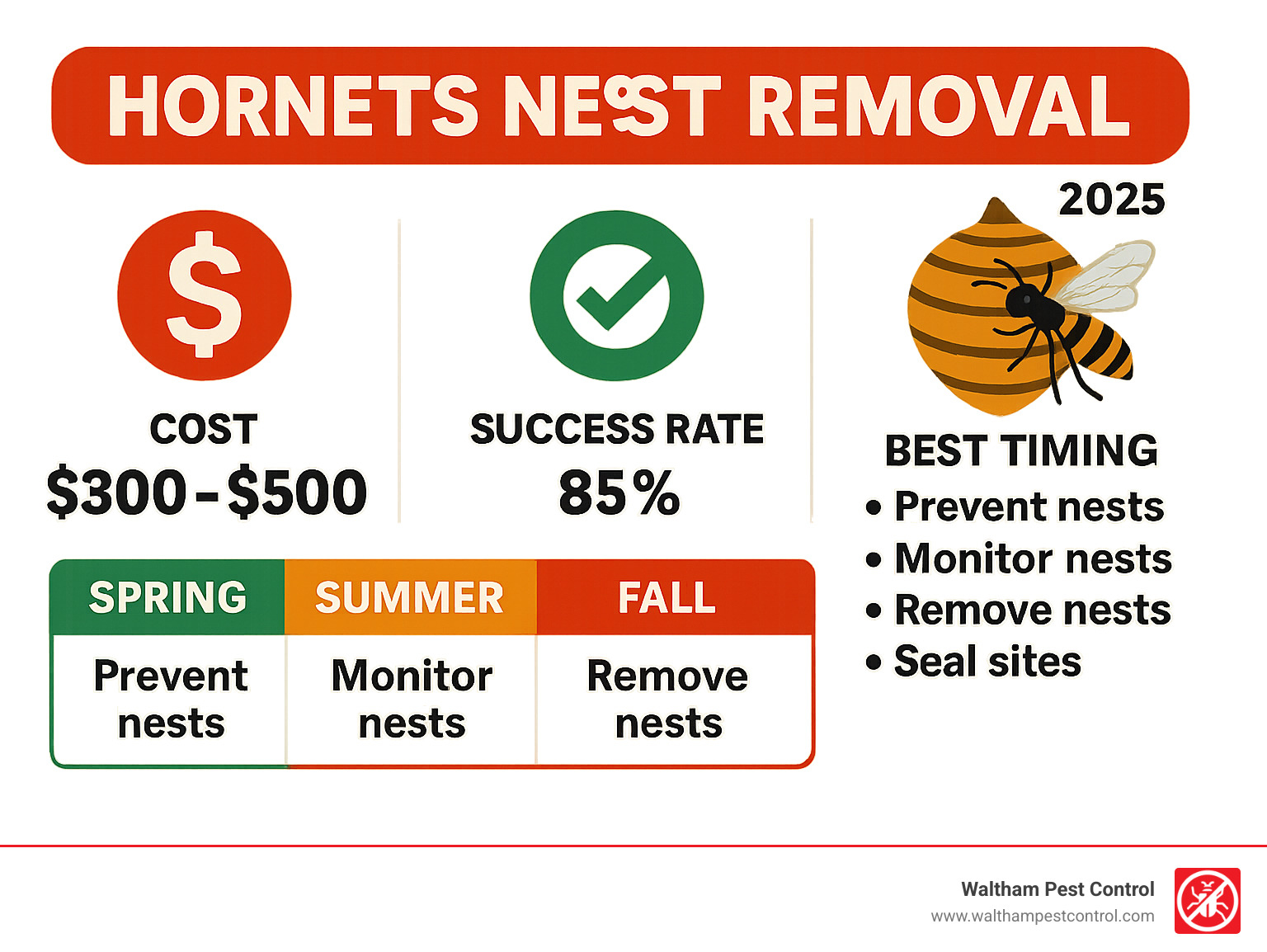
Seasonal timing matters tremendously. Spring inspections focus on preventing queen establishment during the critical nest-building season. Summer monitoring watches for new colony formation. Fall identification prepares for winter removal after colonies naturally die off.
Eco-Friendly Deterrents & Wildlife Benefits
While hornets nest removal is sometimes necessary for safety, understanding these insects’ ecological role helps you make smarter decisions about when removal is truly needed versus when peaceful coexistence might work.
Hornets are actually beneficial predators that consume enormous quantities of pest insects. A single colony can eliminate thousands of flies, caterpillars, and other garden pests during the summer season.
Natural deterrents work surprisingly well when applied consistently. Planting mint, eucalyptus, or citronella around outdoor living areas creates natural scent barriers. Installing yellow jacket traps away from activity areas redirects foraging insects without eliminating them entirely.
The most effective long-term strategy combines targeted removal when safety demands it with habitat modification and natural deterrents to reduce future problems.
Frequently Asked Questions about Hornets Nest Removal
Are hornets dangerous to pets and kids?
Hornets pose serious risks to both children and pets, making hornets nest removal a critical safety concern for Massachusetts families. The danger isn’t just theoretical – hornet venom is significantly more potent than bee venom, and these aggressive insects can sting multiple times without dying.
Children face the greatest risk because their smaller body weight means venom has more concentrated effects. Medical research shows that as few as 20 stings on a child can be potentially fatal, compared to 40 stings for adults. Even a single sting can trigger severe allergic reactions in sensitive individuals.
Our furry family members aren’t immune either. Dogs and cats often investigate interesting buzzing sounds, putting their faces dangerously close to defensive hornets. Pet stings typically occur around the nose and mouth area, where swelling can quickly become life-threatening by blocking airways.
Watch for these warning signs in children: difficulty breathing, rapid swelling around sting sites, nausea, dizziness, or widespread rash. In pets, look for excessive drooling, pawing at their face, swelling around the mouth, difficulty breathing, or unusual lethargy.
About 5% of the population has severe allergic reactions to hornet stings, making professional removal the safest choice for most families.
How can I tell if a nest is active or abandoned?
Determining whether a hornet nest is active or abandoned is absolutely crucial before attempting any hornets nest removal. The difference can mean the difference between a safe removal and a dangerous swarm attack.
Active nests are like busy airports – there’s constant traffic during daylight hours. Stand about 15 feet away and watch for hornets coming and going through the main entrance hole. You’ll also hear them – active colonies produce a distinctive low humming or buzzing sound.
Active nests look fresh and well-maintained, with clean, intact papery walls. Abandoned nests look weathered and neglected with deteriorating walls, faded colors, and tears that aren’t being repaired. Most importantly, there’s complete silence.
Seasonal timing gives you major clues. In Massachusetts, hornet colonies typically die off after our first hard frost, usually in late October or November. Any nest you find during winter months is almost certainly abandoned and safe for removal.
What should I do if I’m stung during hornets nest removal?
Getting stung during hornets nest removal is a serious situation that requires immediate, proper response. Unlike bee stings, hornet stings pack more venom and the insect can sting you multiple times.
Your first priority is getting away from the nest immediately. Hornets release alarm pheromones when they sting, which can trigger coordinated attacks from other colony members. Move quickly but calmly away from the area.
Once you’re safe, clean the sting site with soap and water to prevent infection. Apply a cold compress for 10-15 minutes to reduce swelling and numb the pain. Take an antihistamine like Benadryl to help control allergic reactions.
Watch carefully for signs of severe reaction: difficulty breathing, swelling of your face or throat, rapid pulse, dizziness, nausea, widespread rash, or loss of consciousness. These symptoms require immediate emergency medical attention.
Seek emergency care if you experience multiple stings (more than 10-15), stings in your mouth, nose, or throat area, or if you have any history of severe sting reactions.
Conclusion
Hornets nest removal doesn’t have to be a nightmare scenario that keeps you trapped indoors all summer. With the right knowledge, timing, and approach, you can reclaim your outdoor spaces and protect your family from these aggressive stinging insects.
Throughout this guide, we’ve covered everything from identifying different hornet species to understanding when DIY removal makes sense versus when it’s time to call in the professionals. The key takeaway? Safety always comes first. While small, easily accessible nests might tempt you to grab a can of spray and handle things yourself, most situations benefit from professional expertise to ensure complete elimination and prevent dangerous encounters.
Here’s the reality: hornet colonies can house hundreds of aggressive defenders capable of multiple stings with potent venom. When you factor in the 5% allergy risk in the general population, the potential for hidden satellite nests, and the specialized equipment needed for safe removal, professional hornets nest removal often provides better value than the DIY approach.
At Waltham Pest Control, we’ve been protecting Eastern Massachusetts families from stinging insects for over 40 years. Our licensed, insured technicians have safely handled thousands of nest removals, from small backyard nuisances to complex commercial infestations. We understand the unique challenges that Massachusetts homeowners face, from aggressive bald-faced hornets in suburban trees to European hornets nesting in historic home eaves.
What sets us apart isn’t just our four decades of experience – it’s our commitment to complete solutions. We don’t just knock down the visible nest and walk away. Our comprehensive approach includes identifying satellite colonies, treating wall voids where necessary, and providing follow-up monitoring to ensure your property stays hornet-free.
From our Burlington headquarters, we serve communities throughout Eastern Massachusetts, bringing the same professional standards and guaranteed results to every job, whether it’s a single nest in Cambridge or multiple colonies at a commercial property in Newton.
Don’t let hornets dictate where your family can safely enjoy your own property. Whether you’re dealing with an urgent nest near your front door or planning preventive measures for next season, our team is ready to help with the expertise and safety protocols that come from decades of pest control experience.
Ready to take back your outdoor spaces? Contact us today to schedule your inspection and find why thousands of Massachusetts homeowners trust Waltham Pest Control for safe, effective hornets nest removal.
Hornet and Wasps Nest Removal – Schedule your professional removal service for fast, guaranteed relief from dangerous hornet infestations.
