
Home Pest Control Solutions: Top 5 Proven Tips 2024

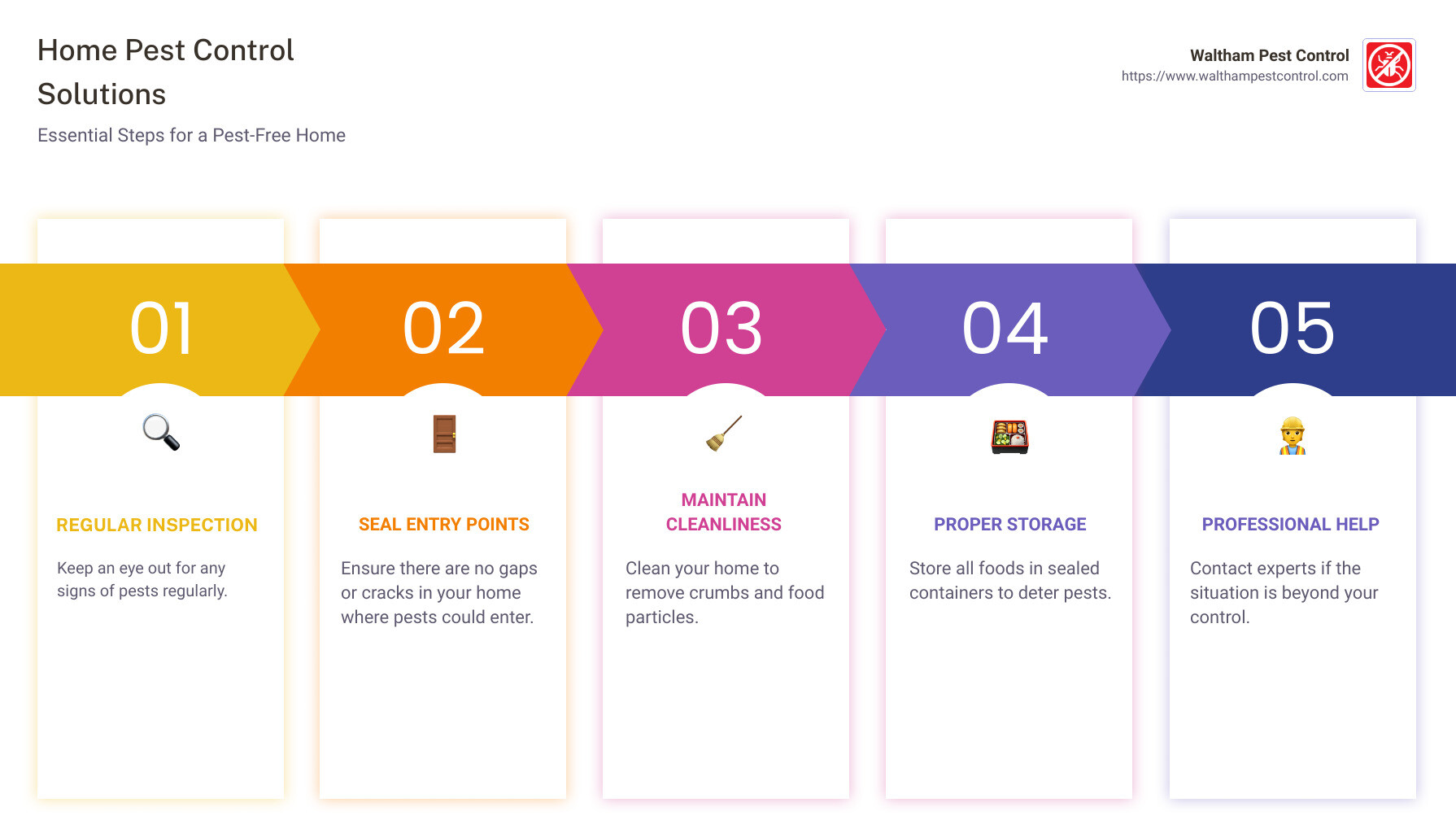
Home pest control solutions are essential for maintaining a safe and comfortable environment. Here’s a quick guide to help you understand what’s involved:
- Regular Inspection: Keep an eye out for any signs of pests regularly.
- Seal Entry Points: Ensure there are no gaps or cracks in your home that pests could enter through.
- Maintain Cleanliness: Clean your home to remove crumbs and food particles.
- Proper Storage: Store all foods in sealed containers to deter pests.
- Professional Help: Don’t hesitate to contact experts if the situation is beyond your control.
Year-round pest control is crucial in protecting your home from unwelcome guests. Whether it’s ants invading your kitchen in the summer, or rodents seeking warmth in the winter, pests can cause significant discomfort and damage if not properly managed. Proactively addressing these issues through effective solutions ensures your home remains a haven for you and your family.
I’m Waltham Pest Control, with over 40 years of experience in the pest control industry. I’ve dedicated my career to providing home pest control solutions that safeguard properties and create pest-free environments.
Basic Home pest control solutions terms:
– Child-safe pest control
– Comprehensive pest control
– Wildlife control services
Common Household Pests and Their Challenges
Pests can be more than just a nuisance; they can pose significant challenges to homeowners. Let’s explore some of the most common household pests and the unique difficulties they present.
Termites: The Silent Destroyers
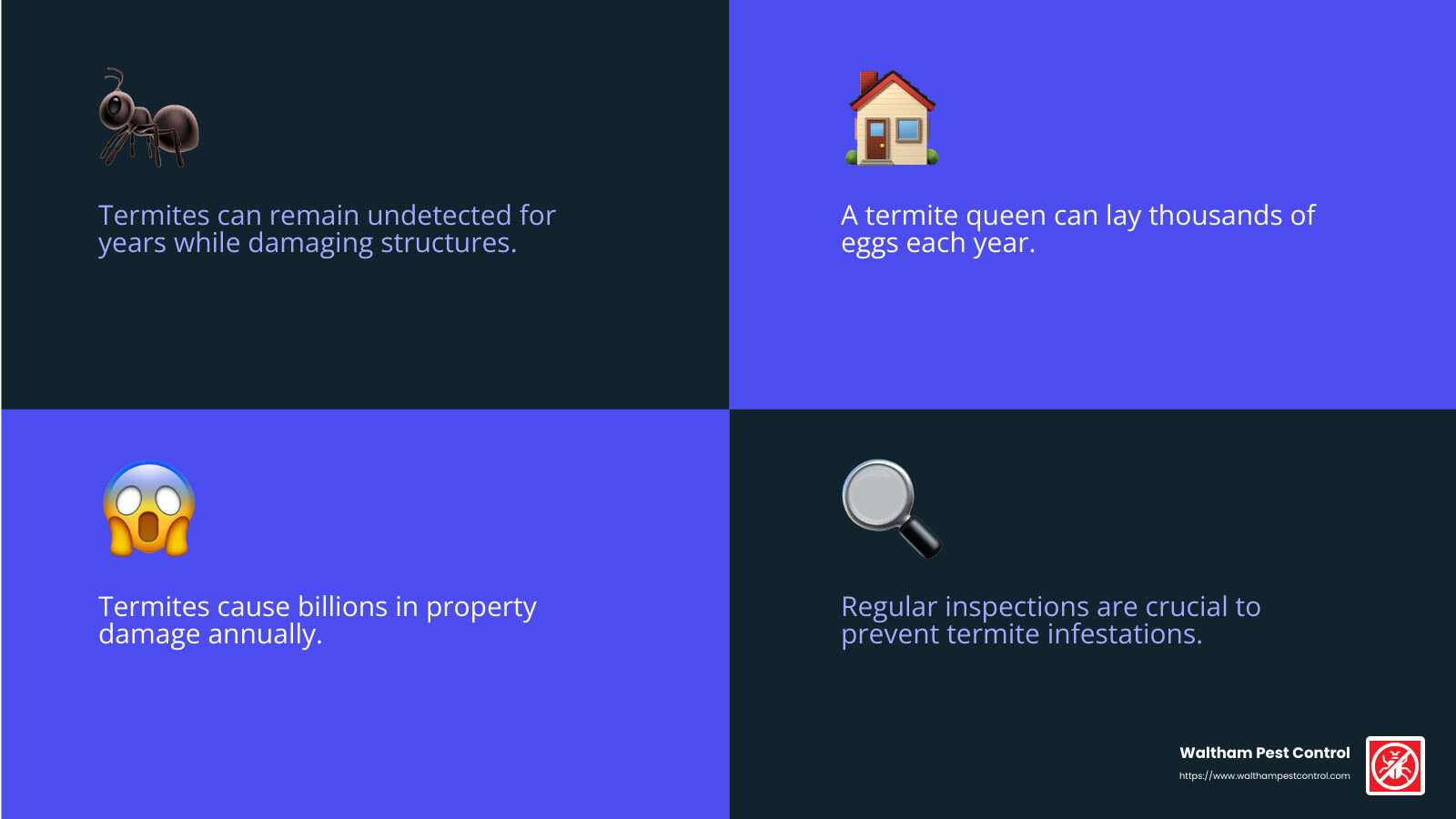
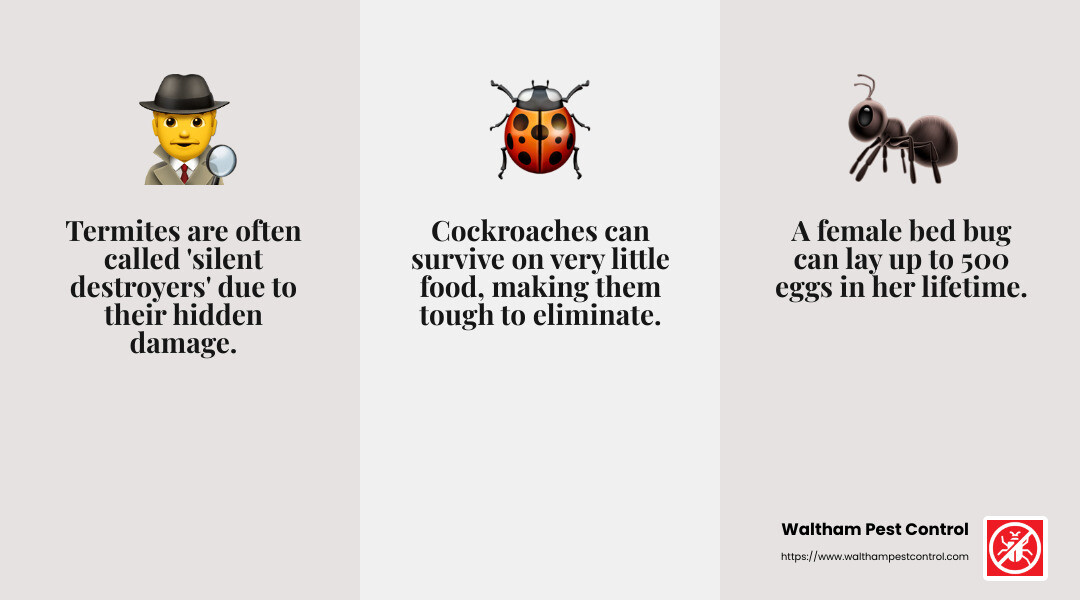
Termites are often called the “silent destroyers” because they can cause extensive damage to your home without you even realizing it. These pests feed on wood and can compromise the structural integrity of a building.
- Hiding Spots: Termites often hide in walls, floors, and ceilings, making them difficult to detect.
- Reproduction Rates: A single termite queen can lay thousands of eggs each year, leading to rapid infestations.
Bed Bugs: The Unwanted Travelers
Bed bugs are small, parasitic insects that can infest bedding, furniture, and luggage. They are notorious for their ability to hitchhike from place to place, making them a common concern for travelers.
- Hiding Spots: Bed bugs are experts at hiding in cracks and crevices, including mattress seams and behind headboards.
- Reproduction Rates: A female bed bug can lay up to 500 eggs in her lifetime, leading to fast-growing populations.
Cockroaches: Resilient and Rapid Breeders
Cockroaches are known for their resilience and ability to adapt to various environments. They are nocturnal creatures that can survive on very little food, making them tough to eliminate once they infest a home.
- Hiding Spots: Cockroaches prefer dark, moist areas such as kitchens and bathrooms.
- Reproduction Rates: The German cockroach, for instance, can produce between four and six egg cases in its lifetime, with each case containing 30-50 eggs.
Understanding these pests and their behaviors is the first step in developing effective home pest control solutions. By identifying their hiding spots and understanding their reproduction rates, homeowners can better strategize to keep these unwelcome guests at bay.
In the next section, we’ll explore the best home pest control solutions, including both natural and chemical methods, to help you tackle these persistent pests.
Best Home Pest Control Solutions
When it comes to keeping your home free from pests, having the right home pest control solutions is essential. Let’s explore both natural and chemical methods that can help you maintain a pest-free environment.
Natural Pest Control Methods
Natural pest control methods are popular for their eco-friendly approach and safety around children and pets. Here are some effective options:
- Essential Oils: Oils like peppermint, eucalyptus, and tea tree are known to repel pests like ants, spiders, and mosquitoes. Simply mix a few drops with water in a spray bottle and apply to affected areas.
- Vinegar: A versatile household staple, vinegar can deter pests like fruit flies and ants. Use it as a cleaning agent or mix with water to spray on surfaces where pests are present.
- Coffee Grounds: Used coffee grounds can repel pests such as ants and snails. Sprinkle them around your garden or entry points to keep these critters at bay.
- Herbs: Certain herbs like mint, basil, and rosemary can act as natural repellents. Planting them around your home or using their oils can help deter pests.
These natural methods are a great first line of defense and can be easily incorporated into your regular cleaning routine.
Chemical Pest Control Methods
For more persistent pest problems, chemical methods might be necessary. Here’s what you need to know:
- Pyrethrin and Pyrethroids: These are common ingredients in many insecticides. Derived from chrysanthemum flowers, pyrethrin is effective against a wide range of insects. Pyrethroids, synthetic versions, offer longer-lasting protection.
- Professional-Grade Products: Sometimes, DIY solutions aren’t enough, especially for severe infestations. Professional-grade products offer powerful and targeted pest control. These products are often used by experts and may require careful handling and application.
Chemical methods can be highly effective but should be used with caution. It’s important to follow instructions carefully to ensure safety for your family and pets.
Combining both natural and chemical methods can provide a comprehensive approach to pest control, helping you protect your home year-round. In the next section, we’ll discuss DIY home pest control solutions, including essential tools and a step-by-step guide for effective pest management.
DIY Home Pest Control Solutions
Taking a DIY approach to pest control can be a practical and cost-effective way to manage pests in your home. Here, we’ll cover the essential tools and products you need, along with a simple step-by-step guide to help you keep your home pest-free.
Essential Tools and Products
To effectively tackle pests on your own, it’s important to have the right tools and products at your disposal. Here’s a list of essentials:
- Insect Traps: These can be used to capture and monitor various pests like cockroaches and ants. Place them in areas where you’ve noticed pest activity.
- Bait Stations: Effective for controlling rodents and insects, bait stations provide a secure way to deliver poison to pests while keeping it out of reach of pets and children.
- Bug Foggers: Also known as bug bombs, these release an insecticide fog that can penetrate hidden areas where pests may be hiding. Use them for severe infestations.
- Repellents: Available in natural and chemical forms, repellents can deter pests from entering your home. Natural options include essential oils and herbal sprays.
Step-by-Step Guide
Once you have the right tools, follow these steps to maintain a pest-free home:
- Seal Cracks and Gaps: Inspect your home for any cracks or gaps in walls, windows, and doors. Use caulk or weatherstripping to seal these entry points and prevent pests from getting inside.
- Dispose of Garbage Properly: Regularly empty trash bins and use sealed containers to prevent attracting pests like rodents and flies. Food waste should be disposed of promptly.
- Reduce Clutter: Pests often hide in cluttered areas. Keep your home tidy and organized to minimize hiding spots. Focus on areas like basements, attics, and garages.
- Store Food Securely: Use airtight containers for storing food items in your pantry and kitchen. This will help keep pests like ants and weevils at bay.
By following these steps and using the right tools, you can effectively manage pests on your own. However, if you’re dealing with a severe infestation or a pest that poses health risks, it may be time to consider professional pest control services.
In the next section, we’ll explore the benefits of hiring professionals and what you can expect from a professional pest control service.
Professional Pest Control Services
When dealing with persistent or severe pest issues, hiring a professional pest control service can be a game-changer. Here’s why:
Benefits of Hiring Professionals
Expertise: Professionals bring years of experience and specialized knowledge to the table. They can identify the specific type of pest and understand its behavior, which is crucial for effective control. For example, a Waltham Pest Control technician like Eric (as mentioned in customer testimonials) can quickly diagnose and address pest problems with precision.
Advanced Technology: Professional services often use state-of-the-art equipment and methods. This includes tools that are not available to the average homeowner, ensuring a more thorough and effective treatment.
Custom Plans: Each home is unique, and so are its pest problems. Professionals offer custom plans that address the specific needs of your home, ensuring targeted and efficient pest control solutions.
What to Expect from a Professional Service
Inspection: The process begins with a comprehensive inspection of your home, identifying current infestations and potential problem areas. This step is crucial in crafting a targeted treatment plan.
Treatment: Professionals apply the appropriate treatments to eliminate pests. This may involve using specialized chemicals like pyrethrin and pyrethroids, which are effective against a wide range of pests.
Fortification: After treatment, steps are taken to fortify your home against future infestations. This may include sealing entry points, caulking gaps, and ensuring that potential breeding sites are eliminated.
Monitoring: Pest control doesn’t stop with a single visit. Professionals will set up monitoring systems to track pest activity and ensure that the treatments are working effectively.
Reporting: A detailed report is provided after each service, outlining what was done and any recommendations for further action. This transparency ensures you are fully informed about the state of your home’s pest control.
Follow-Up: Regular follow-ups are a part of professional services to ensure that pests do not return. This ongoing support provides peace of mind and helps maintain a pest-free environment year-round.
By hiring professional pest control services like those offered by Waltham Pest Control, you not only tackle existing pest problems but also prevent future issues. This comprehensive approach keeps your home safe and comfortable throughout the year.
In the next section, we’ll dig into seasonal pest control tips to help you maintain a pest-free home as the seasons change.
Seasonal Pest Control Tips
Keeping your home pest-free requires different strategies throughout the year. Here are some seasonal pest control tips to help you tackle pests effectively.
Spring and Summer
Landscaping: As plants bloom and grow, they can become hiding spots for pests like ants and mosquitoes. Regularly trim shrubs and mow the lawn to reduce their habitat. Consider planting pest-repelling plants like lavender and marigolds.
Standing Water: Mosquitoes thrive in stagnant water. Check your yard for puddles, clogged gutters, or any containers that might collect rainwater. Empty these regularly to keep mosquitoes at bay.
Outdoor Dining: Warmer months are perfect for outdoor meals, but they can attract pests. Keep food covered and clean up promptly after meals. Use citronella candles to deter mosquitoes and other flying insects.
Fall and Winter
Sealing Entry Points: As temperatures drop, pests seek warmth indoors. Inspect your home’s exterior for cracks and gaps and seal them with caulk or weatherstripping. Pay special attention to areas around windows, doors, and utility pipes.
Indoor Cleanliness: Rodents and insects are drawn to food sources. Maintain a clean home by regularly sweeping and vacuuming. Store food in airtight containers and promptly dispose of garbage.
Storage Practices: Cooler weather often means more storage activities. Use plastic bins with tight-fitting lids instead of cardboard boxes, which can harbor pests. Keep storage areas organized and clutter-free to minimize hiding spots.
By adapting your pest control methods to the season, you can effectively manage and prevent pest issues year-round. In the next section, we’ll address some frequently asked questions about home pest control solutions.
Frequently Asked Questions about Home Pest Control Solutions
What is the best way to eliminate household pests?
Eliminating household pests involves a combination of regular cleaning, secure food storage, and patching holes. Regular cleaning helps remove crumbs and spills that attract pests like ants and cockroaches. Sweep and vacuum floors regularly, and ensure kitchen surfaces are wiped clean.
Secure food storage is crucial. Use airtight containers to store food items and keep them off countertops. This simple step can deter pests from invading your kitchen.
Patching holes is another effective method. Inspect your home for cracks and gaps, especially around windows, doors, and baseboards. Seal these openings with caulk or weatherstripping to prevent pests from entering.
What is the hardest pest to get rid of?
Some pests are notoriously difficult to eliminate, with termites, bed bugs, and cockroaches topping the list. Termites can cause severe structural damage as they feed on wood, often going unnoticed until significant harm is done. Regular inspections and professional help are recommended for termite control.
Bed bugs are tiny, resilient, and adept at hiding in mattresses, furniture, and even luggage. They require thorough treatment, often multiple times, to eradicate completely. Professional intervention is often necessary.
Cockroaches are tough survivors. They reproduce quickly and thrive in hidden spaces. Effective control requires persistent cleaning, sealing of entry points, and sometimes chemical treatments.
What do exterminators use around the house?
Exterminators use a range of products and methods to control pests effectively. Two common chemicals are pyrethrin and pyrethroids. These compounds are derived from chrysanthemum flowers and are used to target a wide variety of insects. They work by affecting the nervous system of pests, leading to their elimination.
Exterminators may also use traps, baits, and other integrated pest management techniques to ensure comprehensive control. Their expertise in selecting the right products and methods ensures effective and safe pest control for your home.
Conclusion
At Waltham Pest Control, we pride ourselves on delivering high-quality service with a steadfast commitment to protecting your home from pests year-round. With over 40 years of experience, we understand the unique challenges that pests present in Eastern Massachusetts. Our team is not only licensed and insured, but also dedicated to providing cost-effective solutions custom to your specific needs.
We believe in a proactive approach to pest management. Our experts use advanced technology and science-backed methods to ensure your home remains a safe and comfortable environment. From thorough inspections to customized treatment plans, we cover every aspect of pest control with precision and care.
Our commitment to quality service means that we are always ready to address your concerns and provide ongoing support. Whether it’s sealing entry points to prevent future infestations or offering detailed reports and follow-ups, we are here to give you peace of mind.
For more information on how we can help you maintain a pest-free home, visit our Waltham Pest Control service page. Let us partner with you in safeguarding your home with our licensed, insured, and cost-effective solutions.
