

Get rid of roof rats: 5 Proven Solutions
Unwanted Guests: Understanding and Eliminating Roof Rats
Hearing scratching noises from your attic at night? You might need to get rid of roof rats. These agile pests are more than a nuisance; they cause serious property damage and pose health risks to your family.
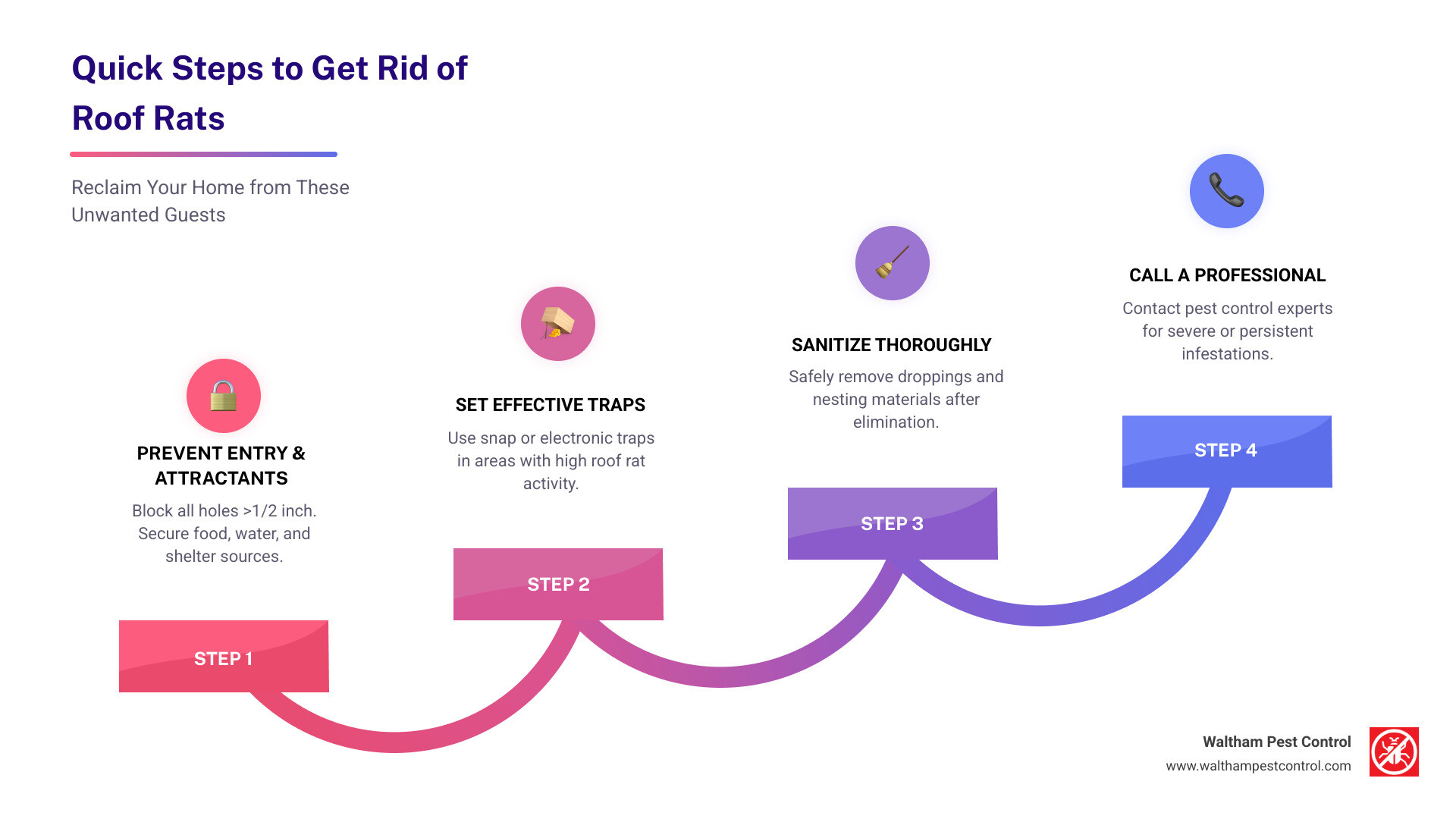
Here’s a quick overview for addressing a roof rat problem:
- Seal Entry Points: Block all holes larger than 1/2 inch.
- Remove Attractants: Secure food, water, and shelter sources.
- Set Traps: Use snap or electronic traps in high-activity areas.
- Clean Up: Safely remove droppings and nests after elimination.
- Call a Pro: Contact an expert for severe or persistent infestations.
As expert climbers, roof rats often invade attics and upper levels of homes seeking shelter and food. Once inside, they multiply quickly, turning a small issue into a major problem. This guide will help you understand, prevent, and eliminate them.
I’m Waltham Pest Control, President and CEO of Waltham Pest Control. With over 40 years of experience, our team helps homeowners in Eastern Massachusetts successfully get rid of roof rats and other pests.
Get rid of roof rats vocab explained:
Are You Sharing Your Home with Roof Rats?
Before you can get rid of roof rats, you need to confirm your opponent. Roof rats (also called black rats or ship rats) have unique habits that distinguish them from their ground-dwelling cousins, Norway rats. Identifying the correct species is the first step toward an effective solution.
Roof Rat vs. Norway Rat: Know Your Enemy
A roof rat is a nimble climber, while a Norway rat is a stocky burrower. Their different behaviors require different control strategies. Here’s how to tell them apart:
| Characteristic | Roof Rat (Rattus rattus) | Norway Rat (Rattus norvegicus) |
|---|---|---|
| Body | Slender, sleek | Stockier, heavier-bodied |
| Nose | Pointed | Blunt |
| Ears | Large, prominent, almost hairless | Smaller, less prominent |
| Eyes | Large | Small |
| Tail | Longer than head and body combined (can reach nose when pulled over back) | Shorter than head and body combined (reaches only to middle of skull) |
| Color | Typically black, gray, or brown with a paler underbelly | Brown or gray |
| Weight | Around 5 to 10 ounces | Between 7 to 18 ounces |
| Nesting | Primarily arboreal (above ground): attics, trees, dense vegetation, wall voids | Primarily burrowing: ground burrows, basements, lower floors, woodpiles |
| Climbing | Excellent climber, agile | Poor climber, prefers ground level |
| Foraging | Up to 300 feet or more from nests | 100 to 500 feet from nests |
| Diet | Omnivorous, prefers fruits, nuts, seeds, berries, vegetables, slugs, snails | Omnivorous, prefers grains, meats, fish, nuts, fruits, garbage |
This distinction is critical. For roof rats, you must focus trapping efforts in liftd areas like attics. They are also cautious of new objects, so traps may require a few days to be accepted.
If you’re unsure, our experts at Waltham Pest Control can identify the pest and create a plan to get rid of roof rats effectively. Learn more about our services for rats.
Telltale Signs of a Roof Rat Infestation
Roof rats are nocturnal, so you may only see the evidence they leave behind. Recognizing these signs early helps you tackle an infestation before it grows.
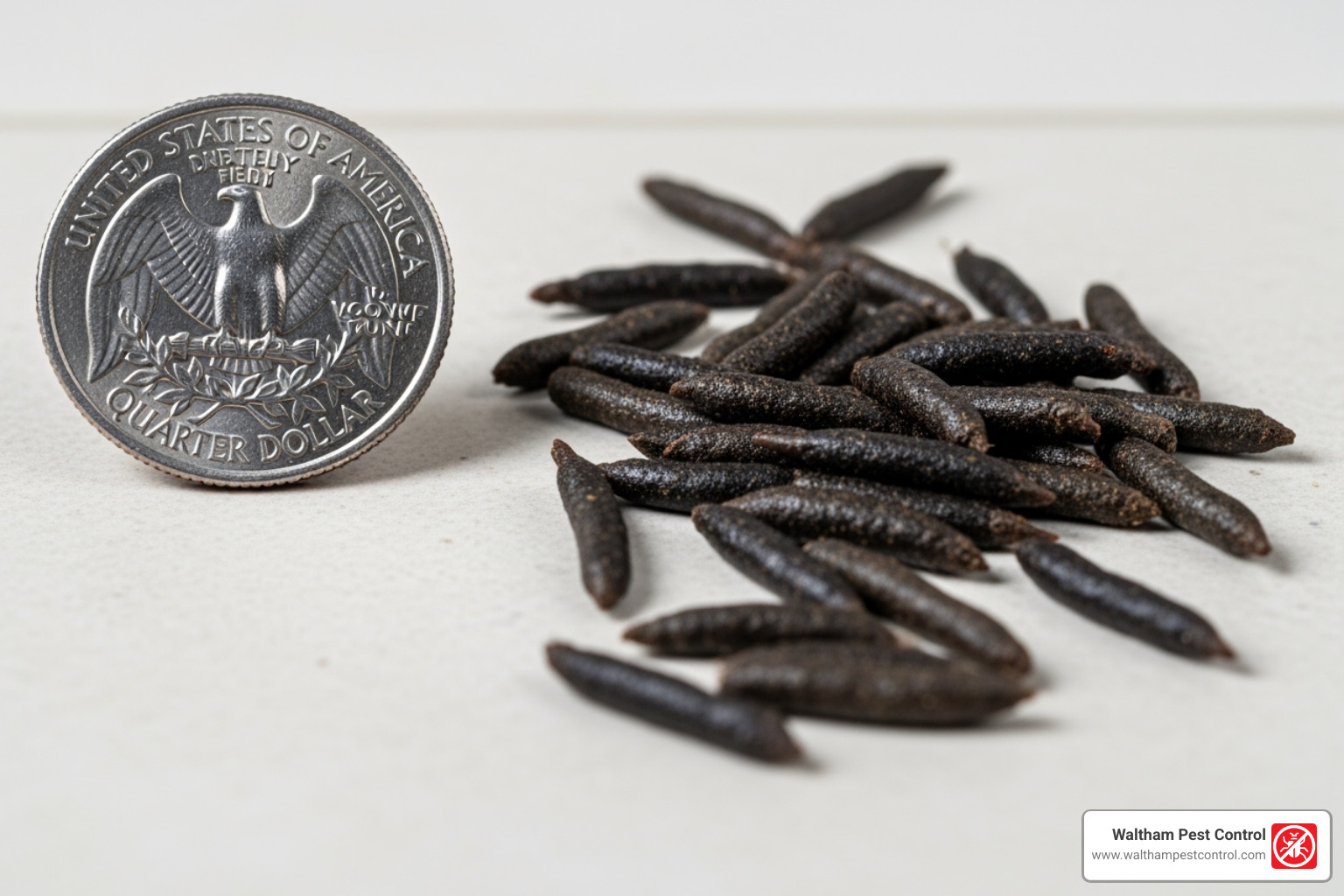
- Droppings: Look for dark, pellet-like droppings about 1/2 inch long with pointed ends. You’ll find them in attics, along travel paths, and near food sources.
- Noises: Scratching, scurrying, or gnawing sounds from walls, ceilings, or attics, especially at night, are a strong indicator of rodents.
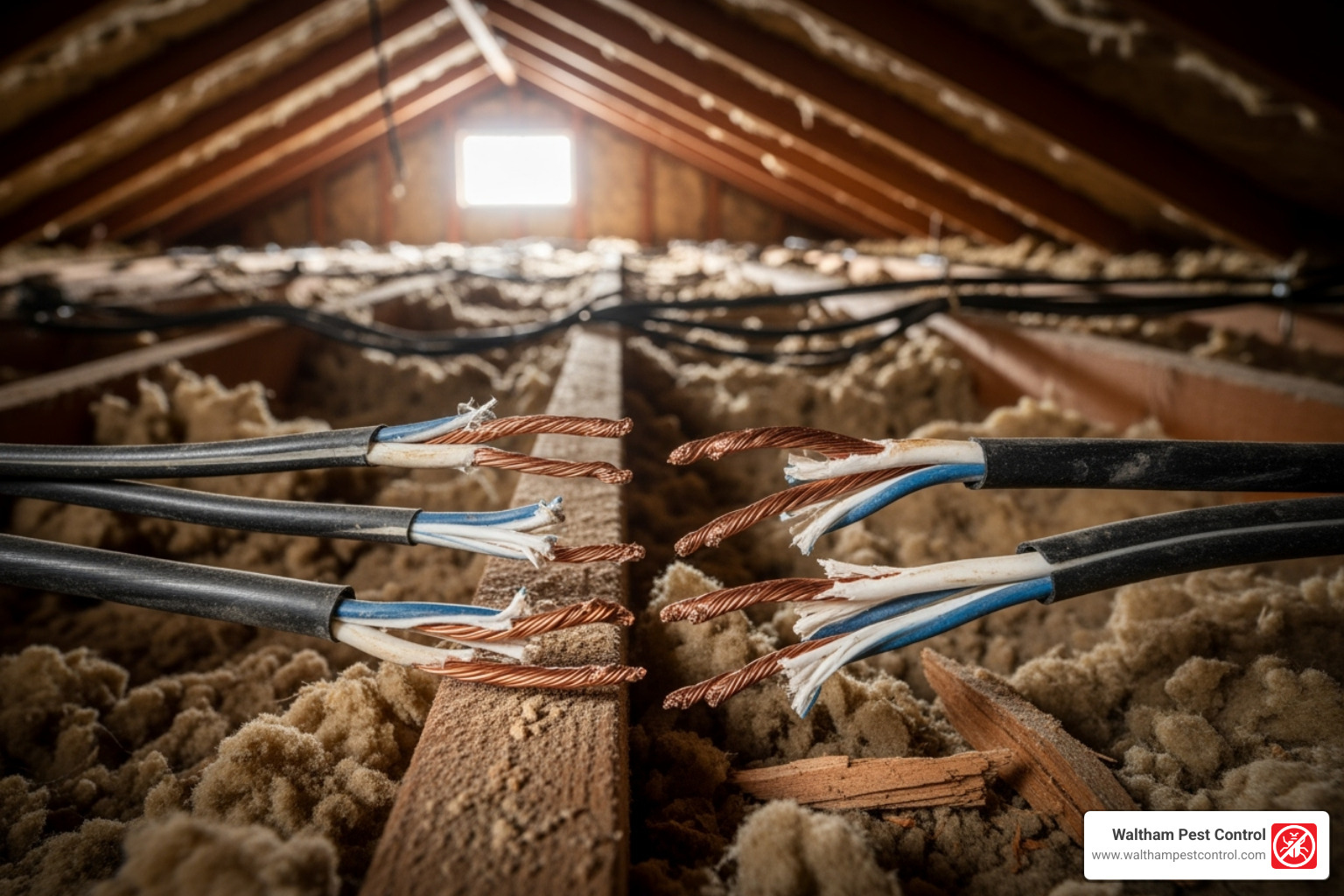
- Gnaw Marks: Rats constantly chew to manage their teeth. Check for gnaw marks on wood, pipes, electrical wires, and food packaging. Chewed wires are a serious fire hazard.
- Grease Marks (Rub Marks): As rats use the same routes, their body oils leave dark, greasy smudges along walls, rafters, and pipes.
- Nests: Roof rats build messy, ball-shaped nests from shredded insulation, paper, and fabric in hidden, liftd spots like attics, wall voids, and soffits.
- Outdoor Signs: Look for hollowed-out citrus fruits in your yard. You might also spot rats climbing trees or utility lines around dusk.
If you notice these signs, it’s time to act. Ignoring them allows the population to grow, leading to more damage and health risks. More on identifying a rat infestation in your home.
The Hidden Dangers: Damage and Health Risks
A roof rat infestation is more than an annoyance; it brings serious property damage and significant health threats to your household.
Property Damage Caused by Roof Rats
Roof rats must constantly gnaw to keep their teeth from overgrowing, and your home’s structure often becomes their target. This behavior leads to several dangers:
- Fire Hazards: Chewing on electrical wires in attics and walls can expose live currents, creating a severe risk of electrical fires.
- Structural & Water Damage: Gnawing can weaken wooden beams and rafters. Rats may also chew through plastic or metal pipes to access water, causing costly leaks and water damage.
- Insulation Damage: They tear up and tunnel through insulation, reducing its effectiveness and increasing your energy bills.
- Food Contamination: Stored food in pantries, pet food, and garden produce can be spoiled by rat urine, feces, and hair, making it unsafe to eat.
Health Risks Associated with Roof Rats
Beyond property damage, roof rats are carriers of diseases and pathogens that pose a direct threat to your family and pets.
- Disease Transmission: They can transmit diseases like Leptospirosis, Salmonellosis (food poisoning), and Rat-bite fever. Pathogens spread through direct contact, bites, or contamination from their urine and droppings.
- Contamination: Their waste contaminates surfaces, food, and air, spreading filth and bacteria throughout your home. Always wear protective gear like gloves and a mask when cleaning up after rodents.
- Parasites: Rats can bring fleas, ticks, and mites into your home, which can infest pets and people and transmit their own diseases.
- Allergies & Asthma: Rat dander, urine, and droppings are potent allergens that can trigger allergic reactions and worsen asthma symptoms, particularly in sensitive individuals.
Given these risks, addressing a roof rat problem quickly is essential. At Waltham Pest Control, we provide solutions that protect your home and your family’s health. Explore our rodent problem solutions today.
Your First Line of Defense: Prevention and Exclusion
The most effective way to get rid of roof rats is to prevent them from entering in the first place. By sealing entry points and making your property less attractive, you can stop an infestation before it starts.
Rat-Proofing Your Home: Sealing Entry Points
Roof rats are flexible climbers that can squeeze through openings as small as a nickel (1/2 inch). A thorough inspection is the first step to blocking their access.
Walk around your home’s exterior, looking from the foundation to the roofline. Pay close attention to gaps around pipes, utility lines, vents, eaves, and soffits. Once you’ve identified potential entry points, seal them with materials rats can’t chew through.
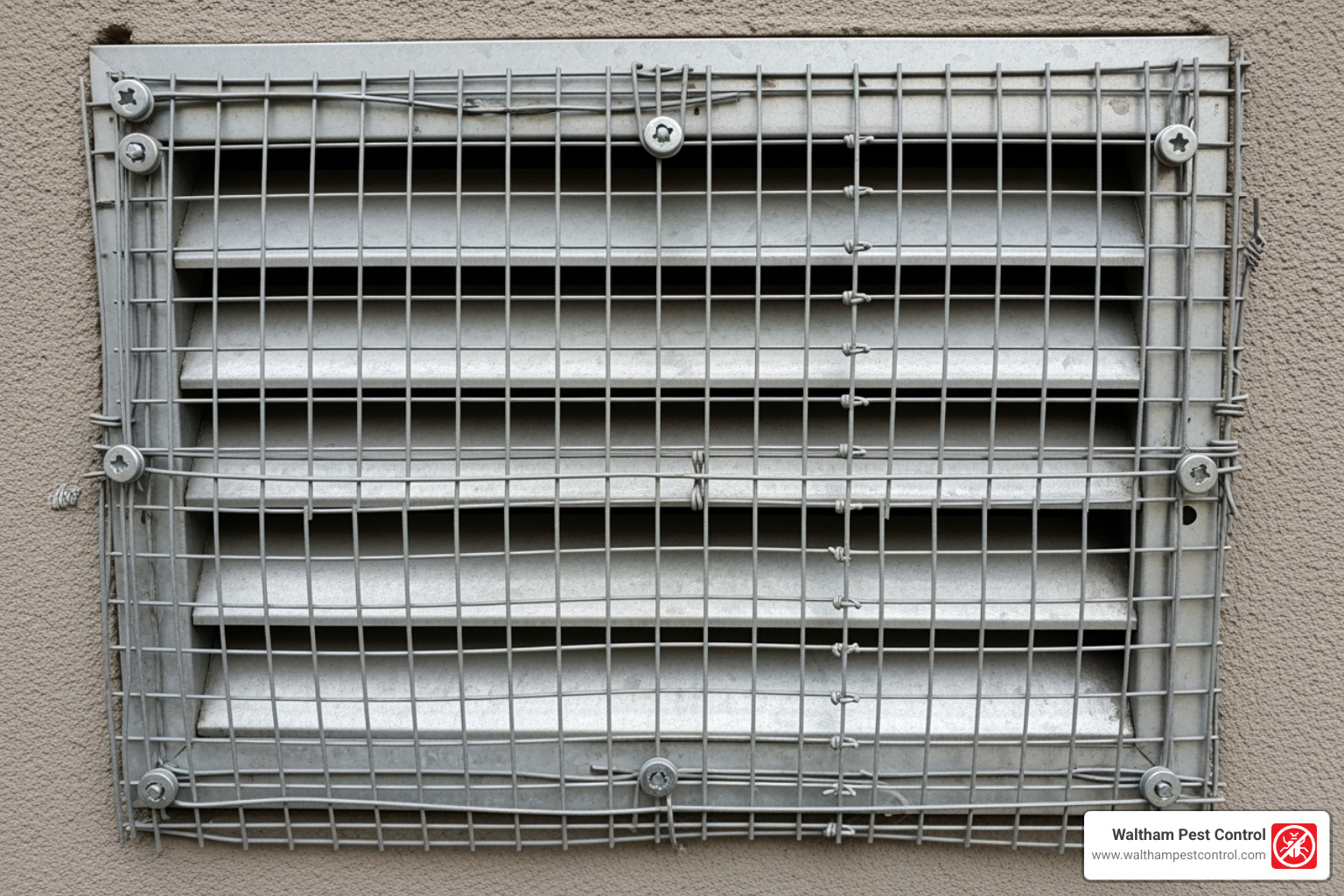
Use steel wool for small gaps (secured with caulk), 1/2-inch, 18-gauge wire mesh for larger openings like vents, and metal flashing to seal gaps around pipes. Avoid using materials like expanding foam, caulk, or wood alone, as rats can easily gnaw through them. Since roof rats are climbers, sealing high entry points near the roof is especially critical.
This physical barrier approach is the most effective long-term solution for rodent control. Details on rodent prevention and control.
Habitat Modification: Making Your Yard Uninviting
Even a perfectly sealed home can be targeted if your yard provides food, water, and shelter. Make your property as unappealing to rats as possible.
- Trim Vegetation: Keep tree branches at least 3-6 feet from your roof and walls. Cut back dense ivy and shrubs that provide covered pathways to your home.
- Remove Food Sources: Regularly clean up fallen fruit from trees. Store pet food in airtight containers and don’t leave it out overnight. Consider removing bird feeders temporarily or using rat-proof designs.
- Eliminate Water: Fix leaky outdoor faucets and irrigation systems. Remove standing water from bird baths, clogged gutters, and empty containers.
- Improve Sanitation: Use garbage cans with tight-fitting lids. Store firewood at least 18 inches off the ground and away from your house. Clear away debris piles and general clutter that can serve as shelter.
By removing these attractants, you encourage rats to move on to easier targets. Help with a rat problem in the garden.
How to Get Rid of Roof Rats: An Eradication Guide
If roof rats are already inside, a direct approach is needed to get rid of roof rats. This typically involves trapping, though professional guidance is key for severe issues.
Trapping: The Recommended Method to get rid of roof rats
For removing rats inside your home, trapping is the preferred method. It confirms removal and avoids the odor of a dead rat decaying in a wall or attic.
- Choose the Right Traps: Classic wooden snap traps are effective and affordable. Electronic traps offer a quick, high-voltage shock and are often reusable, with indicator lights to signal a catch.
- Bait and Placement: Use a small amount of bait like peanut butter, dried fruit, or nuts. This forces the rat to interact with the trap trigger. Since roof rats are climbers and wary of new objects, place traps along their runways in liftd locations like attic rafters and ledges. Position them perpendicular to walls. For safety, always place traps where children and pets cannot access them.
- Disposal: Wear gloves when handling a captured rat. Place the rodent in a sealed plastic bag and dispose of it in an outdoor trash can. Wash your hands thoroughly afterward.
For an active infestation, using multiple traps is key to resolving the problem quickly. Find the best way to kill rats and regain your peace of mind.
Safe Use of Rodenticides to get rid of roof rats
Rodenticides (rat baits) can be part of a plan for severe infestations, but they must be used with extreme caution due to risks to children, pets, and wildlife.
- When to Consider Baits: Baits are best reserved for outdoor use under the guidance of a pest control professional. The risk of a poisoned rat dying in an inaccessible area and creating a foul odor is a major drawback of indoor use.
- Use Bait Stations: Never place loose bait pellets. Always use tamper-resistant bait stations, which are designed to allow rodents access while keeping the poison secure from children and non-target animals.
- Understand the Risks: Rodenticides can cause secondary poisoning if a pet or wild animal eats a poisoned rat. Due to these significant risks, we strongly recommend consulting a professional service like Waltham Pest Control for any rodenticide application.
Our trained technicians can deploy these products safely and effectively. Information on the chemical control of rodents.
What About Repellents?
While the idea of a simple repellent is appealing, most commercially available options are not effective long-term solutions.
- Ultrasonic Devices: Studies show these devices have little to no lasting effect. Rats quickly get used to the sound or simply avoid the immediate area.
- Natural Repellents: Scents like peppermint oil, cayenne pepper, or ammonia may act as a minor, temporary deterrent in a small area but will not solve an established infestation.
For a permanent solution to get rid of roof rats, focus on proven methods like exclusion and trapping.
Frequently Asked Questions about Roof Rat Control
Dealing with roof rats brings up many questions. Here are answers to some of the most common inquiries we receive from homeowners.
How long does it take to get rid of roof rats?
The timeframe to get rid of roof rats varies. The size of the infestation and the methods used are key factors. A small issue might be resolved in a few days, while a large, established colony can take several weeks. A comprehensive approach combining exclusion, sanitation, and strategic trapping is the fastest route. For persistent problems, professional intervention is the most efficient solution.
What does a roof rat nest look like?
A roof rat nest is typically a messy, ball-shaped structure built from soft materials. They use shredded insulation, paper, fabric, twigs, and leaves. You’ll find these nests in liftd, hidden locations like attics, wall or ceiling voids, soffits, or within dense outdoor vegetation like trees and thick shrubs.
Can roof rats climb walls?
Yes, absolutely. Roof rats are exceptional climbers, which is how they get their name. Their agility allows them to easily scale rough vertical surfaces like brick, stucco, and wood siding. They also use trees, vines, utility lines, and pipes as ladders to reach your roof and find entry points into your home’s upper levels.
When to Call a Professional for Your Rat Problem
Sometimes, DIY methods aren’t enough to solve a rat problem. If you’ve tried trapping and sealing entry points but still hear scratching, it’s time to call for professional help.
Consider calling an expert for:
- Persistent Infestations: If your efforts haven’t worked after a few weeks, the rats may have learned to avoid your traps or are using entry points you haven’t found. Continuing with ineffective methods allows the population to grow.
- Large-Scale Problems: Frequent rat sightings or droppings in multiple areas suggest an established colony that is difficult to manage without professional tools and strategy.
- Safety Concerns: Professionals are equipped to handle the health risks associated with cleaning rat waste and can safely deploy control methods without endangering your family or pets.
- Peace of Mind: Your home should be a sanctuary. If dealing with rats is causing stress, a professional service provides the confidence that the problem is handled correctly and completely.
At Waltham Pest Control, we have over 40 years of experience helping homeowners in Eastern Massachusetts get rid of roof rats. Our licensed technicians conduct thorough inspections to identify all entry points and develop a customized, long-term solution for your home.
We serve homeowners and businesses throughout Eastern Massachusetts, including Acton, Amesbury, Andover, Arlington, Boston, Burlington, Cambridge, Concord, Framingham, Lexington, Lowell, Newton, Peabody, Quincy, Waltham, and surrounding communities.
Don’t let roof rats compromise your home’s safety or your family’s health. Schedule your professional rat control service today and let us help you reclaim your space.
Like us on Facebook!
