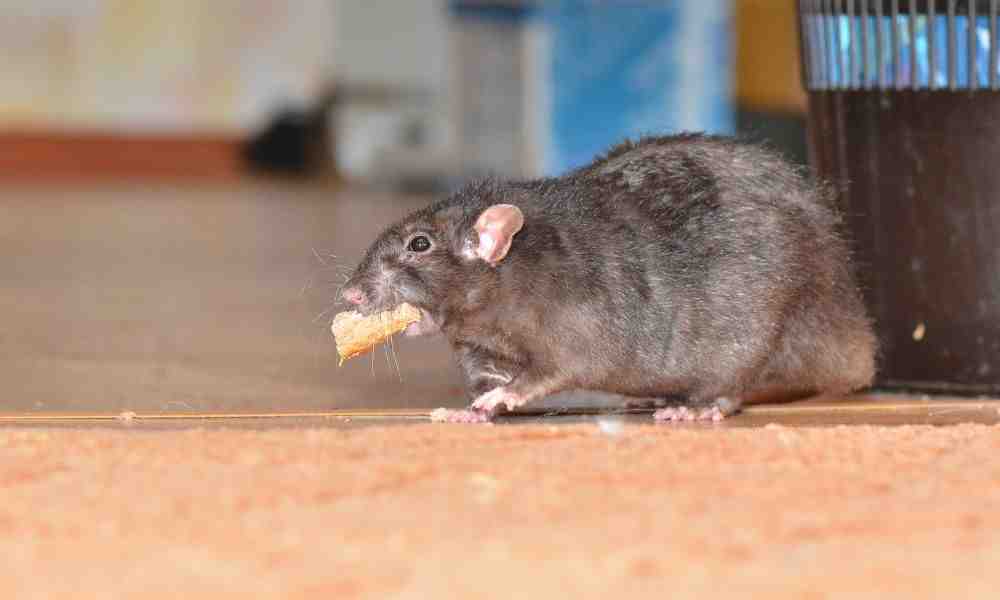

Get Rid of Rats at Home: 7 Surefire Tips for 2025

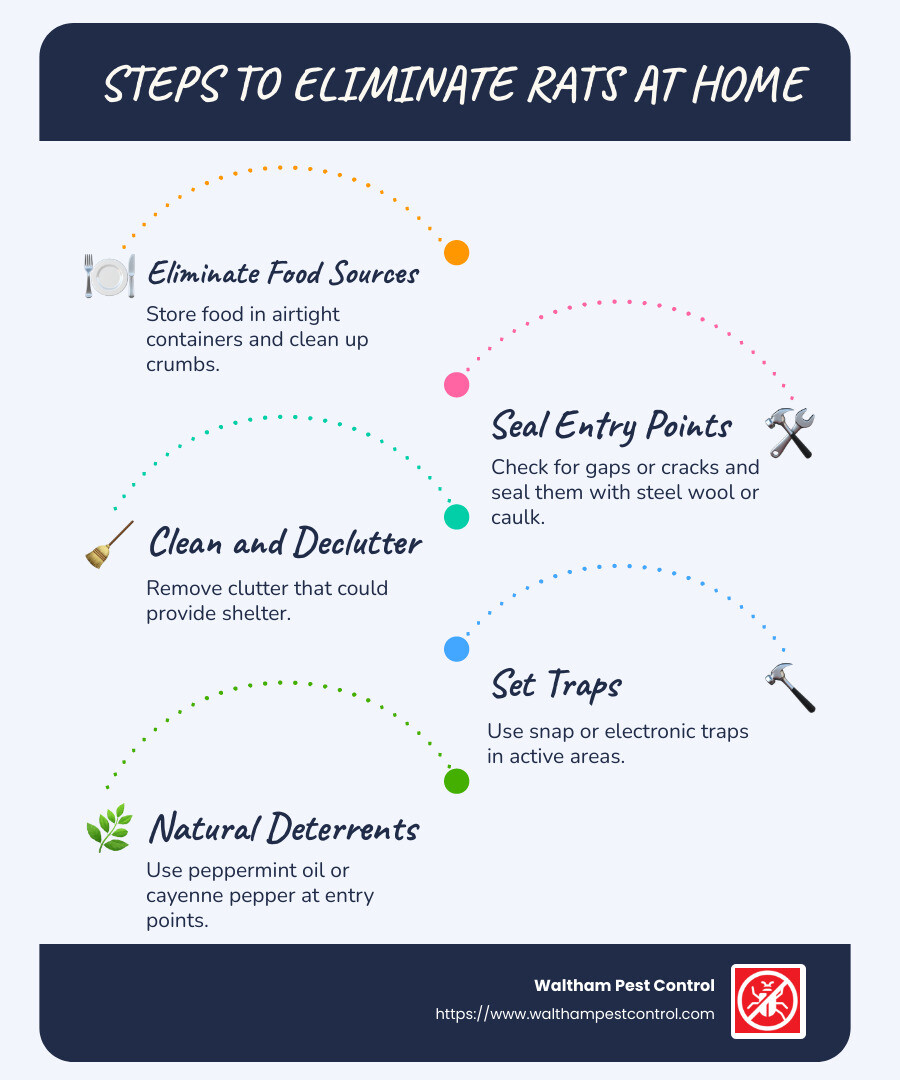
To get rid of rats at home quickly and effectively, follow these steps:
- Eliminate Food Sources: Store food in airtight containers and clean up crumbs.
- Seal Entry Points: Check for gaps or cracks and seal them with materials like steel wool or caulk.
- Clean and Declutter: Remove clutter that could provide shelter to rats.
- Set Traps: Use snap traps or electronic traps in active areas.
- Natural Deterrents: Use peppermint oil or cayenne pepper at entry points.
- Professional Help: Contact a pest control company if the problem persists.
Rat infestations are more than just a nuisance; they pose serious risks to your health and property. These cunning creatures are not picky and can make themselves at home quickly. They can transmit diseases like leptospirosis and hantavirus, as well as cause significant property damage by gnawing on wires and insulation. That’s why prompt action to control and eliminate them is crucial.
I’m Waltham Pest Control, President & CEO of Waltham Pest Control Co., Inc. With over 40 years of experience, I’ve helped countless Massachusetts homeowners successfully get rid of rats at home. Let’s dig into why controlling these pests is so important.
Understanding Rats
Rats are incredibly adaptable creatures, which makes them both fascinating and challenging to control. Knowing their behavior, species, habitat, diet, and reproduction is key to effectively managing these pests.
Rat Species
In the U.S., the two most common types of rats are the Norway Rat and the Roof Rat.
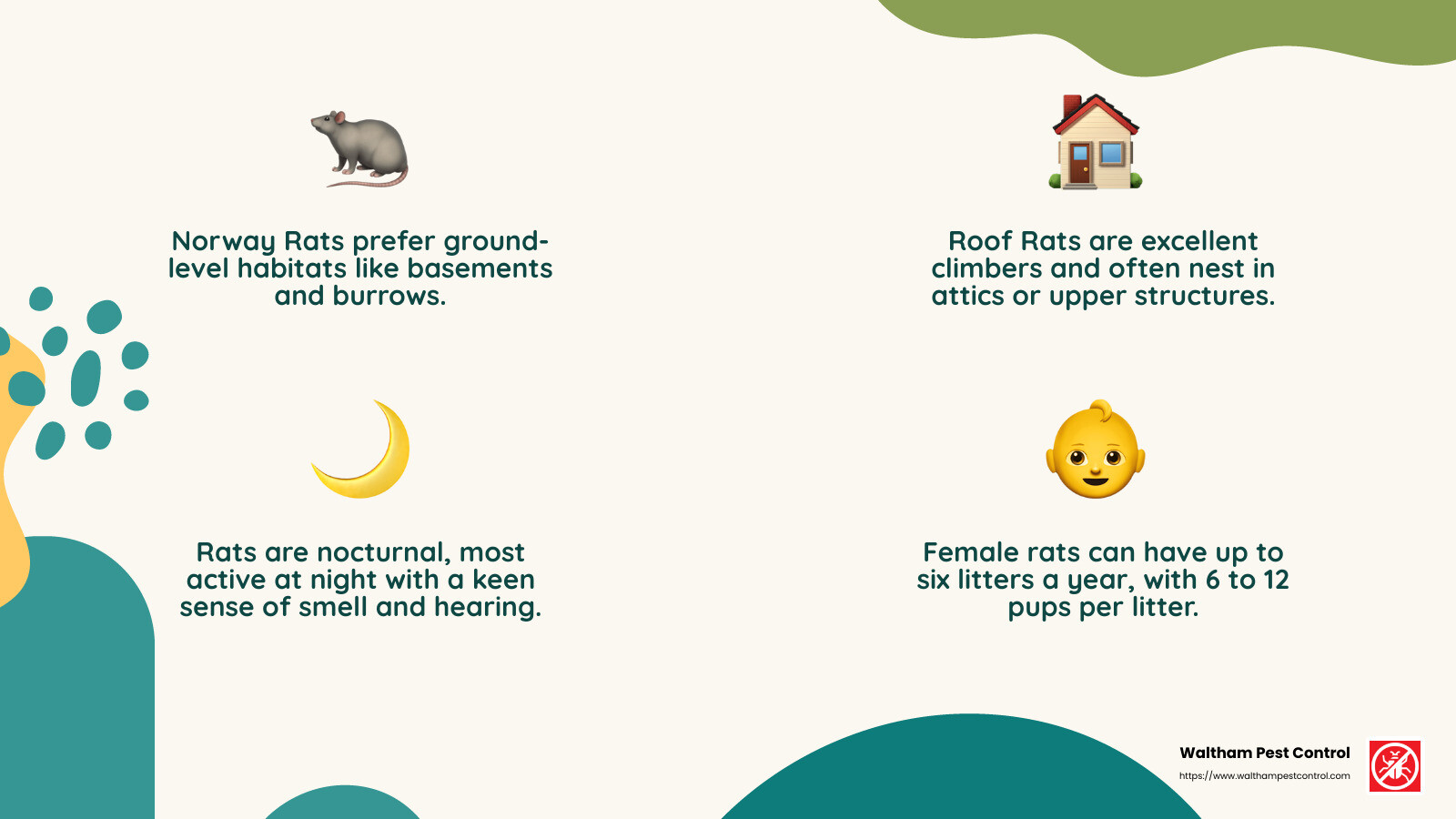
- Norway Rats are large and robust, with coarse brown fur and a gray belly. They prefer ground-level habitats like basements and burrows.
- Roof Rats are sleeker, with grayish-black fur and a pointed nose. They are excellent climbers and often nest in attics or upper structures.
Behavior
Rats are nocturnal, meaning they are most active at night. They have poor vision but compensate with a keen sense of smell, taste, hearing, and touch. Their cautious nature makes them wary of new traps or baits, often avoiding them for a day or two.
Habitat
Rats thrive in environments where they have easy access to food, water, and shelter. They are often found in urban areas, living in sewers, basements, attics, and even in the walls of homes. Norway Rats tend to stay closer to the ground, while Roof Rats prefer higher locations.
Diet
Rats are omnivores and will eat almost anything. Their diet includes grains, fruits, meats, and even pet food. They are also known to gnaw on materials like wood, plastic, and electrical wiring, which can lead to significant property damage.
Reproduction
Rats reproduce quickly, which can lead to rapid infestations. A female rat can have up to six litters a year, with each litter containing 6 to 12 pups. This rapid reproduction rate makes it crucial to address infestations promptly to prevent them from spiraling out of control.
Understanding these aspects of rat behavior and biology is essential for developing an effective strategy to get rid of rats at home. By knowing what attracts them and how they operate, you can better implement control measures to keep them at bay.
Next, we’ll explore the signs of a rat infestation, so you can act quickly if you suspect these unwelcome guests have made themselves at home.
Signs of a Rat Infestation
Detecting a rat infestation early can save you from extensive damage and health risks. Here are the key signs to watch for:
Droppings
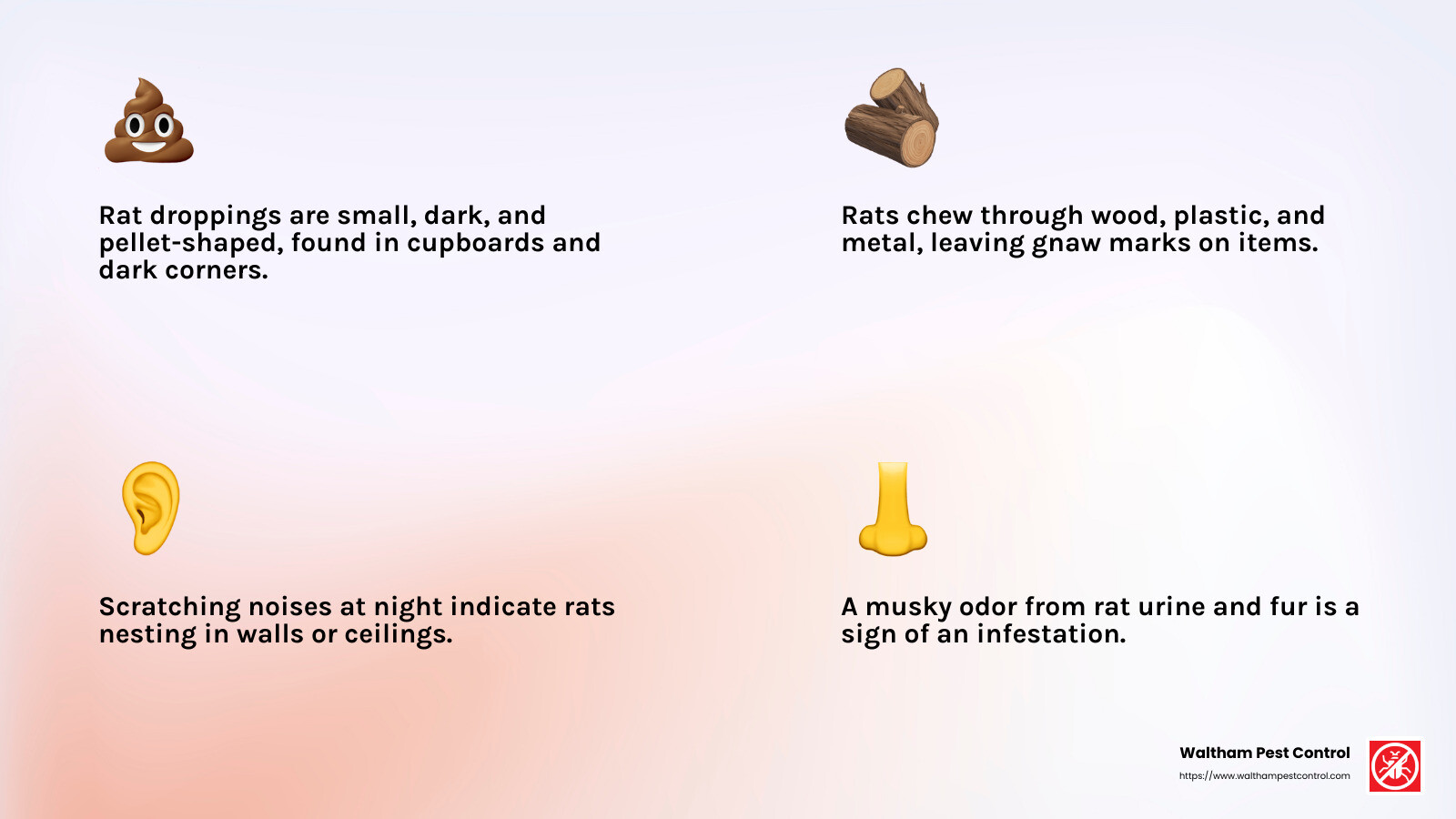
Rat droppings are small, dark, and pellet-shaped. Finding these in cupboards, behind appliances, or in dark corners is a clear sign of rat activity. They not only indicate an infestation but can also help determine its size and severity.
Gnaw Marks
Rats have strong teeth that can chew through wood, plastic, and even metal. Look for gnaw marks on food packaging, baseboards, and electrical wires. These marks are a telltale sign of a rat problem and can lead to significant property damage if not addressed.
Scratching Noises
Since rats are nocturnal, you may hear scratching or scurrying noises at night. These sounds often come from the walls, ceilings, or floorboards, indicating that rats might be nesting inside.
Nests
Rats build nests using shredded materials like paper, fabric, or insulation. These are usually found in secluded areas such as attics or crawl spaces. Finding a nest is a strong indication of a rat infestation.
Footprints
In dusty areas like basements or attics, you might find rat footprints. These can provide clues about their movement patterns and help in locating their nests.
Grease Marks
Rats have oily fur, and as they travel along walls and baseboards, they leave behind greasy smudges. These marks can indicate their common paths and entry points in your home.
Bad Odor
A strong, musky odor is often associated with rat infestations. This smell is due to their urine and the oils in their fur. If you notice an unpleasant smell, especially in enclosed spaces, it could be a sign of rats.
Recognizing these signs early is crucial to get rid of rats at home effectively. Once you identify an infestation, taking immediate action can prevent further damage and health issues. Next, we’ll discuss practical steps to eliminate these pests from your home.
How to Get Rid of Rats at Home
Eliminating rats from your home requires a strategic approach. Here’s a step-by-step guide to help you tackle the problem effectively.
Step 1: Inspect Your Home Thoroughly
Begin by conducting a detailed inspection of your home. Rats can squeeze through tiny gaps, so check for entry points like cracks, crevices, vents, and drains. Pay special attention to areas where pipes and wires enter your home, as these are common access points for rodents.
Step 2: Seal Cracks and Crevices
Once you’ve identified potential entry points, it’s time to seal them. Use materials like steel wool, hardware cloth, caulk, cement, and plaster to block these gaps. Steel wool is particularly effective because rats find it difficult to chew through.
Step 3: Clean Up Your Home
A clean home is less attractive to rats. Focus on clutter removal, proper food storage, and waste management. Store food in airtight containers and keep your kitchen and pantry tidy. Dispose of garbage regularly and ensure bins are tightly sealed.
Step 4: Remove Potential Food Sources
Rats are always on the hunt for food. Eliminate their food sources by securing pet food, bird seed, fallen fruits, and garbage cans. Keep pet food in chew-proof containers and clean up any spills immediately.
Step 5: Set Traps
Traps are a crucial part of Integrated Pest Management (IPM). Use snap traps or electronic traps to catch rats. Place traps in areas where you’ve noticed activity, such as along walls or near entry points. Bait the traps with foods like peanut butter to increase effectiveness.
Step 6: Try Home Remedies for Natural Deterrent Methods
If you prefer natural methods, consider using scent repellents. Rats dislike strong smells, so try peppermint oil, eucalyptus oil, cayenne pepper, black pepper, and cloves. Soak cotton balls in these oils and place them in areas where rats are active.
Step 7: Contact a Pest Control Company
When the infestation is severe or persists despite your efforts, it’s time to call in the professionals. Waltham Pest Control offers expert services to safely and effectively remove rats from your home. Professional help ensures that all aspects of the problem are addressed, from elimination to prevention.
By following these steps, you can get rid of rats at home and maintain a rodent-free environment. Next, we’ll explore how to manage rat problems outside your home.
How to Get Rid of Rats Outside Your Home
Dealing with rats outside your home is just as important as managing them indoors. Here’s how you can effectively get rid of rats outside your home.
Yard Cleanup
Start by cleaning up your yard. Rats love clutter, so remove any wood piles, old appliances, or cardboard boxes. Keep your grass mowed and clear away leaves and debris. This reduces hiding spots and makes your yard less inviting to rodents.
Vent Inspection
Rats are excellent climbers and can use vents to enter your home. Regularly inspect vents for any signs of gnawing or damage. Reinforce them with copper wire or stainless steel mesh to prevent rats from getting in.
Food Source Removal
Rats are constantly searching for food. Remove potential food sources like fallen fruits, nuts, and seeds from your yard. Secure garbage cans with tight-fitting lids and store pet and bird food in airtight, chew-proof containers.
Attract Natural Predators
Encourage natural predators like owls to visit your yard. Owls can eat dozens of rats in one night. Consider installing a birdbath or nest box to attract these helpful birds. Avoid using bird feed, as it can attract more rats.
Use Dry Ice
Dry ice is an innovative method to handle rat burrows. Place it at burrow entrances. The carbon dioxide it releases anesthetizes and kills the rats. Remember to wear gloves when handling dry ice, as it can harm your skin.
Set Snap Traps
Snap traps are effective outdoors too. Place them in strategic locations like near burrows or along walls. Use peanut butter or other bait to attract the rats. Cover traps with a box or crate to protect other animals.
Use Electronic Traps
For a more humane option, try electronic traps. These traps electrocute rats instantly and can be used outside. They run on batteries and are easy to set up. Remember to wear gloves to avoid leaving your scent on the traps.
Baits and Poisons
If necessary, use baits and poisons, but only outside. Place them in tamper-proof bait stations to protect children and pets. Always follow label instructions and check local regulations, as some poisons are restricted in certain areas.
By taking these steps, you can effectively manage and reduce the rat population outside your home. Keep reading to learn about preventing future infestations.
Preventing Future Infestations
Once you’ve successfully managed to get rid of rats at home, the next step is to make sure they don’t come back. Prevention is key, and here are some practical strategies to keep your home rat-free.
Regular Inspections
Conduct regular inspections of your home and yard. Look for new entry points like cracks, holes, or damaged vents. Rats can squeeze through very small openings, so seal any gaps immediately using steel wool, caulk, or cement. Consistent checks will help you catch potential problems early.
Maintenance
Maintenance plays a crucial role in keeping rats away. Make sure to repair any leaks in plumbing or roofs, as rats are attracted to water sources. Trim trees and shrubs at least four feet away from your house to prevent rats from using them as bridges. Keeping your environment in good condition reduces the likelihood of infestations.
Neighbor Cooperation
Rats are a community issue, not just an individual one. Work with your neighbors to ensure everyone is taking steps to prevent infestations. Share tips and strategies, and consider organizing a neighborhood cleanup to remove potential rat habitats. A collective effort can make a significant difference in keeping the entire area rat-free.
By staying vigilant and proactive, you can prevent future rat infestations and maintain a safe, healthy home environment. Now, let’s address some frequently asked questions about getting rid of rats at home.
Frequently Asked Questions about Getting Rid of Rats at Home
What is the fastest way to get rid of rats?
The quickest way to get rid of rats at home is to combine several methods for maximum effectiveness. Pest control professionals can offer the fastest and most comprehensive solutions. They have access to powerful traps, chemical baits, and other tools not available to the general public.
Traps such as snap traps and electronic traps can be set in strategic locations where rat activity is high. These traps are efficient and can eliminate rats quickly. Chemical baits are another option, though they should be used with caution due to their toxicity to pets and humans.
Live traps are available for those who prefer a non-lethal approach. They capture rats alive, allowing you to release them far from your home.
What scent will keep rats away?
Certain scents are known to deter rats, making them a valuable tool in your pest control arsenal. Ammonia is a strong smell that can drive rats away, mimicking the scent of predators’ urine. Mothballs are another option, though they should be used carefully, as they can be toxic.
Natural scents like peppermint, rosemary, citronella, sage, and lavender are also effective. These can be used in essential oil form. Simply soak cotton balls in the oil and place them around your home, focusing on entry points and places where rats have been spotted.
How do you get rid of rats without killing them?
If you’re looking to remove rats without harming them, consider using Integrated Pest Management (IPM) strategies. This approach focuses on making your home less attractive to rats by eliminating food sources and habitats.
Start by storing food in airtight containers and promptly cleaning up spills and crumbs. Remove clutter where rats can hide and nest. Scent repellents like peppermint oil can also help keep rats at bay without causing them harm.
By focusing on food source elimination and habitat removal, you create an environment that’s inhospitable to rats, encouraging them to move elsewhere naturally.
Conclusion
In conclusion, getting rid of rats at home requires a comprehensive approach that combines prevention, direct action, and professional assistance. By understanding the behavior and habits of rats, homeowners can take effective steps to eliminate these pests and prevent future infestations.
While DIY methods, such as traps and natural deterrents, can be effective, they often require time and patience. For a more immediate and long-lasting solution, seeking professional help is crucial. Pest control experts, like those at Waltham Pest Control, have the experience and tools necessary to tackle even the most stubborn rat infestations.
With over 40 years of experience, Waltham Pest Control offers quality and commitment in pest management solutions custom to your needs. Our licensed and insured team is dedicated to ensuring your home is rat-free, providing peace of mind and a safer living environment.
By working with professionals, you not only address the current rat problem but also gain insights into preventing future issues. Regular inspections and maintenance, coupled with expert advice, can help keep your home free from these unwelcome guests.
When it comes to rat control, prevention and prompt action are key. Don’t wait for a small problem to become a big one—contact Waltham Pest Control today for effective and reliable pest management.