

Get rid of raccoons in crawl space: Top 3 Safe Tips
The Uninvited Guest Beneath Your Floors
To get rid of raccoons in crawl space, you need a four-step professional approach:
- Identify entry points – Inspect foundation vents, gaps, and openings as small as 3-4 inches
- Humanely remove raccoons – Use one-way exclusion doors or live traps (check for babies first)
- Clean and sanitize – Remove contaminated insulation and droppings using proper PPE and CDC protocols
- Seal all access points – Install heavy-duty steel mesh or hardware cloth to prevent re-entry
Hearing thumping sounds at night? Smelling a musky odor from your vents? These are classic signs of a raccoon in your crawl space. For Massachusetts homeowners, these intelligent animals see your crawl space as a perfect den: dark, sheltered, and close to food.
But their presence leads to serious problems. Raccoons can cause thousands of dollars in structural damage by tearing up ductwork, insulation, and wiring. They also contaminate the area with feces carrying dangerous parasites like raccoon roundworm (Baylisascaris), a health risk to your family. If a mother has kits, the situation is even more complex.
The good news is that professional removal is safe and effective. I’m Waltham Pest Control, President & CEO of Waltham Pest Control. With over 40 years of experience in Eastern Massachusetts, we use proven, humane methods to get rid of raccoons in crawl space situations. Here’s what you need to know about handling these masked bandits.
Get rid of raccoons in crawl space terms to remember:
Is That a Raccoon? Telltale Signs of an Unwanted Tenant
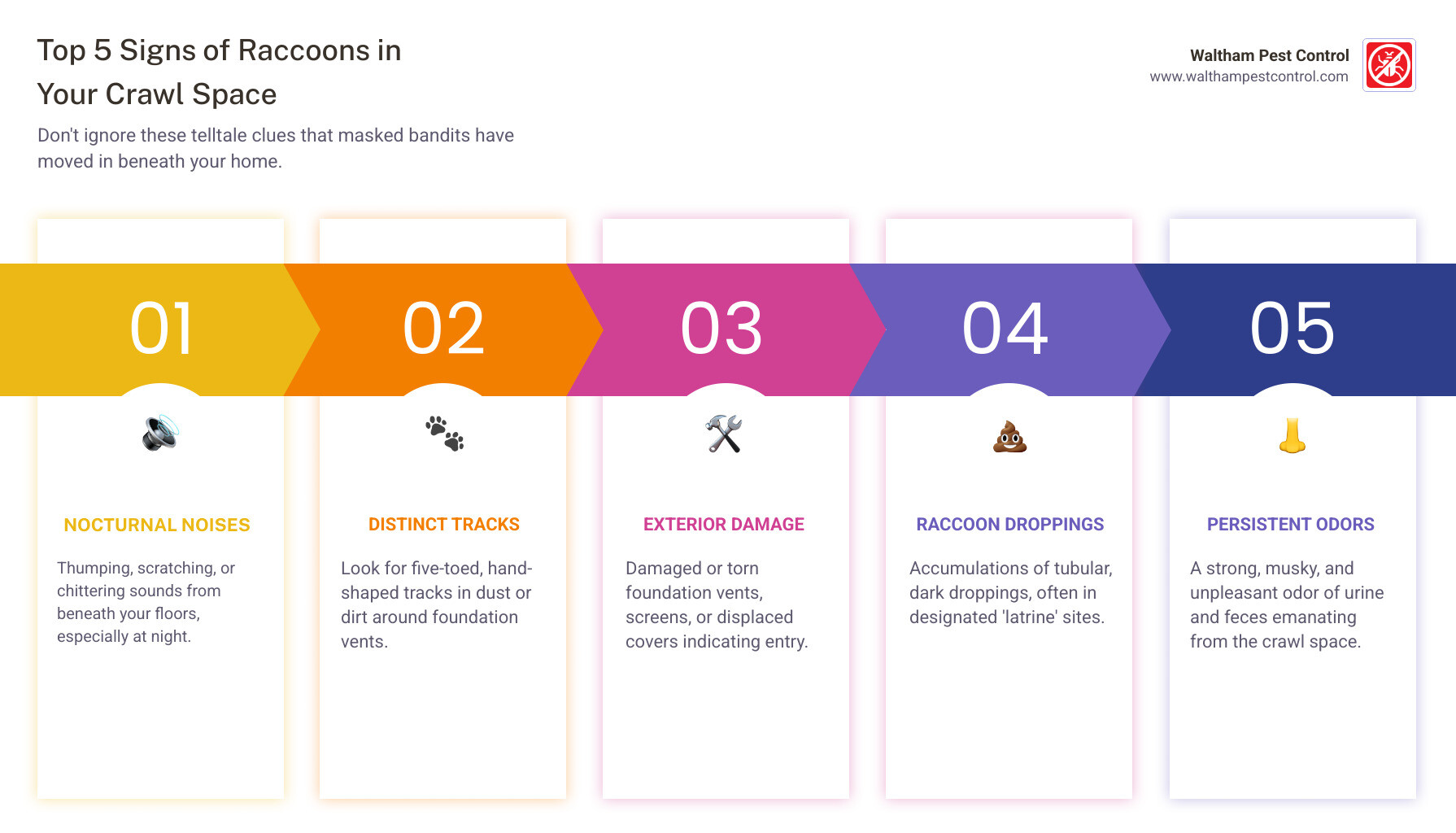
Before you can get rid of raccoons in crawl space, you must be sure that’s what you’re dealing with. These nocturnal animals leave many clues.
Audible Signs (Heard at Night)
- Thumping and Heavy Footsteps: Raccoons weigh 10-30 pounds, so their movements sound substantial as they walk or shuffle around.
- Scratching Noises: Caused by their dexterous paws exploring, tearing materials for nesting, or digging.
- Vocalizations: Chittering, growling, or squealing sounds are raccoon communication. High-pitched squeals often indicate baby raccoons (kits).
Visual Evidence
- Hand-Shaped Tracks: Their footprints look like small human hands, about 3-4 inches long, and are visible in dust or soft soil.
- Damaged Vents and Screens: Raccoons are strong enough to bend, tear, or pry off foundation vent covers to get inside. They can fit through openings as small as 3-4 inches.
- Torn Insulation: They shred insulation for nesting material, which also compromises your home’s energy efficiency.
- Oily Smudges: Greasy marks and gray-brown fur tufts are often left along their regular travel paths and around entry points.
Raccoon Droppings and Odors
- Latrine Sites: Raccoons create communal “toilets,” leaving piles of dark, tubular droppings (2-3 inches long) in one area. The feces often contain undigested seeds or berries.
- Musky Odor: A strong, pungent smell from urine and feces is a giveaway. The odor can become very noticeable and even seep into your living space.
Why Your Crawl Space is a Raccoon Magnet
Understanding why raccoons target your crawl space is key to preventing them. Your property likely offers the perfect combination of shelter, food, and access.
The Perfect Shelter
From a raccoon’s perspective, your crawl space is a luxury apartment. It offers:
- Protection: A safe haven from New England’s harsh weather and predators like coyotes.
- Seclusion: The dark, quiet space is ideal for a nocturnal animal to rest undisturbed during the day.
- A Maternity Den: For a mother raccoon, it’s a secure, protected place to give birth and raise her vulnerable kits.
An All-You-Can-Eat Buffet Nearby
Raccoons are drawn to homes with easily accessible food sources, including:
- Unsecured Trash Cans: Their top target. They are skilled at knocking over bins and prying off lids.
- Pet Food Left Outside: A bowl of kibble is a reliable and inviting meal.
- Bird Feeders and Gardens: Spilled seed and garden produce provide easy calories.
Easy Access Points
Raccoons only need a 3-4 inch opening to get in. Common vulnerabilities on a home include:
- Damaged Foundation Vents: Weak, rusted, or flimsy screens are easily torn open.
- Gaps in the Foundation: Openings where utility lines, pipes, or cables enter the home are ready-made highways for wildlife.
To effectively get rid of raccoons in crawl space situations, you must address all three factors, which is what professional wildlife removal services are designed to do.
The Dangers of Raccoons Under Your Home
A raccoon in your crawl space is more than a nuisance; it’s a direct threat to your home’s structure and your family’s health.
Structural Damage
Raccoons are surprisingly destructive. They can cause expensive damage by:
- Tearing Ductwork: This leads to significant energy loss and circulates contaminated air through your home.
- Chewing Wiring: Damaged electrical wires create a serious fire hazard.
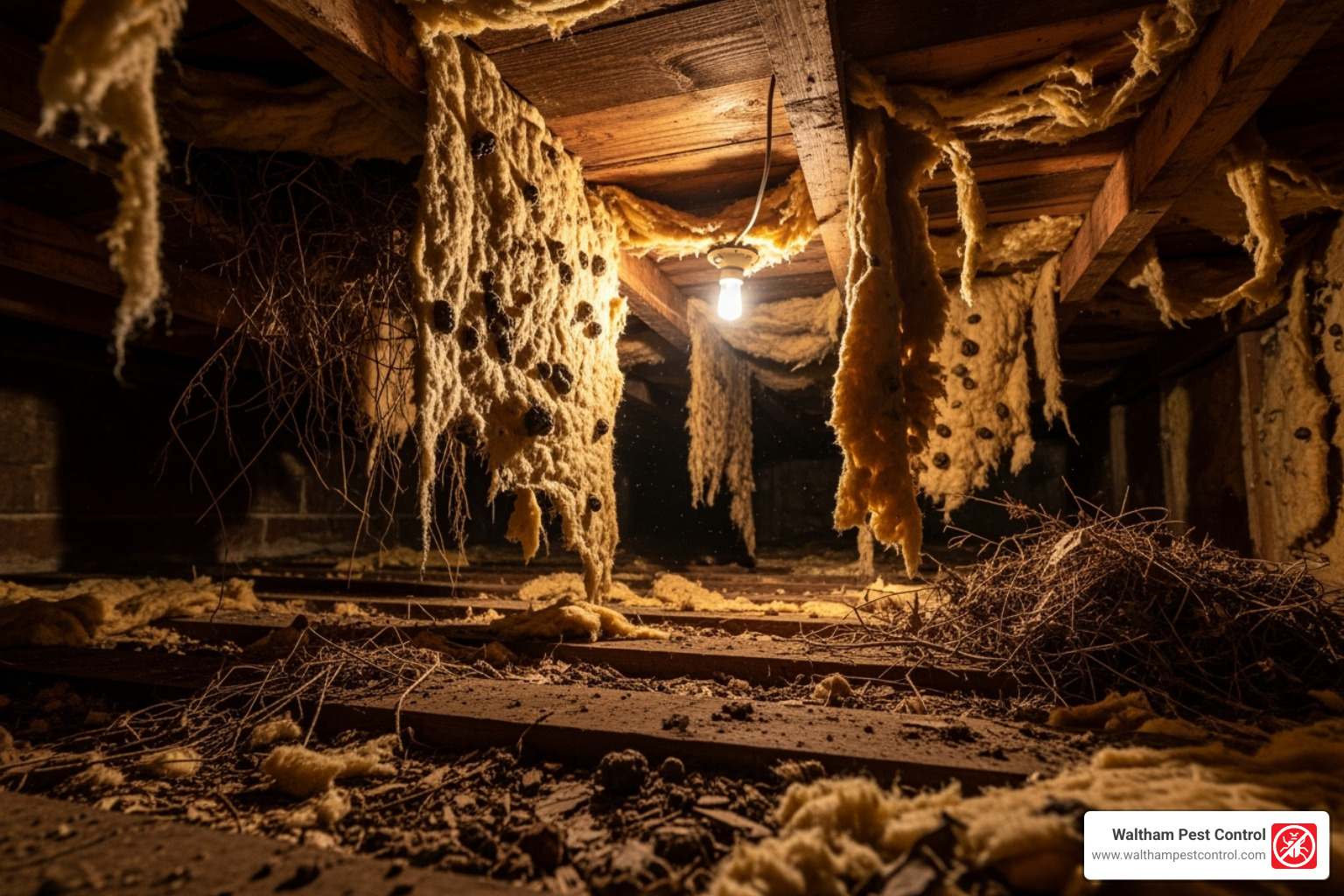
- Destroying Insulation: They shred insulation for nesting and contaminate it with urine and feces, rendering it useless and creating foul odors.
- Creating Moisture Problems: By damaging vents and vapor barriers, they allow moisture to enter, which can lead to mold, mildew, and wood rot.
Health Risks
Raccoon waste and their presence can introduce serious diseases:
- Baylisascaris Roundworm: Found in raccoon feces, the microscopic eggs of this parasite can become airborne. If ingested by humans, the larvae can cause severe neurological damage, blindness, or even death. This is a major risk during cleanup.
- Rabies: Raccoons are a primary carrier of the rabies virus. While transmission to humans is rare, any bite or scratch requires immediate medical attention.
- Leptospirosis: This is a bacterial disease spread through infected urine that can contaminate soil and water in your crawl space.
Aggressive Behavior
While they usually avoid humans, a raccoon will defend itself. A cornered animal can inflict serious bites and scratches. A mother with kits is fiercely protective and will not hesitate to attack if she perceives a threat to her young, which makes DIY removal especially dangerous. The answer to are raccoons dangerous is a definitive yes, and they should be handled by professionals.
How to Get Rid of Raccoons in a Crawl Space: The Professional Process
Successfully getting rid of raccoons in crawl space situations requires a strategic approach that balances effectiveness, safety, and humane treatment. This is where professional expertise makes all the difference, as DIY attempts are often dangerous and incomplete.
Inspection & Humane Removal
Every successful raccoon removal begins with a thorough inspection to identify all entry points and assess the damage. Once we understand the situation, we implement humane removal methods.
- One-way exclusion doors are our preferred method. These devices are installed over the main entry point, allowing raccoons to leave but not get back in. It’s a stress-free method for the animal.
- Live trapping is used when exclusion doors aren’t practical. We use properly sized traps and check them frequently, handling all wildlife according to Massachusetts regulations.
For comprehensive wildlife solutions, explore our raccoon removal services.
The Complication of Baby Raccoons (Kits)
If a mother raccoon has kits (common from March through early summer), the process becomes more complex. Separating a mother from her young is inhumane and creates a bigger problem. Our technicians are trained to use humane reunion techniques that encourage the mother to relocate her family to an alternate den site. This delicate process is dangerous for homeowners due to the risk of attack from a protective mother.
After the Eviction: Safely Cleaning a Raccoon Latrine
After the raccoons are gone, cleanup is critical. Raccoon feces are hazardous waste containing Baylisascaris procyonis (raccoon roundworm) eggs, which can cause severe neurological damage in humans.
Our cleanup crews follow strict CDC’s cleanup recommendations, using full personal protective equipment (PPE) like N95 respirators. We safely remove contaminated materials, such as soiled insulation, and disinfect the area to neutralize the health threat. This is not a DIY job. We offer specialized professional raccoon latrine removal services to ensure your crawl space is fully restored and sanitary.
Securing Your Foundation: Long-Term Raccoon Prevention
Getting the raccoons out is only half the battle. To keep them out for good, you need to fortify your home against future invasions.
Exclusion Work
Exclusion is the most important step for permanent prevention. We carefully seal every potential entry point around your foundation—any gap 3-4 inches or larger—using materials raccoons can’t defeat.
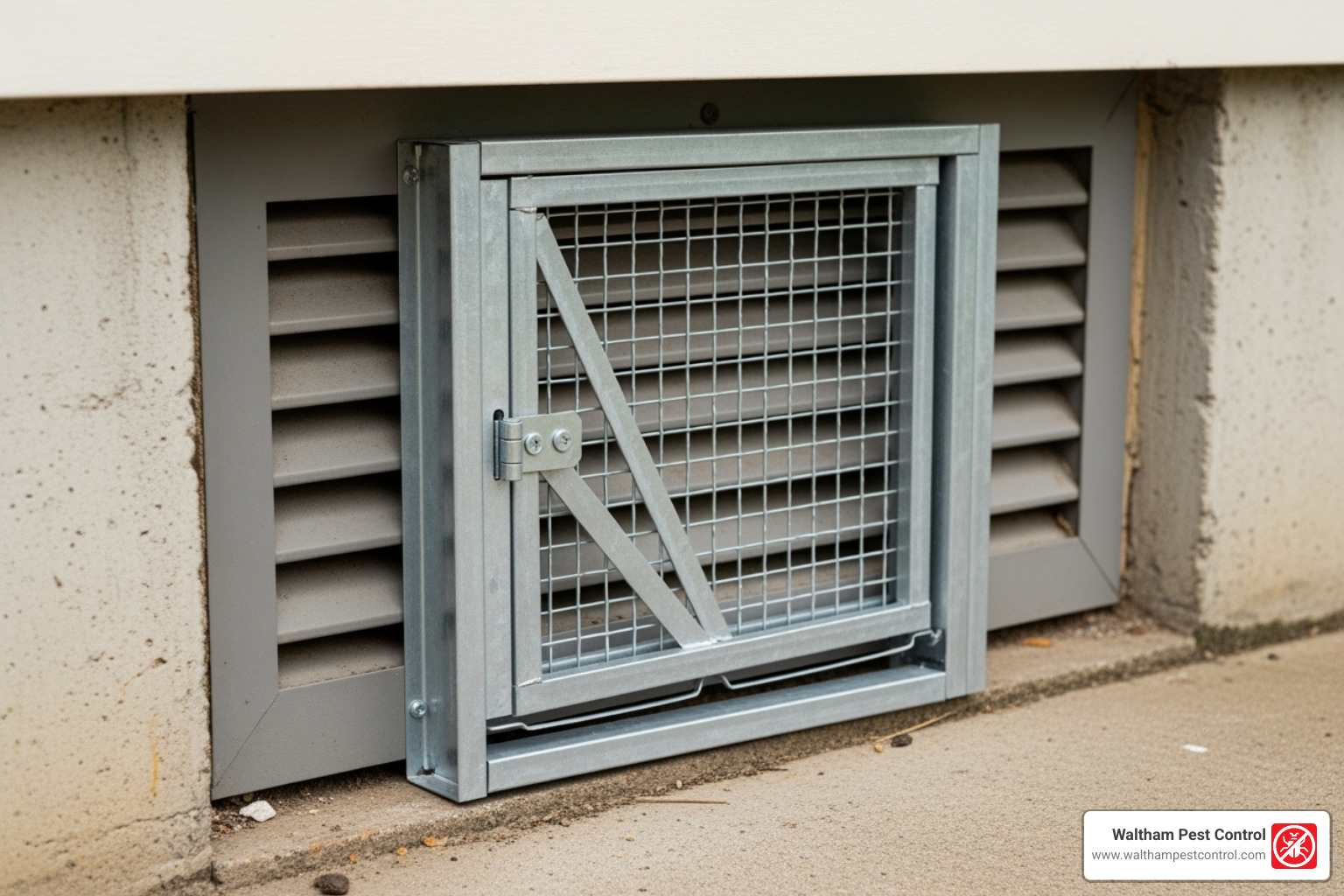
- Steel mesh and hardware cloth are our go-to materials. These galvanized barriers are tough enough to withstand a raccoon’s strong paws and sharp claws.
- Foundation vent covers are replaced with sturdy, animal-proof versions that allow proper ventilation but keep guests out.
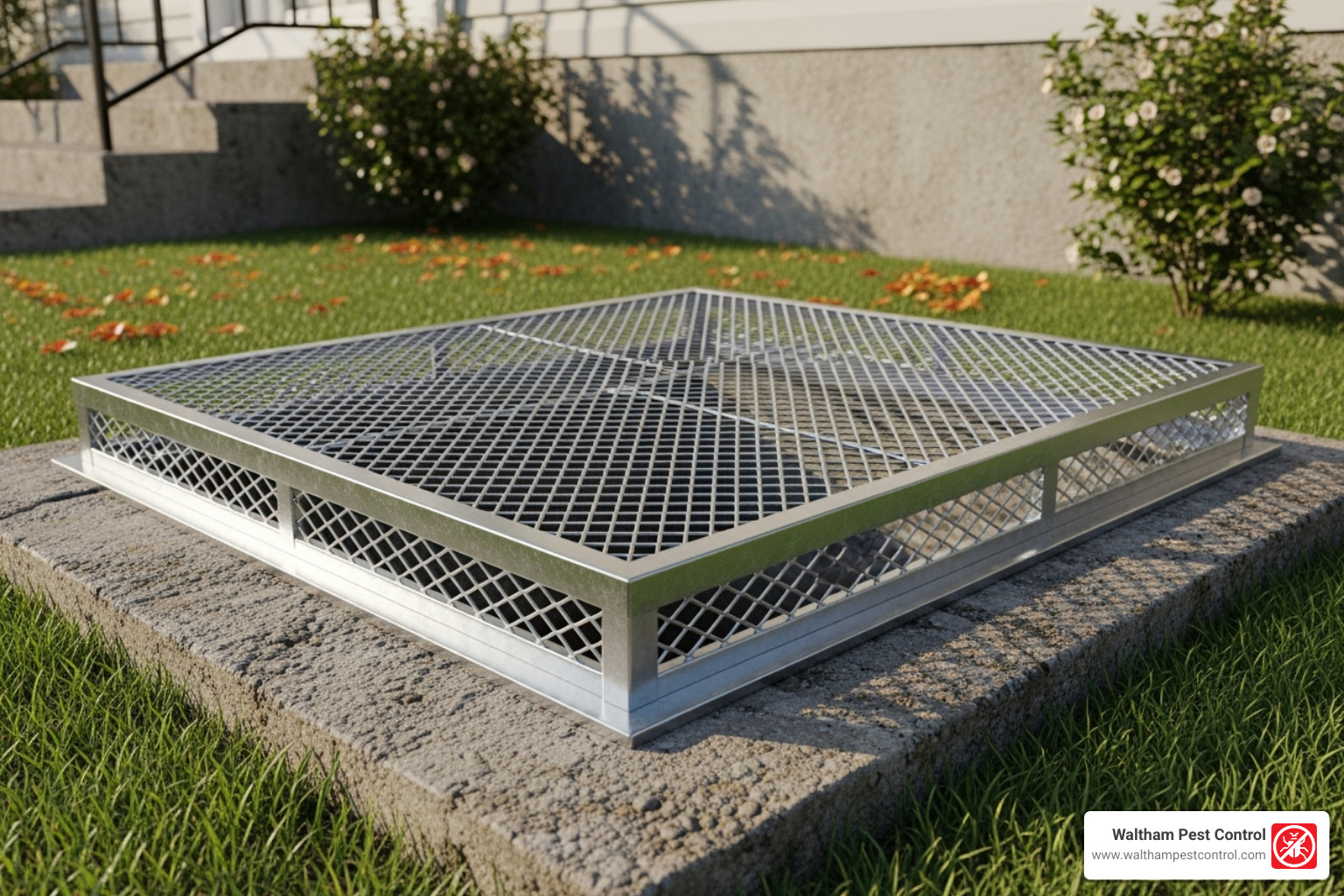
- Chimney caps are essential. A missing or damaged cap is an open invitation, so we install commercial-grade stainless steel caps.
Habitat Modification
Raccoons are practical. If your property doesn’t offer food, they’ll move on. Make your yard less appealing:
- Secure your trash cans with locking lids or bungee cords, or store them in a garage.
- Remove pet food bowls immediately after mealtime and never leave food out overnight.
- Manage bird feeders by using seed catchers and baffles, or consider taking them down during peak raccoon activity.
- Trim tree branches back at least six feet from your home to remove easy access to your roof.
For more comprehensive strategies, check out our guide on how to get rid of raccoons.
Your Prevention Checklist
To get rid of raccoons in crawl space situations permanently, follow these three essential strategies:
- Seal all potential entry points around your foundation with professional-grade materials like heavy-gauge steel mesh.
- Remove or secure all outdoor food sources, including garbage, pet food, and birdseed.
- Schedule an annual professional wildlife inspection to catch vulnerabilities early.
Frequently Asked Questions about Raccoons in Crawl Spaces
Here are answers to the questions we hear most often from Massachusetts homeowners.
How small of a hole can a raccoon fit through?
Raccoons can squeeze through openings as small as 3 to 4 inches in diameter. Despite their size, they are very flexible. This is why even a small gap in your foundation or a bent vent cover is a significant risk.
Is it common to find baby raccoons in a crawl space?
It’s possible, though they typically prefer higher locations like attics. A mother raccoon will use a crawl space if it’s the best available nursery. Finding babies, which is common in the spring, significantly complicates removal and makes professional help essential.
How much does professional raccoon removal cost?
The cost for professional raccoon removal services varies. The price depends on the complexity of the job: the number of raccoons, if babies are present, the extent of damage, and the amount of cleanup and exclusion work needed. Costs can range from a few hundred dollars for a simple removal to several thousand for complex infestations requiring major repairs and decontamination. For an accurate price, call us for a direct quote based on a thorough inspection of your property.
Your Best Defense: Professional Raccoon Control
When you find raccoons living beneath your home, DIY removal is a risky gamble. You risk bites, disease exposure, and ineffective results. Repellents and other gimmicks don’t work on intelligent, adaptable animals like raccoons. Meanwhile, the damage and health hazards in your crawl space continue to grow.
Professional wildlife control is the only safe, permanent solution. At Waltham Pest Control, we have over 40 years of experience helping Eastern Massachusetts homeowners get rid of raccoons in crawl space situations. Our licensed and insured technicians use the right tools for the job: humane traps, one-way doors, and professional-grade exclusion materials that last.
We don’t just remove the raccoons; we solve the problem. This includes a full cleanup following CDC protocols to remove hazardous waste and sealing all entry points to prevent future invasions. You’re not just paying for removal—you’re investing in your family’s health, your home’s structural integrity, and your peace of mind.
If you’re dealing with raccoons in your crawl space anywhere in Eastern Massachusetts, don’t risk your safety. Contact Waltham Pest Control today for reliable and humane raccoon control services. We’re here to help you reclaim your home.
