

Get rid of raccoons in backyard: 3 Safe Steps
Why Raccoons Invade Your Massachusetts Backyard
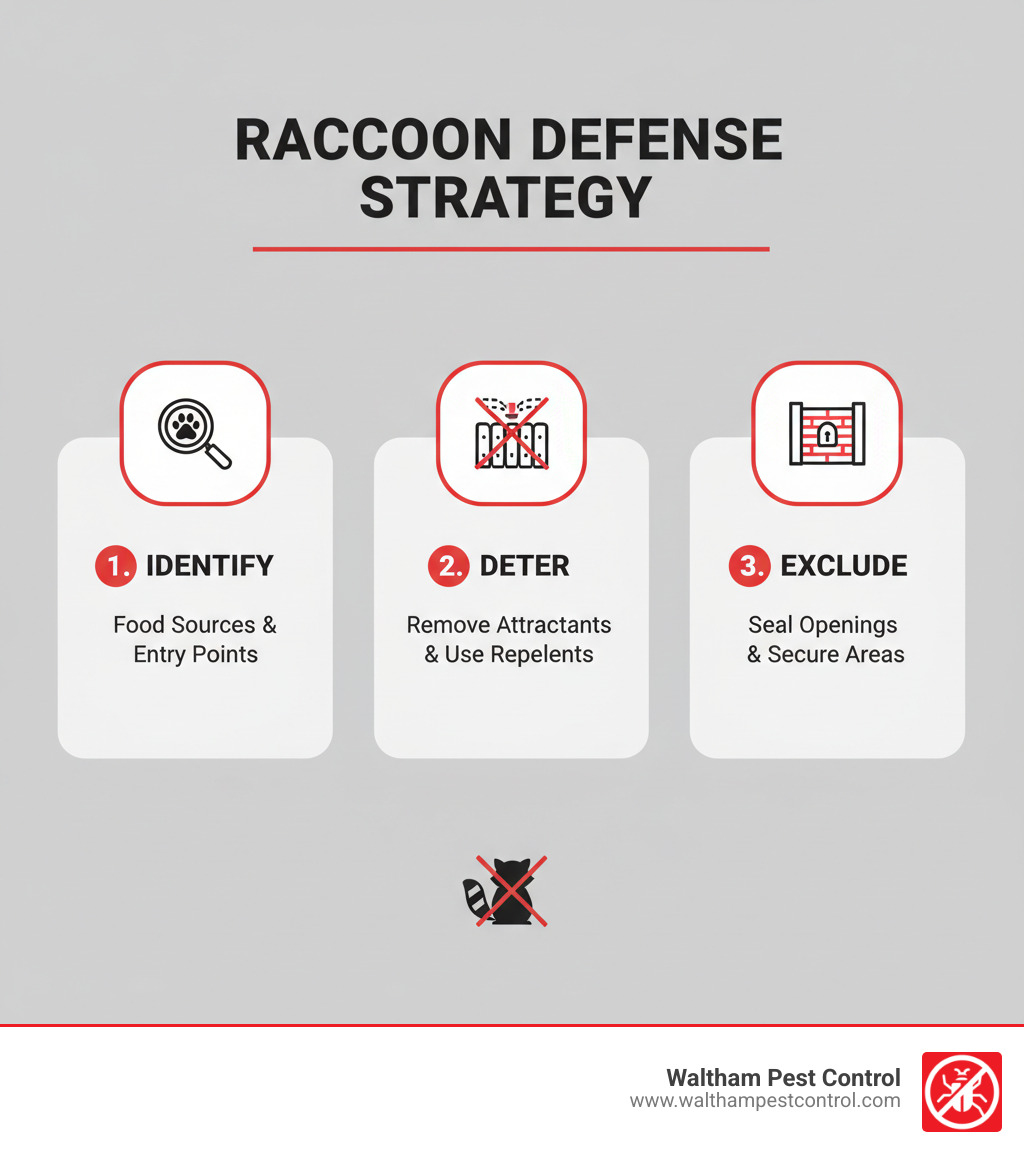
Looking to get rid of raccoons in your backyard? You’re not alone. These masked bandits are drawn to easy food and shelter, often causing serious property damage. Here’s what works:
Quick Solutions to Get Rid of Raccoons in Your Backyard:
- Secure all trash cans with locking lids or bungee cords
- Remove food sources like pet food, fallen fruit, and bird feeders at night
- Seal entry points to sheds, decks, and attics (raccoons fit through 3.5-inch openings)
- Install motion-activated sprinklers or lights to startle nocturnal visitors
- Use natural deterrents like cayenne pepper or ammonia-soaked rags around problem areas
- Call a professional if raccoons are inside your home or showing aggressive behavior
Raccoons aren’t just a nuisance; they carry diseases like rabies, damage property by tearing shingles and insulation, and can become aggressive. The good news is you can take action now to make your yard less appealing to them.
Known as “trash pandas” or “masked bandits,” these clever animals are a common problem in suburban Massachusetts, especially as colder weather makes your warm home and food sources more attractive.
The key to success is a multi-layered approach. Removing attractants works better than any single deterrent. Sealing entry points prevents them from denning on your property. And understanding their behavior helps you outsmart them at their own game.
I’m Waltham Pest Control, President & CEO of Waltham Pest Control. For over 40 years, I’ve helped Massachusetts homeowners get rid of raccoons in backyard areas with humane exclusion methods. Our team combines prevention with professional removal to ensure your property stays raccoon-free.
Relevant articles related to get rid of raccoons in backyard:
Is It Raccoons? Signs and Risks of an Unwanted Visitor
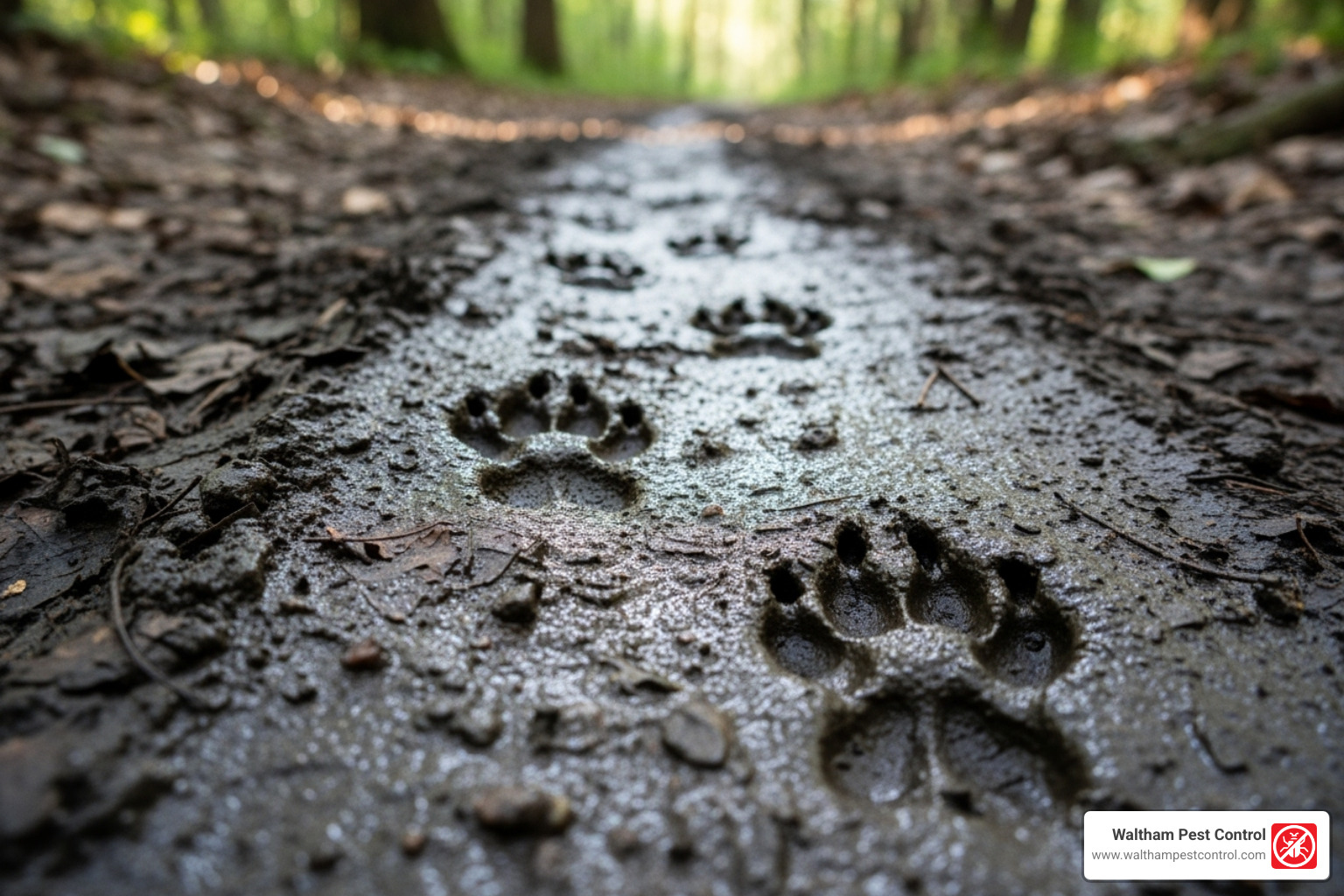
Before you can get rid of raccoons in your backyard, you need to be sure they are the culprit. While these nocturnal visitors are stealthy, they leave behind plenty of evidence.
Telltale Signs of Raccoon Activity
- Five-toed tracks: Their most distinctive sign, these prints look like tiny human hands. You’ll spot them in mud, soft soil, or dust.
- Toppled trash cans: A classic sign of their dumpster-diving skills. Raccoons are strong enough to pry open most standard lids.
- Garden and lawn damage: They devour vegetables, eat fruit, and roll up sod to find grubs, often peeling back entire sections of lawn.
- Climbing evidence: Look for scratches on trees and fence posts, or oily smudges on walls from their fur rubbing against surfaces.
- Distinctive droppings: Raccoons use designated “raccoon latrines” on logs, at the base of trees, or even in attics. The droppings are tubular and often contain undigested food.
- Nocturnal noises: Listen for growls, chattering, or crying sounds coming from attics, chimneys, or under decks at night.
If you’re seeing multiple signs, it’s time to take action. For a comprehensive identification and management plan, check out our raccoon control services.
The Dangers and Damages Raccoons Pose
Beyond being a nuisance, raccoons pose serious risks to your property, family, and pets.
- Structural Damage: They are strong enough to tear shingles, rip off boards, and chew through electrical wiring (a fire hazard) to get into attics and crawl spaces. Once inside, they destroy insulation for nesting.
- Health Risks: Raccoons are vectors for several dangerous diseases.
- Rabies: A rabid raccoon may act strangely (daytime activity, aggression). Any bite requires immediate medical attention.
- Baylisascaris roundworm: The eggs of this parasite are shed in raccoon feces and can cause serious neurological damage if accidentally ingested by humans, especially children.
- Leptospirosis: This bacterial disease is spread through contact with infected urine or contaminated water and soil.
- Parasites: They also carry fleas, ticks, and lice that can transfer to your pets and into your home.
- Risk to Pets: Raccoons will fight with cats and dogs, especially if cornered or protecting their young. A mother raccoon is particularly dangerous and can inflict serious injuries.
Given these risks, we never recommend handling or trapping raccoons yourself. Professional help from a company like Waltham Pest Control is not just easier—it’s the safer choice.
The Best Defense: Making Your Backyard Uninviting
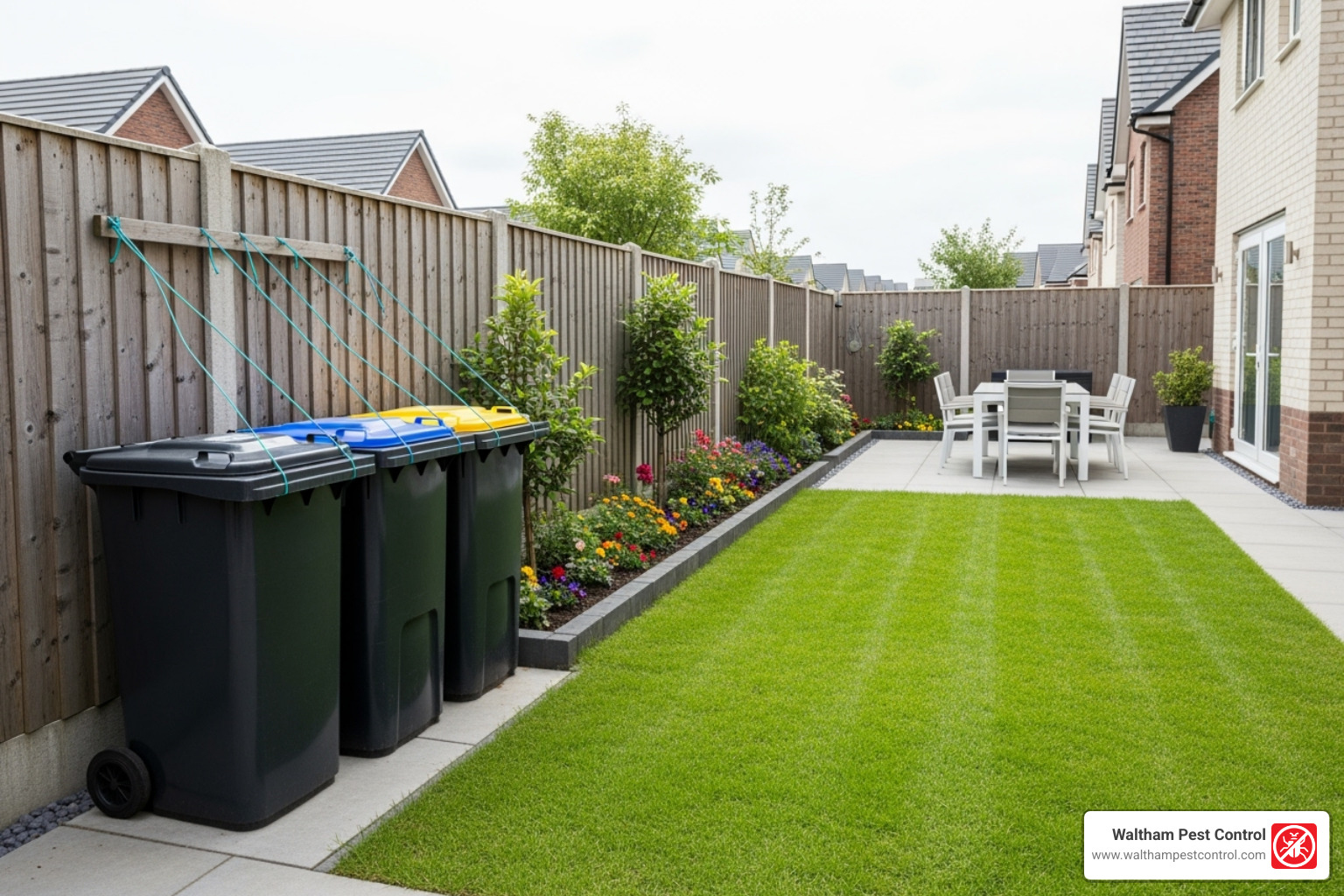
The most effective way to get rid of raccoons in your backyard is to convince them there’s nothing worth staying for. By eliminating food, water, and shelter, you make your property the least appealing spot on the block. This approach, known as habitat modification, works far better than temporary deterrents.
Secure All Potential Food Sources
Raccoons have an incredible sense of smell and will return nightly to reliable food locations.
- Trash Cans: Use animal-proof cans with locking lids or secure them with strong bungee cords. Storing cans in a locked shed or garage until collection day is even better.
- Pet Food: Never leave pet food bowls outside overnight. Feed pets indoors or bring bowls in immediately after they finish.
- Garden & Fruit Trees: Harvest ripe produce promptly and clean up fallen fruit daily. Rotting fruit is a powerful attractant.
- Compost Bins: Open compost piles are a buffet. Use a fully enclosed, secure bin with a locking lid.
- Bird Feeders: Remove feeders at night or invest in wildlife-proof designs. Store birdseed in galvanized metal cans, not bags.
- Grills: Clean your grill thoroughly after every use to remove leftover food particles and grease.
Eliminate Shelter and Water Access
After securing food, remove the safe shelter and water sources raccoons need.
- Seal Entry Points: Raccoons can squeeze through openings as small as 3.5 inches. Inspect your home, shed, and garage, sealing any gaps with heavy-gauge wire mesh or metal flashing.
- Chimneys: An uncapped chimney is an open invitation for a den. Install a sturdy, professional chimney cap with wire mesh.
- Decks and Porches: Block access by installing a footer of galvanized wire mesh around the perimeter. Bury it at least a foot deep and extend it outward in an “L” shape to prevent digging.
- Vents and Soffits: Secure attic and foundation vents with heavy-duty mesh and repair any damaged soffits or loose fascia boards.
- Tree Branches: Trim any branches that come within three to five feet of your house to block their highway to your roof.
- Yard Debris: Clean up woodpiles, debris, and overgrown shrubs that offer ideal hiding and denning spots.
- Water Sources: Cover fish ponds at night and eliminate standing water from bird baths, pet bowls, or leaky faucets.
For more strategies to protect your property, explore our residential pest control services.
How to Protect Your Garden and Plants from Raccoons
- Fencing: Your best defense is a fence at least 4-6 feet tall, made from chicken wire with 1-inch or smaller openings. The crucial step is to bury the bottom edge 6-12 inches deep or bend it outward in an “L” shape to stop raccoons from digging under it.
- Electric Fencing: For persistent problems, a two-wire electric fence (at 6 and 12 inches off the ground) powered by a low-voltage charger can be very effective. Always post clear warning signs.
- Crop Cages and Raised Beds: Simple cages made from PVC and chicken wire can protect vulnerable plants. Anchor them securely, as raccoons are strong enough to push aside loose barriers.
- Discouraging Plants: While nothing is completely raccoon-proof, they tend to avoid strong-smelling plants like mint, garlic, lavender, cucumbers, and hot peppers.
Active Deterrents to Get Rid of Raccoons in Your Backyard
Sometimes, even after removing attractants, you need an extra layer of defense. Active deterrents work by startling or irritating nocturnal visitors, making your backyard an uncomfortable place to be.
Using Motion-Activated Devices to Scare Them Away
Raccoons are wary of surprises. Motion-activated devices use this to their advantage.
- Motion-activated sprinklers are highly effective. When a raccoon enters the sensor’s range, a sudden burst of water sends it scrambling. It’s harmless but memorable.
- Motion-sensor lights work on a similar principle. Raccoons prefer darkness, so a sudden bright light can make them feel exposed and vulnerable. Basic models start around $40.
- Ultrasonic repellents emit high-frequency sounds that are irritating to raccoons but inaudible to humans. Their effectiveness can vary significantly.
It’s important to be aware of raccoon habituation. These intelligent animals can learn that a deterrent is not a real threat. To prevent this, switch up your strategies. Move your lights or sprinklers to different locations every few weeks to keep the raccoons guessing.
What are the best natural deterrents to get rid of raccoons in your backyard?
Many homeowners prefer natural, non-toxic methods, which typically rely on strong scents that raccoons find unpleasant.
- Scent-based repellents are the most common option. Raccoons reportedly dislike odors like cayenne pepper spray, ammonia-soaked rags, peppermint oil, and strong-smelling soaps like Irish Spring.
- Limited effectiveness and frequent reapplication are the major drawbacks. These methods are largely anecdotal and don’t work for every raccoon. If a strong food source is available, a raccoon will often push through an unpleasant smell to get it.
- Rain and even morning dew will wash away these scents, meaning you’ll need to reapply them constantly.
In our experience, natural deterrents are best used as a supporting player in a broader strategy that includes exclusion and removing attractants. They are rarely a complete solution on their own.
When DIY Isn’t Enough: Calling for Professional Raccoon Removal
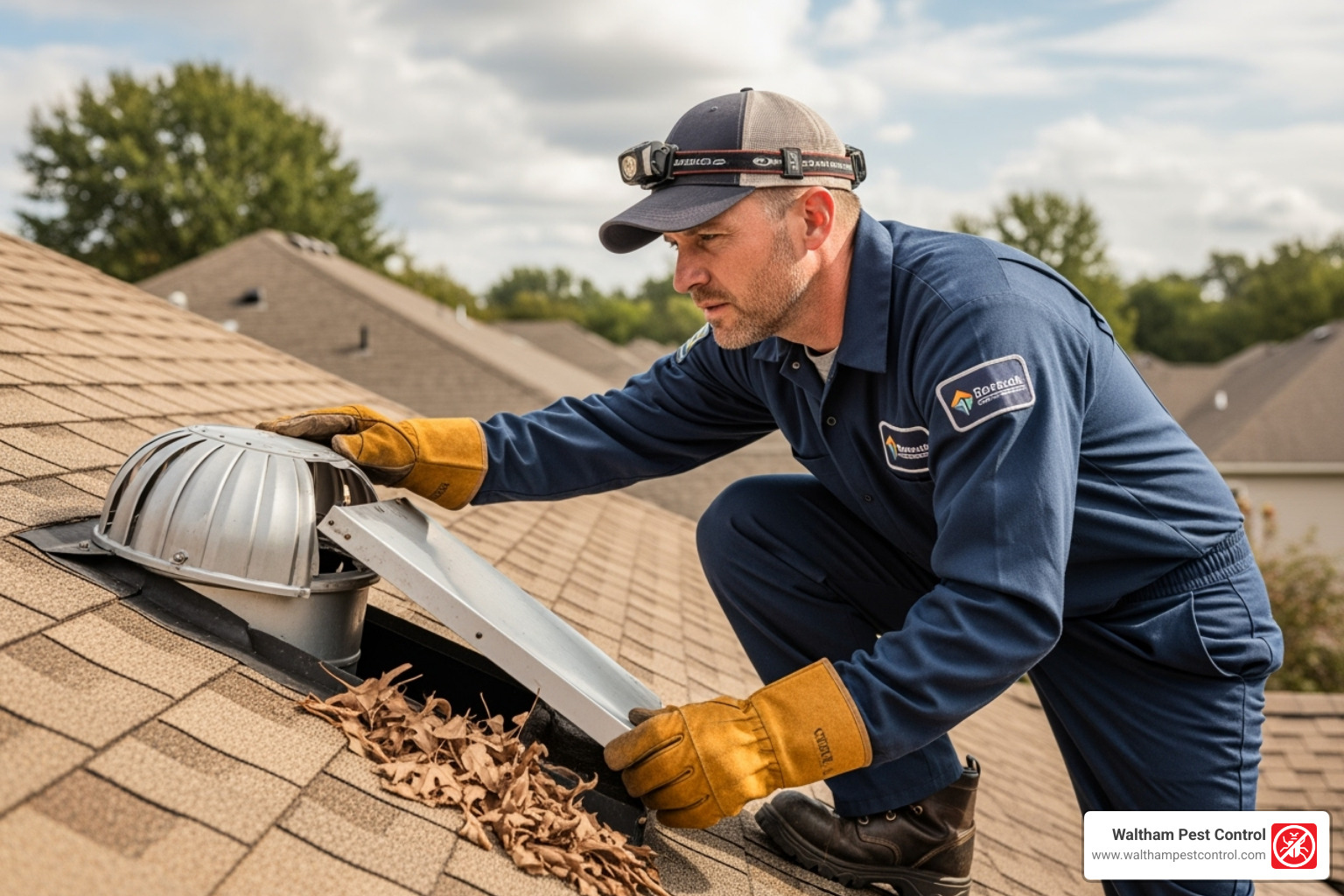
Sometimes, despite your best efforts to get rid of raccoons in your backyard, these clever creatures won’t take the hint. In many situations, calling a professional is the safest and most effective choice for everyone involved—including the raccoons.
How to know when to get rid of raccoons in your backyard with professional help
You should pick up the phone when your raccoon problem has moved beyond the DIY stage. Call a professional immediately if:
- Raccoons have moved inside your home, such as the attic, chimney, or crawl space.
- You suspect a mother has her babies in your home, as this requires special expertise for humane removal.
- Raccoons are persistent and keep returning despite your best prevention efforts.
- You see any signs of sickness or aggressive behavior, which could indicate rabies. Never approach such an animal.
- An animal is trapped in a difficult-to-reach area like a wall void or chimney flue.
If you’re unsure, our pest inspection services can provide a thorough evaluation.
What to Expect from Professional Services
Working with a professional wildlife control company provides a comprehensive, permanent solution.
- Professional Assessment: A technician inspects your entire property to identify entry points, attractants, and the full extent of the damage.
- Humane Trapping and Removal: We use proven, humane techniques that prioritize animal welfare. For mothers with young, we use strategies that encourage the family to relocate together.
- Exclusion Work: This is the most critical step. After removal, we seal every potential entry point with durable materials like heavy-gauge wire mesh and metal flashing to prevent them from coming back.
- Damage Repair and Cleanup: We can help address structural damage and follow CDC guidelines for safely cleaning up hazardous raccoon latrine sites.
- Cost of Professional Removal: The cost varies based on the complexity of the situation. Internet data suggests that average costs can range from approximately $350 to over $1,500. The final price depends on factors like the number of raccoons, accessibility of the den, and the extent of damage and exclusion work required. This investment provides a permanent solution and peace of mind.
Choosing Waltham Pest Control ensures the job is done ethically, safely, and effectively through our humane raccoon control services.
Frequently Asked Questions about Raccoon Deterrence
We hear these questions all the time from frustrated homeowners. If you’re wondering about the best ways to get rid of raccoons in backyard spaces, here are the answers you need.
Will raccoons just leave on their own?
It’s highly unlikely. Raccoons are opportunistic and creatures of habit. As long as your property offers easy food, water, and shelter, they will consider it their territory and stick around. The only way to get them to leave is to actively remove all the things that are attracting them. Simply waiting them out is not an effective strategy.
What smells do raccoons dislike the most?
Raccoons have sensitive noses and are said to dislike strong smells like hot pepper (cayenne), ammonia, peppermint oil, onions, and garlic. However, these are rarely a long-term solution. A determined raccoon will often ignore an unpleasant smell for a good meal, and these deterrents wash away easily in rain, requiring constant reapplication. They are not a reliable substitute for proper exclusion and removing food sources.
Is it safe to trap a raccoon myself?
No, we strongly advise against attempting to trap a raccoon yourself. The risks are significant and far outweigh any potential savings:
- Legal Issues: In Massachusetts, trapping and relocating wildlife is strictly regulated and often illegal without a license, carrying the risk of fines.
- Personal Safety: A cornered raccoon is dangerous and can inflict serious bites, potentially transmitting rabies or other diseases.
- Inhumane Outcomes: You might accidentally separate a mother from her young, leaving the babies to starve. Relocated raccoons often struggle to survive in unfamiliar territory.
- Disease Exposure: Handling traps puts you at risk of exposure to parasites like Baylisascaris roundworm from raccoon feces.
Professional trapping and removal by a licensed expert is the safest, most humane, and most effective choice.
Secure Your Yard from Raccoons for Good
You now have a comprehensive toolkit to get rid of raccoons in your backyard and keep them from returning. The key to success is a consistent, multi-layered approach.
Prevention is your most powerful weapon. By removing all food attractants and sealing every potential shelter, you eliminate the reasons raccoons visit in the first place. Active deterrents like motion-activated sprinklers can provide an extra layer of defense, but clever raccoons can adapt, so it’s important to stay vigilant.
When should you call for help? If you’ve tried these strategies and raccoons persist, or if they’ve already moved into your home, it’s time to call a professional. This is especially true if a mother and her young are involved or if an animal appears sick or aggressive. Your safety and the humane treatment of wildlife should always come first.
At Waltham Pest Control, we’ve been helping homeowners across Eastern Massachusetts for over 40 years. We serve communities throughout Middlesex County, Essex County, and Norfolk County, including Acton, Andover, Arlington, Belmont, Burlington, Cambridge, Concord, Framingham, Lexington, Lowell, Newton, Peabody, Waltham, Watertown, Wellesley, and Woburn. Our team understands the unique challenges that Massachusetts homeowners face with wildlife, and we’re committed to providing effective, humane solutions that work.
Don’t let masked bandits continue to wreak havoc on your property, damage your home, or put your family’s health at risk. Whether you need a professional assessment, humane removal, or comprehensive exclusion work to prevent future invasions, we’re here to help. Contact us today for comprehensive wildlife control and let us help you reclaim your backyard for good.
