

Exterminator for Mice: Top 5 Proven Ways in 2025

Finding the best exterminator for mice can make a significant difference in swiftly and effectively dealing with a rodent problem. Many homeowners and business owners in Massachusetts struggle with recurring mouse issues, often caused by small gaps and clutter that create perfect entry points and nesting sites for these pests. Here’s a quick guide:
- Professional Assessment: Experts can accurately identify the species and recommend an appropriate treatment plan.
- Effective Control: Combining mechanical traps, baits, and exclusion techniques ensures comprehensive extermination.
- Prevention Focus: Long-term solutions include sealing entry points and ongoing monitoring.
- Health and Safety: Professionals use safe methods that minimize risks to humans and pets.
Mice are not just a nuisance; they can pose health risks and cause property damage. Enlisting the help of seasoned professionals ensures that infestations are handled efficiently and sustainably. With over 40 years of experience in exterminator for mice services, I, Waltham Pest Control, am committed to delivering expert pest control solutions. Our focus is not just on removing current infestations but on preventing future ones, safeguarding your home and peace of mind.
Identifying a Mouse Infestation
Recognizing a mouse infestation early can save you time, money, and stress. Mice are stealthy creatures, but they leave behind telltale signs that alert you to their presence.
Signs of Infestation
- Droppings: These small, dark pellets are a common indicator. You might find them in kitchen cabinets, under sinks, or along baseboards.
- Gnaw Marks: Mice have strong teeth and will gnaw on wood, plastic, and even electrical wiring. Look for these marks on food packaging and furniture.
- Nests: Mice build nests from shredded materials like paper and fabric. Check hidden areas like attics, basements, and wall voids for these nests.
- Tracks and Footprints: In dusty areas, you might notice tiny footprints or tail marks.
- Noises: Listen for scratching or scurrying sounds, especially at night. Mice are nocturnal and most active when the house is quiet.
- Odors: A musky smell can indicate a large infestation. This is often due to urine and droppings.
Mouse Behavior
Mice are curious and social creatures. They are excellent climbers and can squeeze through openings as small as a pencil. Their diet includes grains, fruits, and seeds, but they will nibble on almost anything available. Mice are also prolific breeders, with a single female capable of producing up to 60 offspring a year.
Types of Mice
- House Mouse: Gray-brown in color with a hairless tail. They are the smallest but most common indoor invaders.
- Deer Mouse: These mice have a grayish-brown to reddish-brown coat with white undersides and feet. They prefer rural areas but can invade homes.
- White-footed Mouse: Similar to the deer mouse but slightly larger. They also prefer outdoor environments but can enter homes in search of food and shelter.
By understanding these signs and behaviors, you can better identify and address a mouse infestation. Early detection and professional intervention are key to effective pest control.
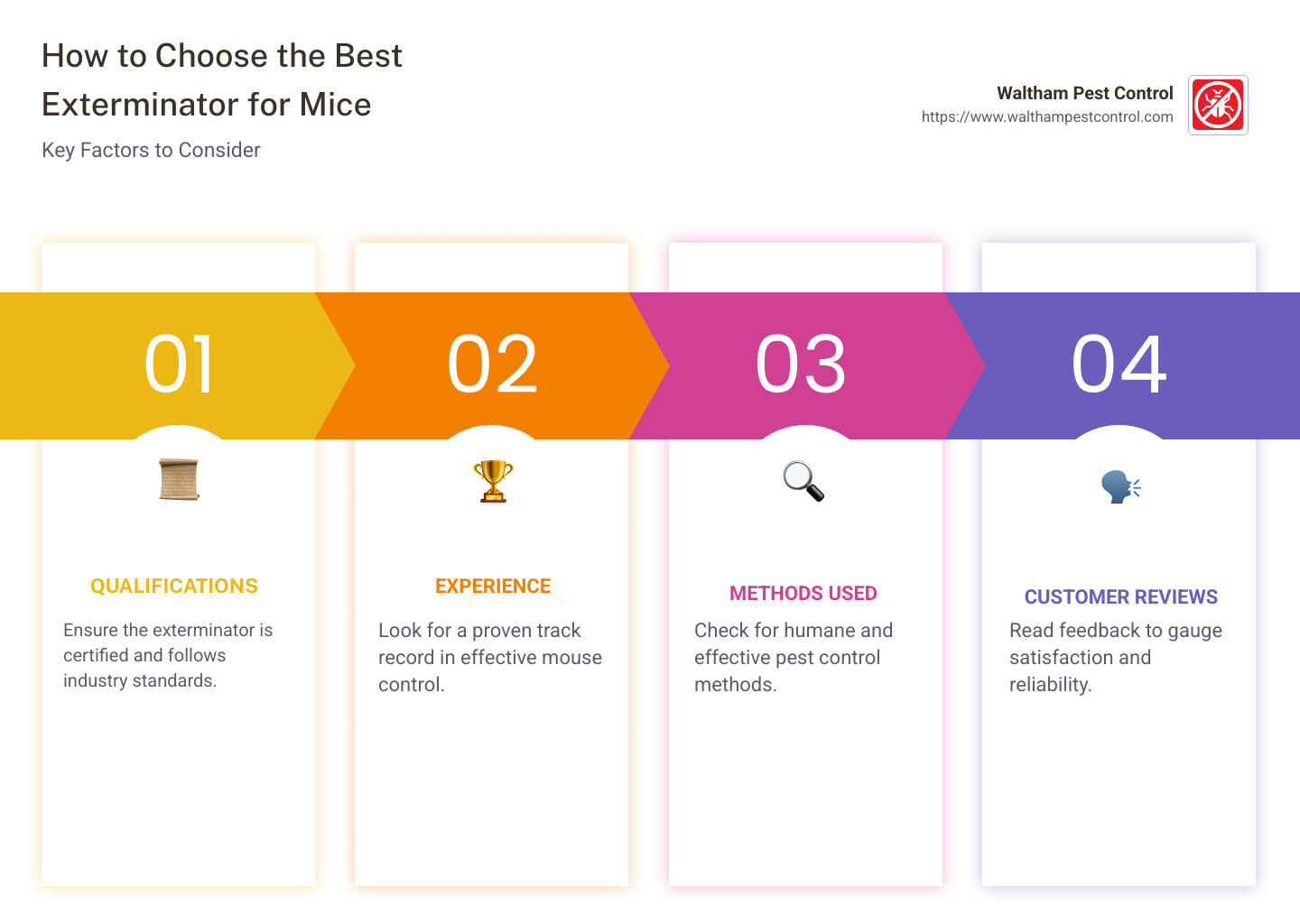
How to Choose the Best Exterminator for Mice
When dealing with a mouse infestation, choosing the right professional can make all the difference. Here’s what to look for in an exterminator for mice:
Qualifications
First, ensure the exterminator is licensed and certified. This means they have the necessary training to handle pest issues safely and effectively. A qualified professional will have a deep understanding of pest behavior and the science behind pest control.
Experience
Experience is crucial. An exterminator with years of experience has likely seen a variety of mouse problems and knows how to tackle them efficiently. Look for companies with a proven track record, like Waltham Pest Control, which has been serving communities for years.
Methods Used
Ask about the methods they use to control mice. Effective exterminators employ a combination of strategies, such as:
- Traps and Mechanical Devices: These are used to capture and remove mice safely.
- Exclusion Techniques: This involves sealing entry points to prevent future infestations.
- Sanitation Measures: Keeping areas clean and free of food sources that attract mice.
- Non-chemical and Chemical Methods: A good exterminator will prioritize non-chemical methods to minimize the use of chemicals.
Customer Reviews
Check online reviews and testimonials. Satisfied customers often leave positive feedback about their experiences. Look for comments on the exterminator’s professionalism, effectiveness, and customer service. A company with high ratings and positive reviews is likely to provide excellent service.
Case Study
For example, one customer in Boston shared how Waltham Pest Control quickly identified the type of mouse in their home and implemented a comprehensive treatment plan. They appreciated the detailed report and follow-up service, which ensured their home stayed mouse-free.
Choosing the right exterminator involves considering their qualifications, experience, methods, and customer feedback. This careful selection process ensures you get the best service to tackle your mouse problem effectively.
Effective Mouse Control Methods
When it comes to tackling a mouse problem, the right strategies can make a huge difference. Here are some of the most effective methods used by professionals:
Traps
Traps are a classic and effective way to control mice. They come in various types, including snap traps, live traps, and electronic traps. Snap traps are popular for their quick action, while live traps allow for the humane capture and release of mice. Electronic traps deliver a quick, humane kill.
Tip: Place traps along walls and in dark corners where mice are likely to travel.
Baits
Baits are another common tool in mouse control. These are often used in tamper-proof bait stations to ensure safety for children and pets. Baits should be placed strategically to attract mice away from food sources.
Caution: Always follow the product’s label instructions to prevent accidental exposure to non-target animals or people.
Exclusion Techniques
One of the best long-term solutions is to prevent mice from entering in the first place. Exclusion involves sealing entry points using materials like steel wool, caulk, or heavy-duty sealants. Mice can squeeze through gaps as small as a quarter-inch, so thoroughness is key.
Recommendation: Regularly inspect your home for new openings, especially during colder months when mice seek warmth indoors.
Sanitation Measures
Sanitation is crucial in preventing and controlling mouse infestations. Keep your home clean and free of food crumbs. Store food in airtight containers and dispose of garbage promptly. Mice are attracted to clutter, so maintaining a tidy environment helps deter them.
Advice: Regularly clean areas where food is prepared and consumed, and ensure that trash cans have tight-fitting lids.
Using a combination of these methods can greatly improve the effectiveness of your mouse control efforts. Each technique addresses different aspects of the problem, from immediate removal to long-term prevention.
Cost of Mouse Extermination Services
When dealing with a mouse infestation, understanding the cost of extermination services is crucial. Here’s what you need to know about the expenses involved.
Price Range
The cost of hiring an exterminator for mice can vary significantly. Typically, you might expect to pay anywhere from $100 to $500 for basic treatments. However, more severe infestations or larger properties can push this cost higher.
Factors Affecting Cost
Several factors influence the overall expense of mouse extermination services:
- Severity of Infestation: More mice mean more work, which can increase costs. Severe infestations may require multiple visits and a combination of control methods.
- Size of Property: Larger homes or commercial spaces take more time and resources to inspect and treat, affecting the price.
- Methods Used: The choice of traps, baits, and exclusion techniques can impact costs. Non-chemical methods, while effective, may require more labor and time.
- Location: Prices can vary based on your geographical area. Urban locations might have higher rates compared to rural areas.
Typical Expenses
In addition to the initial treatment, there might be ongoing costs for follow-up visits and maintenance. Some exterminators offer service packages that include regular inspections and treatments, which can be cost-effective over time.
While it might be tempting to handle the problem yourself, professional exterminators bring expertise and experience that can save you money in the long run by effectively addressing the issue and preventing future infestations.
Understanding these cost elements can help you make informed decisions when choosing an extermination service. It’s important to weigh the initial expenses against the potential damage and health risks posed by a mouse infestation.
Frequently Asked Questions about Exterminators for Mice
Will an exterminator get rid of mice?
Yes, an exterminator for mice can effectively eliminate a mouse infestation. Professionals use a combination of traps, mechanical devices, and mouse baits to address the problem.
- Traps: Snap traps and glue boards are common choices. They are effective for capturing individual mice but may not be enough for larger infestations.
- Mechanical Devices: These include more sophisticated traps and electronic repellents. While electronic devices emit high-frequency sounds to deter mice, their effectiveness can vary.
- Mouse Baits: Baits are often used in conjunction with traps. They are placed in tamper-proof stations to prevent accidental exposure to pets or children.
How much should it cost to get rid of mice?
The cost to get rid of mice depends on several factors, including the severity of the infestation and the methods used.
- Price Range: You might pay between $100 and $500 for basic treatments. Severe infestations or larger properties could increase the cost.
- Infestation Level: A minor issue might be resolved quickly, while a severe infestation could require multiple visits and a combination of methods, raising the price.
- Removal Methods: The choice of traps, baits, and exclusion techniques can also impact costs. Non-chemical methods might require more labor but are often safer for homes with pets and children.
Is there a way to permanently get rid of mice?
Achieving permanent results requires a combination of extermination and prevention strategies.
- Sealing Cracks: Mice can enter through very small openings. Sealing cracks and gaps in walls, floors, and foundations is crucial.
- Airtight Containers: Store food in airtight containers to eliminate potential food sources for mice.
- Clutter-Free Home: Reducing clutter removes hiding spots and nesting materials, making your home less attractive to mice.
While an exterminator can address the immediate issue, maintaining a mouse-free environment involves ongoing preventive measures. By combining professional services with these strategies, you can keep your home mouse-free in the long term.
Conclusion
In summary, dealing with a mouse infestation requires a strategic approach that combines professional extermination with ongoing prevention efforts. An exterminator for mice can effectively manage the immediate problem using a variety of methods like traps, mechanical devices, and baits. However, achieving long-term success involves sealing entry points, storing food securely, and maintaining a clutter-free environment.
At Waltham Pest Control, we pride ourselves on delivering top-notch pest control services in Eastern Massachusetts. With over 40 years of experience, our team is dedicated to providing effective, safe, and cost-efficient solutions custom to your needs. Our licensed and insured professionals are here to help you reclaim your home from pests.
For more information or to schedule a consultation, please visit our Waltham Pest Control service page. We’re here to assist you 24/7 with all your pest control needs. Whether you’re dealing with a minor issue or a severe infestation, our experts are ready to help you create a safe and comfortable home environment.