

Dead Termites: 5 Warning Signs of Major Infestation 2024
What Does It Mean When You See Dead Termites?
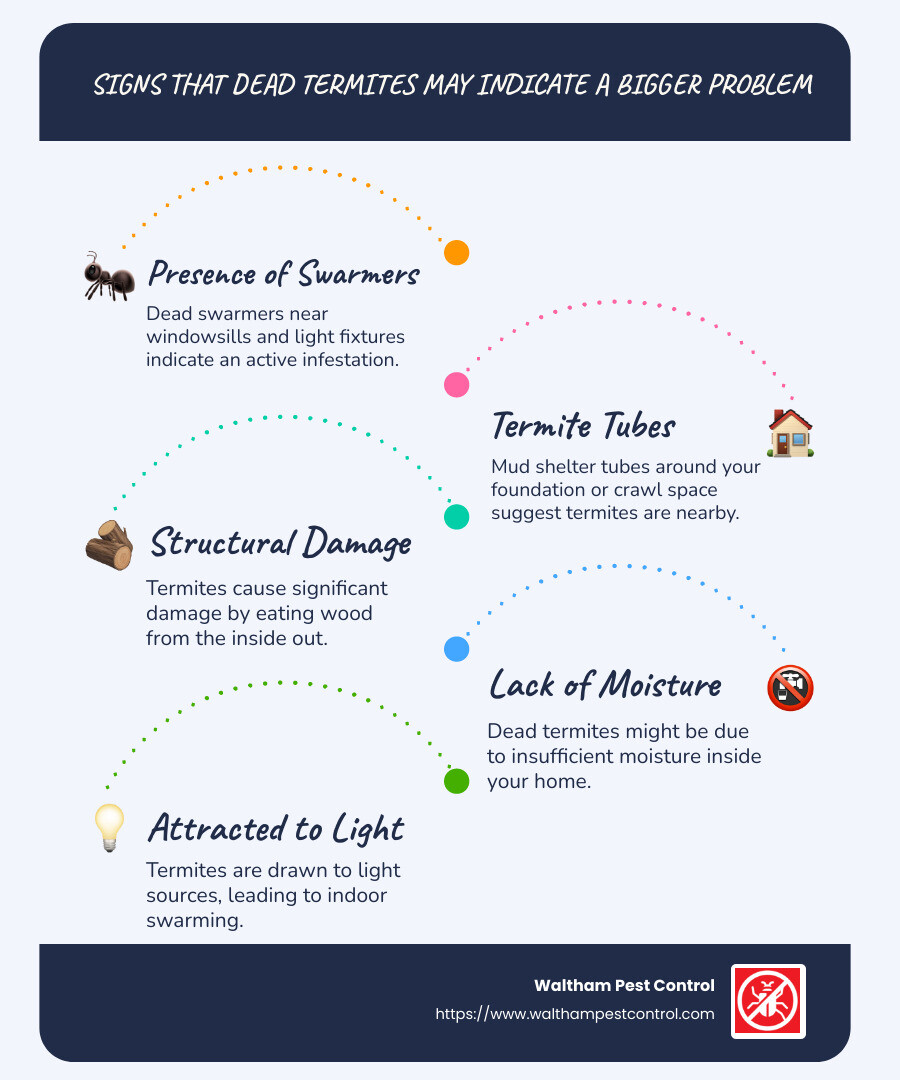
Dead termites inside your home might seem like a minor issue, but they usually signal a larger, hidden problem. Here’s what you need to know:
- Presence of swarmers: Seeing dead termite swarmers, especially near windowsills and light fixtures, is a strong indication of an active termite infestation.
- Termite tubes: Finding mud shelter tubes around your foundation or crawl space means termites are likely thriving somewhere close by.
If you’ve noticed dead termites in your property, don’t ignore them. Termites can cause significant structural damage to your home over time by eating wood from the inside out.
I’m Waltham Pest Control, President & CEO of Waltham Pest Control, bringing over 40 years of experience in tackling termite infestations. Let’s dive deeper into what dead termites signify and how to protect your home effectively.
Dead termites terms to remember:
– are termites attracted to light
– can termites fly
– how do pest control companies treat for termites
What Are Dead Termites?
Understanding what dead termites mean starts with knowing their lifecycle and behaviors. Termites undergo a change that includes several stages, and dead termites can appear at any point in this cycle.
Termite Lifecycle
Termites have a complex lifecycle that includes the following stages:
- Eggs: Termite eggs are laid by the queen deep within the colony.
- Nymphs: These young termites eventually develop into different roles within the colony.
- Workers, Soldiers, and Alates: Workers gather food, soldiers defend the colony, and alates (swarmers) are responsible for reproduction.
Alates: The Swarmers
Alates, or swarmers, are winged termites that leave their colony to mate and start new colonies. They are often seen during swarming events, especially in the spring or fall depending on the species.
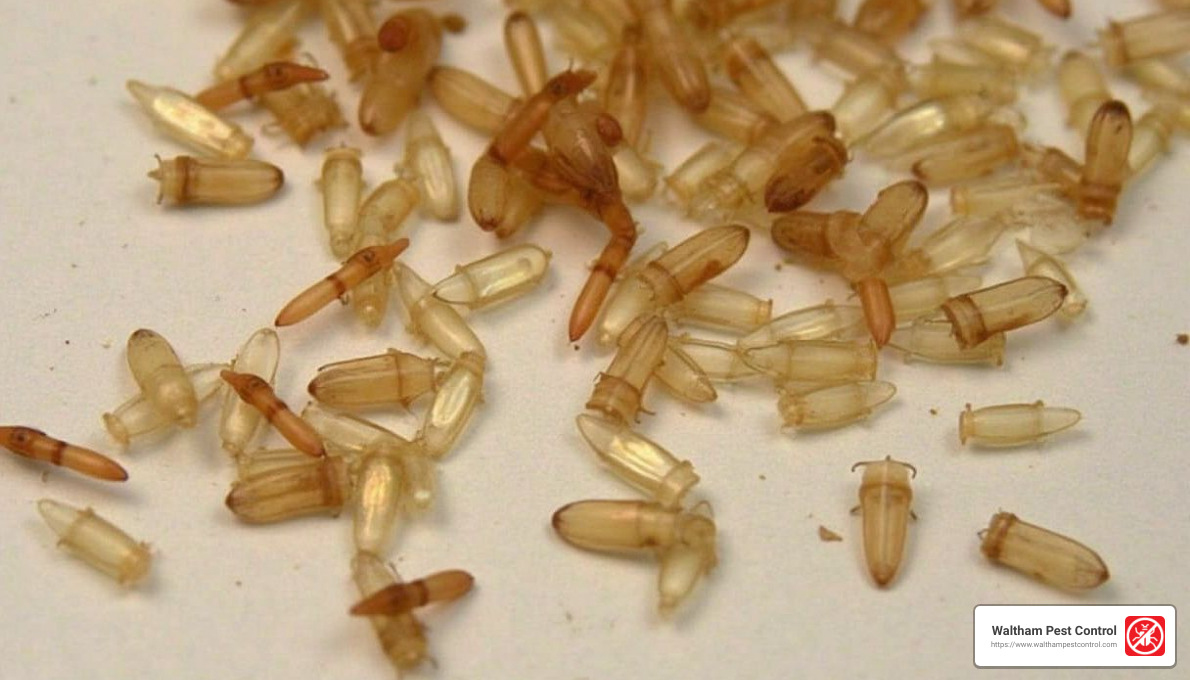
- Swarming: This is when alates take flight, mate, and then shed their wings. If you find dead alates around your home, it’s a sign they may have tried to start a colony nearby.
- Wing Shedding: Alates lose their wings quickly after mating, leaving behind piles of wings, which is a common sign of termite activity.
Termite Colonies
A termite colony is a well-organized unit with different castes performing specific roles. Here’s a quick look at the main members of a termite colony:
- Queen: The primary egg layer, responsible for the colony’s growth.
- King: Mates with the queen and helps care for the young.
- Workers: These are the most numerous and do most of the labor, such as gathering food and building tunnels.
- Soldiers: Defend the colony from predators.
- Alates: Future kings and queens that leave the colony to reproduce.
Finding dead termites could mean that a colony is nearby, trying to establish itself in your home. Dead termites can indicate that the colony’s alates have failed to start a new nest, but the presence of workers and soldiers means the colony is still active and damaging your property.
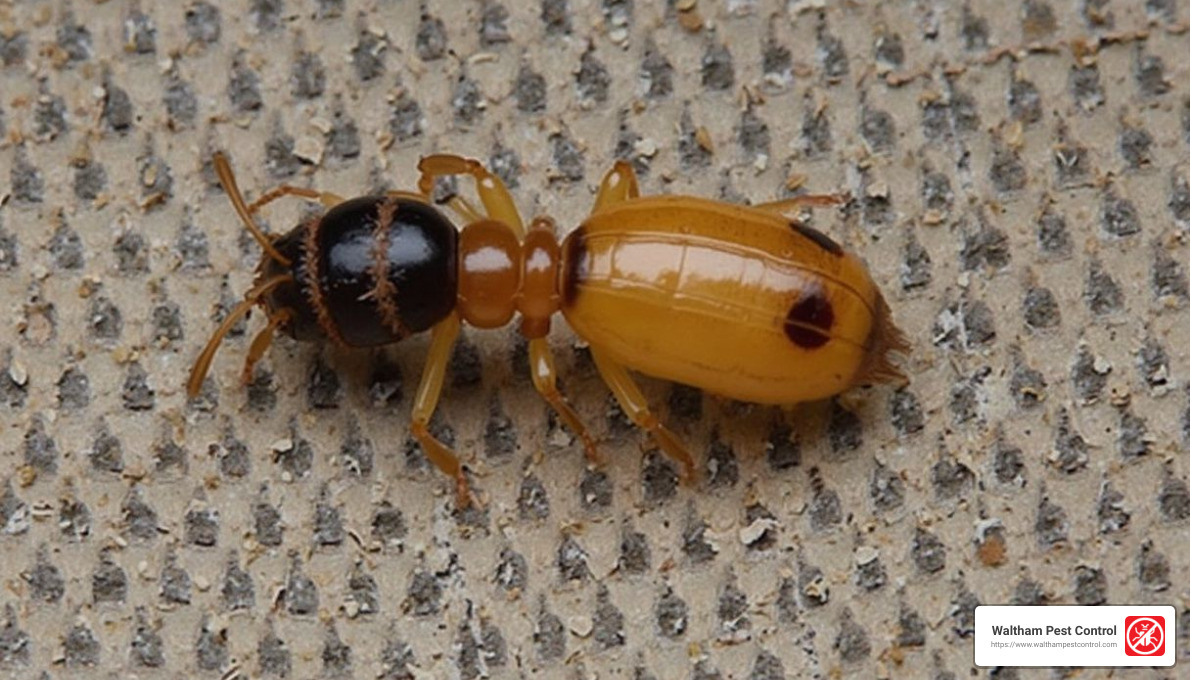
Understanding the lifecycle and roles within a termite colony helps explain why dead termites are more than just a nuisance—they’re a sign of a bigger problem lurking within your walls.
Next, we’ll explore common places where you might find dead termites in your home and what that means for you.
Common Places to Find Dead Termites
Finding dead termites in your home can be alarming. These pests often leave behind clues in specific areas. Knowing where to look can help you identify a bigger problem early on.
Window Sills
Window sills are a common spot for dead termites, especially alates. These winged termites are attracted to light and often swarm towards windows. If you see piles of wings or dead termites on your window sills, it’s a sign that swarmers have tried to escape but failed. This could indicate a nearby colony trying to establish itself.
Light Fixtures
Like window sills, light fixtures attract termites, especially during swarming season. If you notice dead termites around light fixtures or even inside them, it’s a clear sign that swarmers are present in your home. Since termites are drawn to light, they often get trapped and die in these areas.
Bathrooms
Bathrooms are another hotspot for finding dead termites. These areas provide the moisture termites need to survive. If you find dead termites around sinks, bathtubs, or toilets, it’s a warning sign of a potential infestation. Moisture from leaky pipes or damp wood can attract termites, making bathrooms a prime location for these pests.
Floors
Dead termites on your floors, especially near baseboards or wooden structures, are a strong indicator of termite activity. Termites often travel through your home using mud tubes and can appear on floors as they search for food. If you find dead termites on your floors, it’s essential to investigate further to determine the extent of the infestation.
Finding dead termites in these common areas is more than just an inconvenience. It often points to a larger, hidden problem. In the next section, we’ll dive into why there are dead termites in your house and what it means for you.
Why Are There Dead Termites in My House?
Finding dead termites in your house can be unsettling. But why are they there in the first place? Let’s explore some common reasons.
Lack of Moisture
Termites need moisture to survive. When they can’t find it, they die. This is often the case with dead termites you find around dry areas of your home. If your home has areas with fluctuating humidity levels, termites might struggle to survive, leading to dead ones appearing.
Attracted to Light
Termites, especially swarmers or alates, are strongly attracted to light. During their swarming season, they often fly towards light sources like windows and light fixtures. Unfortunately for them, these areas are often traps. They get stuck, can’t find their way out, and eventually die. This is why you might see piles of dead termites or wings around windowsills and lamps.
Indoor Swarming
Swarming is a natural part of a termite’s lifecycle. When a termite colony matures, it sends out swarmers to start new colonies. If this happens indoors, it’s a sign of a significant problem. Indoor swarming often results in many dead termites because they can’t escape the confines of your home. This indoor swarming is not typical and indicates a nearby colony, possibly within your walls or foundation.
Seeing dead termites can be a sign of a bigger problem. In the next section, we’ll discuss how to check for active termite infestations and what to look for.
How to Identify Dead Termites
Identifying dead termites is crucial for understanding the extent of a termite problem. Here’s how you can tell if those dead insects are termites and not something else.
Termite Wings
One of the easiest ways to identify dead termites is by their wings. Termite swarmers, also known as alates, have two pairs of wings that are equal in length. After swarming, they often shed their wings, leaving them scattered around windowsills, light fixtures, and floors.
- Equal Wing Length: Unlike ants, whose front wings are larger than their back wings, termite wings are all the same size.
- Shape and Texture: Termite wings are more delicate and have a veined texture, while ant wings are tougher and less veined.
Termite Bodies
The body structure of a termite is another key indicator. Here are some features to look for:
- Uniform Shape: Termites have a broad, tube-like body without the pinched waist seen in ants.
- Color and Size: Dead termite bodies are usually creamy white to dark brown or black, and they measure around ¼ to ½ inch long.
- Antennae: Termites have straight, beaded antennae, unlike ants, which have elbowed antennae.
Ant vs. Termite
It’s easy to confuse termites with ants, especially flying ants. Here’s a quick comparison to help you differentiate:
| Feature | Termites | Ants |
|---|---|---|
| Wings | Two pairs, equal length | Two pairs, front wings larger than back wings |
| Body Shape | Broad, tube-like, no pinched waist | Pinched waist, segmented body |
| Antennae | Straight, beaded | Elbowed, smooth |
| Color | Creamy white to dark brown or black | Varies, but usually darker and more uniform |
If you find dead insects and are unsure whether they are termites or ants, use the table above as a quick reference.
Seeing dead termites can be a sign of a bigger problem. In the next section, we’ll discuss how to check for active termite infestations and what to look for.
Dead Termites: Signs of a Bigger Problem?
Finding dead termites in your home might seem like a small issue, but it often signals a much larger problem. Here’s why:
Termite Infestation
Dead termites usually mean there’s a termite infestation nearby. Termites are social insects that live in colonies, and when you spot dead ones, it’s likely that many more are still alive and active, causing damage.
Fact: Large termite colonies can eat as much as a pound of wood per day. This means that even if you only find a few dead termites, the colony could still be doing significant damage to your home.
Structural Damage
Termites feed on wood, and their constant chewing can weaken the structural integrity of your home. If left untreated, termite damage can cause:
- Sagging floors
- Crumbling wood
- Hollow-sounding wood when tapped
Statistic: Damage from termites usually isn’t obvious until three to eight years after an infestation begins. By then, the damage can be extensive.
Mud Tubes
One of the most telling signs of a termite infestation is the presence of mud tubes. These are small tunnels made of soil and wood particles, which termites use to travel between their colony and food sources.
Tip: If you find mud tubes, break a small section and check for live termites. If the tube is repaired within a few days, you have an active infestation.
Quote: “Simply destroying the tubes will not control the termites; they are still there in the ground and will find other ways to get into the building.” – Source
Seeing dead termites can be a sign of a bigger problem. In the next section, we’ll discuss how to check for active termite infestations and what to look for.
How to Check for Active Termite Infestations
Signs of Active Termite Infestations
To determine if you have an active termite infestation, look for these key signs:
1. Live Termites
Seeing live termites is a clear sign of an active infestation. They are usually found in dark, damp areas and can be seen when you break open mud tubes or damaged wood.
2. Swarmers
Swarmers are winged termites that leave the colony to start new ones. Finding swarmers, either alive or dead, inside your home is a strong indicator of an active termite problem. Swarmers are attracted to light and are often found near windows or light fixtures.
3. Mud Shelter Tubes
Termites build mud shelter tubes to protect themselves as they move between their colony and food sources. These tubes can be found on walls, foundations, and other surfaces. Break a small section and check for live termites. If the tube is repaired within a few days, you have an active infestation.
4. Pinholes
Look for small, BB-sized spots of dried mud on walls or ceilings. These are known as “pinholes” and occur when termites accidentally create an opening to the outside, which they quickly repair. Scrape away the mud to see if there is a hole underneath and watch for termites.
5. Termite Damage
Termite damage can appear as sunken lines or winding areas in wallpaper, paint, or other surfaces. Termites often eat the outer cardboard covering of sheetrock without disturbing the paint, making the damage less obvious.
How to Tell If Termites Are Dead or Active
1. No Live Termites
If you find termite damage but no live termites, it could mean the infestation is old and has already been treated. However, it’s important to have a professional inspection to confirm this.
2. Unrepaired Mud Tubes
Check mud tubes for signs of activity. If you break a section of the tube and it remains unrepaired after a few days, the infestation might be inactive. But don’t rely solely on this method; always consult a professional for a thorough inspection.
3. Dried Mud in Galleries
When removing wallpaper or doing home repairs, you might find dried mud in termite galleries. This could be a sign of past termite activity. Again, a professional inspection is crucial to determine if the infestation is still active.
Understanding these signs can help you identify whether you have an active termite infestation. In the next section, we’ll discuss what steps to take if you find dead termites in your home.
What to Do If You Find Dead Termites
Immediate Actions to Take
Finding dead termites in your home can be alarming. Here are some immediate steps you should take:
1. Contain Swarmers
If you see live swarmers, contain them quickly. Close doors to prevent them from spreading to other parts of the house.
2. Vacuum
Use a vacuum cleaner to clean up dead termites and their wings. This helps keep your living space clean and prevents further spread.
3. Collect Specimens
Collect a few dead termites and their wings in a plastic bag. This will help a professional identify the type of termites you’re dealing with.
4. Contact a Professional
Call a pest control service immediately. They can provide a professional inspection to determine if there is an active infestation.
Long-Term Solutions
After taking immediate action, consider these long-term solutions to ensure your home stays termite-free:
1. Professional Inspection
A professional inspection is crucial. They will look for signs of active infestations, such as mud tubes, live termites, and termite damage.
2. Termite Treatment
Based on the inspection, a pest control service will recommend a suitable treatment plan. This could include soil treatment, baiting systems, or other methods.
3. Soil Treatment
Soil treatment involves applying a liquid termiticide around your home’s foundation. This creates a barrier that termites can’t cross, effectively killing them when they come into contact with it.
4. Baiting Systems
Baiting systems are another effective method. These are installed around your home and contain a substance that termites find attractive. Once they consume the bait, they carry it back to the colony, which eventually kills the entire colony.
5. Annual Inspections
Schedule annual inspections to catch any future termite activity early. Regular inspections can help prevent extensive damage and save you money in the long run.
Taking these steps will help you manage and prevent termite infestations effectively. Regular maintenance and professional help are key to keeping your home safe from these destructive pests.
Frequently Asked Questions about Dead Termites
Is it normal to find dead termites?
Yes, finding dead termites inside your home is not uncommon, especially during swarming season. Termite swarmers, or alates, are adult reproductive termites that leave their colony to start new ones. They are often attracted to light sources and may end up inside your home. Once inside, they typically die quickly due to lack of moisture and suitable soil to establish new colonies.
How can you tell if termites are dead or active?
To determine if termites are dead or if there is an active infestation, look for these signs:
- Live termites: If you see live termites, especially swarmers, it indicates an active infestation.
- Mud shelter tubes: These are tunnels termites build to travel between their colony and food sources. If you break open a tube and see live termites, the infestation is active.
- Termite damage: Look for damaged wood that sounds hollow when tapped. Active infestations often have fresh, moist mud inside the tunnels.
If you only find dead termites and no other signs of activity, it might mean the swarmers failed to establish a new colony. However, it’s best to get a professional inspection to be sure.
Is it normal to see a few termites?
Seeing a few termites, especially swarmers, can be normal during swarming season. However, even a small number of termites can be a sign of a larger problem. Termites work in colonies that can number in the hundreds of thousands. If you see a few termites, it’s a good idea to:
- Check for other signs: Look for mud tubes, damaged wood, and other indicators of an infestation.
- Get a professional inspection: A pest control expert can determine whether you have an active infestation and recommend a treatment plan.
Finding dead termites or a few live ones should prompt immediate action to prevent potential structural damage to your home.
Conclusion
Finding dead termites in your home can be alarming, but it doesn’t always mean you have an active infestation. However, it’s crucial to take these signs seriously and act promptly to prevent potential structural damage.
At Waltham Pest Control, we specialize in termite prevention and professional pest control services. With over 40 years of experience in the industry, we have the expertise to protect your home from these silent destroyers. Our team provides thorough inspections, effective treatments, and ongoing monitoring to ensure your property remains termite-free.
Termite prevention is key to safeguarding your home. Here are some steps you can take:
- Address moisture issues: Termites thrive in moist environments. Fix any leaks and ensure proper ventilation in your home.
- Use quality materials: When building or renovating, opt for professionally-rated wood and materials that are less susceptible to termite damage.
- Regular inspections: Annual inspections by a professional can catch early signs of termite activity before they cause significant damage.
If you suspect a termite problem, don’t wait. Contact Waltham Pest Control for a comprehensive inspection and custom treatment plan. Our licensed and insured team is committed to providing cost-effective solutions that protect your home and peace of mind.
For more information or to schedule a free termite inspection, visit our Pest Inspections page.
Taking these steps can help you stay ahead of termite issues and maintain the structural integrity of your home. Early detection and professional intervention are your best defenses against termites.
