
Dead rat in roof: 3 Urgent Solutions
When a Foul Odor Signals a Hidden Problem
A dead rat in roof spaces is an urgent health and safety concern. That unmistakable putrid, rotting odor is a red flag for a serious problem that requires immediate attention. A decomposing carcass releases toxic gases, attracts secondary pests like flies and maggots, and poses a health risk to your family.
Quick Action Steps:
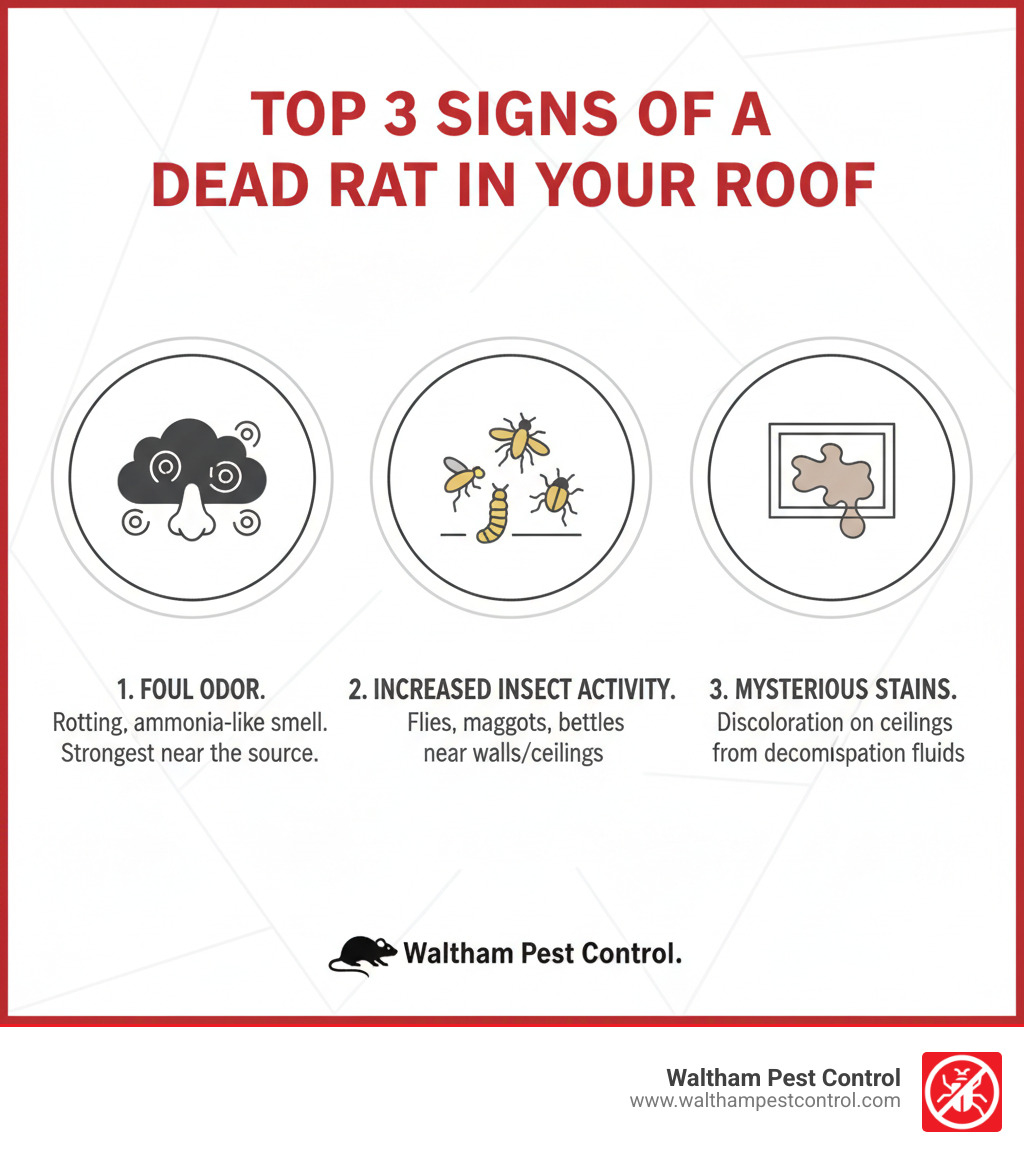
- Identify the signs – Look for a strong, putrid odor, increased insect activity, and mysterious ceiling stains.
- Assess the situation – Determine if the location is accessible and if you have proper safety equipment.
- Call a professional – For inaccessible locations or health safety concerns, professional removal is strongly recommended.
- Address the root cause – Seal entry points to prevent future infestations.
The main challenge is that rats often die in inaccessible places like wall cavities or deep within insulation. The smell can persist for weeks or months if the source isn’t removed. Many homeowners attempt DIY removal but fail to locate the carcass or lack the proper safety equipment, making professional intervention essential.
I’m Waltham Pest Control, President & CEO of Waltham Pest Control. For over 40 years, I’ve helped Massachusetts homeowners safely resolve dead rat in roof issues. Our trained professionals use specialized equipment to locate and remove carcasses while minimizing property damage and health risks.
Key dead rat in roof vocabulary:
The Telltale Signs: Is There a Dead Rat in Your Roof?
The first sign is usually an odd smell that grows stronger daily. Here are the telltale signs of a dead rat in roof spaces.
Foul Odor
The smell is unforgettable, often described as rotting cabbage with a sickly sweet, putrid undertone. This odor comes from gases like sulfur dioxide and methane released during decomposition. The smell is a natural warning sign. Its intensity fluctuates, becoming much worse on warm, humid days, as humidity and temperature amplify decomposition odors.
Insect Activity
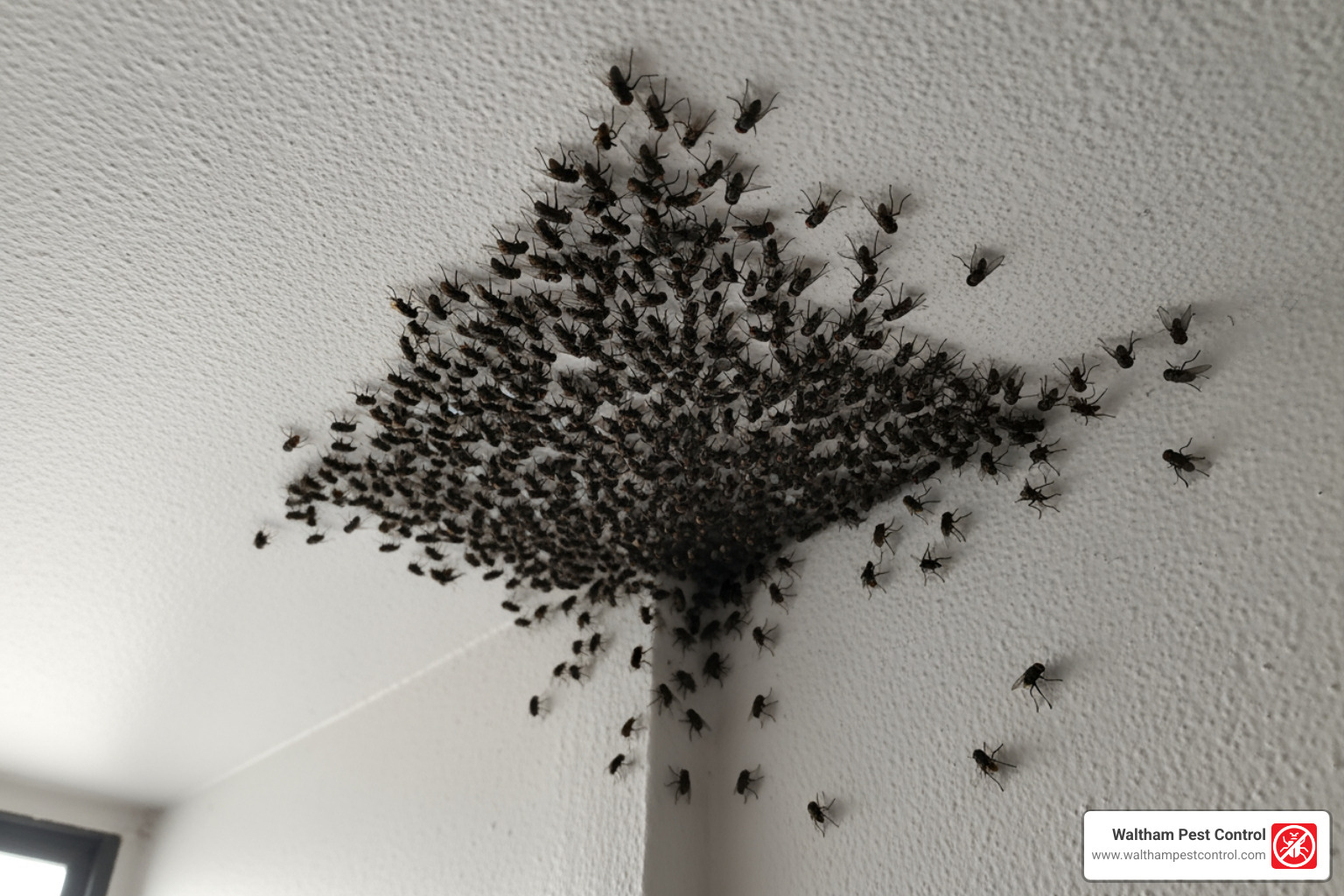
A decomposing rat attracts an unwelcome audience. A sudden increase in flies, maggots, or beetles congregating near a ceiling or wall is a strong indicator. Flies arrive within hours to lay eggs, and their persistent buzzing around one spot can help pinpoint the general location of the problem.
Unexplained Stains
As a carcass decomposes, bodily fluids can seep into surrounding materials, causing ceiling discoloration. These dark, greasy, or yellowish-brown stains may look like water damage but appear in odd locations. If you see these stains along with the foul odor, a dead rodent is the likely cause.
How long does the smell of a dead rat last?
The worst of the smell typically lasts 3 weeks to a month, but several factors can extend this decomposition timeline:
- Rat size: A larger rat means a stronger, longer-lasting odor.
- Temperature and Humidity: Warm, moist conditions accelerate decay, which makes the initial smell more intense.
Even after the peak decomposition phase, a lingering scent can remain for weeks. Waiting it out is not a practical solution, which is why professional removal is so important.
For more information about addressing rodent problems before they become this serious, visit our Rodent Infestation Control services page.
Understanding the Health Risks and Hazards
The overwhelming smell of a dead rat in roof spaces is a warning sign of a genuine health hazard. A decomposing rat is a biological time bomb, releasing toxic gases and airborne particles into your home’s air supply.
These contaminants can cause respiratory issues, especially for those with allergies or asthma. The carcass and the pests it attracts also spread bacterial contamination. Flies and maggots can transfer bacteria from the carcass to your kitchen counters and food. A dead rat also attracts secondary pests like fleas and ticks, which can move on to your pets and family.
Diseases Spread by Rats
The health risks don’t disappear when a rat dies. According to the CDC, rats can spread at least 35 diseases to humans through direct and indirect contact. Serious diseases include:
- Leptospirosis: A bacterial infection that can lead to severe liver and kidney damage.
- Salmonellosis: A common bacterial infection causing fever, diarrhea, and abdominal cramps.
- Potentially deadly hantavirus: A respiratory disease transmitted by breathing in airborne particles from rat droppings, urine, or saliva.
These risks are why DIY removal is not recommended. Homeowners often underestimate the dangers and lack the proper protective equipment. A dead rat in roof requires professional handling, including respiratory protection and decontamination protocols, to ensure your family’s safety.
For comprehensive help with rodent-related health concerns and proper removal, our Wildlife Control Services team has the training and equipment to protect your family’s health while solving the problem safely.
Locating and Removing a Dead Rat in the Roof: A Job for Professionals
Locating and safely removing a dead rat in roof spaces is rarely a simple DIY job.
DIY Risks
Rats instinctively die in hidden, inaccessible spots like wall cavities or deep inside insulation. Following the smell is often misleading due to air currents. DIY attempts frequently lead to frustration, unnecessary property damage from cutting exploratory holes, and exposure to biohazards due to a lack of proper safety equipment like respirators and heavy-duty gloves.
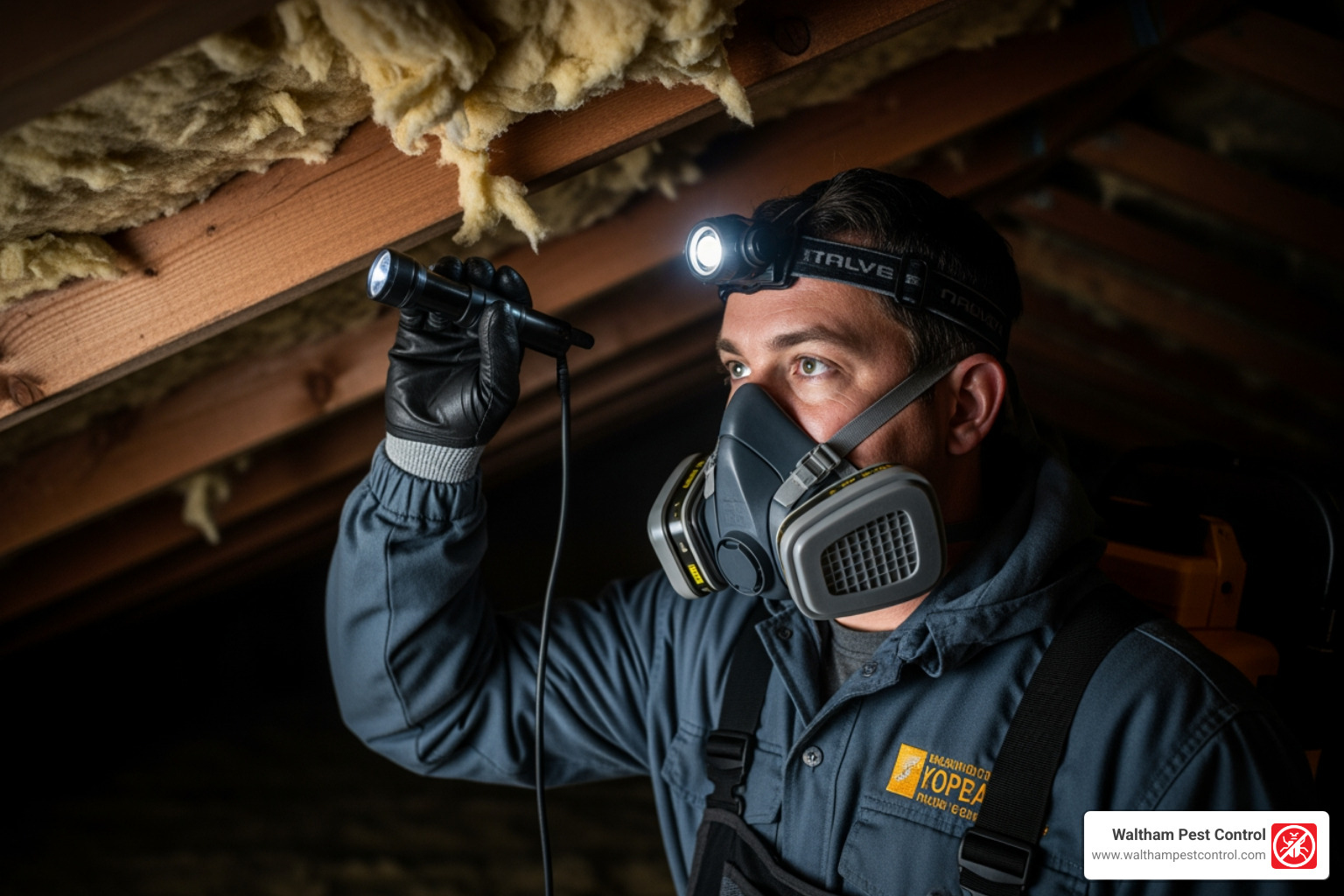
How Professionals Locate a dead rat in the roof
At Waltham Pest Control, our technicians use a systematic inspection process. We analyze air current patterns and use specialized equipment to pinpoint the carcass with minimal disruption.
- Borescopes: Flexible fiber-optic cameras allow us to see inside walls and tight spaces without causing damage.
- Thermal Imaging Cameras: These can detect temperature variations that may indicate a decomposing body.
Our goal is to minimizing damage by making precise, targeted openings only after confirming the location. For more information about how our experienced team handles various pest challenges, visit our Professional Pest Control Services page.
Safe Removal of a dead rat in the roof
Once located, safe removal is critical. Our technicians use full protective gear, including industrial-grade respirators and gloves, to prevent exposure to pathogens. We follow strict containment procedures, bagging the carcass and any contaminated materials in sealed, heavy-duty bags. Proper disposal adheres to all local biohazard regulations. We focus on preventing cross-contamination throughout the process to keep your home safe.
If you’re dealing with wildlife concerns beyond just rats, our Animal Trapping Services provide comprehensive solutions for various animal removal needs.
Aftermath and Prevention: Cleaning and Securing Your Home
Removing the dead rat in roof is the first step. The aftermath requires proper cleaning and future prevention.
Lingering Odors and Contaminated Materials
Even after the carcass is gone, odors can linger by soaking into porous materials like insulation, wood, and drywall. Contaminated insulation that has absorbed bodily fluids must be removed and replaced to eliminate the smell and health hazards. A faint scent may persist for up to two weeks, but proper ventilation will help it dissipate.
Cleaning and Disinfecting the Area
Proper cleaning is essential for health and safety.
- Ventilate the area: Open windows and use fans to circulate fresh air.
- Do not sweep or vacuum: This can kick hazardous particles into the air.
- Disinfect surfaces: Spray the area with a disinfectant solution (one part bleach to ten parts water) and let it sit for five minutes before wiping.
- Use enzymatic cleaners: For persistent odors, professional-grade enzymatic cleaners break down the organic compounds causing the smell.
Severely contaminated building materials may need to be removed and disposed of. For more guidance on maintaining a pest-free home environment, check out our Home Pest Control Solutions.
How to Prevent Rats from Dying in Your Roof Again
The best solution is to prevent rats from entering your home in the first place.
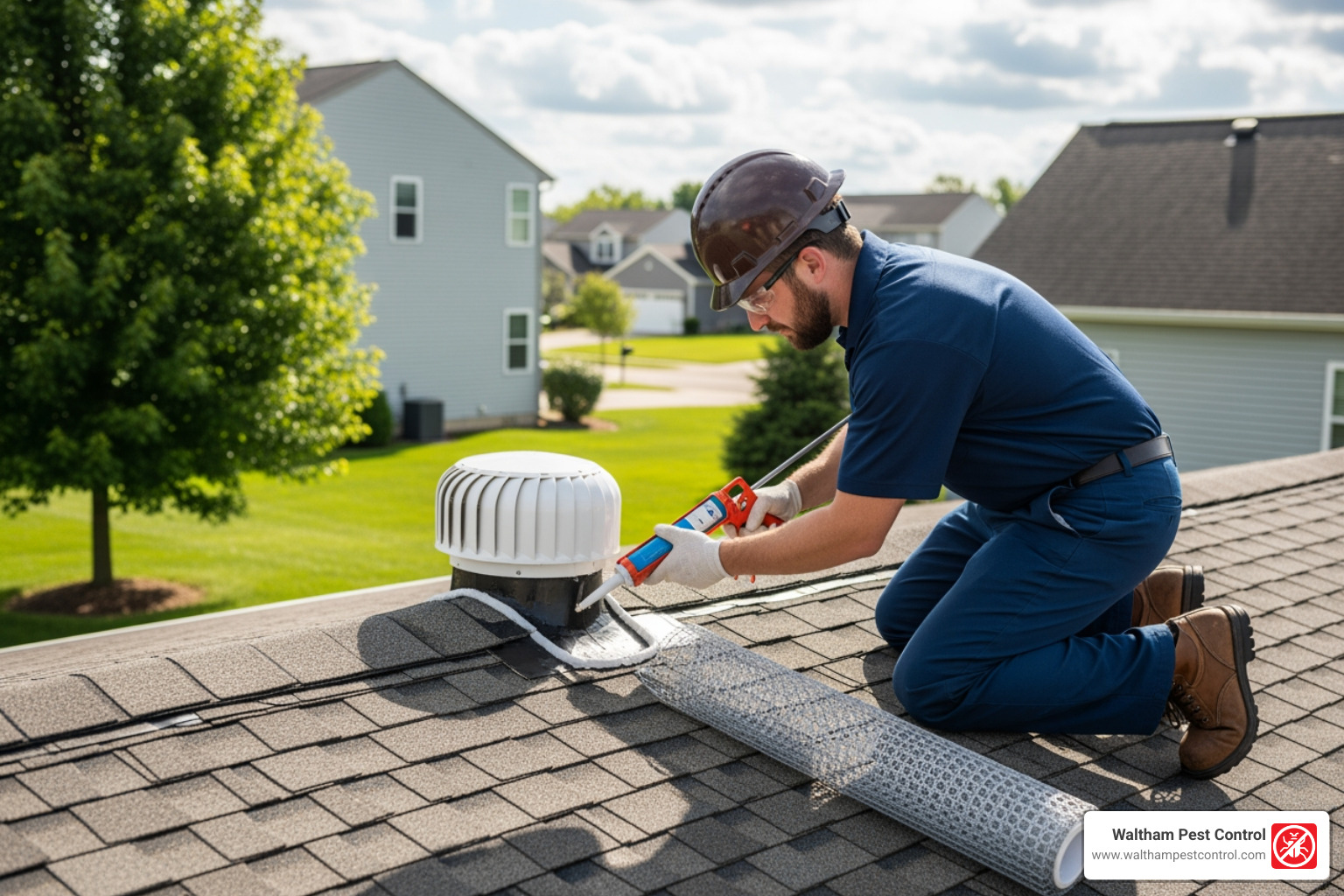
- Seal Entry Points: Rats can fit through holes as small as a quarter. We inspect for and seal gaps around vents, soffits, pipes, and foundations using chew-proof materials like wire wool, cement, or metal plates.
- Eliminate Access: Trim tree branches back several feet from your roofline to remove an easy access route for climbing rodents.
- Remove Attractants: Keep your property tidy and free of clutter. Store garbage in sealed, rodent-proof bins. Inside, keep all food, including pet food, in airtight containers and clean up spills promptly.
By removing their access to food, water, and shelter, you make your home far less attractive to rats.
For comprehensive strategies on keeping rodents out for good, visit our page on Rodent Prevention and Control: Keeping Mice and Rats Out of Your Property.
Frequently Asked Questions about Dead Rats in a Roof
Finding a dead rat in roof spaces raises many questions. Here are answers to the most common concerns.
Why do rats die in roofs and attics?
Rats seek out quiet, safe, and hidden places when they are sick, injured, or dying. Your attic, roof cavity, and wall spaces provide the perfect shelter. A common cause is the delayed effect of poison bait. A poisoned rat has several days before it dies, often succumbing while hidden deep within your home’s structure. This is a major drawback of DIY poison use, as discussed on our page about the Best Way to Kill Rats.
Can I just leave the dead rat to decompose?
No, this is not recommended. Leaving a dead rat will lead to:
- Prolonged Odor: A foul smell can permeate your home for weeks or months.
- Health Hazards: The carcass releases toxic particles and harbors bacteria.
- Secondary Pests: It will attract flies, maggots, and beetles.
- Structural Damage: Decomposition fluids can stain and saturate building materials.
When should I call a professional for dead rat removal?
You should call a professional in these situations:
- The rat is inaccessible: If it’s in a wall, ceiling, or deep in insulation, professionals have the tools to find and remove it with minimal damage.
- The smell is overwhelming: A strong, persistent odor indicates a problem that needs expert attention.
- You suspect a larger infestation: One dead rat can be a sign of a larger Rat Infestation in Home. A professional can address the root cause.
- You have health and safety concerns: Professionals are equipped to handle biohazards safely, protecting your family from disease exposure.
Here at Waltham Pest Control, we’ve been serving Eastern Massachusetts for over 40 years. We’ve seen it all, from simple removals to complex infestations, and we’re here to help homeowners throughout towns like Acton, Amesbury, Andover, and beyond. Sometimes the peace of mind that comes with professional service is worth every penny.
Secure Your Home from Rodent Problems for Good
When you find a dead rat in roof space, you’re dealing with more than an unpleasant smell—you’re facing a genuine health risk and a warning sign that your home has been compromised. That foul odor wafting through your living spaces is your home telling you something needs to change.
The truth is, finding one dead rat often means there’s a bigger story unfolding in your walls, attic, or roof cavities. It means rats found a way in. It means they felt comfortable enough to nest, breed, and eventually die in your home. And if one rat got in, others likely can too.
Professional removal is the safest solution. While it might be tempting to tackle this yourself, the risks—from disease exposure to property damage—simply aren’t worth it. Our trained technicians at Waltham Pest Control have seen it all over the past 40 years serving Eastern Massachusetts. We know where rats hide, how to locate them safely, and most importantly, how to prevent them from coming back.
But here’s what really matters: long-term prevention is key. Removing the dead rat solves today’s problem. Sealing entry points, eliminating attractants, and implementing proper exclusion measures? That protects your property and family for years to come. We don’t just clean up the mess; we help you understand why it happened and what needs to change so it never happens again.
Your home should be your sanctuary, not a source of stress and health concerns. Whether you’re in Burlington, Acton, Andover, or any of the dozens of communities we serve across Eastern Massachusetts, we’re here to help you reclaim that peace of mind.
Contact us for comprehensive rat control solutions and let’s work together to secure your home from rodent problems for good. Because you deserve a home that’s truly yours—not one you’re sharing with unwanted guests.
