
Cost to get rid of raccoons: 2025 Expert Peace
Why Understanding Raccoon Removal Costs Matters for Massachusetts Homeowners
The cost to get rid of raccoons typically ranges from $200 to over $2,000, depending on the infestation’s severity, the animals’ location, and the extent of property damage. Here’s a quick overview of what homeowners can expect:
Quick Cost Overview:
- Initial Inspection: $75 – $450 (often waived with service)
- Basic Trapping & Removal: $200 – $600 for 1-2 raccoons
- Attic Removal (Complete Service): $500 – $2,000+
- Exclusion & Sealing: $150 – $1,500+
- Cleanup & Decontamination: $250 – $1,500
- Damage Repairs: $200 – $6,000+ (highly variable)
If you’ve heard scratching in your attic or found overturned trash cans, you’re not alone. Raccoons are intelligent, adaptable animals that thrive in Massachusetts. While they may seem charming, raccoons in your home cause serious problems, from structural damage to health hazards like rabies and raccoon roundworm.
The cost to remove them varies widely. A simple backyard trapping might cost a few hundred dollars, while a mother with babies in your attic can cost several thousand. Understanding these costs helps you budget and act quickly before a small problem becomes an expensive disaster. Homeowners often delay, but raccoons rarely leave a safe den on their own. Each day of delay means more damage, increased health risks, and a higher final bill.
I’m Waltham Pest Control, President & CEO of Waltham Pest Control. For over 40 years, I’ve helped Massachusetts homeowners understand the true cost to get rid of raccoons. This guide will break down the expenses and show why professional removal is a smart investment.
Common cost to get rid of raccoons vocab:
The Complete Cost to Get Rid of Raccoons: A Detailed Breakdown
Getting raccoons out of your home is a multi-stage process. The cost to get rid of raccoons reflects a comprehensive approach that solves the problem for good. Think of it as a complete service package, not just a single visit. You’re investing in a solution that removes the current animals, prevents future invasions, and restores your home to a safe condition.
Please note: All prices mentioned are national averages based on internet data and are not quotes from Waltham Pest Control. Actual costs vary based on your specific situation.
Stage 1: Initial Inspection
Every job begins with a thorough inspection. A wildlife professional will examine your property to find entry points, assess the number of raccoons, check for babies, and evaluate existing damage. This step is crucial for creating an effective removal plan. Based on national averages, inspection fees range from $75 to $450. Many companies, including us, often waive this fee if you proceed with their removal services.
Learn more about professional pest inspections
Stage 2: Raccoon Trapping & Removal
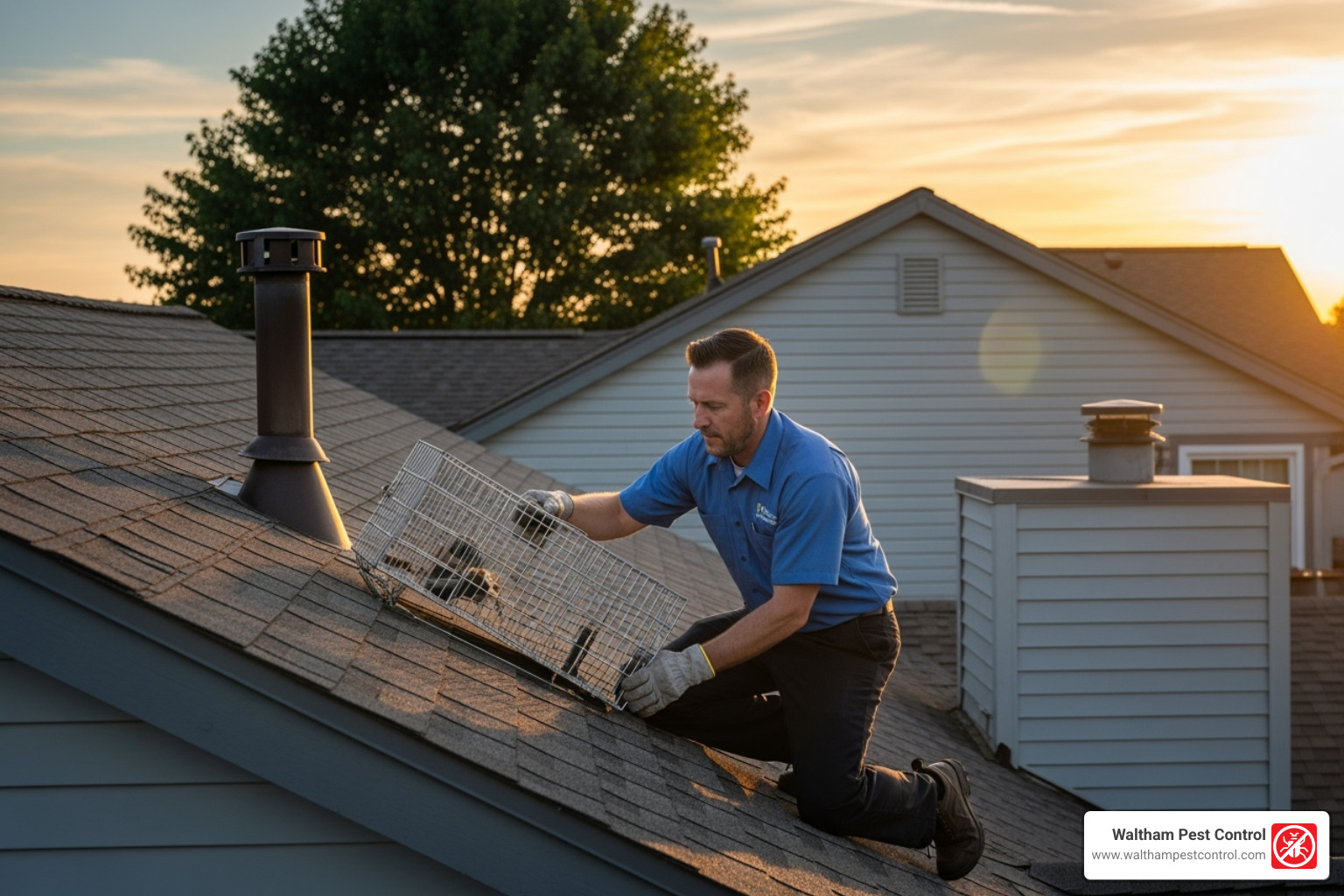
This is the hands-on work of getting raccoons out. We prioritize humane trapping methods, using live traps or one-way doors that let raccoons exit but not re-enter. If a mother and her babies are present, the process is more complex. We never trap a mother and leave her kits behind. Instead, we manually remove the babies first, then trap the mother to ensure the family can be relocated together. The national average cost to get rid of raccoons at this stage ranges from $200 for a simple case to $2,000 or more for multiple raccoons or difficult access.
Stage 3: Exclusion & Prevention
Removing raccoons without sealing entry points is a temporary fix. The exclusion stage is where we raccoon-proof your home, sealing every opening with durable, animal-resistant materials like galvanized steel mesh. Raccoons are strong and can tear through flimsy repairs. This stage may also include installing animal-proof vents and chimney caps. National averages for exclusion work range from $150 for minor sealing to $1,500 or more for comprehensive proofing. This investment prevents future infestations and saves money in the long run.
Stage 4: Cleanup & Damage Repair
Raccoons leave behind a hazardous mess. This final stage addresses contamination and damage. The cleanup process involves safely removing raccoon feces and urine, which can harbor dangerous pathogens like raccoon roundworm and bacteria causing Leptospirosis. Professional decontamination uses specialized equipment and disinfectants to eliminate these health hazards.
Raccoons also cause physical damage by tearing up insulation, chewing electrical wiring (a fire hazard), and damaging ductwork. National averages for cleanup and decontamination are typically $250 to $1,500. Repair costs are highly variable, ranging from $200 for minor fixes to $6,000 or more for extensive work like insulation replacement or rewiring. Addressing this damage promptly is crucial for your family’s health and your home’s value.
Key Factors That Influence Raccoon Removal Costs
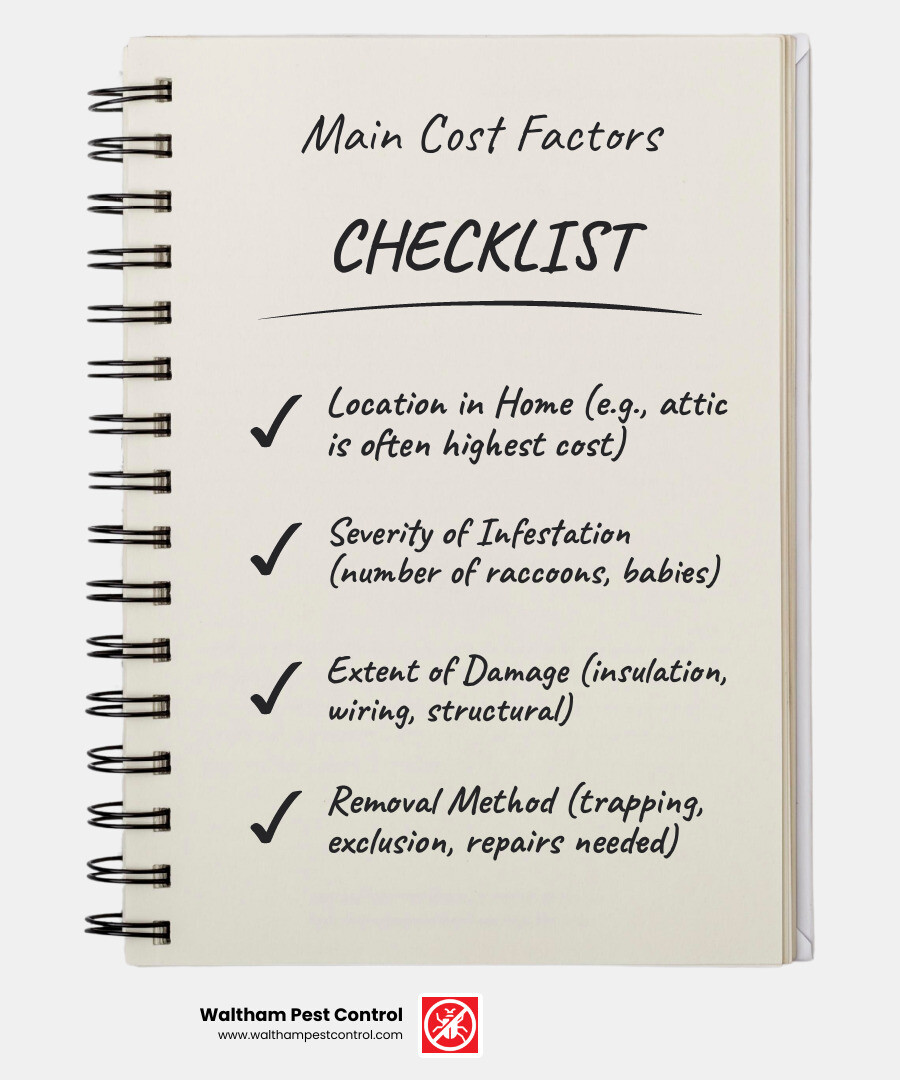
No two raccoon problems are alike, which is why the cost to get rid of raccoons can vary so much. Key factors include the severity of the infestation, the number of animals, and how difficult they are to access. A raccoon in an open backyard is simpler to handle than one in a tight crawlspace. Property size and geographic location also play a role.

How Location Affects the Cost to Get Rid of Raccoons
Where the raccoons are located is often the biggest factor in your final bill.
- Attic infestations are the most complex and costly. Raccoons damage insulation, chew wiring, and leave contamination. Access is often difficult. Based on national averages, attic removal can cost from $300 to $2,000 or more, before repairs. (These are average costs based on internet data, not a quote from Waltham Pest Control).
- Chimney removal requires specialized equipment, as the confined space makes the work delicate.
- Crawlspace issues are frustrating because raccoons can cause hidden damage to ductwork and plumbing in tight, awkward spaces.
- Raccoons under decks or porches are easier to access but still require proper trapping and exclusion.
- A backyard nuisance is the simplest scenario, typically involving trapping and removing attractants. Based on national averages, this can cost between $200 and $1,200. (These are average costs based on internet data, not a quote from Waltham Pest Control).
How Seasonal Factors Impact the Cost to Get Rid of Raccoons
The time of year affects the cost to get rid of raccoons. Spring is baby season (typically April-May), which is the most complex and expensive time for removal. A mother with her litter requires the manual removal of the babies (kits) to reunite them with the mother, a delicate and time-consuming process. This increased demand and complexity often lead to higher prices in the spring. In winter, raccoons seek warm dens like your attic, potentially causing damage for months before being finded.
The Presence of a Nest and Babies
Finding a nest with babies significantly complicates removal and increases the cost. A mother raccoon is fiercely protective, and trapping her without her kits is inhumane and creates a worse problem, as they will die in your walls. Locating and hand-removing the kits is a delicate, labor-intensive process. The babies must be kept safe and are often used to lure the mother into a trap, ensuring the family can be relocated together. This added complexity is reflected in the cost, with national averages for nest removal ranging from $300 to $1,500 or more. (These are average costs based on internet data, not a quote from Waltham Pest Control).
The Hidden Costs: Why Delaying Raccoon Removal is Expensive
It’s tempting to hope a raccoon problem will solve itself, but waiting is one of the most expensive decisions you can make. The cost to get rid of raccoons escalates dramatically with every day of delay. A small noise can transform into thousands of dollars in damage within weeks as the problems, health risks, and removal complexity grow.
Delaying doesn’t just affect your wallet—it impacts your home’s value and your family’s health. Learn more about how we protect your home at More about our residential pest solutions.
Escalating Structural Damage
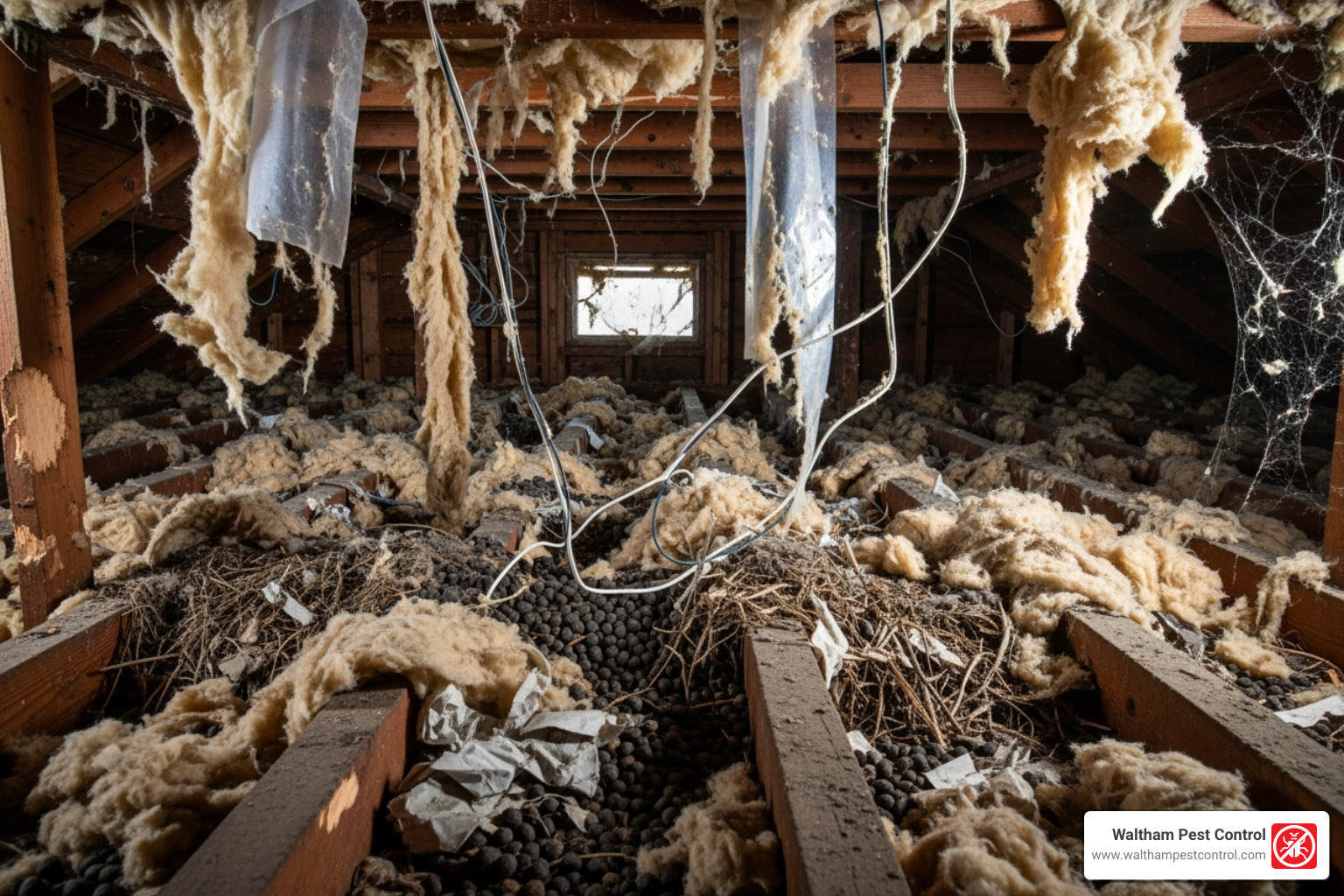
Raccoons are surprisingly destructive. They create openings by tearing up roofing and siding, which can lead to water damage and wood rot. Inside, they shred ductwork, compromising your HVAC system and raising energy bills. Most dangerously, they chew electrical wires, creating serious fire hazards. They also destroy insulation for nesting, which is expensive to replace. Over time, their urine and feces can weaken wood structures, turning minor issues into major repairs.
Serious Health and Safety Risks
Beyond property damage, raccoons bring serious health threats into your home. These are not theoretical dangers; they are real risks to your family.
- Rabies: Raccoons are primary carriers, and the disease is nearly always fatal once symptoms appear. Never handle a raccoon yourself.
- Raccoon Roundworm (Baylisascaris procyonis): Found in up to 70% of raccoons, the microscopic eggs in their feces can survive for years. If ingested, they can cause severe neurological damage or death.
- Leptospirosis: This bacterial disease spreads through urine and can cause kidney and liver damage in humans.
- Parasites: Raccoons carry fleas, ticks, and mites that can infest your home.
Professional cleanup is essential to eliminate these hazards.
Increased Complexity and Cost
A raccoon problem that is ignored doesn’t just get bigger; it gets harder to solve. Raccoons can become trap-shy after a failed DIY attempt, making them harder to catch. A single raccoon can soon become a larger infestation with a family, and they will create multiple entry points, multiplying the cost of exclusion work. The longer they stay, the more contamination spreads, making cleanup more extensive and hazardous. Acting quickly is the best way to keep the cost to get rid of raccoons manageable.
Professional Raccoon Removal: The True Value and Benefits
While the DIY route might seem cheaper, professional raccoon removal is almost always the smarter and safer investment. The cost to get rid of raccoons with a professional service buys you expertise, safety, a long-term solution, and peace of mind.
At Waltham Pest Control, we take a humane approach that is compliant with all Massachusetts wildlife regulations. Our licensed technicians understand raccoon behavior, which is key to a lasting solution. We conduct thorough inspections to find every entry point and use professional-grade materials like galvanized steel mesh for exclusion repairs that raccoons can’t defeat.
Most importantly, we handle the health and safety risks. Raccoon waste contains dangerous pathogens, and our team uses proper protective gear and specialized equipment to decontaminate affected areas, eliminating health threats that DIY methods can’t safely address. Professional services also provide guaranteed results, standing behind the work to ensure your home remains raccoon-free.
The Value of Professional Guarantees
A professional warranty is a key part of the value. When we complete exclusion work, we guarantee it. If raccoons re-enter through a sealed point during the warranty period, we return to fix it at no extra charge. This guarantee is a testament to our quality workmanship and materials.
This warranty prevents re-infestation, breaking the expensive cycle of repeated removal and repairs. It provides long-term peace of mind, knowing your home is protected by professionals who are accountable for their work. When you factor in the cost of avoiding future damage and health risks, professional removal proves to be the most cost-effective solution.
Our approach to humane wildlife control reflects our commitment to providing solutions that work for both homeowners and wildlife.
Frequently Asked Questions about Raccoon Removal
Here are answers to the most common questions we hear from Massachusetts homeowners about the cost to get rid of raccoons and how to handle them.
How can I prevent future raccoon infestations to save money?
Prevention is the most cost-effective strategy. Raccoons seek food, water, and shelter. Removing these attractants makes your home less appealing.
- Secure Garbage: Use heavy-duty cans with locking lids and store them in a garage or shed.
- Remove Food Sources: Don’t leave pet food outside overnight and clean your barbecue grill after use.
- Seal Entry Points: Inspect your home’s exterior for gaps and seal them with sturdy materials like galvanized steel mesh.
- Trim Tree Branches: Keep branches at least six to eight feet from your roofline.
- Install Barriers: Use chimney caps and animal-proof vent covers.
- Eliminate Water: Fix leaky outdoor faucets and ensure proper drainage.
Does homeowners insurance cover raccoon damage?
Coverage depends entirely on your policy. Most policies may cover sudden and accidental structural damage (e.g., a torn roof), but they often exclude damage deemed preventable due to lack of maintenance. Personal property damage and the cost of wildlife removal services are rarely covered. Always check with your insurance provider directly and document any damage with photos. Acting quickly can strengthen your claim.
How do I know if I have a raccoon in my house?
Raccoons are nocturnal, but they leave clear signs of their presence.
- Noises: Loud scratching, thumping, or chattering sounds from your attic, walls, or chimney at night.
- Exterior Damage: Look for damaged shingles, torn vents, or pried-open fascia boards on your roof.
- Tracks: Raccoon tracks look like tiny human handprints and are often found in soft ground near your home.
- Toppled Trash Cans: A classic sign of neighborhood raccoon activity.
- Unpleasant Odors: A strong, musky smell from urine and feces can indicate an active infestation.
- Droppings (Latrines): Raccoons use communal bathroom sites. Their droppings are dark and tubular. Be extremely cautious, as they can contain dangerous raccoon roundworm eggs.
Your Partner in Safe and Effective Raccoon Control
The cost to get rid of raccoons is an investment in protecting your home, your family’s health, and your property’s value. A comprehensive, professional approach involving inspection, humane trapping, exclusion, and cleanup is the only way to solve the problem permanently.
Dealing with these intelligent and persistent animals requires expertise. When you choose professional removal, you’re investing in safety and peace of mind, knowing the job will be done humanely, legally, and with lasting, guaranteed results.
At Waltham Pest Control, we have spent over 40 years helping homeowners across Eastern Massachusetts reclaim their homes from unwanted wildlife. We serve communities throughout the region, including Acton, Andover, Arlington, Bedford, Belmont, Boston, Burlington, Cambridge, Concord, Framingham, Lexington, Lowell, Lynn, Marlborough, Medford, Newton, Peabody, Quincy, Reading, Salem, Somerville, Waltham, Watertown, Wellesley, Weston, Winchester, Woburn, and all surrounding areas. Our commitment is to quality service, humane methods, and solutions that last.
We handle every stage of the process, ensuring your home is protected for years to come. Your home should be your sanctuary, not a den for wildlife. For a comprehensive and humane solution to your raccoon problem in Eastern Massachusetts, trust the experts who’ve been doing this right for four decades. Contact us today for a humane raccoon control plan.
Like us on Facebook!
