
Commercial Insect Control: 3 Essential Steps for 2025
Protecting Your Business’s Bottom Line and Reputation
Commercial insect control is the professional management and prevention of insect pests in business environments. It’s a critical service that protects your health, property, and reputation through key components like Integrated Pest Management (IPM), regular inspections, targeted treatments, compliance documentation, and staff training.
Common commercial pests like cockroaches, ants, flies, and stored product pests are more than a nuisance; they are a significant threat. Ants cause millions in property damage annually, while cockroaches can trigger allergic reactions and food poisoning. Flies are known to spread serious diseases like salmonella and E. coli.
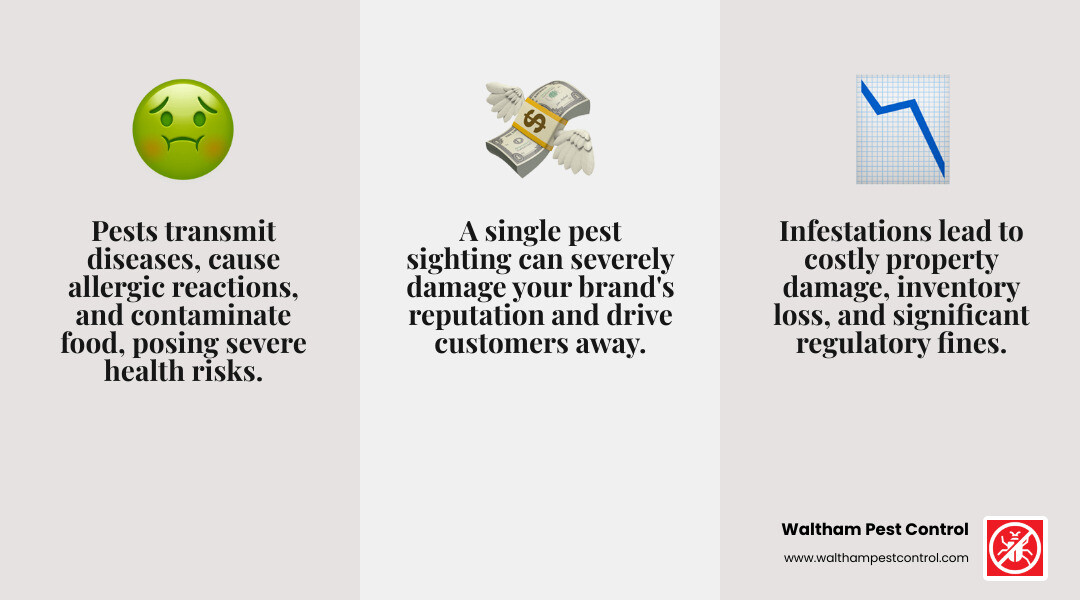
The financial impact is severe. A single pest sighting can lead to failed health inspections, regulatory fines, and devastating online reviews that drive customers away. For restaurants, healthcare facilities, and food processing businesses, the stakes are even higher.
Professional commercial insect control isn’t optional – it’s essential for protecting your investment, ensuring compliance, and maintaining the reputation you’ve worked hard to build.
I’m Waltham Pest Control, President & CEO of Waltham Pest Control, with over 40 years of experience providing commercial insect control solutions across Eastern Massachusetts. Our team has helped countless businesses protect their operations through integrated pest management strategies custom to each industry’s unique challenges.
Commercial insect control helpful reading:
Identifying the Enemy: Common Pests and the Problems They Cause
Effective commercial insect control starts with understanding the pests that find your business appealing. Let’s get to know some of the most common invaders and the problems they cause.
Cockroaches are serious health hazards, spreading bacteria like salmonella and E. coli. A single sighting can lead to health code violations and food poisoning risks, especially in restaurants.
Ants can contaminate food, and some species, like the carpenter ant, cause significant structural damage by tunneling through wood and insulation. Learn more in our guide to Commercial Ant Control.
Flies are major health threats, transmitting diseases like salmonella, staphylococcus, and E. coli. Businesses involved in food preparation or waste management must be especially vigilant.
Stored Product Pests, such as beetles and moths, can ruin large amounts of inventory, leading to major financial losses. They damage not just food but also equipment, packaging, and textiles.
Bed Bugs are a growing concern for hotels and healthcare facilities, causing discomfort to guests and employees and quickly damaging a business’s reputation.
Spiders, while often harmless, can deter customers and make a business appear unclean. Some species deliver painful bites, posing a safety risk.
Termites are “silent destroyers” that cause extensive, hidden damage to a building’s structure. They can enter through cracks as thin as a credit card, making them difficult to exclude.
Our services also address a wide array of Other Pests, from silverfish and earwigs to wildlife like bats, squirrels, and nuisance birds, all of which can cause damage and spread disease. Learn more about our comprehensive Pest and Rodent Control Services.
The Telltale Signs of an Unwanted Invasion
Pests are good at hiding, but they always leave clues. Catching an infestation early can save you significant time and money. Here are common signs that pests have moved into your business:
- Live or dead insects: Consistent sightings, especially in specific areas or at night, often indicate a larger infestation.
- Pest droppings: Look for small, dark specks resembling coffee grounds or black pepper, which can indicate cockroach or rodent activity.
- Gnaw marks and property damage: Chewed electrical cables, wood structures, or damaged packaging can be signs of rodents or insects like carpenter ants.
- Strange odors: A musty or oily smell can point to a cockroach infestation, while any large infestation can create a generally unpleasant odor.
- Nests or hives: Visible nests from bees or wasps, or small piles of debris from ant colonies, are clear signs of an active presence.
- Smear marks on walls: Cockroaches often leave dark, greasy smear marks along their travel paths on baseboards or walls.
- Unusual noises: Scratching or scurrying sounds, particularly at night, could mean rodents or other pests are active within walls or ceilings.
- Damaged products or packaging: Torn bags or holes in boxes are undeniable signs of stored product pests or rodents.
- Webs or cocoons: Besides spiders, certain moths and beetles create silken webs or cocoons, often found in infested food products.
- Red stains: Crushing certain pests, like clover mites, can leave behind unusual red stains.
What’s That Bug? Professional Pest Identification
While phone apps can offer a quick guess, they have significant limitations for professional commercial insect control. Accurate pest identification is crucial for effective treatment. Misidentifying a pest, like treating destructive carpenter ants as simple sugar ants, leads to ineffective methods, wasted resources, and a prolonged infestation.
If you spot something unusual, we recommend you:
- Take clear photos or videos, noting the location and time of day.
- Collect a sample in a sealed container, if it’s safe to do so.
- Consult a licensed pest control expert. Our trained technicians have the industry knowledge to accurately identify pests, assess the extent of the problem, and recommend the correct treatment.
For businesses, professional identification is essential for maintaining compliance and ensuring effective pest management. Find more about our custom solutions on our Pest Control for Businesses page.
The Core of Commercial Insect Control: An Integrated Approach
At Waltham Pest Control, we believe effective commercial insect control is more than just spraying. Our core philosophy is Integrated Pest Management (IPM), a smart, long-term strategy focused on preventing pests rather than just reacting to them.
IPM is a holistic approach that combines inspection, identification, analysis, and custom solutions. It emphasizes good sanitation and targeted treatments while minimizing environmental impact. We use eco-friendly solutions whenever possible and apply pesticides only when necessary, ensuring the safety of your employees and customers.
Our IPM program focuses on understanding a pest’s life cycle and how it interacts with your business. This allows us to implement proactive measures that disrupt pest life cycles by cutting off access to food, water, and shelter, creating an environment where they cannot thrive. Learn more about our commitment to responsible solutions through our IPM Program and Green Pest Control services.
The A.I.M. Process: Assess, Implement, Monitor
Our systematic approach to commercial insect control follows a clear, three-step process: Assess, Implement, and Monitor (A.I.M.). This ensures a thorough, custom, and effective pest management plan for your business.
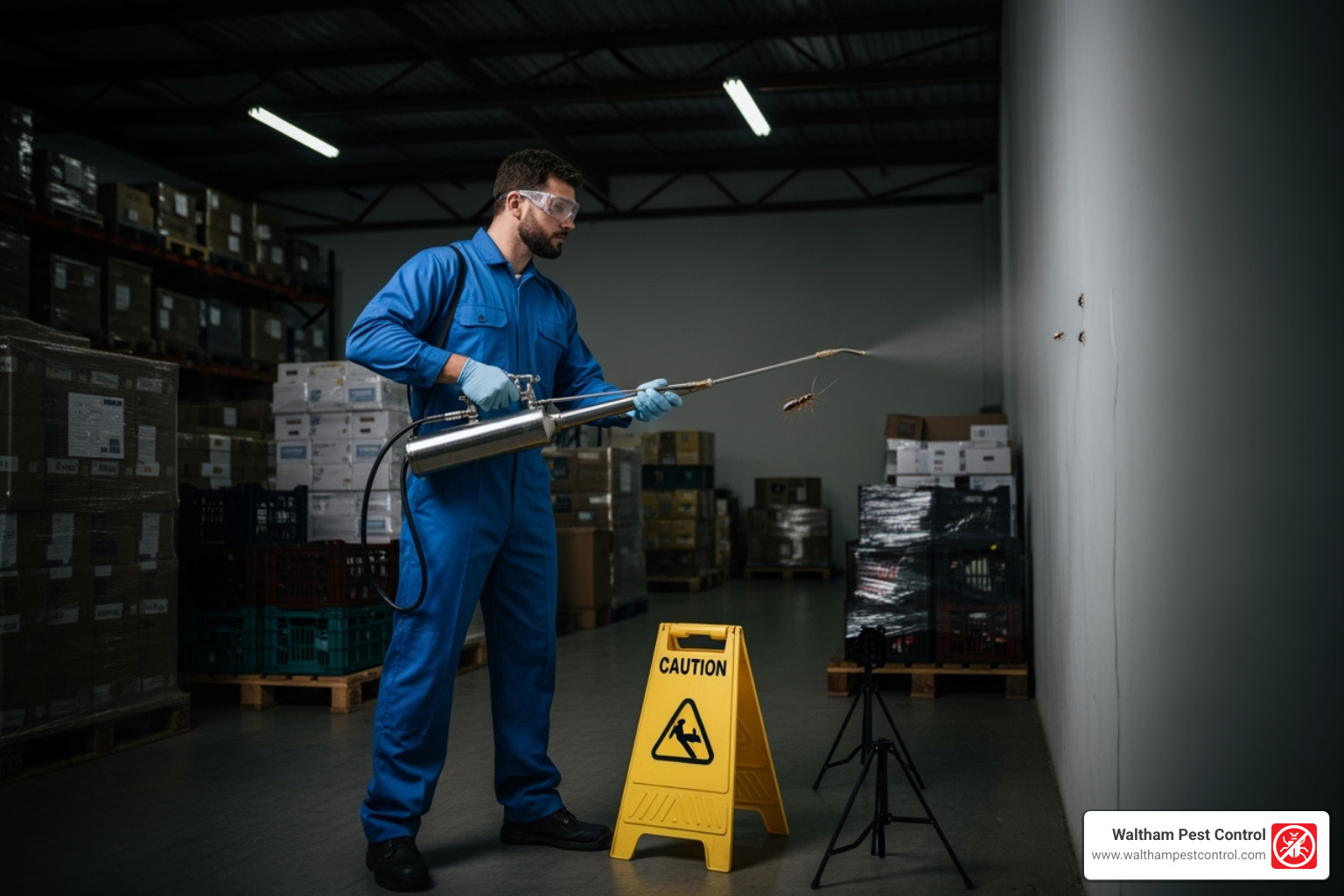
First, we Assess. Our certified technicians conduct a comprehensive inspection to find existing pest activity, identify potential entry points, and note conditions that attract pests. We analyze your facility’s layout and consider industry-specific standards to understand your unique challenges.
Next, we Implement. Based on our assessment, we execute a customized pest management plan that may include:
- Sanitation Protocols: We work with you to establish or refine cleaning schedules to reduce pest attractants like food spills, moisture, and clutter.
- Structural Exclusion: We identify and recommend sealing cracks, crevices, and gaps around doors, windows, and utility lines to block pest entry points.
- Targeted Treatments: When treatments are needed, our technicians apply them precisely and safely, favoring eco-friendly products and using the least invasive methods possible.
Finally, we Monitor. Effective commercial insect control is an ongoing process. We continuously monitor your property for pest activity, track trends, and watch for new threats. This includes regular check-ins and using monitoring systems that provide transparent data. We adjust your program as needed to ensure it remains effective year-round.
Key Preventative Measures Your Business Can Take
Your business plays a vital role in the success of any commercial insect control program. Implementing simple preventative measures creates an environment that is inhospitable to pests.
- Sanitation Protocols: Maintain strict daily cleaning routines, especially in food areas. Wipe surfaces, clean spills immediately, and ensure all food is sealed and stored properly.
- Waste Management: Use pest-proof bins with tight lids. Ensure dumpsters are emptied regularly, kept clean, and located away from building entrances.
- Sealing Entry Points: Regularly inspect and seal cracks in foundations, walls, and around pipes. Use door sweeps and repair damaged window screens.
- Landscaping Maintenance: Keep shrubs and trees trimmed away from the building. Ensure proper drainage to avoid standing water and keep grass cut short near the foundation.
- Employee Awareness and Training: Your team is your first line of defense. Train them on proper sanitation, waste disposal, and how to spot and report pest activity. This is especially critical in environments like schools. Learn more about our solutions for educational facilities on our Pest Control for Schools page.
Partnering with Professionals: The Benefits of Expert Service
While preventative measures are crucial, some pest problems require professional commercial insect control services. Partnering with experts like Waltham Pest Control offers benefits that DIY methods cannot match.
- Expertise and Experience: With over 40 years in business and technicians averaging 15+ years of experience, we bring unparalleled knowledge to every pest challenge in Eastern Massachusetts. We understand pest biology and the most effective eradication and prevention strategies.
- Knowledge of Pest Biology: Understanding a pest’s life cycle is key to effective control. Our experts target pests at every stage, ensuring long-term solutions. For example, a follow-up visit is often needed to eliminate newly hatched insects.
- Access to Specialized Equipment: We use advanced tools, technologies, and monitoring systems not available to the public, ensuring precise and effective treatment.
- Ensuring Regulatory Compliance: We help your business meet and exceed strict health codes, especially in industries like food service and healthcare. We provide thorough documentation for audits, minimizing your risk of fines or shutdowns.
- Safety for Employees and Customers: We prioritize safety by using certified, eco-friendly products when possible and adhering to strict protocols. We aim to limit unnecessary pesticide use, ensuring treatments are safe for everyone.
- Guaranteed Results: Unlike DIY attempts, our professional services come with guarantees. We are committed to solving your pest problems and offer re-treatment policies to ensure your satisfaction.
For a comprehensive overview of how we can protect your business, visit our Commercial Pest Control Services page.
Choosing a Partner: What to Look for in a Commercial Insect Control Service
Selecting the right partner for your commercial insect control needs is a critical business decision. You need a company that eradicates pests, understands your industry, and provides reliable, long-term solutions.

- Licensing and Insurance: Verify the company is fully licensed and insured to protect your business from liability. Waltham Pest Control is a licensed and insured pest control operator (PCO) serving Eastern Massachusetts.
- Experience in Your Industry: Look for a company with a proven track record in your sector, whether it’s food processing, healthcare, or retail. Our experience allows us to tailor solutions to your specific needs.
- IPM Philosophy: Choose a company that champions Integrated Pest Management (IPM). This indicates a commitment to proactive, environmentally responsible, and long-term solutions.
- Customer Reviews and Testimonials: Check online reviews and ask for references to gain insight into a company’s service quality, responsiveness, and customer satisfaction.
- Technician Training and Certifications: Inquire about technician training. Certifications like ACE certification or GreenPro certification demonstrate a commitment to excellence.
- Transparent Pricing and Communication: A trustworthy company provides clear pricing and maintains open communication, explaining their process and findings clearly.
- Discreet and Reliable Service: A professional service understands the need for discretion and minimal disruption. They should offer flexible scheduling and discreet operations.
Frequently Asked Questions about Commercial Pest Management
Businesses have unique concerns when it comes to keeping their spaces pest-free. Here are answers to some of the most common questions we hear about commercial insect control:
What is the difference between commercial and residential pest control?
While the goal is the same, commercial insect control is more complex than residential services. Commercial properties are often larger, with diverse environments like kitchens, warehouses, and offices that require unique approaches. Businesses also face different pests, stricter health regulations, and the need for detailed documentation to stay compliant. Most importantly, commercial services focus on protecting public health and a brand’s reputation from the significant financial and reputational damage a pest sighting can cause.
How often do businesses need pest control services?
There is no one-size-fits-all answer. The ideal frequency for commercial insect control depends on your industry, business type, and level of pest activity. High-risk industries like restaurants, food processing plants, and healthcare facilities may require monthly service to meet strict regulations. Lower-risk businesses, such as offices or retail stores, might only need quarterly service. A customized plan is key, and we will recommend a schedule custom to your specific needs and budget.
Are pest control treatments safe for my employees and customers?
Yes. When performed by a licensed, professional company like Waltham Pest Control, treatments are safe for your employees, customers, and the environment. Your safety is our top priority. Our trained technicians use low-impact, targeted products and eco-friendly solutions whenever possible. We follow strict safety protocols, including clear communication before and after service. Our Integrated Pest Management (IPM) approach further reduces reliance on chemical treatments by focusing on prevention first.
How much does commercial insect control cost?
The cost of commercial insect control varies based on facility size, pest type, infestation severity, and service frequency. To give you a general idea, based on averages reported online, monthly costs might range from $50 to $150 for small offices. For restaurants or larger facilities, you might see averages between $150 and $500 per month. For very large or high-risk properties, costs could go up to $1,500 or more. Please remember, these figures are average prices from internet sources and do not reflect the actual costs for Waltham Pest Control. We provide custom solutions and would be happy to give you a precise quote designed for your business. To get an accurate estimate, please contact Waltham Pest Control directly.
Secure Your Business with a Trusted Partner
When it comes to protecting your business, you can’t afford to leave anything to chance. As we’ve seen, insects like cockroaches, ants, and flies can cause disease, structural damage, and illness, devastating your reputation overnight. The financial stakes are real, from failed health inspections and fines to lost customers and inventory.
These problems are preventable with the right approach. Integrated Pest Management isn’t just a buzzword; it’s a proactive strategy that protects your investment and ensures compliance. By focusing on prevention, targeted implementation, and continuous monitoring, you create an environment where pests cannot thrive.
Professional commercial insect control provides expertise, specialized equipment, and guaranteed results that DIY methods can’t match.
At Waltham Pest Control, we’ve spent over 40 years perfecting our craft across Eastern Massachusetts. We understand that every business, from restaurants in Cambridge to healthcare facilities in Newton, faces unique challenges. Our licensed and insured team doesn’t just eliminate pests; we partner with you to create long-term solutions that protect your employees, customers, and bottom line.
Your business deserves protection from a team that cares about your success. Don’t wait for pests to find their way in.
Contact us for a comprehensive commercial pest control plan and find the difference that four decades of experience can make for your business.
