

Cicada Killer Wasp Nest Removal: Safe Expert 2025
Understanding the Need for Cicada Killer Wasp Nest Removal
Cicada killer wasp nest removal becomes a priority for many homeowners when these intimidating insects start creating unsightly holes and dirt mounds throughout their property. While these massive wasps look terrifying – growing up to 2 inches long – they’re actually quite docile and rarely sting humans.
Quick Cicada Killer Wasp Nest Removal Methods:
- Prevention First – Maintain thick, well-watered turf and mulch bare soil areas
- DIY Options – Pour boiling water into burrows at night (limited effectiveness)
- Professional Treatment – Insecticidal dusts and liquids applied directly to nest entrances
- Timing Matters – Treat during evening hours when wasps are inside burrows
- Safety Priority – Wear protective clothing or hire professionals for large infestations
Despite their fearsome appearance, cicada killers are solitary wasps that hunt cicadas to feed their young. Males cannot sting at all, and females only sting when directly threatened or handled. The real concern is the cosmetic damage they cause to lawns and gardens through their extensive burrowing.
As Waltham Pest Control, President of Waltham Pest Control with over 40 years of experience in Eastern Massachusetts, I’ve often advised homeowners that while we can certainly perform cicada killer wasp nest removal, these beneficial insects don’t always need to be eliminated. Understanding when to act can save you time and money.
Handy cicada killer wasp nest removal terms:
What Are Cicada Killers and How Do I Identify Them?
Scientifically known as Sphecius speciosus, cicada killer wasps are among the largest wasps in North America. Female cicada killers can grow up to 2 inches long, with a black abdomen decorated with bright yellow bands, rusty-brown wings, and a reddish head and thorax.
When it comes to cicada killer identification, understanding the difference between males and females is key. Male cicada killers are smaller and cannot sting. Their aggressive-seeming flight is pure bluff. Female cicada killers are larger and have a stinger, but they are not aggressive and only sting if handled or stepped on.
Because of their size, cicada killers are often mistaken for other stinging insects. Here is a quick comparison:
| Characteristic | Cicada Killer Wasp | Yellow Jacket | European Hornet |
|---|---|---|---|
| Appearance | Large (up to 2 in), black abdomen with yellow bands, light brown wings, reddish head/thorax. | Medium (0.5-0.75 in), distinct yellow and black bands, slender waist. | Large (up to 1.5 in), rusty brown head/thorax, yellow and black striped abdomen. |
| Nest Type | Solitary, underground burrows in soil, often with a U-shaped mound of dirt. | Social, nests often in ground, wall voids, or aerial. | Social, nests often in wall voids, hollow trees, or sometimes in ground. |
| Aggression | Low. Females sting only if provoked. Males cannot sting. | High. Very aggressive, especially when nests are disturbed. | Moderate to High. Can be aggressive, especially if nest is threatened. |
| Sociality | Solitary (each female builds her own nest). | Social (live in large colonies). | Social (live in large colonies). |
The key difference is their solitary nature. Unlike social wasps that live in large colonies and aggressively defend them, each female cicada killer works alone. This non-aggressive behavior means they are not looking for trouble.
What Do Cicada Killer Nests Look Like?
When a female cicada killer starts a family, her ground burrows are easy to spot. Look for a distinctive U-shaped mound of excavated soil that surrounds the nest entrance. The entrance itself is typically coin-sized, about 1 to 1.5 inches in diameter.

These underground homes are surprisingly complex. The main tunnel depth can be a foot deep with side tunnels extending several feet. Inside, the female creates multiple cells for her eggs and their food (paralyzed cicadas).
Cicada killers are particular about their nest location. They prefer sunny areas with dry, sandy soil that’s easy to dig. You’ll often find their burrows in lawns, garden beds, and along sidewalks, especially near trees that host cicadas.
If you’re dealing with multiple ground nests and aren’t sure what type of insects you’re facing, check out our guide on hornet nest in the ground removal for more identification help.
Assessing the Threat: Are Cicada Killers Dangerous?
Cicada killer wasps pose a surprisingly low risk to humans and pets. The fear they inspire is much greater than the actual danger they present.
Male wasps cannot sting. Their aggressive dive-bombing is a harmless bluff. Females have a stinger but use it for hunting cicadas, not people. A female will only sting if she is stepped on or physically handled.
In the rare event of a painful sting from a female, expect localized swelling and redness similar to a bee sting. The main concern is allergic reactions. If you have a known sensitivity to insect stings, treat it with caution and seek medical attention if needed.
The most noticeable impact is cosmetic lawn damage. Their digging creates unsightly dirt mounds and holes, as a single female can excavate several pounds of displaced soil.
For more detailed information about potentially more dangerous stinging insects in our area, check out our comprehensive guide on dangerous wasps. You can also read an expert’s take on cicada killer stings from the University of Kentucky’s entomology department.
Should Nests Be Removed or Is Coexistence Possible?
Deciding on cicada killer wasp nest removal isn’t always straightforward, as these insects are surprisingly beneficial. They provide natural pest control by hunting cicadas, which can damage trees. Adult wasps also act as pollinators.
When to leave them alone: If nests are in low-traffic areas, coexistence is a great option. They are only active for a few summer months and will likely ignore you.
When removal is necessary: Consider removal for the following reasons:
- High-Traffic Areas: Nests located near playgrounds, walkways, or patios create a risk of accidental encounters.
- Severe Lawn Damage: If numerous nests are ruining your landscape, removal is a reasonable choice.
- Peace of Mind: If the wasps cause you anxiety and prevent you from enjoying your yard, professional removal can restore your comfort.
A Homeowner’s Guide to Cicada Killer Wasp Nest Removal
When cicada killers turn your lawn into a construction site, it’s time to consider your options for cicada killer wasp nest removal. At Waltham Pest Control, we believe prevention first is the best approach. It’s easier to deter these wasps than to evict them.
We use an Integrated Pest Management approach, combining smart cultural practices with targeted treatments to address the root cause of the infestation.

How to Prevent Cicada Killers from Nesting in Your Yard
Cicada killers are picky; they want dry, sandy soil in sunny areas. The key to prevention is making your yard less attractive to them through proper lawn maintenance.
- Maintain Thick Turf: A dense, healthy lawn is difficult to dig through. Fertilizing soil correctly is crucial.
- Water Frequently: Keeping soil moist during summer makes it less appealing. Aim for an inch of water per week.
- Mow High: Set your mowing height to 3-4 inches. Taller grass shades the soil and discourages digging.
- Mulch and Cover: Use at least three inches of mulch on flower beds and reseed or plant groundcover to reduce bare soil.
For more comprehensive strategies on creating a pest-resistant landscape, check out our guide on residential pest control.
DIY Methods for Cicada Killer Wasp Nest Removal
While the DIY approach is tempting, it’s important to understand its limited effectiveness and potential risks. If you attempt a DIY solution, timing and safety are critical. Treat nests after dusk when wasps are inside, and always wear protective clothing.
The most common DIY method is pouring boiling water into burrows at night. This may work on a single nest but is impractical and often ineffective for larger infestations. Simply covering holes is also ineffective, as the wasps will dig out.
The risks of DIY methods are significant, from potential stings to the improper use of chemicals. Most homemade solutions fail to address the larvae underground, leading to recurring problems.
When to Call a Professional for Cicada Killer Wasp Nest Removal
Some situations require professional expertise and products unavailable to the public.
- Large Infestations: Properties with dozens of burrows are too extensive for DIY methods.
- Nests in High-Traffic Areas: Nests near playgrounds or patios pose an unnecessary risk of accidental stings.
- Allergy Concerns: If anyone in your home has known sensitivities to insect stings, professional treatment is the only safe option.
- When DIY Fails: If the wasps cause significant anxiety or DIY attempts are unsuccessful, professional service provides guaranteed results and peace of mind.
We bring specialized knowledge and professional-grade treatments to address the problem effectively. For more information, visit our guide on who to call for hornet nest removal.
What to Expect from Professional Removal Services
When you call Waltham Pest Control for cicada killer wasp nest removal, you get a systematic approach backed by 40 years of experience in Eastern Massachusetts.
Our process begins with a thorough inspection by a licensed technician to identify all active and potential nesting sites. We then develop a customized treatment plan custom to your property, considering factors like the location of nests relative to play areas and patios.
Treatment involves the application of professional-grade insecticides, typically insecticidal dusts applied directly into nest entrances with specialized equipment. The wasps track the dust deep into the burrow, increasing its effectiveness. In some cases, liquid treatments may be used as a soil drench to reach deeper into the tunnel system.
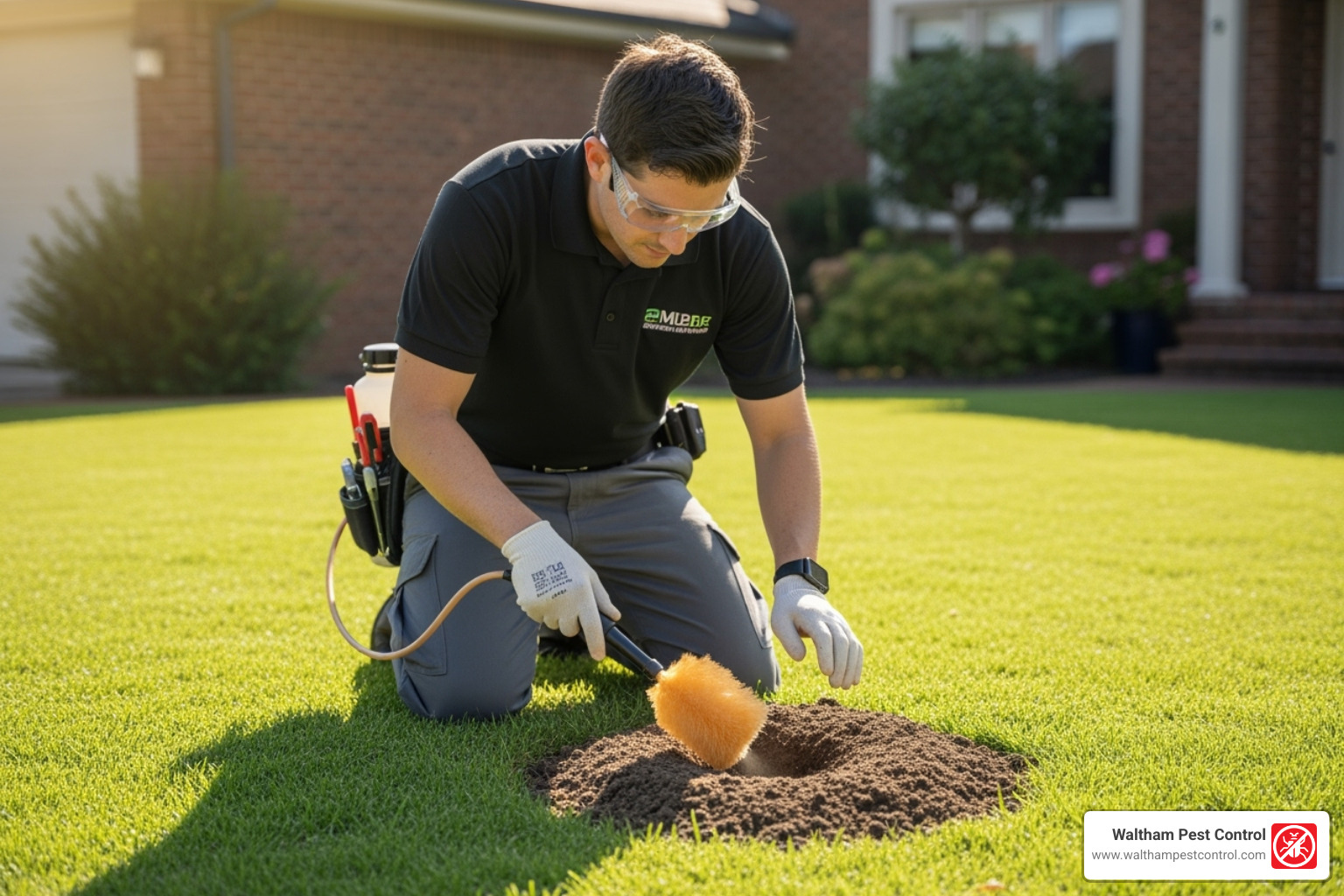
After treatment, we offer nest removal and burrow sealing to prevent other wasps from using the abandoned tunnels. Safety protocols are paramount. Our technicians use full protective gear, treat nests in the evening, and provide clear instructions to keep your family and pets safe.
What Is the Typical Cost for Professional Cicada Killer Wasp Removal?
Let’s talk numbers. Please note that these are average costs based on internet data and not actual costs for Waltham Pest Control. Every situation is unique, and we provide an accurate quote after a thorough inspection.
Several cost factors influence the final price, with the infestation size and location of the nests being the most significant variables. Treatment frequency also plays a role.
Based on publicly available industry sources, you can expect a wide price range:
- A one-time visit typically runs from $150 to $1,200, with an average around $350.
- Annual contract costs for quarterly visits (which usually cover multiple pest types) might range from $600 to $3,600 per year, with an average around $1,000.
These wide ranges ensure the high-end figures are at least three times the average pricing, giving you a realistic picture of potential costs. Your actual cost will depend on your specific situation. We believe in transparent pricing and will always provide a clear quote before starting any work.
For more general information about pest control pricing, you can check out our guide on pest control costs.
Frequently Asked Questions about Cicada Killer Wasps
Here are answers to common questions about cicada killer wasp nest removal.
What attracts cicada killer wasps to my yard?
Cicada killers are attracted by two main things: a food source and the right nesting site. They need cicadas to hunt, so yards near mature trees (oaks, maples) are prime locations. For nesting conditions, they seek dry, sandy, well-drained soil in full sunlight, which makes digging easy. Common nesting spots include lawns, gardens, and areas next to driveways and patios.
What kind of damage do cicada killer wasps cause?
Cicada killers do not cause structural damage to homes. The primary damage is cosmetic. Their burrowing creates unsightly mounds and holes in lawns and gardens as they excavate soil. A large population can be very destructive to a lawn’s appearance, as each female can displace several pounds of soil. In rare, severe cases, their tunneling can disturb plant roots or slightly undermine pavers, but they are not a threat to your home’s structure like termites.
What is the life cycle of a cicada killer wasp?
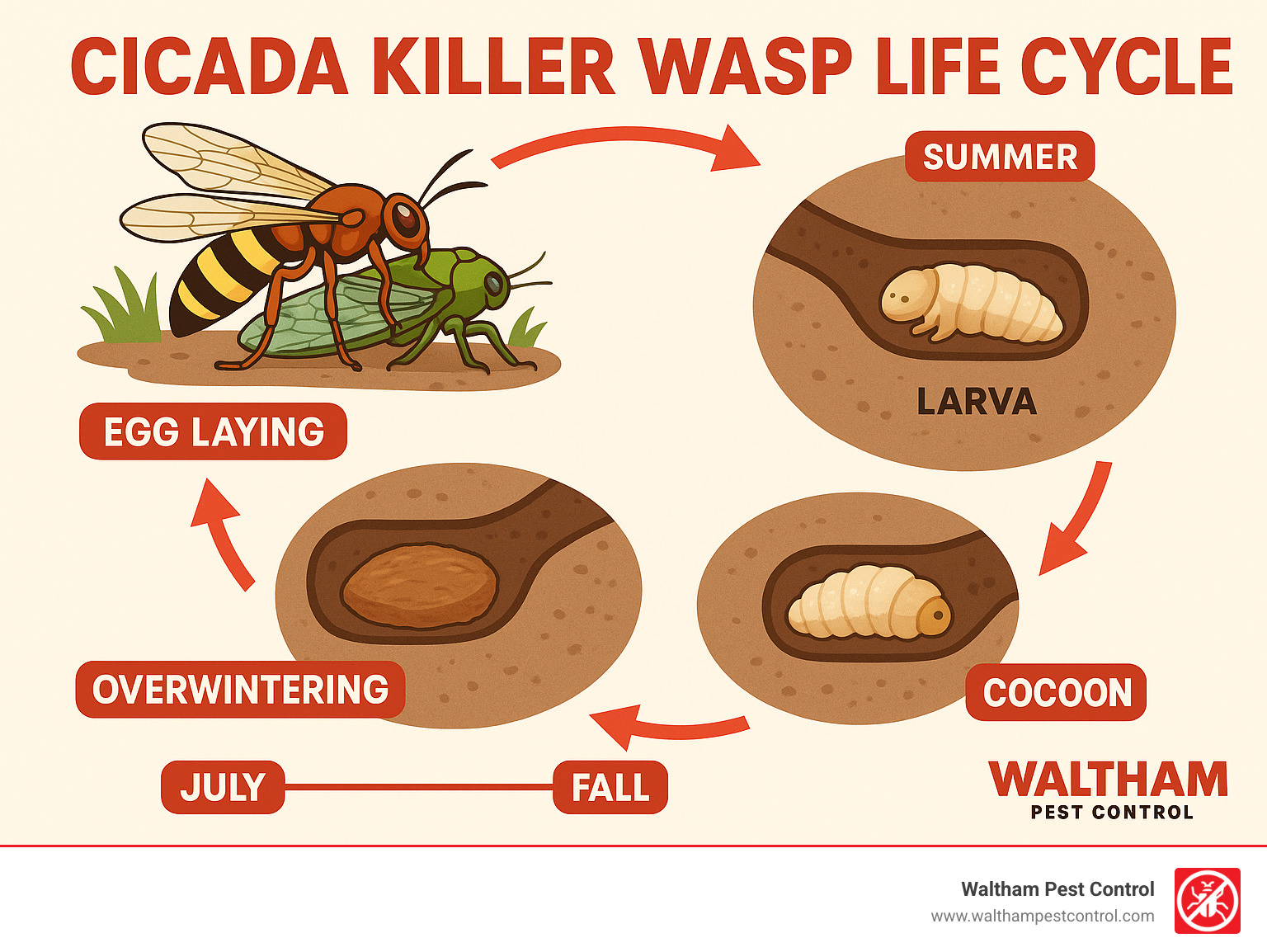
Understanding the life cycle of cicada killer wasps helps in planning control strategies. Adults emerge in mid-summer (July-September) to coincide with the appearance of cicadas. The female digs a burrow, then hunts a cicada, paralyzes it, and places it in the burrow with a single egg. The hatched larva feeds on the paralyzed cicada, then spins a cocoon. The larva overwinters underground, pupates in spring, and emerges as an adult the next summer. There is only one generation per year.
Conclusion
Cicada killer wasps, despite their intimidating size, are gentle giants. Their solitary wasp behavior means they are not aggressive and rarely bother humans. The primary concern is cosmetic lawn damage from their burrowing. You are now equipped to decide whether to coexist with these beneficial insects or seek removal.
Your removal options range from prevention to professional treatment. Whether you choose coexistence or cicada killer wasp nest removal for your peace of mind, it’s a valid choice. Safety is always the top priority. Males cannot sting, and females are very reluctant to do so.
At Waltham Pest Control, we’ve spent over 40 years helping homeowners across Eastern Massachusetts steer exactly these kinds of pest concerns. From Burlington to Cambridge, from Lexington to Newton, we’ve seen it all. Our experience has taught us that education often matters more than elimination – though we’re always here when you need expert help.
If those U-shaped dirt mounds are taking over your beautiful lawn, or if the sight of these large wasps is causing sleepless nights, don’t hesitate to reach out. We’re here to provide the peace of mind you deserve. Contact us for safe and effective hornet and wasp solutions – because your outdoor spaces should be places of joy, not worry.
