
Chemical Control of Rodents: 5 Powerful Safe Solutions
Chemical control of rodents offers an effective solution for homeowners and business owners struggling with pesky rodent infestations. Chemicals like warfarin, brodifacoum, and bromadiolone can swiftly rid your property of these unwanted guests. Here’s why addressing rodent problems promptly matters:
Rodent Control Essentials:
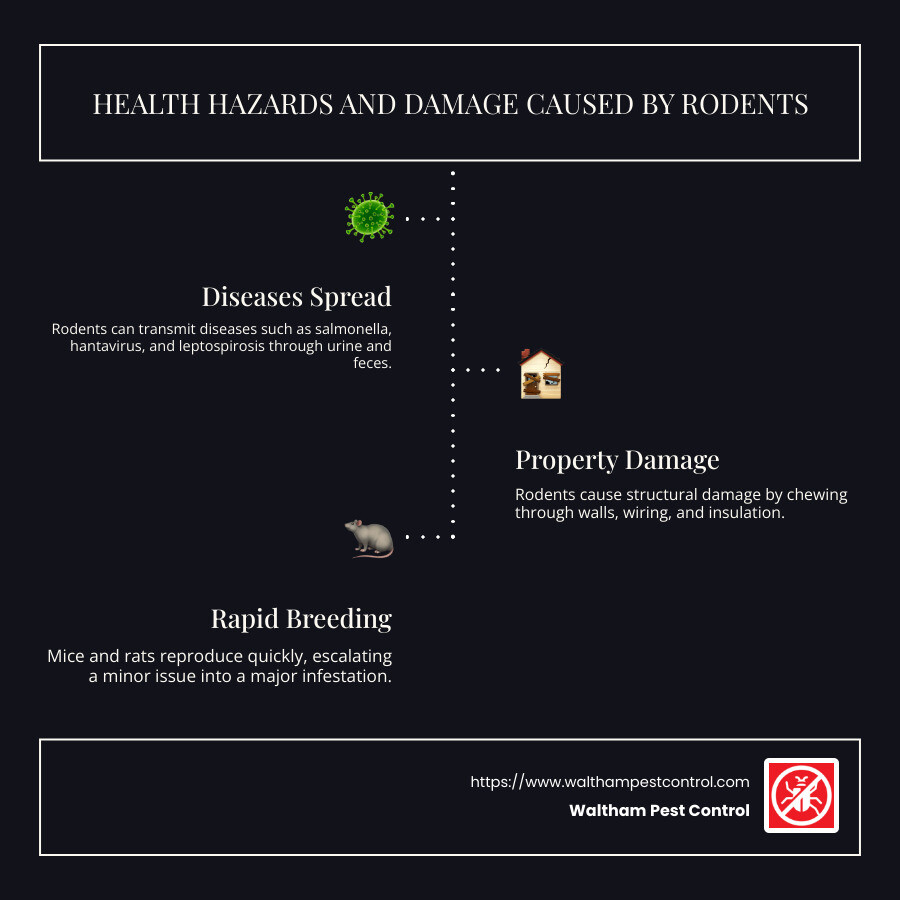
- Health Concerns: Rodents spread diseases such as salmonella, hantavirus, and leptospirosis.
- Property Damage: These pests chew through walls and wiring, potentially causing significant damage.
- Rapid Breeding: Mice and rats reproduce quickly, turning a minor issue into a major infestation if left unchecked.
Waltham Pest Control understands that rodents are more than just a nuisance—they’re a threat to your health and property. Our professional services ensure these problems are dealt with swiftly and efficiently.
My name is Waltham Pest Control, and with over four decades of experience in pest control, I’ve seen the importance of chemical control of rodents in preserving the safety and integrity of homes and businesses. Let’s explore why rodent control is so crucial.
Chemical control of rodents terms to know:
– get rid of rats at home
– rat infestation removal
– rat prevention in home
Understanding Rodenticides
Rodenticides are specialized chemicals designed to eliminate rodents such as rats, mice, and other similar pests. These substances are crucial in managing infestations that can lead to health risks and property damage. They are typically divided into two main categories: anticoagulants and non-anticoagulants. Additionally, some rodenticides fall under the category of fumigants.
Types of Rodenticides
Anticoagulants are the most common type of rodenticides. They work by interfering with the rodent’s blood clotting process, leading to internal bleeding. These can be further divided into:
- First-generation anticoagulants: This group includes chemicals like warfarin, chlorophacinone, and diphacinone. They usually require multiple doses to be effective.
- Second-generation anticoagulants: These are more potent and include brodifacoum, bromadiolone, difenacoum, and difethialone. They are effective with a single feeding and are known to persist longer in the rodent’s body.
Non-anticoagulants work differently and include:
- Bromethalin: A neurotoxin that affects the central nervous system, leading to respiratory distress.
- Cholecalciferol: Also known as Vitamin D3, which, in large doses, leads to the toxic buildup of calcium.
- Zinc phosphide: Converts into phosphine gas in the stomach, causing damage to vital organs.
- Strychnine: A neurotoxin that causes muscle contractions and can lead to rapid death.
How Rodenticides Work
Rodenticides employ various mechanisms to eliminate rodents:
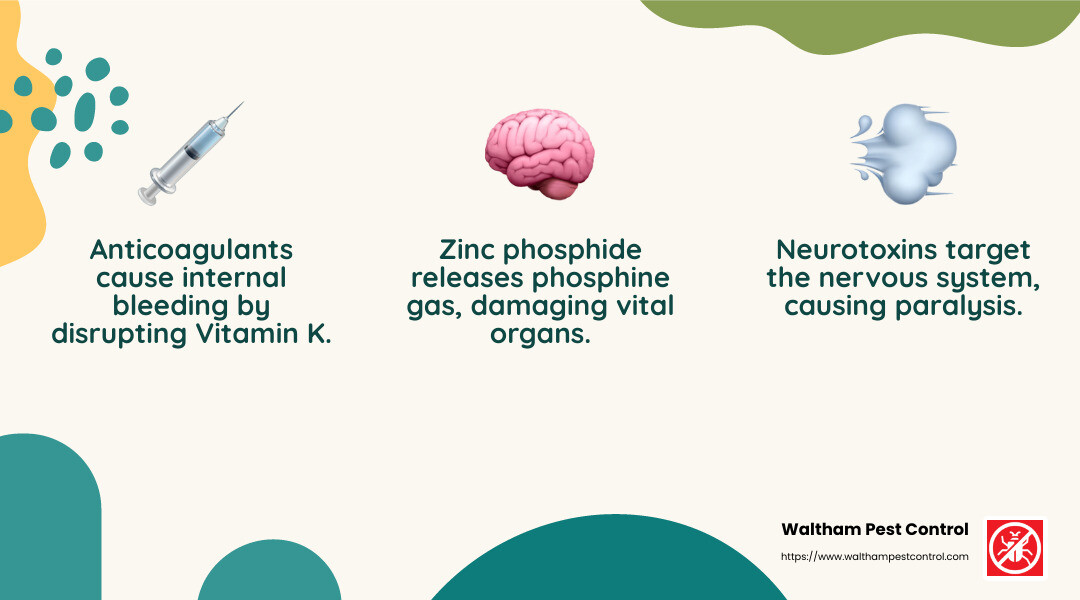
- Blood Clotting Interference: Anticoagulants disrupt the rodent’s ability to produce Vitamin K, essential for blood clotting. Without it, rodents suffer from internal bleeding. This method is slow but effective, allowing rodents to continue consuming the bait, which increases the likelihood of their demise.
- Neurotoxins: Non-anticoagulants like bromethalin and strychnine target the nervous system. They cause paralysis and respiratory failure, leading to death. These are generally faster-acting compared to anticoagulants.
- Phosphine Gas: Zinc phosphide releases toxic gas when ingested. This gas is highly effective in damaging the brain, heart, liver, and kidneys, leading to a swift end for the rodent.
Understanding these types and mechanisms is crucial for selecting the right rodenticide for your situation. Each type has its own set of advantages and potential risks, which should be carefully considered, especially in environments with pets or children.
Next, we will dig deeper into the specific chemical rodenticides commonly used today and explore their applications and safety measures.
Common Chemical Rodenticides
When it comes to tackling rodent infestations, understanding the specific chemical rodenticides available can make a significant difference. Let’s explore some of the most common options used today.
Anticoagulant Rodenticides
Warfarin: This is one of the earliest anticoagulants used for rodent control. It works by preventing blood from clotting, leading to internal bleeding. Warfarin typically requires multiple feedings to be effective, making it less potent compared to newer options.
Brodifacoum: A second-generation anticoagulant, brodifacoum is highly toxic and effective in a single feeding. It remains in the rodent’s body for an extended period, increasing the risk of secondary poisoning to predators and pets.
Bromadiolone: Similar to brodifacoum, bromadiolone is also a second-generation anticoagulant. It is potent and effective with just one feeding, but poses similar risks regarding secondary poisoning.
Non-Anticoagulant Rodenticides
Zinc Phosphide: This rodenticide acts quickly by releasing phosphine gas in the rodent’s stomach. The gas is highly toxic and damages vital organs such as the brain and liver. Zinc phosphide is effective but must be used carefully, as it can pose risks to non-target animals if ingested.
Strychnine: Known for its rapid action, strychnine is a neurotoxin that causes severe muscle contractions, leading to death by asphyxiation. It is approved for use only in specific ground applications due to its high toxicity.
Cholecalciferol: Also known as Vitamin D3, cholecalciferol causes a toxic buildup of calcium in the bloodstream. This results in organ failure over time. It requires multiple doses but poses a lower risk of secondary poisoning compared to anticoagulants.
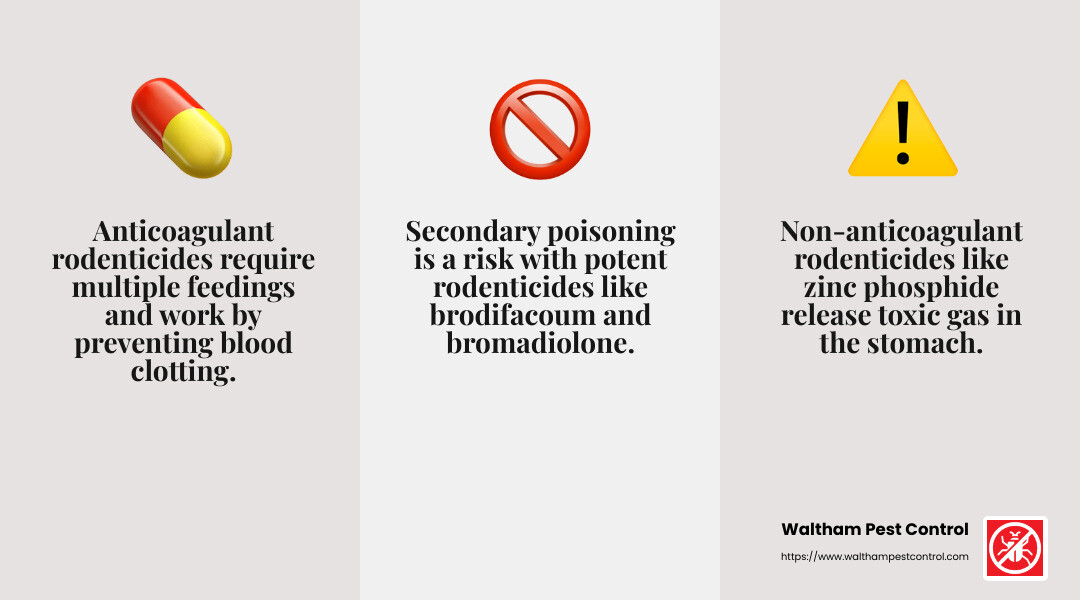
Each of these rodenticides has its own method of action and associated risks. It’s crucial to consider these factors, especially in environments where pets, children, or wildlife may be present. The choice of rodenticide should also align with regulatory guidelines to ensure safe and effective rodent control.
In the next section, we’ll discuss the safe application of chemical rodenticides and how professional pest control services can help manage these risks effectively.
Safe Application of Chemical Rodenticides
When dealing with rodenticides, safety should always be your top priority. Chemical control of rodents can be effective, but it comes with risks. Let’s explore how to use these chemicals safely and why professional help is often the best choice.
Professional Application
Handling rodenticides isn’t just about putting out bait; it’s about doing it safely and effectively. Professional pest control services, like Waltham Pest Control, have the expertise to ensure that rodenticides are applied correctly. Professionals understand the specific needs of each situation and can tailor their approach using Integrated Pest Management (IPM) techniques. IPM focuses on long-term prevention and uses a combination of methods to control pests, minimizing the need for chemical use.
Professionals are trained to wear proper personal protective equipment (PPE), which is crucial when handling toxic substances. This includes gloves, masks, and protective clothing to prevent exposure. They also follow strict EPA regulations, ensuring that all applications are legal and safe.
Risks and Precautions
Rodenticides are highly toxic to both humans and pets. Secondary poisoning is a serious concern, as predators or pets that consume poisoned rodents can also be affected. For example, second-generation anticoagulants like brodifacoum and bromadiolone can remain in a rodent’s system for weeks, posing a long-term risk to other animals.
To mitigate these risks, bait stations are often used. These are secure boxes that hold the rodenticide, making it accessible only to rodents. Bait stations help protect children, pets, and non-target wildlife from accidental poisoning.
The environmental impact of rodenticides is another important consideration. Chemicals like zinc phosphide can leach into the groundwater, affecting local ecosystems. That’s why follow all label instructions and regulations to minimize harm.
In summary, while rodenticides can be an effective solution for rodent problems, their use requires careful planning and execution. The expertise of professionals, adherence to safety guidelines, and consideration of environmental factors are key to successful and responsible rodent control.
Next, we’ll explore alternatives to chemical rodent control, providing options that are safer for your family and the environment.
Alternatives to Chemical Rodent Control
While chemical solutions can be effective, there are several natural and non-chemical methods that can help keep rodents at bay. These methods are often safer for families, pets, and the environment. Let’s explore some popular alternatives.
Natural Repellents
Natural repellents are a great first line of defense against rodents. These substances deter rodents without the use of harmful chemicals:
- Peppermint Spray: Rodents dislike the strong smell of peppermint. Spraying peppermint oil around entry points and common rodent paths can help keep them away.
- Eucalyptus: Like peppermint, eucalyptus has a strong scent that rodents find off-putting. Planting eucalyptus around your property or using eucalyptus oil indoors can serve as a natural deterrent.
- Wormwood: This plant not only deters rodents but can also be used to repel insects. Planting wormwood around your home can create a natural barrier against pests.
Exclusion Methods
Keeping rodents out of your home is often the most effective way to control them. Here are some proven exclusion techniques:
- Sealing Entry Points: Rodents can squeeze through surprisingly small gaps. Use caulk to seal cracks in walls and around windows.
- Wire Mesh: Cover vents and other necessary openings with wire mesh. This allows air to flow while keeping rodents out.
- Caulk: Use caulk to seal any small gaps or holes in your home’s exterior. This prevents rodents from finding a way inside.
Biological Control Agents
Nature itself offers solutions in the form of biological control agents. These methods use natural predators and other biological means to manage rodent populations:
- Predatory Animals: Encouraging the presence of natural predators, like owls, can help reduce rodent numbers. Owls are efficient hunters and can significantly lower rodent populations in an area.
- Pathogens: Certain pathogens can be used to control rodent populations, though this method is typically used in more controlled environments.
- Barn Owl Habitats: Building barn owl boxes on your property can attract these natural predators. A single barn owl can eat dozens of rodents each night, providing a natural and effective control method.
These alternatives to chemical rodent control offer effective ways to manage rodent problems without the risks associated with toxic substances. By using natural repellents, exclusion techniques, and biological control agents, you can create a safer environment for your home and family.
Next, we’ll address some frequently asked questions about chemical control of rodents, providing insights into the most common concerns and solutions.
Frequently Asked Questions about Chemical Control of Rodents
What chemical gets rid of rodents?
When it comes to chemical control, coumachlor and coumatetralyl are two common rodenticides used to manage rodent populations. These chemicals work by interfering with the blood clotting process in rodents, leading to their eventual death. They are part of the anticoagulant class of rodenticides, which have been widely used due to their effectiveness.
Which chemical control methods are safest?
The safest way to use chemical rodenticides is through bait stations and professional application. Bait stations are tamper-proof containers that securely hold the rodenticide, preventing accidental exposure to children, pets, and non-target wildlife. This minimizes the risk of secondary poisoning and environmental contamination.
Professional application is crucial because trained experts understand how to handle and apply these chemicals safely. They follow strict guidelines and use personal protective equipment (PPE) to reduce risks. Professionals also have the experience to choose the most appropriate rodenticide for your specific situation, ensuring effective control while prioritizing safety.
How long do rodenticides take to work?
Rodenticides typically take 3-10 days to be effective. The time it takes for the rodents to die depends on factors like the type of rodenticide used and the amount ingested. Many rodenticides require multiple feedings before they can take full effect. This means that rodents must consume the bait several times over a few days for the rodenticide to be lethal.
Understanding these aspects of chemical rodent control can help you make informed decisions about managing rodent infestations safely and effectively.
Conclusion
When it comes to managing rodent infestations, the importance of professional pest control cannot be overstated. At Waltham Pest Control, we understand that dealing with rodents is not just about applying chemicals; it’s about using a comprehensive and integrated approach to ensure safety and effectiveness.
Integrated Pest Management (IPM) is at the heart of our strategy. This means combining various methods to not only eliminate rodents but also prevent them from returning. By using a mix of chemical and non-chemical solutions, we can tackle the problem from all angles. This approach is not only effective but also environmentally responsible.
Safety is a top priority. Our trained professionals use personal protective equipment (PPE) and follow strict guidelines to handle rodenticides safely. We also use bait stations to minimize the risk of accidental exposure to children, pets, and non-target wildlife. This careful application ensures that while we are targeting rodents, we are protecting everything else.
Effectiveness and safety go hand in hand. By trusting Waltham Pest Control, you’re choosing a team with over 40 years of experience in providing quality pest management solutions. Our commitment to excellence and our deep understanding of rodent behavior allow us to deliver results that last.
If you’re facing a rodent problem or want to prevent one, contact us at Waltham Pest Control today. Let our expertise in chemical control of rodents and our integrated approach keep your home safe and rodent-free.