

Carpenter Bees and Pressure Treated Wood: 7 Powerful Truths 2025
The Truth About Carpenter Bees and Pressure Treated Wood
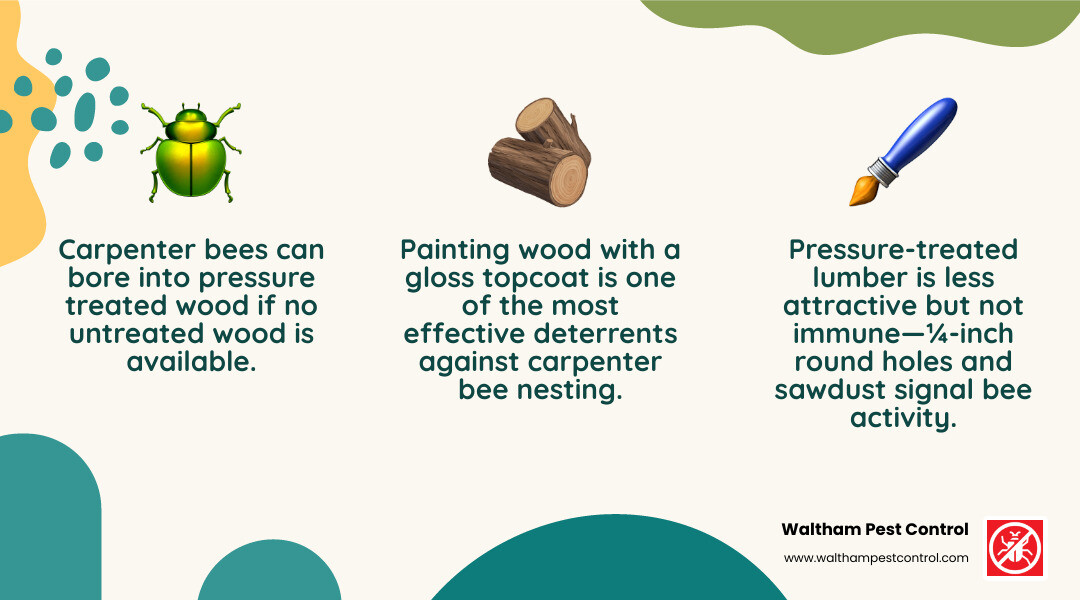
Carpenter bees and pressure treated wood have a complicated relationship. Despite common beliefs, carpenter bees CAN bore into pressure treated lumber, though they generally prefer untreated wood when given the choice.
Here’s what you need to know:
| Question | Answer |
|---|---|
| Can carpenter bees damage pressure treated wood? | Yes, though they prefer untreated wood |
| Does pressure treatment deter carpenter bees? | Partially – it’s less attractive but not immune |
| What signs indicate carpenter bee activity? | Perfect round ¼-inch holes, sawdust piles below, buzzing sounds |
| How quickly can damage occur? | A bee can drill several inches in just a few hours |
| Best prevention methods? | Paint or apply gloss topcoat, fill existing holes, use composite materials |
Carpenter bees are nature’s wood-drilling specialists, creating perfectly round ¼-inch entrance holes that lead to extensive gallery networks inside wooden structures. While pressure-treated lumber contains chemicals that make it less appealing, determined female carpenter bees can still bore through it when other options aren’t available.
The density of pressure-treated wood provides some resistance, but it’s not a guaranteed deterrent. Many homeowners are surprised to find these persistent pollinators attacking their expensive pressure-treated decks, porches, and outdoor furniture.
I’m Waltham Pest Control, President of Waltham Pest Control, with over 40 years of experience addressing carpenter bees and pressure treated wood issues throughout Eastern Massachusetts, helping homeowners protect their wooden structures while respecting these important pollinators.
Carpenter bees and pressure treated wood word roundup:
– carpenter bees treatment and prevention
– home treatment for carpenter bees
– average price of carpenter bee pest control treatment
Meet the Culprit: Carpenter Bee Biology & Behavior
Ever watched a bee hovering near your deck and wondered if it’s plotting against your woodwork? You might be eyeing a carpenter bee! These fascinating creatures are often misunderstood, so let’s get to know them better.
Unlike their social cousins, carpenter bees are the introverts of the bee world. They’re solitary insects, preferring to live alone rather than in busy colonies. Each female bee creates her own nest by drilling perfectly into wood—including your carpenter bees and pressure treated wood encounters.
How can you spot them? Look for that shiny, hairless black abdomen—it’s their most distinctive feature and separates them from the fuzzy-bottomed bumblebees they’re often confused with.
Male carpenter bees are all show and no sting. They’ll perform dramatic “bluff charges,” zooming toward you when you approach their territory. Don’t worry—males lack stingers entirely!
Female carpenter bees do pack a punch with functional stingers. But they’re surprisingly gentle unless you literally grab them or threaten their nest directly.
Despite their destructive reputation, these bees play a crucial role in our ecosystem as excellent pollinators.
Carpenter Bees vs. Other Bees
Proper identification is key to addressing any bee issue effectively:
Carpenter Bees: These robust insects sport a shiny, hairless black abdomen. They create perfect ¼-inch round entrance holes in wooden structures.
Bumblebees: Similar in size but covered with fuzzy yellow and black hair—including their abdomens. They’re ground-nesters who create small colonies in abandoned rodent burrows.
Honeybees: Smaller than both carpenter and bumblebees, with distinctive striped abdomens. They’re highly social, living in large colonies and producing honey.
Why They Drill Instead of Eat
Carpenter bees don’t actually eat wood! They’re excavators, not consumers. The female bee uses her strong mandibles like tiny jackhammers, vibrating against the wood to gradually carve out a tunnel about ½ inch in diameter.
These galleries typically extend 4-6 inches along the wood grain initially. However, if left untreated, reused galleries can eventually stretch several feet as generations of bees expand the family home.
Inside these wooden nurseries, the female creates a series of cells, each provisioned with a ball of “pollen bread” (pollen mixed with nectar), lays a single egg, and then seals it off with a partition made of chewed wood pulp.
In Massachusetts, we typically observe one generation per year, with adults overwintering in old galleries and emerging in spring when temperatures consistently reach the 70s.
Wood Preferences: Soft, Hard, or Treated?
When it comes to home-drilling preferences, carpenter bees are like picky real estate agents with specific tastes. While these industrious insects can bore into almost any wood, they definitely play favorites.
Untreated pine tops their “most desirable” list. With its soft texture and straight grain, pine offers the perfect combination of easy drilling and cozy nesting potential. Cedar and redwood aren’t far behind despite their natural insect-repelling oils.
Many homeowners believe the myth that hardwoods like oak or maple completely deter carpenter bees. The truth? While these denser woods do put up more resistance, determined female bees can still make themselves at home when other options aren’t available.
Moisture content plays a significant role too. Carpenter bees prefer wood with moisture content above 10% because it’s simply easier to tunnel through.
For superior resistance, composite decking materials (which blend wood fibers with plastic resins) offer excellent protection due to their high plastic content and density.
| Wood Type | Susceptibility to Carpenter Bees | Relative Cost | Durability |
|---|---|---|---|
| Untreated Softwood (Pine) | Very High | $ | Low |
| Cedar/Redwood | High | $$ | Medium |
| Hardwood (Oak, Maple) | Medium | $$$ | High |
| Pressure-Treated Wood | Medium-Low | $$ | Medium-High |
| Composite Decking | Very Low | $$$ | Very High |
What Attracts Them to Certain Boards
Carpenter bees aren’t random in their selection process. They’re actually quite strategic.
Sun exposure plays a major role in their decision-making. Boards that receive plenty of sunshine – particularly eaves, fascia boards, and deck railings facing south or west – tend to attract more carpenter bees.
Weathered grain is like a “welcome” sign for carpenter bees. When wood has been exposed to the elements, its surface fibers break down, creating an easier entry point for drilling.
Previous holes act like carpenter bee billboards advertising prime real estate. This is why prompt filling and sealing of holes is so crucial.
Wood that has developed fungal growth or mildew emits subtle odors that can attract carpenter bees.
Finally, unpainted surfaces are significantly more attractive than finished ones.
Are Painted or Sealed Surfaces Safer?
Absolutely! One of the most effective carpenter bee deterrents is also one of the simplest: a good coat of paint. Painted wood surfaces rarely attract carpenter bees because the paint film creates a barrier that bees either don’t recognize as wood or can’t easily grip with their mandibles.
A high-gloss topcoat offers particularly strong protection. Throughout our decades serving communities from Boston to Framingham, we’ve witnessed dramatic reductions in carpenter bee activity after homeowners apply gloss finishes.
When comparing stain versus clear sealant, both offer some protection, but neither matches the effectiveness of paint or a gloss topcoat.
For optimal protection against carpenter bees and pressure treated wood, we recommend this maintenance schedule:
- Paint: Reapply every 5-7 years
- Gloss topcoat: Reapply every 2-3 years
- Stain with sealant: Reapply every 1-2 years
- Clear sealant alone: Reapply annually
According to research from the University of Kentucky, maintaining a painted surface ranks among the most effective non-chemical deterrents for carpenter bees.
Carpenter Bees and Pressure Treated Wood (Primary Keyword Section)
Now let’s tackle the burning question on every homeowner’s mind: Do carpenter bees bore into pressure treated wood? The short answer is yes—they absolutely can and do, though they’ll typically choose untreated wood first if given options.
Pressure treated lumber undergoes a process where chemical preservatives are forced deep into the wood fibers under pressure. These preservatives—usually copper-based compounds like ACQ (Alkaline Copper Quaternary)—are excellent at fighting off fungi and many wood-destroying insects. But here’s the crucial distinction: carpenter bees don’t eat wood; they excavate it for nesting purposes.
The relationship between carpenter bees and pressure treated wood is influenced by several key factors:
The chemical preservatives in pressure treated wood weren’t specifically designed to repel carpenter bees. They target fungal decay and termites, leaving a protection gap that carpenter bees can exploit. The treatment does make the wood somewhat denser and harder to bore into, providing a modest natural deterrent—but a determined female carpenter bee with limited options will power through this resistance.
One myth we frequently encounter is that pressure treated lumber is completely bee-proof. Our 40+ years of experience tells a different story. We’ve documented numerous carpenter bee infestations in pressure treated decks, pergolas, and fence posts throughout Eastern Massachusetts.
Can Carpenter Bees Bore Into Pressure Treated Wood?
Yes, carpenter bees and pressure treated wood definitely have a complicated relationship. While not their first choice, carpenter bees will readily attack pressure treated lumber under certain conditions.
We’ve seen this happen consistently when untreated wood isn’t readily available nearby, when pressure treated wood has weathered and aged, when previous damage or holes already exist, or when the wood has developed high moisture content or fungal growth.
Though carpenter bees work a bit slower in pressure treated wood compared to untreated pine, they’re still remarkably efficient. A single female can drill a hole several inches deep in just a couple of hours.
Don’t underestimate the structural risk these insects pose. While a few isolated holes might seem harmless, repeated nesting over multiple seasons can significantly weaken wooden members.
Signs of Carpenter Bee Activity in Pressure Treated Wood
Catching a carpenter bees and pressure treated wood problem early makes it much easier to address. Here’s what to watch for:
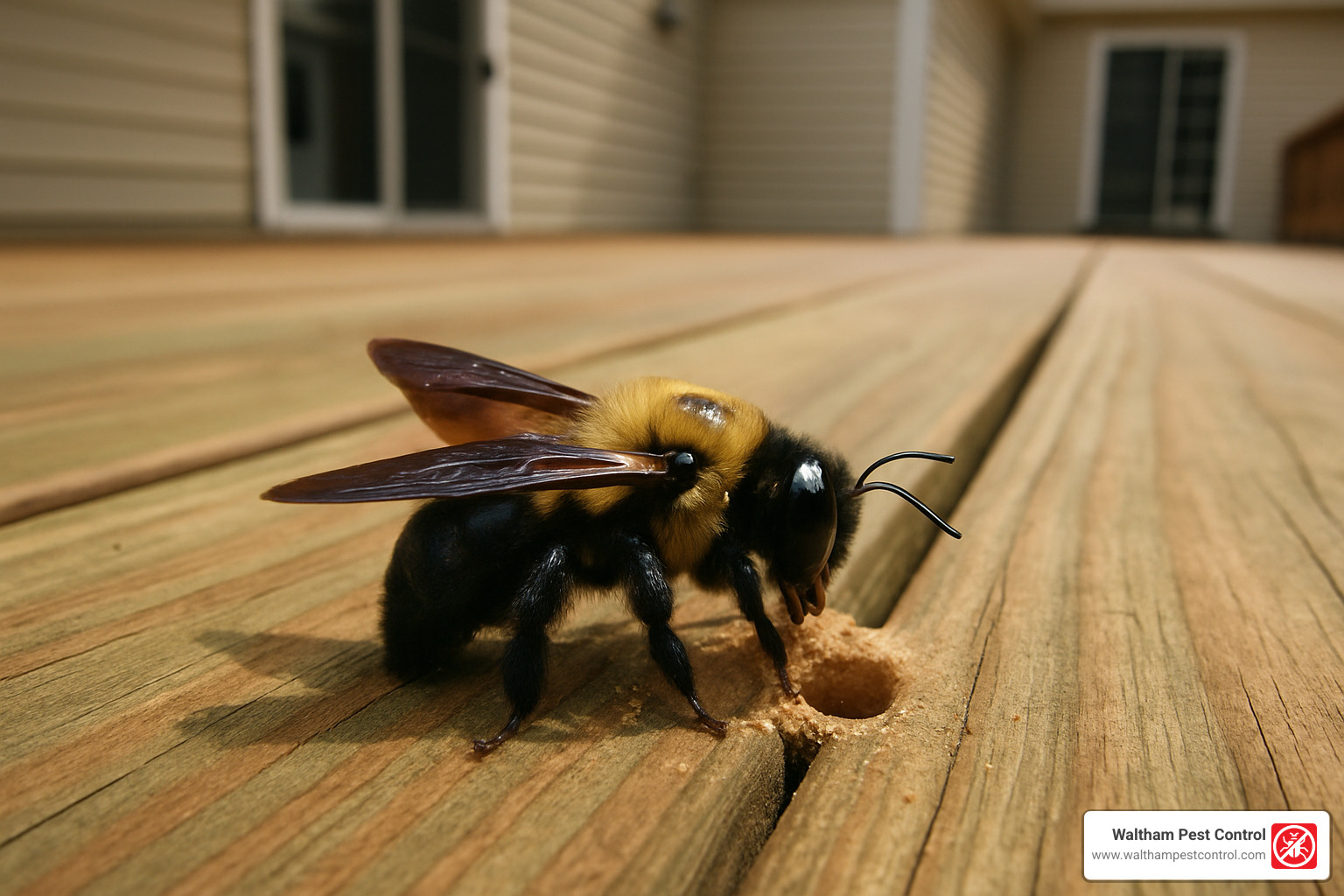
Look for perfectly round entrance holes about ¼ inch in diameter—these are remarkably clean-cut, almost as if created with a power drill. You’ll often find piles of coarse sawdust directly below these entrance holes.
Yellow streaking below entrance holes is another telltale sign—this is carpenter bee excrement that can stain surfaces. In the evening, try placing your ear near a suspected entrance hole; you might hear buzzing sounds as bees move within their galleries.
Male carpenter bees often hover protectively near nest entrances, especially during spring mating season.
Is Composite Decking a Better Alternative?
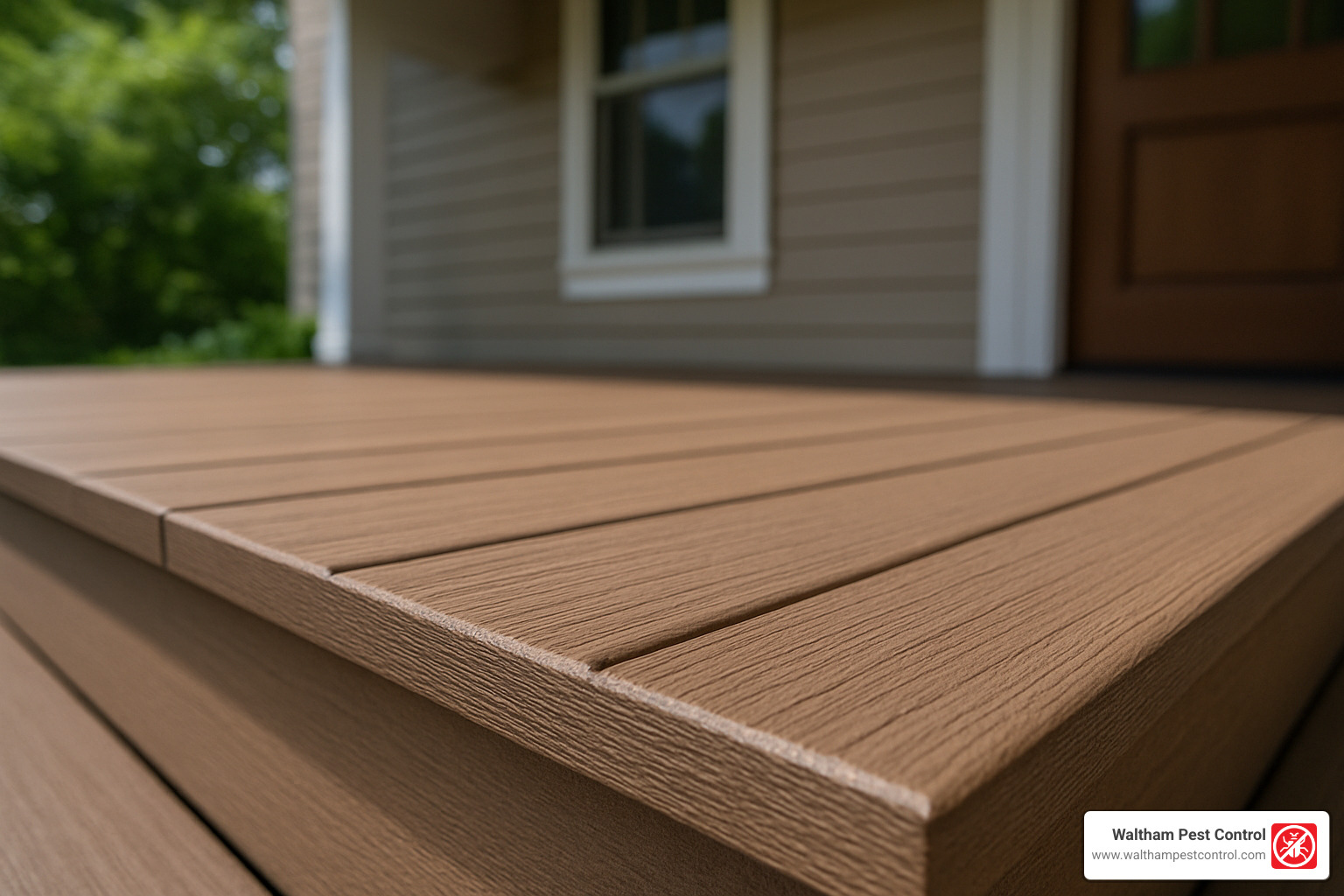
For homeowners concerned about carpenter bees and pressure treated wood, composite decking materials offer a superior solution. These innovative materials blend wood fibers with plastic resins to create durable, low-maintenance decking products that carpenter bees find nearly impossible to penetrate.
The high concentration of plastic in composite materials creates a surface that carpenter bees simply can’t grip and excavate effectively. These materials are generally denser than natural wood, providing additional resistance to boring insects of all types.
Modern composite decking has come a long way aesthetically, now available in a wide range of colors and textures that beautifully mimic natural wood grain without the maintenance headaches.
According to research on composite decking history, these materials have been steadily gaining popularity since the 1990s, with remarkable improvements in quality, appearance, and performance.
Prevention, Treatment & Repair Solutions
At Waltham Pest Control, we believe in a comprehensive approach to managing carpenter bees and pressure treated wood issues. Prevention is always preferable to treatment, but we offer solutions for both scenarios.
A professional inspection is the first step in developing an effective management plan. Our trained technicians can identify existing carpenter bee activity, assess the extent of damage, and recommend appropriate preventive measures.
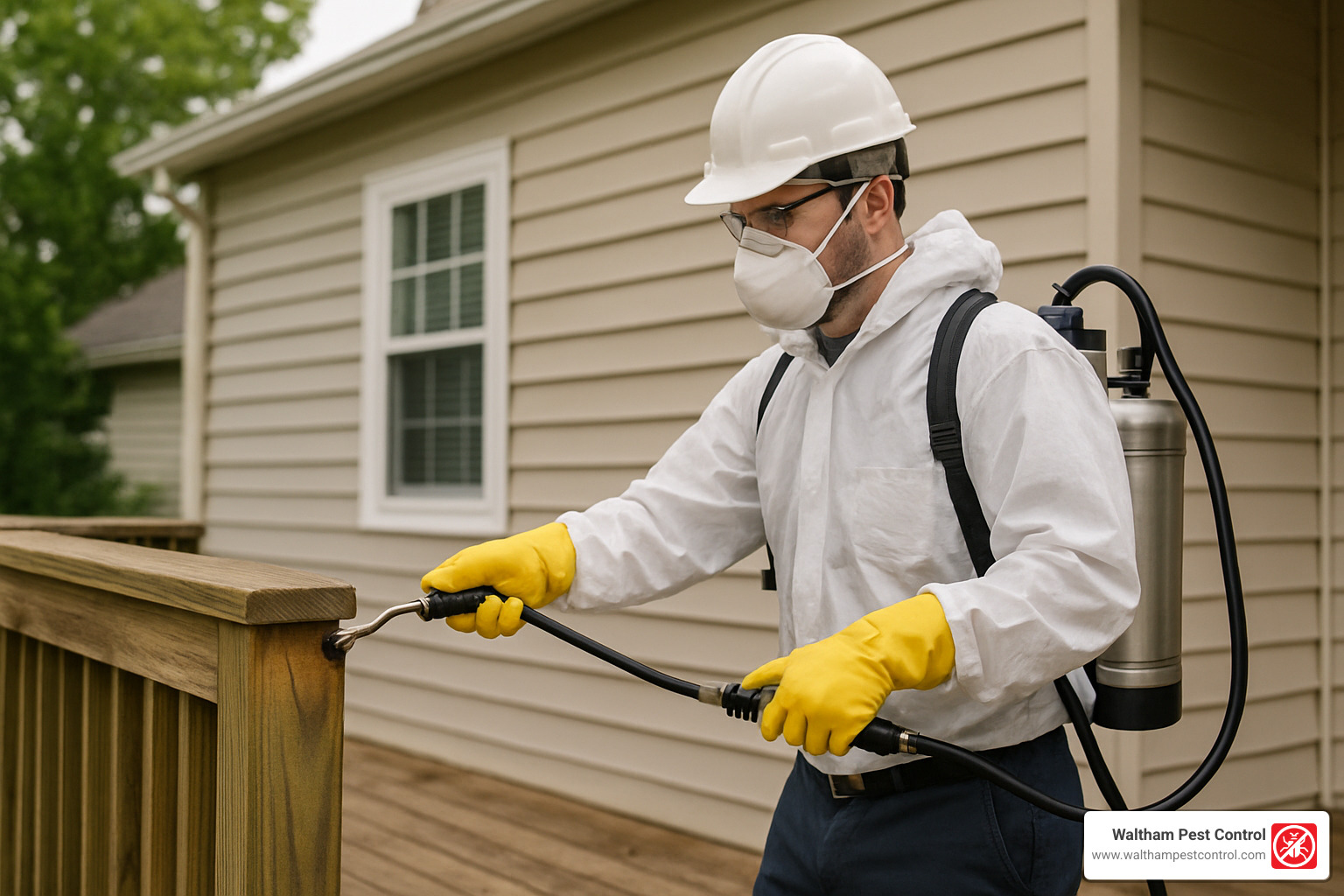
For active infestations, hole dusting with appropriate insecticides is often necessary. This targets bees inside their galleries without widespread application of chemicals. Following treatment, sealing holes with wood putty or caulk prevents reuse of galleries.
Repellent coatings can provide ongoing protection. These may include conventional insecticides with residual activity or newer, more eco-friendly deterrents derived from natural oils. Based on internet data, the average cost for professional carpenter bee treatment ranges widely from $250 to $900+, depending on the extent of the infestation and the size of the structure.
Pro-Level Prevention Plans
At Waltham Pest Control, we’ve developed effective prevention strategies based on decades of experience with carpenter bees and pressure treated wood:
- Spring & Fall Treatments: We recommend preventive treatments during two critical periods: early spring (March-April) before nesting activity begins, and fall (September-October) to prevent overwintering in existing galleries.
- Residual Sprays: Professional-grade residual insecticides can be applied to wood surfaces to deter carpenter bees from landing and beginning to excavate.
- Filling Old Holes: A crucial step in prevention is properly treating and sealing existing holes. We use a systematic approach:
- Treat the gallery with appropriate insecticide dust
- Insert a flexible wire to break pollen plugs that might block the insecticide
- Fill the hole with wood putty or a specialized sealant
- Paint or seal over the repair to match the surrounding surface
For more detailed information about our professional treatment options, visit our carpenter bees treatment and prevention page.
DIY — Where It Works and Where It Doesn’t
Many homeowners throughout Eastern Massachusetts ask us about DIY options for managing carpenter bees and pressure treated wood issues. While some DIY approaches can be effective for minor problems, they have limitations for more serious infestations.
Where DIY Works:
- Limited Sanding: For small areas with minimal bee activity, sanding weathered wood surfaces and applying fresh paint or sealer can deter new nesting.
- Citrus Oil Deterrent: Some homeowners have reported success using citrus oil sprays as natural repellents.
- Traps: DIY carpenter bee traps can capture some bees, particularly males, but rarely address the entire population.
Where DIY Falls Short:
- Safety Concerns: DIY treatments often involve ladders and working at heights, creating fall hazards.
- Incomplete Treatment: Without professional equipment to inject insecticides deep into galleries, DIY treatments often fail to reach all bees or larvae.
- Temporary Solutions: Most DIY approaches provide only short-term relief.
Based on internet data, average DIY costs range from $50-$150 for materials, while professional treatments average $250-$900+ depending on the extent of the problem.
Repairing Existing Damage
Once carpenter bees and pressure treated wood have come into conflict, repairs become necessary. Here’s our professional approach:
- Wood Filler: For isolated holes in non-structural elements, a high-quality exterior wood filler provides an effective repair.
- Color-Matched Plugs: For visible areas like deck railings or fascia boards, we often use color-matched wood plugs that blend seamlessly with the surrounding wood.
- Structural Assessment: For extensive damage, particularly in load-bearing members, a thorough structural assessment is crucial.
- Repainting: After repairs are complete, applying a fresh coat of paint or sealer is essential to prevent re-infestation.
- Monitoring: We recommend regular inspections of repaired areas, especially during spring nesting season, to catch any new activity early.
Going Green: Non-Lethal Deterrents
At Waltham Pest Control, we understand that many homeowners value carpenter bees as pollinators and prefer non-lethal management approaches. Here are effective eco-friendly strategies:
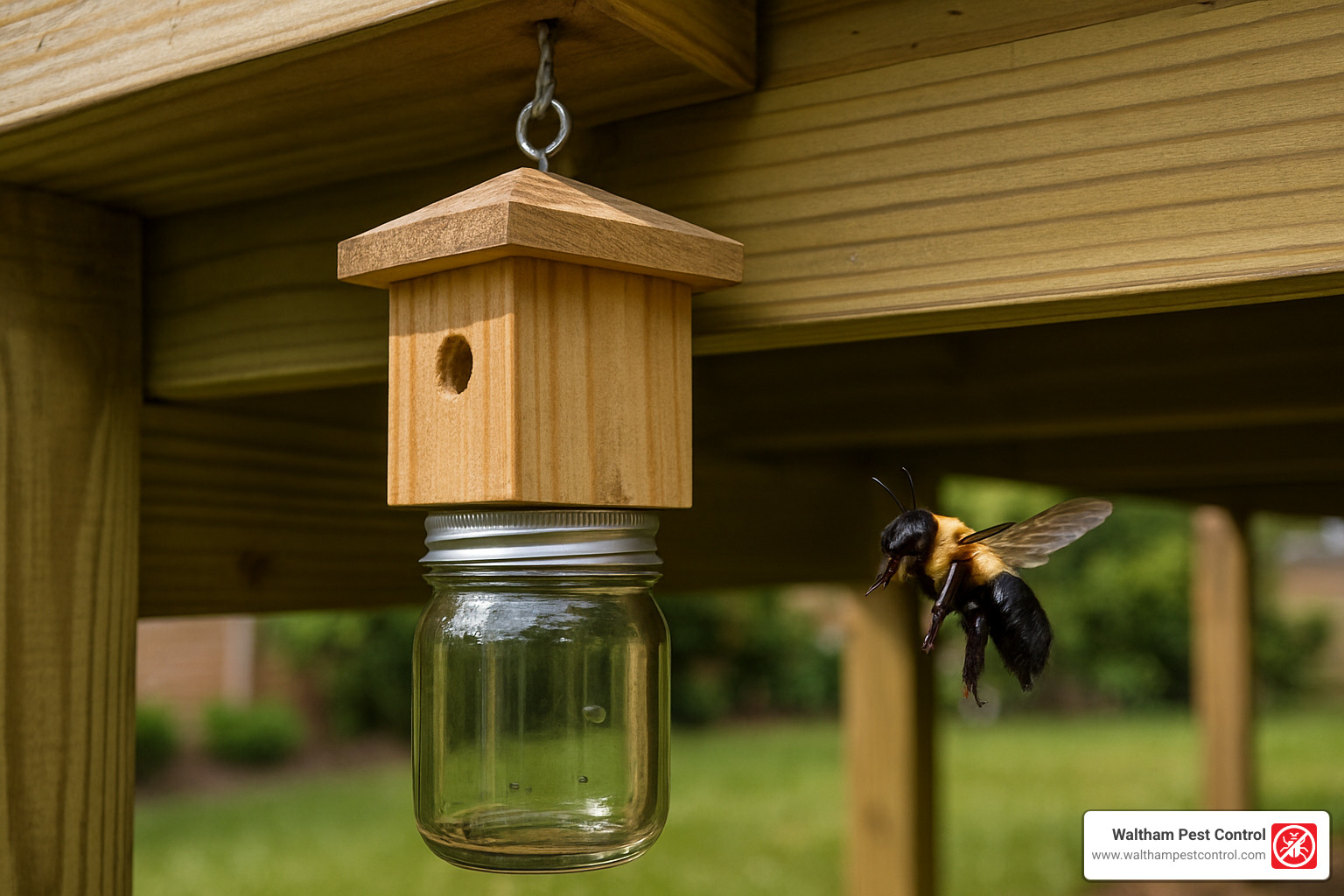
- Bee Traps: Non-lethal carpenter bee traps can capture bees without killing them. These typically consist of a wooden chamber with entrance holes similar to what bees naturally create, but with a clear container below that traps the bees.
- Relocation: Working with local beekeepers or conservation groups, carpenter bees can sometimes be relocated to more appropriate habitats.
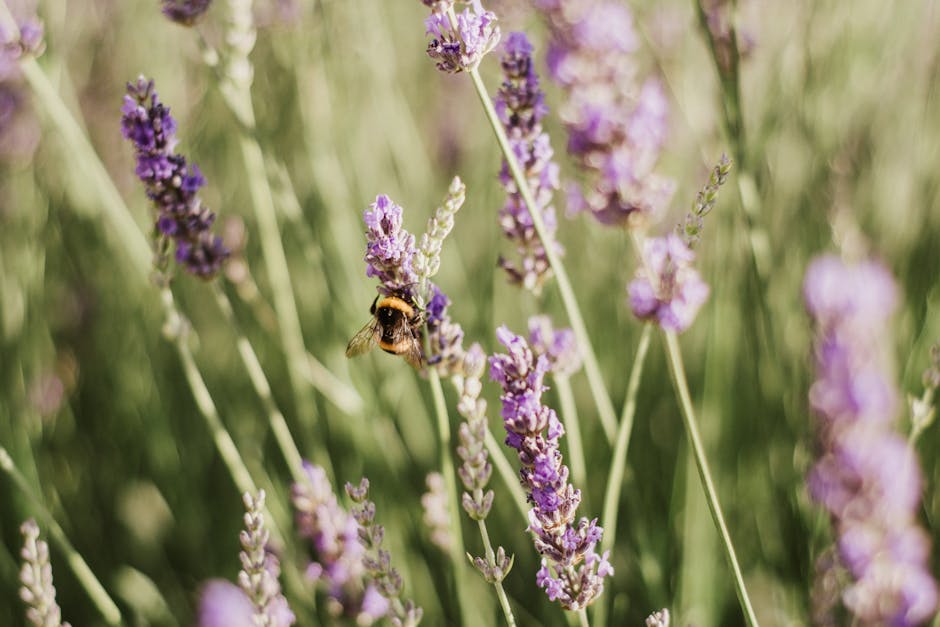
- Lavender Sachets: Hanging sachets containing lavender or placing lavender plants near wooden structures can deter carpenter bees.
- Noise/Vibration: Carpenter bees are sensitive to vibration and sound. Some homeowners have reported success using wind chimes or small speakers playing music near problem areas.
Frequently Asked Questions about Carpenter Bees and Pressure Treated Wood
How long does pressure-treated lumber stay unattractive to carpenter bees?
When pressure-treated lumber is fresh from the lumberyard, it has two natural defenses: the chemical preservatives and higher moisture content both make it less appealing to carpenter bees.
But this honeymoon period doesn’t last forever. After about 2-5 years of exposure to the elements, that same pressure-treated wood gradually becomes more inviting to these persistent pollinators. The protection timeline varies significantly based on several factors:
Sunlight exposure accelerates the breakdown of surface chemicals through UV degradation. Weather patterns also play a role—repeated cycles of rain, snow, and temperature fluctuations gradually weather the wood. Even the specific treatment chemicals used in the lumber affect longevity of protection.
Pressure-treated wood that receives regular maintenance can resist carpenter bees for 7+ years, while unprotected wood often shows the telltale perfect round holes within just 3-5 years.
My best advice? Apply paint or exterior polyurethane within the first year after installation, then maintain this coating according to the manufacturer’s recommendations.
Will staining my deck once be enough to keep bees away?
While staining does provide some protection by making the wood somewhat less appealing to carpenter bees, a single application simply isn’t enough for long-term deterrence.
Stain penetrates the wood rather than creating the hard, smooth surface that truly keeps bees at bay. Think of stain as a good first step in a more comprehensive protection plan.
For truly effective protection against carpenter bees and pressure treated wood problems, follow this maintenance routine:
First, use a quality stain that contains sealer for better protection. Next, apply a gloss polyurethane topcoat over the stain. This creates the smooth surface bees struggle to grip with their mandibles. Plan to reapply this topcoat every 2-3 years, and perform annual inspections to catch any areas where the finish is wearing thin.
When should I call a professional instead of trying DIY methods?
As much as I respect a good DIY spirit, there are definitely situations where calling in professionals makes more sense for carpenter bee management.
Multiple active nests are a red flag that DIY methods might not be sufficient. If you’re seeing several holes or multiple bees buzzing around your property, you’re likely dealing with a larger population that requires comprehensive treatment.
Recurring problems also warrant professional attention. If you’ve been battling carpenter bees year after year despite your best DIY efforts, it’s time for expert intervention to break the cycle.
When carpenter bees target structural elements like deck supports or roof eaves, the potential for significant damage increases.
Safety concerns should always take priority. Those nests tucked under third-story eaves or in difficult-to-reach areas create genuine fall hazards during DIY treatment attempts.
Families with young children or pets often prefer professional services to ensure treatments are applied safely with minimal exposure risk to family members.
Conclusion
Managing the relationship between carpenter bees and pressure treated wood requires a balanced approach that protects your property while respecting these important pollinators. Throughout Eastern Massachusetts, from historic homes in Salem to modern developments in Burlington, we’ve helped countless homeowners address carpenter bee challenges effectively.
Key takeaways from our discussion:
- Pressure-treated wood is not immune to carpenter bee damage, though it’s less attractive than untreated wood.
- Early prevention through painting, sealing, or applying gloss topcoats provides the most effective protection.
- Regular inspection and prompt treatment of new holes prevents the expansion of galleries and reduces structural damage.
- Composite decking materials offer superior resistance to carpenter bee damage for those considering new construction or renovation.
- Both professional and DIY approaches have their place, depending on the severity of the infestation and the structures involved.
At Waltham Pest Control, we’ve been addressing carpenter bees and pressure treated wood issues for over 40 years throughout Eastern Massachusetts. Our experience spans communities from Acton to Weymouth, giving us unique insight into local carpenter bee behavior and effective management strategies.
We offer customized, eco-conscious solutions that protect your property while minimizing environmental impact. For more information about our carpenter bee services or to schedule a free inspection, visit our carpenter bee services page.
Early intervention is key to preventing costly damage. If you’ve noticed the telltale round holes or sawdust piles that indicate carpenter bee activity, don’t wait—contact us today to protect your wooden structures for years to come.
