

Carpenter Ants Outside House: 5 Essential Solutions 2025
Understanding Carpenter Ants Outside Your House
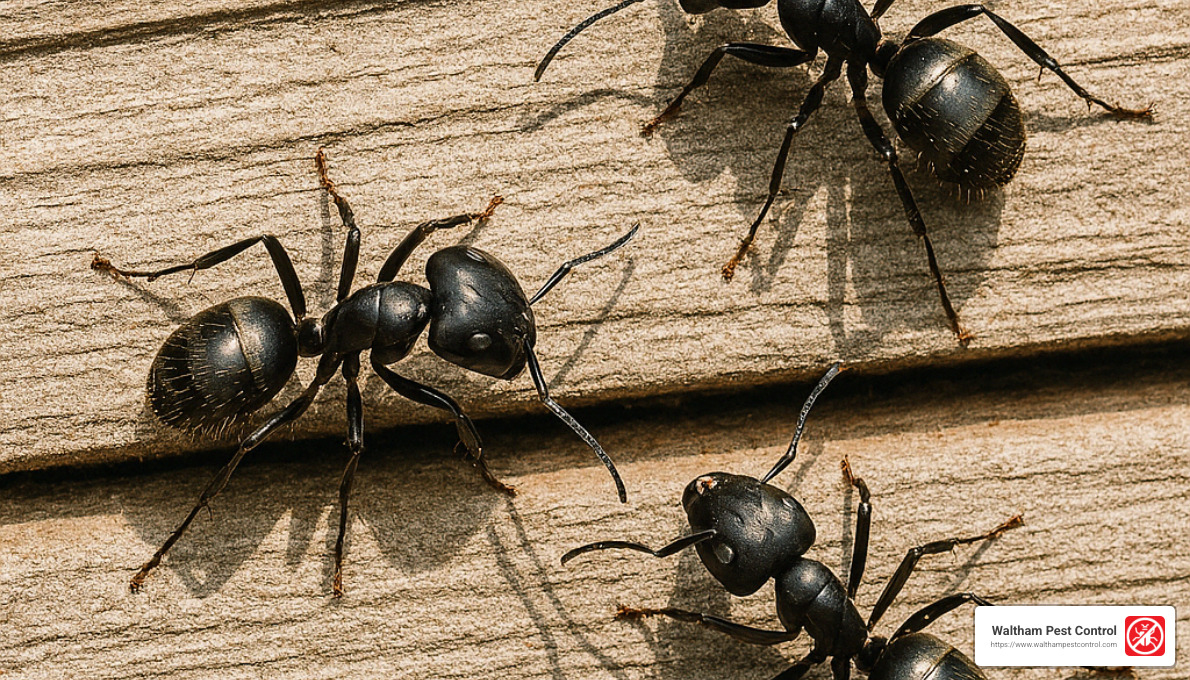
Seeing carpenter ants outside house walls or doors can be worrisome. Should you worry?
Here’s the quick answer:
– Yes, outdoor carpenter ants can signal moisture and wood issues.
– Unchecked, their outside nests might move indoors, causing structural damage.
– Professional assessment is recommended if you repeatedly see them.
We’ll unpack exactly what outdoor carpenter ants mean for your home
— and what you can do about it.
I’m Waltham Pest Control, President & CEO of Waltham Pest Control, with over 40 years of experience helping Massachusetts homeowners effectively manage pest issues, including carpenter ants outside house perimeters. I’ll help you understand these pests clearly and simply.
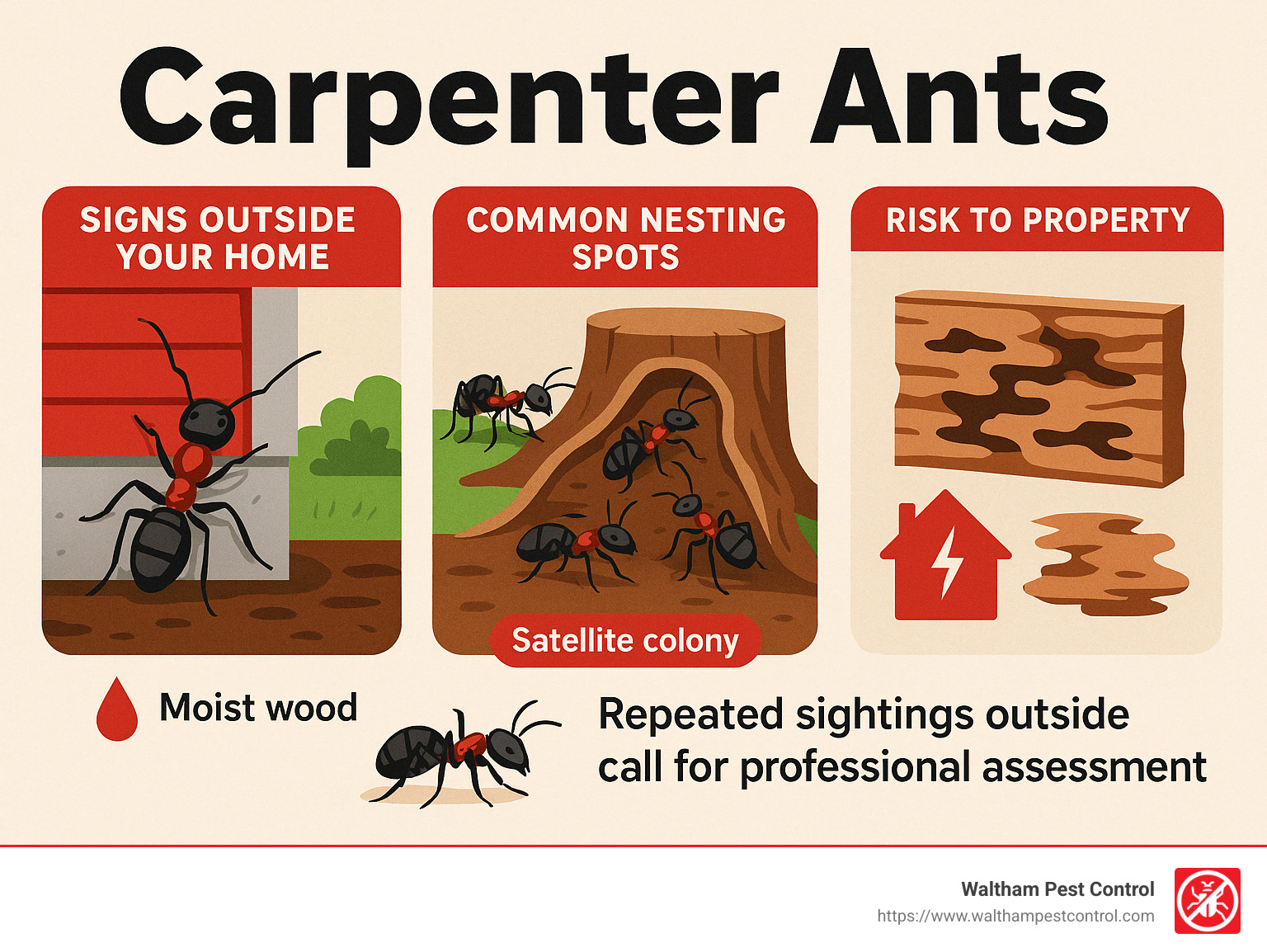
Carpenter ants are among the largest ant species in North America, typically measuring between 1/4 to 1/2 inch in length. If you’d like more in-depth information on this species, check out the Carpenter ant Wikipedia page. Unlike termites, they don’t eat wood but excavate it to create their nests, which can lead to significant structural damage over time.
When you spot carpenter ants outside house structures, they’re often establishing what we call “satellite colonies.” These industrious insects typically build their primary nest outdoors in areas with moist or decaying wood, such as:
- Dead tree stumps
- Rotting fence posts
- Woodpiles
- Landscape timbers
- Hollow trees
- Under stones or in soil
“Many homeowners don’t realize that carpenter ants prefer to establish their primary colony outdoors where moisture levels are naturally higher,” explains our senior technician at Waltham Pest Control. “What they see around their home is often just the tip of the iceberg.”
These outdoor nests become especially concerning when they serve as launching points for indoor invasions. A mature carpenter ant colony can house thousands of workers, and when resources become limited outdoors, they’ll readily explore your home for food and potential nesting sites.

Signs of Carpenter Ants Outside
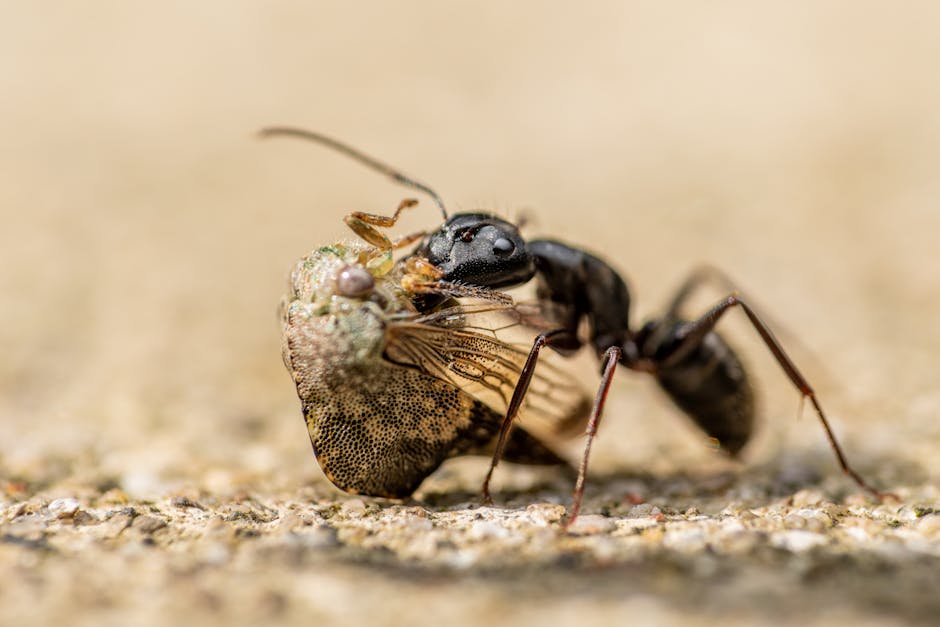
Spotting a carpenter ant outside house areas doesn’t automatically spell disaster, but it shouldn’t be ignored either. These industrious insects often leave behind several clues before serious damage occurs. Being able to recognize these signs early can save you thousands in potential repairs.
1. Wood Shavings (Frass)
Have you ever noticed small piles of what looks like sawdust near wooden structures around your home? That’s likely carpenter ant frass – a telltale calling card of these wood-excavating insects.
“What surprises many homeowners is that carpenter ant frass isn’t just sawdust,” explains our lead technician. “If you look closely, you’ll notice it contains bits of insect parts and other debris. It’s essentially their colony’s waste disposal.”
Unlike termites that consume wood, carpenter ants simply carve it out to create living spaces, pushing the debris outside their galleries. Finding these small sawdust-like piles near deck posts, fence lines, or along your foundation is often your first hint of carpenter ants outside house perimeters.
2. Ant Trails
Carpenter ants are creatures of habit with impressive organizational skills. They establish well-defined highways between food sources and their nests, often following structural lines like the edges of your foundation, deck supports, or fence boundaries.
These ant highways become most active during dawn and dusk when worker ants venture out for food. If you notice a steady stream of large ants (¼ to ½ inch long) marching in formation along the same path day after day, you’re likely witnessing a carpenter ant commute.
3. Winged Ants (Swarmers)
Spring and early summer bring a particularly concerning sight: flying carpenter ants. These winged reproducers, often mistaken for termites, signal that a mature colony exists nearby – and it’s expanding its territory.
“When clients call about flying ants around their property, I tell them it’s like seeing the tip of an iceberg,” shares our senior pest specialist. “Those swarmers mean there’s a thriving, established colony that’s been developing for at least 2-3 years somewhere close by.”
Swarmers typically emerge after rainfall when humidity is high, often gathering around windows and light fixtures. Their presence warrants immediate investigation.
4. Rustling Sounds
In the quiet of night, your home should be peaceful – not making noise. If you hear faint rustling or crackling sounds coming from within wooden structures, you might be listening to carpenter ants at work.
This unusual sign is most noticeable during nighttime hours when these nocturnal insects are busiest expanding their galleries. The sound resembles the crinkling of cellophane paper and becomes more pronounced in severe infestations.
5. Visual Sightings
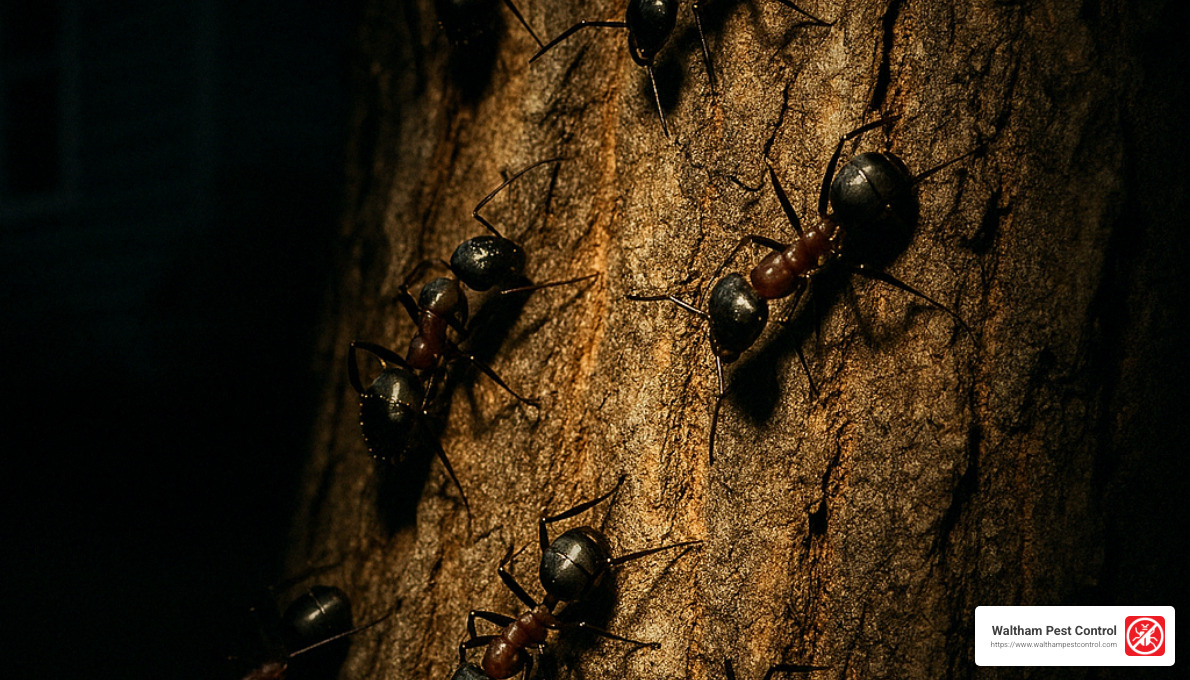
Perhaps the most obvious sign is simply seeing these distinctive insects regularly around your property. Carpenter ants outside house structures are typically larger than regular household ants, measuring between ¼ to ½ inch in length, with colors ranging from black to reddish-brown.
If you’re consistently spotting these larger ants near wooden structures, especially during evening hours, it warrants a closer inspection. Carpenter ants are most active from dusk until dawn, so grabbing a flashlight and checking suspicious areas after sunset might reveal activity you’d miss during daylight hours.
Seeing a few carpenter ants occasionally might not indicate a serious problem – they could be scouts from a distant colony. However, regular sightings, especially when combined with any of the other signs we’ve discussed, suggest it’s time to consult with a professional pest management service like Waltham Pest Control.
Early identification of carpenter ants outside house areas can prevent them from establishing indoor colonies and causing significant structural damage to your home.
How to Prevent Carpenter Ants from Entering Your Home
Keeping carpenter ants outside house perimeters from moving indoors is simpler than you might think. It basically comes down to making your home less attractive to these tiny carpenters. Here’s how you can achieve that, step by step.
Moisture Control
Carpenter ants absolutely love moisture—think of it as their favorite hangout spot. That means your first line of defense is keeping your home dry and well-ventilated. If you have leaky pipes or faucets, don’t wait—fix them ASAP. Ensure water from your gutters and downspouts drains away from your home’s foundation. Damp basements or crawl spaces can act like neon “vacancy” signs for carpenter ants, so consider using a dehumidifier in these areas.
Remember also to check your roof regularly for leaks and keep your gutters clear of debris. Proper ventilation in attics and crawl spaces is important too. Our experienced technicians at Waltham Pest Control agree: “Addressing moisture issues not only helps prevent carpenter ants but also protects your home’s structural strength—it’s a win-win.”
Vegetation Management
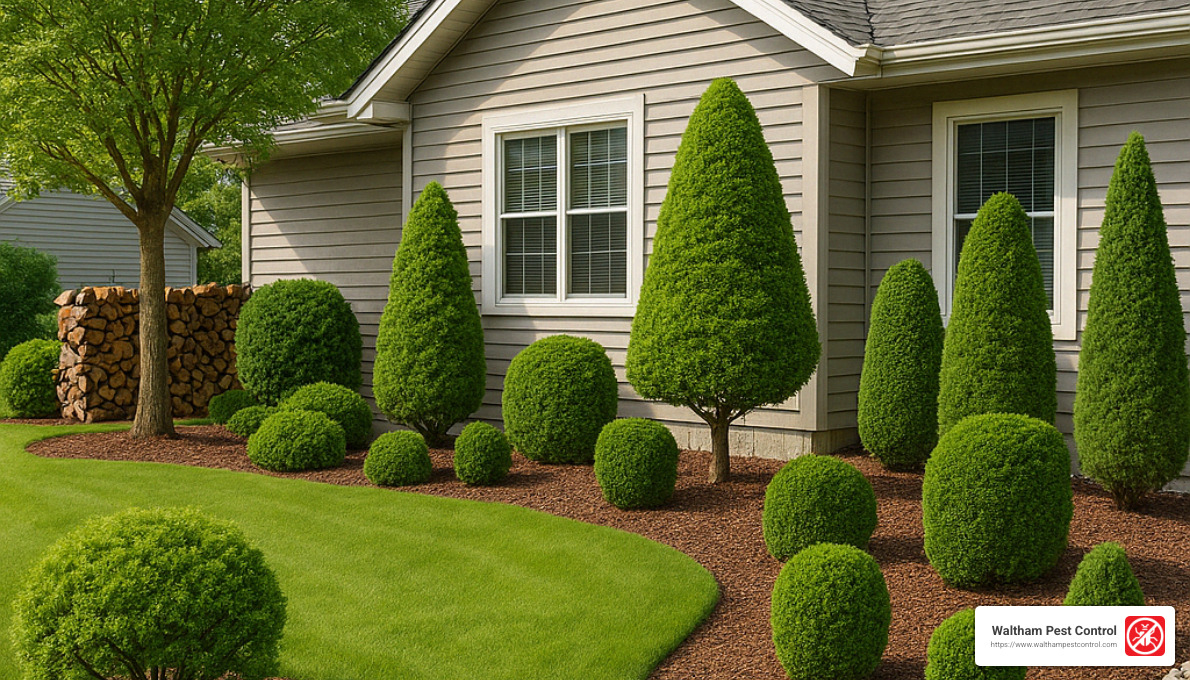
Next up: your landscaping. Trees and shrubs in contact with your home make a perfect bridge for climbing ants. Trimming branches and bushes so they don’t touch your house removes easy access paths. Got firewood? Ideally, store it at least 20 feet from your home, and make sure it’s lifted off the ground. Dead tree stumps or rotting wood on your property also invite carpenter ants, so removing these promptly is wise.
Mulch can be another troublemaker if it’s piled too close to your foundation. Try keeping mulch at least six inches away or consider swapping it for stone or rubber alternatives near your home’s foundation. Your home’s landscaping shouldn’t just look nice—it should work smartly to discourage unwanted outdoor pests like carpenter ants.
Sealing Entry Points
Did you know carpenter ants can slip through surprisingly small cracks? Think of them as tiny burglars looking for the easiest entry points. Sealing gaps around your windows, doors, foundation, and utility pipes makes it tougher for them to get in. Repair or replace damaged window screens, install door sweeps on exterior doors, and regularly inspect your home’s exterior for cracks or gaps. A little caulk and some weather-stripping can go a long way in preventing access.
Food Source Elimination
Carpenter ants are explorers, always on the hunt for food. If your home provides easy snacks, they’ll keep coming back for more. Make sure you promptly clean up any food spills and keep food stored securely in airtight containers. Don’t leave pet food bowls out overnight, and keep outdoor dining areas tidy. Regularly cleaning your garbage and recycling bins can also help deter these ants from making your home their favorite dining spot.
By combining moisture control, smart landscaping, sealing entry points, and removing food sources, you’re creating a powerful barrier against carpenter ants. Prevention is far easier (and cheaper) than dealing with an infestation later. And if you ever feel overwhelmed or unsure, our friendly experts at Waltham Pest Control are always here with advice and practical pest management solutions custom specifically for homeowners in Eastern Massachusetts.
Effective Solutions for Carpenter Ant Control
If you’ve spotted carpenter ants outside house walls, fences, or decks, prevention efforts may no longer be enough. At this stage, take targeted action to eliminate the infestation and protect your home.
Professional Pest Control Assessment
At Waltham Pest Control, we always begin with a detailed, professional inspection—because understanding the heart of the infestation is key. Our experienced technicians carefully evaluate the extent of carpenter ant activity, pinpointing both primary and satellite colonies. We’ll also identify how the ants are getting close to (or inside) your home, and highlight any conditions outside that attract these pests.
Our licensed specialists use special equipment and decades of expertise to locate nests that homeowners typically overlook. By accurately assessing the situation first, we ensure our treatments target the real source of your carpenter ant troubles—and not just the symptoms you see on the surface.
Non-Repellent Insecticide Applications
One of the most effective treatment methods we use is applying non-repellent insecticides. Unlike old-fashioned repellents that ants detect and simply avoid, these advanced treatments are invisible to carpenter ants. Workers will unknowingly pick up the insecticide while traveling along their trails, then carry it back to the colony. This clever solution ensures we get right to the core of the infestation.
During treatment, we focus carefully on known ant trails, the areas around your home’s foundation, entry points, and identified nesting sites. Our technicians also use crack-and-crevice applications to effectively target ants moving in and out of your home.
Baiting Strategies
Another smart approach is ant baiting, especially for nests that are tricky to reach directly. The key to successful baiting is understanding exactly what carpenter ants are craving at that time of year.
For instance, ants generally seek protein in springtime when colonies are growing, while sugary baits tend to be irresistible in the warmer summer months. We carefully select the best bait formulation based on seasonal ant behaviors. Gel baits can be precisely placed directly into tiny cracks, crevices, and along their favorite trails. Granular baits, meanwhile, work exceptionally well for targeting ants around your home’s perimeter.
As our lead technician often jokes, “Ants can be picky eaters—it’s our job to give them exactly what they want (even if it’s their last supper).”
Habitat Modification
Treating the ants themselves is crucial, but it doesn’t stop there. To prevent future problems, we help you address the conditions outside your house that attract carpenter ants in the first place.
We’ll advise you on removing decaying wood structures, correcting moisture issues around your home’s exterior, and sealing entry points that these pests might use. If your property has aging trees or damaged wood structures that could harbor colonies, we’ll help you identify and eliminate those risks, too.
By combining targeted treatments with smart habitat modifications, Waltham Pest Control delivers comprehensive, lasting results. Whether you’re in Burlington, Lexington, Cambridge, or anywhere else in Eastern Massachusetts, we’re here to help you reclaim your home and peace of mind from carpenter ants outside house perimeters.

Frequently Asked Questions about Carpenter Ants Outside House
When it comes to carpenter ants outside house perimeters, homeowners understandably have lots of questions. After all, spotting these busy insects crawling around can make anyone nervous. Let’s explore some of the most common questions we hear at Waltham Pest Control, and clear up any confusion once and for all.
How do I find a carpenter ant nest outside?
Finding carpenter ant nests outdoors can feel like detective work—but don’t worry, it’s easier than you think. First, pay attention to where you see ant activity. Carpenter ants are most active in the early evening and early morning, so these are great times for your ant-detecting trips. Following the workers back along their paths often leads straight to their nest.
Look closely at dead tree stumps, rotting fence posts, firewood piles, and hollow trees—these are prime nesting spots. Carpenter ants move wood debris and sawdust out of their tunnels, leaving behind little piles of what we call “frass.” Spotting frass is a big red flag that you’re close to a nest.
If you’re still unsure, try gently tapping on suspect wood surfaces. Believe it or not, you may hear a quiet rustling or chewing sound from inside—proof you’ve uncovered their secret hideout! Additionally, seeing winged ants (called swarmers) means there’s a mature colony nearby that’s ready to expand.
At Waltham Pest Control, our trained technicians use specialized equipment and decades of experience to quickly pinpoint hidden outdoor nests. We ensure no carpenter ant colony stays unnoticed for long!
What attracts carpenter ants to my property?
Carpenter ants are like most of us—they love comfort, food, and a nice place to settle down. One of their favorite attractions is moisture. Damp or water-damaged wood, from leaky pipes or poorly drained landscaping, practically invites them to move in.
They also appreciate easy access to food sources, from sugary snacks left outside after a family barbecue to proteins and pet food bowls. Carpenter ants don’t actually eat the wood—they tunnel through it for nesting, so they’ll actively forage for tasty treats.
Shelter matters, too. Dead trees, old stumps, landscape timbers, firewood piles, and even wood mulch near your home’s foundation are all appealing spots for colonies. They provide safe nesting habitats close to their next potential target—your house.
Finally, carpenter ants love convenient entry points. Overhanging tree limbs or bushes touching your house are like handy bridges right into your home. Even existing tunnels or galleries from previous ant damage make your property attractive to these pests.
The good news? By adjusting landscaping, addressing moisture issues, and sealing off entry spots, you can significantly reduce your property’s appeal to carpenter ants. Our experienced Waltham Pest Control team can help you identify these trouble spots easily.
Are carpenter ants more active at night?
Absolutely—carpenter ants are night owls! While they don’t strictly work only after dark, you’ll typically see them at their busiest between sunset and midnight. They prefer cooler, darker conditions to forage and build their nests.
This nighttime activity is one reason why many homeowners don’t notice the ants until the infestation is already substantial. When you finally do see carpenter ants during the daytime, it’s often a sign that the colony is large and established.
Here at Waltham Pest Control, we understand that nighttime activity can make early detection challenging. That’s why our inspections include assessments after dark. Our thorough approach helps us identify activity patterns you might miss during regular daytime checks, ensuring we catch and treat infestations before serious damage occurs.
Conclusion
Spotting carpenter ants outside house walls, fences, or landscaping might seem minor at first, but these little critters can quickly become big trouble if left unchecked. Outdoor ant colonies are often early warnings of moisture problems or hidden wood decay around your home. Ignoring them can mean inviting these industrious insects indoors, where they’ll gladly set up satellite nests and potentially cause costly structural damage.
At Waltham Pest Control, we know how quickly a small carpenter ant issue turns into a major headache (trust us—we’ve seen it all in our 40-plus years serving Eastern Massachusetts). That’s why we take a proactive approach. Our licensed pest control technicians carefully inspect your property, pinpointing the exact locations of carpenter ant nests and the factors attracting them. Then, we develop targeted treatments using advanced non-repellent insecticides and specialized baiting methods to effectively eliminate the colony at its source.
But controlling carpenter ants outside house perimeters isn’t just about knocking out an infestation—it’s about keeping them from coming back. Our team at Waltham Pest Control emphasizes practical prevention advice, like sealing entry points, managing moisture, and adjusting landscaping practices. Addressing these foundational issues doesn’t just keep carpenter ants away—it protects your home’s structural integrity for years down the road.
For homeowners in towns like Burlington, Cambridge, Lowell, and communities throughout Eastern Massachusetts, our team offers licensed, insured, and cost-effective pest management solutions custom to your specific needs. We’re proud of our reputation for quality, commitment, and friendly service—and we’re here when you need us most.
So, don’t wait until those carpenter ants decide your living room wall looks comfy. Early intervention saves you hassle (and money!) in the long run. If you’re concerned about carpenter ants outside house structures, reach out today. Our experienced team is just a click or call away, ready to help protect your home.

