

Carpenter Ants in Garden Bed: 1 Expert Guide.
Why Carpenter Ants in Your Garden Bed Matter
Carpenter ants in garden bed environments are a common concern for Massachusetts homeowners. These large, dark-colored ants can play both helpful and harmful roles in your outdoor spaces.
Quick Management Guide for Garden Carpenter Ants:
- Beneficial: Aerate soil, break down dead wood, eat pest insects
- Problematic: Protect aphids, may indicate nearby structural damage risk
- Key Warning: Ants travel up to 100 yards from nests – garden activity could mean home infestation
- Prevention: Keep mulch 12-18 inches from foundation, seal home entry points
- Action Needed: Call professionals if you see trails entering your home or find sawdust piles
The real question isn’t whether carpenter ants belong in your garden. It’s whether their presence signals a bigger problem lurking in your home’s structure.
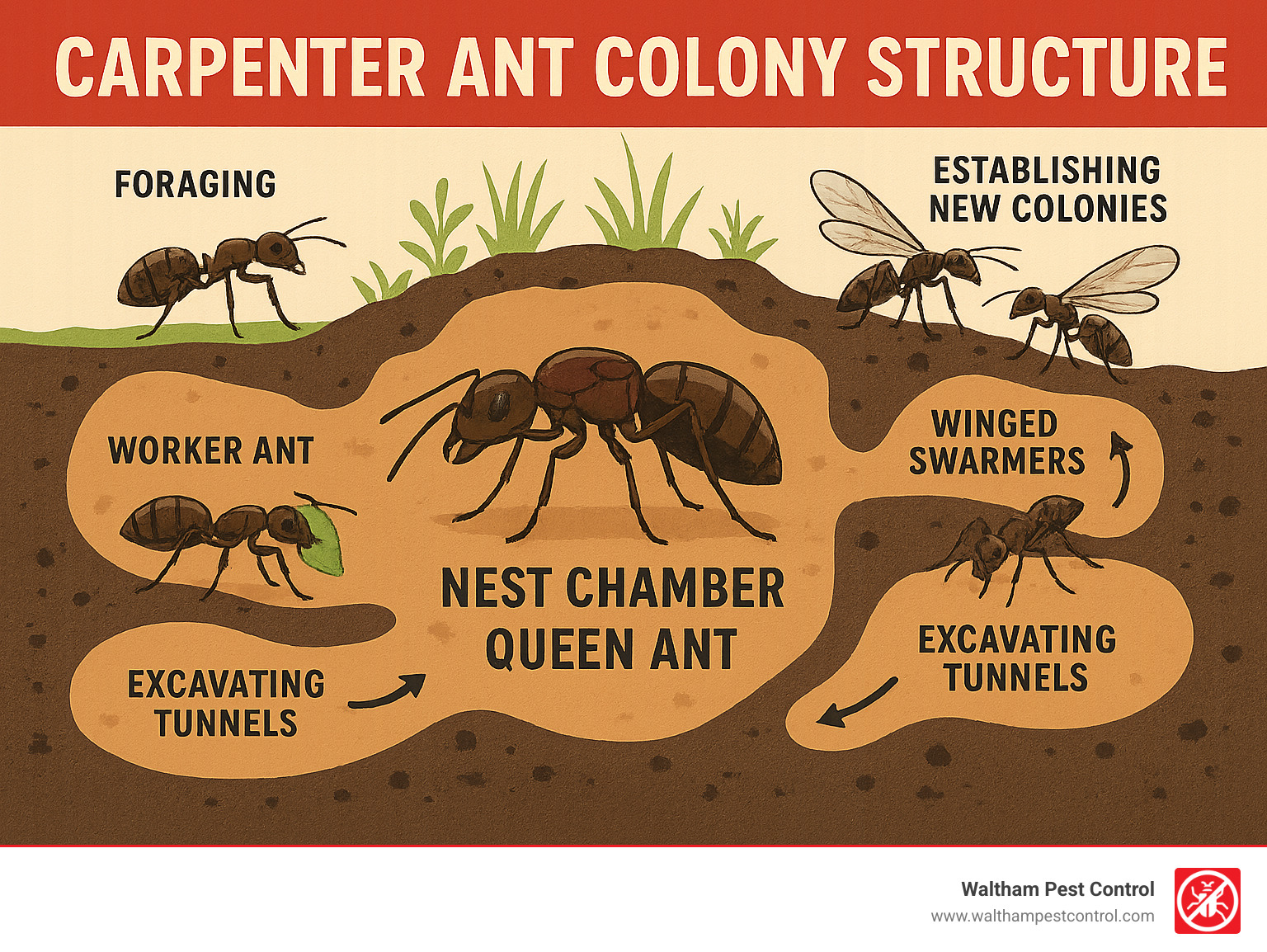
Unlike termites that eat wood, carpenter ants excavate galleries in moist, decaying timber to build their nests. They leave behind smooth tunnels and piles of sawdust called frass. A single colony can have satellite nests scattered across your property – from that old tree stump to your deck’s foundation.
Most ants in gardens are harmless and even beneficial. But carpenter ants are different. They’re scouts for potential structural damage to your most valuable investment: your home.
I’m Waltham Pest Control, President & CEO of Waltham Pest Control, and I’ve spent over 40 years helping Eastern Massachusetts homeowners understand the difference between beneficial garden insects and serious structural threats like carpenter ants in garden bed areas. This guide will help you identify when garden carpenter ants are just doing their job – and when they’re warning you about expensive damage ahead.
Must-know carpenter ants in garden bed terms:
Identifying Carpenter Ants and Understanding Their Behavior
How to identify carpenter ants in your garden bed
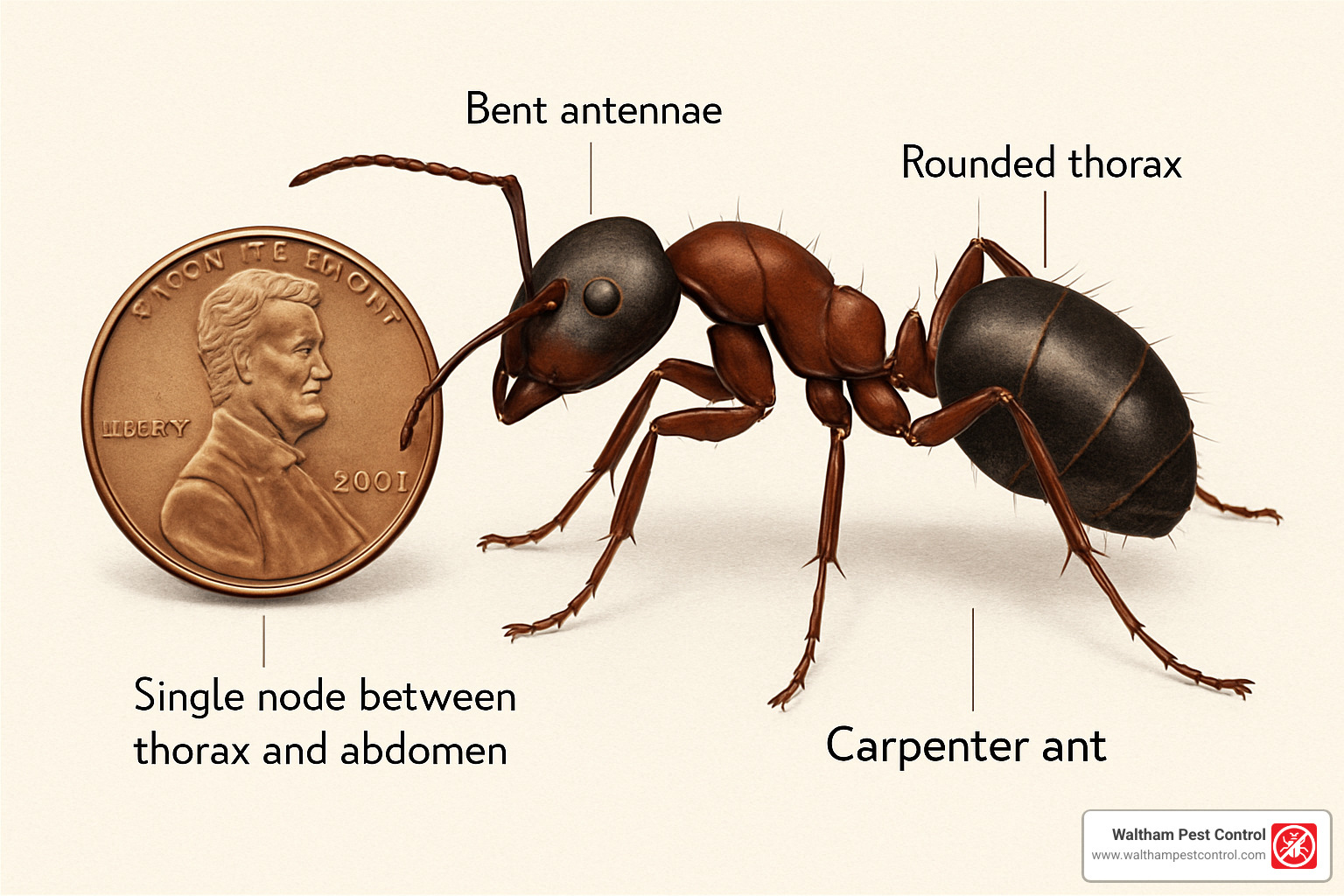
When you’re working in your garden and spot some unusually large ants, you might be looking at carpenter ants. These impressive insects are among the biggest ants you’ll find in Eastern Massachusetts – they measure between 1/4 to 1/2 inch in length, roughly the size of a small paper clip.
Carpenter ants in garden bed areas are typically black or reddish-black, though some species can be entirely red. What really sets them apart from other ants are their distinctive physical features.
The most reliable way to identify them is by their single node – that narrow waist connection between their thorax and abdomen. Unlike some other ant species that have two nodes, carpenter ants have just one. Their rounded thorax gives them a smooth, curved profile when viewed from the side.
Look for their bent antennae – they’re distinctly elbowed, which is different from termites’ straight antennae. You’ll also notice their large mandibles (jaws) that are strong enough to chew through wood, and their well-developed compound eyes that help them steer.
Here’s something interesting: pay attention to the company they keep. Carpenter ants often work alongside aphids in what’s essentially a farming operation – and this relationship can directly impact your plants’ health.
What Do Carpenter Ants Eat?
Let’s clear up a huge misconception right away: carpenter ants don’t actually eat wood. I know, I know – the name is misleading. Instead, they’re like tiny contractors who excavate galleries in moist, decaying wood to create their nests. They’re remodeling, not dining.
When carpenter ants tunnel through wood, they leave behind frass – a mixture of wood shavings and ant debris that looks like coarse sawdust. These tunnels are smooth and clean, quite different from the rough, mud-filled galleries that termites create.
So what do they actually eat? Their diet consists of protein and sugar sources. For protein, they hunt dead insects and small arthropods – making them helpful pest controllers in your garden. For their sweet tooth, they go after nectar from flowers and honeydew from aphids.
This aphid connection is where things get interesting for gardeners. Carpenter ants essentially “farm” aphids like tiny livestock, protecting them from predators like ladybugs in exchange for the sweet honeydew they produce. While this might seem harmless, it can lead to increased aphid populations that stress and damage your plants.
When carpenter ants venture indoors, they’ll seek out pet food, crumbs, and any sweet substances they can find. Understanding what they eat helps explain why they’re attracted to certain areas of your garden – and why they might be eyeing your kitchen.
Carpenter Ants vs. Termites: A Critical Distinction
This is where things get serious. Mixing up carpenter ants and termites can lead to the wrong treatment approach – and potentially thousands of dollars in damage.
| Feature | Carpenter Ants | Termites |
|---|---|---|
| Body Shape | Pinched waist (narrow connection between thorax and abdomen) | Broad waist (no narrow connection) |
| Antennae | Bent/elbowed | Straight |
| Wing Size | Front wings longer than back wings | All wings equal size |
| Wood Damage | Smooth, clean galleries | Rough galleries with mud/soil |
The body shape difference is the easiest to spot. Ants have a pinched waist – that classic “ant” silhouette we all recognize. Termites have a broad waist with no narrow connection between their body segments.
Ant antennae are bent at distinct angles, while termite antennae are straight as tiny arrows. If you see winged insects, check the wings: ants have different-sized front and back wings, but termite wings are all equal size.
The wood damage tells a different story too. Ant galleries are smooth and clean-looking, while termite galleries are rough and contain mud. More importantly, ants excavate but don’t consume wood, while termites actually eat it.
This distinction matters because treatment approaches are completely different. Carpenter ants need moisture control and nest elimination, while termites require specialized baiting systems and soil treatments. If you’re unsure what you’re dealing with, our guide on how to know if you have termites in Massachusetts can help you identify the key differences.
Getting this identification right the first time can save you both time and money in the long run.
The Role of Carpenter Ants in Your Garden Ecosystem
The Benefits: Nature’s Cleanup Crew
Here’s something that might surprise you: carpenter ants in garden bed environments actually do quite a bit of good work before they cause problems. These busy insects earn their keep as nature’s maintenance crew in several important ways.
Soil aeration happens naturally as carpenter ants tunnel through the ground and create their network of pathways. Think of them as tiny earthworms – their underground activity helps water and nutrients reach plant roots more effectively. Your garden soil becomes healthier and more productive thanks to their constant digging.
The decomposition process gets a major boost from carpenter ant activity. When they excavate galleries in rotting wood, fallen branches, and other organic matter, they’re essentially creating highways for fungi and bacteria to break everything down faster. That old tree stump becomes compost much quicker with their help.
Pest control is another valuable service these ants provide. Their appetite for protein means they’re constantly hunting down dead insects, small arthropods, and other garden pests. It’s like having a tiny cleanup crew working around the clock to keep unwanted visitors in check.
As gardening experts note, even carpenter ants can be beneficial in the garden or flower beds. They rarely damage healthy, living plants directly and generally help maintain the natural balance that keeps gardens thriving.
The Drawbacks: When Good Ants Go Bad
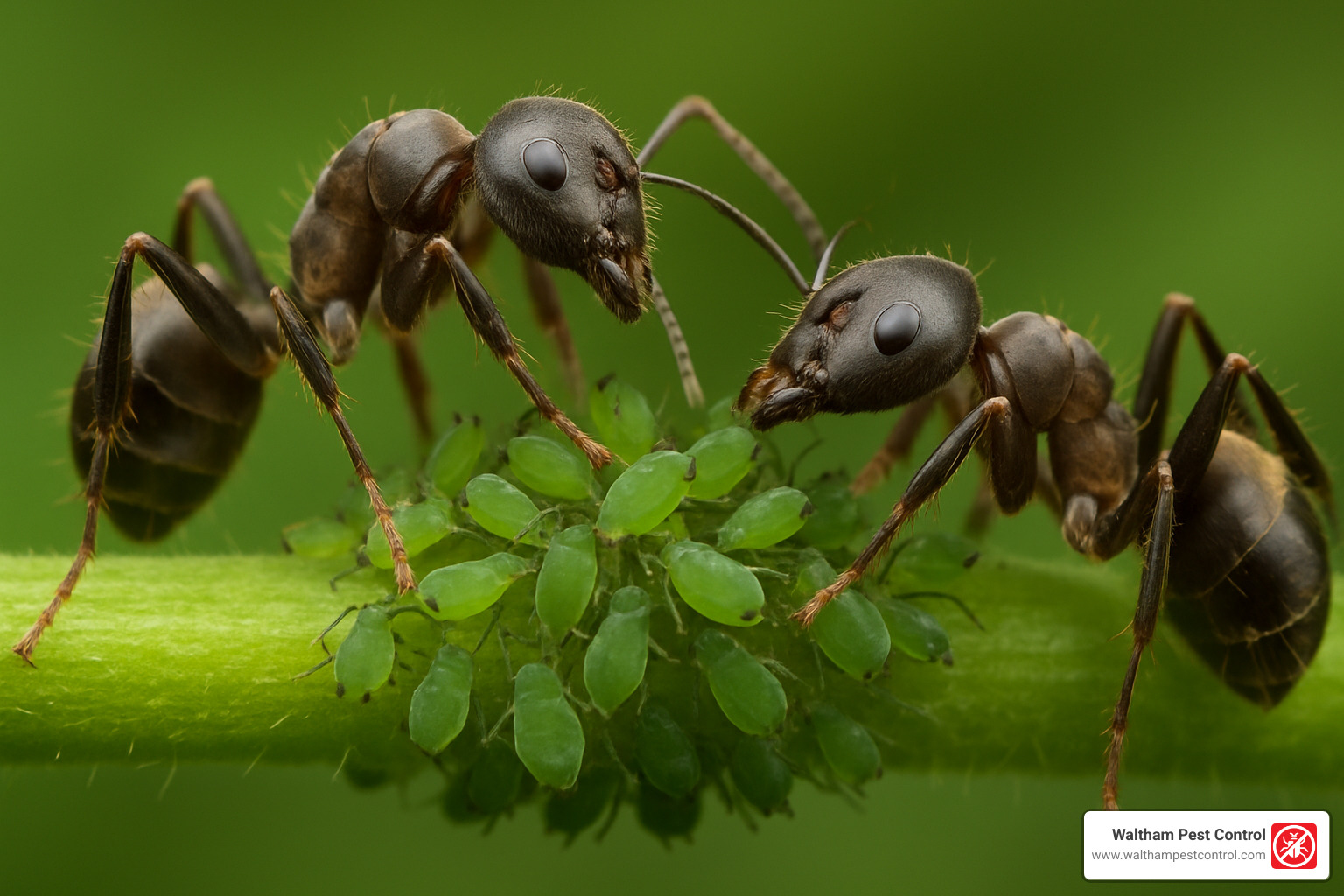
Unfortunately, carpenter ants have a serious character flaw that can turn them from garden helpers into garden villains. The problem lies in their relationship with aphids – and it’s not what you’d call healthy.
Aphid farming is exactly what it sounds like, and carpenter ants are surprisingly good at it. They don’t just tolerate these sap-sucking pests – they actively protect and manage them like livestock. The ants get sweet honeydew in return, while the aphids get bodyguard service against their natural enemies.
This protection racket creates increased aphid populations that can devastate your plants. Without ladybugs, lacewings, and other beneficial insects to keep them in check, aphid colonies explode in size. These tiny vampires drain nutrients from your plants and can even spread diseases from one plant to another.
Sooty mold growth becomes a real problem when aphid populations get out of control. All that excess honeydew creates perfect conditions for black, sticky mold to coat your plants’ leaves and stems. This blocks sunlight and interferes with photosynthesis – essentially suffocating your plants.
The disrupted natural predation is perhaps the most frustrating aspect. Carpenter ants will chase away the very insects that would normally solve your aphid problem. It’s like having a security guard who protects the burglars and kicks out the police.
Research shows that humans aren’t the only ones who farm animals – ants have been perfecting this technique for millions of years, often at the expense of gardeners trying to grow healthy plants.
Managing Carpenter Ants in Your Garden Bed: Risks and Prevention
The Real Risk: From Garden to Home
When you spot carpenter ants in garden bed areas, the real concern isn’t what they’re doing to your petunias. It’s what their presence might mean for your home’s wooden structure.
Here’s the unsettling truth: carpenter ants are incredible travelers. A single worker ant can forage up to 100 yards from its nest while searching for food. That means the ants marching through your garden bed could be living in your home’s walls, floor joists, or roof timbers.
Even more concerning, carpenter ants often establish satellite nests throughout your property. Think of these as branch offices of the main colony. One day they’re tunneling through that old tree stump near your garden. The next, they’ve moved into the moisture-damaged wood around your bathroom window.
Proximity is the main concern when it comes to carpenter ants. These industrious insects are naturally drawn to moisture-damaged wood in houses – exactly the kind of expensive structural damage that keeps homeowners awake at night.
Your garden bed might harbor satellite nests in landscape timbers, mulch piles, or decorative wood features. Meanwhile, the parent nest could be quietly excavating galleries in your home’s structure. The U.S. Forest Service research confirms that the issue with carpenter ants nests in your trees is that they could expand into your home.
Proactive Prevention: Your First Line of Defense
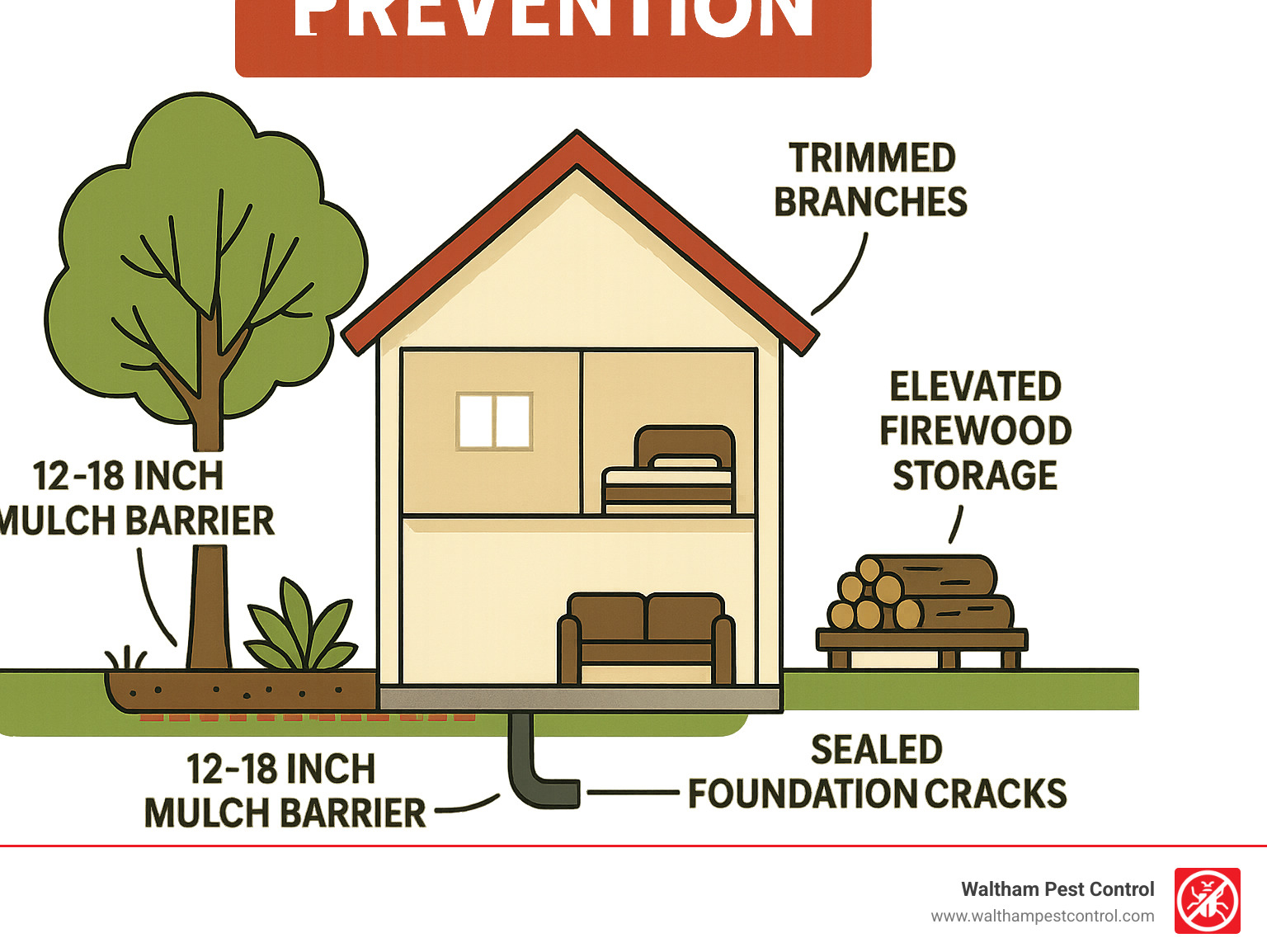
The good news? You can take meaningful steps to protect both your garden and your home from carpenter ant invasion. Prevention is always less expensive than dealing with structural damage later.
Create a barrier between your garden and your home’s foundation. This simple step can dramatically reduce your risk. Keep mulch and soil at least 12-18 inches away from your foundation walls. Use stone, gravel, or concrete as a buffer zone instead.
Seal cracks and openings in your foundation, especially around utility penetrations like pipes and cables. Carpenter ants can squeeze through surprisingly small gaps, so thorough sealing is essential.
Trim tree branches and shrubs so they don’t touch your house. These create convenient highways for foraging ants to reach your home’s structure.
Fix leaky outdoor faucets and ensure proper drainage around your property. Moisture is like a neon sign advertising “prime real estate” to carpenter ants. Clean your gutters regularly and improve ventilation in crawl spaces.
Store firewood off the ground and away from the house – at least 20 feet if possible. That cozy woodpile against your garage wall is essentially a carpenter ant hotel with room service.
For more seasonal protection strategies, our spring pest control checklist provides comprehensive guidance for year-round prevention.
Why Professional Carpenter Ant Control is Recommended
While you might be tempted to tackle carpenter ants yourself, these aren’t your average garden-variety pests. Carpenter ant colonies are complex social structures with multiple nests connected by invisible trail systems that can span your entire property.
Professional inspection and treatment provide the most effective, long-term control because we understand how these colonies actually function. DIY methods are often limited in effectiveness and may not address the root of the problem.
At Waltham Pest Control, our licensed and insured technicians can identify nests you’d never find on your own. We use specialized equipment like moisture meters and thermal imaging to locate hidden colonies. More importantly, we can assess your property’s risk factors and provide targeted solutions that prevent future infestations.
Effective carpenter ant control requires more than just spraying visible ants. We need to eliminate the entire colony structure while addressing the moisture and structural conditions that attracted them in the first place.
Our 40+ years of experience in Eastern Massachusetts means we’ve seen every type of carpenter ant challenge this region can throw at homeowners. We don’t just treat the immediate problem – we help you create a long-term defense strategy that protects your most valuable investment.
When to Call a Professional for Carpenter Ant Control
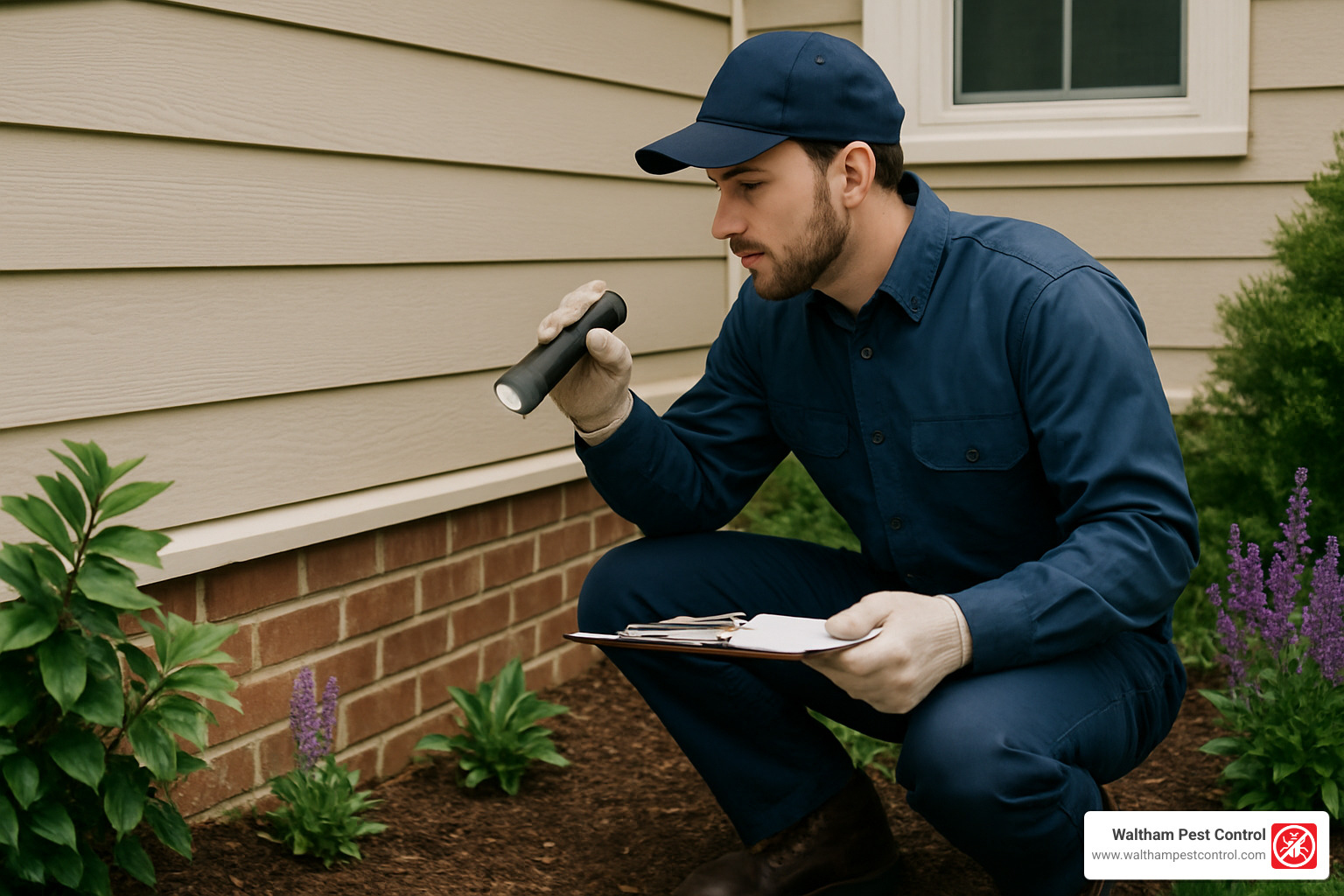
The moment you spot carpenter ants in garden bed areas, you might wonder if it’s time to call in the professionals. While a few ants exploring your mulch isn’t necessarily cause for panic, certain warning signs demand immediate expert attention.
Trails entering your home are the biggest red flag. When you see consistent streams of carpenter ants marching between your garden and house, they’ve likely established a highway between satellite nests and your home’s structure. This isn’t casual exploration – it’s organized colonization.
Finding frass inside your home changes everything. Those small piles of sawdust-like material along foundation walls or in corners mean carpenter ants are actively excavating wood somewhere in your structure. Unlike outdoor frass that’s part of natural decomposition, indoor frass signals structural damage in progress.
Winged ants emerging from inside your home indicate a mature, established colony. These reproductive swarmers only emerge when a colony is ready to expand. If they’re coming from inside your house rather than your garden, the main nest is likely in your walls or foundation.
The subtle rustling sounds in walls at night often puzzle homeowners. That faint crackling or scratching you hear when the house is quiet? It could be carpenter ants chewing through wood inside your walls. These sounds are most noticeable during their peak activity hours after dark.
DIY methods failing after several weeks of consistent application is another clear signal. Store-bought ant baits and sprays rarely address the complex colony structure that carpenter ants maintain. If your garden ant population keeps growing despite your best efforts, it’s time for professional intervention.
Locating the nest proves difficult for most homeowners. Carpenter ants are masters of concealment, often maintaining multiple connected nests across your property. Professional technicians use specialized equipment like moisture meters and thermal imaging to pinpoint hidden colonies.
Our experienced team at Waltham Pest Control has the tools and expertise to address these complex situations effectively. We don’t just treat the ants you see – we eliminate the entire colony structure.
What Does Professional Carpenter Ant Service Cost?
Professional carpenter ant treatment costs vary significantly based on your specific situation. Average costs for professional carpenter ant treatment can range from $150 to $500 for a single visit, with more extensive infestations or larger properties sometimes costing $1,500 or more. These are average prices based on internet data and not actual costs for Waltham Pest Control.
Property size and complexity greatly influence treatment costs. A small ranch home with a single satellite nest requires different resources than a large colonial with multiple structures and extensive landscaping.
Infestation severity affects both treatment complexity and follow-up requirements. Early-stage problems with garden activity cost less to address than established colonies with structural damage.
Multiple treatment locations across your property require more time and materials. If carpenter ants have established nests in your garden beds, deck, and home foundation, comprehensive treatment becomes more involved.
The structural repairs needed after carpenter ant damage can significantly impact overall costs. While pest control eliminates the ants, damaged wood may require professional carpentry work.
For an accurate quote custom to your specific situation, contact Waltham Pest Control directly. Our licensed technicians provide thorough inspections and detailed treatment plans with transparent pricing – no surprises or hidden fees.
Frequently Asked Questions about Garden Carpenter Ants
Will carpenter ants in my raised garden bed damage the wood?
Yes, carpenter ants in garden bed structures can definitely weaken your raised beds over time, especially if the wood is damp or starting to decay. Here’s what many gardeners don’t realize: while these ants don’t actually eat wood like termites do, they’re incredibly efficient at excavating galleries for their colonies.
The damage develops gradually but steadily. You’ll first notice smooth, clean holes appearing in the wood surface – these are the entrance points to their tunnel systems. Unlike the rough, muddy galleries that termites create, carpenter ant tunnels are surprisingly neat and organized.
Piles of coarse sawdust (called frass) will start appearing near your raised bed structure. This mixture of wood shavings and ant debris is a dead giveaway that carpenter ants have moved in. When you tap the wood, it may sound hollow in areas where extensive tunneling has occurred.
Over months and years, this excavation activity weakens the structural integrity of your raised beds. The wood becomes more susceptible to breaking under the weight of soil and water, especially during freeze-thaw cycles in Massachusetts winters.
To protect your investment, choose naturally rot-resistant woods like cedar or redwood for raised beds. Ensure proper drainage around the structure and maintain a barrier between the wood and direct soil contact.
Can carpenter ants kill my vegetable plants?
Carpenter ants rarely kill plants directly – they’re not interested in munching on your tomatoes or lettuce. However, they can contribute to serious plant stress and damage through their fascinating but problematic relationship with aphids.
Think of carpenter ants as protective farmers who tend aphid “livestock.” They actively shield these sap-sucking pests from natural predators like ladybugs and lacewings. In exchange, the aphids provide sweet honeydew that the ants crave.
This protection allows aphid populations to explode far beyond what would naturally occur. Large aphid colonies can drain plant nutrients through excessive sap feeding, leading to yellowing leaves, wilting, and stunted growth. Even worse, aphids can transmit plant viruses and diseases as they move from plant to plant.
The excess honeydew from massive aphid colonies creates another problem: sooty mold development. This black, sticky substance coats leaves and stems, blocking sunlight and interfering with photosynthesis.
The good news? Managing carpenter ants often leads to natural aphid population reduction. Once the ants are gone, beneficial predators return to the area and restore the natural balance that keeps aphid numbers in check.
Is one carpenter ant a sign of an infestation?
Spotting a single carpenter ant in your garden doesn’t necessarily mean you have an infestation – it could simply be a lone scout exploring for food sources. However, the frequency and location of your sightings tell the real story.
Daily sightings of multiple carpenter ants suggest established colony activity rather than random foraging. Pay attention to timing too – carpenter ants are most active between sunset and midnight, so evening garden visits might reveal more activity than daytime observations.
Location matters significantly. Ants near moisture sources or wooden structures are more concerning than those wandering across open lawn areas. Large, purposeful ants following specific trails indicate organized colony behavior rather than casual exploration.
The real warning sign is seeing carpenter ants inside your home. Garden activity combined with indoor sightings strongly suggests a nearby nest that requires professional attention.
If you’re consistently seeing carpenter ant activity in your garden bed, it’s worth having a professional inspection to determine whether there’s an established colony on your property. Early detection can prevent both garden damage and potential structural issues with your home.
Conclusion: Protect Your Garden and Your Home
Carpenter ants in garden bed environments are more than just a gardening curiosity – they’re nature’s early warning system for potential problems with your home’s structure. Throughout this guide, we’ve explored how these impressive insects can be both helpful garden allies and concerning structural threats.
The reality is that carpenter ants don’t respect property boundaries. When you spot them in your garden bed, they’re likely part of a larger colony network that could extend all the way to your home’s foundation, deck, or even interior walls. With their ability to travel up to 100 yards from their main nest, those ants tunneling through your mulch today could be scouting tomorrow’s satellite colony in your home.
Prevention and monitoring are your most powerful tools. Creating that crucial 12-18 inch barrier between your garden beds and foundation, sealing entry points, and managing moisture around your property can stop carpenter ant problems before they become expensive structural repairs. These simple steps protect both your garden ecosystem and your most valuable investment.
But here’s what four decades of pest control experience has taught me: once carpenter ants establish themselves, professional intervention becomes essential. DIY methods might reduce the ants you can see, but they rarely address the complex colony structure hidden beneath the surface. The smooth galleries these ants excavate, the satellite nests they establish, and the moisture conditions they seek require specialized knowledge and professional-grade treatments.
At Waltham Pest Control, our licensed and insured technicians understand the unique challenges that Eastern Massachusetts homeowners face with carpenter ants. We’ve seen how quickly garden activity can escalate into serious structural concerns, and we know how to stop that progression effectively.
The good news? Early detection and professional management can save you thousands in repair costs while preserving the beneficial aspects of a healthy garden ecosystem. You don’t have to choose between a thriving garden and a protected home – you can have both with the right approach.
Don’t wait until you’re hearing rustling sounds in your walls or finding piles of sawdust in your basement. Those carpenter ants in garden bed areas are telling you something important about your property’s vulnerability.
For a comprehensive carpenter ant inspection and treatment plan, contact us today. Our team serves communities throughout Middlesex County, Essex County, Norfolk County, and the Merrimack Valley with quality, cost-effective pest management solutions custom to your specific needs.
Remember: carpenter ants in your garden bed aren’t just a gardening issue – they’re a home protection priority.
