

Can Termites Fly? 7 Shocking Facts to Know in 2024
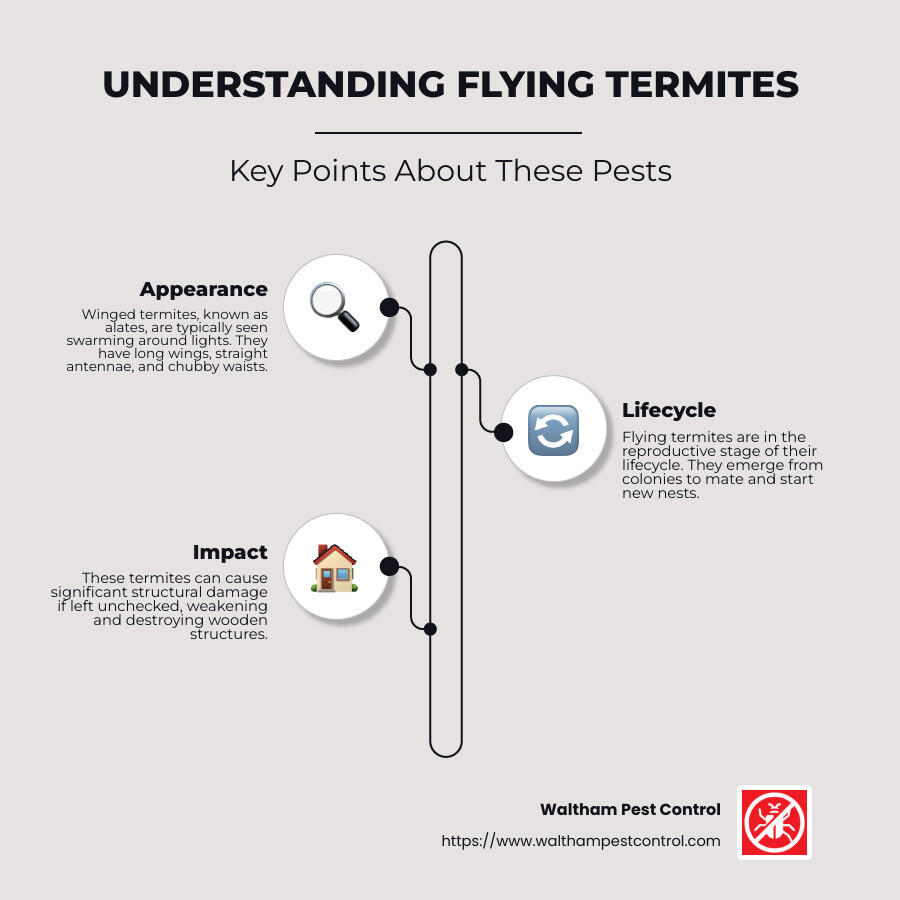
Can termites fly? Yes, termites can indeed fly, but only in one particular stage of their lifecycle. Known as alates or swarmers, these winged reproductive termites emerge from their colonies to mate and establish new nests. If you spot flying termites around your property, it’s a red flag for a potential infestation.
Here are the key points you need to know:
- Flying termites are typically seen when their colonies are swarming.
- These termites can cause significant structural damage if left unchecked.
- A mature termite colony could already be causing serious damage to your home.
Flying termites are a homeowner’s nightmare for a good reason. These pests can eat your home from the inside out while leaving the outer shell intact. This allows termite infestations to go unnoticed for years until severe damage has already been done. That’s why it’s crucial to understand what you’re dealing with and take immediate action to prevent costly repairs.
I’m Waltham Pest Control, President & CEO of Waltham Pest Control, with over 40 years of experience tackling termite infestations. My expertise can help you understand and combat this destructive pest. Let’s dive deeper into how flying termites can affect your home.
Can termites fly terminology:
– are termites attracted to light
– how do pest control companies treat for termites
– how to choose a termite control company
What Do Flying Termites Look Like?
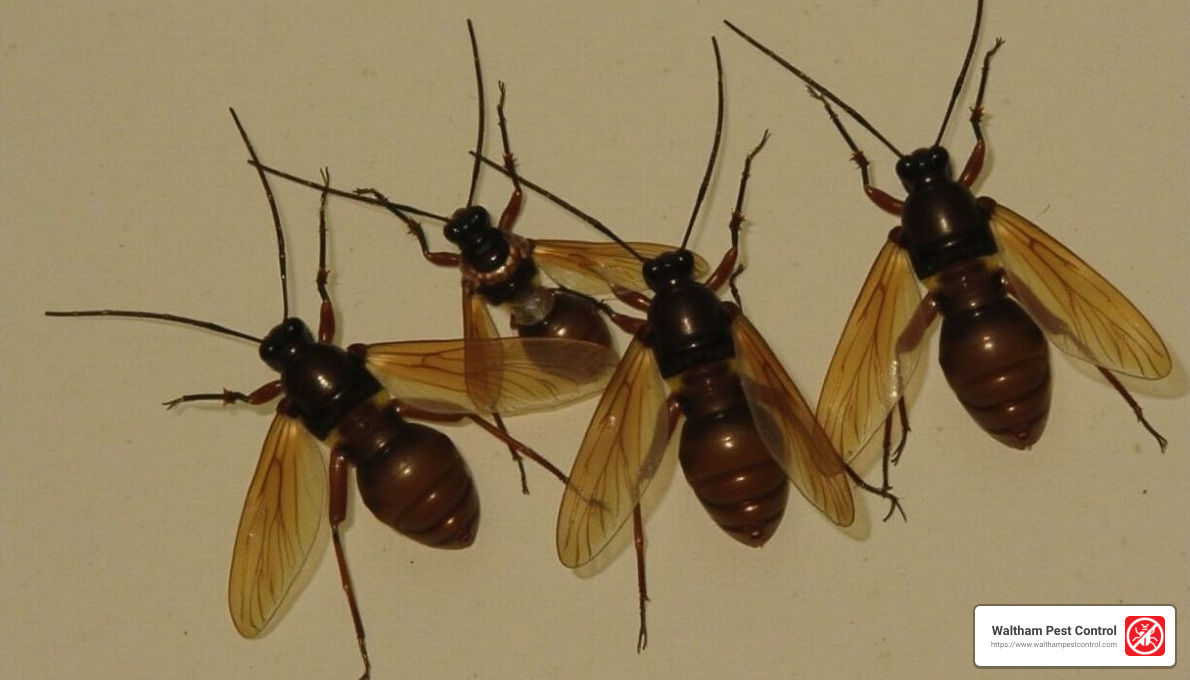
Flying termites, also known as alates, have some distinct features that make them easy to identify. Here’s what you should look for:
Size
Flying termites can range in size from 1/4 to 3/8 of an inch. This size varies depending on the species, but generally, they are small enough to go unnoticed until you see a swarm.
Color
The color of flying termites can differ based on their species. While worker termites are usually light in color, flying termites can be:
– Light in color
– Dark brown
– Black
The darker color helps them retain moisture, which is crucial for their survival outside the nest.
Wings
One of the most noticeable features of flying termites is their wings. They have four wings of equal size. These wings are typically translucent and may have a slight sheen. After their mating flight, the alates shed their wings, which you might find around windowsills or other entry points in your home.
Antennae
Flying termites have straight antennae that resemble tiny beads strung together. This is a key difference from ants, whose antennae are bent at a 90-degree angle.
Chubby Waists
Unlike ants, termites have a broad, straight-sided waist. This chubby appearance is another distinguishing feature that can help you identify them correctly.
Now that you know what flying termites look like, it’s easier to spot them before they cause significant damage. If you notice these pests around your property, it’s time to take action.
Can Termites Fly?
Yes, termites can fly, but only during a specific phase of their life cycle. These flying termites are known as alates. They are the reproductive members of the termite colony and have wings, unlike the worker and soldier termites.
Why Do Flying Termites Enter Homes?
Flying termites, or alates, have a very specific job: to start new nests. During the swarming phase, which typically occurs in the spring or summer, these winged termites emerge from their colonies in large numbers. Their primary goal is to find a mate and establish a new colony.
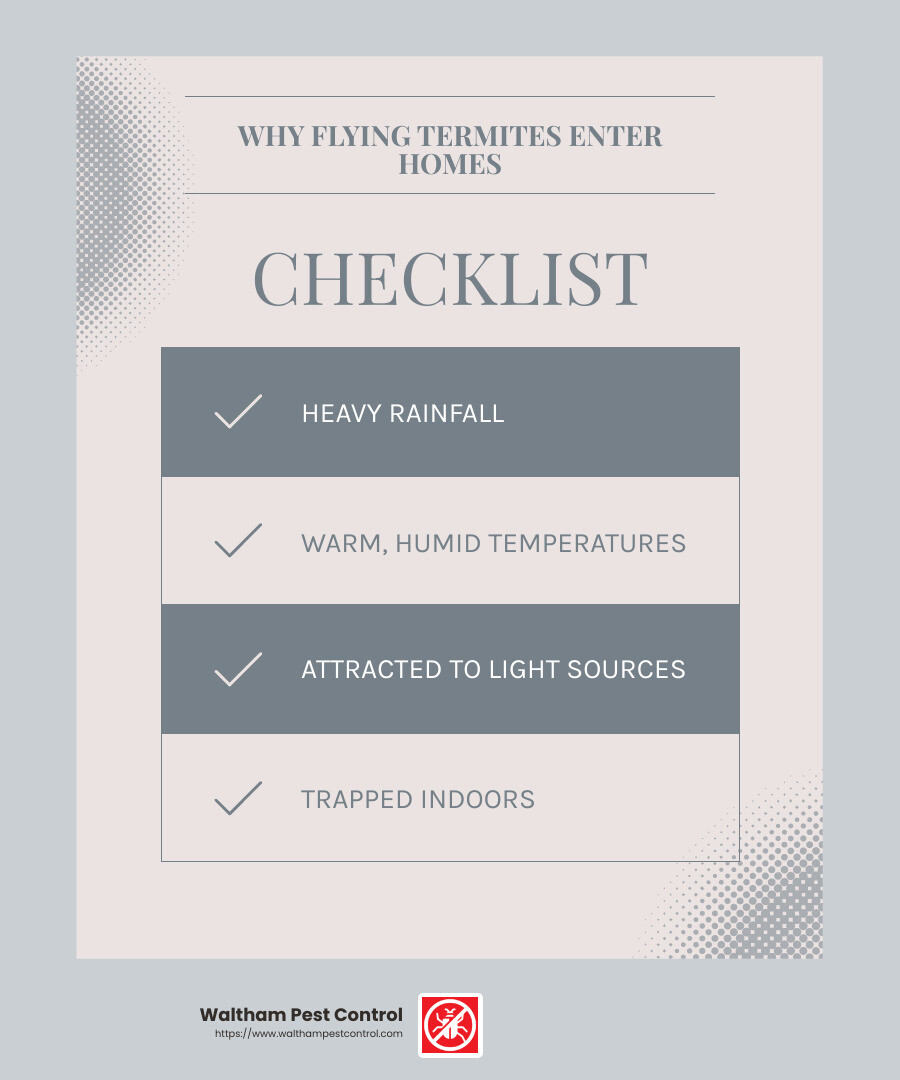
Several factors can trigger a termite swarm, including:
- Heavy rainfall
- Warm, humid temperatures
Once they leave their nest, male and female alates pair up, shed their wings, and burrow into the ground to start a new colony.
Why are they in my house?
Flying termites often enter homes because they are attracted to light. You might find them near windows, doors, or other light sources as they try to escape. Sometimes, they get trapped indoors and fly around looking for an exit.
How Far Can Termites Fly?
Termites are not strong fliers. Once they leave their original colony, they usually only fly a few yards before landing. Their flight is limited and they often rely on wind to help them travel longer distances. After landing, they quickly shed their wings and begin the process of starting a new colony.
Swarming triggers like heavy rainfall and warm temperatures can cause large numbers of alates to take flight simultaneously, making it more likely you’ll see them around your home.
If you notice flying termites or their shed wings around your property, it’s a sign of a nearby termite colony. Immediate action is advisable to prevent potential damage.
Now that you understand why termites fly and how far they can travel, it’s crucial to know how to differentiate them from other pests. Let’s explore the differences between flying termites and flying ants.
Differences Between Flying Termites and Flying Ants
Flying termites and flying ants are often mistaken for each other, but there are clear differences that can help you tell them apart. Knowing these differences is crucial for proper pest control.
Appearance
Flying Termites:
– Color: Typically light in color, but can also be dark brown or black.
– Size: Range from 1/4 to 3/8 of an inch.
Flying Ants:
– Color: Varies widely, from black to combinations of red, orange, yellow, and brown.
– Size: Generally between 1/8 to 1/2 inch long.
Waist Shape
Flying Termites:
– Waist: Broad and straight, giving them a more uniform, chubby appearance.
Flying Ants:
– Waist: Pinched and narrow, creating a distinct separation between the thorax and abdomen.
Wing Length
Flying Termites:
– Wings: Four wings of equal length that extend far beyond their bodies.
Flying Ants:
– Wings: Two sets of wings, with the front pair being longer than the back pair.
Antennae
Flying Termites:
– Antennae: Straight and slightly curved, without any bends.
Flying Ants:
– Antennae: Bent at 90-degree angles, with several bend points.
Quick Comparison
| Feature | Flying Termites | Flying Ants |
|---|---|---|
| Color | Light, dark brown, black | Black, red, orange, brown |
| Waist | Broad, straight | Pinched, narrow |
| Wing Length | Equal wings | Unequal wings |
| Antennae | Straight | Bent |
Understanding these differences can help you identify whether you’re dealing with termites or ants, which is essential for choosing the right treatment method.
Next, let’s explore the signs of a termite infestation and what to look out for in your home.
Signs of a Termite Infestation
Spotting a termite infestation early can save you from costly repairs. Here are some key signs to watch for:
Swarms
Flying Termites: The sudden appearance of flying termites, or alates, is a major red flag. These winged insects emerge from mature colonies to mate and start new ones. If you see a swarm, it means there’s a mature colony nearby, often within your home.
Case Study: A homeowner in Southern California noticed a swarm of flying termites near a window. Upon inspection, it was revealed that a mature colony had been feasting on the wooden framing inside the walls for years.
Shed Wings
Shed Wings: After mating, flying termites shed their wings. Finding these discarded wings around windowsills, doorways, or other entry points is a strong indicator of a termite presence.
Fact: Termites shed their wings after mating, which can leave behind piles of wings as a telltale sign of infestation.
Mud Tubes
Mud Tubes: Termites build pencil-width mud tubes to travel from their colony to their food source. These tubes protect them from predators and maintain the moisture they need.
How to Spot: Look for these tubes around your home’s foundation or in crawl spaces. Break open a tube to see if termites are actively using it.
Wood Damage
Wood Damage: Termites eat wood from the inside out, leaving the exterior intact. This makes the damage hard to notice until it’s severe.
Signs:
– Hollow-sounding wood: Tap on wooden structures. If it sounds hollow, termites might have eaten the interior.
– Faint lines: Look for maze-like lines on wood surfaces, a sign of termite tunnels.
Quote: “Termite infestations can go on for years until the damage reveals itself through evidence of mud tubes, cracks, or collapse of the building’s wood.”
Cracks
Cracks: Termite activity can cause tiny cracks in your walls, ceilings, and woodwork. These cracks are often a result of the structural damage termites cause as they chew through wood.
Checklist:
– Check for cracks in wooden beams and supports.
– Look for small holes or crevices in drywall or plaster.
Fact: Termites create tiny pinholes as a way to exit walls and move out of their colonies.
Understanding these signs can help you detect a termite infestation early, saving you from extensive damage. Next, we’ll dive into how serious flying termites can be and the potential damage they can cause.
How Serious Are Flying Termites?
Flying termites, also known as alates, are more than just a nuisance. They are a sign of a mature termite colony nearby. Here’s why that’s a big deal:
Colony Maturity
A termite colony takes about three to six years to mature. During this time, the colony grows large enough to produce alates. Spotting flying termites means there’s a well-established colony, possibly with thousands of termites, already at work.
Fact: Colonies can have between 50,000 to 250,000 termites. That’s a lot of potential damage!
Wood Damage
Termites eat wood from the inside out. They prefer the soft interior parts, leaving a thin outer shell. This makes the damage hard to notice until it’s severe.
Signs of Damage:
– Hollow-sounding wood: Tap on wooden structures. If it sounds hollow, termites might have eaten the interior.
– Maze-like lines: Look for faint lines on wood surfaces, a sign of termite tunnels.
Quote: “These worker stage termites eat the soft interior portions of wooden supports and other wooden building components, while leaving the wood’s outer shell intact.”
Costly Repairs
Termite damage can be expensive to fix. The longer the infestation goes unnoticed, the more extensive and costly the repairs.
Statistics:
– Termite damage costs homeowners in the U.S. billions of dollars each year.
– Repairs can range from a few hundred to several thousand dollars, depending on the extent of the damage.
Case Study: A homeowner in Southern California faced thousands of dollars in repairs after ignoring early signs of termite activity. The termites had been feasting on the wooden framing inside the walls for years.
Structural Integrity
Termites can compromise the structural integrity of your home. They weaken wooden supports, beams, and even floors, which can lead to serious safety issues.
Checklist:
– Check for sagging floors or ceilings.
– Look for cracks in wooden beams and supports.
– Inspect for small holes or crevices in drywall or plaster.
Fact: Termites create tiny pinholes as a way to exit walls and move out of their colonies. These holes can weaken the overall structure of the building.
Understanding the seriousness of flying termites can help you take swift action. Next, we’ll explore how to get rid of these pests and protect your home from further damage.
How to Get Rid of Flying Termites
DIY Methods and Professional Help
When it comes to getting rid of flying termites, there are two main approaches: DIY methods and professional help. Both have their pros and cons, but understanding when to use each is key.
DIY Tactics
For minor infestations or as a temporary measure, you can try some DIY methods:
- Vacuum Them Up: Use a vacuum to remove visible flying termites. This is a quick way to reduce their numbers indoors.
- Seal Entry Points: Check for and seal any cracks or gaps in windows, doors, and foundations to prevent more termites from entering.
- Light Traps: Since termites are attracted to light, set up light traps near windows or other entry points to catch them.
Note: DIY methods are only short-term solutions. They can help manage the problem temporarily but won’t eliminate the root cause.
Professional Extermination
For a more permanent solution, professional extermination is the way to go. Here’s why:
- Thorough Inspection: Pest control specialists conduct a comprehensive inspection to identify the extent of the infestation. They look for signs like mud tubes, wood damage, and swarmers.
- Customized Treatment Plans: Professionals create a custom treatment plan based on the severity and location of the infestation. This often includes applying an odorless, non-repellant liquid to the soil around your home’s foundation.
- Long-Term Solutions: The liquid treatment used by professionals is undetectable by termites. As they tunnel through the treated soil, they carry the treatment back to the colony, effectively eliminating it.
Fact: This type of treatment doesn’t require termites to find and eat bait. They just have to come into contact with the treated soil.
Why Choose Waltham Pest Control?
At Waltham Pest Control, we offer a comprehensive termite treatment program. Our services include:
- Expert Inspection: We identify the extent of termite damage and locate the colony.
- Effective Treatment: Using the latest in termite control technology, we ensure the complete elimination of the termite colony.
- Preventive Measures: We provide tips and treatments to prevent future infestations.
Case Study: A homeowner in Greater Boston noticed flying termites near a window. After contacting Waltham Pest Control, our specialists conducted a thorough inspection, found the colony, and applied a liquid treatment. Within weeks, the termite problem was resolved, saving the homeowner thousands in potential damage.
Quote: “Termites are hungry little beasts that can eat your home from the inside out. Waltham Pest Control is a termite infestation’s worst enemy!”
Checklist for Homeowners:
– Schedule an annual inspection.
– Keep firewood and mulch away from the foundation.
– Seal cracks and gaps in your home’s exterior.
By combining DIY tactics for immediate relief and professional services for long-term solutions, you can protect your home from the destructive power of flying termites.
Next, we’ll dive into frequently asked questions to address common concerns about flying termites.
Frequently Asked Questions about Flying Termites
Should I Worry if I See Flying Termites?
Yes, you should be concerned. Flying termites, also known as swarmers or alates, are a sign of a mature termite colony nearby. Their presence indicates that termites are looking to establish new colonies, which can lead to significant structural damage if left unchecked. According to Waltham Pest Control, finding even a few flying termites indoors often means a colony is already active, posing a risk to your property.
Can Flying Termites Bite Humans?
No, flying termites do not bite humans. Their primary role is reproduction and establishing new colonies. While they might look intimidating, they don’t have the capability to bite or sting. Their focus is on finding a mate and starting a new nest, not on human interaction.
Do Flying Termites Eat Wood?
Yes, but not directly. Flying termites themselves don’t eat wood. However, once they shed their wings, they lose their ability to fly and become the reproductive members of a new colony. The workers in these colonies are the ones that consume wood, causing damage to homes and other wooden structures. They feed on cellulose found in wood, plants, and even paper, leading to potential structural damage over time.
For more detailed information and professional help, always consult with a pest control specialist like Waltham Pest Control.
Conclusion
When it comes to termite control, early detection and prevention are crucial. Flying termites are a clear sign of a potential infestation, and their presence should not be ignored. These pests are in their reproductive stage and are looking to establish new colonies, which can lead to severe structural damage if left untreated.
Termite Control and Prevention
Effective termite control starts with a thorough inspection. At Waltham Pest Control, we offer comprehensive termite inspection services to identify any signs of infestation. Our experienced professionals use the latest tools and techniques to detect termite activity and assess the extent of the problem.
Prevention is always better than cure. To prevent termites from invading your home, consider the following tips:
- Keep Wood Away from Foundation: Store firewood and other wooden materials away from your home’s foundation.
- Reduce Moisture: Termites thrive in moist environments. Fix any leaks and ensure proper drainage around your home.
- Seal Cracks and Crevices: Seal any cracks in your home’s foundation and walls to prevent termites from entering.
- Regular Inspections: Schedule regular termite inspections, especially if you live in an area prone to termite activity.
Professional Inspection and Pest Management Solutions
If you suspect a termite infestation, act quickly. Our team at Waltham Pest Control provides reliable and cost-effective pest management solutions. We offer both residential and commercial services, ensuring that your property remains termite-free.
Our inspection services are thorough, and we provide detailed reports on our findings. If termites are detected, we discuss a custom treatment plan to eliminate the infestation and protect your property from future attacks.
Don’t wait until the damage is done. Contact Waltham Pest Control today for a professional termite inspection and take the first step towards a termite-free home.
By staying vigilant and taking proactive measures, you can protect your home from the destructive power of termites. Early detection and professional intervention are key to maintaining the structural integrity of your property. Let us help you keep your home safe and secure.
