

Black ants with wings in bathroom: #1 Alarming Truth
Why You’re Seeing Black Ants with Wings in Your Bathroom
Finding black ants with wings in bathroom can be startling, but it’s a clear signal about your home’s environment. If you’re seeing these flying insects, here’s what you need to know right away:
- What they are: These are not a new species. They are flying ants, often called alates or swarmers. They are the reproductive members of an ant colony.
- Why they are in your bathroom: Their presence indoors, especially in a moist area like a bathroom, usually means a mature ant colony is nearby or inside your home.
- Common culprits: Often, these are carpenter ants, which are attracted to moisture-damaged wood. This is a common issue in bathrooms due to leaks and humidity.
These winged ants are simply looking to mate and start new colonies. But their appearance can point to a larger problem: an established ant nest that needs attention. Understanding what these ants are and why they appear can help you tackle the problem effectively.
As Waltham Pest Control, President & CEO of Waltham Pest Control, I’ve spent over 40 years helping homeowners in Eastern Massachusetts understand and resolve issues like black ants with wings in bathroom. My experience has taught me that quick identification and action are key to protecting your home.
Relevant articles related to black ants with wings in bathroom:
What Are These Winged Intruders? Understanding Flying Ants
Spotting black ants with wings in bathroom areas can be confusing, but these are not a new type of insect. They are flying ants, also known as alates or swarmers. These are the fertile males and future queens of an ant colony, whose purpose is to leave the nest, mate, and establish new colonies. Their presence is a natural part of the ant life cycle and indicates a mature, thriving colony is nearby. You can learn more about different ant species to understand their diversity.
The Role of Alates in an Ant Colony
The nuptial flight is a synchronized event where alates from mature colonies swarm to mate, typically in late spring or early summer. After mating, the males die, and the newly fertilized females seek a suitable location for a new nest. Once a spot is found, the new queen sheds her wings, as she will never fly again, and uses the stored nutrients to lay her first batch of eggs. This process is essential for colony expansion.
Why Are Some Flying Ants Bigger Than Others?
If you notice some flying ants are larger than others, you’re likely seeing the difference between males and females. The size difference between female ants vs male ants is a survival strategy.
Female ants are significantly larger because they need substantial energy reserves to survive while they establish a new colony and raise the first generation of workers. Their larger body stores the necessary fat and nutrients.
Male ants, on the other hand, are smaller and built for one purpose: mating. Their short lifespan means they don’t require the same energy stores, making them less resource-intensive for the parent colony to produce when starting new nests.
Understanding this biology makes seeing black ants with wings in bathroom areas more concerning. It means a successful colony has grown large enough to produce these specialized reproductives, and that colony could be within your home’s structure.
Is It an Ant or a Termite? Key Identification Tips
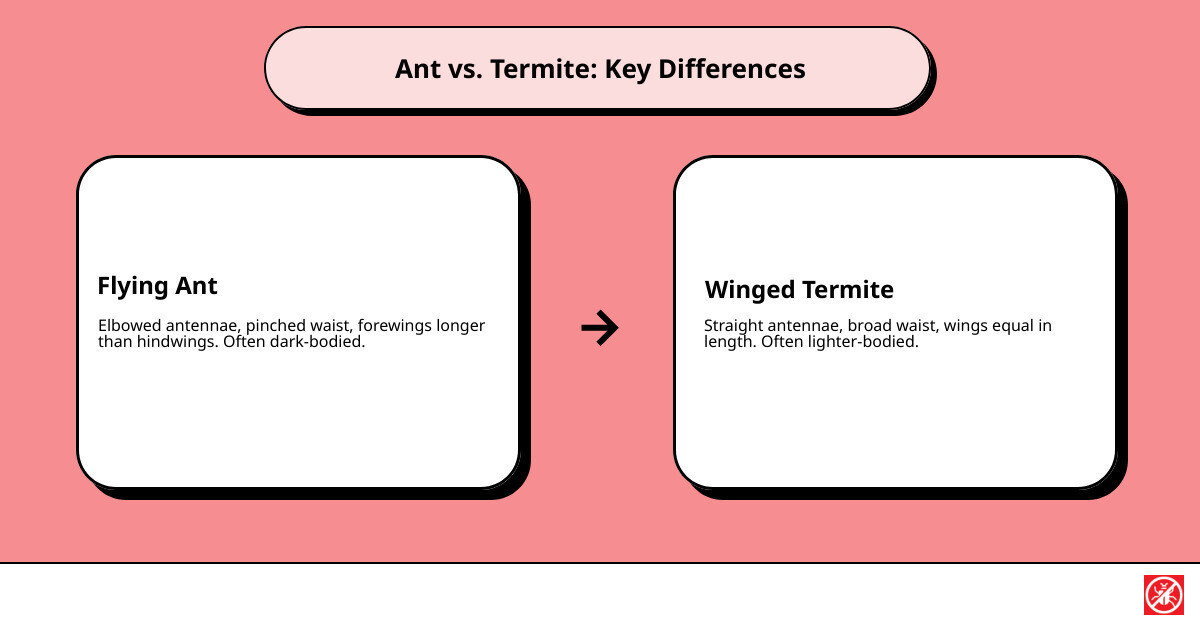
When you find winged insects in your home, especially black ants with wings in bathroom, it’s crucial to determine if they are ants or the more destructive termites. Misidentification can lead to significant structural damage if a termite problem is left untreated. Both insects produce winged “swarmers” to start new colonies, but there are clear physical differences to help you tell them apart.
Let’s look at the key features:
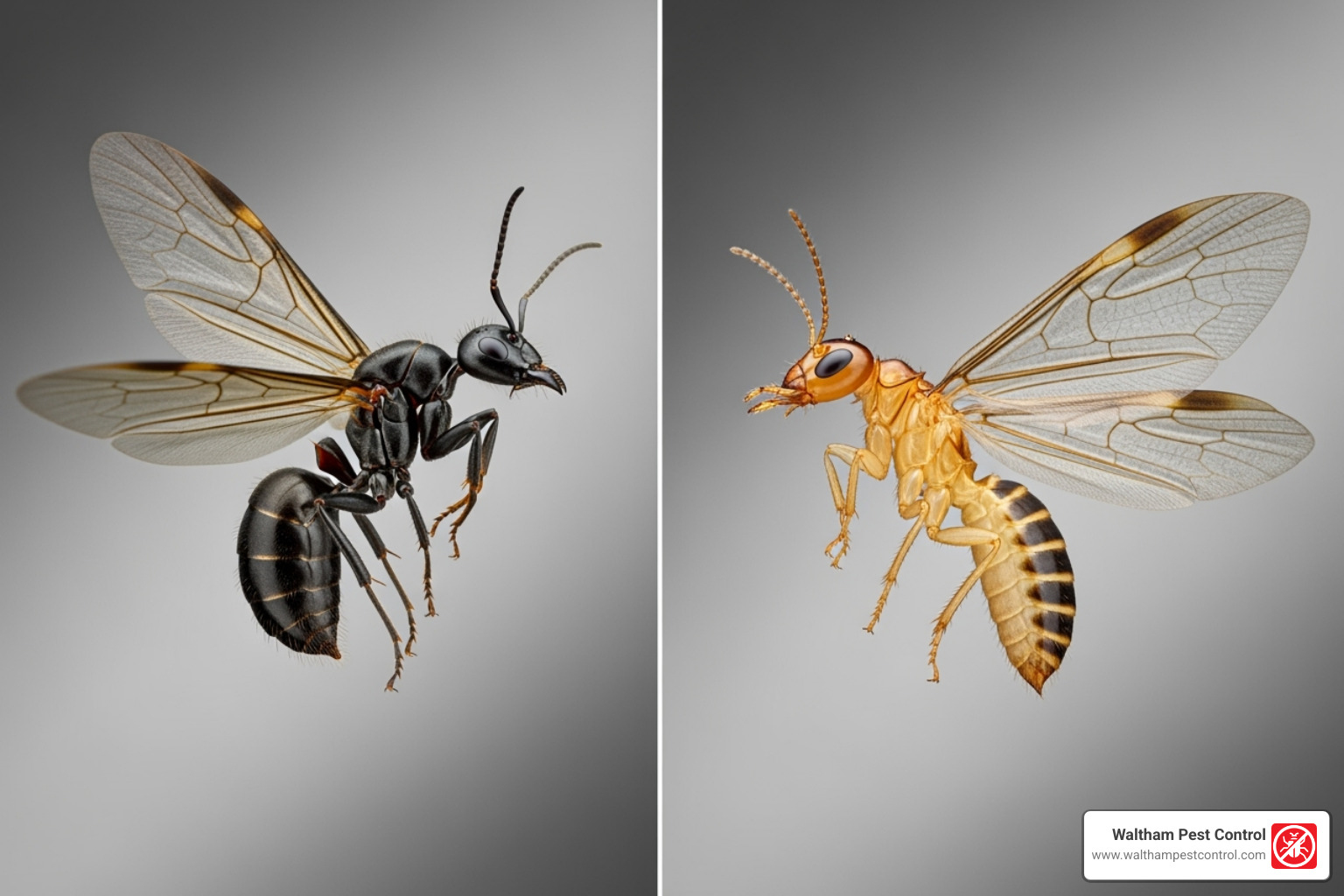
- Antennae: Flying ants have elbowed (bent) antennae. Termites have straight, bead-like antennae.
- Waist: Ants have a distinctly pinched waist. Termites have a broad, uniform waist with no clear definition between the thorax and abdomen.
- Wings: Flying ants have two pairs of wings of unequal length, with the front pair being longer than the back. Termites have four wings of equal length.
- Color and Size: Flying ants are typically dark (black or reddish-brown), and carpenter ant swarmers can be quite large. Termites are usually pale (light brown or whitish) and smaller.
For a side-by-side visual and even more details, you can learn more about telling them apart.
The damage they cause is also different. Carpenter ants excavate wood to create smooth, clean galleries for nesting, pushing out piles of sawdust-like “frass.” Termites eat the wood, leaving behind messy tunnels often filled with soil and debris, and may build mud tubes on foundations.
If you’re still unsure, proper identification is the most crucial first step. It’s always best to consult with a pest control professional to get a definitive answer and protect your home from potential damage.
Why Your Bathroom? The Link Between Black Ants with Wings in the Bathroom and Moisture
If you’ve found large black ants with wings in bathroom, the reason is almost always moisture. Bathrooms provide the damp conditions that certain ant species, particularly carpenter ants, need to thrive.
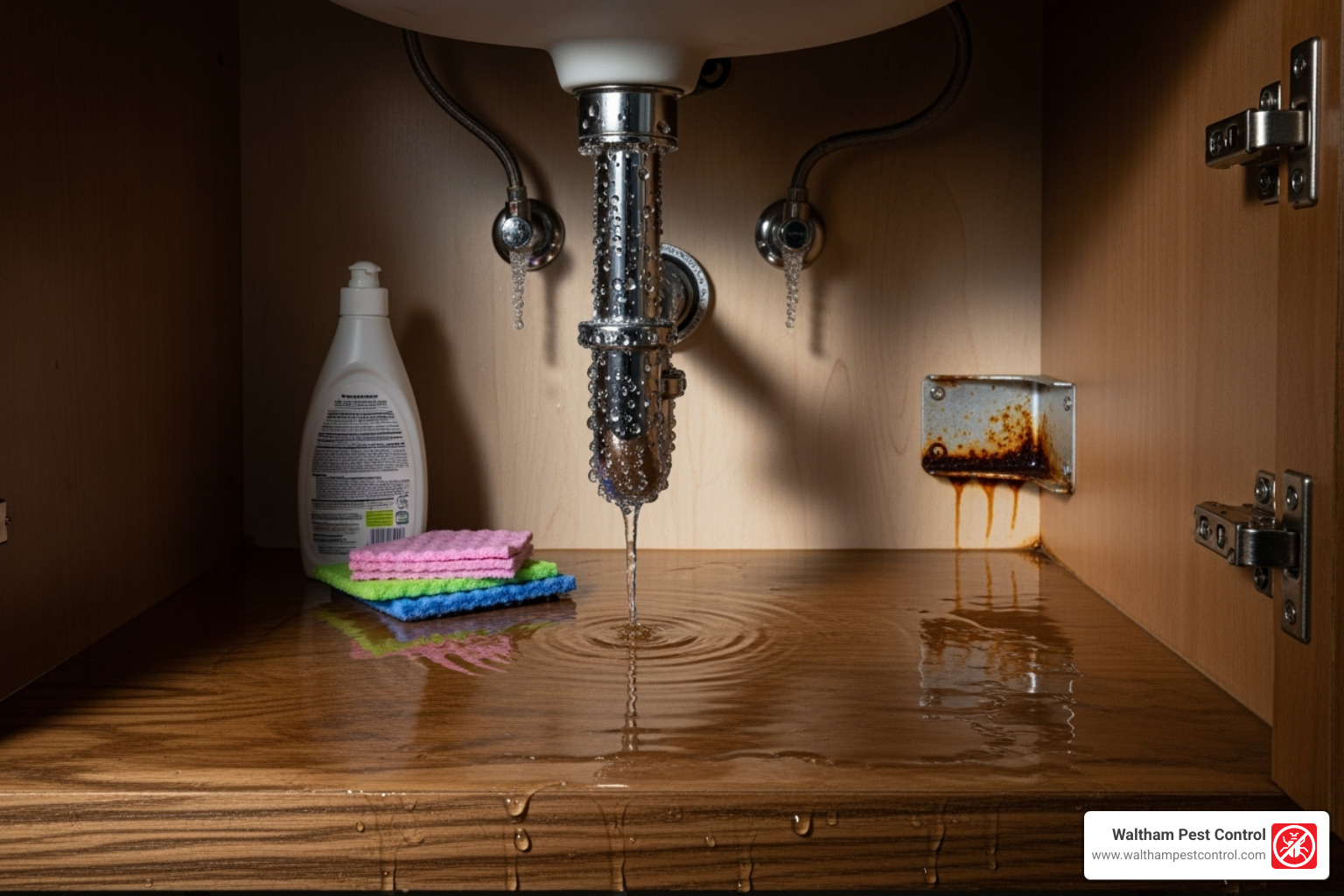
Carpenter ants don’t eat wood, but they love to nest in wood that has been damaged by moisture, making bathrooms an ideal location. Common moisture sources include:
- Leaky Pipes and Fixtures: Slow drips from sinks, toilets, or showerheads create ideal damp spots.
- Shower and Tub Seepage: Failing caulk or poor drainage allows water into walls and subfloors, damaging wood and creating nesting sites.
- Condensation: High humidity from showers can dampen wood around windows and in poorly ventilated areas.
- External Leaks: Water from a leaky roof or wall can travel into the bathroom structure, providing hidden nesting areas.
The presence of winged ants indoors, especially outside their typical late spring/early summer swarming season, is a prime indicator of an indoor infestation.
Common Types of Ants Found in Bathrooms
While carpenter ants are the primary concern due to their potential for structural damage, other ants are also drawn to bathroom moisture:
- Carpenter Ants: Large, black or reddish ants that nest in moist wood. Winged swarmers indicate a mature colony.
- Pharaoh Ants: Tiny, yellowish ants drawn to moisture. Difficult to control due to multiple queens.
- Odorous House Ants: Small, dark ants that smell like rotten coconut when crushed. They nest in damp areas like wall voids.
- Argentine Ants: Small, dark brown ants that form huge colonies and seek out water sources.
Signs of an Indoor Carpenter Ant Infestation
If you’re seeing black ants with wings in bathroom, look for these other signs of a carpenter ant infestation:
- Frass (Sawdust Piles): Piles of fine wood shavings, similar to sawdust, often mixed with insect parts. Look for them near baseboards, window sills, or in cabinets.
- Rustling Sounds in Walls: Faint, crinkling sounds from within walls or wooden structures, especially at night, can indicate ants moving and chewing.
- Shed Wings: Finding discarded wings on floors or window sills is a sign that a nuptial flight has occurred indoors, pointing to a nearby nest.
- Foraging Ants: Seeing wingless worker ants, especially at night, in your kitchen or bathroom is a strong sign of an indoor colony.
- Damaged Wood: Look for small, smooth holes in wood where ants expel frass. The internal galleries they create are clean and smooth, unlike termite damage.
Recognizing these signs early is vital. For comprehensive information on how to keep these pests out, you can refer to resources on how to prevent ants from entering your home.
The Dangers of a Carpenter Ant Colony in Your Home
The presence of black ants with wings in bathroom signals a potential threat to your home’s structure. Carpenter ants don’t eat wood, but they excavate it, using their strong jaws to create smooth tunnels and galleries for their nests. They are physically carving out the wooden framework of your home.
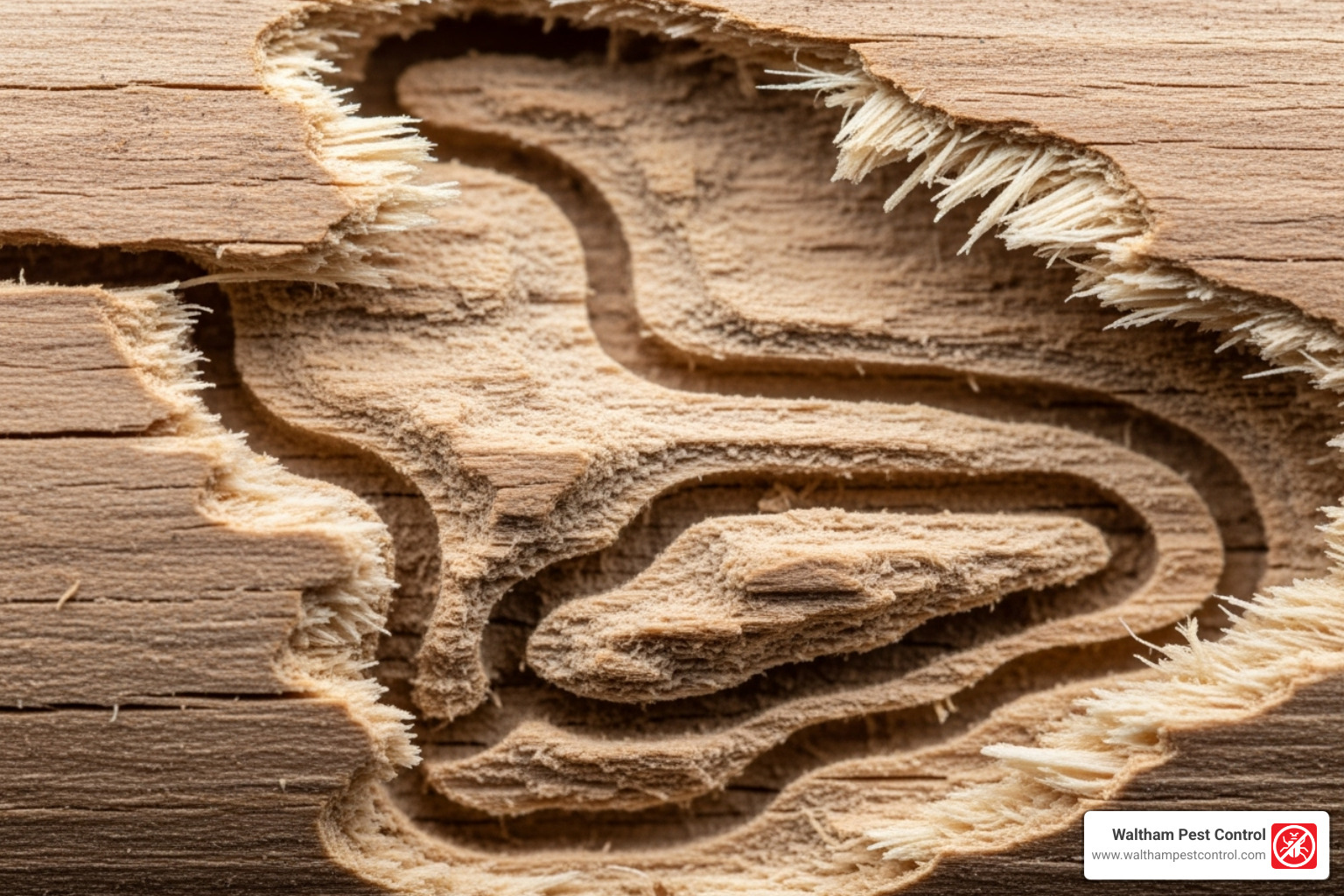
An unchecked infestation can cause extensive damage. They can tunnel through support beams, wall studs, floor joists, and subflooring. As a colony matures, it may establish satellite nests inside your home, often in damp areas like wall voids or behind bathroom tiles. This expands the infestation and accelerates the damage.
Over time, this constant tunneling weakens vital wooden structures, potentially leading to sagging floors, warped door frames, and compromised structural integrity. While a total collapse is rare, the cost of repairs can be substantial. Seeing signs like frass or the ants themselves means damage is already underway.
That’s why proactive pest management is so important. If you suspect carpenter ants are in your home, don’t wait for the damage to get worse. We highly recommend you schedule a professional pest inspection to get a clear picture of the situation. At Waltham Pest Control, our team has over 40 years of experience helping homeowners across Eastern Massachusetts identify and solve these kinds of issues, ensuring your home stays safe and sound.
What to Do About Flying Ants: Control and Elimination
When you see black ants with wings in bathroom, your first instinct might be to use a bug spray. However, this is only a temporary fix for a larger problem. A strategic approach is needed to eliminate the entire carpenter ant colony, not just the visible ants.
At Waltham Pest Control, our process focuses on complete colony elimination. This involves three key steps: locating the nest(s), including hidden satellite colonies inside walls; addressing the moisture source by recommending repairs for leaks or ventilation issues; and applying targeted treatment using specialized baits that foraging ants carry back to the queen and the rest of the colony. This comprehensive approach is far more effective than DIY sprays, which rarely reach the hidden nest. For a truly effective and long-term solution, our team is here to help. You can learn more about our comprehensive residential pest control services.
Are black ants with wings in the bathroom harmful to people or pets?
A common concern is whether these flying ants are dangerous. The good news is that black ants with wings in bathroom pose little direct threat to people or pets. Carpenter ants do not sting and are not known to transmit diseases. While a large worker ant can bite if it feels threatened, the bite is not venomous and typically only causes minor, temporary irritation. The real danger they present is not a health hazard, but the potential for significant structural damage to your home.
When should I call a professional for black ants with wings in my bathroom?
While a single winged ant could be a stray, seeing multiple black ants with wings in bathroom is a strong sign of an indoor colony. It’s time to call a professional if you notice:
- Indoor Swarmers: Seeing winged ants inside your home is the clearest sign of a mature, indoor nest.
- Frass or Wood Damage: Piles of sawdust-like material or small holes in wood indicate active tunneling.
- Rustling Sounds in Walls: Faint crackling noises from within walls can be the sound of ants at work.
- Recurring Problems: If DIY treatments fail and ants keep returning, the core colony has not been addressed.
- Large Numbers of Ants: Consistently seeing many ants, winged or not, points to a large infestation.
A professional service like Waltham Pest Control provides accurate identification, comprehensive inspections to find all nests, and targeted treatments to eliminate the entire colony. We also offer prevention strategies to address moisture issues and seal entry points, protecting your home from future problems. For even more detailed insights into managing these pests, you can check out resources on carpenter ant management.
Conclusion
Finding black ants with wings in bathroom is a clear message from your home: a mature ant colony, most likely carpenter ants, is nearby. Their presence in a moisture-rich area like a bathroom indicates the colony is established and ready to expand.
As we’ve covered, you can identify these pests by their pinched waists and bent antennae, distinguishing them from termites. They are drawn to your bathroom by moisture from leaks or condensation, which damages the wood they use for nesting. Key warning signs include sawdust-like frass and rustling sounds in your walls. While these ants won’t harm you or your pets directly, the structural damage they can cause is a serious risk.
Grabbing a can of bug spray won’t solve the real problem. The hidden colony will keep producing more ants, and the structural damage will continue to worsen. Don’t let this problem grow bigger and more expensive. When you’re seeing black ants with wings in bathroom, it’s time to call in professionals who can locate hidden nests, eliminate entire colonies, and address the underlying moisture problems.
At Waltham Pest Control, we’ve been protecting homes across Eastern Massachusetts for over 40 years. We understand that your home is your biggest investment, and we’re committed to keeping it safe from these destructive pests. Our licensed and insured team provides thorough inspections and targeted treatments that get to the root of the problem.
Contact us for a comprehensive inspection and carpenter ant treatment plan today. Don’t wait for the damage to get worse – let us help you reclaim your home from these unwanted guests and keep them from coming back.
