

Big black flying bug that looks like a wasp: 7 Key Danger Signs
Identifying Those Mysterious Black Visitors in Your Garden
If you’ve spotted a big black flying bug that looks like a wasp in your yard, it’s likely one of these common species:
| Species | Size | Key Features | Sting Risk |
|---|---|---|---|
| Great Black Wasp | 1-1.5 inches | Solid black, thread waist, smoky wings | Low (unless provoked) |
| Cicada Killer | Up to 2 inches | Black with yellow stripes, rust-colored head | Very low |
| Carpenter Bee | 0.5-1 inch | Black abdomen, yellow fuzzy thorax | Males cannot sting |
| Pelecinid Wasp | Up to 2.5 inches | Extremely long, thin abdomen | None (cannot sting) |
| Ensign Wasp | 0.5 inch | Black with “tapping” tail | None (targets cockroach eggs) |
That startling moment when a large, buzzing black insect zips past your head can trigger immediate concern. Is it dangerous? Will it sting? Should you run?
The truth is, many of these intimidating insects are actually beneficial solitary wasps that help control garden pests and pollinate plants. The great black wasp (Sphex pensylvanicus), one of the most common large black wasp-like insects in North America, is a perfect example.
Unlike yellow jackets or hornets that aggressively defend their colonies, most of these large black insects are solitary and non-aggressive toward humans. They’re much more interested in finding nectar, hunting prey for their offspring, or finding suitable nesting sites than they are in bothering you.
My name is Waltham Pest Control, President of Waltham Pest Control, and with over 40 years of experience identifying and managing various pest insects including big black flying bugs that look like wasps, I’ve helped countless Massachusetts homeowners understand these misunderstood creatures. These impressive insects often generate unnecessary fear, but with proper identification, most can safely coexist with your outdoor activities.
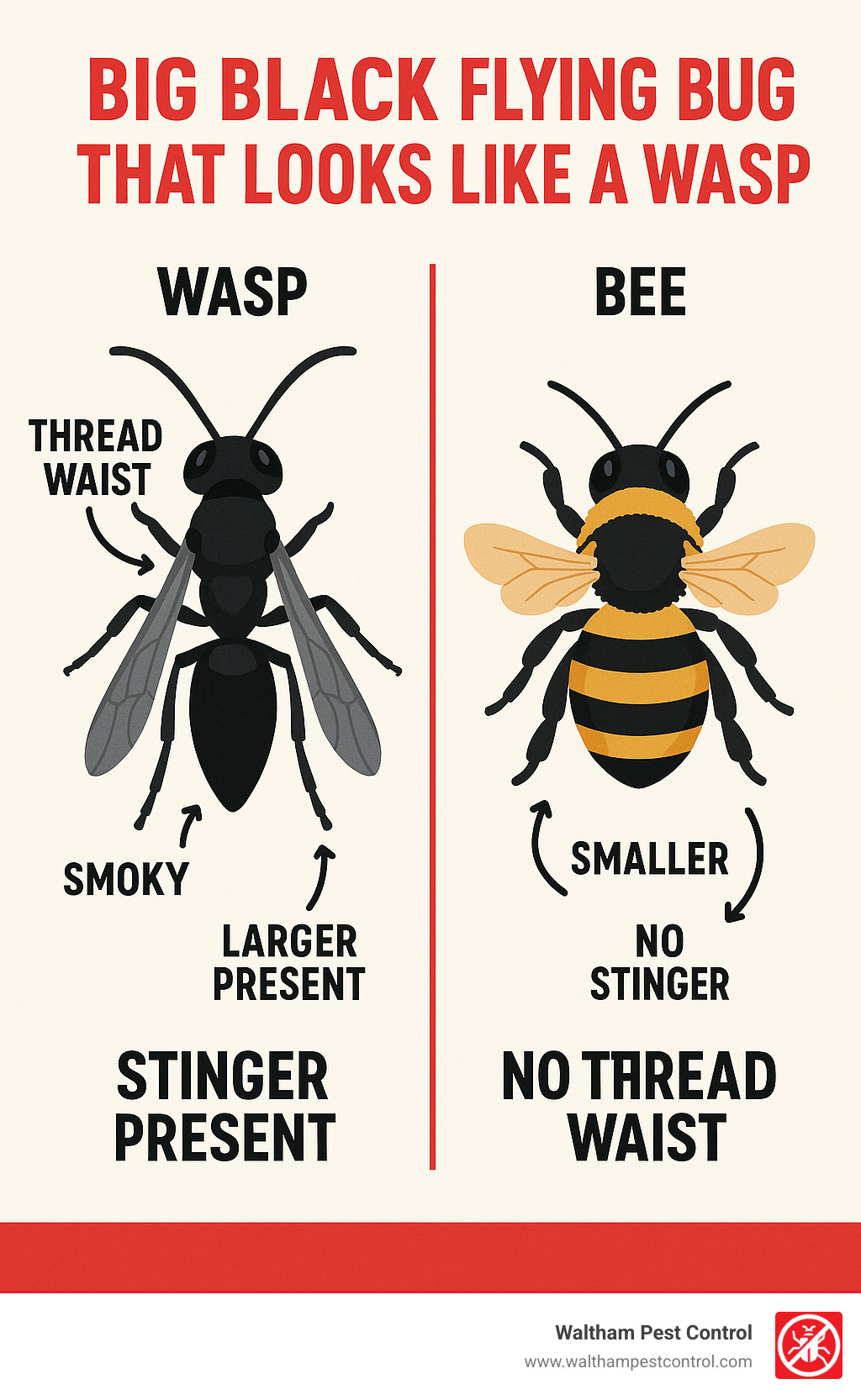
Big black flying bug that looks like a wasp terminology:
Big Black Flying Bug That Looks Like a Wasp: Quick ID Checklist
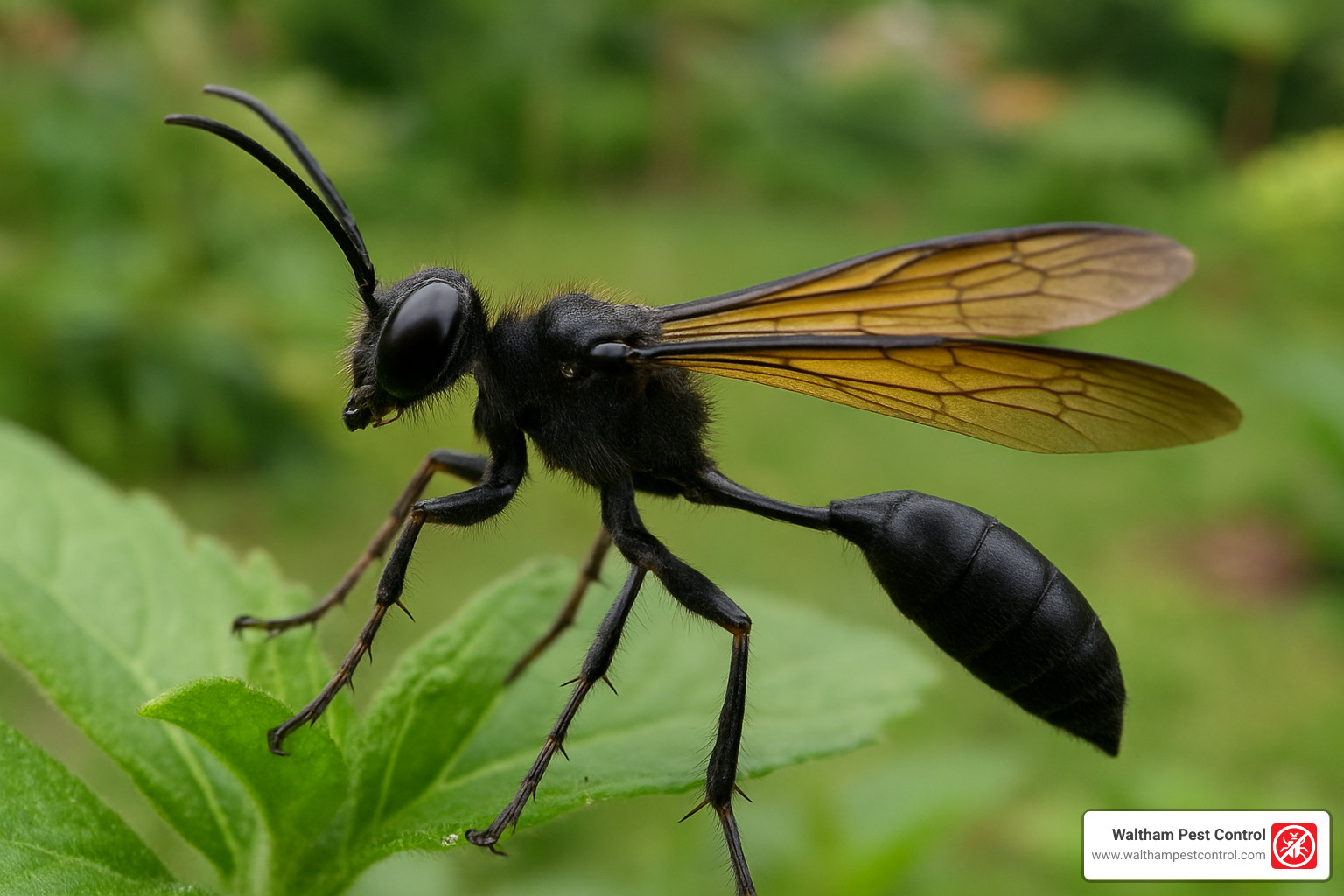
That heart-stopping moment when a large, dark insect buzzes past you doesn’t have to trigger panic. With a few simple observations, you can quickly determine whether you’re dealing with a beneficial pollinator or something that warrants more caution.
When you spot a big black flying bug that looks like a wasp in your garden, take a moment to notice its features. Most of these impressive insects measure between 1 to 1.5 inches long, with females typically being the larger of the sexes. Their bodies are solid black, often gleaming with a beautiful blue-violet sheen when sunlight hits them just right.
What really sets these insects apart is their distinctive “thread-waisted” appearance – that narrow pinched section between the thorax and abdomen that gives them such a distinctive silhouette. Their wings typically have a smoky or dark tint, sometimes flashing with bluish iridescence as they fly. And speaking of flight, many species have a characteristic pattern of movement, often with their long legs dangling below their bodies as they cruise through your garden.
Pay attention to their behavior too. Are they flying solo rather than in groups? Are they visiting flowers or investigating the ground? These clues can help confirm you’re looking at a solitary wasp like the great black wasp (Sphex pensylvanicus) rather than a more aggressive colony-dwelling species.
Fast clues for any big black flying bug that looks like a wasp
When you need a quick identification, focus on these telltale signs: Size matters – at 1-1.5 inches, these insects dwarf ordinary honey bees and even many yellowjackets. Their solid black coloration stands in stark contrast to the yellow-striped patterns of many common wasps. That distinctive thread-waisted appearance is a dead giveaway for many species in this category.
Watch their behavior too. These insects typically display solitary habits, so you’ll rarely see more than a few individuals at once. Many show interest in ground activity, investigating soil surfaces for potential nesting sites or hunting for prey. And they’re most active during midday hours, especially when the sun is high and temperatures warm.
Here in Eastern Massachusetts, from Burlington to Wilmington and Woburn to Bedford, we receive numerous calls about these impressive insects during summer months. Their imposing size and dark coloration often cause concern, but in most cases, they’re beneficial visitors to your garden that prefer to avoid human interaction.
Identification is the first step toward peaceful coexistence with these fascinating creatures. If you’re still unsure about what’s buzzing around your property, or if you have concerns about a nest in a high-traffic area, don’t hesitate to reach out for professional guidance.
Meet the Great Black Wasp (Sphex pensylvanicus)
When Massachusetts homeowners call us about a big black flying bug that looks like a wasp, the great black wasp is often the mysterious visitor in question. This impressive insect—scientifically known as Sphex pensylvanicus—is nature’s own pest control specialist with an neat appearance that can be startling at first glance.
These stunning wasps belong to the thread-waisted wasp family (Sphecidae) and have earned nicknames like “katydid hunter” and “great black digger wasp” that hint at their fascinating lifestyle.
What makes them stand out in your garden? Their completely black body showcases a beautiful violet-blue sheen that sparkles in summer sunlight—like nature’s own jewelry. Their wings have a distinctive smoky appearance with the same iridescent quality that catches the eye. Female wasps are particularly impressive at 1 to 1.5 inches long, while males are slightly more modest in size.
You’ll find these beneficial insects throughout North America, including every corner of Eastern Massachusetts from Middlesex County to the Merrimack Valley. Unlike their more aggressive yellowjacket cousins that live in colonies, the great black wasp is a solitary soul. Each female is an independent contractor—digging her own nest and hunting without help from others.
Fascinating research published in the Journal of the Kansas Entomological Society has documented their remarkable hunting techniques and precise nest construction methods. They’re truly master architects of the insect world!
Why the great black wasp is often the big black flying bug that looks like a wasp
There are several reasons why the great black wasp is frequently the culprit when people spot a big black flying bug that looks like a wasp around their homes:
These wasps are underground nesters, with females digging foot-deep burrows in well-drained soil. You might spot them working along garden edges, walkways, or in sandy patches—bringing them naturally into our human spaces.
If you have milkweed in your garden (either Asclepias syriaca or A. incarnata), you’ve essentially put out a welcome mat. Adult wasps love feeding on these nectar-rich flowers, making them highly visible as they hover and dine.
Timing also plays a role in our frequent encounters. Their peak activity from July through September perfectly aligns with our own outdoor enjoyment season here in Massachusetts.
Despite their intimidating appearance, these wasps aren’t looking for trouble. They’re remarkably non-aggressive toward humans and only sting if directly handled or threatened—they’re much more interested in hunting katydids than bothering your backyard barbecue.
It’s worth noting that only the females can sting at all (their stinger is actually a modified egg-laying organ), while males are completely stingless.
In our 40+ years helping homeowners from Acton to Woburn, we’ve come to appreciate these beneficial insects for their role in controlling garden pests and contributing to pollination. Their specialty in hunting katydids and grasshoppers makes them valuable allies in natural garden management.
If you’re concerned about any big black flying bug that looks like a wasp on your property, we’re happy to help with proper identification. For more serious wasp issues or nests in high-traffic areas, our hornet and wasp nest removal services provide professional, worry-free solutions.
Doppelgängers: Other Large Black Wasps & Mimics You Might Encounter

“What on earth was that?” It’s a question we hear often when homeowners spot something dark and buzzing that isn’t quite the great black wasp. Nature loves its copycats, and several impressive insects can leave you wondering if you’ve spotted a big black flying bug that looks like a wasp.
Let’s meet this fascinating lineup of look-alikes that might be visiting your Massachusetts yard:
The tarantula hawk makes quite the entrance with its striking appearance. While more common in the Southwest, these occasional visitors to our region sport an unmistakable black body with vibrant orange or rusty-red wings that seem to flash warnings as they fly. Growing up to 2 inches long, they hunt spiders (though not actual tarantulas in Massachusetts). Their sting ranks among the most painful in the insect world, but fortunately, they’re incredibly docile unless directly handled.
Your sandy lawn might be home to the cicada killer, a common Massachusetts resident reaching up to 2 inches in length. Unlike the solid-black great black wasp, these insects wear yellow markings on their abdomen and sport a distinctive rust-colored head. The males, though territorial and intimidating as they hover and dive at passersby, lack stingers entirely. Females spend their days hunting cicadas, which they paralyze and bring to underground burrows as food for their young.
If you spot something small and black with a peculiar “flag-raising” habit with its abdomen, you’ve likely encountered an ensign wasp. At just half an inch long, these beneficial insects parasitize cockroach egg cases, providing free pest control services. Recent research from Texas A&M AgriLife Extension has confirmed their effectiveness as biological control agents – truly allies in disguise. Despite their wasp-like appearance, they cannot sting humans.
The pelecinid wasp might win the award for most unusual silhouette. Females feature an absurdly long, thin abdomen that can reach 2.5 inches and curves downward like a scorpion’s tail. This glossy black creature uses that remarkable appendage to lay eggs in soil-dwelling beetle grubs. Despite looking like something from a science fiction movie, these wasps cannot sting humans.
Mud dauber wasps are the architects of the insect world. Their slender, thread-waisted bodies in metallic blue-black colors are distinctive, but you’re more likely to notice their artistic mud structures attached to the eaves of your home. These solitary wasps hunt spiders to provision their mud nurseries. They’re so focused on their construction projects that they rarely, if ever, sting humans, even when their nests are disturbed.
Don’t be fooled by the carpenter bee. With its shiny black, hairless abdomen (unlike the fuzzy bumblebee), this wood-boring bee is frequently mistaken for a wasp. Males put on quite a show, hovering aggressively near their territory, but lack stingers entirely. Females can sting but rarely do so unless directly handled. Instead, they’re busy drilling perfectly round holes in wooden structures to create their nests.
Perhaps the most impressive mimics are robber flies, which aren’t wasps at all. These predatory flies have evolved to look remarkably wasp-like, with dark bodies, tapered abdomens, and intimidating presence. They’re excellent aerial hunters that snatch other insects mid-flight. While they cannot sting, they may deliver a painful bite if mishandled.
Spotting differences from a big black flying bug that looks like a wasp
When our technicians are called to identify these dark visitors throughout Eastern Massachusetts, from Cambridge to Lexington, we look for several key differentiating features:
Wing color provides instant clues – the great black wasp has uniformly smoky wings, while tarantula hawks flash those unmistakable orange wings. Body patterns matter too, with cicada killers showing yellow abdominal bands while the great black wasp remains neatly, entirely black.
Flight behavior is another giveaway. Great black wasps often fly with legs dangling beneath them, while carpenter bees hover almost motionless when investigating potential nest sites. What they’re hunting tells us even more – cicada killers struggle with enormous cicadas, great black wasps capture katydids, and mud daubers collect spiders.
Even their homes reveal their identity: carpenter bees leave sawdust below perfect drill holes in wood, mud daubers create clay apartment complexes, and great black wasps dig neat burrows in soil.
At Waltham Pest Control, we’ve spent over four decades identifying these impressive creatures for homeowners throughout Eastern Massachusetts. This expertise allows us to provide reassurance when you’ve spotted a harmless mimic or appropriate management when you’re dealing with something that poses actual risks. After all, knowing exactly what’s buzzing around your property is the first step toward peaceful coexistence – or deciding when professional help might be needed.
Life Cycle, Habitat & Seasonality
Ever wonder where that big black flying bug that looks like a wasp goes when it’s not buzzing around your garden? Understanding the fascinating life cycle of the great black wasp helps explain when and why you might spot these impressive insects around your Eastern Massachusetts home.
The great black wasp follows a complete metamorphosis with four distinct stages, each one a marvel of nature’s design:
The cycle begins when a female wasp carefully lays a single egg on or near a paralyzed katydid or grasshopper tucked away in an underground chamber. Once hatched, the hungry larva feasts on this living but immobilized meal for about 10 days, growing rapidly to over an inch in length. After consuming its food supply, the larva spins a silken cocoon within its underground home and transforms into a pupa. Finally, when summer warmth returns the following year, the adult emerges to continue the cycle.
What makes these wasps truly remarkable is their hunting prowess. A female great black wasp is nature’s neurosurgeon, delivering three precisely placed stings that paralyze her prey without killing it. This keeps the meat “fresh” for her developing offspring. A single industrious female might capture up to 16 grasshoppers or katydids daily – that’s serious pest control for your garden!

I’ve always been impressed by the engineering skills these wasps display. Their underground nests extend about a foot deep into well-drained soil, with the main tunnel branching into several chambers. Each chamber becomes a nursery for one egg and a pantry stocked with 2-6 paralyzed insects. Once provisioned, the female seals each chamber by tamping down soil with her head – a true testament to maternal dedication.
Nature has its own balance, though. Birds like catbirds and house sparrows have learned to engage in kleptoparasitism – a fancy term for theft – stealing the wasp’s paralyzed prey when they get the chance.
When the big black flying bug that looks like a wasp shows up in your yard
“When will I see these wasps in my yard?” is a question we often hear from homeowners in Burlington, Bedford, and throughout Eastern Massachusetts. The answer is quite predictable:
You’ll most likely spot adult wasps from July through September, with peak activity during August’s warmest days. They prefer to fly during warm, sunny afternoons when flowers are producing maximum nectar. If your property has sandy or well-drained soils, open sunny locations, and flower beds with plenty of nectar sources (especially milkweed), you’ve created perfect great black wasp habitat.
In my 40+ years of experience serving communities throughout Middlesex County and Essex County, I’ve noticed these impressive insects are particularly drawn to suburban gardens with diverse plantings and patches of undisturbed soil. Garden borders, prairie edges, and natural meadows are all prime real estate for these beneficial insects.
The larvae spend winter safely tucked away in their underground chambers, developing slowly until they emerge as adults when summer temperatures rise. This timing perfectly aligns with the blooming of their favorite nectar sources like milkweed, making late summer prime time for wasp-watching in your garden.
At Waltham Pest Control, we appreciate the role these solitary wasps play in our local ecosystem. While their size might be intimidating, understanding their lifecycle helps us recognize them as the beneficial garden allies they truly are.
Stings & Safety: Risk, First Aid, Allergies
That intimidating big black flying bug that looks like a wasp buzzing around your garden might seem frightening, but the actual risk is usually much lower than most people fear. Let me put your mind at ease about these impressive insects.
Great black wasps and their look-alikes typically mind their own business. Unlike the aggressive yellow jackets that might crash your backyard barbecue, these solitary wasps have no colony to defend, which makes them remarkably peaceful neighbors. Only female wasps can sting—the males might look scary zooming around, but they’re completely stingless and harmless!
If you do manage to get stung (usually by accidentally trapping or grabbing one), the pain rates as moderate on the insect sting scale. It’s more intense than a honey bee sting but far less excruciating than the infamous tarantula hawk wasp. Most people experience sharp pain, some redness, and localized swelling that gradually subsides over 1-3 days.
For basic sting first aid, keep it simple:
- Wash the area with mild soap and water
- Apply an ice pack wrapped in cloth for 20 minutes to reduce swelling
- Take an over-the-counter antihistamine if itching develops
- Use acetaminophen or ibuprofen for pain relief if needed
While most people recover quickly from wasp stings with minimal treatment, allergic reactions can occur and should be taken seriously. Medical research shows approximately 0.8% of children and 3% of adults have insect sting allergies that could lead to anaphylaxis—a severe, potentially life-threatening reaction.
Watch for warning signs like difficulty breathing, facial swelling, dizziness, widespread hives, or nausea after a sting. If you notice these symptoms, seek emergency medical attention immediately. Anyone with known insect allergies should carry prescribed epinephrine (such as an EpiPen) and use it according to their doctor’s instructions if stung.
Here in Eastern Massachusetts, from our work in communities like Lexington, Winchester and Woburn, we’ve found that most encounters with great black wasps end peacefully. These beneficial insects typically avoid human interaction unless they feel directly threatened. By giving them space and appreciating them from a respectful distance, you can enjoy their fascinating behaviors while minimizing any risk.
At Waltham Pest Control, we understand that while these solitary wasps benefit our gardens, some situations do call for professional intervention—particularly if you have young children with allergies or nests developing in high-traffic areas. Scientific guidance from medical experts like Mount Sinai Hospital provides clear protocols for wasp sting treatment that inform our approach to these impressive but misunderstood insects.
Control & Coexistence: From Friendly Observation to Professional Help
When you spot a big black flying bug that looks like a wasp buzzing around your yard, your first instinct might be concern. But before reaching for that can of insecticide, consider this: most of these impressive insects are actually beneficial creatures that help keep your garden healthy by controlling pests and pollinating plants.
As a homeowner in Eastern Massachusetts, you have several options for managing these insects, ranging from peaceful coexistence to professional intervention when necessary.
Coexisting with Beneficial Wasps
Great black wasps and other solitary wasps make excellent garden allies. Unlike their more aggressive yellow jacket cousins, these insects typically mind their own business unless directly threatened.
To live harmoniously with these beneficial insects, simply give them space. Watch their fascinating hunting behaviors from a few feet away, and you’ll likely find a newfound appreciation for their role in your garden ecosystem. They’re nature’s pest controllers, targeting katydids and grasshoppers that might otherwise damage your plants.
Support these helpful visitors by planting nectar-rich flowers like milkweed, goldenrod, and other native species. These plantings not only attract pollinators but also provide essential food sources for adult wasps. Take the opportunity to teach children and family members about these misunderstood insects – explaining that despite their intimidating appearance, they’re generally non-aggressive and actually help keep the garden healthy.
Natural Deterrents
If you’re uncomfortable with wasps in certain areas of your yard, several gentle deterrents can encourage them to nest elsewhere without causing harm.
Natural repellents can be surprisingly effective. Coffee grounds sprinkled in soil not only deter wasps but also provide nutrients for your plants. Peppermint oil diluted with water and sprayed around areas you’d like to keep wasp-free creates a scent barrier they typically avoid. Even simple household items like cucumber peels placed strategically can discourage wasps from lingering in specific locations.
Modifying the habitat can also influence where wasps choose to nest. Since many solitary wasps prefer dry, bare soil for their burrows, regular lawn irrigation makes areas less attractive for nesting. Adding mulch to garden beds not only helps your plants retain moisture but also reduces available nesting sites. For high-traffic areas, filling in bare soil patches can encourage wasps to dig their burrows in more remote corners of your property.
When planning outdoor gatherings, timing matters. Schedule picnics and barbecues during early morning or evening hours when wasp activity naturally decreases.
When Professional Help Is Needed
While coexistence is ideal, there are legitimate situations when professional pest management becomes the safest option.
If you find nests near doorways, playgrounds, or busy walkways, the risk of accidental encounters increases significantly. Multiple stings or the presence of family members with known insect allergies are clear indicators that professional intervention may be necessary. Sometimes, multiple female wasps create nesting aggregations in a concentrated area, which can increase the likelihood of defensive behaviors.
For those interested in learning more about DIY approaches, our guide on DIY hornet and wasp nest removal techniques provides valuable information, though we always emphasize safety first when dealing with any stinging insects.
Based on internet data (not Waltham Pest Control pricing), professional removal services for wasps typically range from $150 to $450, with complex situations potentially reaching $900 or more depending on factors like nest location, species involved, and accessibility.
When to call the pros for a big black flying bug that looks like a wasp near high-traffic areas
There are specific situations that warrant professional intervention rather than DIY approaches:
When wasps establish nests in children’s play areas, the risk of accidental disturbance is simply too high. Similarly, if your household includes anyone with known insect allergies, professional removal offers peace of mind. Repeated stings in the same area suggest a potential conflict zone that requires expert attention.
Sometimes the issue isn’t a single wasp but rather a significant aggregation of nests in a concentrated area. This situation calls for comprehensive management by trained professionals. Nests located near building entrances or along frequently used walkways create unavoidable interaction zones that are best addressed by experts.
At Waltham Pest Control, our licensed and insured technicians understand the balance between pest management and environmental stewardship. Serving communities throughout Eastern Massachusetts, we use targeted approaches that address specific problem situations while preserving beneficial insects elsewhere on your property. Our goal is to create safe outdoor spaces where you can enjoy your yard without unnecessary worry about stinging insects.
For more information about our professional hornet nest removal services, contact our team for a consultation custom to your specific situation.
Frequently Asked Questions about Big Black Wasp-Like Bugs
Are great black wasps aggressive toward people?
When you spot a big black flying bug that looks like a wasp hovering near your garden, it’s natural to feel concerned. But here’s some reassuring news: great black wasps are remarkably peaceful neighbors despite their intimidating appearance.
These solitary insects are much too busy with their own priorities to care about human activity. They’re focused on finding nectar, hunting prey for their offspring, and creating nests—not on bothering you or your family. I’ve observed countless great black wasps during my years in pest management across Eastern Massachusetts, and their typical response to humans is simple indifference.
Only females possess stingers, and they reserve them almost exclusively for two purposes: hunting prey and self-defense when directly handled. The males you might see patrolling your garden? They’re completely stingless, despite sometimes looking more intimidating with their hovering behavior.
Unlike yellowjackets or hornets that aggressively defend their colonies, great black wasps have no collective nest to protect, which means no swarming behavior or coordinated attacks. This fundamental difference makes them significantly less concerning for most homeowners.
What do their nests look like and where are they found?
Unlike the papery, visible nests built by social wasps, great black wasp homes are underground and easily overlooked. Their subtle presence in your landscape might include:
A small, circular entrance hole roughly half an inch across, often accompanied by a tiny mound of freshly excavated soil. These entrances can be challenging to spot, as they’re frequently partially hidden beneath vegetation or along garden edges.
The actual nest is an engineering marvel that you’ll never see without excavation. The main tunnel extends approximately 12 inches deep into well-drained soil, with several branching chambers where the female stores paralyzed prey and lays her eggs.
Throughout Eastern Massachusetts—from sandy Middlesex County soils to the garden beds of Essex County—these nests typically appear in sunny locations with good drainage. Big black flying bugs that look like wasps particularly favor garden borders, flower beds with bare soil patches between plants, sandy pathways, and the drier edges of lawns.
What’s fascinating is that each female constructs her own individual nest without help. However, in areas with ideal soil conditions, you might notice several females nesting relatively close together, each maintaining her own separate burrow.
How do they benefit my garden?
That big black flying bug that looks like a wasp visiting your garden is actually working hard to make your outdoor space healthier and more productive.
Great black wasps are exceptional natural pest controllers. A single industrious female can capture an impressive number of grasshoppers and katydids—up to 16 per day during active nesting periods. These are precisely the insects that might otherwise be munching on your prized garden plants. Think of them as a free, organic pest management service!
As nectar feeders, adult wasps also serve as important pollinators. They’re particularly drawn to milkweed (Asclepias species), members of the carrot family, and various native wildflowers. While visiting these blooms for a sweet meal, they transfer pollen from flower to flower, helping your garden produce seeds and fruits.
Their digging activities provide the bonus benefit of soil aeration. As they create their underground nests, they naturally loosen compacted soil, improving water penetration and root growth for nearby plants.
Unlike some garden visitors that damage plants while feeding, wasps leave your plant tissues intact. They’re after nectar and insects, not your plant material.
From Burlington to Woburn and throughout our service area, we’ve seen how these beneficial insects contribute to thriving gardens with reduced pest pressure. By understanding and appreciating the role of the big black flying bug that looks like a wasp, you can work with nature rather than against it—often reducing the need for chemical interventions in your outdoor spaces.
Conclusion
Throughout Eastern Massachusetts, from the suburbs of Boston to the communities of Middlesex and Essex Counties, big black flying bugs that looks like wasps often trigger alarm when they zoom through our summer gardens. But behind that intimidating appearance lies a fascinating story of beneficial insects that deserve our understanding rather than our fear.
The great black wasp and its lookalikes are mostly peaceful visitors that bring surprising benefits to our outdoor spaces. These impressive creatures hunt garden pests like katydids and grasshoppers that would otherwise damage your prized plants. At the same time, they serve as dedicated pollinators, helping flowers, vegetables, and native plants thrive during the warm months.
What makes these insects particularly neighbor-friendly is their solitary nature. Unlike yellowjackets or hornets that aggressively defend their colonies, most of these large black wasps live alone and have little interest in human activities. They’re far more focused on finding their next meal or preparing nests for their offspring than they are in bothering you or your family.
By learning to identify the different species we’ve covered, you’ll gain confidence in distinguishing between beneficial visitors and those that might warrant more caution. This knowledge transforms what might have been a fearful encounter into a moment of appreciation for nature’s intricate balance.
Of course, there are situations where professional help makes sense. If you find nests near play areas, doorways, or other high-traffic locations—especially if family members have allergies—it’s wise to seek expert assistance. At Waltham Pest Control, our technicians bring over 40 years of experience to every situation, offering licensed, insured solutions that respect both your safety concerns and the ecological value of beneficial insects.
Whether you’re in Burlington, Wilmington, Woburn, or any of the many communities we serve across Eastern Massachusetts, we’re here to help you make informed decisions about the big black flying bugs that look like wasps in your yard. For more information about our hornet nest removal services and other pest management solutions, we’re just a phone call away.
Not every buzzing visitor requires intervention. With a respectful distance and a bit of knowledge, you can often coexist peacefully with these fascinating creatures as they go about their important work in your garden’s ecosystem. After all, they’re not just visitors to your outdoor space—they’re partners in maintaining its health and beauty all season long.
