

Best Tick Repellent for Yard: Top 5 Powerful Proven Picks 2025
Tick-Free Living: Protecting Your Yard and Family
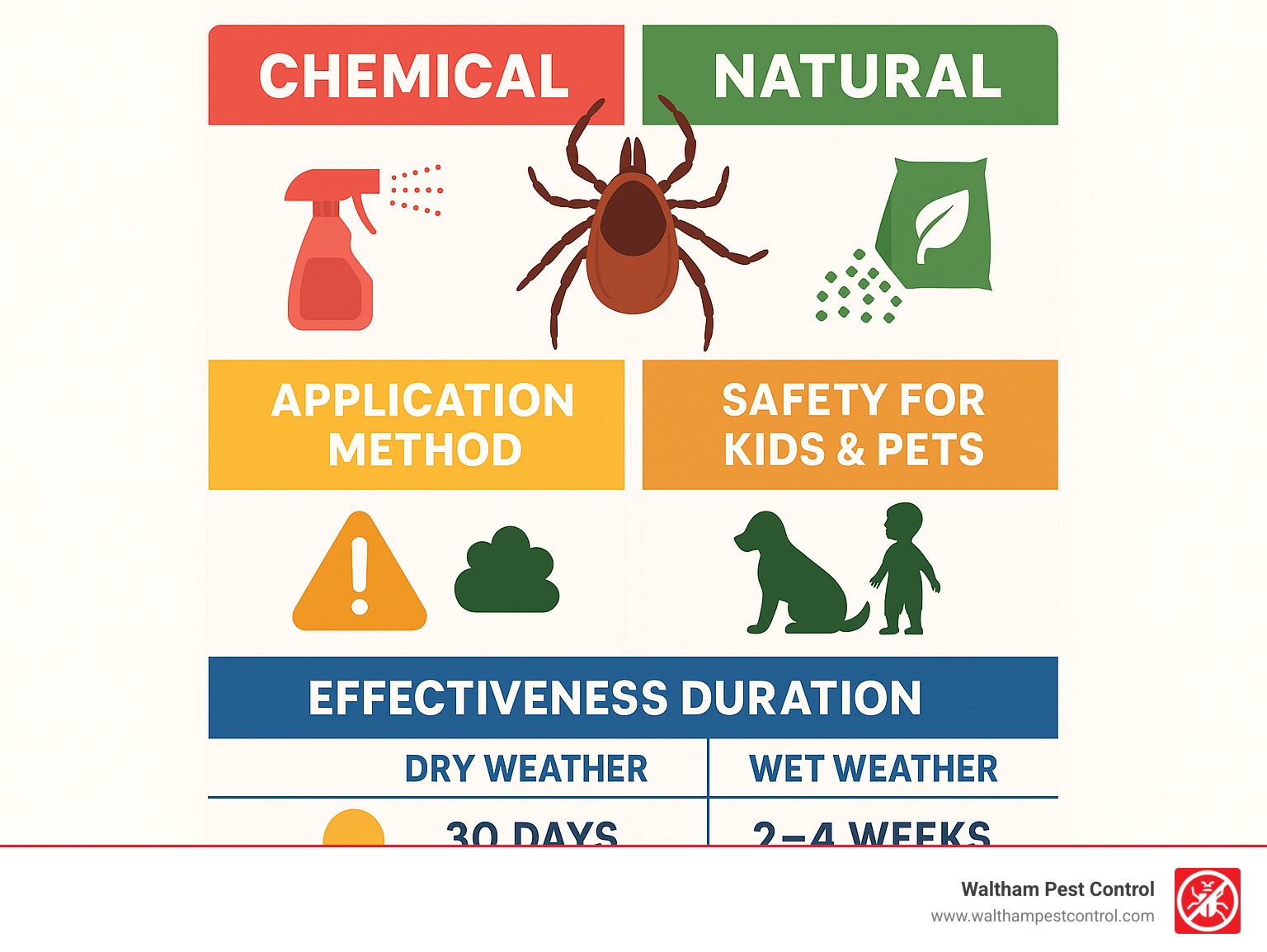
The best tick repellent for yard treatments comes down to a few proven options:
| Type | Product | Effectiveness | Duration | Safety |
|---|---|---|---|---|
| Chemical | Permethrin SFR | High | 30 days | Allow to dry before re-entry |
| Natural | Wondercide Cedar Oil | Moderate-High | 2-4 weeks | Safe when dry |
| Granular | Sevin Insect Killer | High | Up to 3 months | Keep pets away until watered in |
| Biological | Beneficial Nematodes | Moderate | Season-long | Completely safe |
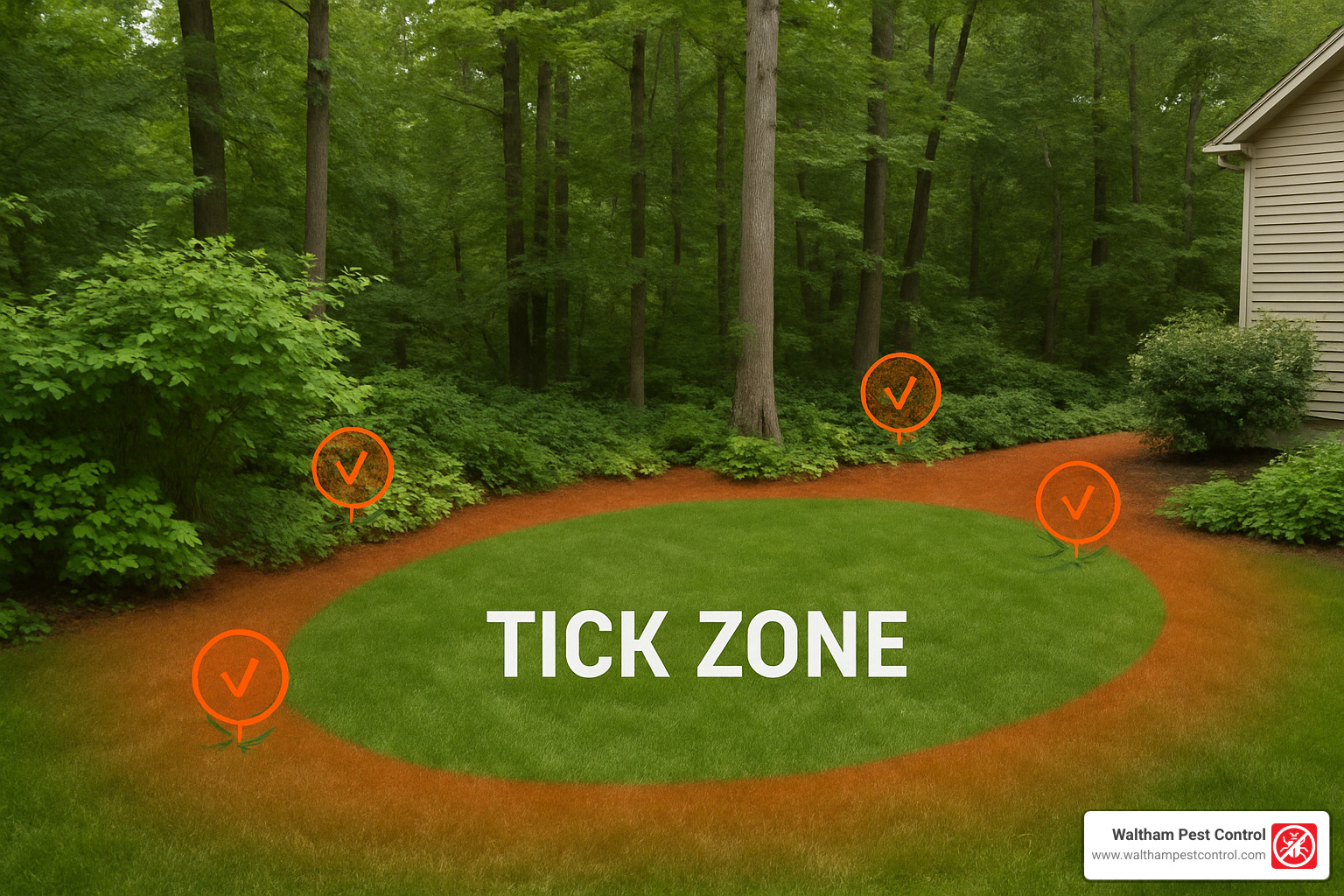
As warmer weather approaches, the threat of ticks in your yard becomes a serious concern for Massachusetts homeowners. These tiny arachnids aren’t just annoying—they’re potential disease carriers that can put your family and pets at risk. Immature nymphs, barely the size of a pinhead, cause approximately 98% of all tick bites and are most active from May through July. Even more concerning, over 80% of yard ticks remain in the outer 9 feet of your lawn, hiding in low-lying ground covers and shrubs where your family frequently spends time.
Creating an effective defense against ticks requires understanding both their habits and the various repellent options available. Whether you’re considering chemical treatments, natural alternatives, or landscape modifications, choosing the best tick repellent for yard spaces depends on your specific needs, safety concerns, and environmental values.
I’m Waltham Pest Control, President of Waltham Pest Control with over 40 years of experience helping Massachusetts residents find the best tick repellent for yard applications that balance effectiveness with family safety. My team has tested countless products and methods to determine what truly works for our New England climate and tick species.
Basic best tick repellent for yard vocab:
– flea and tick control services
– tick and mosquito
– tick spray services
Tick Dangers & Where They Lurk
The threat ticks pose goes far beyond a simple nuisance. These tiny arachnids are vectors for serious diseases that can affect both humans and pets. Understanding where ticks live and how they behave is crucial to selecting the best tick repellent for yard applications.
Those little dots you can barely see? They’re the real problem. Immature tick nymphs—about the size of a pinhead—are responsible for a whopping 98% of all tick bites. These nearly invisible pests reach their peak activity from May through July, making summer family barbecues and garden time particularly risky without proper protection.
What surprises many of my customers is learning that ticks aren’t wandering all over their property randomly. Most ticks—over 80%—stay within the outer 9 feet of your lawn. I call this the “danger zone” where your manicured grass meets wooded areas or gardens. It’s exactly where kids play and pets explore most frequently.
Ticks in Massachusetts aren’t just annoying—they’re dangerous disease carriers. The blacklegged tick (deer tick) transmits Lyme disease, which can cause severe joint pain, neurological problems, and long-term health issues if not caught early. American dog ticks spread Rocky Mountain spotted fever, while various tick species can transmit Anaplasmosis, Babesiosis, and the rare but serious Powassan virus.
According to scientific research on tick activity, a single female tick can lay up to 3,000 eggs at once. That’s why a few ticks in spring can become a yard overrun by mid-summer without proper intervention.
Why Your Yard Is a Tick Magnet
After four decades of tick control work, I’ve seen certain properties that practically roll out the red carpet for ticks. Your yard might be a tick paradise if you have:
High humidity areas that ticks need to survive. Those shady spots under trees where grass doesn’t grow well? Perfect tick real estate. Ticks literally dry out and die without moisture, so they seek these humid microenvironments.
Wildlife visitors like deer, mice, and chipmunks serve as tick taxis, dropping off passengers throughout your yard. That bird feeder might attract beautiful songbirds, but the seed that falls below attracts mice—the primary carriers of immature ticks.
Leaf litter and yard debris create tick condominiums with ideal humidity and protection. I’ve seen properties where neat-looking gardens bordered by unmaintained wooded areas become tick hotspots because of the leaf layer.
Woodpiles and stone walls might look charming, but they’re five-star hotels for small mammals that carry ticks. When stacked against your home, they create highways for rodents (and their tick hitchhikers) to approach your living spaces.
The good news? Understanding these tick magnets is the first step toward creating an effective defense strategy. By knowing exactly where ticks lurk, we can target treatments precisely where they’ll do the most good—making your outdoor living spaces safer for everyone who uses them.
Best Tick Repellent for Yard: Types Compared
When it comes to selecting the best tick repellent for yard use, homeowners have several options, each with its own advantages and considerations. Here’s a comprehensive comparison to help you make an informed decision:
Chemical Sprays: Finding the Best Tick Repellent for Yard Safety
Chemical repellents remain the heavy hitters in the tick control world, and with good reason. Permethrin-based products like Permethrin SFR deliver a one-two punch to ticks – they knock them down quickly and keep working for about a month. It’s pretty impressive stuff – research shows that people wearing permethrin-treated footwear were an astounding 73.6 times less likely to get tick bites compared to those with untreated shoes.
What makes permethrin particularly effective is how it attacks the tick’s nervous system on contact. You’re essentially creating an invisible shield around your yard that says “no ticks allowed.” Plus, you can treat both your yard and your outdoor gear, giving you double protection during those summer barbecues.
Bifenthrin products offer similar staying power and come in both liquid and granular forms, giving you flexibility in how you apply them.
When applying these products, focus on your yard’s “tick zone” – that crucial 9-foot perimeter where most ticks hang out. Pay special attention to areas where your lawn meets wooded spaces, around patios, and underneath shrubs where ticks love to hide.
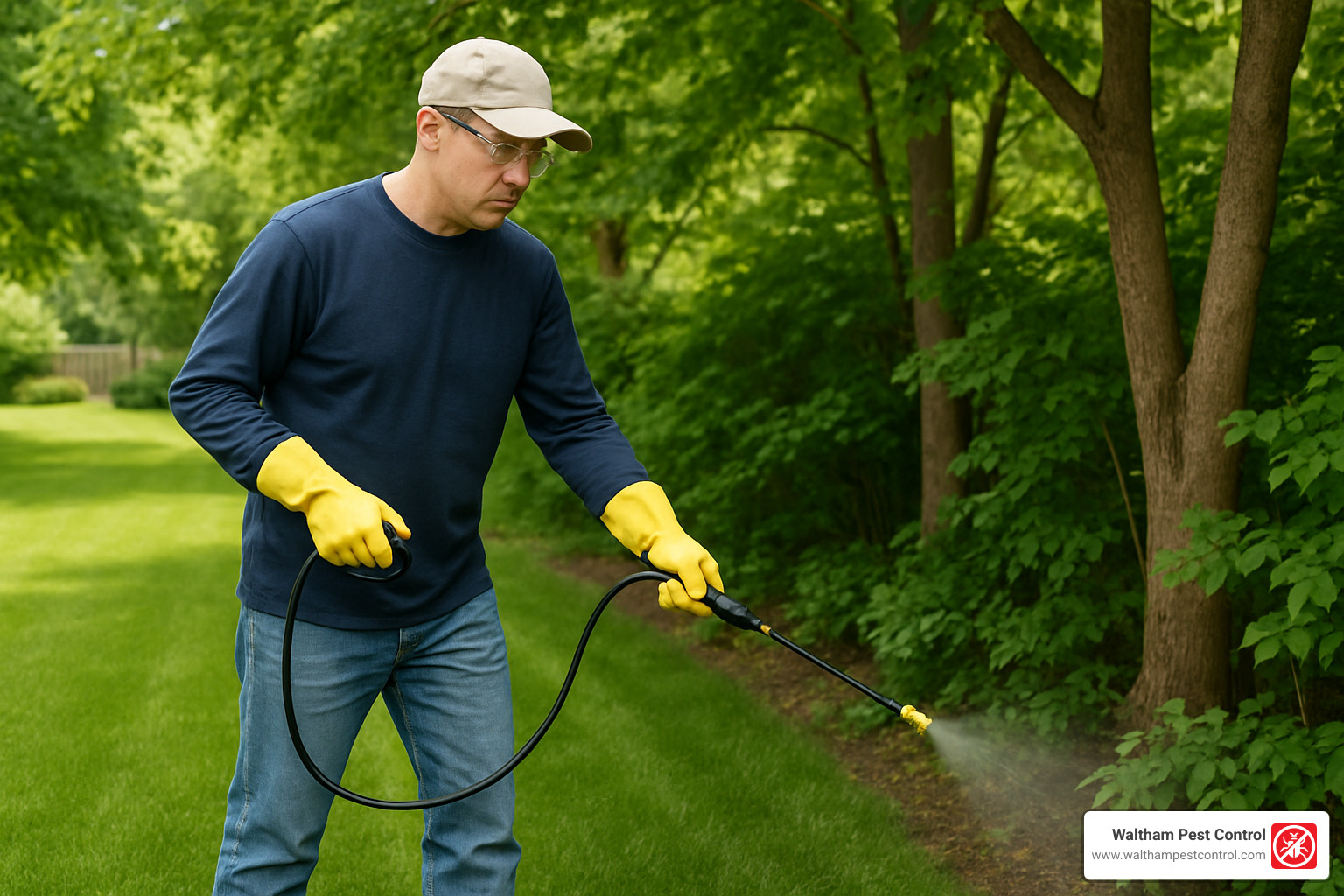
Safety always comes first, though. Let treated areas dry completely before the kids and pets return to play. Follow those re-entry intervals on the label – they’re there for a reason! And please, be mindful of our buzzing friends – avoid spraying flowering plants when pollinators are active.
Not sure which product matches your needs? The EPA offers a helpful tool for repellent choices that can guide your decision based on your specific situation.
Natural Solutions: Is Cedar Oil the Best Tick Repellent for Yard?
If you’re looking for a gentler approach to tick control, natural options have come a long way. Cedar oil-based products like Wondercide have become increasingly popular with families concerned about chemical exposure.
Cedar oil works differently than synthetic chemicals – it disrupts octopamine, a compound ticks need for their nervous systems to function properly. The best part? Mammals, birds, and fish don’t use octopamine, making these products generally safer for your two-legged and four-legged family members.
Many natural formulations add sesame oil (Wondercide includes it at 8.74%) to boost effectiveness. These natural combos aim to match chemical effectiveness while maintaining a gentler environmental footprint. It’s like getting the best of both worlds!
The trade-off with natural solutions is frequency – you’ll need to reapply every 2-4 weeks instead of monthly, and sooner after heavy rain. I’ve found that early morning or evening applications work best to prevent any plant burn when the sun is at its strongest.
In my 40 years of experience at Waltham Pest Control, I’ve seen natural solutions work wonderfully when they’re part of a consistent routine and combined with good yard maintenance practices. Many of our clients in Cambridge, Arlington, and Lexington prefer these family-friendly options, especially those with young children and pets.
Want to learn more about natural approaches? Visit our page on tick and mosquito control for additional insights.
Biological & Eco-Friendly Options
Mother Nature offers her own tick control solutions that can complement your repellent strategy. Beneficial nematodes are tiny soil-dwelling organisms that prey on tick larvae, providing season-long protection once established. They’re completely harmless to humans, pets, and beneficial insects – they only have eyes for the bad guys!
Tick tubes offer another clever approach. These simple devices contain permethrin-treated cotton that mice collect for their nests. Since mice are primary hosts for young ticks, this treats the ticks right where they feed, disrupting their life cycle before they can reach your yard.
Some of my more rural clients have acceptd poultry as tick predators. Chickens and guinea fowl make excellent tick patrol officers, consuming ticks as they forage around your property. Just remember, these feathered employees require proper housing and care.
For targeted areas, diatomaceous earth can be effective. This powdery substance damages ticks’ exoskeletons, causing them to dehydrate. The downside? It loses effectiveness when wet, so it’s not ideal for our sometimes rainy New England weather.
One of my favorite recommendations is creating a 3-foot wide barrier of wood chips or gravel between wooded areas and your lawn. This simple landscape modification creates a dry zone that ticks hate to cross – it’s like creating a moat around your castle!
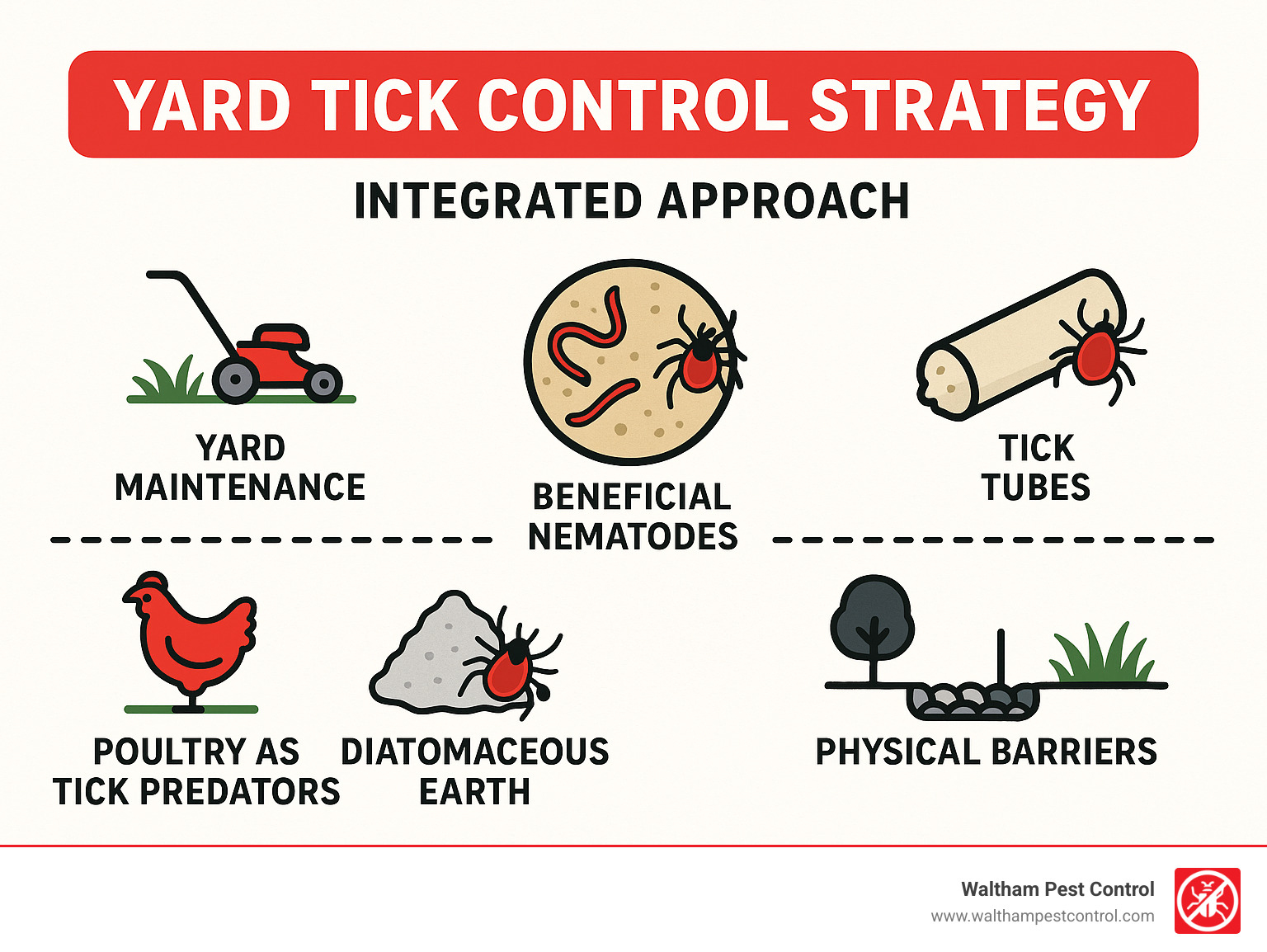
In my experience throughout Eastern Massachusetts, these biological approaches work best as part of a comprehensive strategy. Think of them as teammates rather than solo players – when combined with either natural or chemical repellents, they create a formidable defense system against ticks.
Proper Application & Timing
Getting the best tick repellent for yard treatment right isn’t just about choosing the right product—it’s also about how and when you apply it. Even the most effective repellents can fall short if they’re not applied correctly.
Before you start spraying, take a little time to prepare your yard. Give your lawn a good mow a day or two before application—this helps the repellent reach the soil surface where many ticks hide. Clear away children’s toys, pet dishes, and outdoor furniture from the treatment area. And keep an eye on the weather forecast—choose a day when rain isn’t expected for at least 24 hours after application.
When it comes to actually applying your chosen repellent, technique matters. Use slow, even sweeping motions with your sprayer to ensure you’re getting consistent coverage. A common mistake I see homeowners make is rushing through application, which leads to missed spots where ticks can survive. It’s worth taking your time to slightly overlap your passes, especially in those crucial outer 9 feet of your yard where most ticks congregate.
Focus your attention on transition zones between your lawn and wooded areas, under shrubs, along stone walls, and around ornamental beds. These tick “highways” are where you’ll get the most bang for your buck. Don’t forget to spray the bottom few feet of structures and fences too—ticks often use these as pathways into your yard.
Timing your application is just as important as where you spray. Early morning or evening applications work best for several reasons: temperatures are cooler (preventing plant damage), there’s usually less wind (reducing drift), and pollinators are less active (protecting beneficial insects). If you’re using chemical options like permethrin, this timing consideration is especially important for bee safety.
During peak tick season (May through July), you’ll need to maintain a consistent application schedule. For chemical repellents, plan on monthly applications, while natural cedar oil products typically need refreshing every 2-4 weeks. Mark your calendar now for the season—it’s easy to forget and suddenly find yourself with a tick problem again.
Mother Nature sometimes has her own plans, though. If you get a heavy downpour after treating your yard, you’ll likely need to reapply sooner than planned. Most repellents, even the chemical ones, lose significant effectiveness after substantial rainfall.
For the best protection, follow this simple seasonal calendar:
* Early spring (April): Apply initial treatments twice, spaced two weeks apart
* Peak season (May-July): Monthly applications for chemical options; bi-weekly for natural options
* Late summer/fall: Continue monthly applications until consistent freezing temperatures arrive
Don’t forget to protect yourself during application. Always follow the safety guidelines on the product label. At minimum, wear long sleeves, long pants, closed-toe shoes, and gloves. Eye protection is also a good idea when using sprayers, as even natural products can cause irritation. After you’re done, wash your hands thoroughly and launder your application clothes separately.
For many busy Massachusetts homeowners, finding time for proper application can be challenging. If you’d prefer to leave it to the professionals, our tick removal services provide expert application with industrial-grade equipment that ensures complete coverage and maximum effectiveness.
Beyond Repellents: Landscaping & Professional Help
While finding the best tick repellent for yard use is crucial, creating a truly tick-resistant property requires a comprehensive approach that includes smart landscaping and sometimes professional assistance.

Your yard’s design plays a significant role in tick management. Maintaining short grass at 3 inches or less creates an environment ticks simply don’t love – they prefer taller vegetation where humidity levels stay higher. I’ve seen dramatic differences in tick populations just from regular mowing habits!
Another simple but powerful strategy is removing leaf litter and yard debris promptly. Those piles of leaves might look innocent, but they create perfect tick nurseries with ideal moisture levels and protection. When I visit clients’ homes, this is often the first issue I point out.
Creating physical tick barriers can dramatically reduce tick migration into your recreational areas. A 3-foot wide barrier of wood chips, gravel, or dry mulch between wooded areas and your lawn acts like a desert that ticks rarely cross. Many of my clients are surprised at how effective this simple solution can be.
Your plant choices matter too. Strategic plantings that don’t attract deer and other wildlife can reduce tick carriers visiting your property. I always recommend positioning play equipment, outdoor furniture, and gathering spots away from yard edges and in sunny locations where ticks are less likely to survive.
Don’t overlook rodent control in your tick management plan. Mice and other small mammals are primary hosts for immature ticks, so addressing rodent populations can break the tick life cycle. Simple measures like keeping bird feeders away from the house can make a significant difference.
When to consider professional help
While DIY approaches work for many homeowners, there are situations where calling in the professionals makes good sense. If your property borders heavily wooded areas or known tick habitats, you’re fighting an uphill battle without professional-grade solutions. Similarly, homes in high-risk areas for Lyme disease often benefit from expert intervention.
I’ve worked with many families who tried DIY methods but continued finding ticks. Sometimes the complexity of the landscape makes thorough application difficult, or the tick pressure is simply too high for consumer products to manage effectively.
Professional services like ours at Waltham Pest Control offer several advantages. Our licensed technicians provide targeted application with commercial-grade products and equipment that simply work better. We take a comprehensive approach that addresses all aspects of tick control, not just spraying. Plus, we monitor results and adjust strategies as needed throughout the season.
Based on internet data (not our company’s pricing), professional tick control services typically range from $75-$225 per application, with costs varying based on property size, treatment type, and service frequency.
For Massachusetts homeowners seeking professional assistance, our tick control services near me page provides information on our comprehensive approach to tick management.
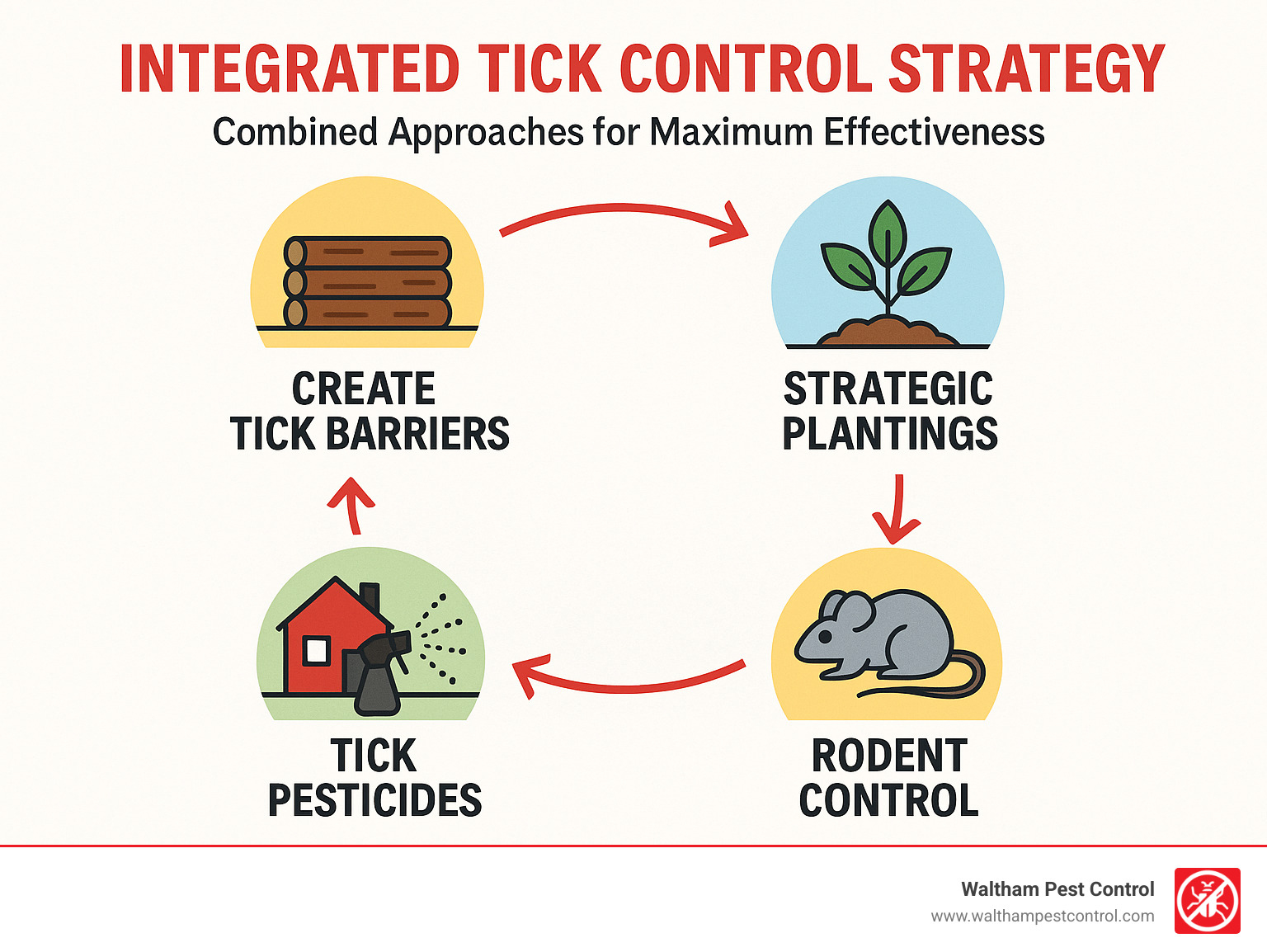
The most successful tick management plans combine the best tick repellent for yard applications with these landscape modifications and, when needed, professional expertise. This integrated approach creates multiple barriers against ticks, significantly reducing your family’s exposure risk.
Frequently Asked Questions about Yard Tick Control
How often should I spray my yard during peak tick season?
Timing is everything when it comes to tick control in your Massachusetts yard. The application frequency really depends on what type of product you’re using to keep those pesky ticks at bay.
If you’ve opted for chemical treatments like permethrin or bifenthrin, you’re looking at about a month of protection per application. These products create a relatively durable barrier during those critical peak months of May through July when nymphs are most active. Mark your calendar for monthly treatments to maintain continuous protection.
For those preferring natural treatments like cedar oil or other plant-based repellents, you’ll need a bit more diligence. These gentler options typically need refreshing every 2-4 weeks, and Mother Nature doesn’t do you any favors here – a good rainstorm can mean it’s time to reapply sooner rather than later.
Some homeowners prefer the convenience of granular products such as Sevin Insect Killer Lawn Granules. When properly applied and watered in, these can provide up to three months of protection, requiring less frequent reapplication throughout the season.
For the best protection strategy in our New England climate, we typically recommend starting with an initial application in April, just as things are warming up, followed by regular treatments based on your chosen product. And if your property backs up to woods or you’ve had tick problems in the past, you might want to consider more frequent applications to create a stronger protective barrier.
Are these repellents safe for children, pets, and pollinators?
Safety concerns are perfectly valid when choosing the best tick repellent for yard treatments, especially when you have little ones (human or furry) running around.
With chemical repellents, timing is crucial for safety. Most products are completely safe once they’ve dried, which typically takes 2-4 hours after application. The key is following those label instructions about re-entry times – they’re not just suggestions! Keep the kids and pets off the lawn until everything is bone dry. For our pollinator friends, applying in early morning or evening when they’re less active helps minimize impact. And please, avoid spraying flowering plants directly when bees are buzzing around.
Many families prefer natural repellents for their gentler approach. Products like Wondercide with cedar oil are specifically formulated to be safer around children and pets. These natural options target octopamine – a compound ticks need but mammals don’t – making them inherently more selective. That said, even natural products deserve respect – follow those label directions just as carefully.
If you’re using granular products, make sure to water them in thoroughly after application. Keep furry friends off the treated areas until the product has been watered in and dried completely. Different products have different safety profiles, so those label instructions are your best friend here.
At Waltham Pest Control, we understand the balancing act between effective tick control and family safety. We’re always happy to help you select treatments that give you peace of mind on both fronts.
Does heavy rain wash away the repellent completely?
Rain and tick repellents have a complicated relationship that varies depending on what product you’re using to protect your yard.
For chemical repellents like permethrin, there’s some good news. Once these products have completely dried (usually within 2-4 hours of application), they actually bind to surfaces and can withstand moderate rainfall without losing all effectiveness. That said, Mother Nature sometimes has other plans – heavy downpours or days of continuous rain will definitely reduce their staying power. After significant rainfall, it’s generally wise to consider reapplication, especially during peak tick season.
Natural repellents tend to be more vulnerable to washing away. Cedar oil and other plant-based products, while effective, simply don’t have the same staying power when the skies open up. Even a moderate rainfall can significantly diminish their effectiveness, often necessitating reapplication to maintain protection.
Interestingly, granular products actually need water to activate properly. You’ll want to water them in after application, which helps them penetrate the soil where they can do their work. Once properly activated, they’re relatively resistant to being washed away by normal rainfall. However, extended heavy rain can still reduce their effectiveness over time.
For all types of yard tick treatments, watching the weather forecast before application is just good common sense. Try to find a 24-hour rain-free window after treatment for optimal results. And remember, when in doubt after a heavy rain, a fresh application provides the best peace of mind during tick season.
Conclusion
Finding the best tick repellent for yard protection isn’t a one-size-fits-all solution. It’s about striking the right balance between what works effectively against ticks and what feels right for your family and environmental values. While chemical options like permethrin deliver powerful, longer-lasting protection, natural alternatives like cedar oil provide a gentler approach that many families prefer, even if it means more frequent application.
What we’ve learned from helping thousands of Massachusetts homeowners is that the most successful tick control strategies combine quality repellents with thoughtful landscape management. Those wood chip barriers, regular mowing, and leaf litter removal aren’t just busy work—they’re essential components that dramatically boost the effectiveness of whatever repellent you choose.
Many of our clients tell us that the true value of professional tick control isn’t just the treatments themselves, but the peace of mind that comes with them. After all, knowing your yard is protected means you can actually enjoy those summer barbecues and backyard games without constantly checking for ticks afterward.
At Waltham Pest Control, we bring over four decades of local experience to every property we treat. Our approach isn’t about selling you a standard package—it’s about designing a customized plan that addresses your specific tick challenges, landscape features, and family needs. We understand that a wooded property in Watertown faces different tick pressures than an urban yard in Cambridge.
Our licensed technicians take pride in delivering solutions that protect what matters most—your family and pets—while respecting our shared environment. We’ve fine-tuned our approaches specifically for New England’s unique climate and tick species, ensuring you get truly local expertise rather than generic solutions.
Don’t wait until you’re finding ticks on your pets or family members. Early intervention makes all the difference in keeping tick populations under control. Whether you’re in Burlington, Cambridge, Watertown, or any of our service communities, we’re ready to help you reclaim your outdoor spaces from these troublesome pests.
To learn more about our comprehensive tick control approach or to schedule a consultation with one of our local experts, visit our Tick Control Watertown, MA page or reach out to our team today.
The best tick repellent for yard protection is the one that’s properly applied, consistently maintained, and part of a broader strategy—exactly what we specialize in providing for our Massachusetts neighbors.
