

Best Termite Treatment: Top 5 Powerful Picks for 2025
Why Finding the Best Termite Treatment Is Critical for Your Property
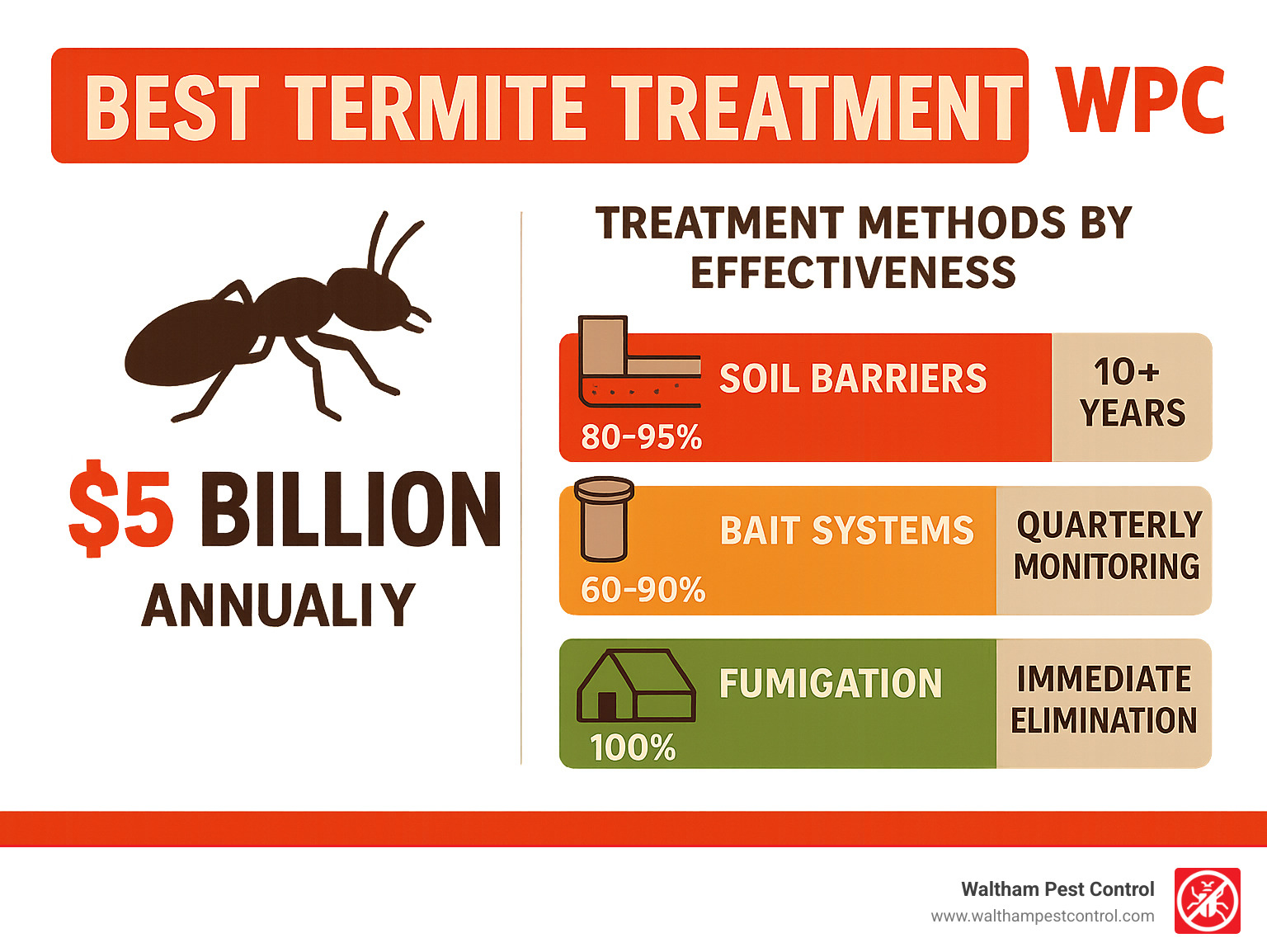
Best termite treatment options in 2025 focus on proven methods that eliminate entire colonies, not just individual termites. Here are the top approaches that deliver lasting results:
Top Termite Treatment Methods:
- Soil Barrier Treatments – Fipronil or imidacloprid applied around foundations (lasts 10+ years)
- Bait Station Systems – Monitor and eliminate colonies using growth inhibitors
- Wood Treatments – Direct injection with borates or foam for targeted control
- Fumigation – Whole-structure tenting for severe drywood infestations
Termites cause over $5 billion in property damage annually across the United States, with repair costs often running into the thousands for individual homeowners. These silent destroyers work 24/7, eating away at your home’s structural integrity while remaining largely invisible until significant damage occurs.
As Waltham Pest Control, President & CEO of Waltham Pest Control with over 40 years of experience in Eastern Massachusetts, I’ve seen how choosing the best termite treatment early can save homeowners tens of thousands in structural repairs. Our integrated pest management approach has protected countless properties by matching the right treatment method to each unique infestation scenario.
Best termite treatment vocab to learn:
- how do pest control companies treat for termites
- when do termites swarm
- are termites attracted to light
Why You Need a Plan in 2025
Climate change is shifting termite behavior patterns across the country. In Massachusetts, our primary concern remains Eastern subterranean termites, but we’ve observed swarms starting as early as late March when temperatures reach 70°F – weeks earlier than historical patterns.
This is why inspection comes first. Before selecting any treatment method, we conduct thorough property assessments to identify the specific termite species, colony locations, and extent of any existing damage.
How Termite Biology & Local Species Drive Treatment Success
The secret to finding the best termite treatment starts with understanding your enemy. Not all termites are created equal, and what destroys one species might barely affect another.
Eastern subterranean termites are our primary concern in Massachusetts. These underground architects build colonies that can house up to 500,000 workers. Their queen lives up to 25 years while producing over 1,500 eggs annually. These termites construct mud tubes – termite highways – to travel safely between their underground homes and your wooden structures.
Drywood termites operate completely differently. These independent spirits live entirely within the wood they’re devouring. They’re more common out west but can show up anywhere. The dead giveaway? Those distinctive pellet-shaped wood frass droppings that look like tiny grains of sand.
Formosan termites are the “super termites” – aggressive invaders that can house several million individuals in a single colony. Thankfully, they prefer warmer southern climates, but climate change is slowly expanding their territory.
Understanding swarm timelines helps predict when these pests are most vulnerable to treatment. For detailed timing information, check out when termites swarm.
Signs You Have a Problem
Discarded wings scattered around windowsills or doorways are like termite calling cards. When swarmers find their match, they drop their wings to start their new colony.
Hollow-sounding wood reveals their handiwork. They leave the outer shell intact while devouring everything inside. A simple tap test can reveal damaged wood.
Mud tubes snaking up foundation walls aren’t decorative features. These pencil-thin highways protect termites as they commute between soil-based colonies and your wooden buffet.
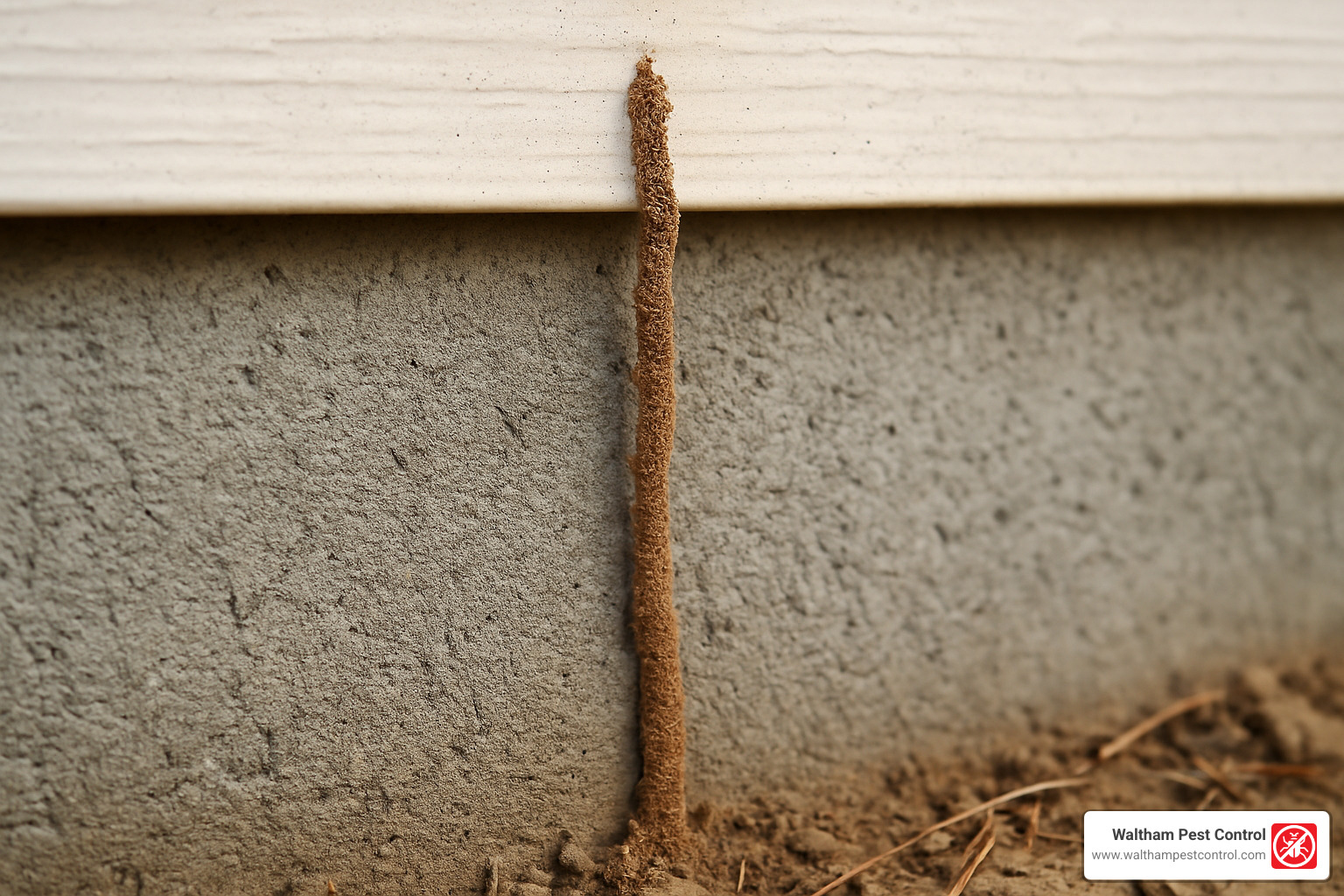
Frass accumulation looks like sawdust or sand but is actually termite waste product indicating drywood termite activity.
Common Species in New England & SoCal
In Massachusetts, we primarily deal with Eastern subterranean termites that time their swarms for late spring when soil temperatures hit 70°F. They’re completely dependent on soil contact for survival.
In California, Western drywood termites don’t need soil contact and can set up shop anywhere there’s wood and humidity. Formosan “super” termites are mostly confined to southern states but climate change is expanding their range.
What Is the “Best Termite Treatment”? Comparing 4 Proven Methods
The best termite treatment is the one that matches your termite species, building style, budget, and tolerance for disruption. After four decades in Eastern Massachusetts, we can usually narrow the choice to one of four proven strategies:
| Treatment Method | Effectiveness | Typical Protection* | Up-Front Cost* | Best Use Case |
|---|---|---|---|---|
| Soil Barriers (fipronil / imidacloprid) | ★★★★☆ | 8-10 yrs | $1,200–$3,500 | Subterranean termites, most New England homes |
| Bait Stations (hexaflumuron / novaluron) | ★★★★☆ | Ongoing with service | $900–$2,800 install + modest annual fee | Long-term monitoring or sites where trenching is impossible |
| Local Wood & Foam (borates, orange oil, Termidor FOAM) | ★★★☆☆ | 2-4 yrs spot areas | $300–$1,500 | Small, contained infestations or preventive hot-spots |
| Whole-Structure Fumigation | ★★★★★ | One-time 100 % kill | $2,500–$8,000 | Extensive drywood infestations, rare in MA |
*Estimates are internet-sourced averages, not Waltham Pest Control pricing. High-end figures can run three times higher on large or complex structures.
Fast Facts on Each Method
- Soil Barriers – A non-repellent liquid is trenched or injected around the foundation. Termites travel through the invisible zone, pick up the active ingredient, and transfer it throughout the colony. One professional visit protects most homes for close to a decade.
- Bait Stations – Underground stations are placed every 8–10 feet. Technicians inspect them quarterly; when termites feed, a slow-acting growth regulator is swapped in to wipe out the colony. You get both control and an early-warning system.
- Wood & Foam Treatments – Borate solutions, citrus-based orange oil, or expanding foams are injected directly into galleries or vulnerable framing. They are precise and low-odor but protect only the treated wood.
- Fumigation – The structure is tented and filled with gas that penetrates every void, guaranteeing complete elimination. Because it offers no residual, follow-up soil or bait protection is recommended.
In practice, we often combine methods (for example, a soil barrier plus a few strategic foam injections) to deliver layered defense without overspending.
2025 Product Roundup: Our Top Picks for the Best Termite Treatment
Modern chemistry gives us tools that are far more effective – and less intrusive – than the old chlordane days. Below are the products we reach for most often in Eastern Massachusetts. (Links are for reference only; we provide all materials during professional service.)
Editor’s Choice: Termidor SC (fipronil)
Invisible to termites, bonds tightly to soil, and still knocks down colonies years later. More than 20 years of data make it our day-to-day “set-and-forget” option.
Best DIY Granule: BioAdvanced Termite Killer
Consumer-grade imidacloprid granules you shake around the foundation and water in. Covers about 200 linear feet and offers a six-month stop-gap until professional service can be scheduled.
Eco-Friendly Pick: Altriset (chlorantraniliprole)
EPA Reduced-Risk designation, zero re-entry delay, and impressive colony control. Ideal for gardens, wells, or homes with kids and pets.
Spot-Treatment Hero: Bora-Care
Mineral salts diffuse through raw lumber and stay for the life of the wood. Great during renovations or for crawl-space framing.
Quick-Fix Foam: Termidor FOAM
Expands up to 30× to fill wall voids and galleries. Same active ingredient as Termidor SC, but in a form that reaches hidden spots without demolition.
These five products cover 95 % of situations we encounter – from a single termite bracket in a garage to full-perimeter protection for historic homes.
Professional vs DIY: Choosing Who Applies the Best Termite Treatment
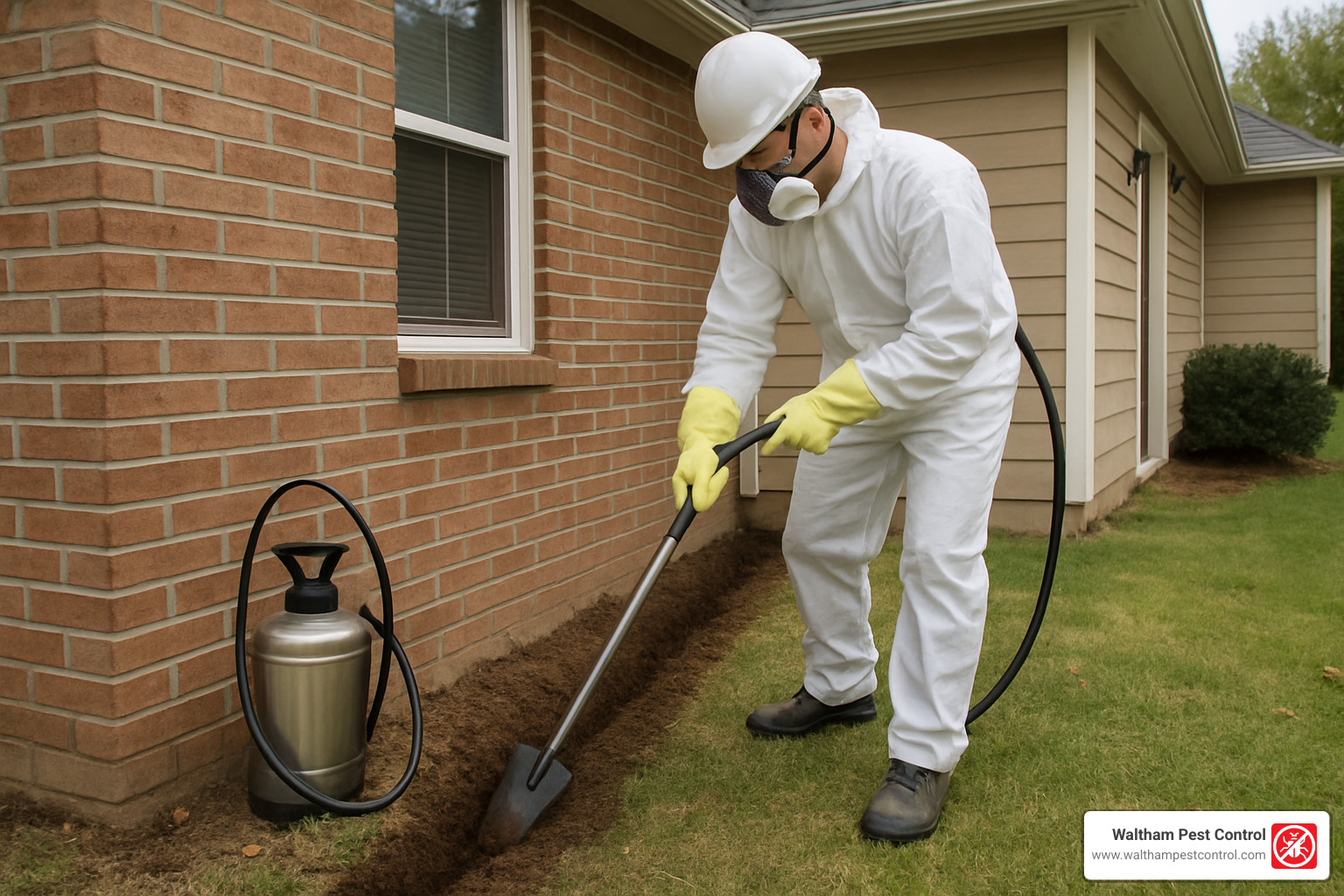
Some homeowners ask whether they can handle termites with a weekend trip to the hardware store. While small, contained problems sometimes respond to consumer products, the best termite treatment for most structures is still a licensed, warrantied application.
| Factor | Professional Service | DIY Approach |
|---|---|---|
| Access to strongest products | Yes (e.g., Termidor SC, Altriset) | No – consumer strength only |
| Equipment & safety gear | Commercial drills, metered injectors, PPE | Rental tools, basic PPE |
| Species identification | Included | Self-diagnosis required |
| Warranty / damage guarantee | Yes (retreatment & often repair) | None |
| Up-front cash outlay | Higher | Lower |
Hidden Costs of DIY
Under-dosing, skipped sections behind porches, or drilling into a water line can quickly erase any savings. We are routinely called to retreat homes that already spent hundreds on failed DIY materials – plus thousands on new floor joists.
For a risk-free quote or information on our transferable warranties, visit our exterminator termites near me page.
Prevention, Inspection & Maintenance After You’ve Found the Best Termite Treatment
Even the best termite treatment requires ongoing maintenance and prevention measures to ensure long-term effectiveness. Successful termite management combines initial treatment with regular monitoring and property modifications that reduce future risk.
Annual professional inspections remain critical even after treatment. Trained technicians can detect early signs of new activity, assess treatment integrity, and identify conditions that might attract future infestations.
Moisture control represents the most important prevention measure. Termites require water for survival, and eliminating moisture sources significantly reduces property attractiveness. This includes fixing plumbing leaks, improving drainage, and maintaining proper ventilation.
Wood clearance around foundations creates inspection zones and eliminates termite bridges. We recommend maintaining 6-inch clearances between soil and any wood components including siding, decks, and landscaping features.
Landscaping modifications can reduce termite habitat near structures. This includes removing wood mulch within 3 feet of buildings, eliminating wood debris, and managing irrigation to prevent soil saturation.
For comprehensive inspection services, visit our pest inspections page.
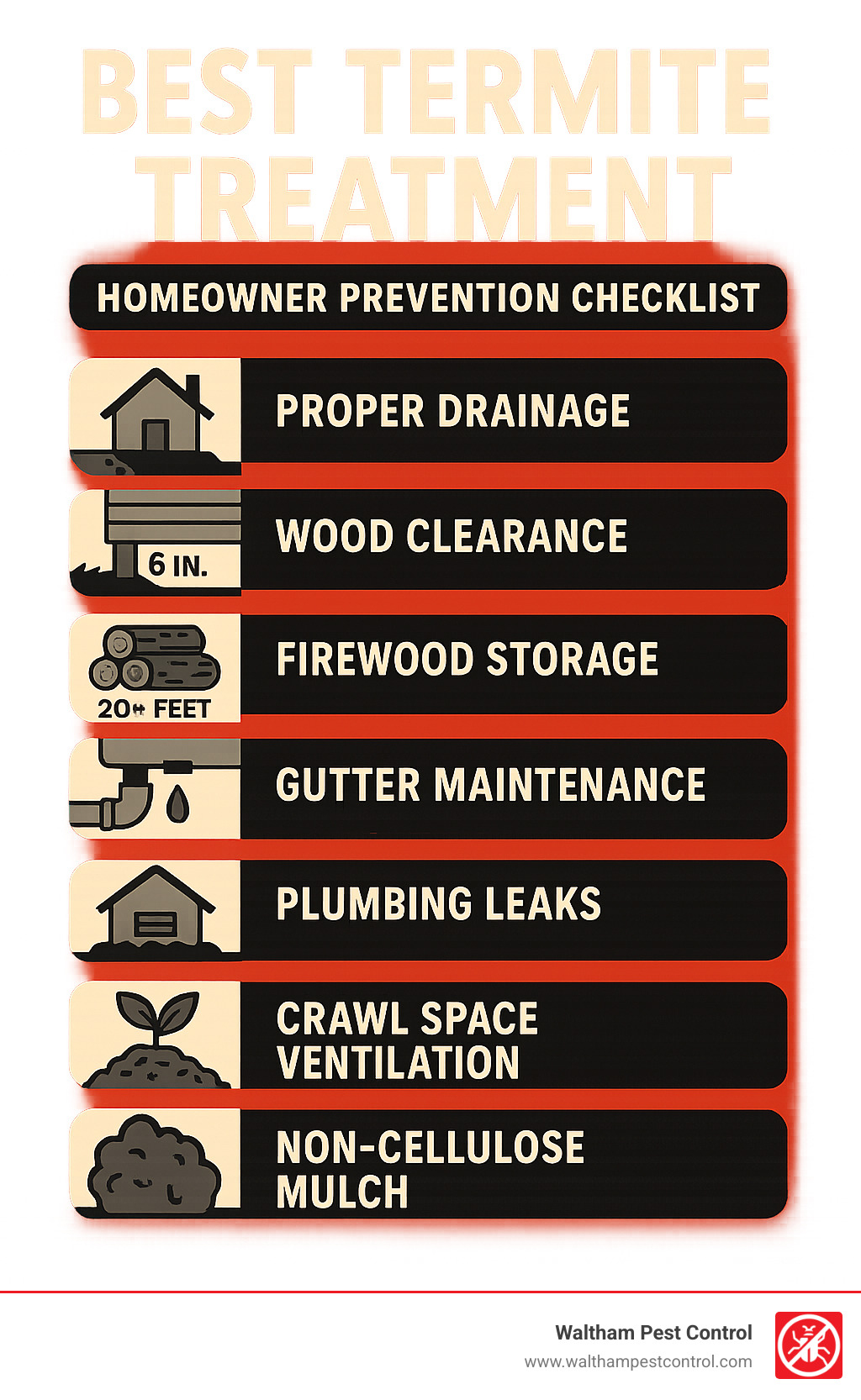
Smart Homeowner Checklist
Moisture Management:
- Clean gutters and downspouts regularly
- Extend downspouts at least 4 feet from foundations
- Grade soil away from buildings to promote drainage
- Repair plumbing leaks promptly
- Maintain crawl space ventilation
Wood Management:
- Store firewood at least 20 feet from buildings
- Lift stored lumber off ground contact
- Remove tree stumps and buried wood debris
- Maintain 6-inch clearance between soil and wood siding
- Replace damaged or rotted wood promptly
Landscaping Practices:
- Use non-cellulose mulch within 3 feet of buildings
- Avoid excessive irrigation near foundations
- Trim vegetation away from building contact
- Remove dead plant material regularly
Regular Monitoring:
- Inspect foundations monthly for mud tubes
- Check for swarmer activity during spring months
- Monitor for wood damage in vulnerable areas
- Document any changes for professional review
Warranty & Re-application Timelines
Treatment longevity varies significantly based on method, environmental conditions, and maintenance practices. Understanding realistic timelines helps homeowners plan for ongoing protection costs.
Soil barrier treatments using fipronil or imidacloprid typically provide 8-10 years of effective protection under normal conditions. Environmental factors like heavy rainfall, soil pH, and organic matter content can affect residual longevity.
Bait station systems require quarterly monitoring visits with annual hardware replacement. The stations themselves may last 3-5 years before requiring replacement, but ongoing service is essential for effectiveness.
Wood treatments with borates provide life-of-wood protection unless lumber is removed or replaced. Foam treatments typically require reapplication every 2-4 years depending on environmental exposure.
Fumigation provides immediate 100% kill but no residual protection. Properties may require follow-up treatments if new infestations occur from external sources.
Professional warranties typically cover retreatment costs if termites return during the warranty period. Coverage may also include structural damage repair up to specified limits, providing additional peace of mind.
Frequently Asked Questions About the Best Termite Treatment
How long will protection last?
• Soil barriers: about 8–10 years under normal New England conditions.
• Bait stations: indefinite, provided quarterly service continues and hardware is replaced every 3–5 years.
• Borate wood treatments: life of the treated lumber.
• Foam spot treatments: usually 2–4 years.
What does treatment cost in MA vs. CA?
Internet averages (not Waltham pricing) show: soil barriers $1,200–$3,500+, bait installs $900–$2,800 with annual service, and fumigation $2,500–$8,000. California prices trend 20–30 % higher due to labor and regulatory costs.
Are there effective eco-friendly options?
Yes. Altriset, orange-oil spot treatments, and borate wood preservatives all deliver solid results with reduced environmental impact. We design an Integrated Pest Management plan that minimizes chemistry while maximizing protection.
Conclusion & Next Steps
Choosing the best termite treatment isn’t about finding a one-size-fits-all solution – it’s about matching the right method to your unique situation. After four decades of protecting Eastern Massachusetts homes, I’ve learned that the most effective approach combines understanding your local termite species with selecting proven treatment methods that deliver lasting results.
Here in Eastern Massachusetts, we’re primarily dealing with Eastern subterranean termites that live underground and build those telltale mud tubes to reach your home’s wooden structure. For these persistent invaders, soil barrier treatments using products like Termidor SC create that invisible protective shield around your property that keeps working year after year.
But maybe your situation calls for something different. If you’re in an environmentally sensitive area or trenching around your foundation isn’t practical, bait station systems offer excellent ongoing protection with the added benefit of continuous monitoring. These systems actually eliminate entire colonies over time, not just the termites you can see.
For those spot problems – maybe you found evidence of activity in your garage or noticed some suspicious wood damage – targeted treatments with foams or borate solutions can address specific areas without the need for comprehensive property treatment.
The key insight from our decades of experience? Early action with the right termite treatment saves homeowners thousands of dollars in structural repairs. Termites don’t take breaks – they’re working 24/7 to damage your home’s foundation, floor joists, and support beams. Every month you wait potentially means more extensive damage and higher repair costs.
At Waltham Pest Control, we’ve seen how proper treatment selection transforms a potentially devastating termite problem into a manageable situation. Our integrated approach starts with thorough inspection to identify exactly what species you’re dealing with, where they’re active, and what treatment method will be most effective for your specific property.

Your home represents your largest investment, and protecting it shouldn’t be left to chance. Whether you’re dealing with active termites or want to prevent future problems, the best termite treatment is one that’s properly selected for your situation, professionally applied, and backed by ongoing support.
We serve communities throughout Middlesex County, Essex County, Norfolk County, and the greater Boston area with the same commitment to quality that’s guided our work for over 40 years. Our licensed technicians understand local termite behavior patterns and can recommend the most cost-effective protection strategy for your property.
Ready to take action? Contact us for a comprehensive inspection that identifies your specific termite risk and treatment options. We’ll walk you through exactly what we find and explain which treatment approach makes the most sense for your situation and budget.
For more detailed information about our services, check out our termite treatment near me page or learn more about our thorough pest inspections. You can also read about how pest control companies treat for termites to understand what to expect from professional treatment.
Don’t wait until you see visible damage – by then, termites may have been quietly working for months or even years. The best time to address termite protection is right now, before these silent destroyers can compromise your home’s structural integrity.
