

Best Mite Treatment for Rats: Ultimate 2025
Why Finding the Best Mite Treatment for Rats Matters for Your Pet’s Health
If you’ve noticed your pet rat scratching excessively, developing scabs, or losing fur, you’re likely dealing with a mite infestation. These microscopic parasites are a common health issue for pet rats, causing significant discomfort that can lead to painful wounds and secondary infections.
While distressing, mites are highly treatable with prompt action and the right approach. The best mite treatment for rats involves a combination of veterinary-prescribed medication, like Selamectin or Ivermectin, and a thorough cleaning of your pet’s environment. It’s crucial to consult a vet for a proper diagnosis and safe dosage, as over-the-counter products for other animals can be dangerous.
With proper care, most rats recover completely. This guide will cover how to identify mites, the most effective treatments, and how to prevent future infestations.
I’m Waltham Pest Control, President & CEO of Waltham Pest Control. With over 40 years of experience, I understand the link between pet health and home pest control. Wild rodents can be a source of mite transmission, so a pest-free home is a key part of protecting your pets.
Identifying a Mite Infestation on Your Pet Rat
The first step in finding the best mite treatment for rats is recognizing the problem. While mites are microscopic, the distress they cause is obvious once you know what to look for. Catching the signs early can save your rat from unnecessary suffering.
Common Symptoms of Mites
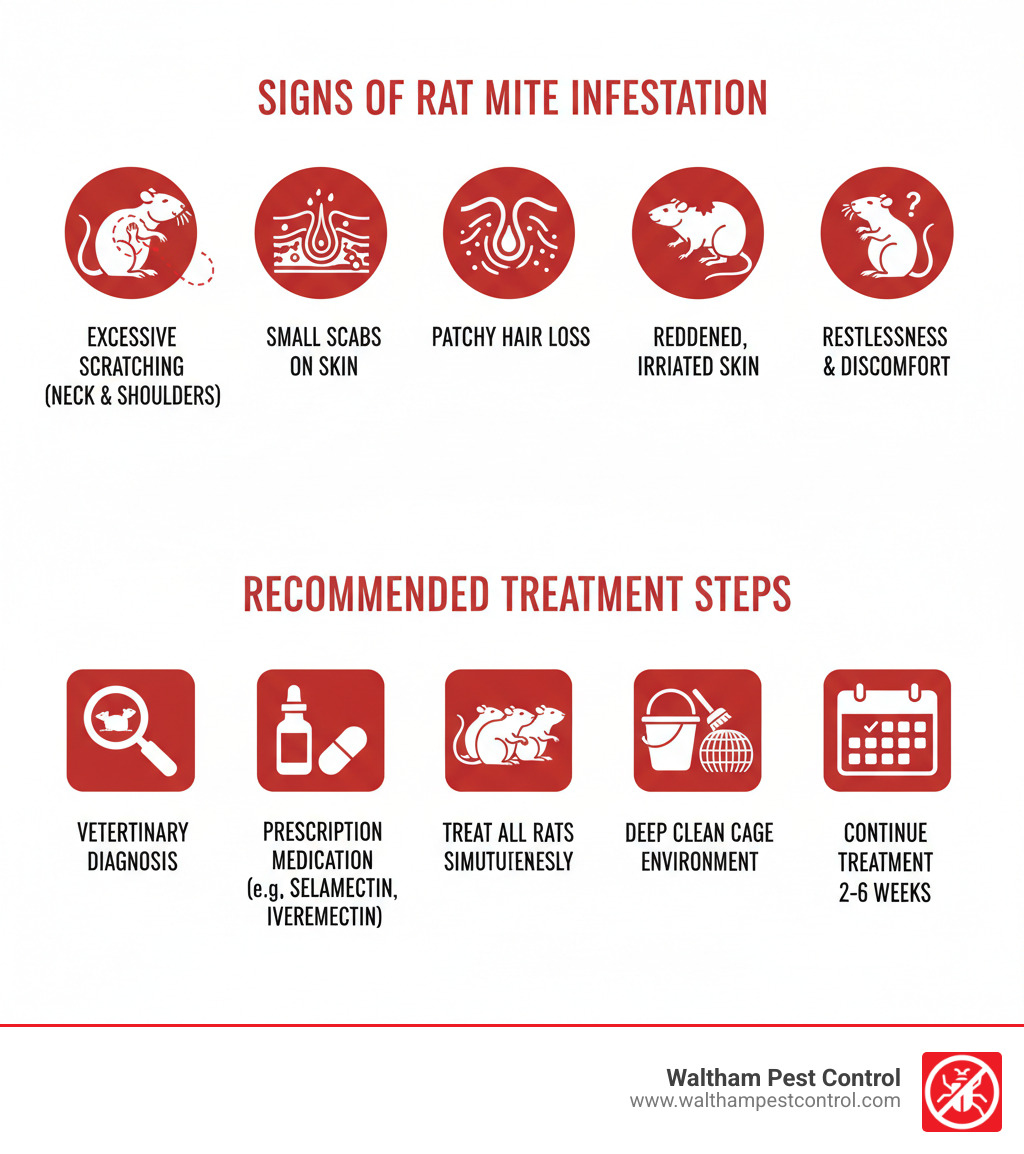
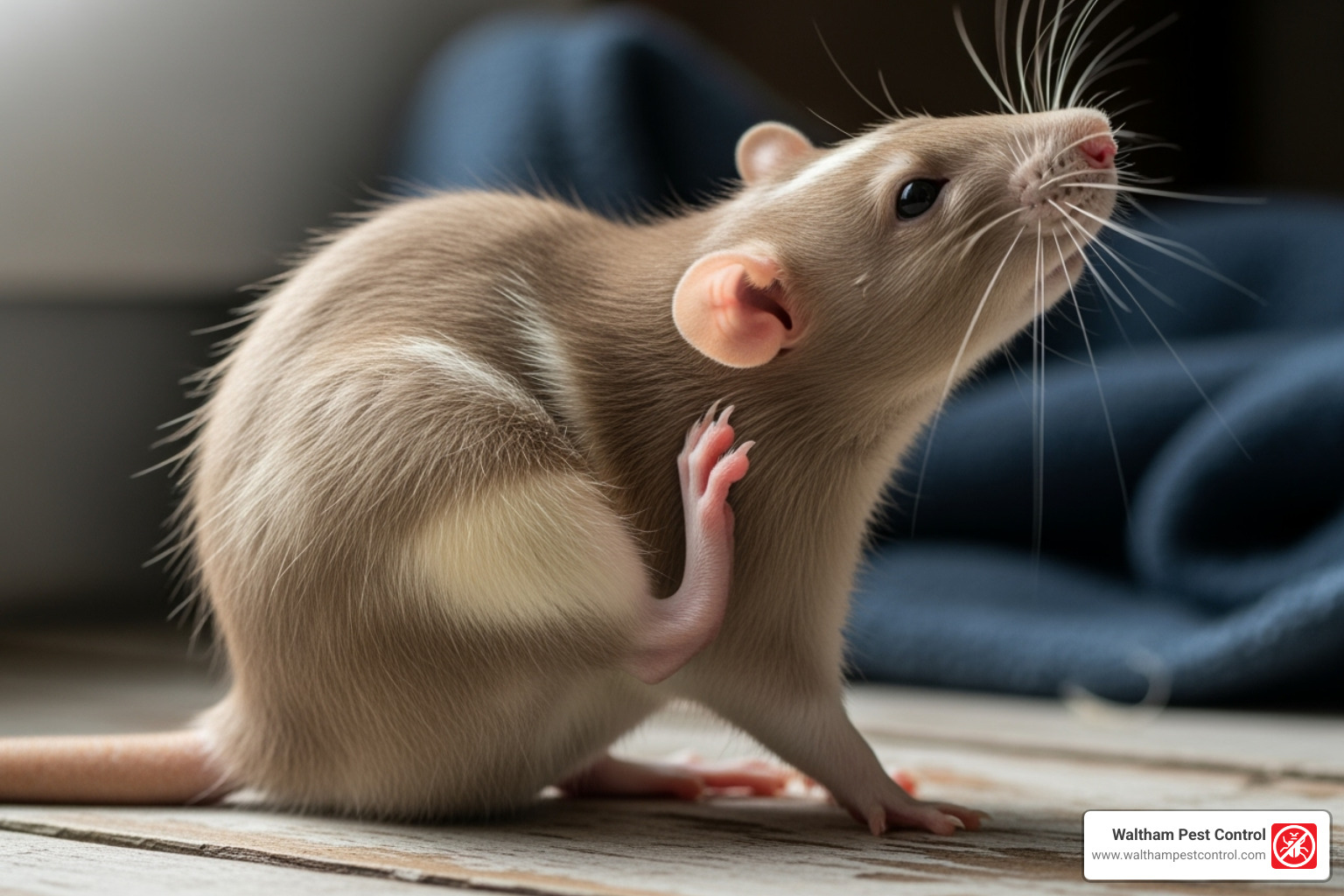
The most common sign of mites is intense, frantic itching (pruritus), which is different from normal grooming. This constant scratching often leads to other symptoms:
- Self-inflicted wounds and scabs: Look for small scabs and red, irritated skin, especially around the neck, shoulders, and back.
- Hair loss: You may see patchy hair loss or thinning fur in the areas where your rat scratches most.
- Behavioral changes: An infested rat may seem restless, agitated, and unable to get comfortable.
- Crusty lesions: Burrowing mites can cause warty-looking lesions on the ears, nose, tail, or legs.
Symptoms can be more severe in elderly rats or those with weakened immune systems. If one rat is scratching, assume all have been exposed.
Distinguishing Mites from Other Skin Issues
Itchy skin doesn’t always mean mites. Other conditions can cause similar symptoms, which is why a veterinary diagnosis is essential.
- Lice: You may be able to see their tiny, silvery eggs (nits) attached to hairs.
- Fungal or Bacterial Infections: Fungal issues cause flaky skin, while bacterial infections (often secondary to scratching) can create abscesses.
- Allergies: Reactions to bedding, food, or detergents can cause intense itching.
- Other Causes: Stress, boredom (leading to over-grooming), hormonal issues, or genetic conditions like the sparse fur of Double Rex rats can be mistaken for mites.
A vet can perform tests like skin scrapings to get a definitive diagnosis. This is crucial for choosing the right treatment. Also, be aware that a rodent problem in your home could be the source, as wild rodents can transfer mites to pets.
Understanding the Different Types of Rat Mites
Not all mites are the same. These microscopic arachnids come in several varieties, which helps explain why veterinary treatment is so specific. Mites are generally categorized as surface mites (living on the skin) or burrowing mites (tunneling into the skin).
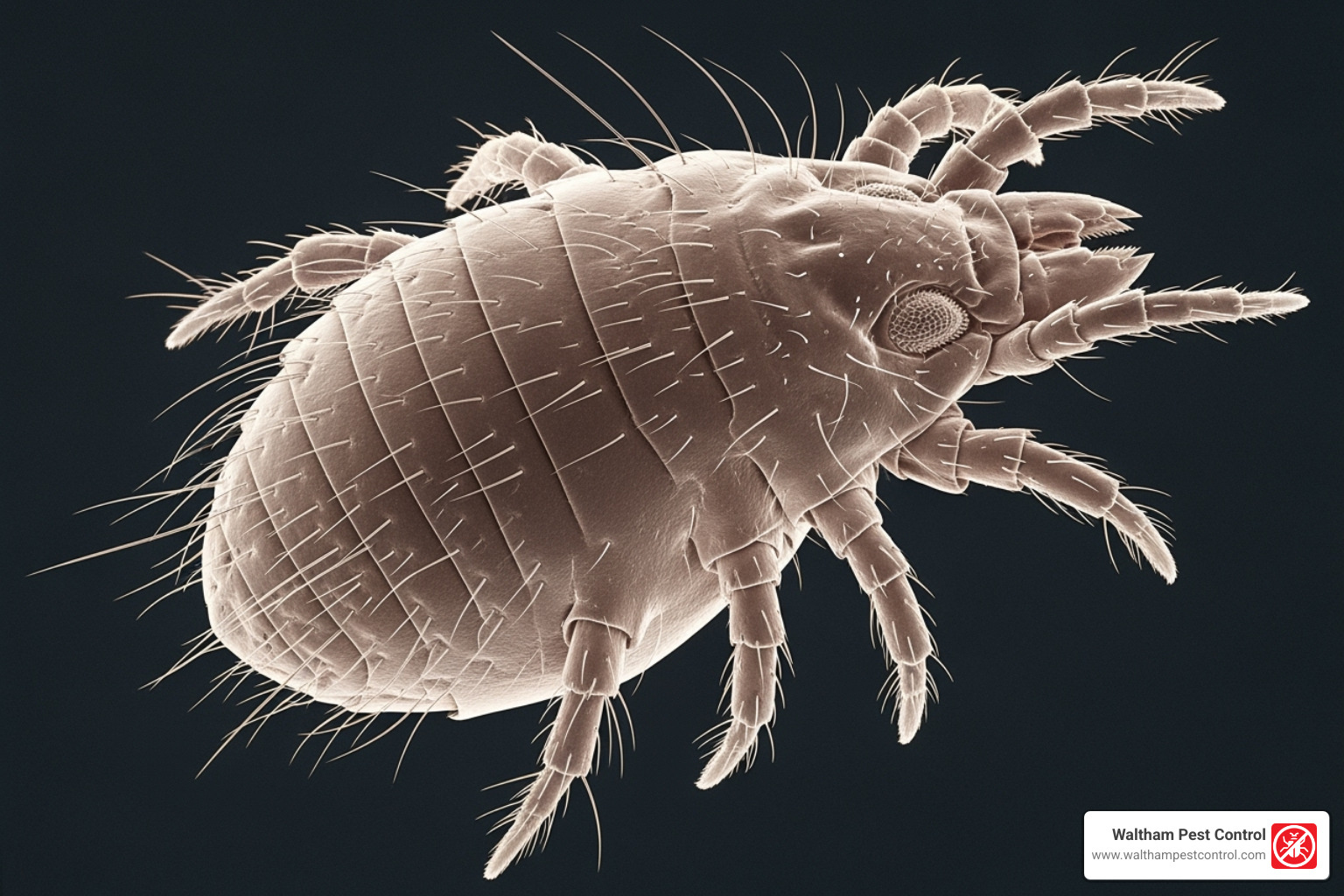
Their life cycle is typically two to three weeks, which is why treatment often requires multiple doses to kill newly hatched mites. Mites are transmitted through direct contact between rats or from contaminated bedding and toys. Wild rodents can also introduce mites into your home.
The Main Culprits: Fur, Ear, and Tropical Rat Mites
Three species are most common in pet rats:
- Rat Fur Mites (Radfordia ensifera): The most common type. These surface mites cause intense itching and scabs, primarily on the neck and shoulders.
- Ear Mange Mites (Notoedres muris): These burrowing mites cause crusty, warty lesions on the ears, nose, and other areas.
- Tropical Rat Mites (Ornithonyssus bacoti): These mites will also bite humans. They can survive for longer periods in the environment and may be visible as tiny red or black dots.
The table below summarizes the key differences:
| Mite Type | Scientific Name | Primary Symptoms | Location on Rat | Visibility | Host Specificity |
|---|---|---|---|---|---|
| Rat Fur Mites | Radfordia ensifera | Intense itching, scabs on neck and shoulders, hair loss | Fur and skin surface | Not visible to naked eye | Highly specific to rats |
| Ear Mange Mites | Notoedres muris | Crusty, warty lesions; head shaking | Ears, nose, tail, genitals, legs | Not visible to naked eye | Specific to rodents |
| Tropical Rat Mites | Ornithonyssus bacoti | Bites humans and rats; general irritation | Anywhere on body; lives in environment | Barely visible as tiny red/black dots | Low specificity; bites multiple species |
Knowing the mite type helps your vet determine the best treatment plan, especially since tropical rat mites require more aggressive environmental cleaning.
Identifying a Mite Infestation on Your Pet Rat
The earlier you catch a mite infestation, the easier it is to treat and the less your rat will suffer. I know how distressing it can be to watch your beloved pet scratching frantically, unable to find relief. The good news is that mites leave behind clear signs, even though the parasites themselves are microscopic and nearly impossible to spot without magnification.
Common Symptoms of Mites
The first thing you’ll probably notice is intense itching—technically called pruritus. This isn’t your rat’s normal grooming behavior. We’re talking about frantic, relentless scratching that seems to offer no relief. Your rat might scratch so vigorously that they actually hurt themselves in the process.
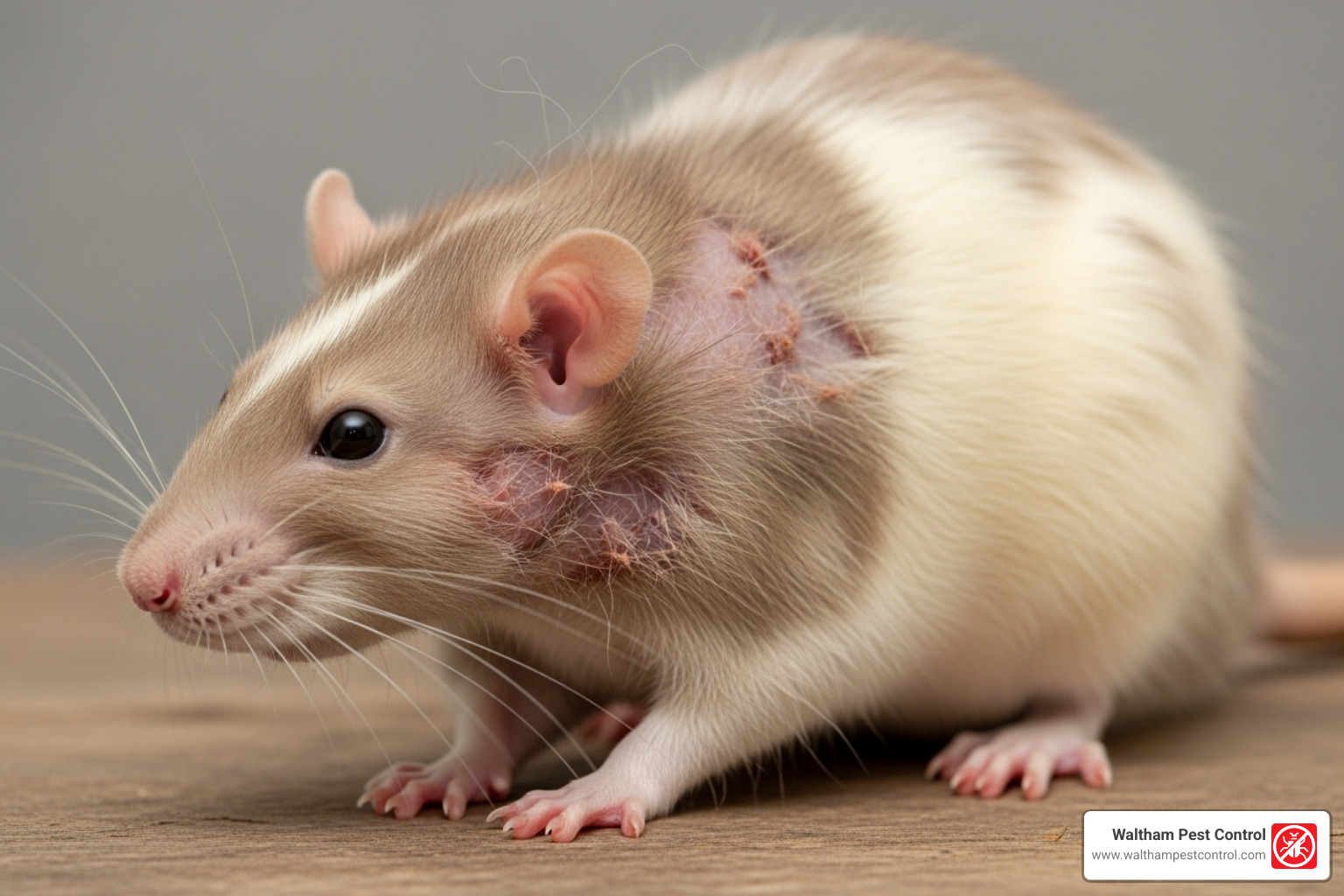
Watch for reddened, inflamed skin, especially in the areas they can reach most easily. The neck, shoulders, and back are common hot spots, simply because that’s where your rat can scratch most effectively. You’ll often see small scabs forming in these areas from self-inflicted wounds. Sometimes you might even notice tiny white casings clinging to the fur—these are actually remnants left behind by the mites themselves.
Hair loss and thinning fur are telltale signs, particularly around the head and neck. This can happen either from the mites affecting the hair follicles directly or from your rat over-grooming in an attempt to relieve the maddening itch. In cases of burrowing mites, you might see crusty, warty-looking lesions on the ears, nose, tail, genitals, or legs.
Beyond the physical symptoms, watch for behavioral changes. A normally sweet-tempered rat might become irritable or restless. They may seem unable to settle down, constantly shifting positions or grooming themselves obsessively. Some rats become so distressed they even act aggressively toward their cage mates or their human companions.
It’s worth noting that elderly rats or those with weakened immune systems often show more severe symptoms, even when their younger, healthier cage mates seem barely affected. Their bodies simply can’t fight off the infestation as effectively.
Distinguishing Mites from Other Skin Issues
Here’s where things get tricky. Your rat’s scratching and hair loss might not be from mites at all, and jumping to conclusions can delay proper treatment. I’ve seen many pet owners assume mites when the real culprit was something entirely different.
Lice are insects rather than arachnids, and while they can cause similar itching, you might actually be able to see their silvery nits (eggs) attached to individual hairs. Lice are also typically more host-specific than mites.
Fleas are less common on pet rats but can hop over from household dogs or cats. Look for tiny black specks in the fur—that’s flea dirt, which is actually digested blood. Not the most pleasant thought, I know.
Fungal infections create flaky, itchy patches and hair loss, but they usually don’t produce the same scabbing pattern you’d see with mites. Bacterial infections, particularly Staphylococcus aureus, often develop as a secondary problem after mites have already damaged the skin. The scratching creates open wounds, bacteria move in, and suddenly you’re dealing with abscesses on top of the original mite problem.
Allergic reactions to bedding materials, food, or even household dust can cause significant itching and skin irritation without any parasites being involved. I’ve known rats who were allergic to certain types of wood shavings or scented bedding products.
Stress and boredom can trigger over-grooming or barbering, where rats chew their own fur or that of their cage mates. This creates patchy hair loss that looks surprisingly similar to mite-related damage. Other conditions like certain cancers, hormonal issues (buck grease in males), or genetic traits (Double Rex rats naturally have patchy, thin fur) can also mimic parasite symptoms.
This is exactly why a veterinary diagnosis is absolutely essential. Your vet can perform skin scrapings, tape tests, or hair plucking to identify exactly what’s causing your rat’s discomfort. They’ll then recommend the best mite treatment for rats for your specific situation, rather than you guessing and potentially using the wrong approach.
And if you’re dealing with a rodent problem elsewhere in your home—wild mice or rats in the walls or basement—these can actually be a source of mite transmission to your pets. It’s worth addressing both issues simultaneously for complete protection.
The Best Mite Treatment for Rats: A Veterinary-Approved Plan
When it comes to getting rid of mites on your rat, a visit to the veterinarian is the first and most crucial step. Professional expertise is required to safely treat a persistent condition like mites.
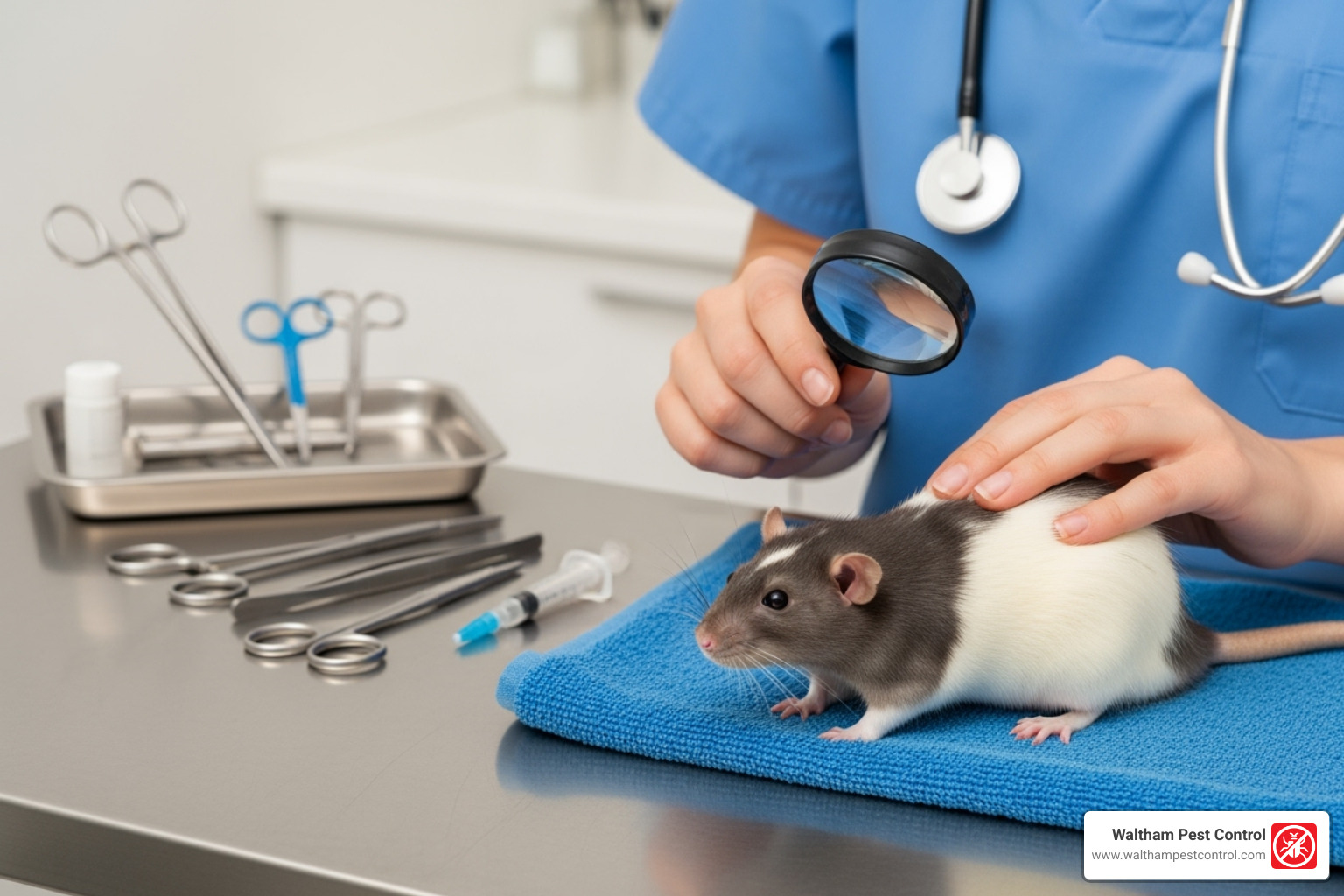
Your vet will diagnose the issue based on symptoms and possibly a skin scraping or tape test. Because mites are highly contagious, all rats in a group should be treated simultaneously.
Finding the Best Mite Treatment for Rats with Your Vet
The safest and most effective treatments are prescription anti-parasitic drugs. Your vet will calculate the precise dose based on your rat’s weight. Common medications include:
- Selamectin (Revolution): Considered one of the best mite treatment for rats, this topical medication is applied to the back of the neck. One dose is often enough, but a second may be needed after 30 days to kill newly hatched mites.
- Ivermectin: This effective anti-parasitic can be given orally or topically. Treatment usually involves several doses spaced a couple of weeks apart to break the mite life cycle.
- Amitraz (Mitaban): For stubborn infestations, a vet might prescribe this potent topical treatment. It requires careful application and strict adherence to vet instructions due to safety considerations.
For comprehensive rodent prevention and control in your home to eliminate external sources of mites, professional services are recommended.
Why Over-the-Counter and DIY Treatments Can Be Dangerous
We strongly advise against using OTC products or home remedies for rat mites.
- Toxicity: Products for cats or dogs often contain ingredients like permethrin, which is highly toxic to rats.
- Incorrect Dosing: OTC products are not formulated for a rat’s small size, leading to risk of overdose or ineffective treatment.
- Ineffective Ingredients: Many non-prescription products are not strong enough to kill rat mites, which prolongs your pet’s suffering.
Always prioritize your rat’s health by seeking professional veterinary advice for a safe and effective treatment plan.
Environmental Control and Preventing Future Infestations
Treating your rat is only half the battle. Mites and their eggs can survive in bedding, toys, and cage corners, waiting to reinfect your pet. A thorough environmental cleaning is essential to break the cycle.

A Rigorous Cleaning Protocol for Your Rat’s Habitat
This deep cleaning should be done weekly during treatment.
- Empty and Scrub the Cage: Remove everything. Scrub the cage with hot, soapy water. Disinfect with a 1:10 bleach-to-water solution, let it sit for 10 minutes, then rinse thoroughly and dry completely.
- Wash Fabric Items: Machine wash all hammocks and fleece bedding in hot water and dry on the highest heat setting.
- Discard Porous Items: Throw away all wooden toys, cardboard, and other items that cannot be fully sanitized. Mites can hide in these materials.
- Sanitize or Freeze Other Items: Disinfect plastic toys, bowls, and bottles. For items that can’t be washed, freeze them for 24-48 hours to kill mites and eggs.
- Clean the Surrounding Area: Vacuum carpets and furniture around the cage and dispose of the vacuum bag outside immediately.
How to Prevent Mites: The Best Mite Treatment for Rats is Proactive Care
The absolute best mite treatment for rats is prevention.
- Quarantine New Rats: Keep any new rat separate from your current pets for at least three weeks to monitor for parasites or illness.
- Freeze Bedding and Food: Freeze new bags of bedding and food for 24-48 hours before use to kill any potential stowaways.
- Prevent Contact with Wild Rodents: Wild rodents are common carriers of mites. Sealing your home from pests protects both your family and your pets.
- Perform Regular Health Checks: Observe your rats daily for signs of scratching or skin irritation. Early detection is key.
- Maintain a Low-Stress Environment: A clean cage, proper diet, and enrichment help boost your rat’s immune system, making them more resistant to parasites.
Frequently Asked Questions about Rat Mites
Here are answers to some common questions about treating rat mites.
Are there any safe and effective home remedies for rat mites?
No. While thorough environmental cleaning is a crucial part of treatment, home remedies like olive oil or diatomaceous earth are ineffective and can be harmful. Olive oil is messy and doesn’t suffocate mites, while diatomaceous earth can cause respiratory irritation if inhaled. The only safe and effective cure for a mite infestation is medication prescribed by a veterinarian.
Can rat mites transmit diseases to humans or other pets?
Most common pet rat mites, like the fur mite (Radfordia ensifera), are host-specific and will not infest humans, cats, or dogs. The main exception is the Tropical Rat Mite (Ornithonyssus bacoti), which is often carried by wild rodents. These mites can bite humans, causing itchy red welts, but they cannot live or reproduce on people. The problem resolves once the rodent infestation is eliminated. The risk to other household pets is generally low.
How long does treatment for rat mites typically take?
The prognosis is excellent with proper treatment. You should see improvement within a week of the first dose of medication. However, the full course of treatment typically lasts 2 to 6 weeks. This is to ensure that any mites hatching from eggs are also eliminated. It is vital to complete the entire course of medication prescribed by your vet, even if your rat seems better, to prevent the infestation from returning.
Conclusion
Dealing with a mite infestation requires a clear plan: identify the symptoms, get a veterinary diagnosis, and follow the prescribed treatment. The best mite treatment for rats is always a combination of vet-approved medication like Selamectin or Ivermectin and a rigorous environmental cleaning schedule. Never use over-the-counter products without consulting your vet.
Prevention is key. By quarantining new animals, freezing bedding, and maintaining a clean, low-stress environment, you can protect your pets from future infestations.
Wild rodents can be a persistent source of mites that can affect your pets and even bite humans. If you suspect a wild rat problem in your home, addressing it is a critical step in protecting your entire household.
At Waltham Pest Control, we specialize in eliminating the wild rodent populations that introduce these parasites into your home. While your vet takes care of your pet, we secure your home. If you’re in Eastern Massachusetts and need help with a rodent infestation, get help with your rat problem today. We’re here to ensure your home is safe for you and your beloved pets.
Like us on Facebook!
