

Bed Bug Exterminator Near Me: Top 5 Trusted Picks 2025
When Uninvited Guests Take Over: Finding Relief Fast
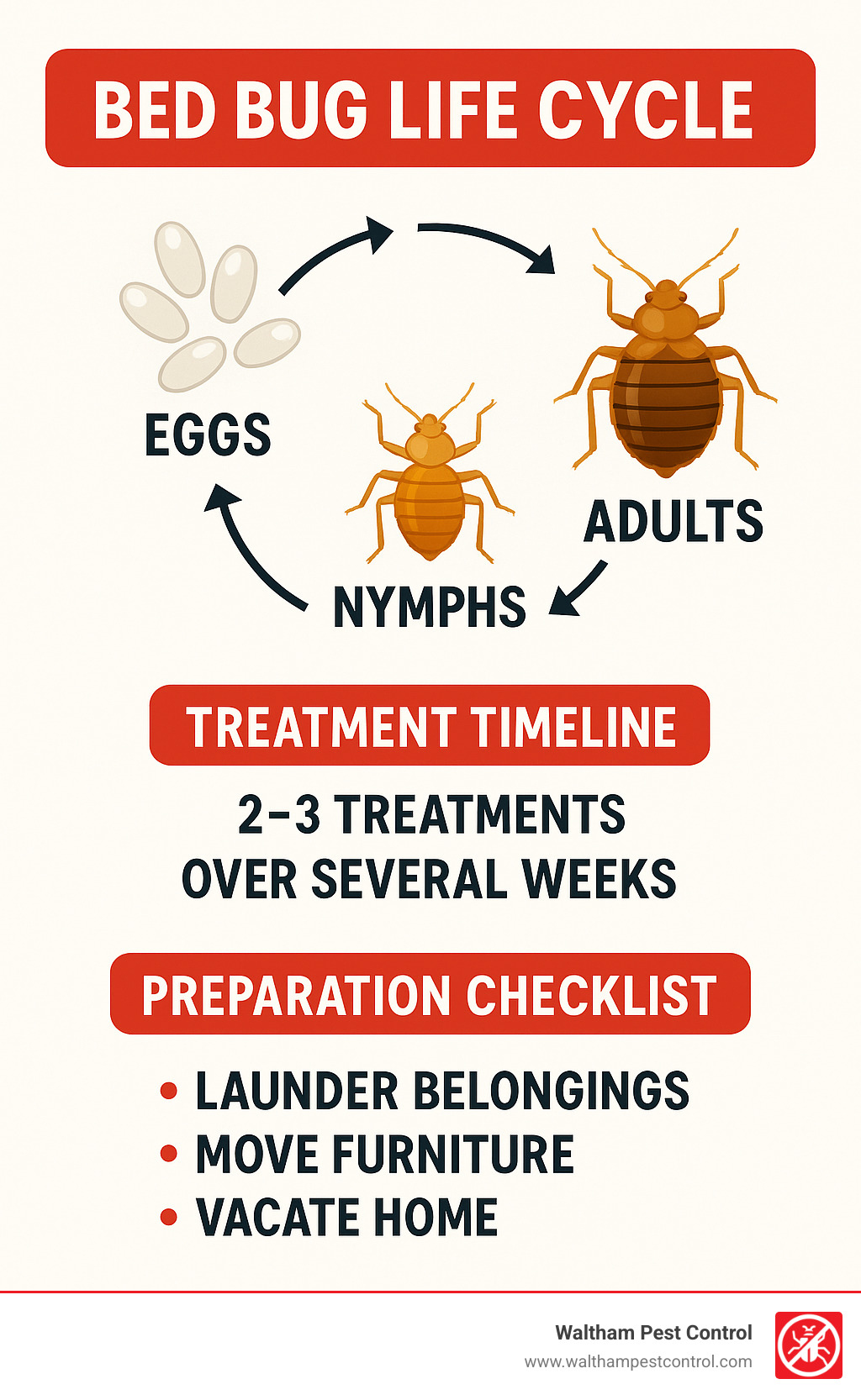
Looking for a “bed bug exterminator near me”? Here’s what you need to know right away:
- Check for signs: Red, itchy bites in clusters, dark spots on sheets, and a musty odor
- Call for inspection: Most reputable exterminators offer free inspections
- Ask about methods: Heat treatments, conventional pesticides, and steam are common options
- Prepare properly: You’ll need to launder items, move furniture, and vacate for several hours
- Expect follow-ups: Complete elimination typically requires 2-3 visits over several weeks
Finding a bed bug exterminator near me is often the first desperate search when those telltale signs appear – the itchy welts on your skin, tiny blood spots on your sheets, or the unsettling sight of a small reddish-brown insect scurrying across your mattress. These unwelcome invaders can trigger immediate anxiety, disrupting your sleep and peace of mind.
Bed bugs are notoriously difficult to eliminate without professional help. They reproduce rapidly, with populations doubling every 16 days, and can hide in cracks as thin as a credit card. While DIY methods might seem tempting, they typically fail to reach hidden eggs and bugs, leading to frustrating cycles of temporary relief followed by reinfestation.
Professional exterminators bring specialized equipment, trained expertise, and systematic approaches that address the complete life cycle of bed bugs – from eggs to adults. They can determine the extent of your infestation and recommend the most effective treatment plan for your specific situation.
I’m Waltham Pest Control, President of Waltham Pest Control with over 40 years of experience helping Massachusetts residents find reliable bed bug exterminator near me solutions that provide lasting relief from these persistent pests. Our trained technicians understand the urgency and emotional toll these infestations create.
Basic bed bug exterminator near me terms:
Spotting the Invaders: Early Signs & Hidden Hangouts
The sooner you identify a bed bug problem, the easier and less expensive it is to resolve. Being vigilant about the early warning signs can save you significant stress, time, and money in the long run.
Tell-Tale Signs You Can’t Ignore
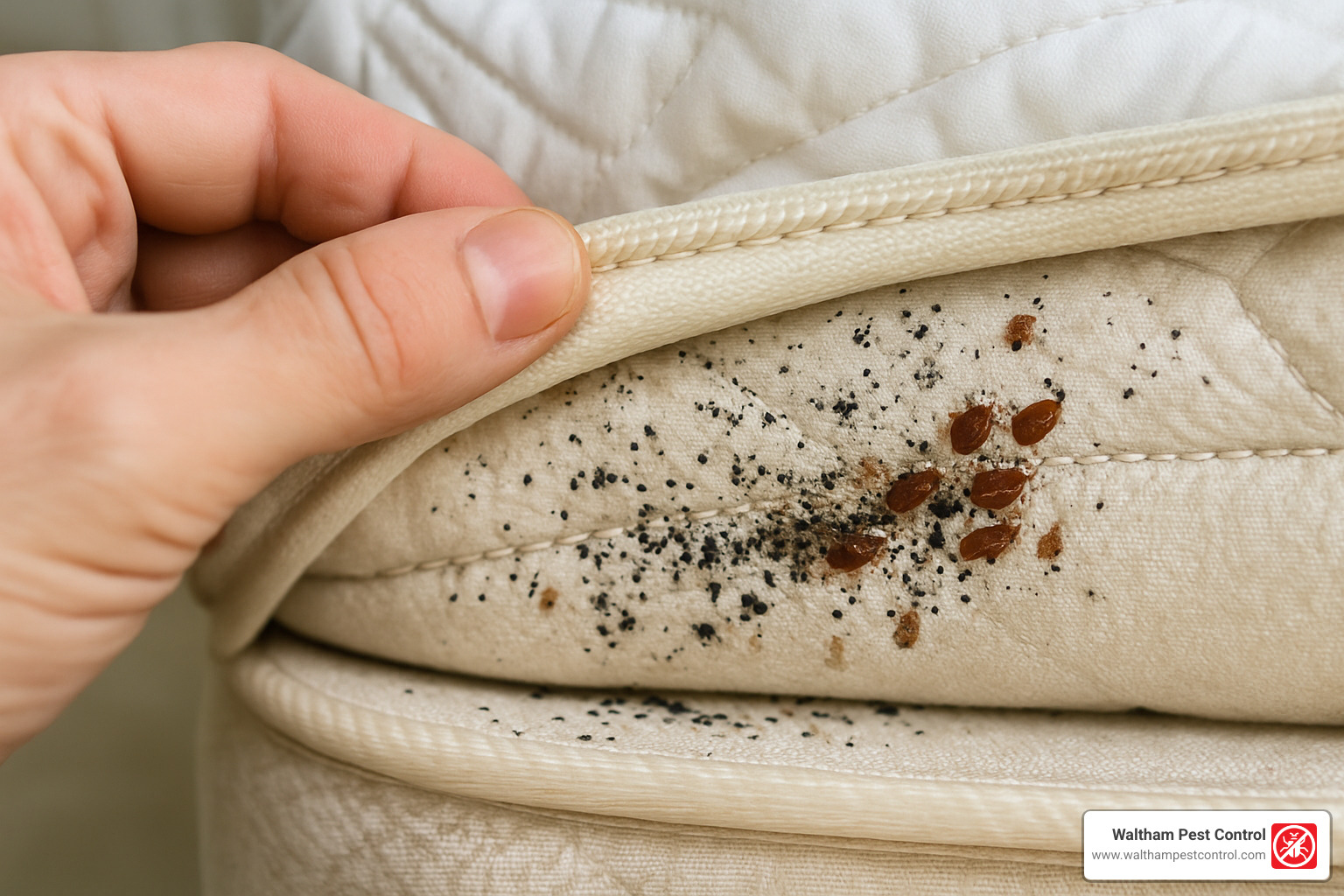
Waking up with itchy welts and bite marks is often the first clue something’s amiss. Unlike random mosquito bites, bed bug bites typically appear in straight lines or clusters—what exterminators sometimes call the “breakfast, lunch, and dinner” pattern. These small, red welts can be itchy, though it’s worth noting that not everyone develops a visible reaction, which can make detection trickier.
Check your bedding carefully for dark stains. Those small black or rust-colored spots aren’t dirt—they’re actually bed bug fecal matter (digested blood). You might spot these telltale marks on sheets, pillowcases, mattress seams, or even nearby walls. Similarly, tiny blood spots on your sheets or pajamas might indicate you’ve accidentally crushed a bed bug during the night after it’s had its fill.
As you inspect further, look for shed skins and eggs. Bed bugs molt as they grow, leaving behind translucent, pale yellow shells of themselves. Their eggs are tiny (about 1mm), pearl-white, and barrel-shaped—easily missed unless you’re looking carefully in mattress seams, furniture joints, and other hiding spots.
Notice a strange, musty, sweet odor in your bedroom? A heavily infested area often develops a distinctive smell, frequently compared to berries or almonds. This scent comes from the bugs’ scent glands and becomes more noticeable as populations grow.
Of course, spotting live bed bugs provides definitive proof. Adult bugs are about the size and shape of an apple seed (4-5mm long), with flat, oval bodies that become more elongated and reddish-brown after feeding. Nymphs (young bed bugs) are smaller and lighter in color, almost translucent before they’ve had a blood meal.
Where Bed Bugs Hide During the Day
Bed bugs are the masters of hide-and-seek, preferring to stay concealed during daylight hours and only emerging at night when you’re asleep and vulnerable. Their flat bodies—no thicker than a credit card—allow them to squeeze into the tiniest cracks and crevices, making detection a real challenge.
Your mattress and box spring are prime real estate for these pests. They love to nestle into seams, piping, tags, and any small crevice that offers protection while keeping them close to their food source (that’s you!). Don’t stop there, though—your bed frame and headboard need thorough inspection too. Pay special attention to joints, cracks, and screw holes in wooden or metal frames where bugs can hide undisturbed.
Furniture near the bed provides secondary hiding spots. Nightstands, dressers, and chairs within 5-8 feet of the bed should be carefully examined—look inside drawers, underneath furniture, and in the seams of upholstered items. These bugs prefer to stay close to where people sleep but will spread out when populations grow.
Those tiny cracks and crevices throughout your bedroom offer perfect concealment. Baseboards, window and door frames, picture frames, and crown molding can all harbor bed bugs, especially in areas close to sleeping areas. Even your electronics and outlets aren’t safe—bed bugs may hide inside clocks, phones, smoke detectors, and behind electrical outlet plates, attracted by the warmth these items generate.
Don’t forget to check behind curtains and wall hangings. Pictures, posters, and the pleats of curtains provide excellent hiding spots. Luggage and clothing can be both a hiding place and a transportation method—many infestations begin when bugs hitch a ride home from travel in suitcases or bags.
In severe cases, these persistent pests venture into unusual places like books, ceiling light fixtures, toys, and even inside electronics. While bed bugs generally prefer to stay within about 8 feet of where people sleep, growing infestations can spread throughout an entire home.
Finding a bed bug exterminator near me becomes crucial when you spot these signs. Early professional intervention can prevent a small problem from becoming a major infestation that affects your entire home and wellbeing. The sooner you act, the sooner you can return to peaceful, bite-free sleep.
Why Professional Help Beats DIY Every Time
When you first spot those telltale signs of bed bugs, it’s tempting to rush to the store and grab whatever sprays promise quick results. I get it – we all want to solve problems ourselves when possible. But as someone who’s seen countless failed DIY attempts turn into major infestations, I need to be straight with you about why finding a bed bug exterminator near me is almost always the smarter choice in the long run.
DIY Dangers vs. Pro Precision
That can of spray might seem like a bargain compared to professional treatment, but there’s a hidden cost most people don’t consider – incomplete elimination. Bed bugs are masters of hide-and-seek, tucking themselves into cracks thinner than your credit card. Miss just a few bugs or eggs (which are nearly invisible to the naked eye), and you’ll be right back where you started in a few weeks.
What’s worse, many bed bug populations have developed pesticide resistance to common over-the-counter products. Those pyrethroids that worked well a decade ago? Many bed bugs now shrug them off like they’re nothing more than water. It’s like trying to fight a modern army with ancient weapons.
DIY treatments also come with serious safety risks that many homeowners don’t anticipate. I’ve seen people accidentally create fire hazards with flammable products, trigger asthma attacks from overusing foggers, and even damage valuable furniture with inappropriate application methods. When children and pets are involved, these risks become even more concerning.
Perhaps most frustrating is how DIY efforts often end up spreading the problem throughout your home. When bed bugs sense danger in one area, they don’t just give up – they scatter to new hiding spots, potentially turning a bedroom problem into a whole-house nightmare.
According to the Centers for Disease Control and Prevention (CDC) research on bed bug health effects, while these pests don’t transmit diseases, their presence can lead to secondary skin infections, allergic reactions, and significant psychological distress. Many people develop anxiety, insomnia, and even symptoms similar to PTSD from ongoing infestations – making proper elimination not just a comfort issue, but a health priority.
What Pros Bring to the Fight
Professional exterminators don’t just bring stronger chemicals – they bring a completely different approach called Integrated Pest Management (IPM). Rather than relying on a single treatment method, IPM combines multiple strategies custom to your specific situation, addressing not just the bugs you can see, but the entire lifecycle from egg to adult.
The specialized equipment professionals use simply isn’t available at your local hardware store. Think industrial-grade HEPA vacuums designed specifically for capturing bed bugs and their eggs, professional heat treatment rigs that can raise entire room temperatures to the precise lethal range (118-135°F), and specialized steam equipment that delivers controlled heat deep into cracks where bugs hide.
Many services now offer canine inspection – specially trained dogs that can detect bed bugs with over 90% accuracy, even in places invisible to the human eye. I’ve seen these amazing dogs find tiny infestations that would have gone completely unnoticed until they became major problems.
Professionals also have access to restricted products – more effective pesticides and growth regulators that aren’t legally available to the general public. These products, when properly applied by certified technicians, can provide residual protection that store-bought options simply can’t match.
Perhaps most valuable is the experience and training professionals bring. When you’ve treated hundreds or thousands of infestations, you develop an intuition for bed bug behavior that no DIY guide can teach. You know exactly where to look, how to apply treatments for maximum effect, and how to prevent reinfestation.
Professional services include comprehensive follow-ups to ensure complete elimination. At Waltham Pest Control, our technicians don’t consider a job done until we’ve verified that every last bug is gone, with follow-up visits included in our treatment plans.
The peace of mind that comes with professional warranties and guarantees is invaluable. When you’re dealing with something as stressful as bed bugs, knowing that you’re protected if they return can help you sleep soundly again.
You can learn more about our comprehensive approach on our professional pest control services page, where we outline exactly how we tackle even the most stubborn infestations.
Treatment Tactics & Average Price Ranges
When you’re frantically searching for a bed bug exterminator near me, understanding treatment options and costs helps you make an informed choice during this stressful time. Not all bed bug treatments are created equal, and what works best depends on your specific situation, infestation severity, and budget considerations.
How Much Will It Cost Near You?
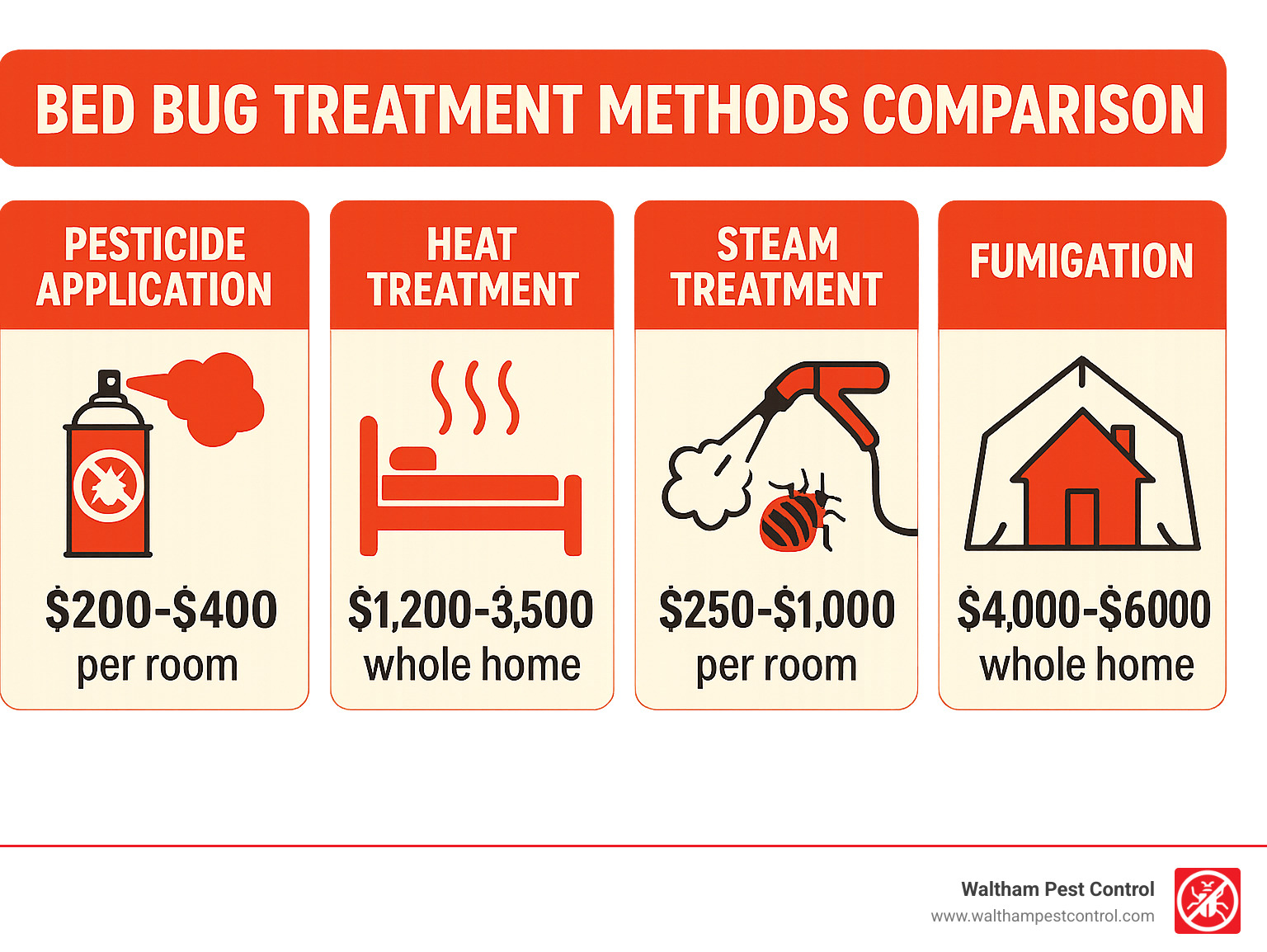
Let’s talk money—because that’s probably one of your biggest concerns right now. Based on industry averages (not Waltham Pest Control’s specific pricing), here’s what Massachusetts residents typically pay for professional bed bug elimination:
Inspection fees generally range from $70-$180, though many reputable companies offer free inspections, especially if you move forward with their treatment plan.
For standard pesticide treatments, expect to pay around $200-$400 per room or $1,000-$2,200 for whole-home treatment. These conventional treatments use residual insecticides that continue working for weeks after application.
Heat treatments typically run higher—about $1,200-$3,500 for a whole home. While more expensive upfront, heat treatment often requires fewer follow-up visits since it kills bugs and eggs in a single session.
If you’re looking for more targeted options, steam treatments average $250-$1,000 per room and are often combined with other methods for comprehensive control.
For severe, widespread infestations, fumigation might be recommended at $4,000-$6,000 for a whole house. This is usually reserved for extreme cases where other methods have failed.
Some homeowners opt for ongoing pest management at $110-$130 monthly to prevent future problems.
These figures represent industry averages based on internet data, not Waltham Pest Control’s specific pricing. Your actual cost will depend on several factors:
The size and severity of your infestation dramatically impacts cost—catching bed bugs early is definitely easier on your wallet. Your home’s size and layout matter too, as larger spaces simply require more treatment time and materials. Multi-unit buildings present unique challenges, sometimes requiring coordination with neighbors to prevent bugs from simply relocating next door.
Your choice of treatment method significantly affects pricing, with each option offering different benefits. Some companies also charge extra if they need to help prepare your home, and most effective treatment plans include multiple visits.
For a deeper dive into what drives bed bug treatment costs, check out our detailed guide on The True Cost of Bed Bug Extermination.
How Long & How Many Visits?
When you’re losing sleep over bed bugs, you want them gone yesterday. Here’s what to expect timeline-wise when working with a professional bed bug exterminator near me:
The initial treatment typically takes 1-2 hours per room, depending on the method and infestation severity. Don’t be fooled by companies promising one-and-done solutions—effective bed bug elimination almost always requires follow-up visits. Most reputable exterminators include 2-3 follow-up appointments spread over several weeks to catch any newly hatched bugs before they can reproduce.
From start to finish, complete eradication usually takes 3-6 weeks, though you should notice significant improvement after the first treatment. Residual protection can last anywhere from 14 days to a full year, depending on the products used and application thoroughness.
Heat treatments work faster—often in a single day—but require more extensive preparation and longer periods away from home during treatment. Chemical treatments might need less prep but typically require more follow-up visits to ensure complete elimination.
Don’t forget to factor in preparation time—typically 1-2 days of washing, decluttering, and preparing your space before treatment can begin.
At Waltham Pest Control, we believe in setting realistic expectations about the treatment process. We’re transparent about timeframes and work to provide effective, lasting results with minimal disruption to your daily life. Our technicians understand both the science of bed bug control and the emotional toll these pests take on families.
Preparing for Your Bed Bug Exterminator Near Me Visit
Getting your home ready for a bed bug treatment isn’t just helpful—it’s essential for success. When you’ve finally found that bed bug exterminator near me you can trust, proper preparation can make the difference between complete elimination and a frustrating cycle of reinfestation.
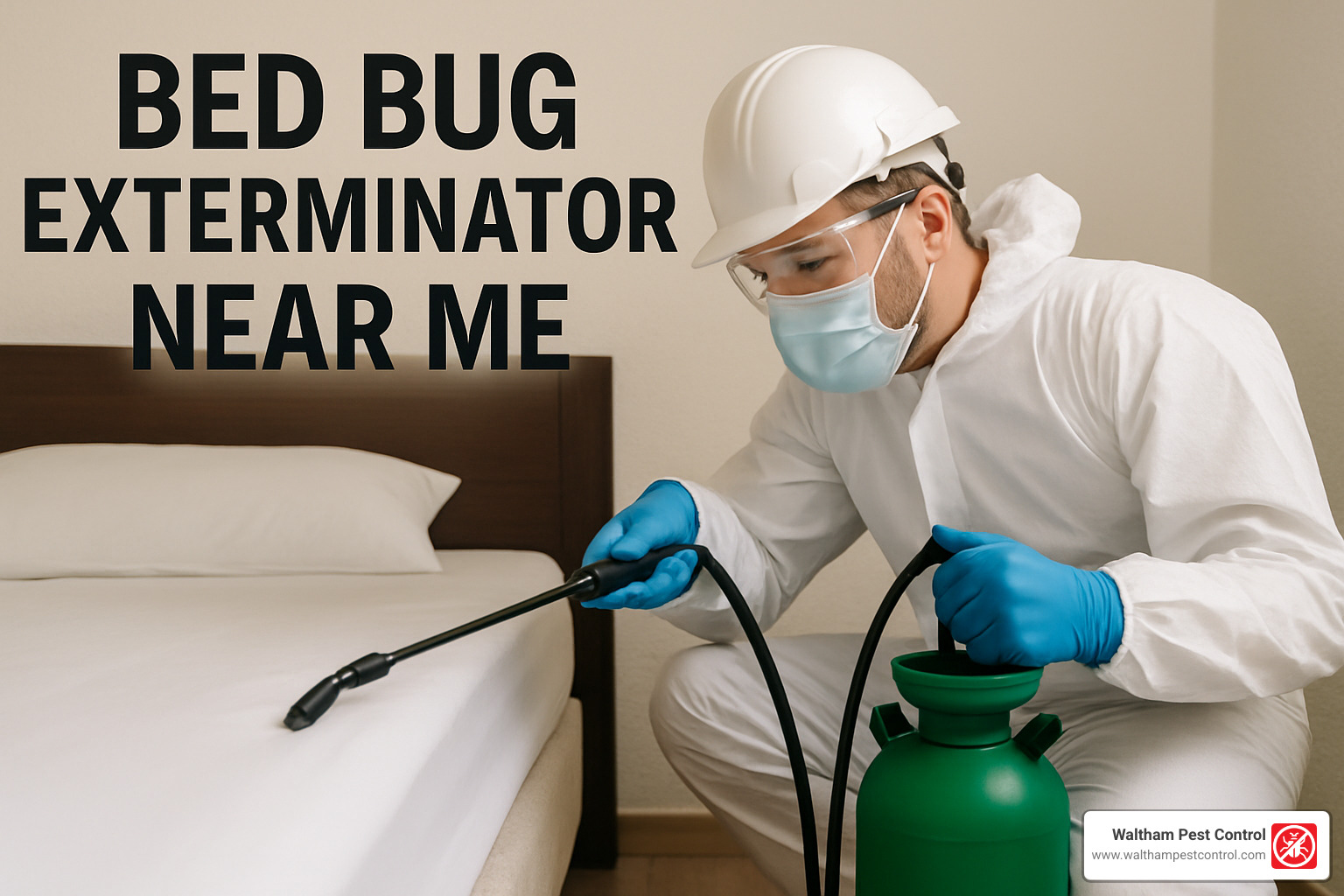
“Bed Bug Exterminator Near Me” Day-Of Checklist
The day before your treatment is going to be busy, but trust me—your future, bed-bug-free self will thank you for being thorough. Start by tackling your laundry. Wash all bedding, curtains, and clothing in the hottest water they can handle (at least 120°F), then dry everything on high heat for at least 30 minutes. It’s actually the heat from the dryer that kills bed bugs more effectively than washing alone.
Once clean, immediately seal these items in new plastic bags—not the ones you used to transport potentially infested items! This prevents re-contamination while your home is being treated. For items that can’t go in a regular wash, dry cleaning works well, but remember to tell the cleaner about the bed bug issue.
Next comes the heavy lifting. Move furniture away from walls by about 12-18 inches so your exterminator can access every potential hiding spot. Empty your drawers and closets completely—yes, completely! I know it’s a pain, but bed bugs love to hide in your stored clothing and personal items.
Thoroughly vacuum everywhere—mattress seams, box springs, bed frames, baseboards, and inside furniture cracks. This physical removal helps reduce the population before treatment even begins. Just remember to immediately dispose of the vacuum bag in a sealed plastic bag placed in an outdoor trash container.
Don’t forget to unplug all electronics before the treatment. Your exterminator will have specific guidance about treating computers and other sensitive equipment, so be sure to ask ahead of time.
For more comprehensive preparation guidelines, visit our Bed Bug Exterminator page.
Child & Pet Safety During Treatment
When it comes to your loved ones—both two-legged and four-legged—safety comes first. All people and pets must leave the home during a bed bug treatment. This isn’t just a suggestion; it’s a requirement for your safety and the effectiveness of the treatment.
If you have fish tanks, cover them completely and turn off air pumps during the treatment. For plants, either remove them or cover them according to your exterminator’s instructions.
The typical re-entry time is at least 4 hours after treatment, though some methods might require a full 24-hour absence. When you do return, open windows to ventilate if weather permits, and avoid touching treated surfaces until they’re completely dry.
For households with special concerns, like pregnant women, infants, or people with respiratory conditions, you might want to extend your time away from home. It’s always best to consult with your doctor if you have specific health concerns.
If chemical sensitivity is a major worry, ask about heat treatments or steam options which can provide effective bed bug control without pesticides. At Waltham Pest Control, we practice Integrated Pest Management (IPM), which means we’re strategic about minimizing pesticide use while still ensuring those bed bugs don’t stand a chance.
Many families worry about their children’s toys and baby items. Let your exterminator know about these concerns in advance—they can provide specific guidance for these sensitive items. Most modern bed bug treatments use products specifically formulated to have low mammalian toxicity while remaining effective against insects.
Proper preparation isn’t just about making the exterminator’s job easier—it’s about protecting your family and ensuring the treatment works the first time. When searching for a bed bug exterminator near me, look for companies that take the time to explain these safety protocols clearly. Your peace of mind is worth it!
Hiring Guide: Choosing the Best Bed Bug Exterminator Near Me
Finding the right bed bug exterminator near me requires some research, but making the effort to choose a qualified professional will save you time, money, and frustration in the long run.
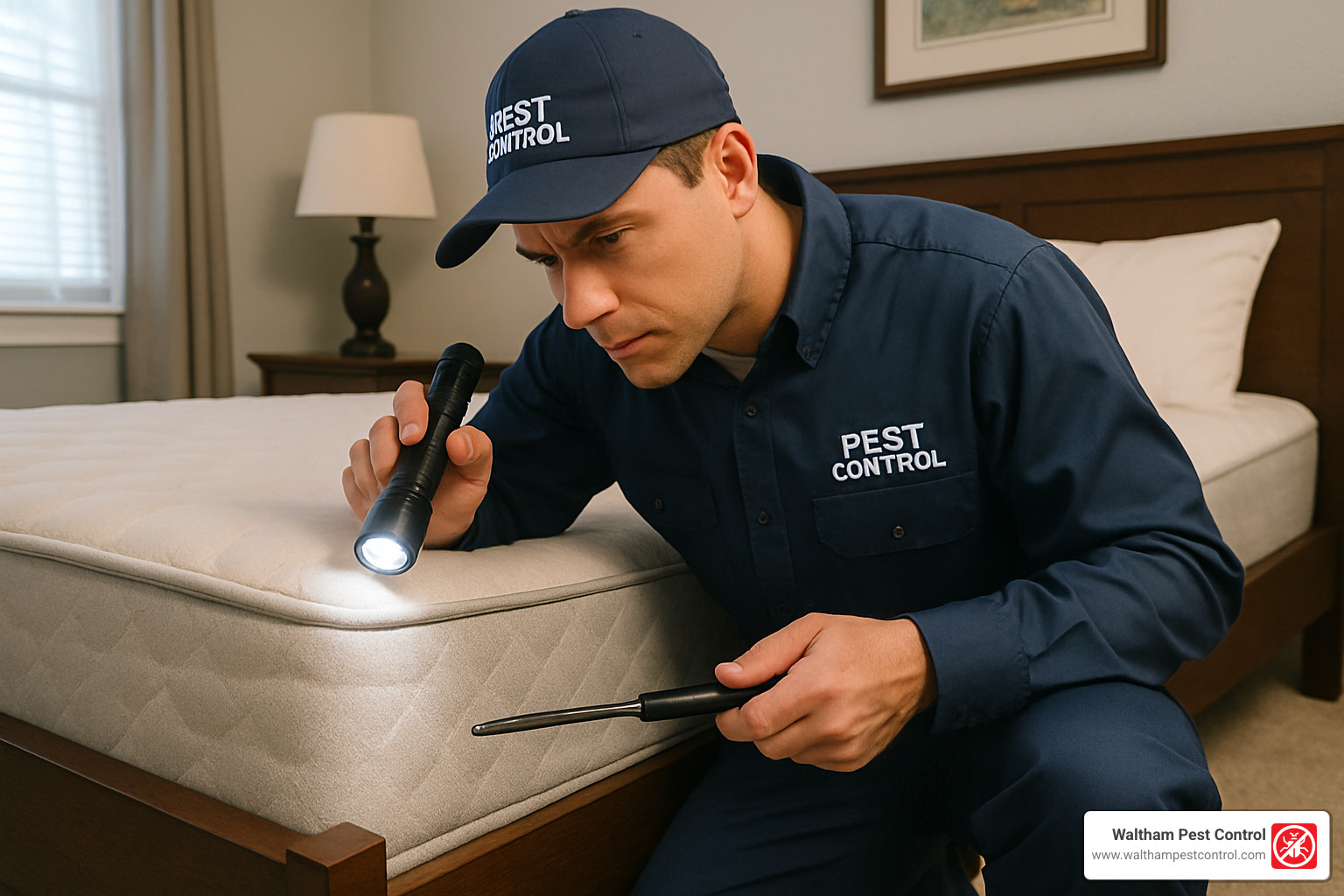
When evaluating potential exterminators in Eastern Massachusetts, you’ll want to look at several key factors that separate the professionals from the pretenders.
First, verify proper licensing and certification. Any reputable exterminator should be properly licensed to perform pest control services in Massachusetts and carry adequate liability insurance. Don’t be shy about asking for proof – legitimate professionals expect these questions and will happily provide documentation.
Experience matters tremendously when it comes to bed bugs. Look for companies with at least 5 years of specific bed bug experience, not just general pest control. These persistent pests require specialized knowledge, and exterminators who handle dozens of cases annually have likely encountered situations similar to yours. Ask directly: “How many bed bug infestations do you treat each month?” Their answer will tell you volumes about their expertise.
The best exterminators offer multiple treatment methods rather than a one-size-fits-all approach. When you call about a bed bug exterminator near me, they should be able to explain the pros and cons of chemical treatments, heat remediation, steam options, and integrated approaches for your specific situation. Be wary of companies that push only one solution without considering your unique circumstances.
Before any treatment begins, expect a thorough inspection. Some companies employ specially-trained canine detection teams for pinpoint accuracy, which can be especially valuable in large homes or when dealing with early-stage infestations. Many reputable companies offer free inspections – you can find more information about this in our guide on Which Bed Bug Exterminators Have Free Inspections Near Me?
Always get everything in writing. A professional will provide a detailed quote specifying treatment methods, areas to be treated, number of visits included, and warranty terms. This documentation should clearly outline what preparation you’ll need to do before treatment and what to expect afterward.
Speaking of guarantees, reputable companies stand behind their work with warranties or guarantees. Understand exactly what’s covered, for how long, and what conditions might void the warranty. This protection gives you peace of mind that you won’t be fighting this battle alone if a few bugs survive the initial treatment.
Don’t skip checking reviews and references. Look beyond the testimonials on the company’s website to platforms like Google, Yelp, and the Better Business Bureau. Pay attention to how the company responds to negative reviews – do they address concerns professionally or dismiss complaints? A company that values its reputation will work to make things right when issues arise.
Finally, pay attention to their customer service from your very first interaction. Are they patient with your questions? Do they explain things clearly without using scare tactics? The way a company treats you during the quote process often reflects how they’ll handle your service.
Questions to Ask Before Signing
Before hiring a bed bug exterminator near me, arm yourself with these essential questions to ensure you’re making the right choice.
“What treatment method do you recommend for my situation, and why?” Their answer should be custom to your specific infestation rather than a one-size-fits-all approach. They should consider factors like infestation size, your home’s construction, and whether you have children or pets.
“How many treatments are included in the quoted price?” Most effective bed bug elimination requires 2-3 visits spread over several weeks to address the complete life cycle of these pests. Be suspicious of any company promising complete elimination in a single treatment without follow-ups.
“What preparation is required before treatment?” The company should provide clear instructions about what you need to do before they arrive. Some companies offer preparation assistance (sometimes for an additional fee), which can be invaluable if you’re overwhelmed or physically unable to complete all the preparation tasks.
“What is your success rate for complete elimination?” While no company can honestly guarantee 100% elimination on the first try in every case, experienced professionals should have a high success rate and be transparent about what to expect.
“How will you confirm the bugs are gone?” Professional exterminators should have a clear follow-up inspection protocol to verify the success of their treatment. This might include visual inspections, monitoring devices, or even canine detection.
“What preventive measures do you recommend after treatment?” Good exterminators provide advice on preventing future infestations, including mattress encasements, routine inspections, and travel precautions.
“Are your technicians specifically trained in bed bug control?” Bed bugs require specialized knowledge, so confirm that the technicians who’ll be working in your home have received specific training on bed bug biology and control methods.
“What safety precautions do you take to protect my family and pets?” They should clearly explain re-entry times, ventilation needs, and any special considerations for sensitive individuals.
“What happens if bed bugs return during the warranty period?” Understand their re-treatment policy and what steps you need to take if you spot signs of bed bugs after treatment.
At Waltham Pest Control, we welcome these questions and believe an informed customer is our best customer. We’ve been serving Eastern Massachusetts for over 40 years, and our technicians receive specialized training in the latest bed bug control techniques. When you’re dealing with something as stressful as bed bugs, you deserve a partner who will be transparent, thorough, and committed to resolving your problem completely.
Frequently Asked Questions about Bed Bug Extermination
How fast can an infestation spread?
Bed bugs don’t waste time when it comes to making themselves at home. A single female bed bug can lay 1-5 eggs daily—up to 500 in her lifetime! Under cozy conditions (around 70-80°F), these unwelcome houseguests can double their population every 16 days.
What starts with one pregnant female can explode into hundreds of bed bugs within just a few months. This rapid reproduction is precisely why finding a bed bug exterminator near me quickly becomes so urgent when you spot the first signs.
These pests are also surprisingly mobile. While they prefer staying within 8 feet of your bed (their food source—that’s you!), they can journey up to 100 feet in a single night when motivated. In multi-unit buildings, they’re notorious for spreading through wall voids, electrical outlets, or by hitching rides on clothing and furniture.
The typical spread pattern starts in the bedroom, then gradually expands to adjacent rooms as the population grows. The sooner you address an infestation, the easier and less expensive it will be to eliminate.
Who pays in a rental unit—tenant or landlord?
The question of financial responsibility for bed bug treatment in rentals can create as much irritation as the bugs themselves. In Massachusetts, here’s how it typically breaks down:
Landlord Responsibility: Under Massachusetts state sanitary code, landlords generally bear the responsibility for maintaining pest-free housing. They’re required to provide habitable living conditions, which includes keeping the premises free from insect infestations.
Tenant Responsibility: The waters get muddier if evidence suggests the tenant introduced the bed bugs—perhaps by bringing in infested second-hand furniture or after returning from travel. In these cases, tenants might find themselves financially responsible for treatment.
Your lease agreement might contain specific clauses about pest control responsibilities, so it’s worth reviewing carefully. Additionally, some Massachusetts municipalities have their own specific ordinances regarding bed bug responsibilities that may override general state guidelines.
If you’re dealing with bed bugs in a rental property:
- Notify your landlord immediately in writing
- Document everything with photos and keep records of all communications
- Cooperate fully with inspection and treatment processes
- Contact your local board of health or housing authority if your landlord refuses to address the problem
For ongoing disputes, consulting with a local tenant rights organization or legal aid service is your best path forward, as specific circumstances can significantly affect who ultimately pays for treatment.
How can I keep bed bugs from returning?
After you’ve gone through the trouble and expense of finding a bed bug exterminator near me, the last thing you want is a repeat performance. Here’s how to keep these persistent pests from making an encore appearance:
Stay vigilant with regular inspections. Make monthly bed checks a part of your routine—pay special attention to mattress seams, headboards, and nearby furniture. Installing bed bug interceptors under furniture legs creates an early warning system that can catch stragglers before they become a full-blown infestation.
Travel smart to avoid bringing hitchhikers home. When staying in hotels, take a few minutes to inspect the room before settling in. Keep luggage liftd on racks rather than placing it on beds or carpets. Upon returning home, unpack directly into your washing machine and clean your luggage thoroughly before storing it away.
Create a less welcoming environment. Invest in quality mattress and box spring encasements specifically designed for bed bug prevention. Reduce clutter around your home to eliminate potential hiding spots. Regular vacuuming, especially around beds and furniture, can remove bugs before they establish themselves. Sealing cracks and crevices in walls, baseboards, and furniture eliminates entry points and hiding places.
Be cautious with second-hand items. That vintage find could be harboring unwanted stowaways. Thoroughly inspect all used furniture, clothing, or decorative items before bringing them into your sanctuary. Consider heat-treating, steam-cleaning, or professionally cleaning second-hand treasures before integrating them into your home.
Take a community approach in multi-unit buildings. If you live in an apartment building, bed bugs don’t respect property lines. Advocate for building-wide inspection and treatment, and report any signs of bed bugs to management immediately.
At Waltham Pest Control, we don’t just eliminate current infestations—we partner with you to prevent future problems. Our technicians can provide custom prevention advice specific to your living situation and lifestyle, helping you maintain a bed bug-free home for the long term.
Conclusion
When you’re frantically searching for a bed bug exterminator near me at 2 AM after finding these unwelcome guests in your bed, that feeling of panic is completely understandable. Bed bugs aren’t just a pest problem—they’re an emotional and psychological challenge that can turn your safe haven into a source of anxiety and sleepless nights.
Throughout this guide, we’ve armed you with essential knowledge to identify, treat, and prevent these persistent invaders. Catching bed bugs early can save you significant time, money, and stress. Those first signs—the itchy welts, tiny blood spots, or that distinctive musty odor—are your cue to act quickly before a small problem grows into a full-blown infestation.
While DIY methods might seem tempting, we’ve seen time and again how professional treatment provides more reliable and lasting results. The specialized equipment, trained expertise, and systematic approach that professionals bring to the fight simply can’t be matched with store-bought products. From industrial-grade heat treatments to precisely applied residual pesticides, professionals have tools and techniques that get the job done right the first time.
Proper preparation is your secret weapon in this battle. By following the detailed checklist we’ve provided, you’ll dramatically improve your chances of success and help prevent these unwanted guests from returning. And remember—follow-up visits aren’t a sign of failure but a necessary part of complete elimination, ensuring that newly hatched eggs don’t restart the cycle.
At Waltham Pest Control, we’ve been helping Massachusetts residents sleep peacefully for over 40 years. Our licensed, insured technicians understand that dealing with bed bugs requires not just technical expertise but also compassion and clear communication. That’s why we take the time to explain our process, answer all your questions, and support you throughout the entire treatment journey.
The path to reclaiming your bed bug-free home starts with a thorough inspection by qualified professionals. If you’re currently dealing with these persistent pests or suspect you might be, we invite you to reach out to us for more information about Boston bed bug treatment and our services throughout Eastern Massachusetts.
Don’t let another night pass with unwanted bedfellows—take the first step toward lasting relief today. With the right professional partner, you can finally say goodnight to bed bugs and hello to peaceful sleep once again.
