

Why Finding a Professional Bed Bug Exterminator Matters
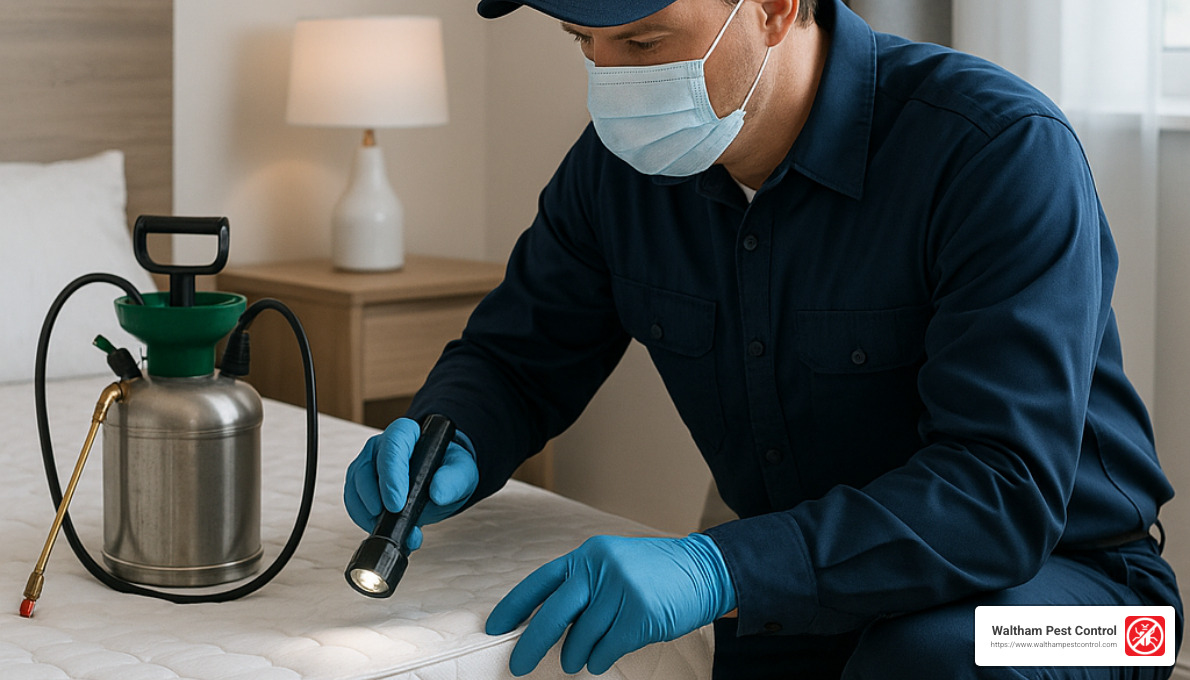
Old bedtime rhyme, “Sleep tight, don’t let the bed bugs bite”? What was once just a quaint saying has become a genuine concern for homeowners across America. These tiny, reddish-brown pests have made a dramatic comeback in recent years, turning peaceful bedrooms into battlegrounds. When facing these resilient invaders, a professional bed bug exterminator isn’t just a convenience—it’s often the only effective solution.
Those apple seed-sized insects might seem harmless at first glance, but don’t be fooled. A single female bed bug can lay up to 5 eggs daily, changing a minor issue into a full-blown infestation before you know it. What makes matters worse is their incredible hiding ability—they can squeeze into cracks as thin as a credit card, making complete DIY elimination nearly impossible.
Many homeowners initially try tackling bed bugs themselves with store-bought sprays or home remedies. Unfortunately, these attempts usually end in frustration and wasted money. The hard truth is that over-the-counter products rarely reach all the hiding spots where bed bugs lurk, and many populations have developed resistance to common pesticides. By the time most people call a professional bed bug exterminator, they’ve already spent hundreds on ineffective solutions.
Professional exterminators bring several crucial advantages to the battle:
- Specialized training and licensing ensures they understand bed bug biology and behavior
- Advanced detection methods including visual inspections and K9 units with 95% accuracy
- Professional-grade treatments combining heat (≥125°F), targeted chemicals, and integrated approaches
- Comprehensive follow-up protocols to catch any survivors before they repopulate
- Meaningful guarantees typically ranging from 30 days to 6 months
When selecting your bed bug exterminator, look beyond the lowest price. Effective treatment typically requires multiple visits—be wary of anyone promising a one-and-done solution. Check for proper state licensing, ask about their specific bed bug experience (not just general pest control), and get their guarantee in writing.
As President & CEO of Waltham Pest Control with over 40 years in the industry, I’ve seen countless bed bug scenarios across Eastern Massachusetts. I can tell you that professional, systematic approaches make all the difference between temporary relief and true elimination. Our integrated pest management strategies target bed bugs at every life stage, breaking the cycle of infestation for good.
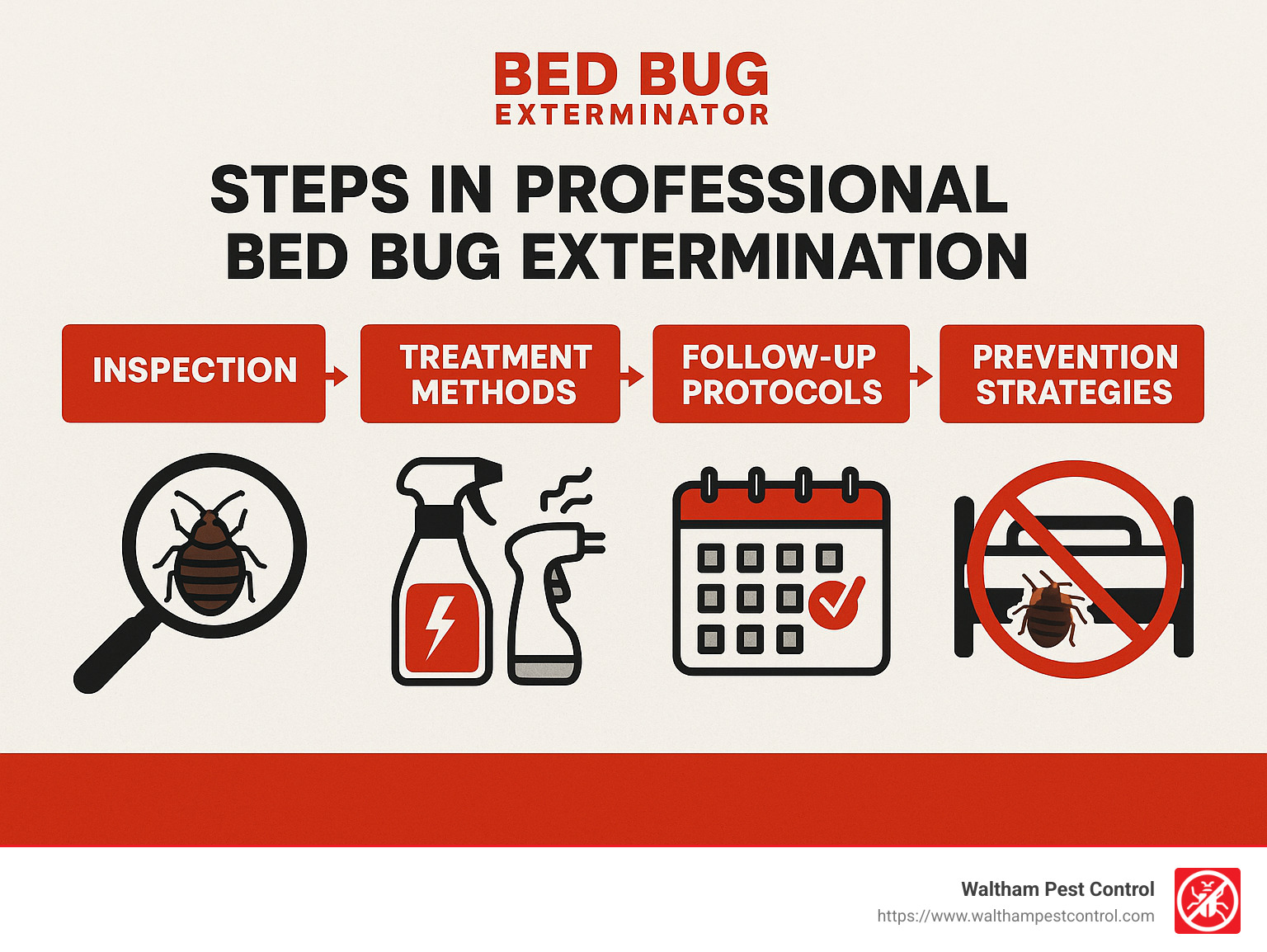
Looking for more information about dealing with these persistent pests? We’ve gathered helpful resources on bed bugs home remedies, identifying bedbugs on mattress, and understanding how much does it cost to exterminate bed bugs.
Don’t let bed bugs rob you of another night’s sleep. While DIY methods might seem cost-effective initially, they often lead to bigger, more expensive problems down the road. Professional bed bug exterminators offer something priceless: the certainty that these resilient pests won’t be returning to disturb your peace of mind.
Bed Bug Basics: Identification & Hitchhiking Habits
Before you can tackle a bed bug problem, you need to know exactly what you’re up against. The common bed bug, scientifically known as Cimex lectularius, has been an unwelcome roommate to humans throughout history. While they nearly disappeared in the mid-20th century, these persistent pests have made a dramatic comeback thanks to increased global travel and changes in pest control practices.
Bed bugs are small but mighty troublemakers. About the size of an apple seed (just 3/16 to 1/4 inch long), these oval-shaped insects have flat bodies that expand considerably after a blood meal. When hungry, they appear light brown and somewhat translucent, but after feeding, they transform into a rusty reddish-brown color. Unlike fleas or ticks, bed bugs don’t jump or fly—they’re crawlers with a remarkable talent for hitching rides to new locations.
“Due to their small and stealthy nature, it is nearly impossible to prevent bed bugs from hitchhiking onto your property,” explains our team at Waltham Pest Control. “They can be found almost anywhere, including hospitals, airplanes, movie theaters, and even department stores.”
What makes these pests particularly concerning is how quickly they spread. They’ll happily travel on your luggage, nestle into clothing seams, hide in used furniture, or even catch a ride in backpack crevices. This hitchhiking behavior explains why bed bug exterminators often find infestations in immaculate homes and five-star hotels—these pests don’t care about cleanliness or how much money you make.
Life Cycle & Appearance
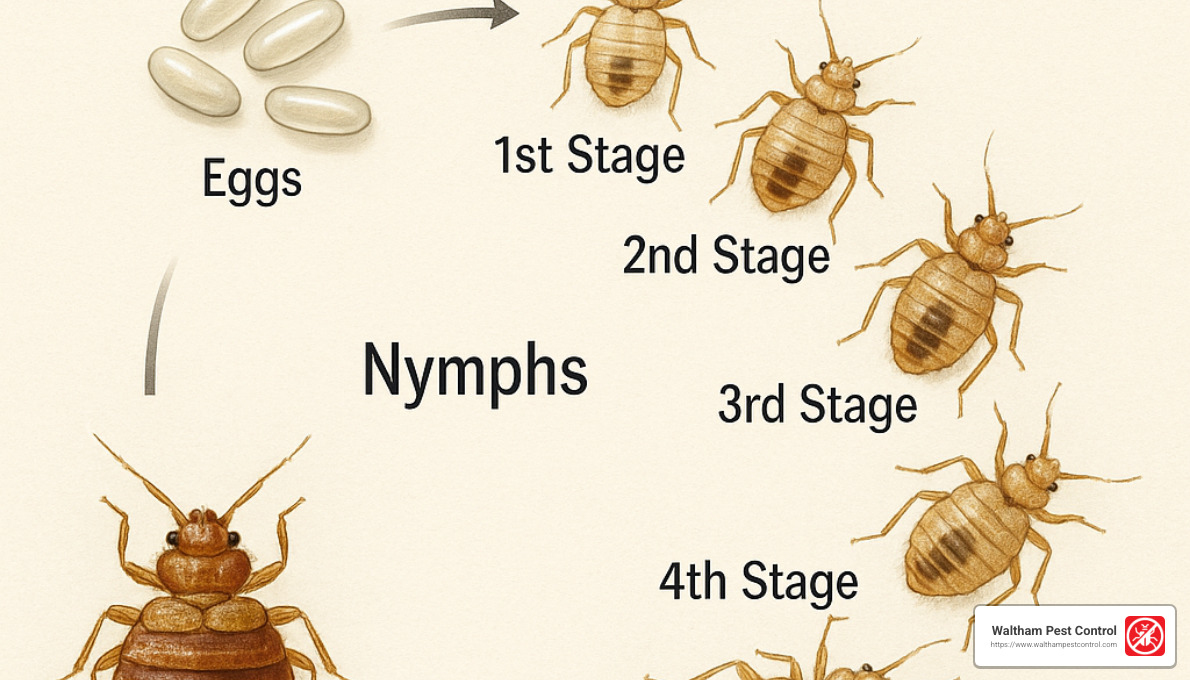
Understanding the bed bug life cycle helps explain why these pests are so resilient and why scientific research on do-it-yourself control often shows disappointing results. Their development unfolds in several distinct stages:
The journey begins with eggs—tiny (about 1mm), pearly white, and typically laid in clusters of 1-5 per day. A single female can produce up to 500 eggs in her lifetime, with each egg hatching in just 6-10 days. Talk about a population explosion!
Once hatched, nymphs emerge looking like miniature adults, though lighter in color and often translucent until they feed. These youngsters must go through five growth stages, requiring a blood meal (yes, that’s your blood) before each molt. It’s like they need a protein shake before buying the next size up in clothes.
Adults reach their final form as reddish-brown, oval-shaped insects about the size of an apple seed. After dinner (again, your blood), they swell dramatically like tiny torpedoes and take on a deeper red color. Under favorable conditions, adults can live for several months to a year—plenty of time to establish a thriving community in your home.
Perhaps most troubling is their ability to survive without feeding for extended periods—typically 2-6 months, but potentially up to a year in some cases. This remarkable survival trait means that abandoned infestations can patiently wait for a host to return, making complete elimination crucial.
How Bed Bugs Enter Homes & Businesses
These tiny invaders find creative ways into our spaces:
Travel is perhaps the most common introduction route. Hotels, hostels, and vacation rentals can harbor bed bugs in mattress seams, behind headboards, and on luggage racks. One night in an infested room, and suddenly you’re bringing home unwanted souvenirs in your suitcase.
Used furniture represents another major risk. That seemingly perfect second-hand couch or “barely used” mattress might come with hidden passengers. Always thoroughly inspect pre-owned items before bringing them through your door.
In multi-unit buildings, bed bugs don’t respect property lines. They’ll happily travel through wall voids, along pipes, or through electrical outlets to visit neighbors. This is why apartment buildings and condominiums can experience widespread infestations that require coordinated treatment.
Commercial hotspots like movie theaters, buses, office buildings, and retail stores can also harbor these pests. A brief visit might be all it takes for a bed bug to attach to your clothing or bag.
Even visitors to your home can unknowingly transport bed bugs. If your guests have an infestation at their place, these hitchhikers might come along for the visit—and decide to stay behind.
According to Cleveland Clinic statistics, approximately 1 in 5 people report encountering bed bugs themselves or know someone who experienced a problem at home or in a hotel. With numbers like these, it’s clear why vigilance and early detection are your best first line of defense against these persistent pests.
Spotting an Infestation Early: Warning Signs & Health Effects
Early detection can make all the difference when it comes to bed bugs. As professional bed bug exterminators, we’ve seen how catching these pests early can save homeowners countless hours of stress, not to mention a significant amount of money. The sooner you identify these unwelcome guests, the easier they are to evict.

When we visit homes in Eastern Massachusetts, we teach residents to look for several telltale signs. Those tiny rust-colored stains on your sheets? That’s likely blood from crushed bed bugs or their droppings after feeding. You might also notice dark fecal spots that look like someone dotted your mattress with a fine-point marker. These spots often bleed into fabric like ink would on a paper towel.
As bed bugs grow, they shed their skins, leaving behind translucent shells that look like hollow versions of the bugs themselves. And of course, there are the actual bugs – visible to the naked eye and often hiding along mattress seams, in box springs, and around headboards.
Many homeowners first become suspicious when they notice tiny pearl-white eggs (about the size of a pinhead) or a peculiar sweet, musty odor that becomes more pronounced as the infestation grows. And then there are the bite marks – typically small, itchy red welts that often appear in lines or clusters on exposed skin while you sleep.
One of our clients in Arlington shared something many can relate to: “I spotted tiny blood spots on my pillowcase but brushed it off as a nosebleed. Then I developed itchy welts on my arms and neck. When I finally checked my mattress with a flashlight, I was horrified to find bed bugs hiding in the seams. Thank goodness Waltham Pest Control identified and treated the problem before it spread throughout my home.”
Common Hiding Places Beyond the Bed
Despite their name, bed bugs aren’t particularly loyal to your mattress. As experienced bed bug exterminators, we regularly find these sneaky insects in surprising places throughout homes and businesses.
While they certainly love box springs and mattress encasements (especially the seams, piping, and tags), they’re equally comfortable in wooden headboards and bed frames with all their convenient cracks and joints. We often find them lurking behind electrical outlets and switch plates, where they can squeeze their flat bodies into impossibly small spaces.
Your living room isn’t safe either – upholstered furniture provides countless hiding spots, and those comfy office chairs at your desk? Perfect bed bug real estate, particularly in the seams and underneath. Even your curtains and drapes offer folds and pleats where these pests can hide undisturbed.
Wall-to-wall carpeting (especially along baseboards), piles of clothing, stacks of books or papers, luggage, backpacks, picture frames, and wall decorations – all provide sanctuary for these elusive insects. This extensive range of hiding places is precisely why professional inspection is so valuable. Our trained technicians know exactly where to look and have specialized tools to detect even the most cleverly concealed infestations.
Health Risks & Myths
Let’s clear up some confusion about bed bugs and your health. While they’re certainly unwelcome houseguests, it’s important to separate facts from fiction.
Bed bug bites typically cause itchy welts and skin irritation, with some people experiencing more severe allergic reactions. Beyond the physical symptoms, many of our clients report significant anxiety, insomnia, and psychological distress from knowing these pests are sharing their beds. We’ve also seen cases where excessive scratching led to secondary skin infections requiring medical attention.
However, despite their unpleasantness, bed bugs don’t transmit diseases to humans. This is one of several common myths we encounter. Another misconception is that bed bugs only infest dirty homes – in reality, they’re equal opportunity pests that are just as happy in a spotless mansion as they are in a cluttered apartment. They’re attracted to the carbon dioxide and body heat humans emit, not to dirt or food crumbs.
Some people believe bed bugs are too small to see, but adult bed bugs (while small) are definitely visible to the naked eye – about the size of an apple seed. And of course, despite their name, they don’t limit themselves to beds.
As Claude, one of our grateful customers, told us: “I was losing sleep not just from the bites but from the anxiety of knowing these bugs were in my home. After Waltham Pest Control’s treatment, I finally got my peace of mind back. Their technicians were knowledgeable and even followed up a week later to check on the situation.”
When it comes to bed bugs, early detection and professional intervention make all the difference. The sooner you spot the signs, the sooner you can return to sleeping tight – without letting the bed bugs bite.
Why DIY Usually Fails & When to Call a Pro
Let’s be honest – when you first spot those telltale signs of bed bugs, your initial reaction might be to rush to the hardware store for DIY solutions. I’ve seen this scenario play out countless times in my years as a bed bug exterminator, and I understand the impulse. But there’s a reason why professional help often becomes necessary.
Think of bed bugs as nature’s perfect survivors. These tiny pests have been living alongside humans for thousands of years, and they’ve gotten remarkably good at it. Their biology makes them incredibly difficult to eliminate without professional intervention.
For starters, bed bugs can squeeze into cracks as thin as a credit card. They don’t just hang out on your mattress—they hide in electrical outlets, behind baseboards, inside picture frames, and in furniture joints that store-bought sprays simply can’t reach. One homeowner in Somerville told me she’d sprayed her entire bedroom twice, only to find the bugs had simply relocated to her living room sofa.
Perhaps most frustrating is the growing pesticide resistance among bed bug populations. Many DIY products contain the same class of chemicals that bed bugs have been exposed to for decades. According to research from the University of Kentucky, many bed bug populations now carry genetic mutations that render these treatments about as effective as spraying water.
The egg problem is another major hurdle. While you might kill the adults you can see, bed bug eggs are nearly invisible and protected by a shell that most over-the-counter products can’t penetrate. Three weeks after your DIY treatment, you’re back to square one as a new generation hatches.
If you live in an apartment or multi-family home, the challenge multiplies. When treated in one unit, bed bugs often retreat into walls only to emerge later or invade neighboring units. This game of pest whack-a-mole can go on for months without professional coordination.
There’s also the matter of safety. A Boston client shared with me how her DIY “bug bomb” treatment not only failed to kill the bed bugs but triggered her child’s asthma and left residue on all their kitchen surfaces. Worse yet, these foggers can create serious fire hazards when used improperly near pilot lights or electrical sources.
“I spent over $400 on sprays, powders, and even a portable heater that promised to kill bed bugs,” explained Marcus from Cambridge. “Six weeks and countless bites later, I finally called Waltham Pest Control. Their integrated approach eliminated the problem in two treatments. I wish I’d just started with the professionals—it would have saved me money, time, and a lot of sleepless nights.”
It’s time to call a professional bed bug exterminator when:
- Your DIY efforts haven’t worked after 2-3 weeks
- The infestation has spread beyond the initial room
- You live in an apartment building where bugs could affect neighbors
- You’re experiencing anxiety or losing sleep over the situation
- Someone in your home has respiratory issues or chemical sensitivities
- Your landlord requires documentation of professional treatment
At Waltham Pest Control, our Bed Bug Control services go beyond simply spraying chemicals. We use integrated pest management techniques that address the entire life cycle of bed bugs, from proper identification through elimination and future prevention. We understand both the biology of these pests and the emotional toll they take on families—which is why we’re committed to creating custom solutions that actually work.
While DIY methods might seem cheaper initially, they often end up costing more in the long run when you factor in repeated treatments, damaged property, and the continued stress of living with these persistent pests. The safety concerns from improper chemical use or fire hazards from foggers can pose even greater risks than the bed bugs themselves.
Choosing the Right Bed Bug Exterminator
Finding a qualified bed bug exterminator isn’t just about opening the phone book and calling the first company you see. The right professional can mean the difference between continued sleepless nights and finally reclaiming your home from these persistent invaders.
Licensing and Certification
Before inviting any pest control company into your home, verify they have proper licensing through your state’s regulatory agency. Here in Massachusetts, legitimate pest control companies must be licensed through the Department of Agricultural Resources – this isn’t just a formality, it ensures the company meets essential standards for training, insurance, and safe pesticide application.
Don’t hesitate to ask about specialized bed bug training, too. The most qualified bed bug exterminators invest in ongoing education through organizations like the National Pest Management Association (NPMA), which offers specialized bed bug certification programs. This additional training makes a tremendous difference in treatment effectiveness.
Experience and Specialization
When you’re dealing with bed bugs, general pest control experience isn’t enough. These resilient pests require specialized knowledge and approaches. During your conversations with potential exterminators, dig deeper with questions about their specific bed bug experience:
“How long have you been treating bed bugs specifically?” is a great starting point. Follow up by asking what percentage of their business focuses on bed bug control, how many infestations they handle monthly, and whether they’ve worked with properties similar to yours.
At Waltham Pest Control, our four decades of experience with Eastern Massachusetts’ diverse housing types means we’ve seen and successfully treated virtually every bed bug scenario imaginable – from historic Guide Hill brownstones to modern apartment complexes in Cambridge.
Inspection Methods
The foundation of effective bed bug elimination starts with thorough inspection. Professional bed bug exterminators should offer comprehensive inspection services that leave no hiding spot unchecked.
Skilled technicians know exactly where to look – not just in obvious places like mattress seams, but behind electrical outlets, inside furniture joints, and along baseboards. Some companies, including ours, offer canine inspection services where specially trained dogs can detect bed bugs with remarkable accuracy (up to 95%), even in areas humans might miss. Professional-grade monitoring devices like interceptors and active monitors provide additional verification of bed bug activity and help track treatment success.
Treatment Options
The best bed bug exterminators don’t rely on a one-size-fits-all approach. Instead, they offer multiple treatment methods and customize their strategy based on your specific situation.
Professional heat treatments raise room temperatures to lethal levels (above 125°F) to eliminate bed bugs in all life stages – even the eggs that chemical treatments might miss. Targeted chemical applications place professional-grade residual insecticides precisely where bed bugs hide. Many successful treatments combine both approaches for maximum effectiveness.
Be wary of companies that promise complete elimination in a single visit without follow-up. Bed bugs are notorious for their resilience, and responsible companies schedule return visits to ensure complete elimination.
Guarantees and Customer Support
A reputable bed bug exterminator stands confidently behind their work with clear guarantees. At Waltham Pest Control, we offer comprehensive warranties because we believe in our methods and want you to feel secure in your investment.
Look for written guarantees that extend 30 days to 6 months, with clear explanation of what’s covered. Equally important is responsive customer service – you want a company that answers questions promptly before, during, and after treatment.
As one of our customers, Patrick B., shared: “Very friendly, reasonable price, and always on time. The best bed bug exterminator in my opinion. What impressed me most was their willingness to explain every step of the process and answer all my questions.”
Questions to Ask Your Bed Bug Exterminator
When interviewing potential exterminators, arm yourself with these essential questions:
Can you provide proof of licensing and insurance? Always verify proper credentials.
What inspection methods do you use? Look for thorough visual inspection at minimum.
What treatment methods do you recommend for my situation and why? Their explanation should be clear and specific to your case.
How many treatments will be needed? Be skeptical of promises for complete elimination in one visit (unless using heat treatment).
What preparation is required before treatment? They should provide detailed, written instructions.
Are your treatments safe for children, pets, and plants? Safety protocols should be clearly explained.
What is your success rate with bed bug elimination? Experienced professionals can discuss typical outcomes.
What guarantee or warranty do you offer? Get specific details about length and terms.
How do you prevent bed bugs from returning? Look for prevention advice and possibly ongoing monitoring.
Can you provide references from similar jobs? Reputable companies willingly share testimonials.
Red Flags When Hiring a Bed Bug Exterminator
Trust your instincts and watch for these warning signs that might indicate an unreliable bed bug exterminator:
Reluctance to provide licensing or insurance documentation should immediately raise concerns. Similarly, companies offering phone-only quotes without an in-person inspection aren’t doing their due diligence. If a quote seems significantly lower than others, question why – it often indicates diluted chemicals or incomplete treatment.
Be wary of “miracle” claims promising 100% elimination with a single chemical treatment – bed bugs are simply too resilient for such guarantees. No written contract or guarantee, high-pressure sales tactics, vague explanations of methods, or unresolved Better Business Bureau complaints are all reasons to keep looking.
At Waltham Pest Control, we believe in transparency at every step. Our detailed inspections and customized treatment plans come with clear communication and our satisfaction guarantee. We’re proud to serve communities throughout Eastern Massachusetts, helping families reclaim their homes from these challenging pests.
Professional Treatment Methods & Timeline
When you hire a professional bed bug exterminator like Waltham Pest Control, you’re investing in proven methods that effectively eliminate these persistent pests. Understanding the treatment options and timeline can help you prepare and set realistic expectations.

Heat Treatment Step by Step
Heat treatment has become one of the most effective weapons in our bed bug-fighting arsenal. When our technicians arrive at your home, they don’t just crank up some heaters and leave – the process is scientific and methodical.
First, we conduct a comprehensive inspection to map out the battlefield. Where are the bugs hiding? How extensive is the infestation? This crucial first step guides our entire approach.
Before cranking up the heat, we’ll identify any heat-sensitive items that might need protection or removal – certain electronics, wax items, and some personal belongings. The good news? Heat treatment requires significantly less prep work than chemical options, meaning less hassle for you.
Next comes the technical part. Our team strategically positions professional-grade heaters and high-volume fans throughout your home, along with temperature sensors in various locations. Think of it as creating a carefully controlled fever for your home – one that’s deadly to bed bugs but safe for your property.
“The technicians explained everything so clearly,” shared one of our Medford clients. “They treated my home like it was their own, carefully monitoring temperatures and checking on things throughout the day. By evening, I was back in my bed bug-free home!”
We gradually raise the temperature to at least 125°F – the thermal death point for bed bugs at all life stages. This lethal heat penetrates deep into furniture, wall voids, and other hiding spots where chemicals might not reach. The temperature is maintained for several hours, ensuring no survivors remain, not even eggs.
Throughout this process, our technicians constantly monitor temperatures to ensure effectiveness while preventing damage. After the treatment, we allow for a controlled cool-down and perform a final inspection to verify success.
The beauty of heat treatment lies in its thoroughness and convenience – it’s often completed in a single day, requires minimal preparation, leaves no chemical residue, and most importantly, it kills bed bugs at every life stage, including those hard-to-kill eggs.
Chemical & Integrated Treatments
While heat treatment works wonders, it’s not always the best fit for every situation. That’s where our chemical and integrated approaches come in.
Chemical treatments begin similarly to heat treatments – with thorough inspection and preparation. You’ll receive detailed instructions for preparing your home, including laundering bedding, reducing clutter, and vacuuming thoroughly. These steps aren’t just busywork – they maximize treatment effectiveness by reducing hiding places and potentially removing some bugs before we even start.
When our technicians arrive, they apply professional-grade insecticides to cracks, crevices, baseboards, furniture joints, and other hiding spots. We use a strategic combination of products: contact insecticides kill bugs immediately, residual insecticides provide ongoing protection for weeks, and insect growth regulators prevent surviving nymphs from maturing into breeding adults.
Unlike heat treatment’s one-day approach, chemical treatments typically involve 2-3 visits spaced 2-3 weeks apart. This schedule isn’t arbitrary – it’s designed to break the bed bug life cycle by targeting newly hatched bugs before they can reproduce.
For the most stubborn infestations, we often recommend our Integrated Pest Management (IPM) approach. This comprehensive strategy combines the best of all methods:
We start with thorough inspection (sometimes improved with our K9 detection services), then deploy multiple non-chemical tactics like vacuuming, steam treatment, heat chambers for smaller items, and mattress encasements. These physical controls are supplemented with precisely targeted chemical applications, minimizing exposure while maximizing effectiveness.
Throughout the process, we monitor and follow up regularly to ensure complete elimination. As Sarah from Cambridge told us, “What impressed me most was their attention to detail. They didn’t just spray and leave – they explained exactly what they were doing and why, then followed up to make sure the problem was solved.”
Comparison of Treatment Methods:
| Treatment Type | Duration | Preparation Required | Residual Protection | Environmental Impact | Best For |
|---|---|---|---|---|---|
| Heat Treatment | 1 day | Minimal | None | Low (no chemicals) | Severe infestations, chemical-sensitive individuals |
| Chemical Treatment | 2-3 visits over 2-4 weeks | Extensive | 2-3 weeks | Moderate (targeted application) | Budget-conscious clients, preventive treatment |
| Integrated Approach | 2-4 weeks | Moderate | 2-3 weeks | Low to moderate | Most situations, thorough elimination |
At Waltham Pest Control, we don’t believe in one-size-fits-all solutions. Every infestation is unique, which is why we customize our approach based on your specific situation, building type, family needs, and budget concerns. Our Bed Bug Treatment Services page provides more detailed information about our specific treatment protocols and how we can tailor them to your needs.
Cost of Hiring a Bed Bug Exterminator & Warranty Expectations
Let’s talk about what most homeowners want to know right away—how much is this going to cost me? When facing a bed bug infestation, understanding the financial investment for professional extermination helps you prepare mentally and financially. The cost of hiring a bed bug exterminator varies significantly, but remember: this is an investment in restoring your peace of mind and protecting your family’s health.
The national average for professional bed bug treatments ranges from $300 on the low end to over $3,000 for severe infestations in larger homes. Why such a wide range? Several key factors come into play.
First, the size and severity of your infestation dramatically impacts costs. A small, contained infestation in just one bedroom will cost significantly less than bugs that have spread throughout your entire home. Early detection truly pays off!
Your property size matters too—treating a studio apartment naturally requires less time, labor, and materials than a four-bedroom house. Similarly, building type affects pricing, with multi-unit buildings often presenting additional challenges. In apartment settings, bed bugs frequently travel between units through wall voids, requiring coordination with neighbors and more complex treatment strategies.
The treatment method you choose significantly influences cost. Heat treatments typically have a higher upfront cost (often $1,000-$3,000 for a moderate-sized home) but may require only one visit. Chemical treatments generally start at a lower price point ($300-$600 for initial treatment) but usually require 2-3 visits spaced weeks apart, which can add up.
Your geographic location also affects pricing due to regional differences in labor costs, regulations, and market competition. Areas with higher costs of living typically see higher extermination prices as well.
As Diane from Cambridge told us after her treatment: “I initially balked at the quote, but after living through this nightmare and finally getting rid of these pests, I would have paid twice as much. You can’t put a price on sleeping through the night without waking up itching and anxious.”
Some companies offer additional services that may affect your total investment. Preparation assistance can be a lifesaver if you’re elderly, disabled, or simply overwhelmed—though it typically adds $100-$200 to your bill. The number of follow-up visits included in your package also impacts overall cost.
At Waltham Pest Control, we believe in transparent pricing based on your specific situation. We provide detailed quotes after a thorough inspection rather than one-size-fits-all pricing that might lead to surprises later.
Inspection Costs
Before treatment begins, a proper inspection is essential. Some companies charge for this service, while others offer it complimentary or apply the inspection cost toward treatment if you proceed with their services:
Visual inspections typically range from free to $200, depending on the company and property size. These involve a trained technician thoroughly examining your home for signs of bed bugs, focusing on beds, furniture, and common hiding spots.
K9 inspections generally cost $300-$600 but offer remarkable accuracy—trained bed bug detection dogs can identify infestations with up to 95% accuracy, even in hard-to-reach places humans might miss. This option is particularly valuable for large properties or when visual inspections have been inconclusive.
At Waltham Pest Control, we consider thorough inspection the foundation of effective treatment. We apply our professional inspection fee toward your treatment plan if you choose our services, making it a risk-free investment.
Warranty Expectations
A quality bed bug exterminator should stand behind their work with a clear warranty or guarantee. After all, you’re paying for results, not just effort. Warranty periods typically range from 30 days to one full year, depending on the company and treatment method.
When evaluating warranties, look beyond just the timeframe. Coverage terms matter—is the warranty limited to initially treated areas or does it cover your entire property? Most quality companies will retreat the entire affected area if bed bugs reappear during the warranty period.
Pay attention to any requirements for maintaining your warranty. Many companies require you to follow specific prevention guidelines, such as continued use of mattress encasements or prompt reporting of any suspected activity.
Response time is another crucial factor—how quickly will the company return if bugs reappear? The best exterminators prioritize warranty calls, understanding the anxiety these resilient pests cause.
Finally, check for any additional costs that might apply during the warranty period. While the treatment itself should be covered, some companies charge service fees for return visits.
As Tom from Boston shared after his experience: “The 6-month warranty gave me confidence that Waltham Pest Control was committed to solving my problem completely. When I spotted a suspicious mark three months after treatment, they were back at my house within 48 hours—no questions asked, no additional charges.”
For more detailed information about what goes into bed bug treatment pricing, visit our comprehensive guide on The True Cost of Bed Bug Extermination.
While cost is certainly important, the cheapest option rarely provides the most value when dealing with bed bugs. Consider the company’s experience, methods, and warranty when making this important investment in your home’s health and your family’s comfort.
Preparing Your Home & Preventing Re-Infestation
Getting your home ready for a bed bug exterminator visit is almost as important as the treatment itself. After helping thousands of Massachusetts homeowners battle these persistent pests, I’ve seen how proper preparation and prevention make all the difference between success and frustration.

Preparing for Professional Treatment
“I felt completely overwhelmed when I saw the preparation checklist,” admits Jennifer from Somerville, a recent client. “But my technician walked me through it step by step, and honestly, it wasn’t nearly as bad as I feared.”
The preparation steps vary depending on whether you’re getting chemical or heat treatment, but they’re all designed with one goal: making sure the treatment can reach every single bed bug.
For chemical treatments, start by decluttering your space. Those piles of clothes, books, and miscellaneous items aren’t just making it harder for technicians to work—they’re providing perfect hiding spots for bed bugs. Next, you’ll need to launder everything fabric-based in hot water (at least 130°F) and dry on high heat for a minimum of 30 minutes. Once clean, seal these items in plastic bags until after treatment.
Your vacuum becomes a powerful ally in preparation. Thorough vacuuming of floors, furniture seams, mattresses, and even inside drawers helps remove adult bugs, nymphs, and eggs. Just remember to immediately dispose of the vacuum bag in a sealed plastic bag outside your home—you don’t want those captured bugs escaping!
Furniture preparation is also crucial. Moving pieces away from walls allows technicians to access baseboards and corners where bed bugs love to hide. If instructed, you’ll also need to empty drawers and closets.
For heat treatments, preparation focuses more on protecting heat-sensitive items. Candles, certain electronics, medications, and anything else that might be damaged needs to be identified and potentially removed. You’ll also need to secure loose papers and lightweight items so they don’t get blown around by the fans used during treatment, and of course, remove all pets and plants before treatment begins.
Post-Treatment Care
After we’ve completed treatment, your cooperation remains essential for success. The number one rule? Patience. Follow your technician’s instructions about when it’s safe to re-enter your home—typically a few hours for chemical treatments and the same day for heat treatments.
For chemical treatments, don’t clean the treated areas for the specified period (usually 2-3 weeks). This allows the residual insecticides to continue working. With heat treatments, you can typically resume normal activities once the home has cooled to a comfortable temperature.
Monitoring for activity becomes your new habit. We often recommend placing bed bug interceptors under furniture legs—these simple devices catch bed bugs trying to climb up and provide early warning of any surviving bugs or new introductions.
If you do spot a bed bug after treatment, don’t panic—but do report it immediately. Most reputable companies (including Waltham Pest Control) offer warranties that cover retreatment if needed. Eggs sometimes survive initial chemical treatments, which is why completing any follow-up treatments is essential, even if you haven’t seen any bugs since the first visit.
Preventing Re-Infestation
“After going through a bed bug nightmare once, I became almost obsessive about prevention,” shares Michael from Cambridge. “The peace of mind is worth every bit of effort.”
Start with mattress and box spring encasements specifically designed for bed bug prevention. These specialized covers trap any remaining bugs inside where they’ll eventually starve, while also eliminating many potential hiding spots. Quality encasements should remain in place for at least a year.
Bed bug interceptors remain valuable long after treatment. These simple cup-like devices placed under furniture legs not only catch bugs before they reach you but serve as an early warning system for new infestations.
Be extremely cautious with second-hand items, especially furniture. That “great deal” on a used couch could come with unwanted passengers. Always thoroughly inspect pre-owned items before bringing them home, paying special attention to seams, crevices, and undersides.
Develop smart travel habits to avoid bringing bed bugs home from hotels or other accommodations. Always inspect hotel rooms before unpacking, keep luggage liftd on racks rather than on floors or beds, and when returning home, launder all clothing on high heat. Some travelers even store their suitcases in the garage or bathtub until they can inspect and clean them properly.
Regular home inspections become part of your routine. Every few months, check mattress seams, box springs, and other common hiding places, especially after traveling or hosting overnight guests. A flashlight and magnifying glass make this task easier.
Reducing clutter and sealing cracks and crevices in your home provide fewer hiding places for bed bugs and make inspections more effective. Think of it as making your home hostile territory for these unwanted guests.
At Waltham Pest Control, we believe informed clients are our best partners in bed bug prevention. That’s why we take time to explain these prevention strategies as part of our bed bug exterminator services.
For our Spanish-speaking clients, additional information is available through the EPA’s Spanish language resources: Información relacionada disponible en español.
Frequently Asked Questions about Bed Bug Exterminators
Let’s face it—dealing with bed bugs raises a lot of questions. After helping thousands of worried homeowners over our four decades as bed bug exterminators in Eastern Massachusetts, we’ve compiled the questions we hear most often. If you’re wondering about timelines, safety, or landlord responsibilities, you’ll find those answers here.
How long does it take to eliminate an infestation?
Nobody wants to live with bed bugs for a minute longer than necessary, but effective treatment takes time. The timeline varies based on your specific situation:
Heat treatments can work wonders in just one day, eliminating all life stages of bed bugs in the treated areas. That said, we still recommend follow-up inspections to make sure we got every last one.
Chemical treatments typically require 2-3 visits spaced 2-3 weeks apart. This schedule isn’t arbitrary—it’s designed to break the bed bug life cycle by allowing newly hatched eggs to mature and contact the residual insecticide before they can reproduce.
For those dealing with severe or long-standing infestations, complete elimination might take 1-3 months with multiple treatments.
I remember a client in Cambridge who called us in a panic after finding bed bugs in her daughter’s bedroom. “I want them gone yesterday!” she told me. We explained that our integrated approach would take about three weeks to completely break the life cycle. While not the overnight solution she initially hoped for, she appreciated our honesty about setting realistic expectations—and was thrilled when we delivered exactly as promised.
Are professional treatments safe for children and pets?
Your family’s safety is just as important to us as eliminating those bed bugs. Reputable bed bug exterminators use products and methods that minimize risks when properly applied.
Heat treatments are generally the safest option for homes with children, pets, or residents with chemical sensitivities since they don’t use chemicals. You’ll need to leave during treatment (and take your pets with you), but usually can return the same day once temperatures normalize.
For chemical treatments, we use professional-grade insecticides applied in targeted locations to minimize exposure. These products are EPA-registered and pose minimal risk when applied correctly. However, you and your furry friends will need to stay elsewhere during treatment and for a specified period afterward (typically 2-4 hours).
At Waltham Pest Control, our safety protocols include using the least toxic effective products, applying treatments only where needed, and providing clear instructions about when it’s safe to return home. We always take extra precautions for households with children, pregnant women, elderly residents, people with respiratory conditions, or pets including fish, birds, and reptiles.
What should landlords or business owners do at the first sign of bed bugs?
For landlords and property managers, quick action is essential. When a tenant reports bed bugs, you should:
Respond immediately to prevent spread to adjacent units. In multi-unit buildings, DIY treatments almost always fail and may actually push the bugs into neighboring apartments.
Hire professional bed bug exterminators who will inspect adjacent units, as these pests easily travel through wall voids to neighboring apartments.
Work closely with tenants to ensure proper preparation and follow-up. And know your legal responsibilities—in Massachusetts, landlords are generally responsible for extermination unless they can prove the tenant introduced the pests.
Document everything—keep detailed records of all inspections, treatments, and communications in case questions arise later.
Business owners face their own unique challenges with bed bugs. Hotels, theaters, medical facilities, and offices should develop a written bed bug response plan before it’s needed. Train staff to identify bed bugs and handle situations discreetly to respect customer privacy. Consider scheduling regular preventive inspections to catch problems before customers notice.
One hotel manager in Boston told us: “Having Waltham Pest Control conduct quarterly preventive inspections has saved us countless times. They’ve caught small issues before they became big problems—protecting both our guests and our reputation.”
How can I verify if a pest control company is properly licensed?
In Massachusetts, legitimate pest control companies must be licensed through the Department of Agricultural Resources. Don’t be shy about asking for proof—reputable bed bug exterminators will happily provide their license number, and technicians should carry identification showing they’re certified to apply pesticides.
All our Waltham Pest Control technicians are fully licensed and undergo continuous education to stay current with the latest bed bug control methods. We’re always happy to provide verification of our credentials upon request.
What happens if bed bugs return after treatment?
Good bed bug exterminators stand behind their work with a solid warranty. If you spot evidence of bed bugs during the warranty period, your exterminator should return promptly to reassess and retreat at no additional cost.
Our bed bug treatments at Waltham Pest Control come with a comprehensive warranty for this exact reason. When a client in Lexington called us in a panic after spotting what she thought was a bed bug three weeks after treatment, we responded immediately. It turned out to be a different insect entirely, but as she told us later: “Your quick response and willingness to come check gave me tremendous peace of mind. That’s exactly why I chose you in the first place.”
We understand that even after successful treatment, the psychological effects of a bed bug infestation can linger. That’s why we’re always just a phone call away if you have concerns—our job isn’t done until you can sleep soundly again.
Conclusion
After dealing with thousands of infestations across Eastern Massachusetts, I’ve seen how bed bugs can turn a peaceful home into a place of anxiety and sleepless nights. These tiny invaders don’t just bite—they rob you of your sense of security and comfort in your own space.
The good news? With professional help, you can reclaim your home completely.
While DIY methods might seem budget-friendly, they often end up costing more in the long run—both financially and emotionally. Many homeowners come to us after weeks or months of frustrating failed attempts, wishing they’d called a professional bed bug exterminator from the start.
At Waltham Pest Control, we’ve been helping families sleep soundly again for over four decades. What makes our approach different is our commitment to personalized solutions. Every home, every infestation, and every family’s needs are unique—and we treat them that way. We don’t just spray and leave; we partner with you through the entire process, from thorough inspection to customized treatment to follow-up verification.
Our team understands the unique challenges of New England homes—whether you’re in a historic Cambridge triple-decker with plenty of hiding spots, a modern Lexington suburban home, or a high-rise Boston apartment where neighbors might also be affected. As a locally owned company, we’re invested in our community’s wellbeing, not just meeting corporate quotas.
When you choose us as your bed bug exterminator, you’re getting more than just a service—you’re getting peace of mind. Our licensed, insured technicians arrive with the latest technology, proven methods, and a genuine desire to solve your problem completely. We take pride in our work, and nothing makes us happier than hearing a client say, “I finally got a good night’s sleep!”
Don’t let bed bugs steal another night from you. Whether you’re seeing the first suspicious signs or dealing with a full-blown infestation, we’re ready to help. Our service area covers communities throughout Eastern Massachusetts, including Boston, Cambridge, Burlington, Woburn and beyond.
For Boston residents with specific needs, our Boston Bed Bug Treatment services offer specialized solutions for the city’s unique housing situations.
When it comes to bed bugs, professional help isn’t a luxury—it’s a necessity for truly effective elimination. With the right bed bug exterminator by your side, you can turn the page on this challenging chapter and get back to living comfortably in the home you love.
