
bait for ants in house: 7 Proven Solutions for Fast Results 2025
The Simple Truth About Ant Baiting
If you’re dealing with bait for ants in house problems, here’s what you need to know right away:
Quick Guide to Indoor Ant Baiting:
– Liquid bait stations (like Terro) are most effective for sweet-loving ants
– Gel baits work best for grease-loving or protein-seeking ants
– Place baits directly on ant trails and near entry points
– Don’t use sprays while baiting – this disrupts the process
– Be patient – it takes 1-10 days to eliminate the entire colony
Ants in your home can quickly turn from a minor nuisance into a major headache. When you spot that telltale trail of tiny invaders marching across your kitchen counter, you need a solution that doesn’t just kill the scouts you see, but eliminates the entire colony hiding behind your walls.
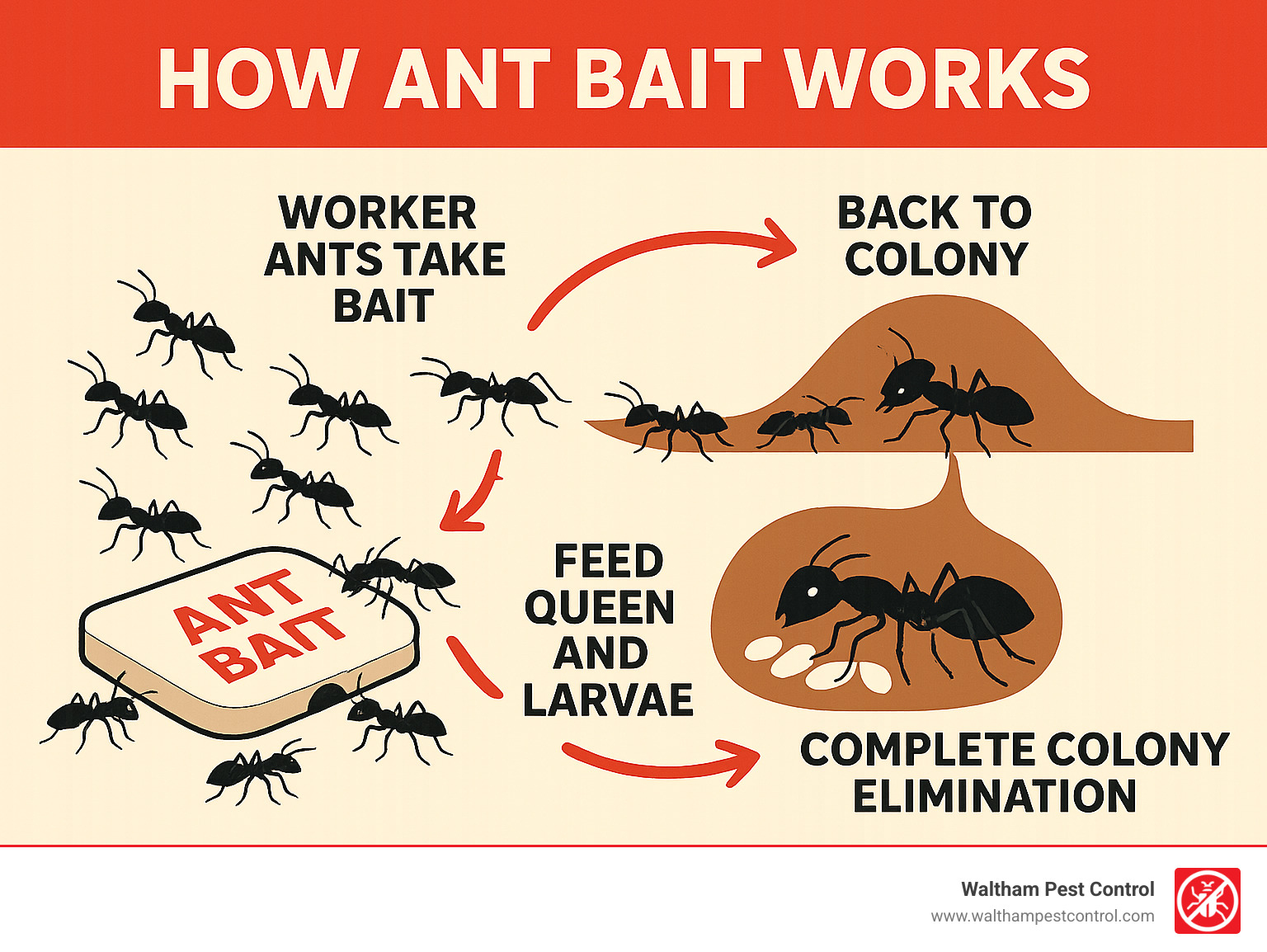
Ant baits work differently than sprays or traps. Instead of killing ants immediately, they use slow-acting insecticides mixed with attractive food sources. Worker ants carry this poison back to the nest, sharing it throughout the colony and eventually killing the queen – the source of your problem.
As Waltham Pest Control, President of Waltham Pest Control with over 40 years of experience handling bait for ants in house situations, I’ve seen countless Massachusetts homeowners try to solve ant problems with quick-kill sprays only to find the ants returning within days. The secret is understanding how colony elimination works rather than focusing on the visible ants.
Bait for ants in house terminology:
– House Ant Control
– ant bait station indoor
How Ant Baits Work Inside Your Home
Ever wonder why pest professionals recommend baits instead of sprays for those persistent kitchen invaders? It all comes down to ant social behavior. Ants practice something called “trophallaxis” – a fancy term for their habit of sharing food mouth-to-mouth with nestmates. This sharing behavior is exactly what makes bait for ants in house solutions so effective.
“The worker ants share bait with the entire colony—killing the ants you see and the ones you don’t,” explains our senior technician at Waltham Pest Control. “This is why patience is crucial when using bait for ants in house situations.”
When a foraging ant finds your bait, it doesn’t just eat and die on the spot. Instead, it fills its social stomach with the poisoned treat and carries it back to share with the whole family – including the queen, who’s the real source of your problem. The best ant baits contain slow-acting insecticides specifically designed to allow time for this sharing process to work its magic.
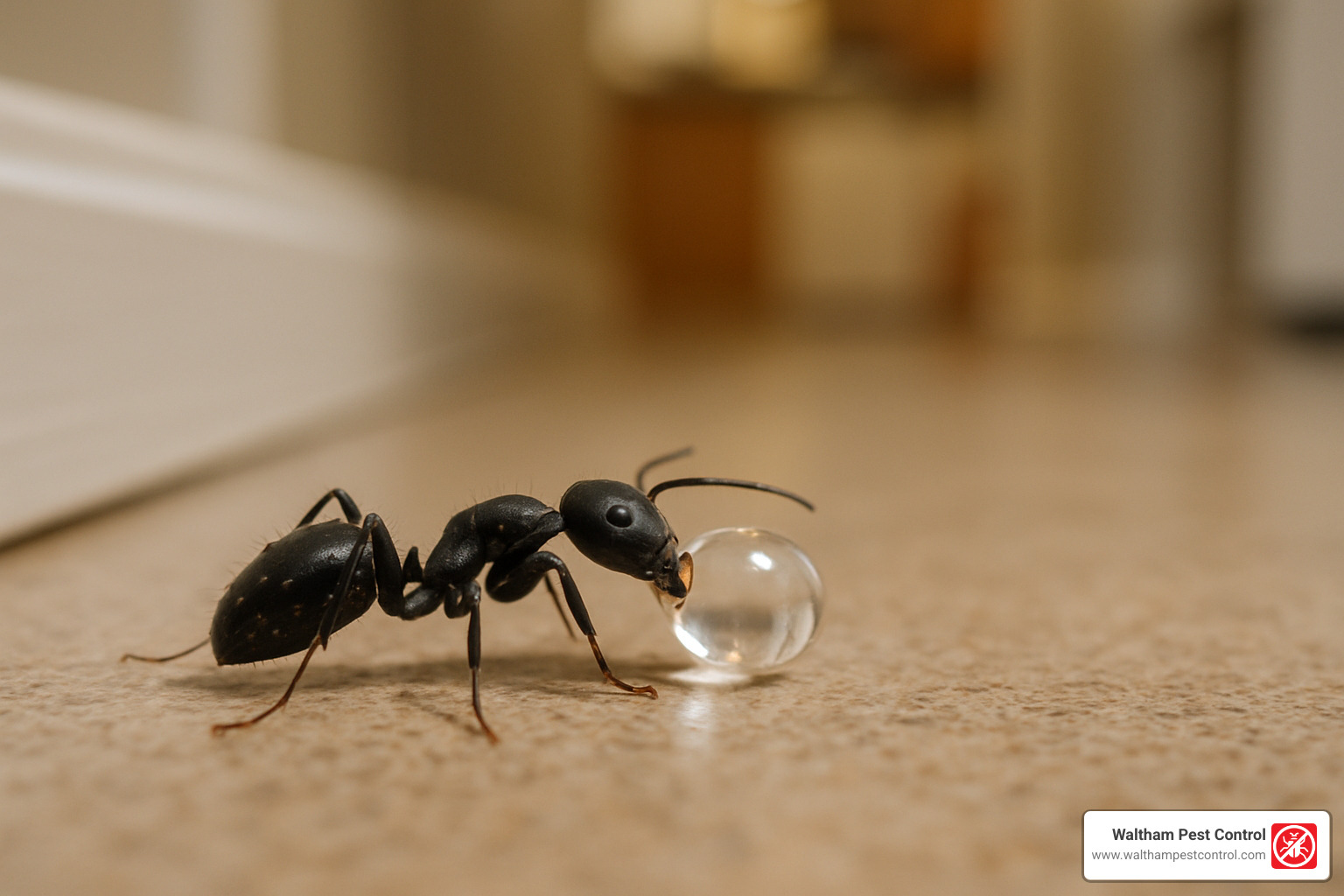
Ant colonies have surprisingly complex nutritional needs that change throughout the year. Adult worker ants can only digest liquids, while the growing larvae can process solid foods. The queen typically receives her meals from both larvae and workers. This diverse diet explains why you’ll find both liquid and solid bait formulations at the store – different types target different members of the colony at different times.
What Makes Baits Different From Sprays
When you spot ants marching across your kitchen counter, it’s tempting to reach for that spray can and blast them away. While this provides immediate satisfaction (and who doesn’t love that?), it actually makes your problem worse in the long run.
“Spraying repellent like pyrethroids once ants are in the house will split the colony,” notes our pest control experts. Sprays only kill the ants they directly contact – typically just 5-10% of the entire colony. Even worse, many ant species (especially those with multiple queens) will respond to this threat by splitting into smaller colonies as a survival mechanism. Congratulations – you’ve just turned one ant problem into several!
Baits work with ant behavior instead of against it. They use the ants’ own food-sharing habits to deliver poison throughout the entire colony structure. Yes, you’ll need patience – you might actually see more ants initially as they find and feed on the bait – but the long-term results are worth the wait.
The Science Behind Borax and Fipronil
The two most common active ingredients you’ll find in bait for ants in house products are borax (sodium tetraborate) and fipronil. Each works differently, but both effectively eliminate colonies when properly formulated.
Borax, a naturally occurring mineral that’s been used in household products since the 1800s, disrupts the ant’s digestive system. When ingested, it interferes with their ability to process food, essentially causing starvation. As one customer explained it, “The sodium reacts with certain acids within the ant, causing a chemical reaction that dehydrates its exoskeleton and ultimately leads to the ant’s expiration.”
The beauty of borax-based baits is their relatively low toxicity to humans and pets when used as directed, combined with high effectiveness against ants. This makes them ideal for indoor use, especially in homes with children or pets.
Fipronil, found in some professional-grade ant baits, takes a different approach. It disrupts the ant’s central nervous system by blocking GABA receptors and chloride channels, leading to hyperexcitation, paralysis, and death. Fipronil works particularly well against ants that have developed resistance to other insecticides.
Both ingredients are carefully formulated to work slowly, giving foraging ants plenty of time to return to the nest and share the poison before dying. This delayed-action property isn’t a bug – it’s a feature! It’s exactly what makes these baits so effective at eliminating entire colonies rather than just individual ants.
According to scientific research on ant digestive disruption, this slow-acting approach is key to successful colony elimination, as it allows the poison to be widely distributed before any ants begin dying and potentially warning the colony.
Choosing the Right Bait for Ants in House
When those tiny invaders march into your home, finding the perfect bait for ants in house situations becomes your mission. Think of it like matchmaking – you need to pair the right bait with your specific ant problem for lasting success.
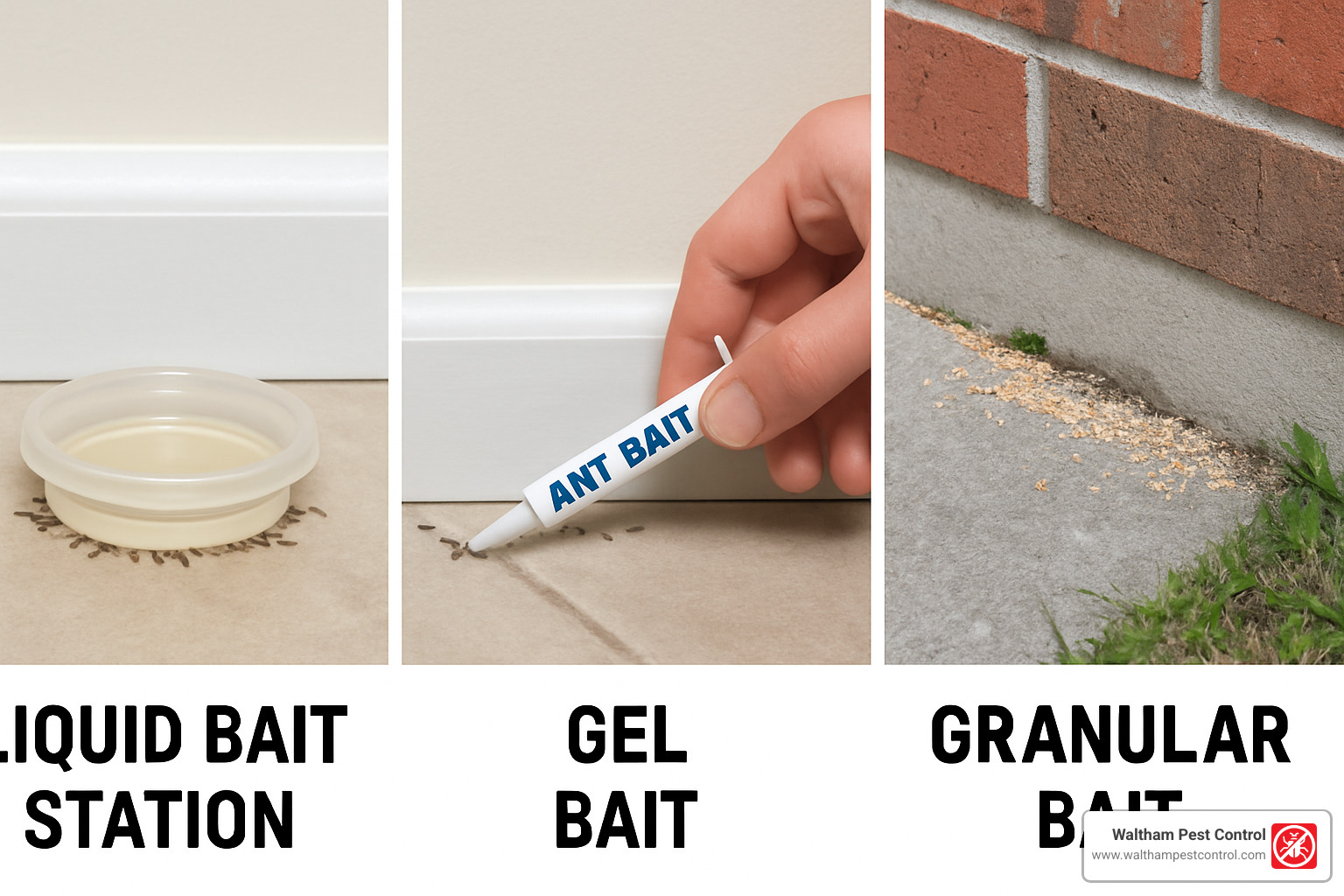
Let me walk you through your options with this handy comparison:
| Bait Type | Best For | Active Ingredients | Pros | Cons |
|---|---|---|---|---|
| Liquid Stations | Sweet-loving ants (most household species) | Borax, sodium tetraborate | Highly attractive, easy to use, visible results | Can dry out, may spill, need replacing |
| Gel Baits | Grease/protein-seeking ants, hard-to-reach areas | Fipronil, hydramethylnon | Precision application, works in cracks/outlets | Less visible results, harder to apply |
| Granular Baits | Outdoor perimeter, large infestations | Hydramethylnon, abamectin | Covers large areas, weather-resistant | Less effective indoors, may attract pets |
I’ve seen countless Massachusetts homeowners get frustrated when their baits fail – usually because they didn’t match the bait to their ant species. As pest control expert Donnie Shelton explains, “Different ant species have different physical anatomy, and because of this, it will depend on how effective borax or other treatments are to that specific species of ant.”
Here in Eastern Massachusetts, we typically battle four main ant invaders in homes:
Odorous House Ants love sweets and practically throw parties around liquid bait stations. Pavement Ants aren’t picky – they’ll happily feast on sweet or protein baits. Carpenter Ants prefer protein/oil-based baits but often require professional intervention to prevent structural damage. And those tiny Pharaoh Ants gravitate toward protein baits but are notorious for splitting colonies when disturbed.
Liquid Stations: Go-To Bait for Ants in House
For most Massachusetts homeowners, liquid bait stations are your best first defense against bait for ants in house problems. They’re particularly effective against our region’s most common invaders – odorous house ants, pavement ants, and those pesky little black ants that seem to appear out of nowhere.
These stations contain a sweet borate solution that most household ants find irresistible. One customer described watching ants “worshiping the bait like it was ambrosia” – and that intense attraction is exactly what makes these baits so effective. The workers carry the sweet poison back to share with the entire colony, including the queen.
Liquid baits shine because they match what most household ants are searching for – sugar. They stay moist and attractive longer than other options, and you can easily monitor their effectiveness by watching the ant activity around them. Plus, they’re incredibly user-friendly – no special equipment or professional training required.
For best results, place your liquid stations directly in the path of active ant trails. Look for spots along baseboards, near entry points, or in corners where you consistently see ant traffic. Once the ants find the bait, resist the urge to move the stations – this can disrupt their trail and reduce effectiveness. Patience is key!
When to Use Gel or Solid Baits for Ants in House
While liquid stations handle most bait for ants in house situations beautifully, sometimes you need a different approach. Gel baits become your best friend when dealing with protein-loving ants like carpenters, or when you need precision application in tight spaces.
“Advion gel is the best on the public market,” shared one experienced homeowner who successfully eliminated a stubborn infestation. These professional-grade gels typically contain fipronil or hydramethylnon and come in syringes for targeted application. They’re perfect for those hard-to-reach hiding spots where ants enter your home.
Here’s a clever trick we recommend to our Waltham Pest Control customers: remove outlet faceplates and apply small amounts of gel bait behind them. Ants often travel along electrical wiring, and one homeowner reported amazing success “applying gel bait directly behind the GFI outlet” where ants were emerging.
Solid baits have their place too, especially when you’re dealing with certain species that prefer solid food or when you want to create a protective barrier around entry points. Some homeowners find success with a DIY mix of borax and confectioners’ sugar (using a 1:3 ratio). As Vincent Luca wisely advises, “Using confectioners’ sugar is essential in this case. Regular sugar can easily be separated by ants from the baking soda.”
For carpenter ants specifically, which can threaten homes throughout Eastern Massachusetts from Burlington to Bedford, protein-based gel baits often work best. However, given the structural damage these ants can cause, we typically recommend professional treatment for established infestations to ensure complete elimination.
More info about Best Indoor Ant Bait
More info about Ant Bait Station Indoor
Step-by-Step Placement Guide
Proper placement of bait for ants in house products is crucial for success. Even the most effective bait will fail if ants don’t find it or if it’s placed in ways that disrupt their normal behavior.
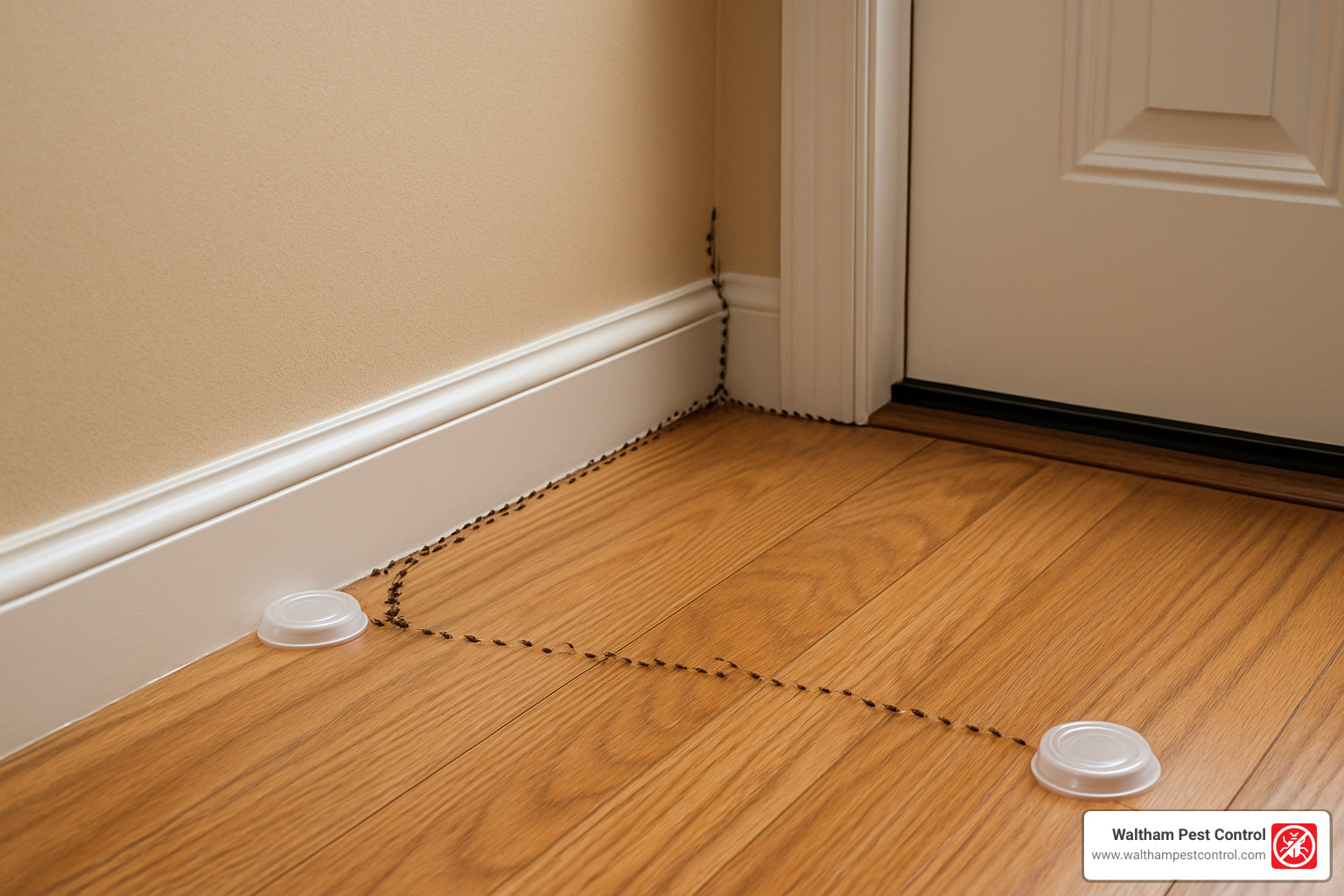
Think of ant baiting as a strategic game of chess, not a random attack. You want to position your baits exactly where ants are already traveling. Start by observing ant activity to identify their main highways and entry points into your home. Once you’ve spotted these trails, place your baits directly on these established pathways – not just in corners where you’ve occasionally spotted a straggler.
Entry points deserve special attention. Doors, windows, pipes, and wire penetrations are like ant superhighways into your home. A well-placed bait station near these entry zones can intercept workers before they even begin foraging inside. And don’t forget to focus on moisture-rich areas like kitchens and bathrooms, which naturally attract ants seeking water.
“Location is key,” emphasizes our senior technician at Waltham Pest Control. “Baits placed in the wrong areas might be completely ignored by ants, regardless of how attractive the formulation is.”
For larger infestations, create a strategic perimeter by placing stations every 10-20 feet along baseboards and near identified trails. Once your ants begin feeding, resist the urge to disturb them or clean up the trails – those pheromone highways are actually helping lead more ants to your bait.
Mapping the Trail Before You Place Bait
Before placing a single bait station, take time to play detective and map out the ant trails in your home. This preliminary work dramatically improves your chances of success.
Many homeowners miss half the action by only looking during daylight hours. Grab a flashlight and conduct a night inspection, as many ant species are more active after dark. When you spot ants, follow them backward to identify entry points – these become prime locations for your bait stations.
Pay special attention to moisture sources in your home. Inspect around sinks, dishwashers, bathroom fixtures, and even potted plants. Ants need water as much as food, and these areas often serve as popular gathering spots.
Ants aren’t limited to floor travel. Look up at ceiling edges and down along baseboards, as these insects often prefer the security of edges when navigating through your home. One homeowner shared their success story: “I followed ants from my pantry recycling bin, cleaned the bin and set traps on their path.” This targeted approach ensures baits are placed where ants will actually find them.
While mapping trails, you might find entry points that can be sealed for long-term prevention. However, don’t seal all entry points during active baiting – you want ants to continue using their established routes to find your bait. For more detailed guidance on eliminating entry points, check out How to Exterminate Ants Inside the House.
Safe Placement Around Kids & Pets
When using bait for ants in house treatments in homes with children or pets, balancing effectiveness with safety becomes essential. While most ant baits contain relatively low concentrations of active ingredients, thoughtful placement prevents unwanted exposure.
Commercial bait stations offer built-in safety features with their tamper-resistant designs. These sturdy plastic containers allow ants to enter and exit while keeping curious fingers and paws away from the bait inside. For an extra layer of protection, implement an elevation strategy by placing baits in areas inaccessible to children and pets – on high shelves, behind appliances, or inside cabinets (while ensuring ants can still access them).
DIY baiting requires extra creativity. One pet owner shared this clever solution: “I set baits inside wire crates to keep pets from accessing them while still allowing ants to enter freely.” Another approach is to create small “ant houses” using index cards folded into tents with small openings that only accommodate ant-sized visitors.
Timing matters too. Apply baits when children and pets aren’t present, allowing time for ants to find them before family members return. And always keep unused bait products in their original containers, sealed and stored well out of reach.
While borax-based baits have relatively low mammalian toxicity, they should still be handled with appropriate caution. As DIY expert Jessi Wohlwend wisely notes, “When the labels say ‘Toxic if ingested, keep out of reach of pets and children’, it means it’s toxic enough that I don’t mess around with it!”
How Long Until You See Results?
“Are these baits actually working?” This question echoes through countless Massachusetts homes during ant season. The timeline for results varies based on colony size, ant species, and your specific bait, but understanding what to expect helps maintain patience during the process.
Here’s what typically happens: Within hours of placement, you’ll likely see increased ant activity around your baits as scouts recruit their nestmates to the food source. This initial surge often alarms homeowners, but it’s actually a positive sign! The more ants that feed on your bait, the faster it spreads through the colony.
For small infestations, you may notice significant improvement within 24-48 hours. Those minor kitchen invaders often represent satellite colonies that can be eliminated relatively quickly. Moderate infestations typically show noticeable reduction in activity within 3-7 days as the poison works its way through the colony structure.
Large colonies or multiple infestations require more patience. Complete elimination may take 7-10 days or longer, especially with species like carpenter ants that maintain extensive networks. “Patience pays off,” notes our technician. “The slow-acting nature of effective baits means complete colony elimination takes time, but the results are worth waiting for.”
Success reveals itself through a gradual tapering of ant activity. You’ll first notice many ants visiting the bait, then fewer and fewer until they disappear completely. Once you’ve seen no ant activity for 3-4 days, you can celebrate likely colony elimination. Remember to check bait stations regularly and replace them if they’re depleted or dried out – maintaining fresh bait throughout the process ensures complete success.
Troubleshooting: When Ants Ignore the Bait
Despite your best efforts, sometimes ants seem to ignore the bait for ants in house treatments you’ve carefully placed. This frustrating situation has several potential causes and solutions.
Common Mistakes That Keep Ants Marching
I’ve seen this scenario play out countless times in homes across Eastern Massachusetts: a homeowner carefully places ant bait, only to watch in frustration as the ants march right past it.
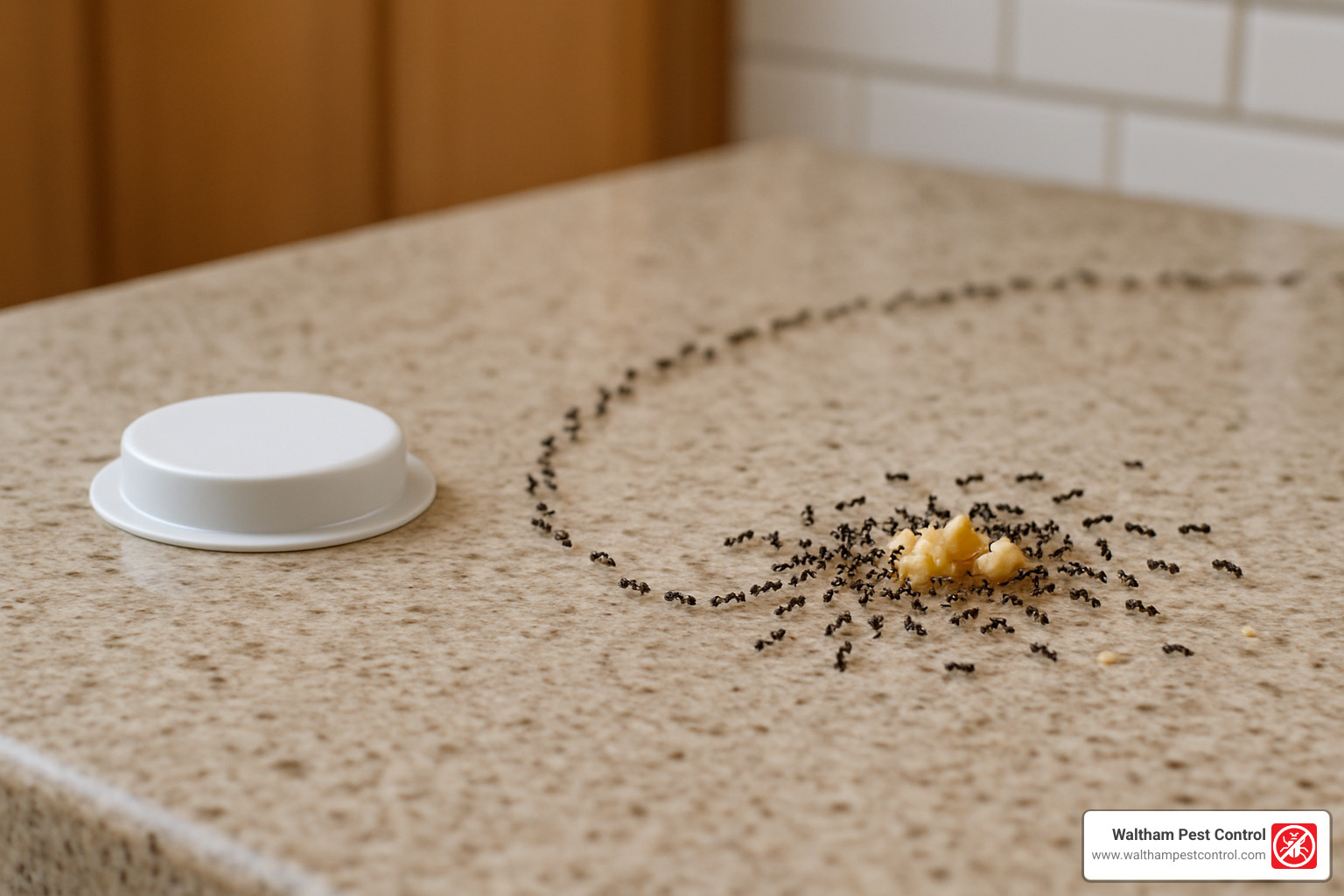
One of the most common mistakes is cleaning away pheromone trails with strong cleaning products. While your counters might look spotless, you’ve actually removed the invisible highways ants use to steer. Without these chemical trails, worker ants struggle to find your bait stations. A gentle cleaning with mild soap is usually sufficient if you need to tidy up.
Another frequent misstep is mixing baiting with spraying. “I thought I was being thorough by spraying and baiting at the same time,” one Lexington homeowner told me, “but I actually made my problem worse.” Using insecticides alongside bait treatments can frighten ants into splitting their colonies, creating multiple problems instead of solving one.
Many homeowners also fall into the trap of under-dosing their homes. A single bait station might not deliver enough poison to eliminate a thriving colony. Think of it like fishing – the more lines you cast, the better your chances of catching something.
Competing food sources are another common culprit. Your bait is essentially competing with every crumb, pet food bowl, and sticky spot in your home. “Keep a regular cleaning schedule and seal up food in containers,” advises our senior technician, who’s been handling ant problems in Burlington homes for over a decade.
Finally, don’t overlook the importance of proper bait selection. Using sweet bait for protein-seeking ants is like offering a vegetarian a steak – they simply won’t be interested.
Switching Flavors & Active Ingredients
Ant colonies are surprisingly sophisticated in their nutritional needs, which can shift throughout the season. If your initial bait choice isn’t working, it’s time to switch things up.
Rotate between sugar and protein baits to see what appeals to your particular invaders. One Andover customer shared: “I had ants completely ignore the first bait I put down, but when I switched to a protein-based gel, they were all over it within minutes.” This experience isn’t uncommon – ant colonies often alternate between carbohydrate cravings and protein needs depending on their growth cycle.
If you’ve been using borax-based baits without success, try products with different active ingredients like hydramethylnon or fipronil. These chemicals work through different mechanisms and might prove more effective against resistant colonies.
Remember to freshen bait regularly during active infestations. Baits can dry out or become less palatable over time, especially in heated homes during winter months or air-conditioned spaces in summer.
For those mixing DIY solutions, don’t be afraid to adjust your recipe. “If ants die at the bait source, dilute the mixture,” I often tell customers. The goal is for ants to survive long enough to carry bait back to the nest and share it with their nestmates.
A creative approach that’s worked for many of our customers is to offer multiple bait options simultaneously. Place different types near each other, observe which attracts more visitors, then focus on that formulation.
Time to Call a Pro
While DIY bait for ants in house methods work well for common household ants, there comes a point when professional help makes sense. After 40+ years in pest control, I’ve learned to recognize these turning points.
If you’ve diligently tried different baits with proper placement for 2-3 weeks without success, something more complex is likely happening. Persistent activity despite multiple approaches often indicates hidden nests or species-specific challenges that require professional identification and treatment.
Carpenter ant infestations deserve special mention here. Unlike their smaller cousins that are merely annoying, carpenter ants can damage your home’s structure. They typically nest in wall voids, attics, or moist wood, making them particularly difficult to reach with consumer-grade products. When we find carpenter ants in homes around Woburn or Winchester, we usually recommend a professional inspection to assess potential damage.
Recurring seasonal infestations suggest an established outdoor colony that’s sending scouts into your home year after year. These persistent colonies often require comprehensive treatment that addresses both indoor and outdoor habitats.
If you’re seeing ants in multiple rooms with multiple entry points or widespread activity, you’re likely dealing with a significant infestation that DIY methods may not fully address. In these cases, the expertise and professional-grade products available to licensed technicians make a meaningful difference.
At Waltham Pest Control, we bring decades of experience with Eastern Massachusetts ant species to your doorstep. Our technicians can identify specific ant species, locate hidden nests, and implement comprehensive treatment plans custom to your unique situation. When DIY efforts fall short, we’re just a phone call away, ready to help restore your ant-free home.
Prevention After the Bait Works
Once you’ve successfully eliminated an ant infestation using bait for ants in house treatments, the next step is preventing their return. A comprehensive prevention strategy combines sanitation, exclusion, and strategic exterior treatments.
Long-Term Housekeeping & Exclusion
Think of ant prevention as building a fortress around your home—both inside and out. The battle doesn’t end when the ants disappear; it’s just entering a new phase.
Keep your kitchen spotless to remove the food sources that attract ants in the first place. As our prevention specialist at Waltham often tells clients, “Even the tiniest crumb can be a feast for an ant colony.” Wipe down counters after meal prep, sweep floors regularly, and clean up spills immediately—especially sweet ones like juice or honey that might as well be flashing neon “eat here” signs to foraging ants.
Food storage matters more than you might think. Those cereal boxes and pasta packages from the grocery store? They’re no match for determined ants. Transfer pantry staples to sealed containers, particularly sweet items like sugar, syrup, and honey. Don’t forget about pet food either—many homeowners are surprised to learn that Fido’s kibble is just as attractive to ants as human food.
Moisture is a magnet for many ant species. In fact, some ants will seek out water sources before they even look for food. Fix those dripping faucets, repair leaky pipes, and check for condensation under sinks. One customer from Lexington told us, “I was battling ants for months before realizing the leak under my dishwasher was what kept bringing them back!”
Taking out the trash might seem basic, but it’s surprisingly effective for ant prevention. Use sealed trash containers and empty them regularly. “I started rinsing food containers before putting them in the recycling bin, and it made a huge difference in keeping ants away,” shared a relieved homeowner from Winchester.
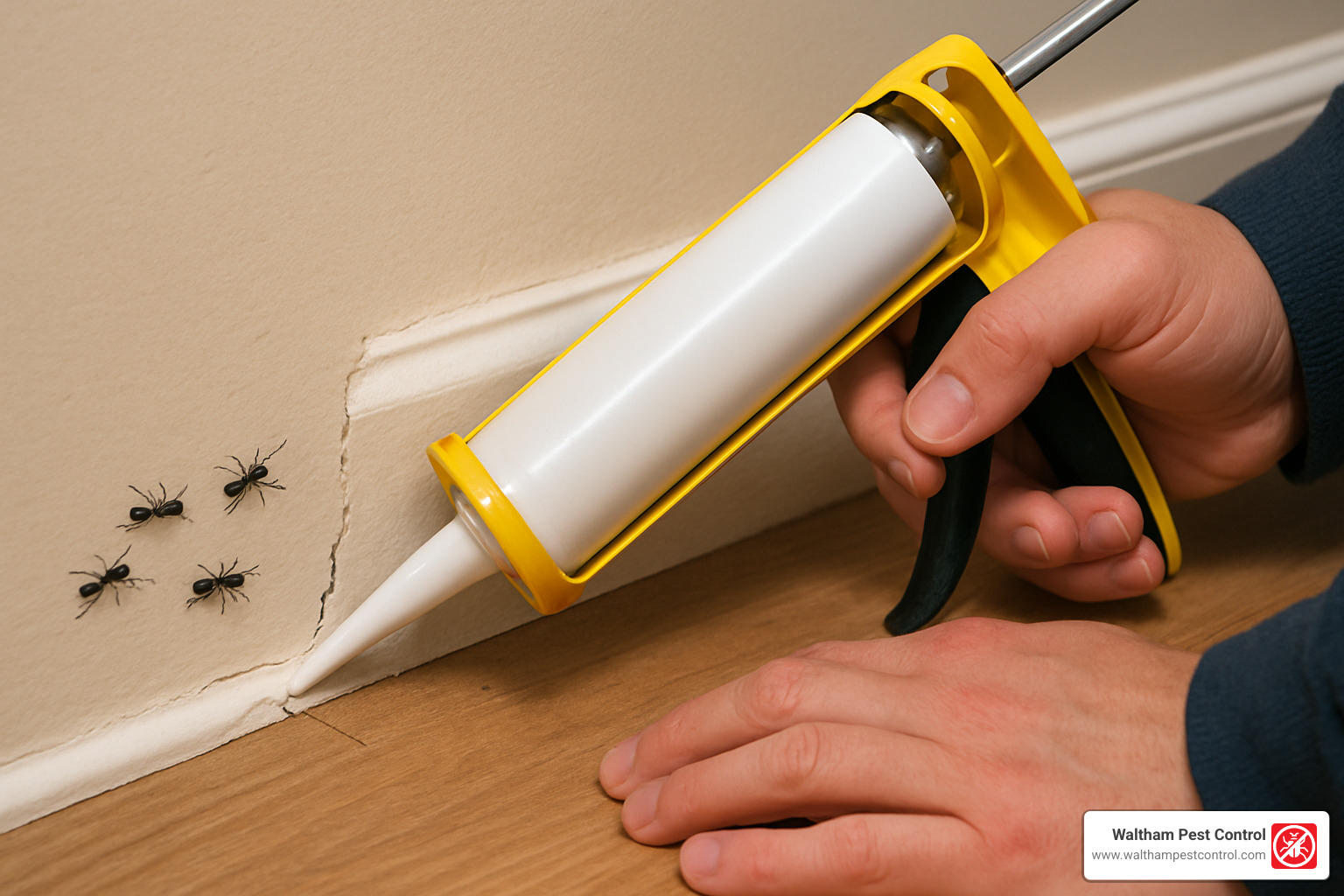
Creating physical barriers is your next line of defense. Seal up entry points with caulk around windows, doors, foundations, and utility lines. One expert tip from our technicians: “Always caulk from outside in to concentrate ant entry points—this makes future baiting more effective if needed.”
Don’t overlook your weather stripping and screens. These seemingly minor gaps around doors and windows can be major highways for ant invaders. Replace damaged screens and add fresh weather stripping where needed.
The vegetation around your home can create natural bridges for ants. Trim back trees and shrubs so they don’t touch your house, as these provide easy access routes for foraging ants. One Burlington resident shared her success story: “After eliminating ants with bait, I spent a weekend sealing every crack I could find and trimming bushes away from my siding. It’s been two years without a single ant inside.”
For ongoing protection, consider creating a defensive perimeter. Granular bait for ants in house prevention works wonders when placed strategically around your home’s exterior during spring and early summer. This intercepts potential invaders before they find their way inside.
Many homeowners in Massachusetts find success with diatomaceous earth as a non-toxic barrier around foundation perimeters. This natural substance damages the exoskeletons of ants that cross it, without posing risks to people or pets.
For truly worry-free protection, consider a professional quarterly service from Waltham Pest Control. Our technicians create and maintain a protective barrier around homes throughout Eastern Massachusetts, addressing seasonal ant pressures before they become indoor problems.
One creative Andover homeowner found that temperature adjustments helped too: “I set my AC below 72°F and combined perimeter and indoor bait for a year-long solution.” While not a complete solution on its own, cooler indoor temperatures can make your home less appealing to certain ant species.
Prevention isn’t a one-and-done task but an ongoing process. By implementing these strategies consistently, you’ll significantly reduce the chances of future ant invasions and protect your home from these persistent pests.
More info about House Ants: How to Prevent Them and How to Treat Them
Frequently Asked Questions about Indoor Ant Baiting
How many bait stations should I use?
The perfect number of bait for ants in house stations isn’t one-size-fits-all – it depends on how bad your ant problem is and how large your home is. For a small problem in just one area of your kitchen, 2-3 strategically placed stations directly on the ant trails might do the trick. If those tiny invaders have spread to multiple rooms, you’ll want to bump that up to 4-6 stations. And for those truly frustrating whole-house infestations? You might need 8-12 stations to get the job done right.
“I’ve found that spacing bait stations every 10–20 feet around the structure gives the best results,” shares one of our senior technicians at Waltham Pest Control. This approach ensures that no matter where ants are entering your Lexington or Winchester home, they’ll stumble across your bait before reaching your kitchen or pantry.
Remember to check your stations regularly – most commercial options last 2-4 weeks before needing replacement, but heavy ant traffic can deplete them faster. When you notice a station looking empty or dried out, it’s time for a fresh one. Your persistence will pay off with an ant-free home!
Why do I see more ants right after placing bait?
It might seem counterintuitive, but that sudden ant parade after placing your bait for ants in house is actually great news! Many homeowners call us in a panic when this happens, not realizing it’s a sign the bait is working exactly as designed.
Here’s what’s really happening: When scout ants find your bait (which they think is a delicious food source), they immediately lay down stronger pheromone trails and call in reinforcements. It’s like they’re sending out invitations to the best buffet in town! Commercial baits contain powerful attractants specifically formulated to be irresistible to ants, drawing them in large numbers.
“The first time I used bait stations, I nearly vacuumed them up when I saw how many ants appeared,” laughs one of our Burlington customers. “My technician explained that patience would pay off – and sure enough, by day four, they were completely gone.”
This initial surge typically lasts 1-3 days before you’ll notice a decline as the slow-acting poison makes its way throughout the colony. The delay is intentional – it gives worker ants plenty of time to carry the bait back to the nest and share it with the queen and other colony members before dying.
Are borax baits safe around pets?
When you have furry family members, safety becomes a top priority when using any bait for ants in house products. The good news is that borax-based baits have relatively low toxicity to mammals compared to many harsher insecticides, but that doesn’t mean you should throw caution to the wind.
Commercial bait stations offer the safest approach since they’re designed with tiny openings that allow ant access while keeping curious paws and noses out. Place these stations strategically in areas your pets can’t access – behind refrigerators, inside cabinets (making sure ants can still get to them), or on shelves well above your pet’s reach.
“For my Cambridge home with two cats who investigate everything, I found placing bait stations between the refrigerator and cabinet created the perfect spot – accessible to ants but completely out of reach for my feline detectives,” shares one satisfied Waltham Pest Control customer.
If you’re making DIY borax baits at home, take extra precautions by using containers with tiny entry holes that keep pets out while letting ants come and go freely. And always supervise pets when you first place new bait stations until you’re confident they show no interest.
While serious poisoning from ant baits is rare due to the low concentration of active ingredients, it’s always better to be safe than sorry. If you suspect your pet has consumed any bait material, contact your veterinarian immediately. For homes with particularly curious pets in Arlington or Cambridge, our professional treatment options can target those ant colonies while keeping your four-legged family members completely safe.
Conclusion
Successfully eliminating ants from your home using bait for ants in house treatments feels like winning a chess match against nature. It’s not about quick fixes—it’s about outsmarting the colony with strategy, patience, and understanding their behavior. Unlike the temporary satisfaction of spray-killing a few scouts, proper baiting delivers what homeowners truly want: a completely ant-free home.
After working with thousands of Massachusetts homeowners over four decades, I’ve seen the relief on people’s faces when they finally solve an ant problem that’s been plaguing them for seasons. The secret isn’t complicated, but it does require following the right steps:
Start by choosing the right bait formulation—liquid stations for sweet-loving ants, protein gels for grease-seekers. Placement is everything—put those baits directly on active trails where worker ants can’t miss them. Then comes the hardest part for most homeowners: patience. Those first few days when ant activity increases around your bait stations can test your resolve, but trust the process.
Monitor your progress by checking bait stations every few days. Are they empty? Replace them. Has activity decreased? You’re on the right track. And once those tiny invaders have finally disappeared, don’t forget to seal entry points and eliminate food sources to prevent their return.
For many homes throughout Eastern Massachusetts—whether you’re in a historic Concord colonial or a modern Waltham apartment—seasonal ant problems are almost a rite of passage. The good news? With the right approach, you can break that cycle.
Sometimes, despite your best DIY efforts, professional help becomes necessary. This is particularly true with carpenter ants, which can cause structural damage to homes in wooded areas like Lincoln or Lexington. At Waltham Pest Control, our technicians bring specialized knowledge and professional-grade products that can reach colonies hiding deep within your walls or foundation.
Timing matters—addressing a small ant problem in early spring can prevent a major kitchen invasion by summer. By understanding how bait for ants in house treatments work and following the strategies we’ve outlined, you’ll be well-equipped to maintain an ant-free home year-round.
For persistent or severe ant problems that resist your best efforts, contact our team for a consultation. After four decades of battling Massachusetts pests, we’ve developed effective solutions for even the most stubborn ant infestations. Your ant-free home is waiting—we’re just a call away.