

Average Price of Carpenter Bee Pest Control Treatment: Top 5 Essential Cost Factors

The average price of carpenter bee pest control treatment can vary significantly based on several factors, but often falls between $150 and $450 for professional services. Addressing a carpenter bee infestation promptly is critical as these solitary insects are more than just an occasional nuisance. While they are important pollinators, their habit of burrowing into wood can lead to severe home damage, making pest control both a preventive and a remedial expense.
Homeowners need to understand the costs involved not only to tackle existing problems but also to prevent future infestations. Several factors such as the severity of the infestation, the number of entry holes, and the service quality can influence the overall cost.
As the President & CEO of Waltham Pest Control Co., with over 40 years of experience, I’ve seen how the average price of carpenter bee pest control treatment reflects the complexity and extent of the issue. My expertise ensures you receive clear, practical advice that balances cost with effectiveness.

What Are Carpenter Bees?
Carpenter bees, belonging to the Xylocopa genus, are fascinating yet troublesome insects. Unlike social bees that live in colonies, carpenter bees are solitary creatures. Each bee prefers to work alone, creating its own nest. This behavior sets them apart from other bees, like honey bees or bumblebees, that thrive in social environments.
Wood-Burrowing Habits
Carpenter bees are aptly named for their unique wood-burrowing habits. They don’t eat wood but instead drill into it to create tunnels or “galleries” for nesting. These bees target untreated or soft wood, making the eaves, siding, and decks of your home ideal spots for their nests. Over time, this drilling can lead to significant structural damage.
Identification and Appearance
Identifying carpenter bees can be tricky since they resemble bumblebees. However, there are some key differences. Carpenter bees have smooth, shiny abdomens, unlike the hairy abdomens of bumblebees. They often have a blackish-blue color, which can sometimes appear metallic.
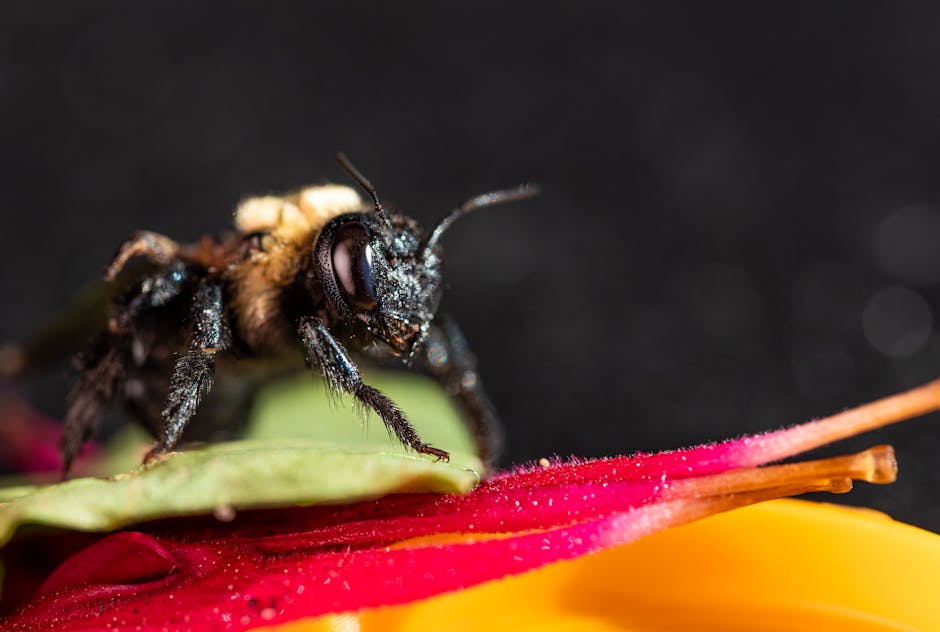
Male and female carpenter bees also differ in appearance. Males have a distinctive white spot on their heads, while females have entirely black heads. These characteristics can help you distinguish them from other bee species.
Behavior
The behavior of carpenter bees is unique. While they are generally not aggressive, females can sting if provoked. Males, on the other hand, are quite territorial and may buzz aggressively around humans, but they can’t sting.
Carpenter bees are most active during the spring when they emerge to mate and establish new nests. Their activity often coincides with warmer weather, which is why many homeowners notice them buzzing around during this time.
Understanding these aspects of carpenter bees can help you identify and manage them effectively, preventing potential damage to your home.
How Carpenter Bees Damage Your Home
Carpenter bees might seem harmless, but their nesting habits can cause significant damage to your home. Here’s how they do it:
Entry Holes and Tunnels
Carpenter bees start by drilling small, round entry holes into wood surfaces. These entry points are typically about 1/2 inch in diameter and can be found in areas like eaves, siding, or decks. Once inside, they create long tunnels or “galleries” that can extend several feet. These tunnels are used for nesting and laying eggs, but they can also weaken the structural integrity of the wood.
Structural Damage
Over time, the network of galleries created by carpenter bees can lead to structural damage. This is especially true if the bees return to the same site year after year, expanding their tunnels. If left unchecked, this can cause beams or supports to weaken and potentially lead to more severe issues, such as sagging or collapse.
Staining and Excrement
As carpenter bees bore into wood, they also leave behind staining from their excrement. This excrement can cause dark, unsightly stains on the wood surface, making your home look unkempt. The combination of entry holes and stains can significantly affect the aesthetic appeal of your property.
Woodpecker Attraction
Interestingly, the presence of carpenter bees can attract another pest: woodpeckers. These birds are known to peck at wood in search of carpenter bee larvae, causing even more damage. The sound of woodpeckers drumming on your home can be a nuisance, and their pecking can further compromise the wood.
Carpenter bees may be solitary, but their impact is anything but. Recognizing these signs early can help you take action before the damage becomes extensive.
Signs of a Carpenter Bee Infestation
Identifying a carpenter bee infestation early is crucial to prevent extensive damage to your home. Here are key signs to watch for:
Visible Bees
Spotting carpenter bees around your home is often the first sign of an infestation. These bees resemble bumblebees but have a distinct hairless abdomen. They are typically seen hovering near wood structures like eaves and decks.
Buzzing Sounds
Carpenter bees are surprisingly noisy. If you hear a persistent buzzing or humming sound near wooden parts of your home, it might be these bees boring into the wood. This sound is often more noticeable in quiet areas or during the evening.
Round Holes
One of the most telltale signs of carpenter bees is the presence of smooth, round holes in wood surfaces. These holes are about 1/2 inch in diameter and are the entry points for the bees to create their tunnels. Look for these holes in exposed wooden areas, such as fascia boards and siding.
Sawdust Piles
As carpenter bees create their tunnels, they leave behind sawdust, also known as frass. You might find small piles of sawdust beneath the entry holes or scattered around the area. This is a clear indicator of active wood-boring.
Staining
Carpenter bee excrement can cause dark, drip-like stains on wood surfaces. Depending on the wood’s color, these stains might appear yellowish. This staining not only affects the appearance of your home but also signals ongoing bee activity.
Structural Give-Way
If a carpenter bee infestation goes unnoticed for too long, it can lead to more severe structural issues. Over time, the wood may become weak or give way, resulting in split supports or broken railings. This level of damage is a serious concern and requires immediate attention.
Being aware of these signs can help you act quickly to address a carpenter bee problem before it escalates. Early detection and treatment are key to protecting your home from these wood-boring pests.
Average Price of Carpenter Bee Pest Control Treatment
When dealing with carpenter bees, understanding the average price of carpenter bee pest control treatment is essential. Costs can vary widely based on several factors, including the severity of the infestation and the specific services required.
Factors Affecting the Cost
- Number of Holes: The more entry holes carpenter bees have created, the higher the cost of treatment. Each hole represents a potential tunnel that needs to be addressed.
- Severity of Infestation: A severe infestation with numerous tunnels and extensive structural damage will increase treatment costs. More bees mean more labor and materials to remove them and repair damage.
- Height of Activity: If the bees have nested in higher or hard-to-reach areas, such as the second or third story of a home, this can increase costs due to the additional equipment and labor required.
- Service Quality: Opting for high-quality pest control services that offer guarantees can affect the price. Companies with strong reputations may charge more, but they often provide more comprehensive and effective treatments.
- Guarantees: Some pest control services offer guarantees that include follow-up visits to ensure the bees are gone. These guarantees can provide peace of mind but might come at an additional cost.
Typical Service Costs
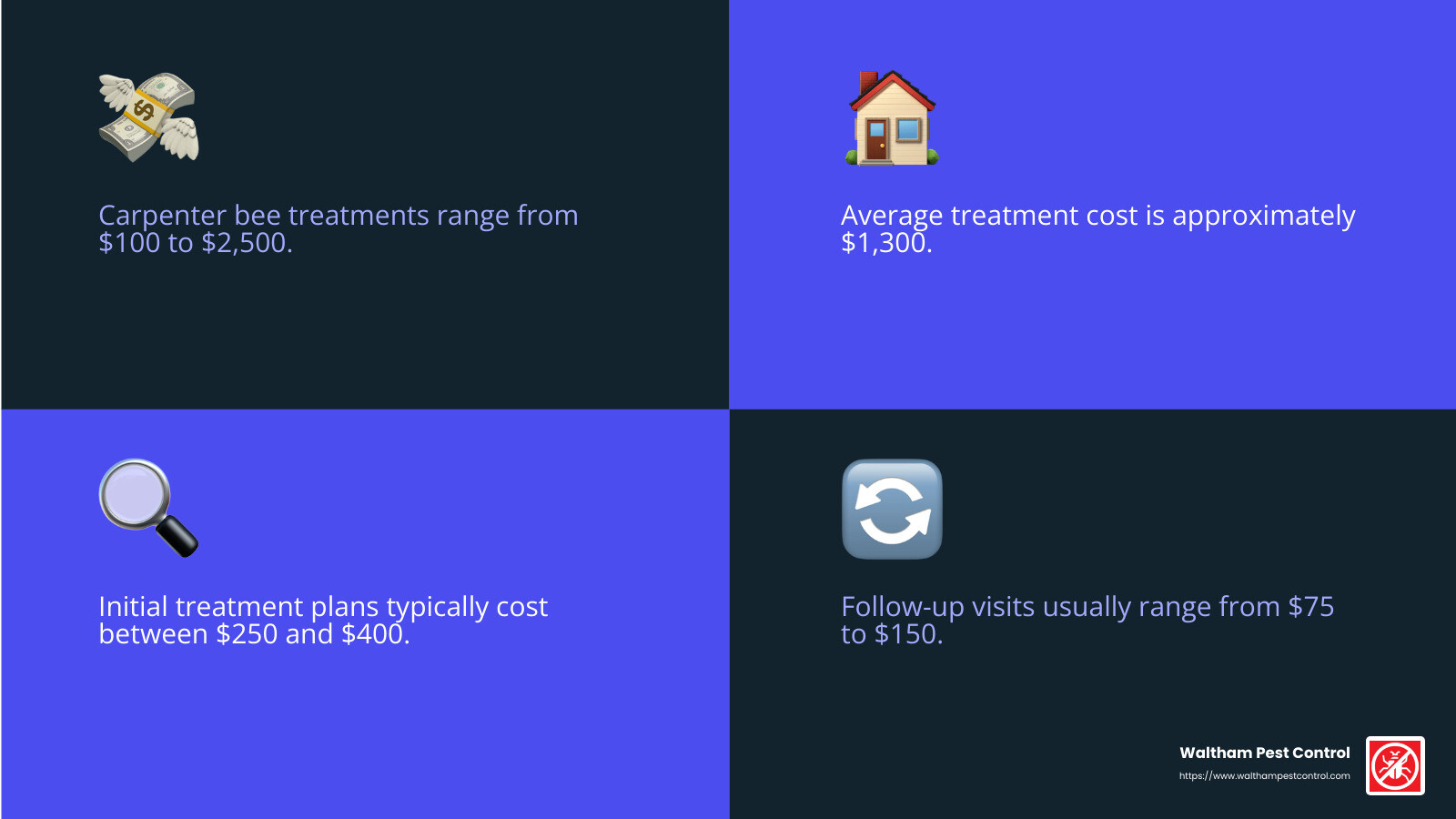
The cost range for carpenter bee pest control is broad, typically falling between $100 to $2,500. The average cost tends to hover around $1,300, depending on the factors mentioned above.
- Initial Treatment Plans: These often range from $250 to $400. This includes the initial inspection and treatment of the infested areas.
- Follow-up Visits: To ensure the effectiveness of the treatment and prevent reinfestation, follow-up visits may be necessary. These visits typically cost between $75 and $150 each.
Understanding these costs and factors will help homeowners budget for effective carpenter bee pest control and make informed decisions about the services they choose. Early intervention and professional help can prevent further damage and save on potentially higher repair costs in the future.
DIY vs. Professional Carpenter Bee Treatment
When it comes to dealing with carpenter bees, you have two main options: DIY methods or hiring a professional. Each approach has its pros and cons, and understanding them can help you choose the best solution for your situation.
DIY Methods
1. Carpenter Bee Traps
Carpenter bee traps are a popular DIY solution. These traps lure bees into a container where they cannot escape. They are simple to use and can be placed in areas with high bee activity, like sunny sides of your home or near existing holes.
2. Essential Oil Sprays
Essential oils, such as citrus or tea tree oil, can deter carpenter bees. Mixing these oils with water and spraying them on wooden surfaces can make the area less appealing to bees. This method is natural and safe for the environment.
3. Noise and Vibration
Creating noise and vibrations around the infested area can sometimes drive carpenter bees away. This can be as simple as playing music or using a vibrating device near their nesting sites.
4. Physical Barriers
Covering vulnerable wood with wire mesh or aluminum flashing can prevent bees from accessing it. Filling existing holes with wood filler or caulk can also stop bees from returning to old nests.
Professional Extermination
Hiring a professional, like Waltham Pest Control, offers a comprehensive approach to dealing with carpenter bees.
1. Inspection
Professionals start with a thorough inspection to assess the extent of the infestation. They identify entry holes, tunnels, and potential nesting sites.
2. Treatment
The treatment usually involves applying insecticidal dust or sprays into the bee tunnels. This can effectively kill the bees and prevent further damage. Professionals have access to stronger, more effective treatments than most DIY options.
3. Follow-up
Many pest control companies offer follow-up visits to ensure the bees are gone and to prevent reinfestation. This ongoing support can provide peace of mind.
4. Prevention
Experts also provide advice and solutions for preventing future infestations. This might include sealing wood, using deterrents, or suggesting structural changes.
Choosing between DIY and professional treatment depends on the severity of the infestation and your comfort level with handling it. While DIY methods can be cost-effective for minor problems, professional extermination offers thorough and lasting results, especially for severe infestations.
Preventing Carpenter Bee Infestations
Preventing carpenter bee infestations is key to protecting your home from damage. Here are some effective strategies to keep these wood-boring insects at bay:
1. Paint or Stain Wood
Carpenter bees prefer untreated wood. Painting or staining exposed wood can make it less attractive to them. These treatments not only improve the appearance of your home but also add a protective layer that deters bees. Regular maintenance is crucial—inspect and reapply paint or stain as needed to maintain this protective barrier.
2. Fill Abandoned Holes
If carpenter bees have already made their mark, filling abandoned holes is essential. Use wood filler, putty, or caulk to seal these entry points. This prevents bees from returning to old nests and helps maintain the structural integrity of your wood. Ensure the filler matches the wood color for a seamless look.
3. Use Vinyl Siding
For a more permanent solution, consider using vinyl siding to cover vulnerable wood areas. Carpenter bees cannot chew through vinyl, making it an effective barrier. Wrap fascia boards and other exposed wood completely, covering all sides to prevent bees from finding a way in.
4. Carpenter Bee Hotels
While it might seem counterintuitive, providing carpenter bee hotels can redirect them away from your home. These structures offer bees an alternative nesting site, keeping them from damaging your property. Place these hotels away from your house to safely relocate bee activity.
Implementing these preventive measures can help keep your home free from carpenter bee damage. Regular inspections and maintenance will ensure these strategies remain effective over time.
Frequently Asked Questions about Carpenter Bee Pest Control
What will an exterminator do for carpenter bees?
When dealing with carpenter bees, an exterminator typically uses a combination of strategies to tackle the problem effectively. Spraying insecticide is a common approach, targeting the bees directly and any larvae within the wood. This helps to eliminate the current infestation and prevent future ones.
In addition to spraying, professional pest control services also treat the wood to deter bees from returning. This might involve applying insecticidal dusts into the holes where bees have nested. The dust kills any remaining bees and larvae, and also discourages new bees from settling in.
Follow-up visits are often part of the treatment plan. These visits ensure that the infestation is fully eradicated and help monitor for any new bee activity. Exterminators may also provide advice on preventive measures to keep carpenter bees away in the future.
Will insurance cover carpenter bee damage?
Homeowners often wonder if their insurance will cover damage caused by carpenter bees. Unfortunately, homeowner policies typically have exclusions for damage caused by pests, including carpenter bees. This means that any repairs needed due to bee damage are usually not covered.
However, there can be coverage arguments depending on the specifics of your policy and the nature of the damage. For example, if carpenter bee activity leads to significant structural damage that causes other insured events, there might be partial coverage. It’s always a good idea to review your policy and discuss it with your insurance provider to understand your coverage options.
How much is pest control for bees?
The cost range for carpenter bee pest control can vary widely based on several factors, including the severity of the infestation and the type of service required. On average, homeowners might expect to pay between $250 and $400 for a typical exterminator visit. However, the total costs can range from $100 to $2,500, depending on the complexity of the situation.
The average price for a comprehensive treatment plan is around $1,300, which may include initial treatment and several follow-up visits. Service types can vary, with some companies offering one-time treatments and others providing ongoing pest management plans. It’s important to discuss your specific needs with a pest control professional to get an accurate estimate.
Conclusion
In summary, carpenter bees are more than just a nuisance; they can cause significant damage to wooden structures if left unchecked. These solitary insects bore into wood, creating entry holes and tunnels that can weaken structures over time. The average price of carpenter bee pest control treatment can vary, but investing in professional services often proves cost-effective in the long run.
Prevention Tips: To avoid future infestations, regular maintenance of wooden structures is key. Consider painting or staining wood surfaces and filling abandoned bee holes to make your property less appealing to carpenter bees. Using alternative materials like vinyl siding can also help reduce the risk of infestation.
When DIY methods fall short, or if the infestation is extensive, Waltham Pest Control is here to help. With over 40 years of experience in Eastern Massachusetts, we offer reliable and cost-effective pest management solutions. Our licensed and insured specialists provide comprehensive services, from inspection to treatment and follow-up, ensuring your home remains bee-free.
For more information on our services or to schedule a consultation, visit our Carpenter Bees service page. If you have any questions or need assistance, don’t hesitate to contact us. We’re committed to providing quality pest control solutions to protect your home and peace of mind.
