

are black and yellow wasps dangerous? 7 Crucial Facts 2025
Understanding Black and Yellow Wasps: Friend or Foe?

Are black and yellow wasps dangerous? The short answer is yes, they can be dangerous, but the level of risk depends on the species, circumstances, and individual sensitivity.
| Risk Factor | Details |
|---|---|
| Sting Capability | Most black and yellow wasps can sting multiple times, unlike honeybees |
| Venom Potency | Yellow jacket venom is more potent than honey bee venom |
| Aggression Level | Social wasps (yellow jackets, paper wasps) become more aggressive when defending nests |
| Allergy Risk | At least 2.5 million Americans have increased sensitivity to stinging insects |
| Fatality Risk | 50-100 deaths annually in the US from insect stings |
The black and yellow color pattern in the insect world often serves as nature’s warning sign. While many people instinctively fear these distinctive insects, understanding their behavior and biology can help you assess the actual risks they pose.
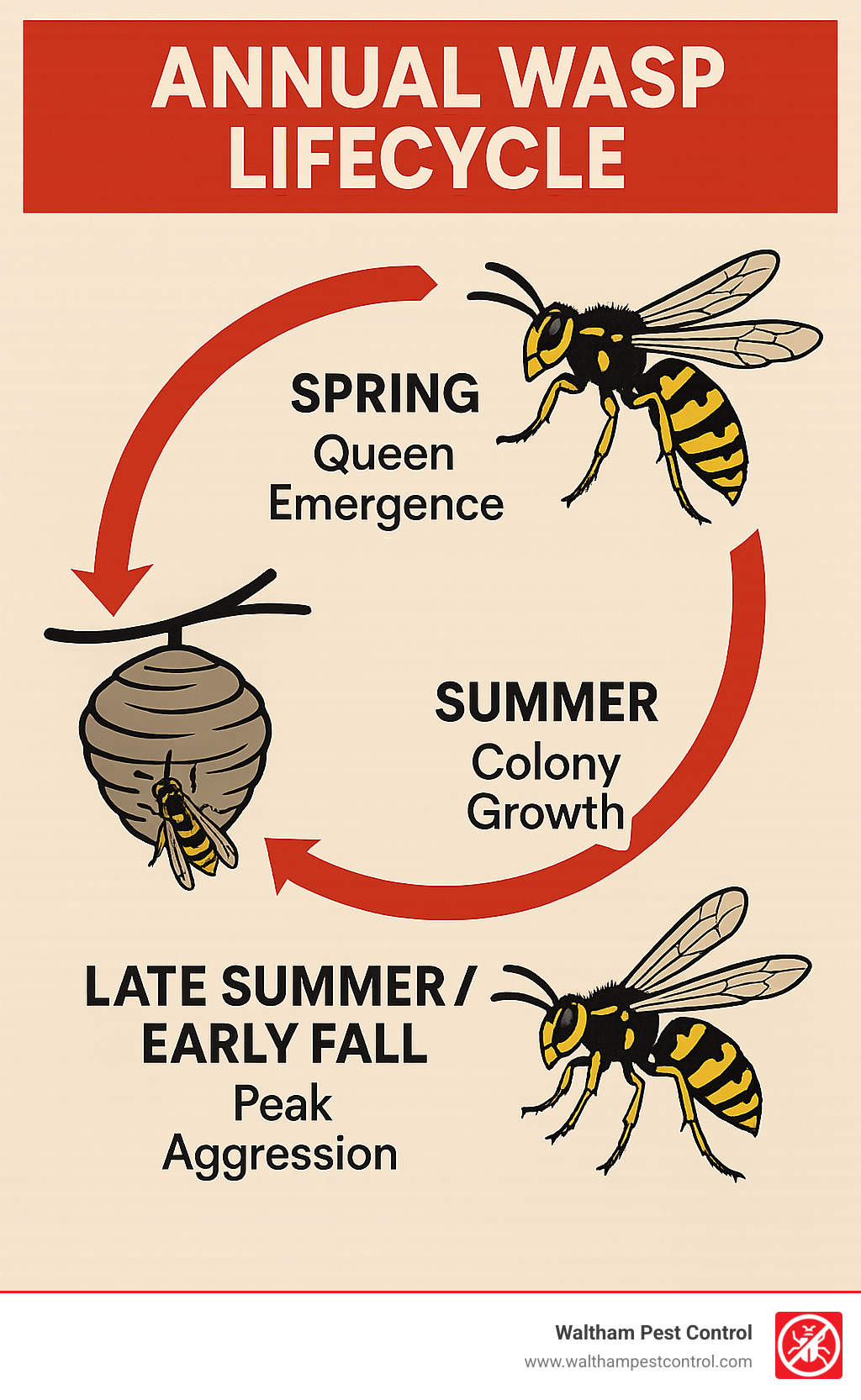
Most wasps with black and yellow markings play beneficial roles in our ecosystem as both pollinators and predators of garden pests. However, certain species like yellow jackets can become aggressive, especially in late summer when their colonies reach peak size (up to 5,000 workers) and food sources become scarce.
I’m Waltham Pest Control, President of Waltham Pest Control, and I’ve spent over 40 years helping Eastern Massachusetts residents safely manage encounters with black and yellow wasps, providing expert guidance on whether black and yellow wasps are dangerous based on species identification and behavior patterns.
Basic are black and yellow wasps dangerous terms:
– hornet nest removal
– wasp pest control
– clearing wasps nests
Are Black and Yellow Wasps Dangerous?
When people ask me if black and yellow wasps are dangerous, I always tell them the honest truth: yes, they can be—but context matters tremendously.
The statistics paint a sobering picture. Each year in the United States, stinging insects including wasps claim between 50-100 lives. This number likely underestimates the true impact, as many wasp-related fatalities may be misattributed to heart attacks due to similar symptoms during severe reactions.
What makes these insects particularly concerning is their venom potency. Yellow jacket venom packs a more powerful punch than honey bee venom, containing a cocktail of chemicals that can trigger intense pain and allergic reactions. And unlike honeybees, which sacrifice themselves with a single sting, wasps retain their stingers to deliver multiple painful jabs in quick succession.
To give you a sense of what a sting feels like, I love sharing Dr. Justin Schmidt’s colorful description. This entomologist, who famously developed the “Schmidt Pain Index” after being stung by countless insects, describes a yellow jacket sting as “hot and smoky, almost irreverent. Imagine W.C. Fields extinguishing a cigar on your tongue.” Ouch!
The danger level varies significantly between different types of wasps:
Social wasps like yellow jackets, paper wasps, and hornets live in colonies and take home defense very seriously. When one feels threatened, it releases alarm pheromones that can mobilize the entire colony within seconds. Before you know it, you could be facing dozens of defenders, all ready to sting.
Solitary wasps such as mud daubers and cicada killers generally mind their own business. These independent insects typically sting only when directly handled or when they feel severely threatened.
Late summer and early fall represent the danger zone for wasp encounters. By August, colonies have reached impressive sizes—a mature yellow jacket nest might house anywhere from 1,000 to 5,000 workers, all capable of delivering painful stings. With food sources dwindling and colonies at peak population, wasps become noticeably more aggressive in their search for nourishment.
According to research on yellow jacket dangers, these wasps are responsible for more stings than any other insect in the United States, with their aggressive nature making them particularly hazardous during certain seasons.
Are Black and Yellow Wasps Dangerous to Humans or Pets?
For most healthy adults, a single wasp sting causes temporary discomfort—localized pain, redness, and swelling that typically resolves within a few days. On the Schmidt Pain Index (1-4 scale), most black and yellow wasps fall between 2 and 3, with yellow jackets scoring a 2 and bald-faced hornets (technically a type of yellow jacket) earning a respectable 2.5.
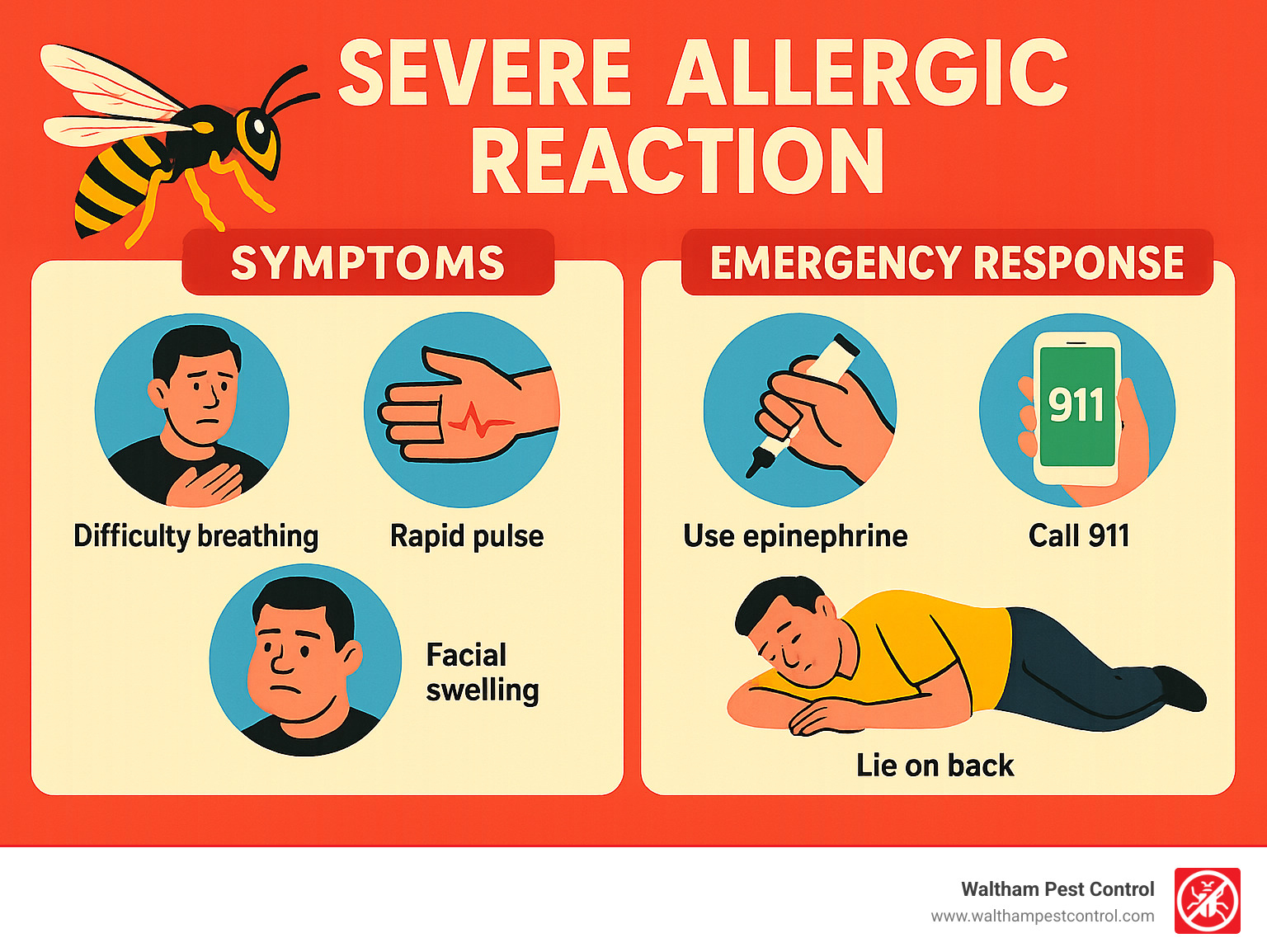
The real danger emerges with multiple stings or allergic reactions. About 2.5 million Americans have heightened sensitivity to stinging insects. For these individuals, even a single sting can trigger anaphylaxis—a severe, potentially life-threatening reaction. Warning signs include difficulty breathing, facial or throat swelling, rapid pulse, dizziness, nausea, and widespread hives extending beyond the sting site.
Our four-legged friends aren’t immune to these dangers either. Dogs, with their curious nature, often investigate wasp nests and may receive multiple stings as a result. Stings around the face and throat are particularly concerning as swelling can block airways. Smaller pets face greater risks simply due to their size—the same amount of venom affects a small animal more severely than a larger one.
As veterinarian Dr. Sarah Johnson explains, “When a dog receives multiple wasp stings, the situation can quickly become life-threatening. Owners should watch for excessive drooling, difficulty breathing, or collapse, and seek emergency veterinary care immediately.”
Are Black and Yellow Wasps Dangerous During Late Summer?
If you’ve noticed wasps becoming more aggressive as summer wanes, you’re not imagining things. Late summer and early fall represent peak danger season for black and yellow wasp encounters, especially with social species.
Several factors converge to create this perfect storm of wasp aggression:
Maximum Colony Size: What began as a single queen’s humble project in spring has grown into a busy metropolis by August. Yellow jacket colonies can expand from one founding queen to thousands of workers in just a few months.
Food Scarcity: As natural food sources begin to disappear, wasps become desperate for calories. This hunger drives them toward human spaces—picnics, barbecues, outdoor dining areas, and trash cans become prime targets.
Increased Aggression: With larger colonies to defend and resources running low, wasps develop a hair-trigger defensive response. The slightest disturbance can provoke an attack.
Changing Diet Preferences: Yellow jackets shift from primarily hunting insects earlier in the season to seeking sugary foods in late summer, bringing them into more frequent contact with humans.
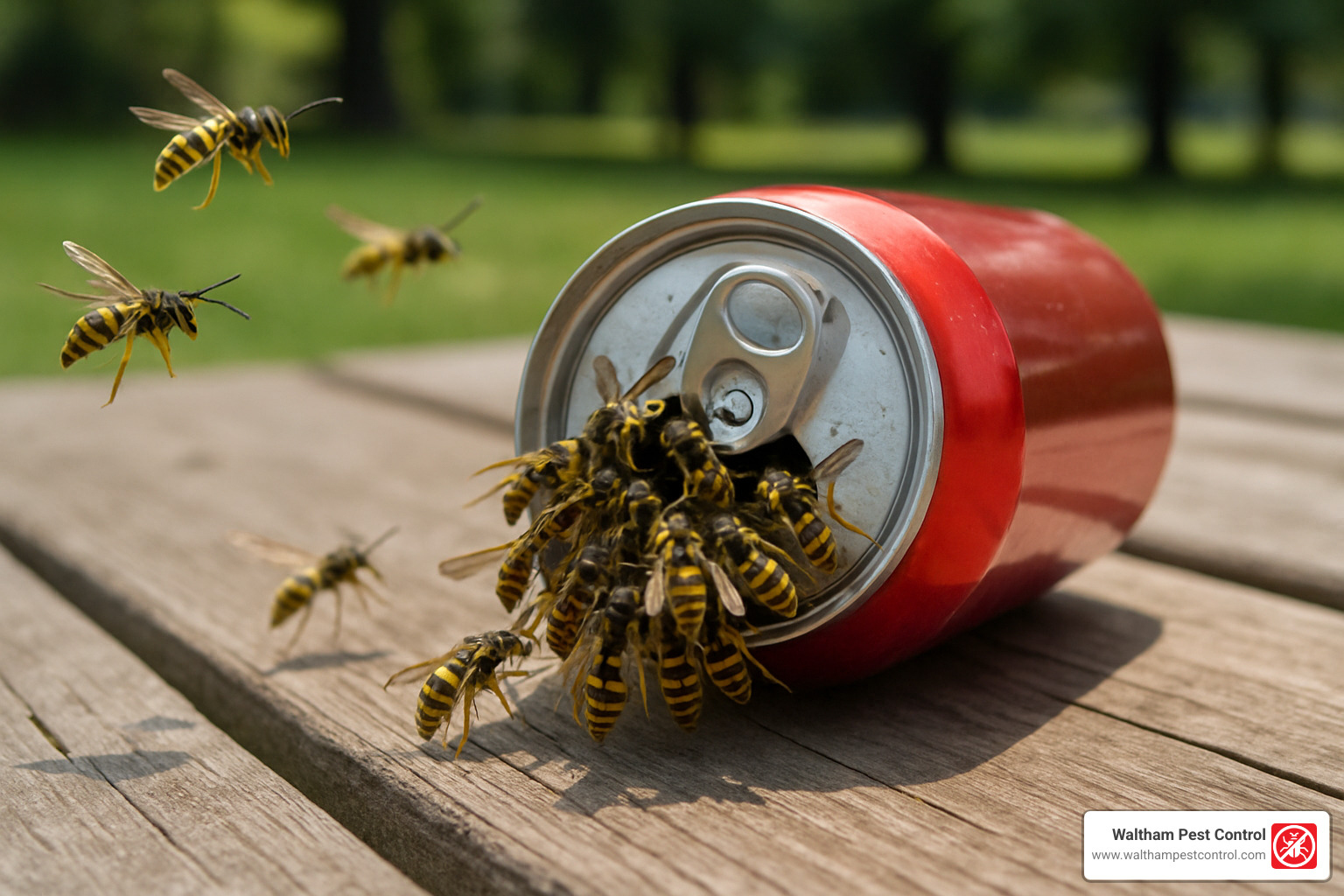
This seasonal shift isn’t just something we’ve noticed in our decades of pest control experience—it’s backed by data. Emergency room visits for insect stings consistently peak during August and September throughout Eastern Massachusetts and the broader Northeast.
A Boston-area park ranger shared with me: “We see a dramatic increase in wasp-related incidents in late August. People who’ve been picnicking all summer without issues suddenly find themselves dealing with aggressive yellow jackets swarming their food and drinks.”
Understanding this seasonal pattern can help you take appropriate precautions when black and yellow wasps are dangerous at their seasonal peak, allowing you to enjoy the outdoors safely even during late summer.
How to Tell Which Black and Yellow Wasp You’re Looking At
When you spot a striped buzzing insect in your yard, knowing exactly what you’re dealing with can help you assess whether black and yellow wasps are dangerous in your specific situation. Let’s explore the common species you might encounter around Eastern Massachusetts.
Yellow Jackets (Vespula spp.)
Yellow jackets are perhaps the most notorious of the bunch. With their bright yellow and black bands and smooth, shiny bodies measuring about ½ inch long, these wasps build their nests usually underground in abandoned rodent burrows or inside wall voids. Their nests are enclosed in a papery envelope that protects thousands of workers.
“Yellow jackets are the wasps most likely to crash your backyard barbecue,” says our senior technician. “They’re highly aggressive when their nest is threatened and have a sweet tooth that draws them to your picnic.” These feisty insects can sting repeatedly and quickly summon nestmates when they feel threatened, making them high on the danger scale.
Paper Wasps (Polistes spp.)
More slender than their yellow jacket cousins, paper wasps have distinctive longer legs that dangle noticeably during flight. They’re typically brown or black with yellow markings and measure between ⅝ to ¾ inch long.
Look up under your eaves and you might spot their distinctive umbrella-shaped open nests with visible cells. While capable of delivering a painful sting, paper wasps are generally less aggressive unless you directly threaten their nest. Think of them as the “mind your own business and I’ll mind mine” type of wasp.

Bald-faced Hornets (Dolichovespula maculata)
Despite their name, bald-faced hornets aren’t true hornets at all but a type of yellow jacket. These larger wasps (about ¾ inch) sport distinctive black bodies with white markings rather than yellow. Their large, football-shaped paper nests hanging in trees, bushes, or on buildings are engineering marvels—and territories they defend fiercely.
“When a bald-faced hornet decides you’re too close to its nest, you’ll know it,” warns our pest specialist. “They’re highly territorial and their stings pack a serious punch.” Consider these high on the danger scale and best admired from a distance.
Mud Daubers
With their thin, thread-like waists and black or blue bodies with yellow markings, mud daubers are distinctive-looking wasps. These solitary insects create artistic mud tube structures on walls and under overhangs.
The good news? Mud daubers rarely show aggression toward humans, preferring to hunt spiders to provision their nests. They’re the introverts of the wasp world, wanting little to do with you unless you directly handle them, making their danger level quite low.
Cicada Killers (Sphecius speciosus)
Don’t let their intimidating size fool you. These gentle giants (1 to 1½ inches long) might look terrifying with their black bodies and yellow abdominal bands, but they pose minimal threat to humans. Male cicada killers may buzz you territorially, but they lack stingers entirely. Females can sting but rarely do unless directly handled.
Look for their distinctive ground burrows with neat entrance mounds in your lawn or garden. Despite their fearsome appearance and name, these wasps deserve our respect rather than fear.
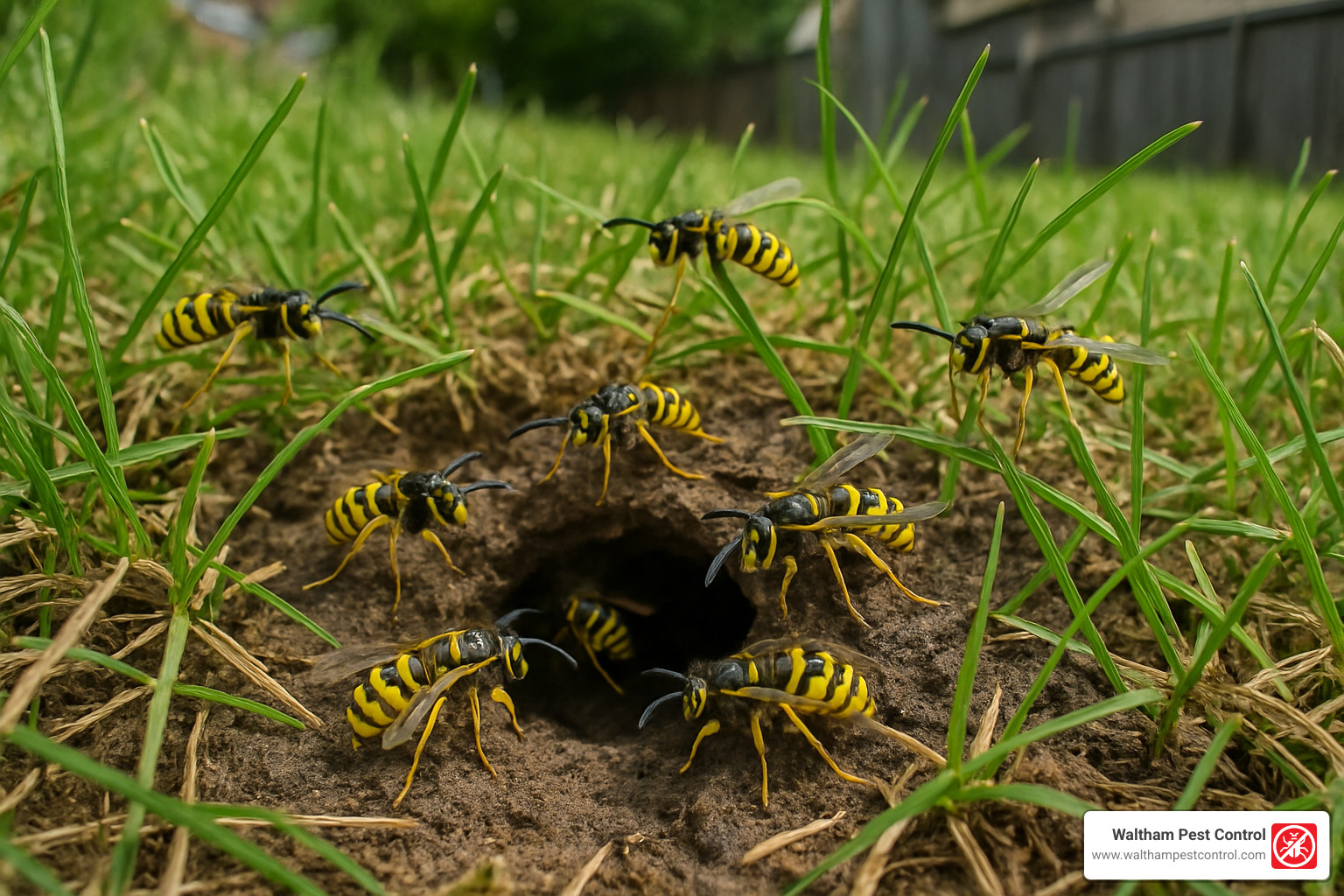
When trying to identify the buzzing visitor in your yard, pay attention to body shape (especially waist thickness), flight pattern (paper wasps dangle their legs while yellow jackets fly more directly), nest structure, and general behavior. These visual cues can help you determine what you’re dealing with and the appropriate response.
It’s also helpful to distinguish wasps from bees and hornets:
| Feature | Wasps | Bees | Hornets |
|---|---|---|---|
| Body | Slender, narrow waist | Robust, hairy | Larger, thicker waist than wasps |
| Color | Usually bright yellow and black | Golden brown to black | Black with white or yellow markings |
| Nesting | Paper nests or ground burrows | Hives with honeycomb | Large enclosed paper nests |
| Sting | Can sting multiple times | Most die after single sting | Can sting multiple times |
| Aggression | Varies by species; more aggressive near nest | Generally defensive rather than aggressive | Highly territorial and aggressive |
“One of the most common mistakes people make is confusing hover flies for wasps,” notes our senior technician. “Hover flies have yellow and black stripes but only two wings instead of four, and they can’t sting at all. Remember the old saying: ‘Two wings fun, four wings run.'”
Learning to identify these different striped visitors can help you make informed decisions about whether that black and yellow wasp in your yard poses a genuine danger or is simply going about its beneficial business of pollinating plants and controlling garden pests.
The Sting Factor: Pain Scale, Allergies & Treatment
When wondering if black and yellow wasps are dangerous, understanding their sting impact is crucial. I’ve seen how wasp stings affect people differently—from minor discomfort to serious medical emergencies.
According to the fascinating Schmidt Pain Index (created by an entomologist who voluntarily got stung by countless insects), our common backyard wasps rate as follows on a scale of 1-4:
- Yellow jacket: 2.0, described as “Hot and smoky, almost irreverent”
- Paper wasp: 3.0, feeling “Caustic and burning”
- Bald-faced hornet: 2.5, characterized as “Rich, hearty, slightly crunchy”
These colorful descriptions might bring a smile, but the pain is real! Most people experience what doctors call a localized reaction—sharp immediate pain, redness, swelling, itching, and a raised welt around the sting site. These symptoms typically fade within a few hours to days without needing medical help.
However, about 5-7% of people experience more serious systemic reactions. These go beyond the sting site and might include widespread hives, swelling in distant areas, stomach cramps, vomiting, dizziness, or headaches.
The most serious reaction is anaphylaxis—a potentially life-threatening condition requiring immediate emergency care. As Dr. Michael Reid, an allergist specializing in insect venom allergies, explains: “Anaphylactic reactions to wasp stings can develop rapidly, sometimes within minutes. Individuals with known allergies should carry an epinephrine auto-injector at all times when outdoors, especially during late summer when wasp activity peaks.”
For those with severe allergies, there’s good news—venom immunotherapy (controlled exposure shots) has proven remarkably effective, with success rates of 97-98% in preventing future anaphylactic reactions.
According to research on wasp venom reactions, yellow jacket stings can cause more severe allergic reactions than other stinging insects, making it especially important to understand the warning signs of a serious reaction.
At-Home Care for Minor Stings
For typical reactions to wasp stings, you can effectively manage symptoms at home:
First, wash the area thoroughly with soap and water. This removes residual venom and reduces infection risk. Then apply cold—an ice pack wrapped in cloth for 10 minutes on, 10 minutes off works wonders for pain and swelling.
Taking antihistamines like Benadryl can significantly reduce itching and swelling, while pain relievers such as ibuprofen or acetaminophen help manage discomfort. Many of my clients find relief with a simple baking soda paste applied directly to the sting site, which helps neutralize acidic venom.
If the sting is on an arm or leg, elevating it helps reduce swelling. And though it might be tempting, avoid scratching the area—this can increase infection risk and spread venom deeper into tissues.
“I always recommend that people avoid home remedies like meat tenderizer, ammonia, or vinegar,” our staff entomologist often tells clients. “These can sometimes do more harm than good by irritating the skin further. Stick with proven methods like ice, antihistamines, and cleanliness.”
When to Seek Immediate Medical Help
While most wasp stings can be handled at home, certain situations require emergency medical attention:
Anyone with a history of severe allergic reactions should seek medical help immediately after a sting, even before symptoms develop. Stings to the throat or mouth are particularly dangerous as swelling can quickly compromise breathing.
Multiple stings—more than 10 at once—can introduce enough venom to cause systemic toxicity even in non-allergic individuals. And of course, any signs of anaphylaxis (difficulty breathing, rapid pulse, dizziness, or widespread hives) requires immediate emergency care.
Watch for signs of infection too—increasing pain, redness, warmth, or swelling after 24-48 hours may indicate a secondary bacterial infection that needs treatment.
Children, elderly individuals, and those with compromised immune systems face higher risks and should be monitored closely after being stung.
“If you’re unsure whether a reaction requires medical attention, it’s always better to err on the side of caution,” advises emergency physician Dr. Sarah Chen. “With anaphylaxis, minutes matter, and delayed treatment can have serious consequences.”
Prevention, Myths & When to Call a Professional
Preventing encounters with black and yellow wasps is always preferable to dealing with stings. After helping thousands of Eastern Massachusetts homeowners over four decades, we’ve learned what truly works to keep these insects at bay.
Effective Prevention Strategies
Good sanitation is your first line of defense against wasps. Those half-empty soda cans and uncovered trash bins might as well be flashing neon “Eat Here” signs to hungry yellow jackets. Keep outdoor eating areas clean, secure garbage cans with tight-fitting lids, and clean up food spills promptly – especially sugary drinks that are irresistible to wasps in late summer.
Your home might have wasp entry points you’ve never noticed. Take a slow walk around your property, looking for cracks in siding, gaps around utility pipes, and damaged window screens. Sealing these potential entry points not only keeps wasps out but improves your home’s energy efficiency too.
Some of our most satisfied customers have had success with decoy nests. Many wasp species are surprisingly territorial and avoid building near existing colonies. As one Burlington resident shared with us: “I hung a paper bag decoy nest under my eaves in early spring, and for the first time in years, we didn’t have paper wasps building on our porch!”
Nature offers some help too. Certain plants seem to repel wasps, including marigolds, eucalyptus, wormwood, mint, and citronella. Strategically placing these around patios and entrances might create a natural barrier. While eliminating standing water reduces wasp activity since, like all living creatures, they need water to survive.
Regular inspection is crucial – check your property every few weeks during spring and summer, paying special attention to eaves, shrubs, and ground holes where wasps commonly nest. Catching a nest when it’s the size of a golf ball is much easier than dealing with one the size of a basketball later!
Common Myths About Black and Yellow Wasps
Fear often breeds misinformation, and wasps have been subject to plenty of myths that can lead to unnecessary panic or dangerous removal attempts.
“One sting means death” is perhaps the most common misconception I hear. While wasp stings can indeed be dangerous for allergic individuals, the vast majority of people experience only temporary discomfort. Medical research shows only about 0.4-0.8% of the population has severe allergic reactions to insect stings. That said, if you’ve had a severe reaction before, take every sting seriously.
Many people believe swatting at a wasp is the best defense, but this usually makes things worse. Sudden movements often trigger defensive stinging. When a wasp investigates you, remaining calm and slowly moving away is typically safer. Wasps aren’t out to get you – they’re just investigating potential food sources or responding to perceived threats.
I’ve lost count of how many times I’ve been called to remove “dangerous wasps” that turned out to be harmless hover flies mimicking wasp coloration for protection. These beneficial insects can’t sting at all! Learning to identify these mimics can save you unnecessary worry (hint: hover flies have only two wings, while wasps have four).
Perhaps the most harmful myth is that “wasps serve no purpose and should always be eliminated.” In reality, wasps play crucial ecological roles as both pollinators and predators of pest insects. A single paper wasp colony can consume thousands of caterpillars and other garden pests in a season. While nests in dangerous locations should be removed, distant nests that pose little risk might be best left alone.
When to Call a Professional
While some wasp situations can be handled without professional intervention, others definitely require expert assistance. Consider calling Waltham Pest Control when:
The nest is large or in a difficult location. Nests in wall voids, high in trees, or in other hard-to-reach places present special challenges that are best left to professionals with proper equipment and protective gear.
You or a family member has a known allergy to insect stings. In this case, the risk is simply too high for DIY removal attempts – one mistake could lead to a life-threatening situation.
Previous removal attempts have failed or made the situation worse. If wasps return after your efforts or seem more agitated, professional-grade treatments may be necessary to resolve the issue completely.
The nest is located near high-traffic areas of your property. Nests near doorways, playgrounds, or patios pose an ongoing risk to family and visitors and should be professionally removed to ensure safety.
You’re dealing with particularly aggressive species like yellow jackets or hornets. These insects defend their nests vigorously and can attack in large numbers when disturbed.
Professional wasp nest removal typically involves proper species identification, appropriate protective equipment, specialized treatments that reach deep into nests, complete removal of nest materials when necessary, and preventive measures to discourage future nesting.
Based on industry data, professional wasp nest removal services typically range from $150 for simple, accessible nests to $750+ for complex situations involving multiple nests or difficult access points. This investment provides peace of mind and significantly reduces the risk of painful or potentially dangerous stings.
For more information on what to do if you encounter a nest, visit our bee and wasp safety guide.
DIY vs. Expert: Key Decision Points
When deciding whether to address a wasp issue yourself or call in professionals, several factors should guide your decision.
Nest size and population matter tremendously. Small, newly established nests with few wasps present lower risks for DIY removal. However, mature nests with dozens or hundreds of wasps pose significant dangers. By late summer, some yellow jacket colonies can contain thousands of workers, all ready to defend their home.
Nest location is equally important. Exposed nests in accessible locations might be candidates for DIY treatment if you’re comfortable using appropriate precautions. However, nests in confined spaces create special problems.
A Lexington homeowner learned this the hard way: “I tried to spray a yellow jacket nest in my attic vent myself. They found another way out through a light fixture and swarmed my bedroom. I should have called the experts first.”
Personal risk factors should never be ignored. If you or anyone in your household has a history of allergic reactions to insect stings, professional removal is strongly recommended. The modest cost savings of DIY approaches simply isn’t worth risking a severe reaction.
Equipment and expertise make a significant difference in safety and effectiveness. Our professional technicians have commercial-grade products not available to the public, specialized protective equipment, training in proper application techniques, and experience identifying the best approach for each species and situation.
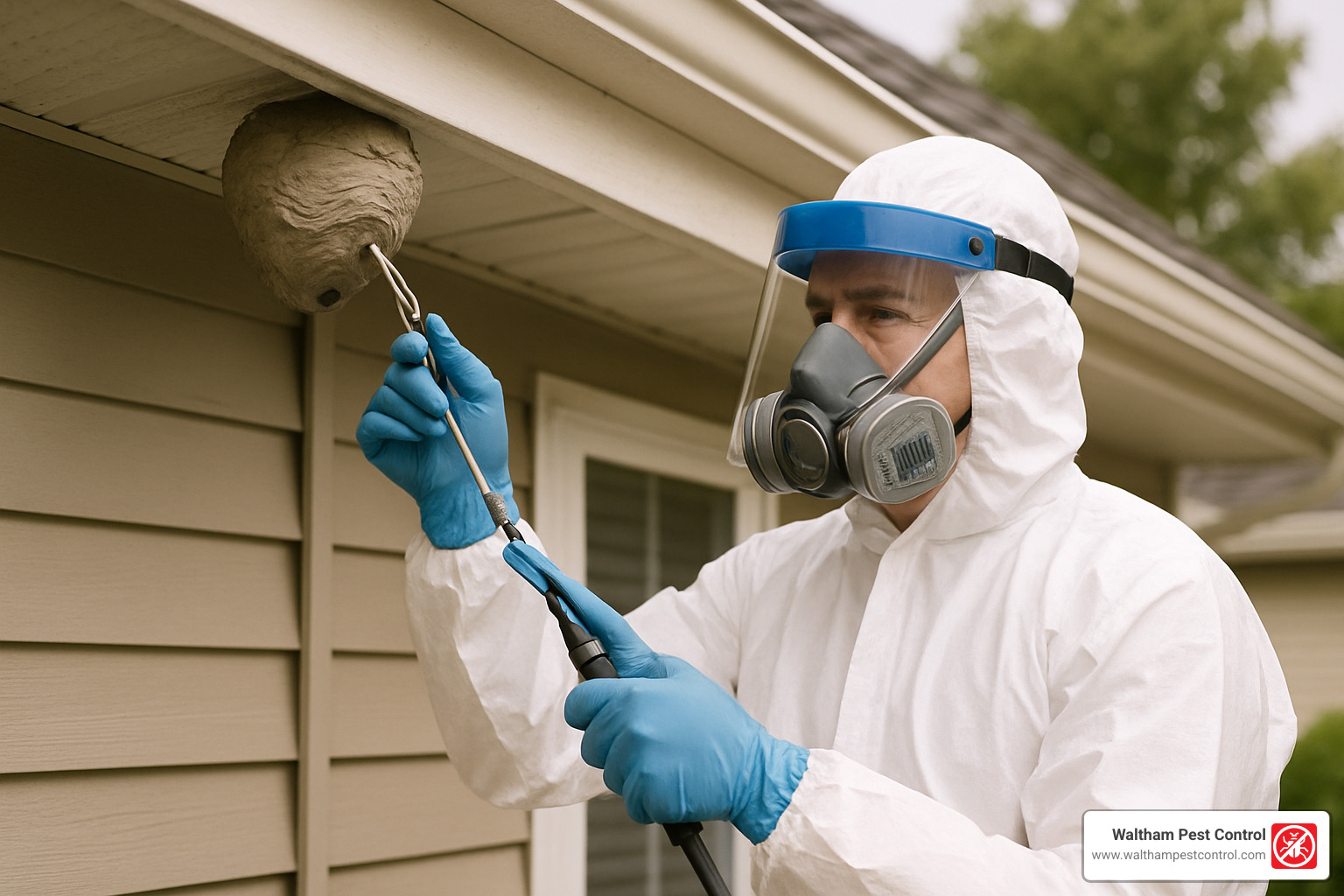
Local regulations may also impact your options. Some municipalities in Massachusetts have restrictions on certain pesticide applications, particularly near wetlands or water sources. Professional pest control companies stay current on these regulations to ensure compliance.
“What many homeowners don’t realize,” explains our operations manager, “is that removing the visible nest is often just part of the solution. Without proper treatment and exclusion methods, wasps frequently rebuild in the same location. Our comprehensive approach addresses both the immediate problem and prevents recurrence.”
At Waltham Pest Control, we’re always happy to assess your specific situation and recommend whether professional service is truly necessary. Sometimes we can even walk you through simpler situations over the phone. After all, our goal isn’t just to remove pests – it’s to give you peace of mind about your home.
For more information about professional removal services, visit our Hornets & Wasps Nest Removal page.
Conclusion
Throughout this guide, we’ve explored the question: Are black and yellow wasps dangerous? The answer isn’t simple black and white. While these striped insects can certainly deliver painful stings and trigger serious allergic reactions in some people, the actual risk depends on the specific wasp species, the situation, and your own personal sensitivity.
After helping thousands of Eastern Massachusetts homeowners with wasp concerns over four decades, we’ve learned a few essential lessons worth remembering:
First, knowing which wasp you’re dealing with makes all the difference. That solitary mud dauber building clay tubes under your porch is practically harmless unless you grab it with your bare hands. But that yellow jacket colony in your yard? They’ll defend their nest with impressive coordination if they feel threatened.
Second, timing is everything when it comes to wasp behavior. That paper wasp nest that caused no trouble in June might become a defensive zone by September when the colony has grown and food sources are dwindling. Late summer and early fall are when most wasp-related emergencies occur.
Third, respect works better than panic. Most wasps aren’t out to get you—they’re busy hunting garden pests and pollinating plants. When encounters happen, staying calm and moving slowly dramatically reduces your sting risk.
Fourth, an ounce of prevention is worth a pound of cure. Simple steps like keeping outdoor eating areas clean, sealing home entry points, and addressing small nests early can save you from dealing with major wasp problems later.
Finally, know when to call in the professionals. While some situations can be handled safely on your own, others—like large nests, hard-to-reach locations, or homes with allergic family members—warrant expert help to avoid painful or potentially dangerous outcomes.
Black and yellow wasps may look intimidating, but they’re actually valuable parts of our ecosystem, controlling pest populations and helping with pollination. The goal isn’t to eliminate all wasps but to manage the risks they pose while respecting their ecological role.
At Waltham Pest Control, we’ve been helping residents throughout Middlesex, Essex, and Norfolk counties safely address wasp concerns since 1981. Our licensed technicians don’t just remove nests—we identify species, assess risk levels, and recommend the most appropriate solutions for your specific situation.
Don’t risk painful stings or allergic reactions by tackling dangerous wasp nests yourself. If you’re concerned about wasps around your home or business, our experts can provide safe, effective solutions custom to your needs—whether that’s removal, exclusion, or simply guidance on peaceful coexistence when the wasps pose minimal risk.
For professional assistance with wasp issues or to learn more about our hornet nest removal services, contact us today. Your family’s safety and peace of mind are always our top priorities.
