
Ant Exterminator Cost 2025: Top 10 Powerful Savings Tips
Understanding Ant Exterminator Costs: What Homeowners Need to Know
If you’re searching for information about ant exterminator cost, here’s what you need to know:
- Average Cost Range: $80-$500 per treatment
- Typical One-Time Service: $150-$300
- Severe Infestations: Can cost $800-$1,200+
- Carpenter Ant Treatment: $250-$500 (more expensive due to structural concerns)
- Fire Ant Treatment: $100-$300
- Annual Service Contracts: $400-$500 per year (more cost-effective long-term)
Finding a line of ants marching across your kitchen counter isn’t just annoying—it’s often a sign of a larger problem lurking behind your walls. Ant infestations can quickly escalate from a few scouts to full-blown colonies, potentially causing property damage and health concerns.
When facing an ant problem, many homeowners struggle with the decision between DIY solutions and hiring professionals. While store-bought traps might seem cost-effective initially, they often fall short against established colonies or specialized species like carpenter ants.
Professional ant exterminators bring targeted expertise, specialized equipment, and access to commercial-grade products that can eliminate colonies at their source. This comprehensive approach often proves more effective and economical in the long run than repeated DIY attempts.
I’m Waltham Pest Control, President of Waltham Pest Control with over 40 years of experience helping Massachusetts homeowners tackle ant infestations, and I’ve seen how understanding ant exterminator cost factors helps families make informed decisions about protecting their homes.
Simple ant exterminator cost glossary:
– ant control companies
– ants control
– best pest control company for ants
Average Ant Exterminator Cost in 2024
Wondering what you might need to budget for professional ant control this year? Let’s break down what homeowners across the country are typically paying to reclaim their homes from these tiny invaders.
In 2024, the national average ant exterminator cost sits around $150 for a standard treatment, though the full range spans from as little as $80 to well over $1,200 depending on your specific situation. For a typical 2,000 square foot home, most families can expect to pay between $200-$300 for a one-time professional treatment.
When considering professional ant control, you’ll generally encounter three service models, each with its own price structure:
One-time treatments typically range from $150-$350 per visit. This is perfect if you’re dealing with a sudden, isolated ant problem.
Quarterly service plans usually cost between $100-$300 per quarter (totaling $400-$1,200 annually), offering regular protection throughout the year.
Monthly service plans generally start with an initial visit at $125-$300, with follow-up visits running $50-$75 each. These provide the most consistent monitoring and prevention.
If you’re battling a severe infestation—particularly involving structural pests like carpenter ants or widespread colonies—costs can climb toward the higher end, sometimes reaching $800-$1,200 or more for comprehensive treatment.
Home Size and Cost Relationship
Your home’s square footage plays a significant role in determining treatment costs. After all, more space means more potential hiding spots for ants and more area requiring treatment.
| Home Size (Square Feet) | Average One-Time Treatment Cost |
|---|---|
| 500-1,000 sq ft | $150-$200 |
| 1,000-2,000 sq ft | $160-$250 |
| 2,000-3,500 sq ft | $180-$350 |
| 3,500-5,000 sq ft | $200-$500 |
| 5,000+ sq ft | $300-$650+ |
Here at Waltham Pest Control, we’ve been helping homeowners throughout Eastern Massachusetts tackle ant problems in properties of all sizes for over four decades. While these figures represent industry averages based on internet research (not our specific pricing), they give you a helpful framework for understanding how home size impacts your potential investment.
Many pest control companies offer bundled service plans that can bring the per-visit ant exterminator cost down from around $150 to $100-$120 for subsequent treatments. For homeowners dealing with persistent ant issues or those who prefer year-round peace of mind, these ongoing service plans often deliver the most value over time.
The cheapest option isn’t always the most cost-effective in the long run. Professional treatments target the colony source—not just the visible ants—preventing future problems and potentially saving you from more expensive repairs down the road.
Cost Drivers & Species Price Differences
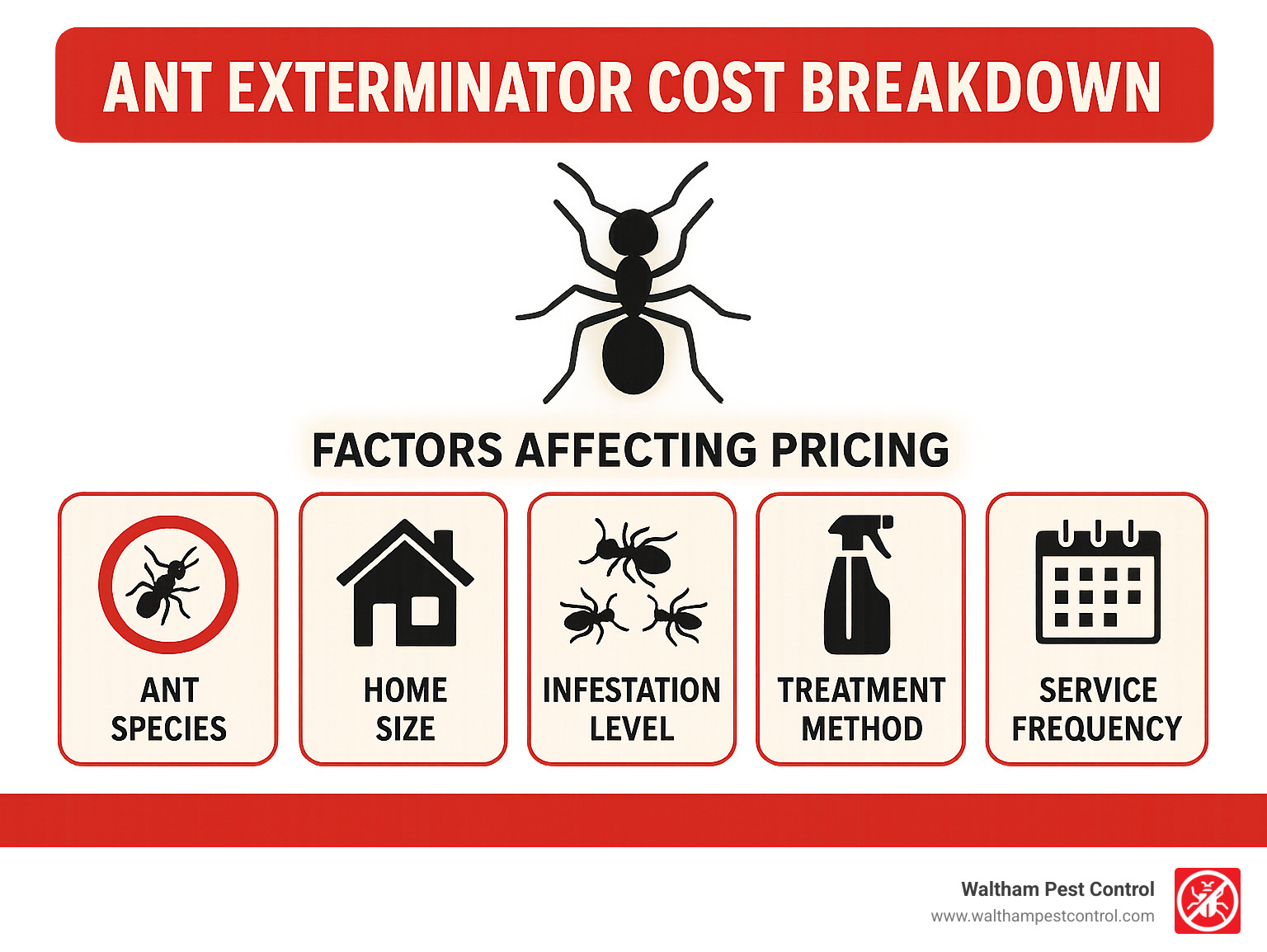
Let’s talk about what really affects your ant exterminator cost. Understanding these factors helps you make sense of price quotes and budget appropriately for your specific situation.
Home Square Footage
Your home’s size naturally influences treatment costs. Think about it – a cozy 1,000 square foot apartment requires less time, fewer materials, and less labor than a sprawling 4,000 square foot home. Larger homes simply have more potential entry points, hiding spots, and areas that need thorough inspection and treatment.
Infestation Level
The severity of your ant problem plays a huge role in determining what you’ll pay. A few scout ants in your kitchen might require a simple treatment, while multiple established colonies throughout your home demand a more intensive approach.
When we visit homes with severe infestations – where ants have taken up residence in multiple locations or caused structural damage – the treatment plan becomes more comprehensive and, yes, more expensive. These situations often require multiple visits and specialized techniques to fully resolve.
Location (Indoor vs. Outdoor)
Where those tiny invaders have set up shop matters tremendously. Ants in easily accessible areas like your kitchen countertops are typically simpler to address than colonies hidden deep in wall voids or foundations.
If your problem extends to hard-to-reach areas like crawlspaces or attics, your technician may need specialized equipment and more time – factors that influence your final cost. Outdoor colonies, particularly fire ant mounds, require entirely different treatment approaches than indoor infestations.
Treatment Method
Different ant problems call for different solutions. A simple barrier spray might suffice for minor issues, while more established infestations might require a combination of baits, sprays, and dust applications. In rare, extreme cases involving massive structural infestations, more intensive methods might be necessary.
The more complex the treatment strategy, the more it typically costs. But remember – choosing the right approach the first time often saves money compared to repeated applications of less effective methods.
Service Frequency
How often you’ll need service significantly impacts your ant exterminator cost:
One-time treatments carry the highest per-visit cost but might be sufficient for minor problems. Quarterly service plans offer moderate per-visit discounts while providing seasonal protection. Monthly services come with the lowest per-visit cost but highest annual total – often recommended for properties with persistent issues.
Ant Species
Perhaps the most significant factor in determining your ant exterminator cost is exactly what type of ant has moved in. Different species require specialized approaches, and some present much bigger challenges than others.
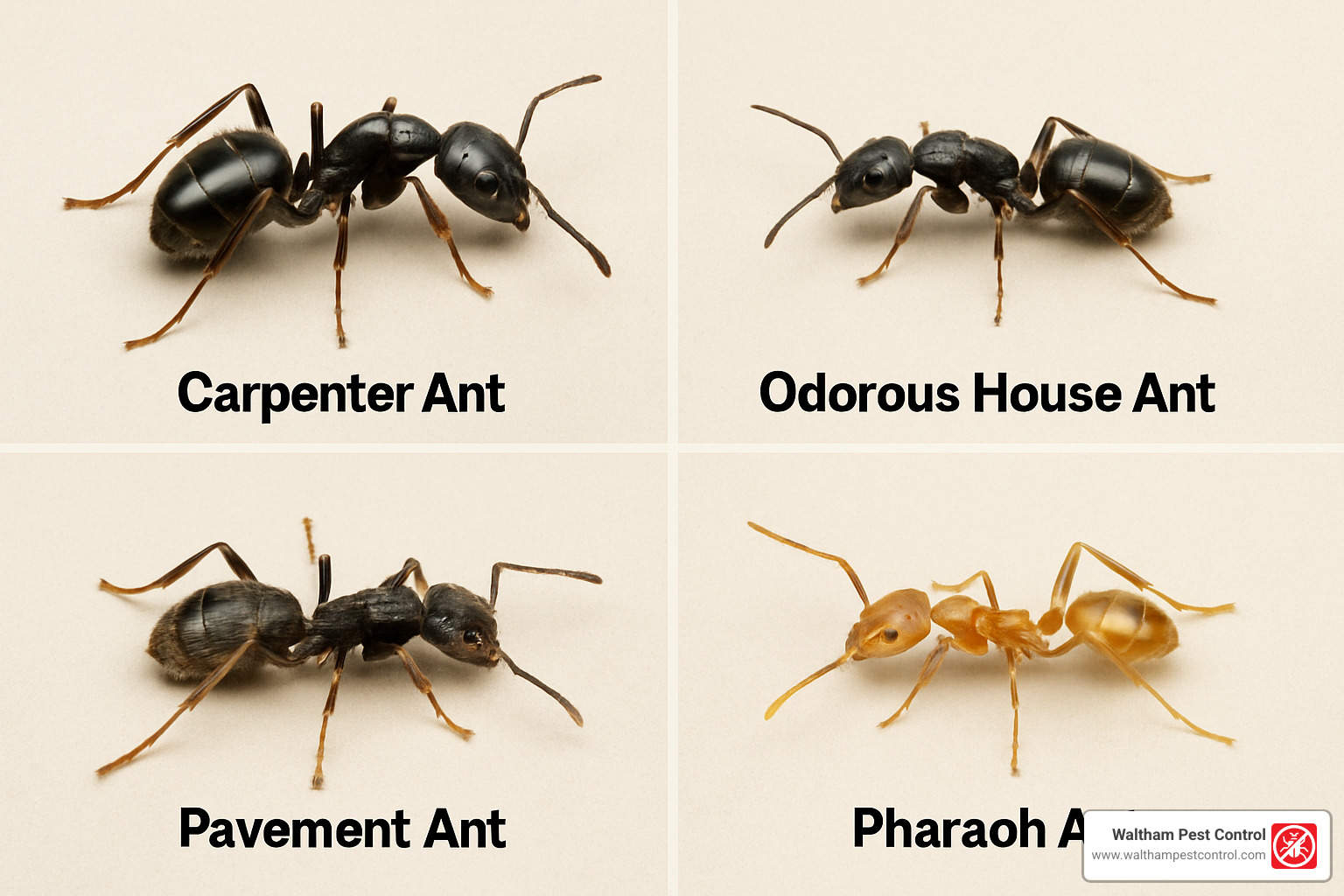
Carpenter Ant Exterminator Cost Breakdown
Carpenter ants typically command the highest ant exterminator cost, ranging from $250-$500 per treatment. This premium price reflects the serious threat they pose to your home’s structural integrity.
Unlike other ants, carpenter ants excavate wood to create their nests. While they don’t actually eat the wood (unlike termites), they hollow out beams, joists, and other wooden structures, potentially causing thousands of dollars in damage if left untreated.
According to entomologists at the University of Kentucky, these industrious pests prefer moist, decaying wood but won’t hesitate to tunnel through perfectly sound structures. Their colonies can grow to contain up to 50,000 workers with multiple satellite nests throughout your property.
Professional carpenter ant treatment involves a thorough inspection to locate all nests, targeted applications to wood voids and tunnels, comprehensive perimeter treatments, and practical recommendations for preventing future infestations through moisture control and repairs.
Given their potential for costly structural damage, the higher ant exterminator cost for carpenter ants represents a smart investment in protecting your home.
Fire Ant Exterminator Cost Breakdown
Fire ant treatment typically falls in the mid-range of ant exterminator cost, between $100-$300. These aggressive outdoor pests are infamous for their painful stings and distinctive mounded nests that can quickly multiply across your yard.
The price reflects the specialized approach needed to eliminate these tenacious insects. Their painful stings pose genuine health risks, particularly for the approximately 5% of Americans allergic to ant venom.
Professional fire ant control usually combines mound drenching with liquid insecticides, strategic bait placement around your property, and barrier treatments to prevent new colonies from forming. For properties with multiple mounds, exterminators may charge additional fees per mound, which increases the initial cost but ensures more thorough elimination.
Pharaoh & Sugar Ant Pricing Snapshot
Smaller household invaders like pharaoh ants and sugar ants typically cost between $150-$250 to treat professionally. While these tiny pests don’t cause structural damage like their carpenter ant cousins, they present their own unique challenges.
Pharaoh ants establish complex colony systems with multiple interconnected nests and numerous queens, making them particularly difficult to eliminate completely. Sugar ants create extensive foraging trails throughout your home while keeping their nests well-hidden.
Both species can contaminate food and spread bacteria as they march across your kitchen counters and into your pantry. Treatment for these smaller ants relies heavily on specialized baiting techniques rather than sprays. Professional exterminators use carefully formulated baits that worker ants carry back to their colonies, effectively eliminating queens and developing larvae at the source.
At Waltham Pest Control, we’ve spent over 40 years developing effective strategies for these persistent invaders. Our experience shows that successful control requires both immediate activity treatment and long-term prevention measures custom to your specific situation and the particular ant species involved.
For more detailed information about specific treatment approaches and costs, check out our guide on the Cost to Exterminate Ants in House or learn about the particularly challenging Argentine ants that have become increasingly common in our region.
What Happens During Professional Ant Extermination?
When you hire a pest control company, you’re not just paying for someone to spray chemicals around your home. The ant exterminator cost reflects a comprehensive, scientific approach to eliminating your ant problem at its source. Here’s what you can expect when professionals tackle your ant infestation:
1. Thorough Inspection
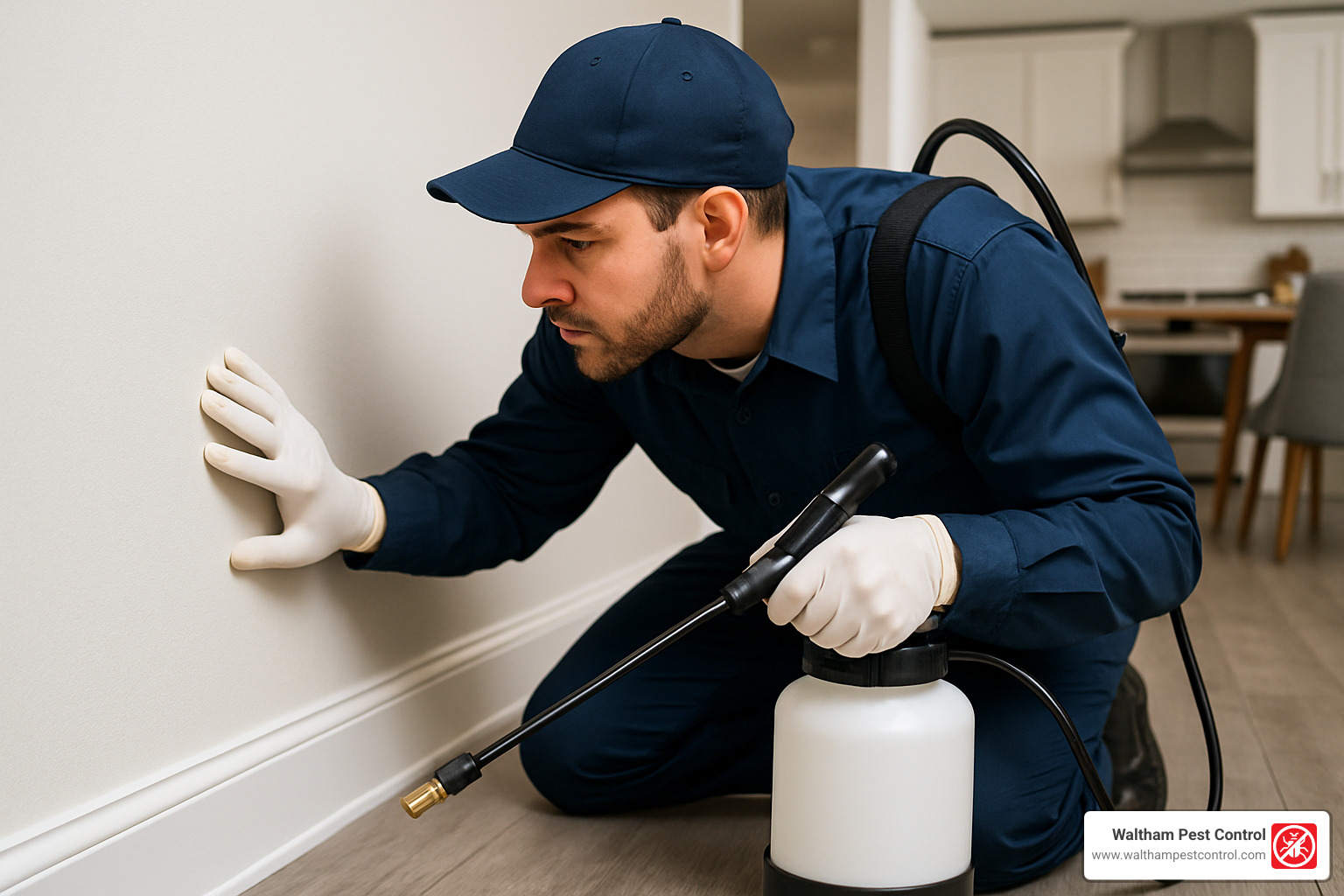
Every effective treatment begins with detective work. Your technician will carefully examine your property to identify exactly what you’re dealing with. They’ll look for ant trails, locate entry points, find nesting sites, and determine how widespread the problem is.
This isn’t just a quick walk-through—it’s a methodical process that requires training and experience. The technician needs to distinguish between carpenter ants and pavement ants, identify moisture issues that might be attracting them, and spot the subtle signs of hidden colonies.
2. Customized Treatment Plan
Based on what they find, your pest control professional will develop a strategy custom to your specific situation. This might include specialized baits that target your particular ant species, strategic barrier treatments, and direct nest elimination when possible.
The days of “spray everything” approaches are long gone. Modern ant control is precise and targeted, focusing treatments where they’ll be most effective while minimizing unnecessary product use.
3. Implementation and Initial Treatment
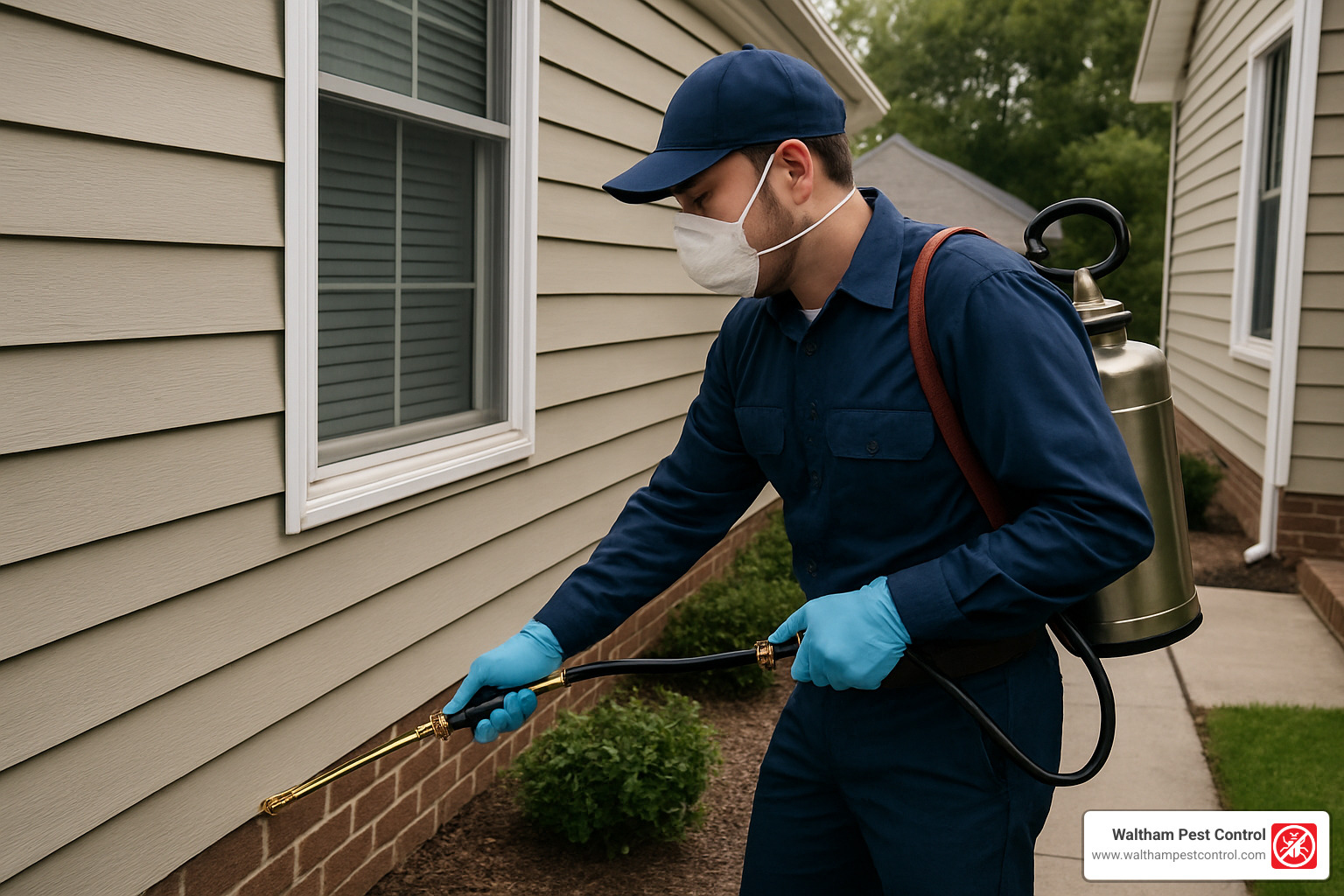
During the service visit, your technician will put the plan into action. They’ll apply professional-grade baits that worker ants carry back to the colony, treat entry points with residual products, and may use specialized equipment to reach wall voids or other hiding spots.
While they work, they’ll also explain what they’re doing and why, answer your questions, and provide practical advice for preventing future problems. This educational component is a valuable part of professional service that DIY approaches simply can’t match.
4. Follow-Up and Monitoring
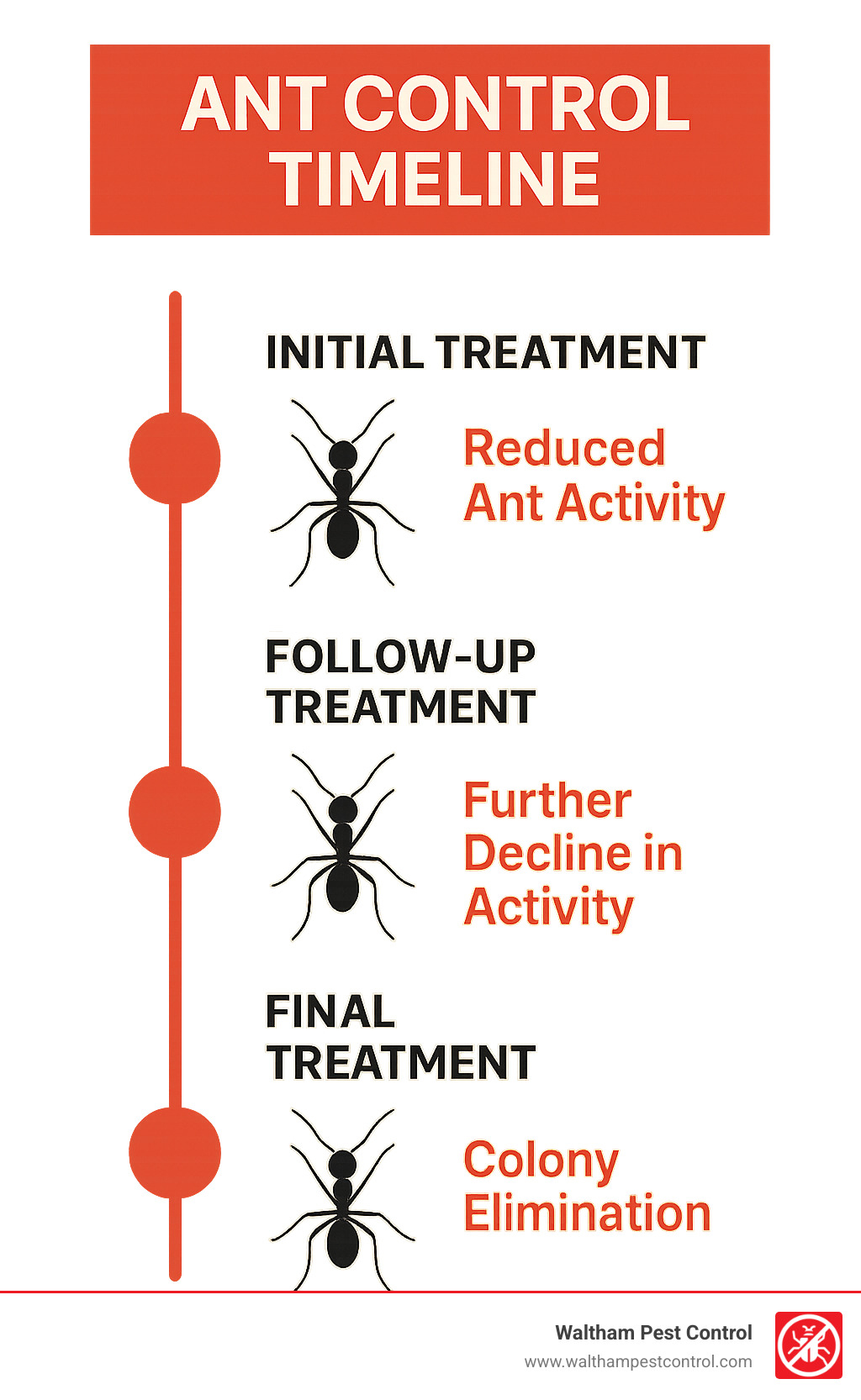
Most ant problems aren’t solved in a single visit. Complete colony elimination typically requires follow-up to ensure the treatment is working as expected. While you’ll likely see a significant reduction in ant activity within 48 hours, complete elimination of established colonies can take 1-4 weeks, depending on the species and severity.
Your technician will schedule follow-up visits to monitor progress and make any necessary adjustments to the treatment plan. This systematic approach is why professional treatment is often more effective long-term than repeated DIY attempts.
Chemical Safety & Eco-Friendly Options
“Are these treatments safe for my family and pets?” This is one of the most common questions we hear at Waltham Pest Control, and it’s completely understandable.
Modern professional ant control prioritizes safety while maintaining effectiveness. Today’s products are typically:
Targeted – Designed to affect specific insect biological pathways that don’t exist in mammals
Low-toxicity – Applied in minimal amounts exactly where needed
Strategically placed – Often in areas inaccessible to children and pets
Many companies now offer green or eco-friendly options that use botanical insecticides, natural desiccants like diatomaceous earth, or reduced-risk formulations. While these eco-friendly approaches might slightly increase your ant exterminator cost, many families find the peace of mind well worth it.
Professional exterminators follow Integrated Pest Management (IPM) principles, which emphasize using the least toxic methods that will effectively solve the problem. This approach is better for your family, your pets, and the environment.
Prevention & Long-Term Maintenance
The smartest approach to ant control combines professional treatment with preventive measures. After eliminating your current infestation, your technician will recommend practical steps to prevent future problems.
Exclusion is your first line of defense—sealing cracks around windows and doors, gaps around pipes, and other potential entry points. Moisture management is equally important, as many ant species are attracted to damp areas. Fixing leaky pipes, improving drainage, and addressing condensation can make your home much less appealing to ants.
Good sanitation practices are essential too. Store food in sealed containers, clean up spills promptly, and keep pet food dishes clean. Outside, maintain your landscape by trimming branches away from your home, keeping mulch at least 6 inches from your foundation, and removing dead wood.
Many homeowners find that quarterly preventive service provides the most reliable long-term protection. These maintenance visits typically include perimeter treatments and monitoring for early signs of activity. While this represents an ongoing investment, it’s often more economical than dealing with repeated full-blown infestations.
At Waltham Pest Control, we’ve been helping Massachusetts homeowners stay ant-free for over 40 years. We’ve seen how a proactive approach saves our customers money, time, and frustration in the long run. For more information about effectively dealing with ant infestations, visit our detailed resource page.
Frequently Asked Questions about Ant Exterminator Cost
How much does an ant exterminator cost for repeat visits?
Once you’ve had an initial treatment, you’ll be happy to know that follow-up visits are typically much more affordable, usually ranging from $40-$70 per visit. This significant discount makes sense—the heavy lifting was done during that first comprehensive treatment.
Many of our Eastern Massachusetts homeowners find that service plans offer the best value. For example, quarterly service plans might cost $400-$500 annually, which can save you 15-30% compared to booking treatments one at a time. These plans provide peace of mind through regular prevention rather than waiting for problems to resurface.
These figures reflect industry averages based on internet research, not our specific Waltham Pest Control pricing. What matters most is finding a consistent solution that fits your home’s specific needs and your budget.
Are the chemicals safe for pets and children?
Good news for families and pet owners—modern ant control has come a long way in terms of safety. Today’s professional treatments use targeted formulations and strategic application methods specifically designed to minimize risk to your loved ones while maximizing effectiveness against pests.
That said, common-sense precautions remain important:
– Keep children and pets away from freshly treated areas until products have dried (typically just 1-2 hours)
– Ensure any bait stations are placed where curious little hands and paws can’t reach them
– Follow your technician’s specific safety instructions for the products used in your home
If you have special health considerations or are particularly concerned about chemical exposure, just let us know. Many treatments now include reduced-risk or green options that might be perfect for your situation. At Waltham Pest Control, we’re parents and pet owners too, and we understand these concerns.
How long until the ants are completely gone?
When dealing with ants, patience is sometimes required—though you won’t have to wait long to see improvement. Most homeowners notice a dramatic reduction in ant activity within just 48 hours of professional treatment. That quick relief is what you’re paying for when you invest in professional ant exterminator cost.
Complete elimination, however, follows a timeline influenced by several factors:
First, the ant species matters enormously. Carpenter ants typically take longer to eliminate than tiny sugar ants. The size of the infestation also plays a role—larger, established colonies with multiple queens require more time than smaller, newer infestations.
Your treatment method also affects timing. Baits work more thoroughly but more slowly than contact sprays because they allow worker ants to carry the treatment back to the colony, eventually reaching the queens and developing larvae.
Most ant problems are resolved within 1-4 weeks after professional treatment. Some particularly challenging situations—like extensive carpenter ant infestations hidden deep in wall voids—might require multiple treatments over several months.
When should I call a professional ant exterminator?
While that single scout ant in your kitchen might not warrant a service call, certain situations definitely signal it’s time for professional help:
When carpenter ants appear, don’t wait. Their ability to damage your home’s structure means quick professional action is your best defense. Similarly, when you see large numbers of ants forming busy highways across your floors or counters, you’re likely seeing just a fraction of a much larger colony.
When ants return despite your DIY efforts, it’s a clear sign there’s a hidden nest that store-bought products aren’t reaching. Professional equipment and expertise can make all the difference here.
When ant activity appears in multiple areas of your home, you might be dealing with several colonies requiring a comprehensive approach. And when you can’t identify which ant species you’re dealing with, different ants require different treatment strategies—professionals can quickly identify and target the specific invaders.
Finally, when you have concerns about children or pets, professional guidance ensures you’re using the safest, most effective approach possible.
At Waltham Pest Control, we provide free inspections to help Eastern Massachusetts homeowners determine whether their ant problem requires professional attention. This no-obligation consultation helps clarify the potential ant exterminator cost for your specific situation and gives you the information you need to make the best decision for your home.
Conclusion
When it comes to tackling ant problems, understanding ant exterminator cost gives you the power to make smart decisions about protecting your home. While no one loves unexpected expenses, professional ant control often proves to be a worthwhile investment in both your property and your peace of mind.
Let’s recap what we’ve learned about the financial side of professional ant control:
The national average for professional ant treatments sits around $150 per visit, though most homeowners can expect to pay somewhere between $80-$500 depending on their specific situation. Carpenter ants, with their wood-destroying habits, typically command higher prices ($250-$500+) due to the potential structural damage they cause. Fire ant control generally falls in the $100-$300 range, while dealing with common household ants like pharaoh or sugar ants usually costs $150-$250.
For long-term protection, many homeowners find that ongoing service plans deliver the best value. While the upfront commitment might seem higher, the per-visit savings and consistent protection often make these plans more economical than repeatedly addressing new infestations.
As for results, most homeowners notice a significant decline in ant activity within the first 48 hours after treatment. However, complete elimination of established colonies typically takes between 1-4 weeks, depending on the species, infestation severity, and treatment method used.
It’s worth noting that the average prices discussed throughout this article are based on internet research and industry data, not specific Waltham Pest Control pricing. For an accurate quote custom to your unique situation, we always recommend contacting a professional pest control provider directly.
With over four decades of experience serving Eastern Massachusetts communities, Waltham Pest Control understands the unique challenges posed by local ant species. Our licensed and insured technicians provide comprehensive solutions that address both immediate infestations and long-term prevention.
Don’t let ants take over your home. Whether you’re dealing with carpenter ants in Andover, fire ants in Burlington, or sugar ants in Cambridge, professional ant control provides the most reliable path to a pest-free home.
More info about Pest Control in Andover
