
Ant Control Outside House: 10 Powerful Proven Tips 2025
Why Outdoor Ant Control Matters
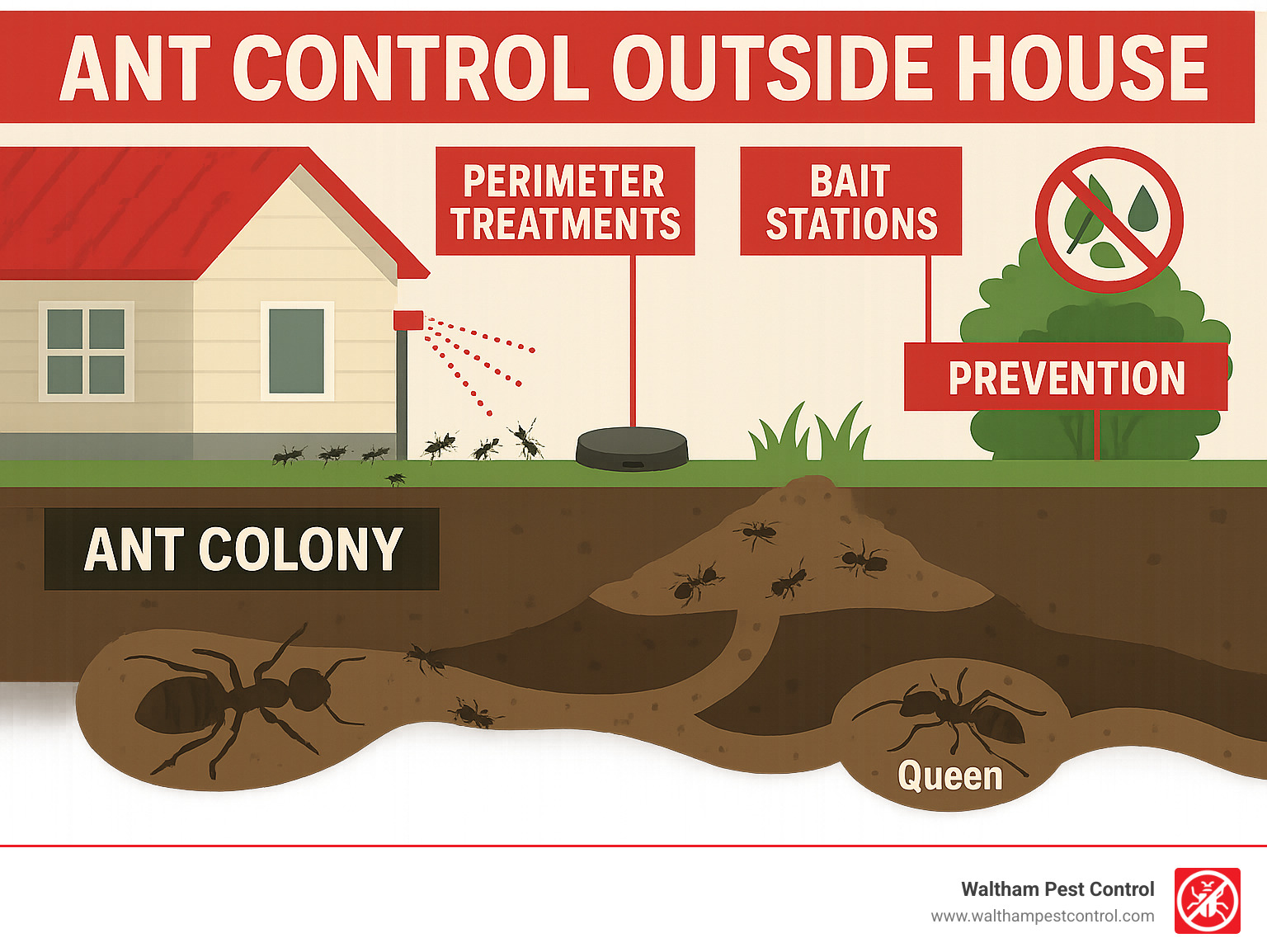
Ant control outside house is essential to prevent indoor infestations and protect your property from damage. Left unchecked, outdoor ant colonies can quickly grow to thousands of members and eventually make their way into your home.
Quick Guide to Outdoor Ant Control:
1. Identify the nest by following ant trails back to their source
2. Choose the right treatment based on ant species (baits, sprays, or natural methods)
3. Apply perimeter treatments around foundation and entry points
4. Eliminate attractants like food debris, standing water, and vegetation touching the house
5. Maintain regular prevention with seasonal treatments and yard maintenance
Outdoor ant colonies pose a significant threat because they can grow rapidly—a single queen can lay thousands of eggs daily. While you might only see a few scouts initially, these represent just 20% of the colony, with the majority remaining hidden underground.
“Failing to address outdoor ants near your home will greatly increase your chances of an indoor infestation,” as many pest control experts confirm.
I’m Waltham Pest Control, President of Waltham Pest Control with over 40 years of experience implementing effective ant control outside house strategies across Eastern Massachusetts. My team and I have developed proven methods to eliminate persistent ant colonies and prevent their return through targeted treatments and integrated pest management.
Ant control outside house word guide:
– House Ant Control
– ant bait station indoor
– bait for ants in house
Spotting the Problem Early: How to Identify Outdoor Ant Activity
Ever notice a line of tiny travelers marching across your patio? That’s your first clue to an outdoor ant problem. Catching ant activity early is like finding a small leak before it floods your basement – much easier to handle! Let’s explore how to become an ant detective around your property.
Visible Ant Mounds
The most obvious sign of ants setting up shop in your yard is those telltale mounds of soil. These little dirt piles are actually architectural marvels – the visible portion of extensive underground tunnel networks where thousands of ants live and work.
Different ant species create distinctive calling cards. Pavement ants leave small soil piles between sidewalk cracks or patio stones. Fire ants build impressive dome-shaped mounds up to 18 inches wide, usually in sunny areas (and you definitely don’t want to step on these!). Field ants construct larger mounds with bits of grass and twigs mixed into the soil.
Fresh ant activity shows loose, recently excavated soil that looks fluffy and undisturbed by rain. If the mound appears weathered and compacted, those tenants might have already moved on.
Ant Trails and Foraging Patterns
One of nature’s most fascinating phenomena is how ants create invisible highways using chemical signals. These pheromone trails act like ant GPS, guiding workers between food sources and their nest.
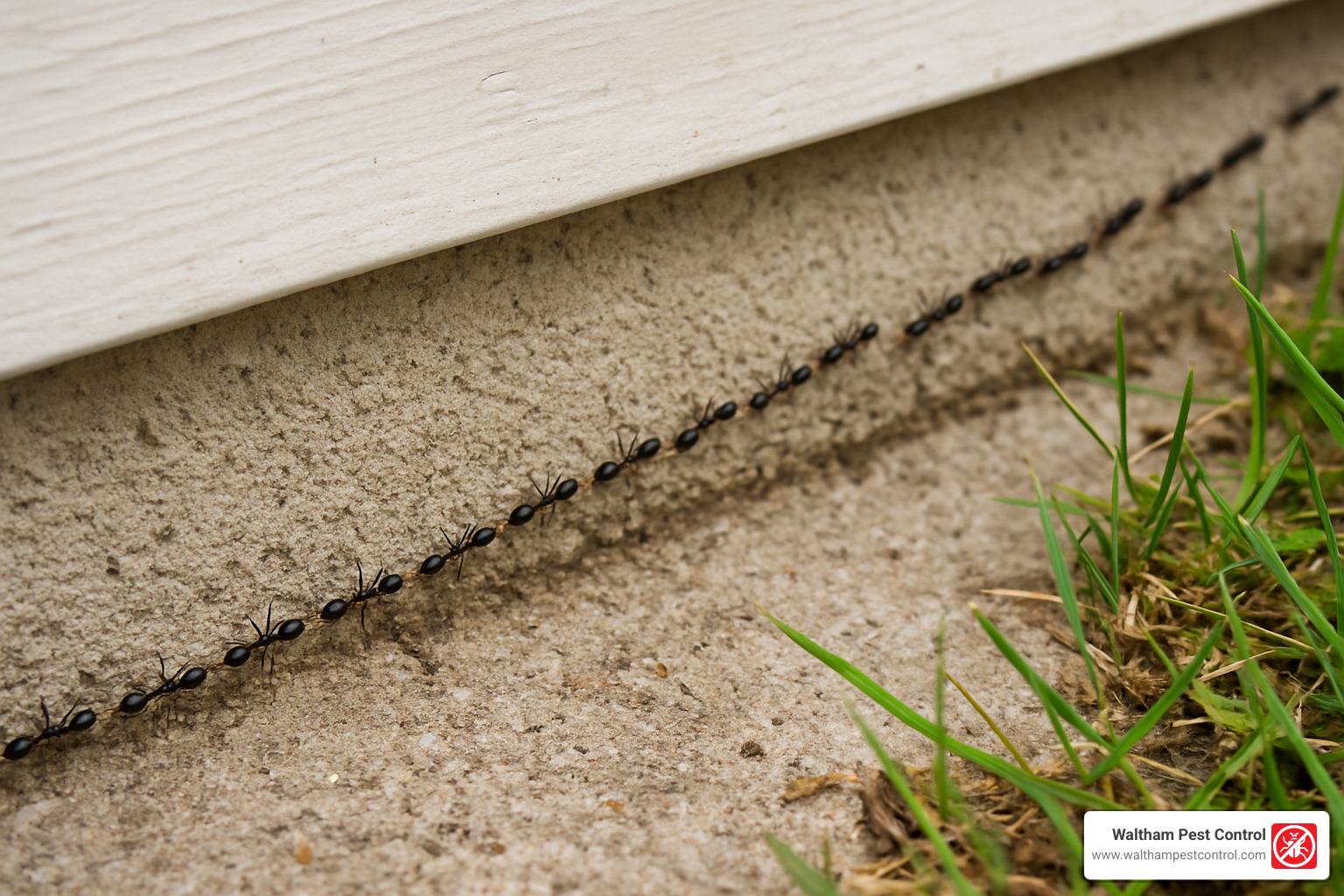
You’ll notice ants traveling in organized lines, often following structural edges like foundation walls, sidewalk borders, or garden edging. These trails become busiest during dawn and dusk when temperatures are just right for foraging – perfect timing for your detective work! Grab a flashlight for early morning or evening inspections when ant activity peaks.
Identifying Common Ant Species
Knowing your enemy is half the battle in effective ant control outside house. Here in Eastern Massachusetts, we commonly encounter:
Carpenter Ants are the giants of our local ant world at 1/4 to 5/8 inch long, typically black or red and black. These nocturnal woodworkers can damage structures by excavating galleries in wood. If you find sawdust-like material (called frass) near wooden structures, carpenter ants may be at work.
Pavement Ants are smaller at about 1/8 inch, dark brown to black, and love making homes under stones, in sidewalk cracks, and along foundations. They’re especially common throughout Burlington, Cambridge, and nearby communities.
Fire Ants, while less common in our region, deserve mention for their painful stings. These reddish-brown troublemakers build distinctive dome-shaped mounds and can turn a pleasant backyard into a danger zone.
Odorous House Ants earn their name from the rotten coconut smell they release when crushed. These brown to black ants, about 1/8 inch long, commonly nest in mulch beds and under stones.
For more detailed information about carpenter ants specifically, our guide on Carpenter Ants Outside House provides targeted advice.
Following Trails Back to the Nest
Finding the ant headquarters is crucial for effective ant control outside house. Here’s how to track them home:
First, create a simple bait station using a dab of honey or maple syrup in areas where you’ve spotted activity. Once the ants find this sweet treasure, they’ll form a clear trail as they carry food back to share. Simply follow this highway to find their home base.
Look for subtle soil disturbances as you track – small piles of excavated dirt often surround nest entrances. Pay special attention to foundation cracks, as many ant species establish colonies along home foundations, especially in gaps where moisture collects.
For carpenter ants, grab a flashlight and conduct a night inspection after dark. These nocturnal creatures are most active after sunset, making them easier to track back to their wooden hideaways.
According to scientific research on scented pheromone trails, ants use these chemical signals not just for finding food but also for communicating danger and marking territory. Understanding this sophisticated communication system helps us develop more targeted control strategies.
Early detection truly is your best friend when it comes to ant control outside house. The sooner you spot the problem, the easier it will be to address before that tiny colony becomes an overwhelming invasion.
Ant Control Outside House: Choosing the Right Strategy
When you’ve spotted those telltale ant trails around your property, it’s time to take action. But before you grab the first ant spray you see at the hardware store, let’s talk strategy. At Waltham Pest Control, we’ve found that a thoughtful, integrated approach works best for effective ant control outside house.
Inspection First
The foundation of any successful ant control plan starts with a thorough inspection. Think of yourself as a detective looking for clues:
Take time to identify exactly which ant species has made your yard their home. Is it the wood-destroying carpenter ant or the nuisance pavement ant? Each requires different treatment approaches.
Walk your property carefully to locate potential nests—those small soil mounds or busy entry points along your foundation could reveal colony locations. Pay special attention to areas where your house meets the ground, as these are common entry highways for ants seeking shelter.
Focus on Colony Elimination
Here’s a sobering thought: those ants you see marching across your patio represent only about 20% of the actual colony. The rest—including the all-important egg-laying queen—remain safely hidden underground.
This is why surface treatments alone won’t solve your problem. For effective ant control outside house, we need to target the entire colony. Think of it like treating an illness—addressing just the symptoms provides temporary relief, but curing the disease requires getting to the root cause.
The queen is your primary target. As long as she’s alive and laying eggs, your ant problem will persist regardless of how many workers you eliminate.
Ant Control Outside House With Baits
Baits are my personal favorite tool for outdoor ant control because they work with ant behavior rather than against it. These clever products exploit the ants’ social feeding habits—workers find the bait, carry it back to the nest, and share it throughout the colony, including with the queen.
The secret to bait success is patience. Quality ant baits contain slow-acting toxins that allow worker ants plenty of time to distribute the material throughout the colony before dying. This ensures the poison reaches deep into the nest where it matters most.
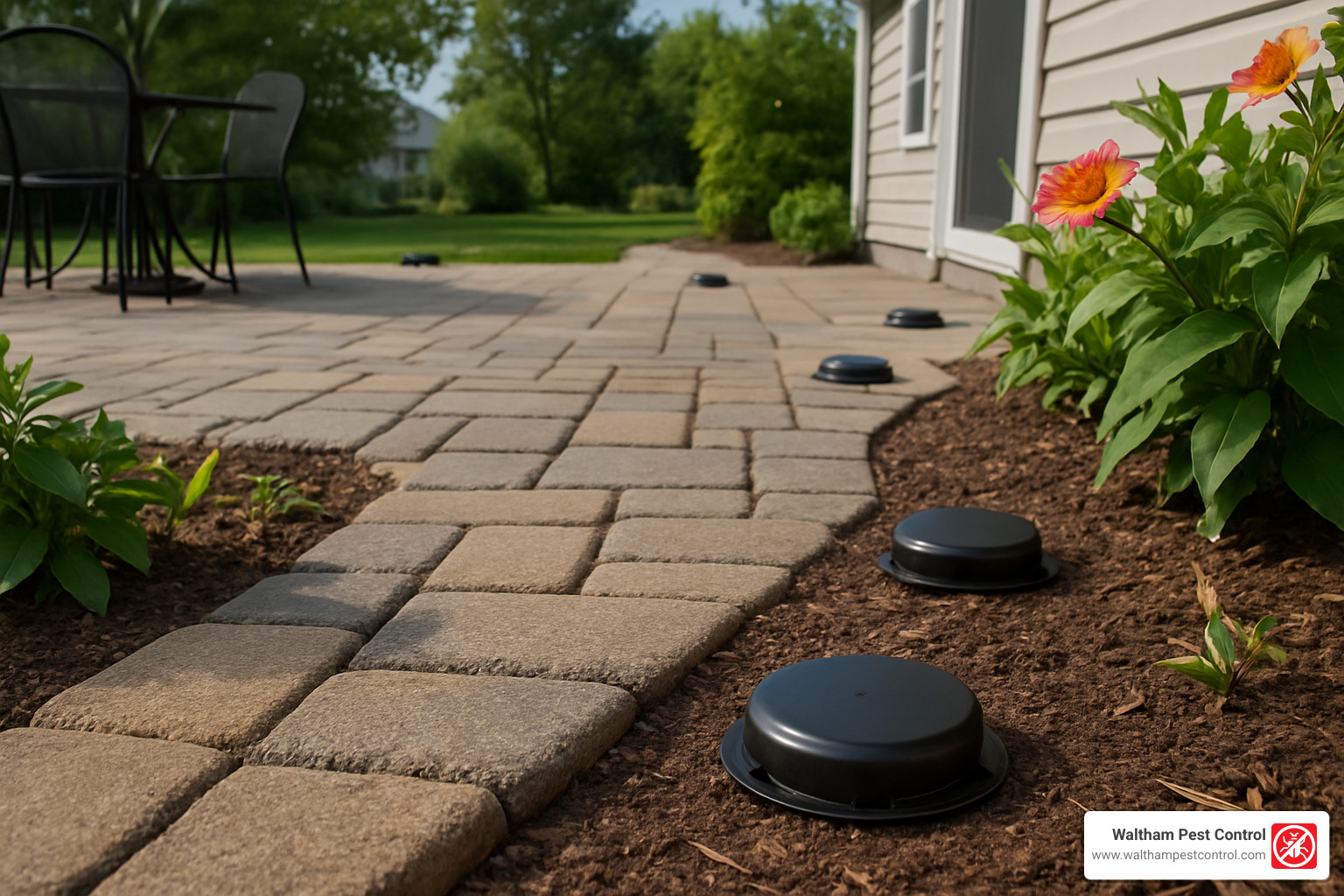
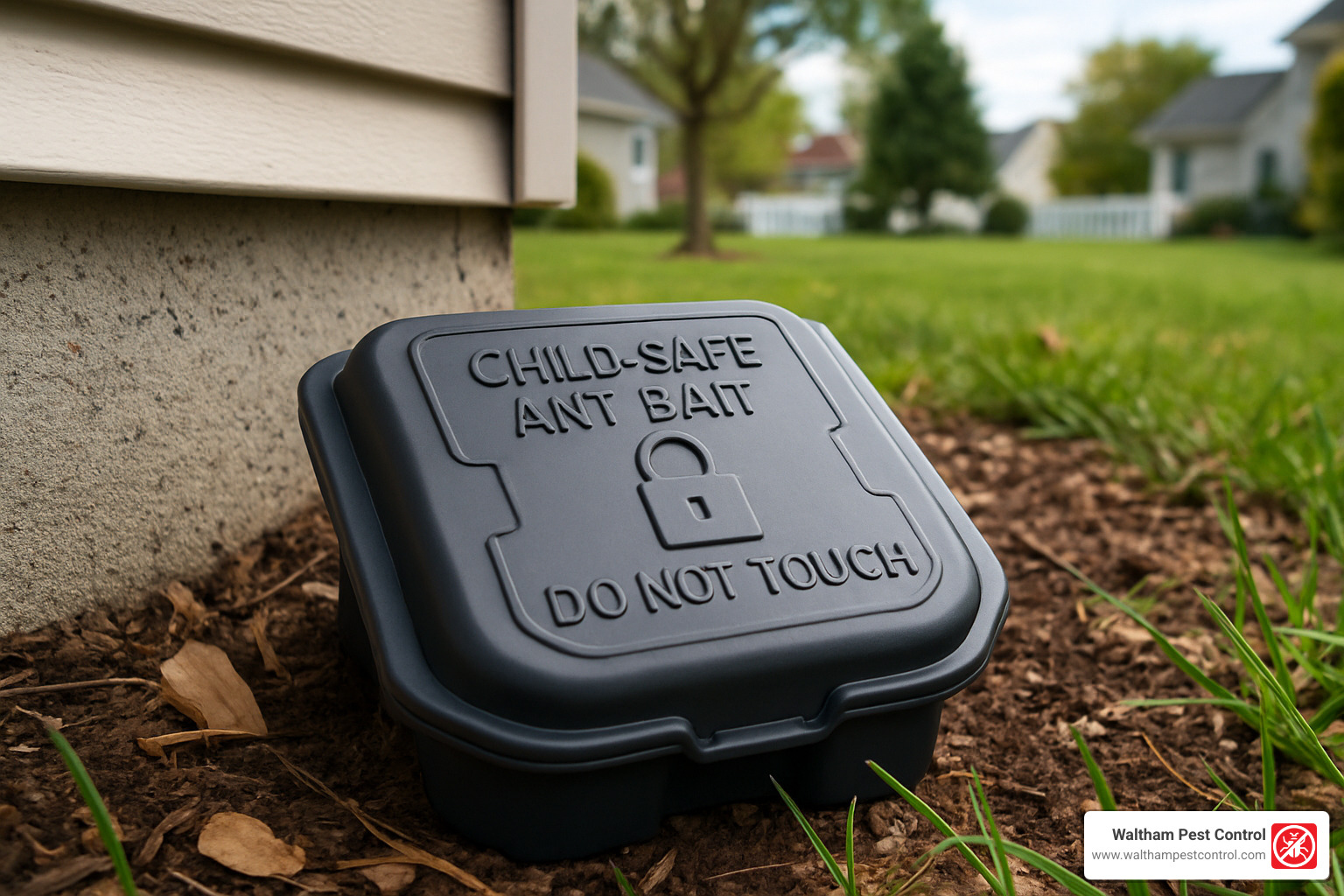
For effective baiting, place stations every 10-20 feet around your home’s perimeter. Position them near visible trails but not directly on them—you want ants to find the bait naturally without disrupting their established pathways. Remember to check and refill stations regularly until you notice a significant decrease in activity.
Pay attention to what your ants prefer eating. Some species crave sweets while others hunt for proteins. This is why we often recommend using both sugar-based and protein-based baits simultaneously. Ants’ dietary preferences can shift with the seasons and even day to day, so covering both bases increases your chances of success.
Ant Control Outside House Using Non-Repellent Sprays
While traditional insecticides often scatter ant colonies (potentially driving them deeper into your home), non-repellent sprays take a more strategic approach. These innovative products remain completely undetectable to ants, allowing them to walk through treated areas without sensing danger.
The beauty of non-repellents lies in their transfer effect. As ants cross treated surfaces, they pick up the insecticide on their bodies and carry it back to the nest. Through normal grooming and contact, the product spreads throughout the colony like a domino effect, eventually reaching the queen.
For best results, apply a 2-3 foot band around your home’s foundation, focusing on entry points like doors, windows, and utility penetrations. Choose a dry, calm day for application to prevent runoff, and keep these treatments separate from your bait stations to avoid contamination.
With proper application, non-repellent sprays typically eliminate colonies within 1-2 weeks while providing ongoing protection for up to three months, depending on weather conditions.
Ant Control Outside House With Natural Options
If you prefer eco-friendly approaches to ant control outside house, several natural methods can be effective with consistent application:
Boiling water offers immediate results for visible mounds. Simply boil a large pot of water and pour it directly into nest openings. This method works best for accessible nests away from valuable plants, as the hot water can damage vegetation. Large colonies may require multiple treatments.
Diatomaceous earth provides a mechanical rather than chemical solution. This natural powder, made from fossilized diatoms, damages ants’ exoskeletons on contact, causing dehydration. Sprinkle a thin layer around nests and along trails, reapplying after rain. Food-grade diatomaceous earth is safe around children and pets when used properly.
Essential oils can effectively disrupt ant communication and foraging. Peppermint, tea tree, and citrus oils are particularly useful. According to recent research on peppermint oil repellency, these natural compounds interfere with the chemical trails ants use to steer. Mix 10-20 drops with water in a spray bottle and apply along entry points and known trails. While effective, oils require frequent reapplication, especially after rain.
The most successful ant control outside house often combines multiple approaches custom to your specific situation. Whether you choose conventional or natural methods, consistency and targeting the colony rather than just visible ants will lead to long-term success.
Safety First: Protecting Pets, Kids, and the Environment
When implementing ant control outside house strategies, safety should always be your top priority. After all, what good is an ant-free yard if it comes at the cost of your family’s wellbeing? Let’s explore how to keep everyone safe while still effectively tackling those pesky ants.
Personal Protective Equipment
I always tell my customers that proper protection isn’t just for professionals. When applying any ant control products:
Wear gloves to prevent skin contact with chemicals that can irritate or be absorbed through your skin. Use a mask when working with powders or sprays to avoid inhaling particles that could affect your respiratory system. Cover up with long sleeves and pants to minimize exposure, and always wash your hands thoroughly afterward—even if you wore gloves!
Following Label Directions
Those tiny instructions on product labels aren’t just suggestions—they’re legally binding directions designed to protect you, your family, and the environment:
Always read the entire label before applying any product. The directions may have changed since you last used it, and manufacturers update safety information regularly. Use only the recommended amount—more isn’t better and can actually be dangerous. Apply only in specified locations as indicated on the label, and observe all safety precautions and waiting periods before allowing children or pets back into treated areas.
Weather Considerations
Mother Nature plays a huge role in both the safety and effectiveness of your ant treatments:
Avoid applying products on windy days, as drift can carry chemicals to unintended areas like your neighbor’s yard or your vegetable garden. Don’t apply treatments before rain, which can wash chemicals into storm drains and local water sources. Early morning or evening applications minimize impact on beneficial insects like bees that are most active during midday. Always check product labels for temperature requirements—many treatments become ineffective or even dangerous outside certain temperature ranges.
Comparing Treatment Options
When deciding between natural methods, DIY chemical treatments, or professional services, consider what matters most to your family:
| Treatment Type | Speed of Results | Environmental Impact | Pet/Child Safety | Typical Effectiveness |
|---|---|---|---|---|
| Natural Methods | Slow to Moderate | Minimal | High | Variable |
| DIY Chemical | Moderate | Moderate | Requires precautions | Moderate |
| Professional | Fast | Targeted | High when dry | High |
At Waltham Pest Control, we’ve spent over 40 years refining our approach to integrated pest management. This means we use the minimum effective amount of treatment precisely where it’s needed, maximizing results while minimizing environmental impact. Our treatments are designed with your family’s safety in mind, becoming safe for household members and pets once properly dried and settled.
Protecting Beneficial Insects
Not all six-legged visitors are your enemies! Bees, butterflies, and other pollinators play crucial roles in our ecosystem and need our protection:
Time your treatments wisely by applying in the evening when bees have returned to their hives. Avoid treating flowering plants that attract pollinators—focus instead on ant trails and nest areas. Use targeted applications rather than broad spraying to minimize collateral damage to beneficial insects. Consider non-chemical barriers like diatomaceous earth in areas where pollinators are active.
Effective ant control outside house doesn’t have to come at the expense of safety. With the right precautions and thoughtful application, you can reclaim your yard while keeping your loved ones—including the four-legged and winged varieties—protected.
Long-Term Prevention & Yard Maintenance
The most effective ant control outside house strategy doesn’t end with treatment—it continues with smart prevention. By making your property less appealing to ants, you’ll dramatically reduce the chances they’ll come marching back.
Creating Physical Barriers
Your home’s exterior is your first line of defense against ant invasions. A few simple fixes can make a world of difference:
Seal cracks and gaps in your foundation with silicone caulk—even openings as small as 1/16 inch can serve as ant highways into your home. While you’re at it, install door sweeps on exterior doors and check that your window screens and weatherstripping are intact. These small repairs not only keep ants out but improve your home’s energy efficiency too—a win-win!
Landscape Management
The way you maintain your yard plays a surprisingly important role in ant control outside house. Think of your landscape as either a “Welcome” or “No Vacancy” sign for ants.
Maintain a 6-inch vegetation-free zone around your foundation—this simple buffer makes it harder for ants to bridge the gap between soil and home. Trim those tree branches and shrubs so they don’t touch your house, as they can serve as natural ant highways. I’ve seen countless cases where overhanging branches became the perfect access point for carpenter ants to reach roof eaves.
Remove any wood-to-soil contact around your home, including wooden steps or lattice that touches the ground. These create ideal nesting spots for moisture-loving ants. And don’t forget about firewood—store it at least 20 feet from your home and lifted off the ground to prevent it from becoming ant housing.
Moisture Control
If there’s one thing ants need besides food, it’s water. Eliminating excess moisture is absolutely essential for ant control outside house.
Repair leaky outdoor faucets and pipes promptly—even slow drips create the damp conditions ants love. Keep those gutters clean and functioning properly, ensuring downspouts direct water away from your foundation. The soil around your home should slope away from the foundation, not toward it, to prevent water pooling.
After rainstorms, check for drainage issues in your yard and address them before they become ant attractions. And don’t forget to empty standing water from containers, birdbaths, and other receptacles regularly—not just for ant control, but also to prevent mosquito breeding.
Outdoor Cleanliness
Food sources are powerful ant magnets, so maintaining cleanliness outdoors is just as important as indoor cleaning:
Clean up spills on patios and decks immediately—that splash of lemonade or bit of dropped hamburger is a feast to an ant colony. Keep pet food indoors or in sealed containers, as pet food left out overnight is one of the most common attractants we find during inspections. Ensure your garbage cans have tight-fitting lids, and give outdoor eating areas and grills a thorough cleaning after use.
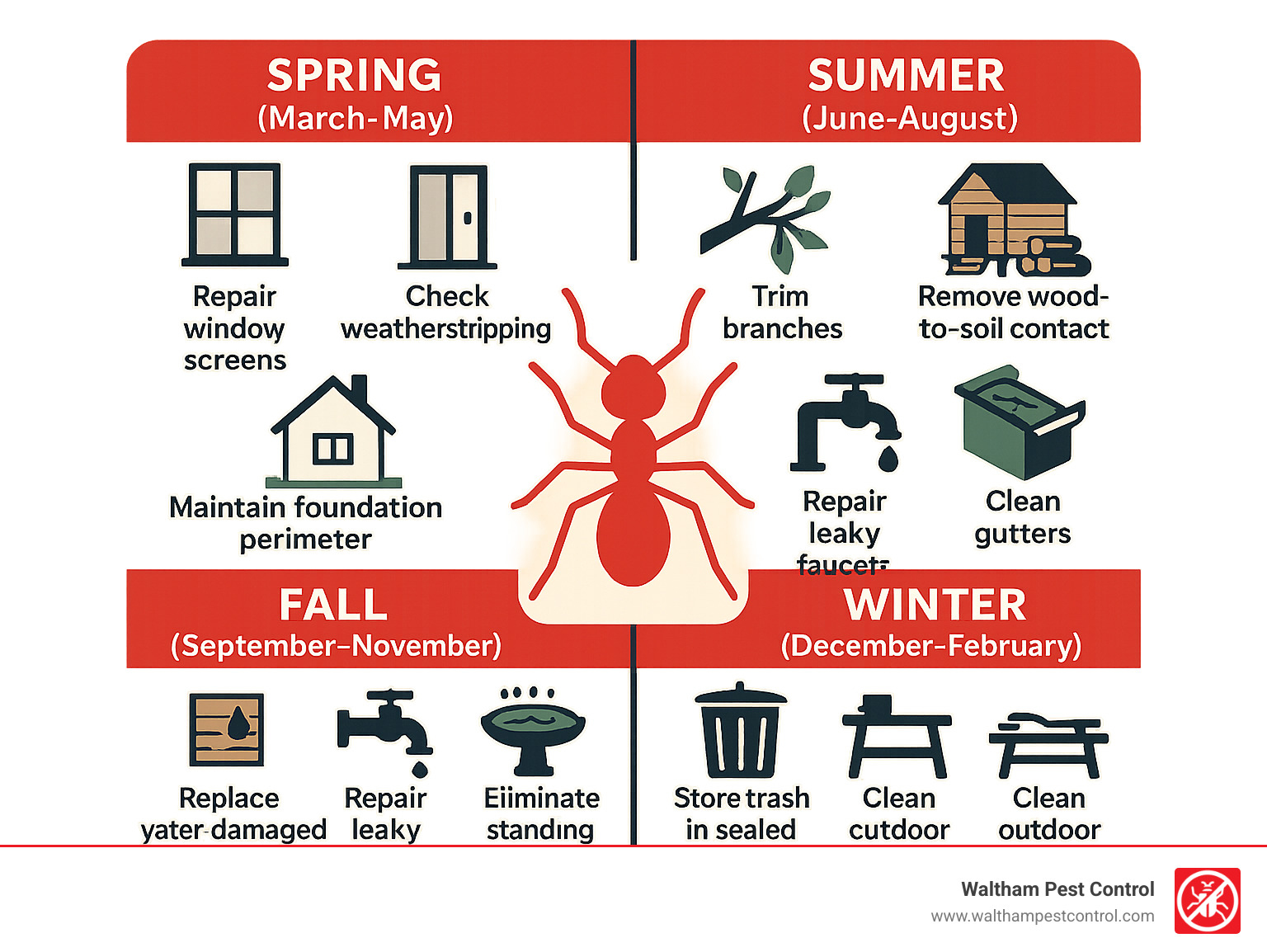
Seasonal Checklist for Ant Control Outside House
Different seasons call for different approaches to ant control outside house. In Massachusetts, our distinct seasons give us natural opportunities to stay ahead of ant problems:
Spring (March-May)
As temperatures warm, ants become active again, making spring the perfect time for prevention. Conduct a thorough inspection of your property as the ground thaws. This is the ideal time to apply preventive perimeter treatments and place bait stations before major ant activity begins.
Spring cleaning should extend to your yard too—clear away winter debris that could house nests and trim back new plant growth from your foundation. Those tender spring shoots can quickly grow into bridges for ants to access your home.
Summer (June-August)
Summer is peak ant season in Eastern Massachusetts. Monitor your yard regularly for new mounds and treat them promptly if they appear. The bait stations you placed in spring will need refreshing as they’re consumed or weather-damaged.
With summer growth in full swing, maintaining that vegetation-free zone around your foundation becomes especially important. Keep outdoor eating areas carefully clean—those backyard barbecues and patio dinners can be prime opportunities for ants to find food.
Fall (September-November)
As temperatures drop, ants begin seeking winter shelter—sometimes in your home. Apply perimeter sprays before this happens to create a protective barrier. Remove fallen leaves and garden debris that could serve as temporary ant housing.
Fall is also the perfect time to seal any new cracks or gaps in your foundation that developed over summer. Trim branches that could provide bridge access to your home, especially near the roof line where carpenter ants often enter.
Winter (December-February)
Even in winter, remain vigilant. Monitor indoor areas, especially warm spots like near heating vents, for signs of ants that have moved indoors. Check attics and crawl spaces for carpenter ant activity, as these spaces can remain active even during cold months.
Address any moisture issues from snow or ice promptly, as melting snow can create damp conditions that attract ants when temperatures rise. Winter is also the perfect time to plan your spring treatment strategy or schedule a professional inspection before the busy season begins.
By following this seasonal approach to ant control outside house, you’ll stay one step ahead of ant populations and prevent them from establishing large colonies near your home. Consistency is key—the most successful ant prevention happens when it becomes part of your regular home maintenance routine.
Professional Help & Average Pricing
Sometimes even the most determined DIY efforts aren’t enough to tackle persistent ant problems. As someone who’s battled countless ant invasions over my 40+ years in pest control, I’ve seen when it’s time to bring in the professionals for ant control outside house.
Signs You Need Professional Help
You might be wondering if your ant situation warrants expert intervention. Trust your instincts if you’re seeing these warning signs:
Have you tried multiple DIY treatments only to see those persistent trails reappear days later? This often indicates a large, established colony that’s not being fully reached by consumer products. When colonies grow to contain multiple queens (what we call polygyne colonies), they become particularly resilient to standard treatments.
Carpenter ants deserve special attention, as they can cause serious structural damage to your home over time. If you’re finding wood shavings (frass) or hearing faint rustling in walls, don’t wait—this could indicate costly damage is already underway.
Fire ants present another urgent scenario with their painful, sometimes dangerous stings. Households with young children, elderly family members, or pets are particularly vulnerable to these aggressive insects.
Perhaps most frustrating is when you’re doing everything right but simply can’t locate the nest despite seeing significant ant activity. Professional pest technicians have the training and tools to find hidden colonies that homeowners often miss.
What to Expect from Professional Treatment
When you call in the experts for ant control outside house, a thorough approach makes all the difference. Professional treatment isn’t just about spraying chemicals—it’s a comprehensive process that typically includes:
First, we conduct a detailed property inspection, identifying not just visible ants but the subtle signs that reveal nest locations, entry points, and conducive conditions. This detective work is crucial for developing an effective strategy.
Based on our findings, we’ll create a customized treatment plan specific to your property, ant species, and infestation severity. This might include specialized baits that worker ants carry deep into the colony, targeted nest treatments, and strategic perimeter applications using professional-grade products not available to consumers.
What truly sets professional service apart is the follow-up. Ant colonies can be persistent, which is why we schedule strategic follow-up visits to ensure complete elimination and adjust our approach if needed. We’ll also provide practical prevention recommendations to keep those ants from returning.
Average Cost Considerations
Based on internet research (not Waltham Pest Control specific pricing), professional ant treatments typically range from $150 to $600+, with the high end being at least three times the average cost. Several factors influence where your treatment might fall within this range:
Property size naturally affects treatment time and material costs, while severe infestations requiring multiple treatments will increase the overall investment. The specific ant species matters too—carpenter ants, for instance, often require more intensive treatment approaches than pavement ants.
Seasonal timing can also impact pricing, with peak season treatments sometimes commanding premium rates. Your geographic location plays a role as well, with varying regional pricing standards.
For specific pricing information custom to your situation in Eastern Massachusetts, I recommend contacting us directly for a personalized quote. We pride ourselves on transparent pricing with no hidden fees.
Questions to Ask Your Pest Control Provider
Before hiring any pest professional, it’s worth asking a few key questions to ensure you’re getting quality service:
“Are your technicians licensed and insured?” This protects both you and the service provider. All our Waltham technicians maintain proper licensing and insurance.
“What training do your technicians receive?” Ongoing education ensures technicians stay current with the latest pest control methods. Our team regularly updates their knowledge through industry certifications.
“What products will be used around my family and pets?” A reputable company will explain their treatment methods and safety protocols. At Waltham, we select products and application methods with household safety as our priority.
“Do you offer any warranty or guarantee?” Understanding the company’s policy on retreatments gives you peace of mind. We stand behind our work with service guarantees.
With over four decades serving communities throughout Eastern Massachusetts—including Burlington, Cambridge, Lowell, and surrounding areas—our licensed technicians at Waltham Pest Control deliver effective, safe solutions for even the most challenging ant problems.
For professional assistance with your ant situation, consider reaching out to Ant Exterminators Near Me.
Frequently Asked Questions about Outdoor Ant Control
What kills ants outside the fastest without harming my lawn?
When you want quick results without turning your beautiful lawn into a patchy mess, finding the right balance is key. Non-repellent liquid insecticides specifically labeled for ant control typically deliver the fastest results while preserving your grass and garden plants—as long as you follow the label directions carefully.
For those who need an immediate solution, boiling water poured directly into ant mounds will kill ants on contact. However, I should warn you that this method will likely create brown patches in your lawn. It’s a trade-off between speed and cosmetic damage.
If you’re willing to wait a few days for results, granular baits offer an excellent compromise. They won’t harm your lawn at all, and while they take 3-7 days to work, they’re much more effective at eliminating the entire colony, not just the ants you can see.
At Waltham Pest Control, our technicians are skilled at applying targeted treatments that work quickly while minimizing impact on your landscape. We focus on precision application—treating only where needed rather than broadcasting chemicals across your entire yard.
How often should outdoor ant treatments be repeated for lasting results?
Successful ant control outside house isn’t usually a one-and-done affair. The timing of repeat treatments depends on both the products used and environmental factors:
If you’re using bait stations, you’ll need to check and refill them every 3-7 days until you no longer see ant activity. Complete colony elimination typically takes 2-3 weeks, as the poison needs time to work its way through the entire ant population.
Granular perimeter treatments generally provide a protective barrier for 1-2 months before needing reapplication. However, heavy rain can significantly reduce their effectiveness, sometimes requiring earlier reapplication.
Liquid residual sprays can last anywhere from 30-90 days. Areas exposed to direct sunlight and rainfall will need more frequent treatment than protected areas. In Massachusetts, our varied weather conditions mean you might need more frequent applications during rainy periods.
Natural remedies like essential oils wash away easily and evaporate quickly, requiring reapplication every 3-5 days or after any rainfall to maintain effectiveness.
For most homeowners, we recommend a seasonal approach—more intensive treatments during spring and early summer when ant activity peaks, followed by maintenance treatments as needed throughout the warmer months.
When should I call a pest control professional instead of DIY?
While many homeowners successfully tackle minor ant problems on their own, certain situations definitely call for professional help. Here’s when to put down the DIY products and pick up the phone:
When you can’t identify the ant species you’re dealing with. Different ants require different treatment approaches, and misidentification can lead to wasted time and money on ineffective products.
Carpenter ant infestations warrant immediate professional attention. These wood-destroying pests often establish hidden satellite colonies that are nearly impossible for homeowners to locate without specialized equipment and training.
Fire ant problems should be handled professionally, especially if you have children or pets. Their painful stings pose health risks, and their colonies are notoriously difficult to eliminate completely without professional-grade products.
If you’ve tried multiple DIY treatments without success over 2-3 weeks, it’s a strong sign that you’re either dealing with a resistant colony or haven’t located all the nests.
Large properties with multiple colonies benefit from professional equipment that can treat expansive areas more effectively and efficiently than consumer products.
When you need guaranteed results, professional services typically offer warranties that DIY methods simply can’t match.
If you have environmental concerns or sensitive plants in your landscape, professionals can apply targeted treatments that minimize impact on non-target areas.
At Waltham Pest Control, we’re always happy to provide free consultations to help you determine whether your ant problem requires professional intervention. Our experienced technicians serve communities throughout Eastern Massachusetts, bringing over 40 years of local pest control knowledge to your doorstep.
Conclusion
Taking control of your outdoor ant problem doesn’t have to be a losing battle. With the right approach to ant control outside house, you can protect your property and prevent these persistent pests from making themselves at home—both outside and eventually inside.
After working with thousands of homeowners across Eastern Massachusetts over the past four decades, we’ve learned that successful ant management comes down to a few essential principles:
Early detection saves time and money. Those first few scout ants you spot are just the messengers—address the problem before they invite the entire colony over. What you see represents only about 20% of the actual colony population lurking underground.
The queen is always the true target. Those worker ants marching across your patio are just symptoms of the real problem. Without eliminating the queen, you’re simply fighting an endless battle against her offspring.
Not all ants are created equal. Whether you’re dealing with carpenter ants that can damage your home’s structure, pavement ants invading your walkways, or painful fire ants in your lawn, the right identification leads to the right solution.
Consistency wins the war. Successful ant control outside house isn’t about one-time treatments—it’s about creating and maintaining a protective barrier around your property through regular maintenance and seasonal treatments.
Your yard can be your first line of defense. Simple changes like trimming vegetation away from your foundation, fixing moisture problems, and keeping outdoor eating areas clean can dramatically reduce your property’s appeal to ant colonies.
Sometimes, calling in reinforcements makes sense. If you’ve tried DIY methods without success or you’re facing a particularly challenging infestation, professional help can save you time, frustration, and potentially even money in the long run.
At Waltham Pest Control, we’ve been helping homeowners throughout Burlington, Cambridge, Lowell, and surrounding communities solve their ant problems for over 40 years. Our approach combines scientific knowledge with practical experience to deliver solutions that actually work—and keep working.
We understand that every property is unique, which is why we develop customized treatment plans rather than one-size-fits-all solutions. Our technicians are not just licensed and trained—they’re problem-solvers who take pride in helping our neighbors live pest-free.
Don’t let ants take over your outdoor living spaces or threaten your home. Whether you need advice on DIY methods or you’re ready for professional intervention, we’re here to help you take back your yard and keep it ant-free.
For more information about our services in your specific area, visit More info about local pest services.
