
The Ultimate Guide to Indoor Ant Bait Stations
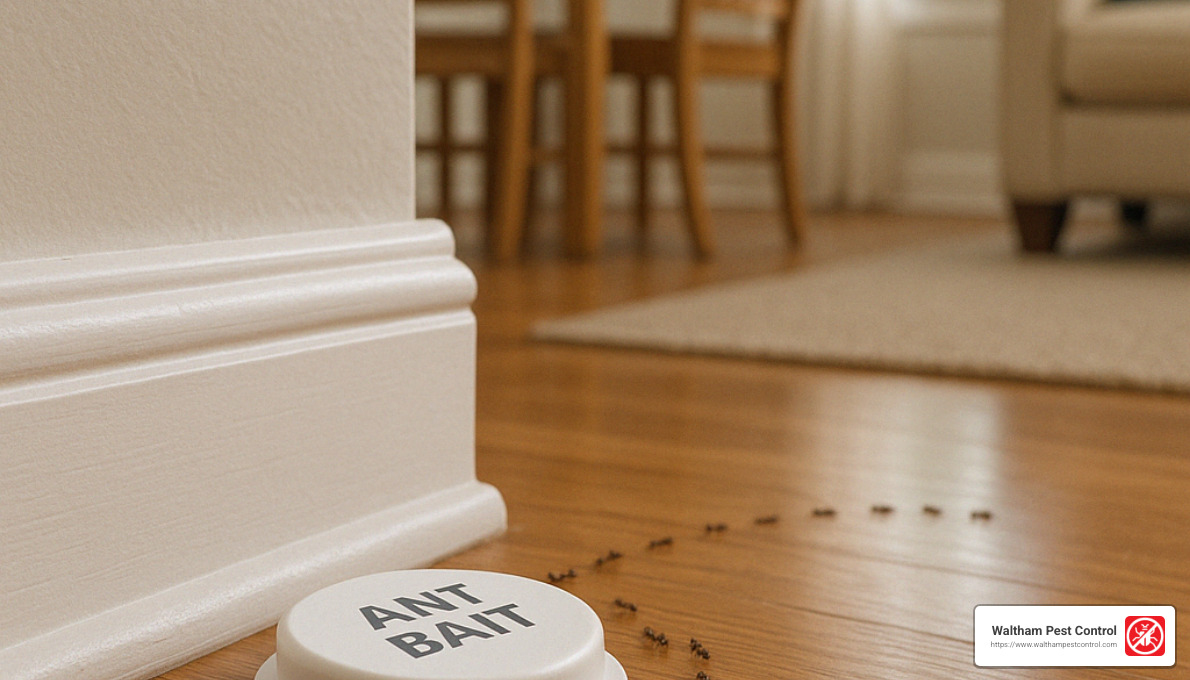
Indoor ant bait stations provide an effective, clean way to eliminate ant colonies by targeting the entire nest, not just visible ants. Here’s what you need to know:
| Key Feature | Benefit |
|---|---|
| Slow-acting toxins | Allows worker ants to share poison with entire colony |
| Child-resistant designs | Safe for homes with children when properly placed |
| Multiple entry points | Increases access for different ant species |
| Compatible with various baits | Targets different ant feeding preferences |
| Discreet placement options | Integrates seamlessly into your home |
If you’ve ever spotted a trail of ants marching across your kitchen counter, you know how frustrating indoor ant infestations can be. Ant bait station indoor solutions offer a strategic approach to eliminating these persistent pests by targeting the source—the colony itself. Unlike sprays that only kill visible ants, bait stations work by attracting foraging ants with a sweet or protein-based lure, allowing them to carry the slow-acting poison back to their nest.
What makes bait stations particularly effective is their exploitation of ant social behavior. When worker ants find the bait, they leave pheromone trails that attract more foragers, creating a domino effect that can eliminate an entire colony within days or weeks.
The beauty of ant bait station indoor solutions lies in their simplicity and cleanliness. There’s no need for messy sprays or constant cleaning—simply place the stations where ant activity is highest and let them do the work.
I’m Waltham Pest Control, President of Waltham Pest Control with over 40 years of experience implementing effective ant bait station indoor solutions for Massachusetts homeowners and businesses facing persistent ant infestations. My team specializes in strategic placement of professional-grade bait stations that target specific ant species while keeping your family safe.
Ant bait station indoor terms simplified:
Understanding Ant Behavior and Indoor Infestations
When tiny invaders march across your kitchen counter in a perfectly organized line, you’re witnessing the remarkable social structure that makes ants such successful pests. To effectively combat them with ant bait station indoor solutions, understanding their behavior is absolutely essential.
Ants are nature’s ultimate team players. Each colony operates like a well-oiled machine with distinct roles: the queen (sometimes multiple queens) focuses solely on reproduction, while worker ants handle everything from food gathering to nursery duty to colony defense. This division of labor makes them incredibly efficient—and challenging to eliminate.
Many homeowners don’t realize they’re dealing with a sophisticated ant society when they spot those first few scouts in their pantry. Because ants have survived on Earth for over 130 million years, they’re remarkably adaptable. That visible trail across your counter may only be the tip of the anthill.
Indoor ant infestations typically begin when worker ants find something your home offers that they need. This might be food crumbs on your counter, a leaky pipe providing water, or simply shelter from harsh weather. They’re masters at finding entry points, squeezing through:
Tiny foundation cracks barely visible to the human eye, gaps around windows and doors you might never notice, utility line entrances, tree branches that touch your roof or siding, and even the tiniest openings around food containers you thought were sealed.
Here in Eastern Massachusetts, we regularly battle several persistent ant species in homes. Pavement ants often travel along baseboards after entering through foundation cracks. The larger carpenter ants can actually damage your home’s structure over time. Tiny Pharaoh ants love warm, humid spots like kitchens and bathrooms. And if you’ve ever crushed an ant and noticed a foul, coconut-like odor, you’ve met the aptly named odorous house ant.
What makes controlling these pests particularly challenging is their colony structure. That single ant you squished represents just one of potentially thousands hiding in your walls, under floors, or outside your home. This explains why spraying visible ants rarely solves the problem—you’re addressing perhaps 1% of the actual infestation.
Some homeowners resort to spraying every ant they see, only to find the ants reappearing the next day or migrating to a different area of the house. It’s not until the entire colony, including the reproductive queen, is targeted that a lasting solution is achieved. This is why professional pest control services focus on colony elimination rather than just killing visible ants.
Ant Bait Station Indoor: How They Work to Eliminate Ant Colonies
Ever noticed how ants seem to magically disappear when you place those little plastic boxes around your home? There’s nothing magical about it—it’s all science and strategy. Ant bait station indoor solutions work by turning foraging ants into unwitting carriers of colony-wide impact.
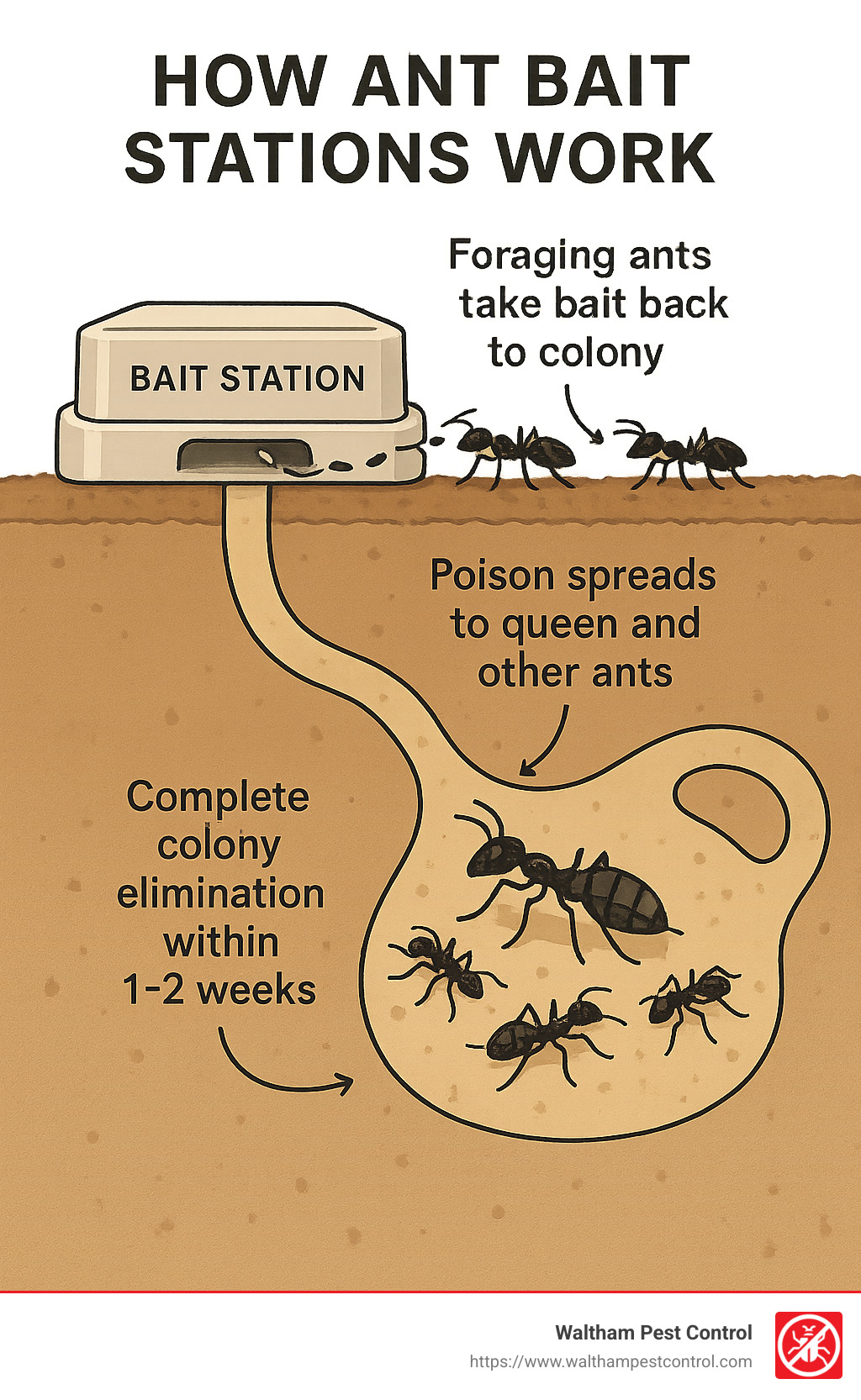
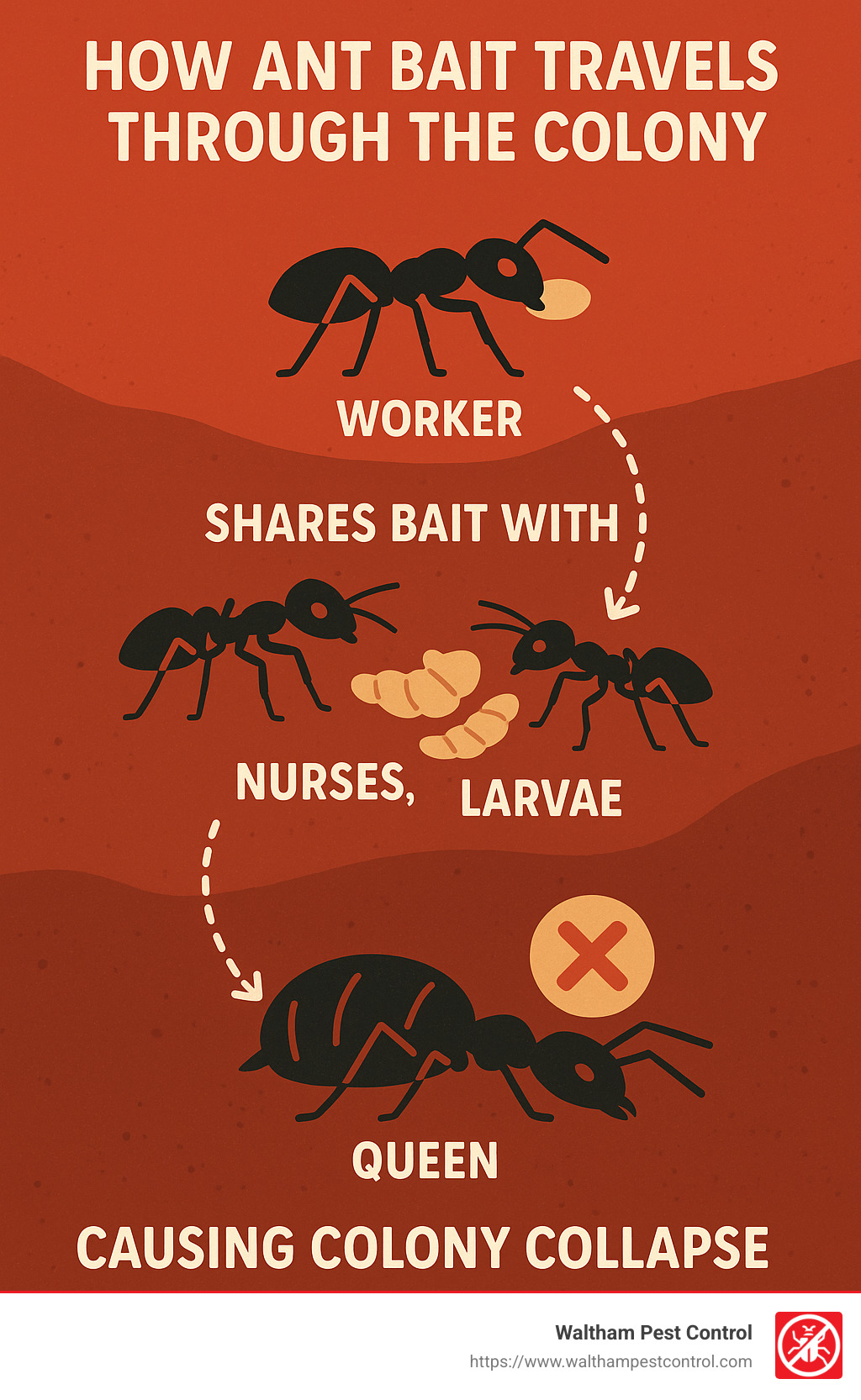
Initially, you may see more ants around the stations. This is actually a good sign because worker ants are gathering the bait and leaving pheromone trails that recruit more ants to the station. The bait contains a slow-acting toxin that gives worker ants enough time to take it back to the nest and share it with other ants, eventually reaching the queen.
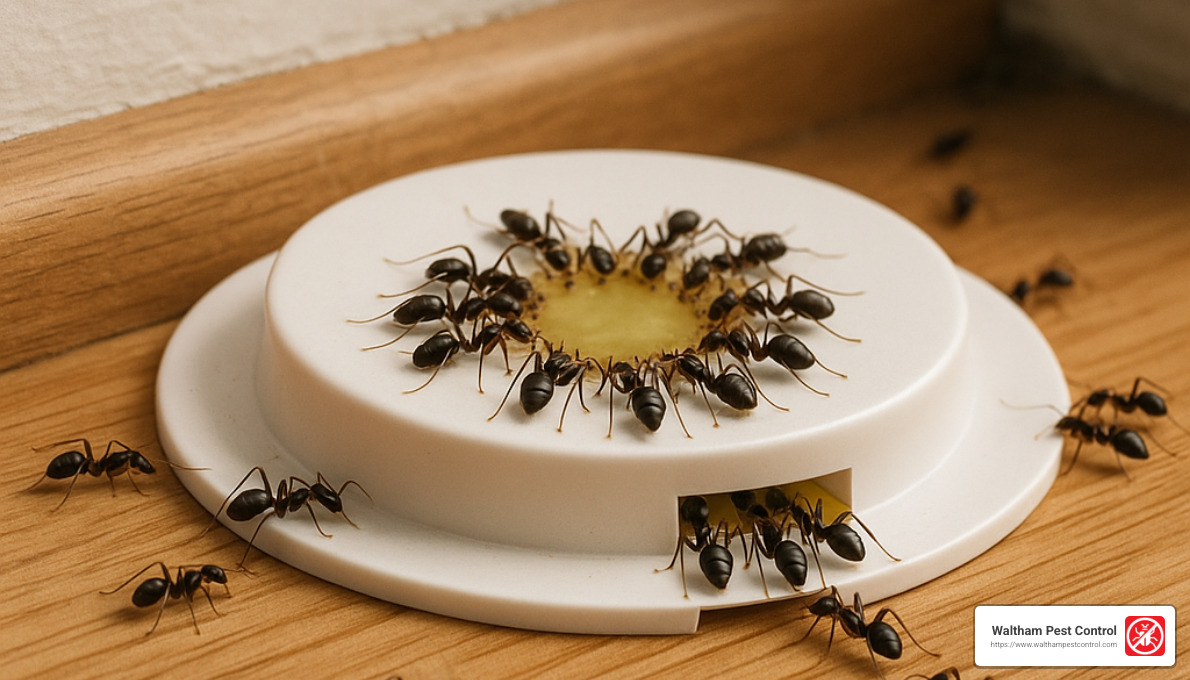
The process works in five straightforward steps:
- Worker ants find the sweet, protein, or carbohydrate-rich bait inside the station.
- They consume some bait and store the rest in their “social stomach” for transport.
- They head home, leaving behind pheromone trails that attract more workers to the bait.
- At the nest, these workers share the bait with other ants through trophallaxis, including the queen.
- After a few days to a couple of weeks, the colony collapses as the toxin takes effect.
Many people are initially skeptical about leaving ants alone to feed, but after a few days or weeks, they often notice the ant problem dramatically decreases or disappears altogether.
Modern ant bait station indoor products are designed with child-resistant features and multiple entry points for optimal ant traffic. Many have transparent windows for easy monitoring, while the bait stays protected inside, minimizing spills and mess.
The Science Behind Ant Bait Station Indoor Solutions
The effectiveness of these solutions is rooted in ant biology and social structure. Ants have multiple stomachs—one for their own nutrition and another for transporting food back to the colony. This is the core reason slow-acting baits work so well.
If the poison is too fast-acting, ants die before sharing it. If it’s too slow or not attractive enough, it won’t make a dent in the colony. Professional-grade baits strike the perfect balance. They also often match ant food preferences—some species prefer sweets, others go for proteins or fats.
“It’s like setting up a domino chain reaction” is a common way to describe this process, because once the foragers find the bait, they bring more ants in, and the colony continues to feed until it collapses.
Common active ingredients include borax, fipronil, hydramethylnon, indoxacarb, and insect growth regulators. Each works differently, but they all have the same end goal: the gradual elimination of the entire colony.
Insect Baits and Insect Behavior
Types of Ant Baits Compatible with Indoor Bait Stations
Not all ants are created equal, and neither are all baits. Some ants crave sweets, while others prefer proteins or fats. Liquid baits are typically sugar-based, gel baits offer a thicker consistency with high moisture content, and granular baits appeal to protein-feeding ants like carpenter ants.
For general infestations, many professionals use liquid baits containing borax, prized for their staying power and ability to attract a wide range of species. Gels are great for targeted applications, while granular baits can be effective for larger ants or outdoor-to-indoor invasions.
Some advanced formulas combine sweet and protein attractants, ensuring coverage for multiple ant species. Professional pest control services may even rotate baits to prevent colonies from developing aversions.
Benefits of Using Ant Bait Stations Indoors
There’s something deeply satisfying about finding a solution that works with nature rather than against it. That’s exactly what ant bait station indoor solutions offer homeowners battling persistent ant problems. At Waltham Pest Control, we’ve seen how these devices can solve ant woes effectively and cleanly.
1. Complete Colony Elimination
The beauty of bait stations is their ability to reach the heart of the problem. While sprays might give you temporary relief, they only address the visible scouts—just 10-15% of the colony. Bait stations leverage the ants’ social behavior, allowing worker ants to share the toxin with the queen and the rest of the nest.
2. Non-Disruptive Application
Unlike traditional treatments that require you to clear out cabinets or vacate your home, bait stations are discreet and can be placed in corners or along baseboards while you go about your day. There’s no lingering chemical odor or large-scale preparations necessary.
3. Continuous, Long-Term Control
A single professional-grade bait station application can provide protection for weeks or even months. This helps prevent reinfestation and reduces the frustration of ants popping up again in a few days.
4. Targeted Treatment
Bait stations are an eco-friendlier approach because they concentrate the pesticide where ants are feeding, minimizing broader exposure. Beneficial insects remain largely unaffected, making this a more precise pest control method.
5. Cost-Effective Solution
Although the upfront cost may be higher than a can of spray, bait stations eliminate repeated treatments by targeting the entire colony. Many homeowners find that the long-term savings far outweigh the initial expense.
6. Safe When Used Properly
Professional-grade ant bait station indoor products often come with child-resistant features and secure housings. Trained technicians know how to position stations so that they are inaccessible to children and pets, while remaining easily accessible to ants.
| Method | Kills Visible Ants | Eliminates Colony | Safe Around Food | Continuous Protection | Mess-Free |
|---|---|---|---|---|---|
| Ant Bait Stations | ✓ | ✓ | ✓ | ✓ | ✓ |
| Spray Insecticides | ✓ | ✗ | ✗ | ✗ | ✗ |
| Sticky Traps | Partial | ✗ | ✓ | Partial | Partial |
| DIY Remedies | Partial | ✗ | Varies | ✗ | Varies |
By turning ants’ strong social nature into their downfall, these solutions achieve full colony elimination with minimal hassle. It’s a strategy that works smarter, not harder, and delivers lasting relief.
Best Practices for Placing Ant Bait Stations Indoors
The secret to successful ant bait station indoor treatment isn’t just about which bait you use—it’s where you place it. After years of battling ant infestations, we’ve learned that strategic placement can make the difference between disappointment and relief.
Identify Ant Trails and Entry Points
Before placing any station, observe ant activity for a few minutes. Watch how they travel, and note where they seem to emerge. These well-worn paths are prime locations for bait stations.
High-Priority Placement Locations
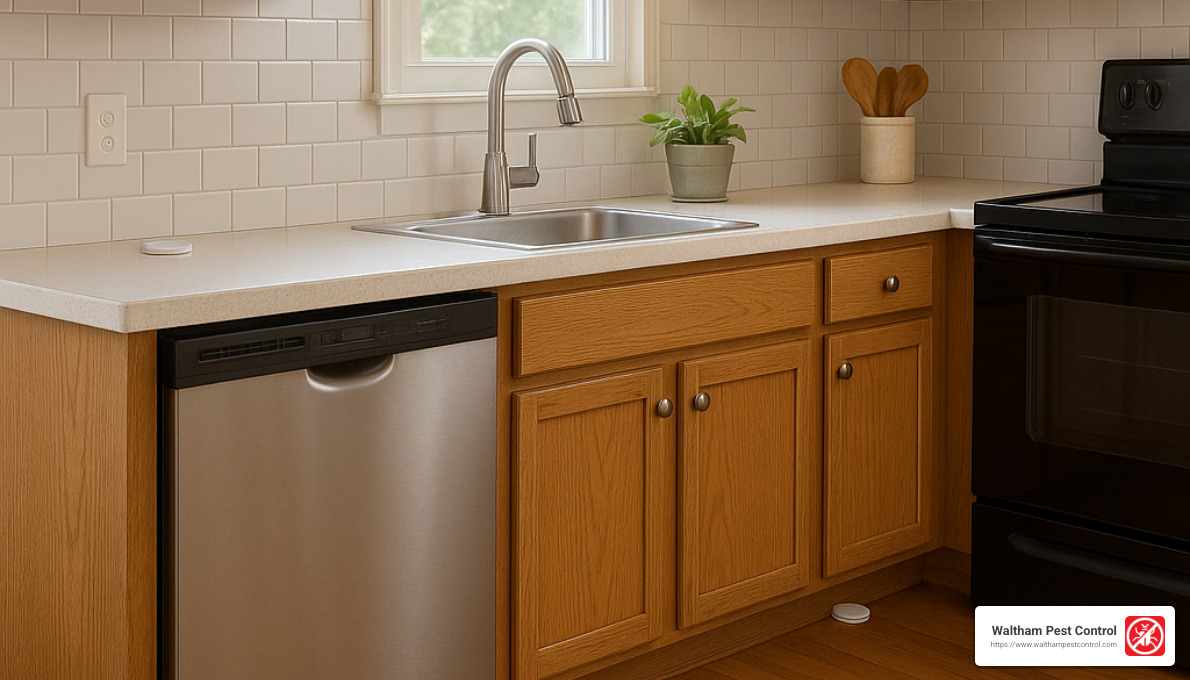
• Kitchens: Near sinks for moisture, under the fridge for food scraps, and along edges of countertops.
• Bathrooms: Around sinks, tubs, and toilets where water is present.
• Entry points: Door thresholds, window sills, utility line entrances, and foundation cracks.
• Food storage areas: Pantries, pet feeding stations, and anywhere food crumbs accumulate.
Optimal Placement Techniques
• Place stations flat on surfaces ants frequent, such as along walls or corners.
• Keep stations dry for maximum attractiveness.
• Use multiple stations in heavily infested areas.
• Space stations about 5-10 feet apart so ants can easily find them.
Maintenance and Monitoring
Check stations every few days to ensure the bait is still available. A temporary uptick in ant activity means the bait is drawing them in. Replace stations if the bait is depleted or contaminated, and consider rotating bait types if the ants seem to lose interest.
Common Mistakes to Avoid
• Using insecticide sprays near bait stations repels ants from the bait.
• Leaving competing food sources makes the bait less attractive.
• Disturbing stations or ant trails interrupts the feeding cycle.
• Not placing enough stations can limit effectiveness in larger infestations.
• Using the wrong bait type for the ant species in your home.
Successful ant bait station indoor placement is equal parts observation and technique. By focusing on the ants’ natural pathways and habits, you’ll increase the odds of delivering bait back to the colony for a swift resolution.
Safety Considerations When Using Ant Bait Stations Indoors
While ant bait station indoor solutions are effective, nothing matters more than keeping your household safe. At Waltham Pest Control, we’ve spent decades ensuring our methods eliminate pests while maintaining a secure environment.
Child and Pet Safety Measures
Modern ant bait stations are often designed with child-resistant features—secure housings and tamper-resistant entry points. Nevertheless, it’s best to place them in areas that are unlikely to attract the attention of children or pets, such as behind appliances or inside cabinets.
In many professional-grade solutions, active ingredients like Fipronil or borax are present in low concentrations, but caution is still advised. Always wash hands after handling bait stations, and clean up any spilled bait immediately.
Safe Handling and Disposal
• Wear disposable gloves when placing or removing bait stations.
• Follow the label instructions for disposal—some products require specific steps.
• Store unused bait stations in their original packaging, out of the reach of children and pets.
Environmental Considerations
Bait stations use minimal pesticide relative to traditional sprays, targeting only the ants. This localized approach limits broader chemical exposure and is often a more environmentally responsible option.
Professional Expertise Matters
Professionals can identify the ant species in your home, calibrate the right bait, and ensure the stations are positioned for maximum safety and effectiveness. Expert knowledge reduces guesswork, helping you achieve long-term results without compromising peace of mind.
Safety guidelines for indoor pesticide use
Monitoring Effectiveness and Troubleshooting Common Issues
After deploying ant bait station indoor solutions, monitoring them is crucial. Knowing what to expect—and how to address issues—can mean the difference between partial relief and complete colony elimination.
Signs That Bait Stations Are Working
Initially, you might see an uptick in ant activity as foragers recruit more ants to the station. This means they’ve found the bait attractive. Over the next few days, the number of ants should gradually decline as the toxin spreads through the colony. Full elimination can take up to two weeks, depending on colony size.
Ant Bait Station Indoor Effectiveness Signs
• Ants actively feeding at stations during the first few days.
• Visible reduction in ant trails after a week.
• Low or no ant activity after two weeks.
Troubleshooting: What to Do If Ants Ignore the Bait
• Match the bait to the ant species: Carpenter ants often prefer protein-based baits, while many house ants favor sweet, sugar-based baits.
• Eliminate competing food sources: Clean thoroughly so the bait is the only appealing option.
• Avoid contamination: Keep cleaning agents and sprays away from stations.
• Consider seasonal shifts: Ant dietary preferences can change with the weather.
If ants remain active beyond two weeks, it could indicate multiple colonies or a particularly large nest. In that case, expert guidance may be needed for a more comprehensive treatment plan.
Frequently Asked Questions about Indoor Ant Bait Stations
After years of helping Massachusetts homeowners, we’ve heard nearly every question about ant bait station indoor solutions. Here are the answers to the most common ones:
How Long Does It Take for Indoor Ant Bait Stations to Work?
Most ant baits can resolve infestations within two weeks. You’ll often see increased ant activity at first, as the foragers bring more ants to the station. This is normal and indicates the bait is attracting them. If activity persists beyond two weeks, you may have a particularly large colony or multiple colonies that require additional attention.
Are Ant Bait Stations Safe Around Pets and Children?
Yes, when used properly. Most modern stations feature child-resistant designs and use low concentrations of active ingredients. Even so, it’s best practice to place them out of reach of kids and pets. Follow label instructions, and clean up any spills immediately.
What Should I Do If I Still See Ants After Placing Bait Stations?
Seeing ants for a few days is normal, since it means they’re taking the bait. If ant activity doesn’t decrease substantially after 7-14 days, consider switching bait types or placing more stations. Also, ensure no other food sources are competing with the bait.
When Should I Call a Professional?
If the infestation is severe, if you’re unsure of the ant species, or if repeated attempts haven’t worked, it’s often more cost-effective to consult a professional. Pest control technicians tailor their approach based on the specific ant species and can provide long-term solutions that keep your home ant-free.
Conclusion
Ant bait station indoor solutions remain one of the most efficient ways to address ant invasions in your Eastern Massachusetts home. By aligning with ant social behavior, they transform worker ants into the very agents that deliver the lethal dose to their hidden colonies.
Simply spraying the ants you see only tackles a fraction of the population. Bait stations ensure that the poison travels back to the queen and the entire colony, providing a more complete and lasting solution.
If you decide to use ant bait station indoor products yourself, place them where ants are active, keep them inaccessible to children and pets, and give them time to work. When in doubt, professional pest control services like Waltham Pest Control can identify the specific ant species, select the most effective bait, and ensure thorough colony elimination.
At Waltham Pest Control, we’ve been assisting Massachusetts homeowners since 1974. Our team is licensed, insured, and highly experienced in handling everything from tiny sugar ants to destructive carpenter ants. A professional approach not only saves you time and frustration—it also gives you the peace of mind that comes from knowing your home is protected against future invasions.
For more information or to schedule a consultation, visit our website or give us a call. We’re committed to helping you enjoy a pest-free home, the way it should be.
