
Commercial and residential pest control: Essential 2025
Why Commercial and Residential Pest Control Are Not the Same Thing
Commercial and residential pest control serve fundamentally different purposes, even though both aim to eliminate unwanted pests. Here’s what sets them apart:
| Aspect | Residential Pest Control | Commercial Pest Control |
|---|---|---|
| Primary Focus | Family safety and home comfort | Brand reputation and regulatory compliance |
| Common Pests | Ants, spiders, mice, termites, bed bugs | Rodents, cockroaches, flies, stored product pests |
| Treatment Approach | Kid and pet-friendly, targeted application | Potent formulas with strict application protocols |
| Service Frequency | Monthly, quarterly, or annually | Daily, weekly, or monthly depending on industry |
| Documentation | Basic service tickets | Detailed reports for multiple stakeholders and audits |
| Stakes | Property damage and health concerns | Business closure, fines, reputation loss, legal liability |
The truth is simple: what works for a home won’t necessarily work for a business. A restaurant facing a single cockroach sighting risks health department fines, negative reviews, and lost customers. A warehouse with rodent activity could face product contamination and failed audits. Meanwhile, a homeowner dealing with ants in the kitchen faces inconvenience and discomfort, but not regulatory action.
According to industry research, commercial clients often accept that occasional pests are inevitable due to constant deliveries, high foot traffic, and open doors. What matters is keeping populations small and preventing customer complaints. Residential clients, on the other hand, typically want immediate elimination and expect a completely pest-free environment.
The scheduling alone tells the story. Commercial pest control often happens after hours to avoid disrupting business operations or alarming customers. Technicians must steer production schedules, shift changes, and lunch rushes. They also need to provide detailed written reports, product labels, and safety data sheets for multiple stakeholders—not just the person who schedules service.
As Waltham Pest Control, President & CEO of Waltham Pest Control with over 40 years of experience, I’ve seen how commercial and residential pest control demand entirely different approaches, from treatment methods to communication protocols. Whether you’re protecting your family’s home or your business’s reputation, understanding these differences is the first step toward effective pest management.
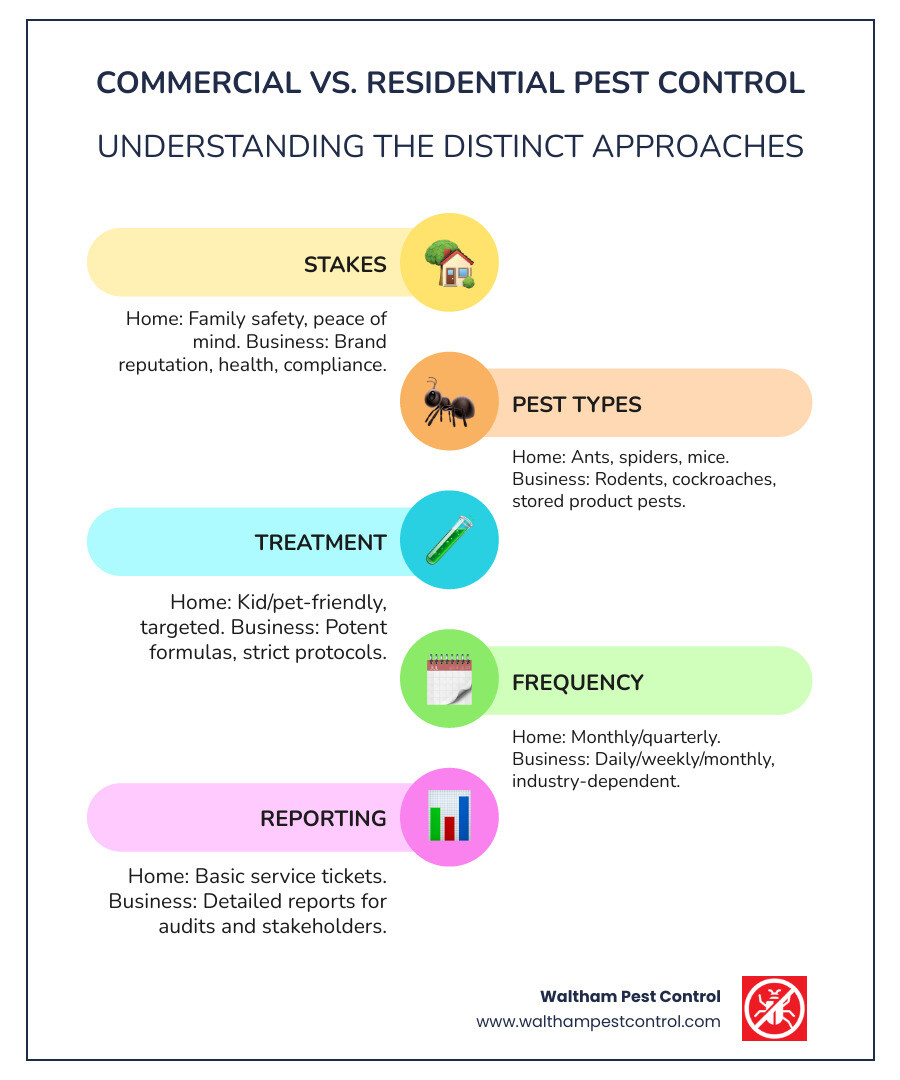
Quick commercial and residential pest control terms:
The Core Differences: Commercial vs. Residential Pest Control
When you’re dealing with pests at home versus at your business, you’re playing two completely different games. While the goal is the same—eliminating pests—the strategies for commercial and residential pest control diverge significantly.
Scope, Stakes, and Regulations
At home, the stakes are personal: your family’s safety, peace of mind, and protecting your property from pests like termites or rodents. For a business, the stakes are much higher. A single pest sighting can damage your reputation, lead to regulatory action, and hurt your bottom line.
Businesses like restaurants, food processing facilities, and healthcare operations must comply with strict FDA and USDA standards and local health codes. A failed inspection can result in fines, closures, and permanent brand damage. For businesses, professional pest control isn’t optional—it’s essential risk management.
Treatment Methods and Products
Treatment methods also differ. Residential pest control prioritizes kid-and-pet-friendly options for targeted issues like ants in the kitchen or spiders in the basement.
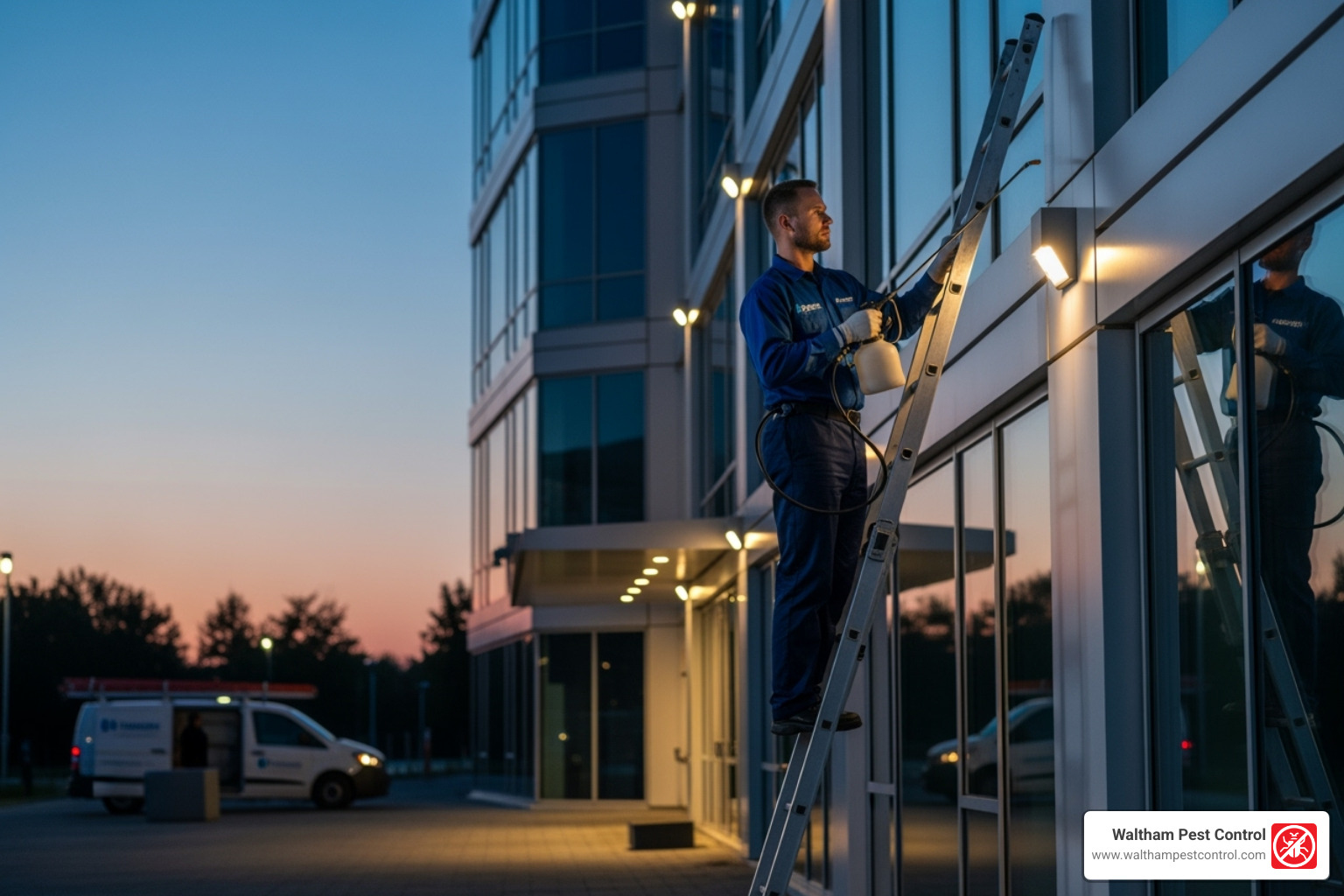
Commercial settings, due to their scale and complexity, may require more potent formulas with strict application protocols. These treatments are often performed after hours to ensure safety and avoid disrupting business. The focus for businesses extends beyond immediate elimination to long-term prevention, creating an environment inhospitable to pests.
Scheduling, Frequency, and Communication
Operational differences are stark. Residential service is scheduled for your convenience, often involving monthly or quarterly visits with direct communication.
Commercial scheduling is far more complex, requiring coordination around production schedules, customer traffic, and delivery times. Service is typically performed after hours to avoid disruption. Frequency varies by industry risk, from daily or weekly for a food plant to monthly for an office. Communication is also more formal, involving detailed written reports for managers, corporate offices, and regulatory agencies. This documentation, accessible through our secure online portal, is crucial for compliance and stakeholder updates.
The Business Imperative: Why Professional Pest Control is Essential
When you’re running a business, every detail matters. But here’s something that can undo everything you’ve built in an instant: pests. A single mouse darting across a dining room floor or a cockroach spotted near your retail display isn’t just unpleasant—it’s a business catastrophe waiting to happen.
Neglecting pest control in a commercial setting opens the door to risks that go far beyond what homeowners face. We’re talking about threats to your brand reputation, your financial stability, and the health and safety of everyone who walks through your doors.
Protecting Your Brand, Health, and Bottom Line
A single photo of a mouse in your establishment can go viral, leading to a flood of one-star reviews and lost customers. The damage to your reputation can be swift and severe.
But the consequences extend beyond bad press. Pests pose significant risks to employee and customer safety, with rodents spreading diseases and cockroaches contaminating surfaces. Physical damage is another major concern. Termites can cause costly structural harm, while rodents chewing through wires create fire hazards. Finally, there’s regulatory compliance. Health inspectors can issue fines or even shut down businesses for pest infractions, resulting in the dreaded “Closed by Health Department” sign.
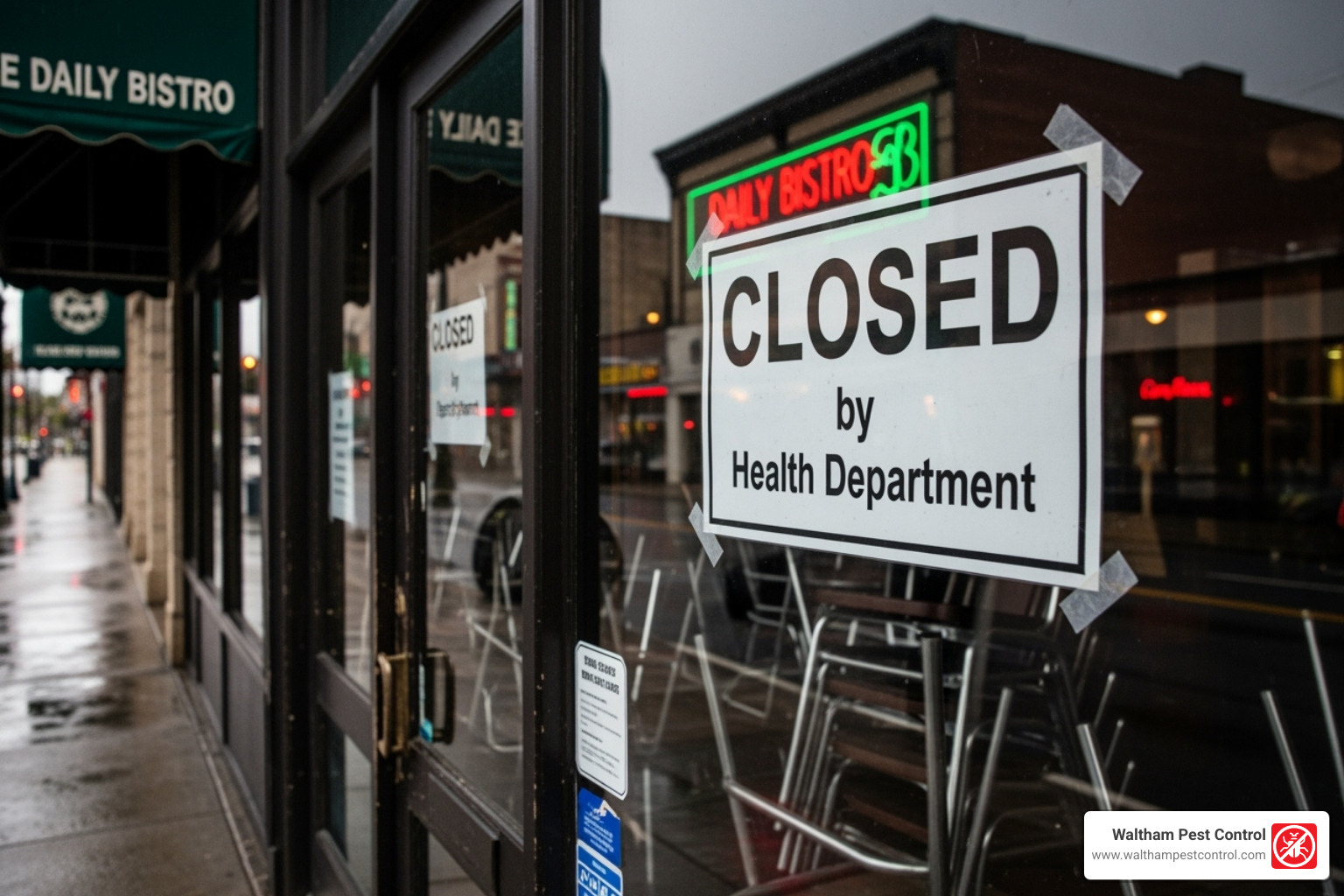
Professional commercial and residential pest control isn’t an optional expense—it’s insurance for everything you’ve worked to build.
Industries with Zero Tolerance for Pests
Some industries have zero tolerance for pests, making professional management essential.
- Food service and restaurants: Face strict health codes where a single sighting can lead to violations or closure.
- Healthcare facilities and hospitals: Must protect vulnerable patients from pest-borne diseases in sterile environments.
- Hotels and hospitality: Rely on reputation, which can be ruined by one review mentioning bed bugs or cockroaches.
- Property managers and apartments: Need to prevent pests from spreading between units, turning a small issue into a large one.
- Warehouses and logistics: Must protect valuable inventory from contamination and damage that can lead to failed audits.
- Schools and universities: Have a duty to provide a safe, pest-free environment for students and staff.
Other high-risk sectors include food processing facilities (FDA/HACCP/GFSI standards), retail stores, office buildings, and childcare centers. For these businesses, our commercial pest control services are a critical partnership that protects everything they’ve built. With over 40 years of experience, we understand what’s at stake, and we treat your business like we’d treat our own.
The Proactive Approach: Integrated Pest Management (IPM) & Technology
Great pest control is proactive, not reactive. At Waltham Pest Control, we don’t just show up when you have a problem; we work to prevent problems from happening in the first place. This proactive mindset is at the heart of modern commercial and residential pest control, relying on Integrated Pest Management (IPM) and cutting-edge technology to create sustainable, long-term solutions.
What is Integrated Pest Management (IPM)?
Integrated Pest Management is a science-based strategy focused on long-term prevention. Instead of relying solely on chemicals, our IPM program uses a multi-faceted approach:
- Inspection and Monitoring: We identify current pest activity, entry points, and conditions that attract pests, then track populations to catch problems early.
- Exclusion and Sanitation: We seal entry points and work with you to eliminate food, water, and shelter sources for pests.
- Targeted Treatment: When necessary, we use minimal, targeted chemical applications, prioritizing the least toxic options. The EPA highlights the advantages of IPM for its effectiveness and safety.
- Staff Education: We train your employees to be the first line of defense by spotting signs of pests and maintaining a clean environment.
This holistic process reduces pesticide use, minimizes environmental impact, and delivers lasting results.
The Commercial Pest Control Process
Our commercial process is custom to your specific industry and facility. It begins with an in-depth inspection to identify pests like the German cockroach and assess vulnerabilities. Based on this, we create a customized treatment plan that aligns with your industry’s regulations (e.g., FDA, USDA) and operational schedule. After implementation, we conduct continuous monitoring and evaluation through regular follow-up services. Detailed documentation is provided after every visit, ensuring you have the records needed for audits and health inspections.
The Role of Technology in Modern Pest Control
Technology has revolutionized commercial and residential pest control. We use tools that monitor pests 24/7 and alert us to problems before they escalate.
- Digital Monitoring Devices: Smart sensors and traps provide real-time data on pest activity, allowing for immediate, targeted responses instead of waiting for a scheduled visit.
- Online Reporting Portals: Our clients can use our online reporting portal to access service reports, track trends, and manage compliance documentation 24/7.
- Data Analysis: We analyze data from devices and reports to identify patterns and predict future pest pressures, allowing for proactive strategy adjustments.
Modern equipment, from precise application tools to advanced insect light traps, further improves our ability to manage pests effectively and discreetly.
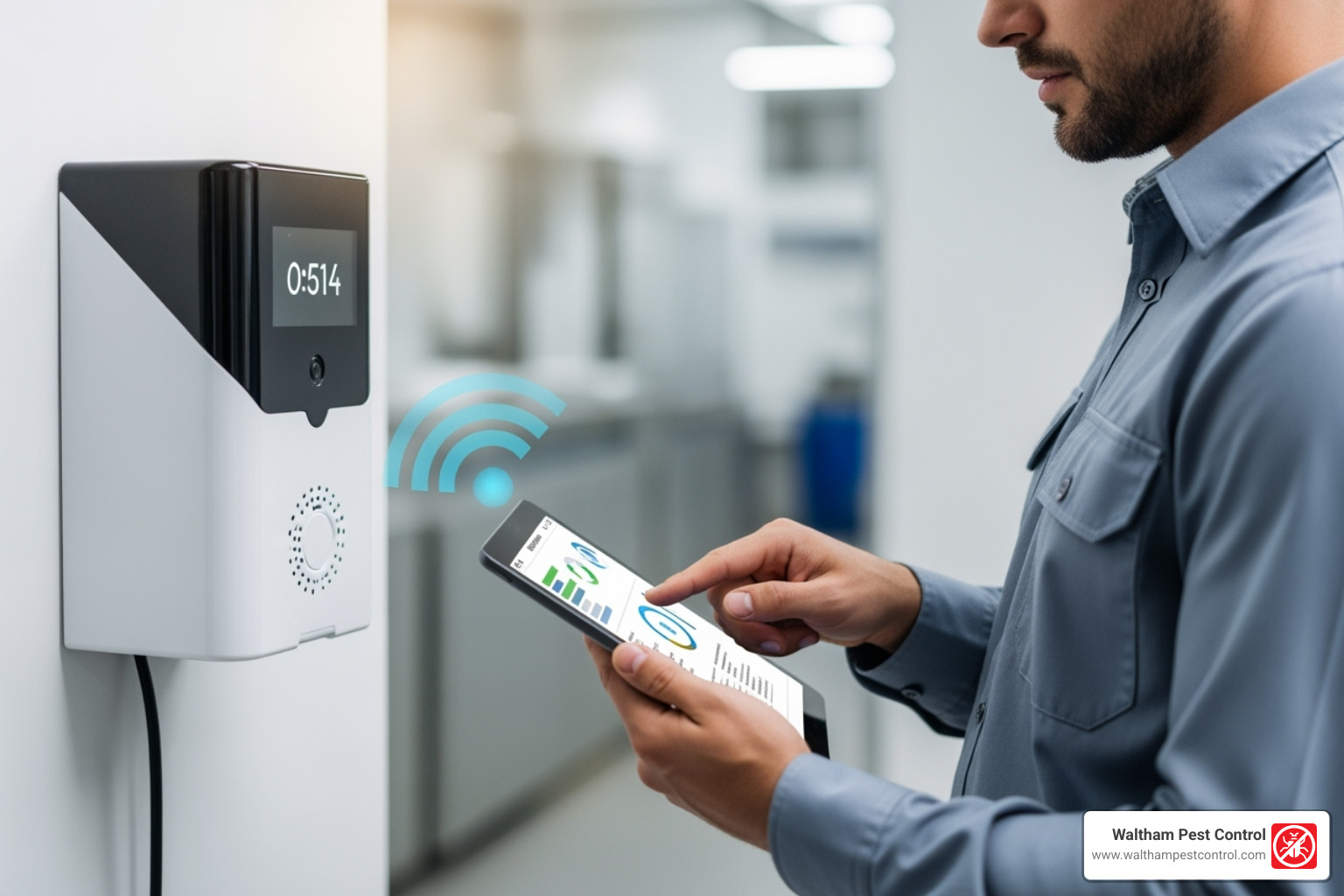
The combination of IPM principles and modern technology creates a powerful approach to pest management. It’s smarter, more sustainable, and more effective than traditional methods. For businesses in Eastern Massachusetts, this means better protection for your brand, your customers, and your bottom line.
How to Choose a Commercial and Residential Pest Control Provider
Finding the right pest control provider isn’t like picking a restaurant from a review site. Whether you’re protecting your family’s home or your business’s reputation, this is a partnership that requires trust, expertise, and a proven track record. At Waltham Pest Control, we know what distinguishes a reliable provider from one that’s just going through the motions.
Key Considerations for a Commercial and Residential Pest Control Provider
When choosing a provider, look for these key qualifications:
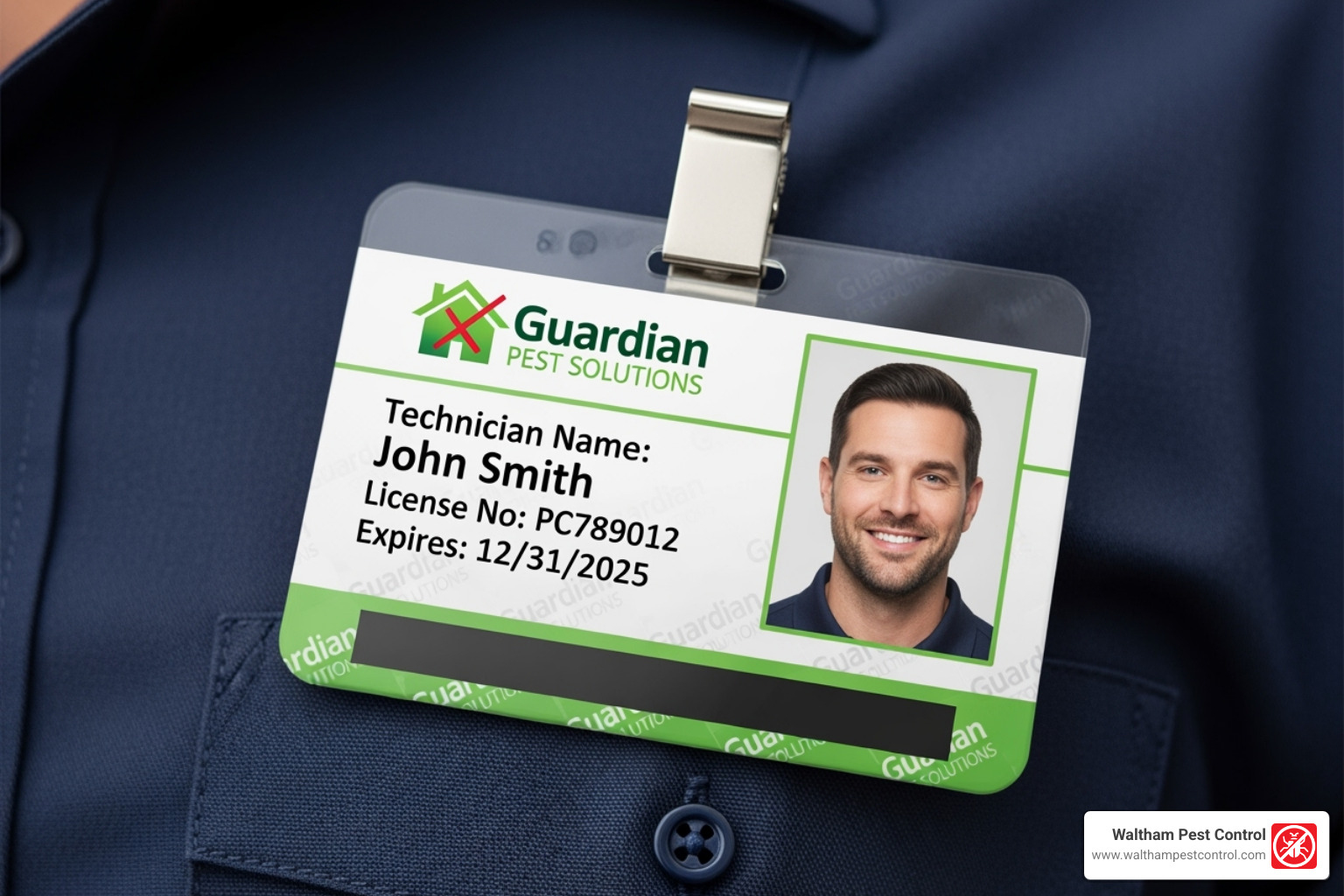
- Licensed and Insured: This is a non-negotiable that ensures accountability and protects you. We proudly meet these standards for our clients across Eastern Massachusetts.
- Industry-Specific Experience: A provider who understands the unique challenges of your industry—from restaurants to warehouses—can offer more effective solutions. Our 40+ years of experience covers a diverse range of commercial clients.
- Knowledge of Local Regulations: Your provider must be an expert on local and state health and environmental codes to ensure your business remains compliant.
- Commitment to IPM: A company that uses Integrated Pest Management (IPM) and offers Green Pest Control options focuses on sustainable, science-based solutions.
- Strong Reputation: Check customer reviews and ask for references, especially from businesses in your industry, to verify reliability and results.
Understanding Guarantees and Compliance for Commercial and Residential Pest Control
A reputable provider will stand behind their work with clear guarantees. Look for satisfaction guarantees that promise free re-service if pests return between treatments. For businesses, rapid response time promises are critical for urgent issues. Some commercial providers may even offer reimbursement guarantees for fines resulting from a pest infestation.
Finally, verify compliance and professionalism. Check for NPMA membership (National Pest Management Association) and Green Pro Certification, which signal adherence to industry best practices. Ensure the technicians servicing your property are highly trained and certified.
When you’re evaluating providers for your commercial and residential pest control needs, remember: you’re not just hiring a service, you’re choosing a partner. That partner should bring expertise, transparency, and a genuine commitment to protecting what matters most to you.
Frequently Asked Questions about Pest Management
We get a lot of questions from both homeowners and business owners about pest management. Here are some of the most common ones, with answers based on our 40+ years of experience.
How often is pest control needed for a business versus a home?
For businesses, service frequency is dictated by industry, risk, and regulations. A restaurant may need weekly service, while a high-risk facility like a food processing plant might require daily attention. An office building may only need monthly visits. The goal is to manage the constant risk of pest reintroduction from deliveries and foot traffic.
For homes, service is more flexible. Most homeowners opt for monthly, quarterly, or annual service based on specific pest pressures, like seasonal ant problems, or for general year-round prevention. Homes are more stable environments, so preventative treatments are often sufficient.
Are the chemicals used in commercial settings safe?
Absolutely. Safety is our top priority. All products we use are EPA-approved and applied by licensed technicians who strictly follow label instructions. For commercial properties, we schedule treatments during off-hours to ensure safety for employees and customers. We also emphasize low-toxicity options and IPM techniques that reduce or eliminate the need for chemicals. Our approach is strategic and science-based, prioritizing the safety of people, pets, and the environment while effectively managing pests.
How can a business’s staff help with pest prevention?
Your staff plays a crucial role in pest prevention. We can provide training to empower your team, but key practices include:
- Sanitation and Waste Management: Promptly cleaning spills and crumbs, and ensuring trash is in sealed containers and removed regularly.
- Immediate Reporting: Encouraging staff to report any pest sightings right away so we can address the issue before it grows.
- Exclusion Practices: Keeping doors and windows closed and inspecting incoming deliveries for hitchhiking pests.
When your team is a partner in prevention, your business is far better protected.
Conclusion
When it comes to pest control, there’s no universal solution that works for everyone. Commercial and residential pest control serve fundamentally different purposes, each requiring its own expertise, approach, and level of commitment.
For your home, pest control is about protecting your family’s health and maintaining the comfort of your personal space. It’s about having peace of mind knowing that your children can play safely and your pets can roam freely without encountering unwanted visitors.
For your business, pest control becomes something far more critical—it’s a strategic partnership that protects your brand reputation, ensures regulatory compliance, and safeguards your financial stability. A single pest sighting can trigger a cascade of consequences, from negative reviews to health department closures. That’s why professional commercial pest control isn’t an optional expense—it’s an essential investment in your business’s future.
The most effective approach, whether for homes or businesses, is proactive rather than reactive. Integrated Pest Management (IPM) combined with modern technology creates sustainable, long-term solutions that prevent problems before they start. This means fewer pests, less chemical use, and better results for everyone involved.
Choosing the right pest control provider matters tremendously. You need a partner who understands your specific needs, whether that’s protecting your family’s sanctuary or maintaining your business’s impeccable reputation. Look for licensed and insured professionals with proven industry experience, a commitment to transparent communication, and guaranteed results you can count on.
At Waltham Pest Control, we’ve spent over 40 years earning the trust of families and businesses throughout Eastern Massachusetts. From Burlington to Acton, from Andover to Woburn, we bring the same dedication to quality and commitment to every single job. Our licensed and insured solutions are customized to meet your unique challenges, whether you’re dealing with termites threatening your home’s foundation or maintaining a spotless reputation for your restaurant.
Ready to experience the difference that true expertise makes? Explore our comprehensive Commercial Pest Control solutions designed for businesses that can’t afford to take risks, or find how our dedicated Residential Pest Control services can protect what matters most—your home and family.
