

What happens when an exterminator comes for bed bugs 2025: Solved
Why Understanding the Bed Bug Extermination Process Matters
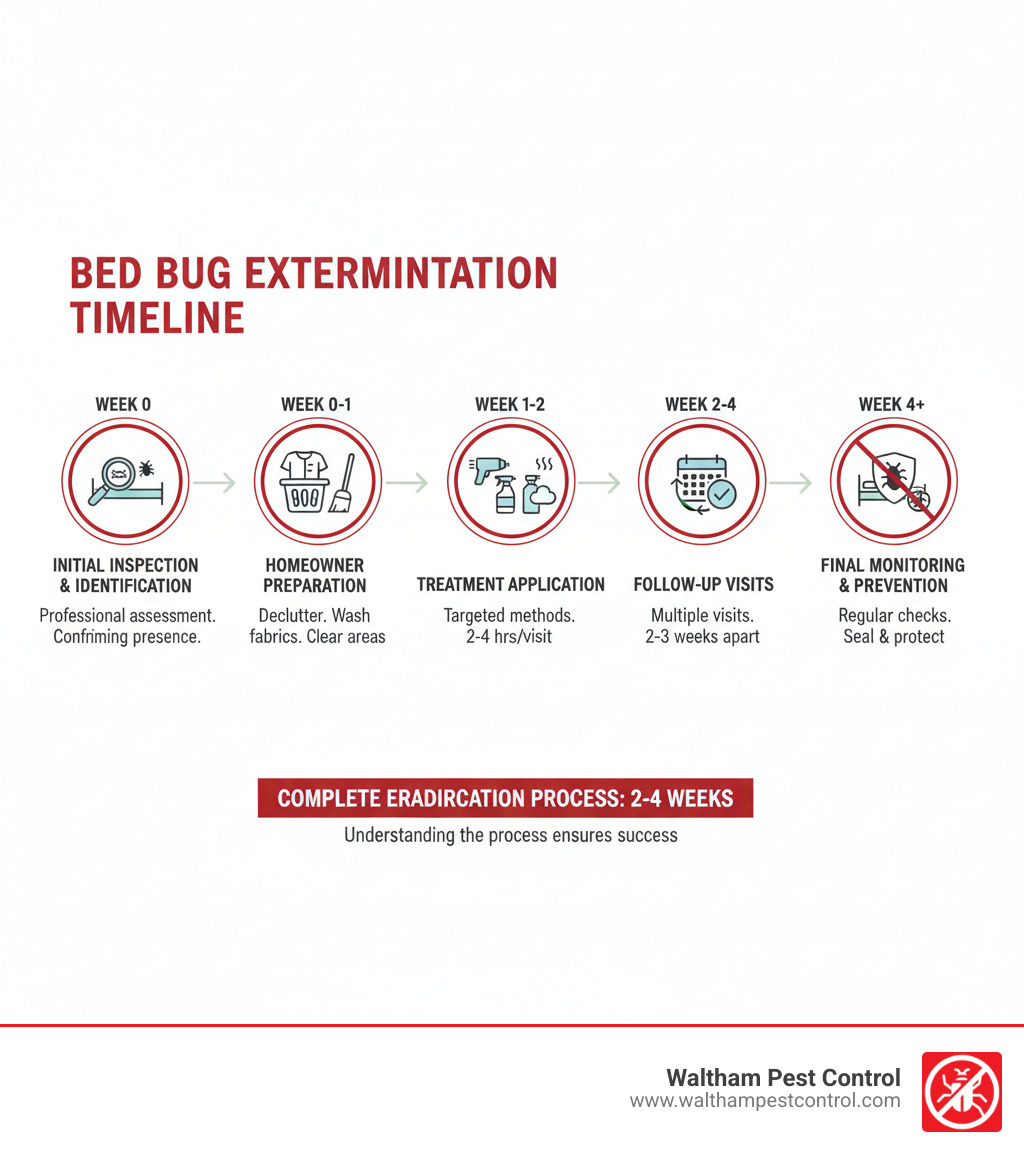
For Massachusetts homeowners, knowing what happens when an exterminator comes for bed bugs is crucial. Here’s a quick overview:
The Bed Bug Extermination Process:
- Inspection – Professional assessment of infestation severity and hiding spots
- Preparation – Homeowner declutters, washes fabrics, and prepares the treatment area
- Treatment – Exterminator applies heat, chemicals, or steam targeting all life stages (2-4 hours per visit)
- Follow-Up – Multiple visits scheduled 2-3 weeks apart to eliminate newly hatched bugs
- Monitoring – Regular inspections to confirm complete eradication
Bed bugs can turn a peaceful night’s sleep into a nightmare of bites and anxiety. About 30% of people don’t react to bed bug bites, meaning infestations can grow unnoticed for months while the population explodes.
Bed bugs are notoriously difficult to eliminate due to their hiding skills, resilient eggs, and resistance to common insecticides. This is why professional pest control is essential for any confirmed infestation.
The full process takes 2 to 4 weeks, involving multiple treatments and homeowner preparation. Understanding what’s involved ensures the treatment is effective the first time.
I’m Waltham Pest Control, President & CEO of Waltham Pest Control. With over 40 years of experience in Eastern Massachusetts, I know that proper preparation is key to success. Here’s what to expect during each stage of professional bed bug treatment.
What happens when an exterminator comes for bed bugs vocab to learn:
- bed bug extermination cost
- bed bug heat treatment
- how to find bed bugs
The First Step: Spotting the Signs and Scheduling an Inspection
Recognizing you have a bed bug problem is the first step, and it often starts with unexplained itching. Bed bug bites are usually the first clue. Look for small, red welts, often in a distinctive zig-zag pattern, on skin exposed during sleep. However, since about 30% of people don’t react to bed bug bites at all, an infestation can grow unnoticed.
Beyond unexplained itching, other warning signs include tiny dark fecal stains on bedding, blood spots on sheets from crushed bugs, translucent shed skins, and a musty odor in severe cases.
Adult bed bugs themselves are visible, resembling a flat, reddish-brown apple seed. Nymphs are smaller and yellowish, while eggs are tiny, pearl-white specks. You can learn more from the EPA’s guide on bed bugs’ appearance and life cycle.
Bed bugs are expert hitchhiking pests. They don’t fly or jump but cling to luggage, clothing, or secondhand furniture to travel. An infestation is not a sign of poor hygiene; they can infest any home. If you see these signs, contact a professional immediately. Waltham Pest Control offers thorough inspections to confirm the presence of bed bugs and assess the extent of the problem.
How Professionals Identify and Assess an Infestation
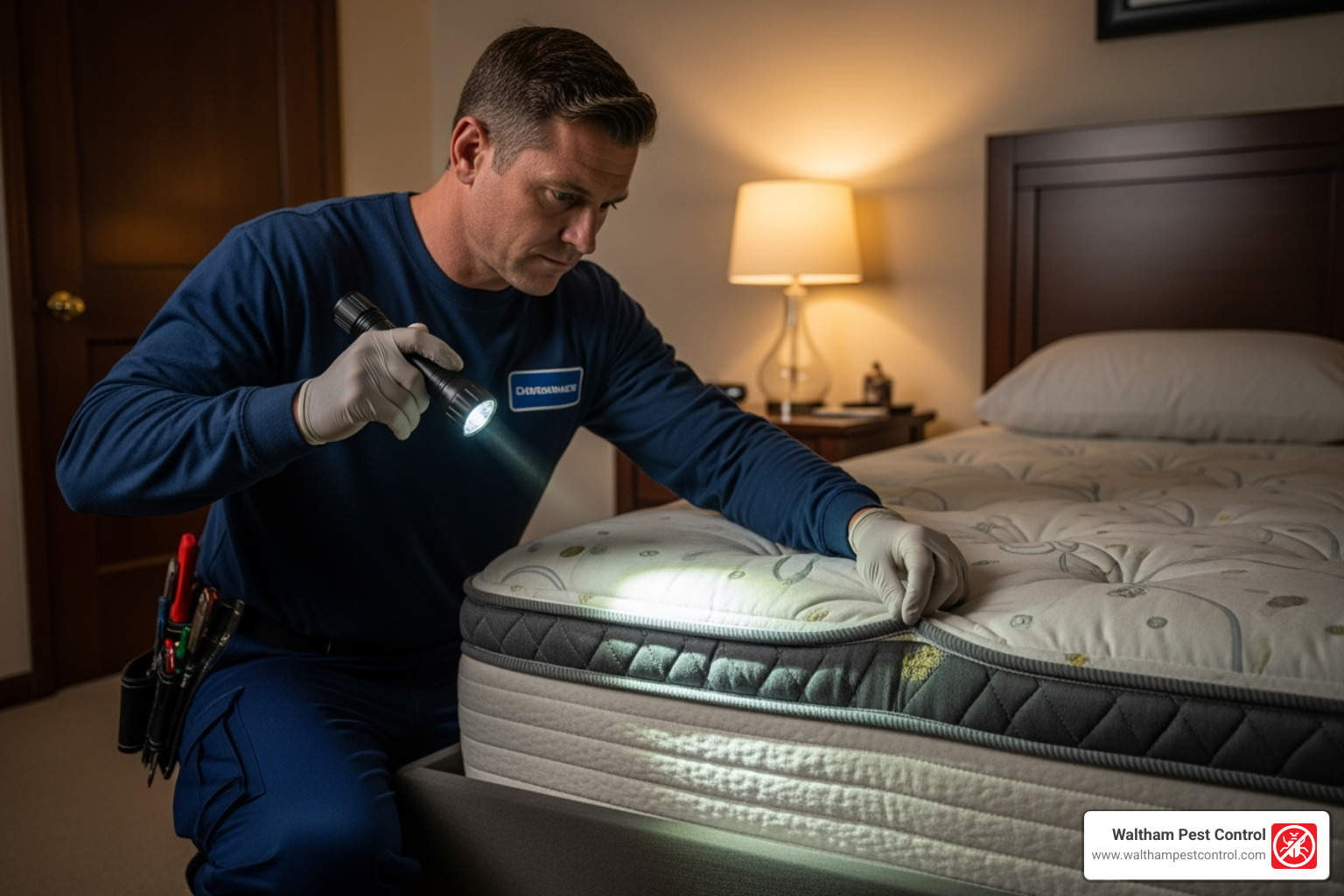
A professional inspection is a critical first step to create a customized, effective treatment plan. Our technicians perform a meticulous visual inspection of all potential hiding spots. This includes mattress seams, box springs, headboards, bed frames, and nearby furniture cracks. We check baseboards, wall joints, behind electrical outlets, and under loose wallpaper, as bed bugs can fit into gaps thinner than a credit card.
Using bright flashlights, we look for live bed bugs, eggs, shed skins, and fecal spots. For challenging cases, canine inspection offers high K9 detection accuracy (90-96%), finding bugs in hard-to-reach areas.
We assess the infestation’s severity (low vs. high infestation) to determine the treatment timeline. A low-level infestation may need two to three visits, while a severe one could require four or more. Clutter provides more hiding spots and can extend the process.
Based on our findings, we create a customized treatment plan for your specific situation, as cookie-cutter approaches are less effective. Learn more about our pest inspection services.
Preparing for Battle: A Homeowner’s Pre-Treatment Checklist
The success of what happens when an exterminator comes for bed bugs depends heavily on your preparation. A cluttered room gives bed bugs countless hiding spots that treatments can’t reach, while a prepared home allows us to target every pest.
- Declutter and Clear Access: First, remove everything from floors, closets, and off furniture surfaces. This gives our technicians clear access to treat baseboards, furniture, and wall edges.
- Wash and Dry Fabrics: Launder all bed linens, curtains, and clothing in hot water (at least 140°F). The dryer is your most important tool: run everything on the hottest setting for at least 30 minutes to kill all life stages, including eggs. Immediately seal clean items in new plastic bags.
- Vacuum Thoroughly: Vacuum all floors, carpets, rugs, and upholstered furniture, focusing on seams and baseboards. Immediately dispose of the vacuum bag or canister contents in a sealed bag outdoors.
- Move Furniture: Move all furniture at least 18 inches away from walls. Remove electrical outlet covers and switch plates, as bed bugs often hide behind them.
- Ensure Safety: For safety, all people and pets must leave during treatment and stay out for the specified time (usually about 4 hours). Cover fish tanks, as fish are sensitive to pesticides.
- Isolate Belongings: Keep all cleaned and bagged items isolated until the infestation is confirmed to be completely eradicated to prevent re-infestation.
This preparation takes effort, but it is the single most important factor in achieving fast, effective results and can reduce the number of treatments needed.
What Happens When an Exterminator Comes for Bed Bugs: The Treatment Process
On treatment day, our technicians arrive to begin a systematic process to eliminate bed bugs from your home. We use an Integrated Pest Management (IPM) approach, combining multiple methods for the most effective results, custom to the severity of your infestation.
A typical treatment takes 2-4 hours per visit. Complete eradication is not a one-visit job; it usually takes several weeks to a few months. Multiple visits are necessary because bed bug eggs are resistant to many treatments and can hatch after the initial service. Follow-up treatments target these newly hatched nymphs before they can reproduce, which is key to complete eradication.
Our Bed Bug Treatment process is refined from over 40 years of experience.
Common Professional Treatment Methods
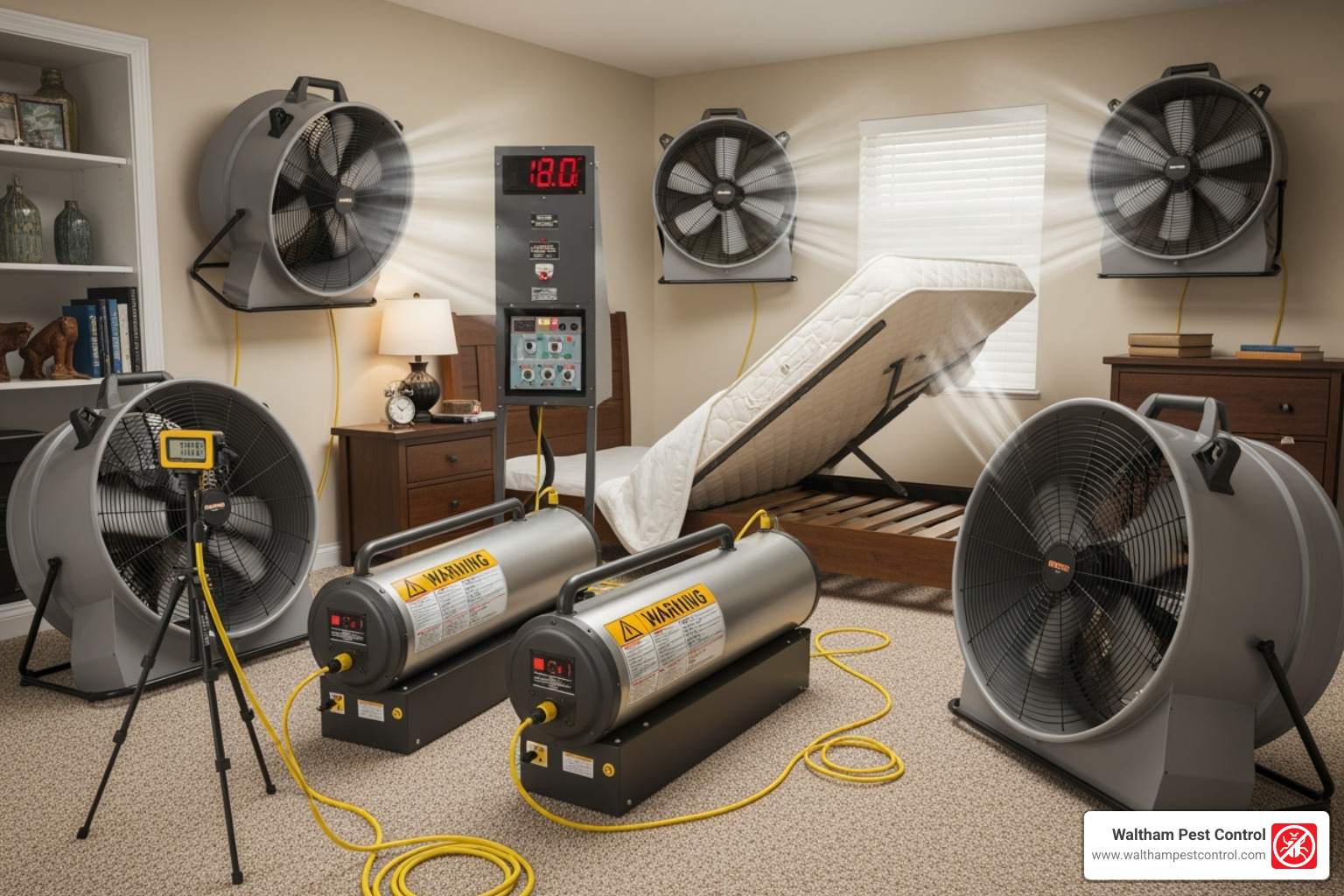
We select from several professional tools, often in combination, for maximum effect.
- Heat Treatment (Thermal Remediation) is a powerful method where we raise room temperatures to 135°F-145°F. This lethal heat penetrates furniture and walls to kill bed bugs at all life stages, often in a single session. It’s highly effective for severe infestations.
- Chemical Treatments use a strategic combination of products. We use contact killers for immediate results, residual insecticides for lasting protection, and dusts for cracks, crevices, and wall voids that sprays can’t reach.
- Steam Treatment uses high-temperature steam (over 212°F) to kill bugs and eggs on contact. It’s ideal for sensitive areas like mattresses, furniture, and children’s rooms.
- Cryonite Treatment uses carbon dioxide snow to freeze bed bugs instantly. It’s a non-toxic option for electronics and other sensitive items.
The On-Site Procedure: What to Expect During the Visit
Upon arrival, our technician will review your prep work and ask about recent sightings. Our technicians then begin the detailed treatment process, targeting all known bed bug hiding spots.
We treat baseboards, bed frames, headboards, and nightstands. Furniture is often partially disassembled to reach hidden colonies. Dressers, drawers, and upholstered furniture like couches are also treated, as bed bugs are not confined to bedrooms. We also apply products into and around electrical outlets and switch plates.
Safety is paramount. We use only EPA-approved products and follow strict application protocols. Our technicians will explain the process and answer any questions to ensure you feel confident and informed.
The Aftermath: Post-Treatment Care and Long-Term Prevention
Post-treatment care is just as crucial as the treatment itself for ensuring complete eradication. Your technician will specify when it’s safe to re-enter, typically after a few hours. Upon returning, ventilate your home by opening windows to clear any lingering, temporary odors.
It’s normal to see some disoriented bed bugs for a few days post-treatment as they are flushed from their hiding spots. Avoid touching treated surfaces until they are completely dry.
Bed bug eggs are highly resistant to chemicals and may hatch after the initial service. This is why follow-up visits, scheduled 2-3 weeks apart, are essential to target newly hatched nymphs and break the life cycle. Waltham Pest Control guarantees its work; if bed bugs return within the guarantee period, we will re-treat at no extra charge.
Monitoring for Survivors: What Happens After an Exterminator Comes for Bed Bugs
In the weeks following treatment, remain vigilant. Continue to inspect for any signs of activity, such as bites, fecal spots, or live bugs. Place interceptor traps under bed legs. These devices trap bugs trying to climb onto the bed and are an excellent way to monitor for activity. Empty traps for two weeks is a strong sign of success.
If you see live bugs or new signs of activity after the scheduled follow-up period, call us immediately. Our service includes follow-up inspections and a guarantee. For more detailed guidance, check out our article on Bed Bug Prevention and Detection: Keeping Your Summer Travels Bug-Free.
Long-Term Prevention Strategies
Once the infestation is gone, take these steps to prevent their return.
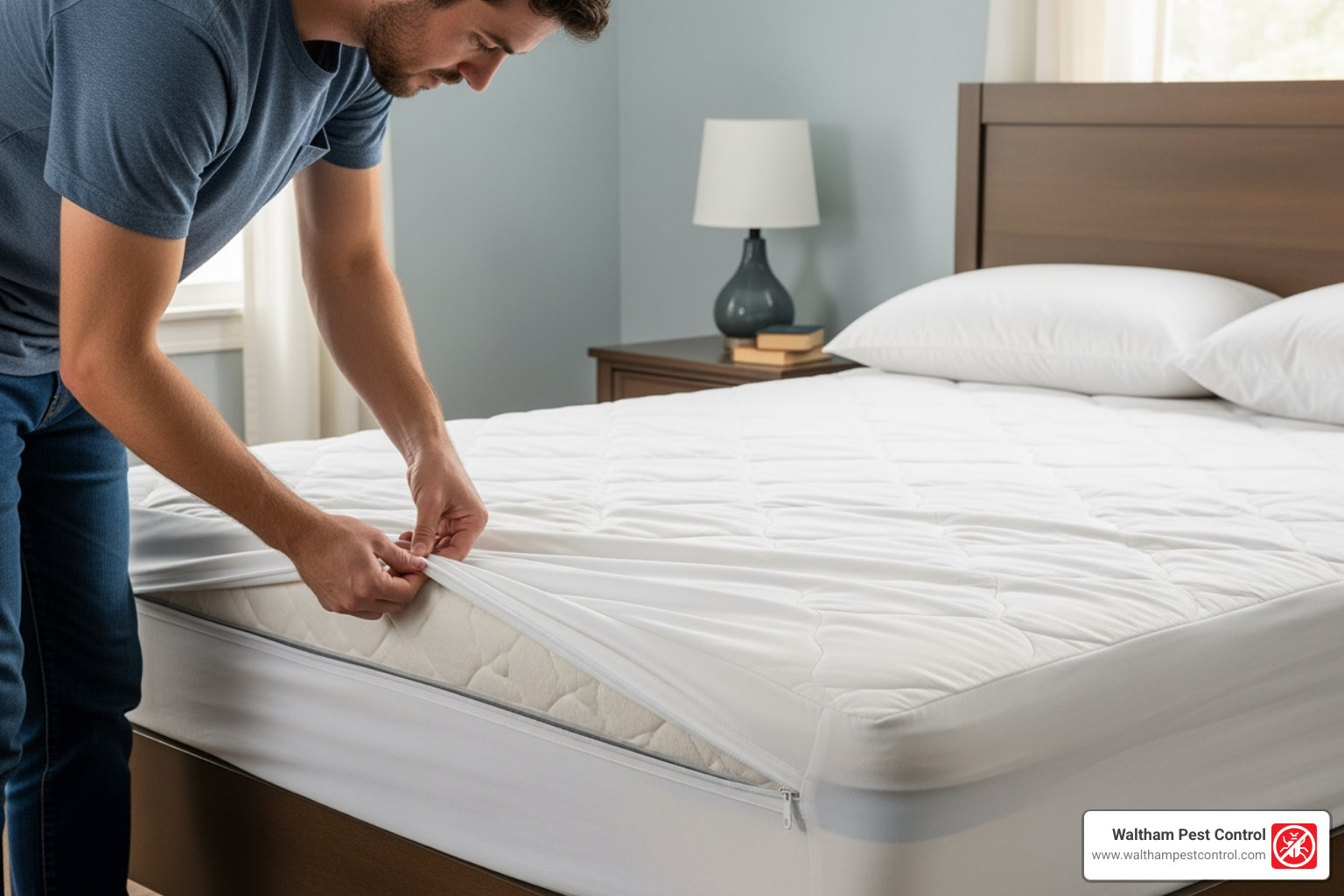
- Use mattress and box spring encasements to trap any remaining bugs and prevent new ones from infesting your bedding.
- Reduce clutter, especially in bedrooms, to eliminate potential hiding spots.
- Seal cracks and crevices in baseboards, walls, and around trim to remove hiding places.
- Inspect all secondhand furniture carefully before bringing it into your home.
- Be cautious when traveling. Inspect hotel rooms, keep luggage off the floor, and immediately wash and dry all travel clothes on high heat when you return home.
Being mindful of these practices dramatically reduces your risk. For additional tips, the EPA offers guidance on How to find bed bugs.
Understanding the Investment: Costs and Considerations
The cost of bed bug extermination is a significant consideration, but it’s an investment in your property and peace of mind. The true cost of an infestation includes replacing furniture, laundering belongings, and the significant psychological toll of stress and sleepless nights.
DIY attempts, while seemingly cheaper, often fail. Many store-bought products merely scatter the pests, making the infestation worse and ultimately more expensive to treat professionally. Several factors influence the professional treatment cost: infestation severity, home size, the chosen treatment method (e.g., heat vs. chemical), and the level of clutter.
| Feature | Professional Treatment | DIY Attempts |
|---|---|---|
| Effectiveness | High, targets all life stages, addresses hidden areas | Limited, often only kills surface bugs, can scatter pests |
| Time Commitment | Exterminator handles application, homeowner preps | Significant homeowner time for application and prep |
| Cost (Initial) | Higher | Lower |
| Cost (Overall) | Often lower due to effective, lasting results | Can be higher due to repeat failures and spread |
| Expertise | Professional knowledge, specialized tools | Limited, relies on general product instructions |
| Safety | Controlled application of professional-grade products | Risk of improper use of pesticides, exposure |
| Guarantees | Often includes warranties and follow-ups | None |
| Peace of Mind | High | Low, persistent anxiety |
How Much Does Professional Bed Bug Extermination Typically Cost?
Please note: The following figures are general industry averages based on internet data and are not a quote from Waltham Pest Control. We provide a transparent, customized estimate after a thorough inspection of your property.
- Inspection fees can range from free to over $600 for specialized canine services.
- Per-room treatment can range from $250 to over $900, while whole-home treatment can cost from $1,000 to $10,000+, depending on the home’s size and infestation level.
- Heat treatment is often more expensive upfront (e.g., $2,000-$6,000+) than a chemical treatment program ($1,000-$5,000+), but may resolve the issue faster.
At Waltham Pest Control, we provide honest, cost-effective solutions that include a warranty. This guarantee to re-treat if bed bugs return provides invaluable protection and peace of mind. After our inspection, we’ll give you a clear plan and a firm price with no hidden fees.
Frequently Asked Questions about Bed Bug Extermination
Here are answers to the most common questions about what happens when an exterminator comes for bed bugs.
Is one bed bug treatment enough?
Typically, no. While the first treatment kills most active bugs, it may not eliminate all the eggs, which are highly resistant. Follow-up treatments, usually scheduled 2-3 weeks apart, are crucial to target newly hatched nymphs and break the reproductive cycle. A complete plan often involves 2-4 treatments.
Can bed bugs become resistant to treatments?
Yes, chemical resistance is a documented problem. This is why DIY sprays often fail. Professionals use an Integrated Pest Management (IPM) strategy, combining different chemical classes with non-chemical methods like heat and steam to overcome resistance and ensure effective elimination.
How long after treatment can I put my things back?
Always follow your technician’s specific instructions. Generally, you can re-enter the home after treated surfaces are dry (a few hours). However, it is critical to wait to unpack your bagged clothing and other items until after the final follow-up visit confirms complete eradication. Unpacking too soon risks re-infesting your clean belongings and undoing all your hard work.
Conclusion: Reclaiming Your Home from Bed Bugs
Understanding what happens when an exterminator comes for bed bugs—from inspection to follow-up—demystifies the process and puts you in control.
Bed bugs are too resilient for most DIY attempts to be effective. Their hiding ability, resistance, and tough eggs make professional intervention necessary. Professional exterminators provide the expertise and specialized tools to eliminate the entire population and prevent a recurrence.
For over 40 years, Waltham Pest Control has protected Eastern Massachusetts homes. Our licensed and insured team brings decades of experience to deliver effective, lasting solutions. The peace of mind from a bug-free home is priceless, and we are here to help you achieve it.
If you suspect you have bed bugs, don’t wait. Early action leads to faster, less costly results. Contact us for a comprehensive bed bug treatment plan today and let us help you reclaim your home.
Your good night’s sleep is waiting. We’re here to help you get it back.
