

Bees pest control near me: #1 Expert Help.
That Buzzing is a Little Too Close for Comfort
Searches for bees pest control near me spike during warm months as stinging insects become active around Massachusetts homes. When that buzzing gets too close, it’s a serious safety concern.
Quick Action Steps:
- Don’t disturb the nest – This can trigger an aggressive swarm.
- Identify the species – Bees, wasps, and hornets require different approaches.
- Call professionals immediately for large nests, aggressive behavior, or if you have allergies.
- Avoid DIY sprays – These often make the problem more dangerous.
While some bees are beneficial pollinators, they become a problem when building colonies in wall voids, under eaves, or near doorways. The line between helpful and harmful isn’t always clear. Honey bees should be relocated, but carpenter bees cause structural damage, while yellow jackets and hornets pose immediate threats with aggressive stings that can trigger severe allergic reactions.
Professional intervention is essential when nests are in high-traffic areas, you see wood damage, or aggressive insects threaten your family or customers.
I’m Waltham Pest Control, and with over 40 years in pest control across Eastern Massachusetts, I’ve seen these situations escalate. My team at Waltham Pest Control has safely resolved thousands of stinging insect problems, from simple wasp nest removals to complex carpenter bee infestations.
Bees pest control near me terms to learn:
- carpenter bees treatment and prevention
- home treatment for carpenter bees
- how to deter carpenter bees
Identifying Your Unwanted Guests: Bees, Wasps, or Hornets?
Knowing which stinging insect you’re facing is key to handling the situation safely. While some bees should be protected, aggressive wasps and hornets require immediate action for your family’s safety.
Bees: The Pollinators
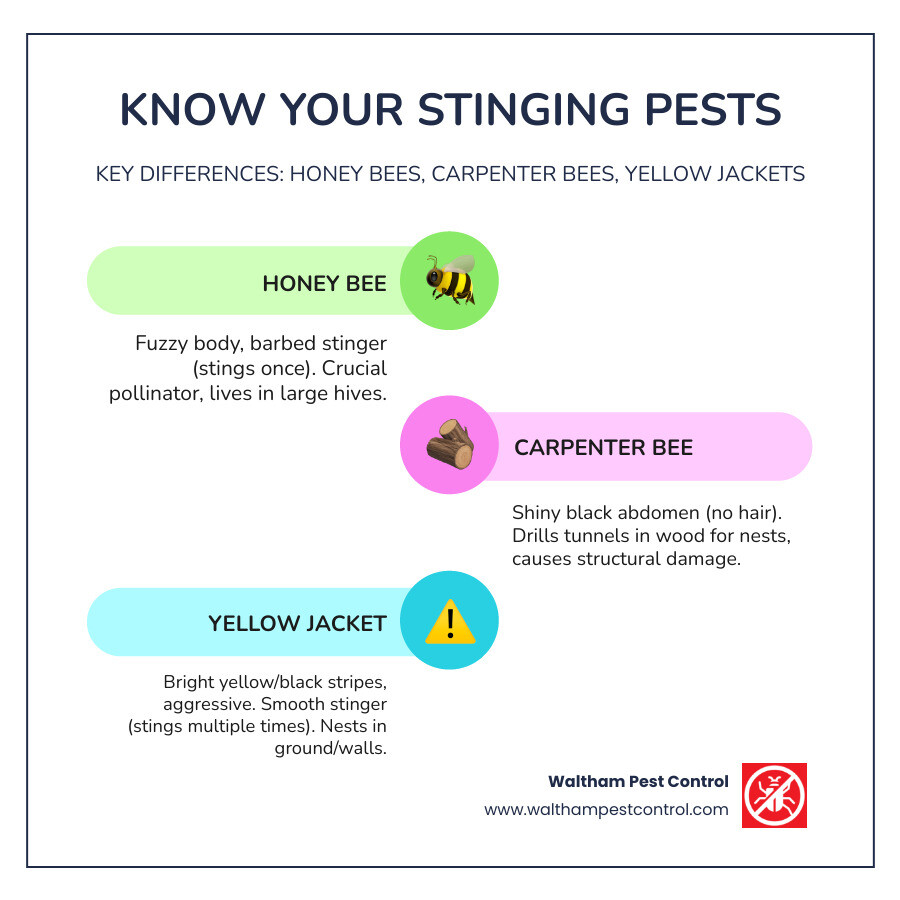
- Honey Bees: Fuzzy, golden-brown with black stripes. They live in large colonies with wax comb nests inside tree cavities or wall voids. They are vital pollinators and typically die after stinging once.
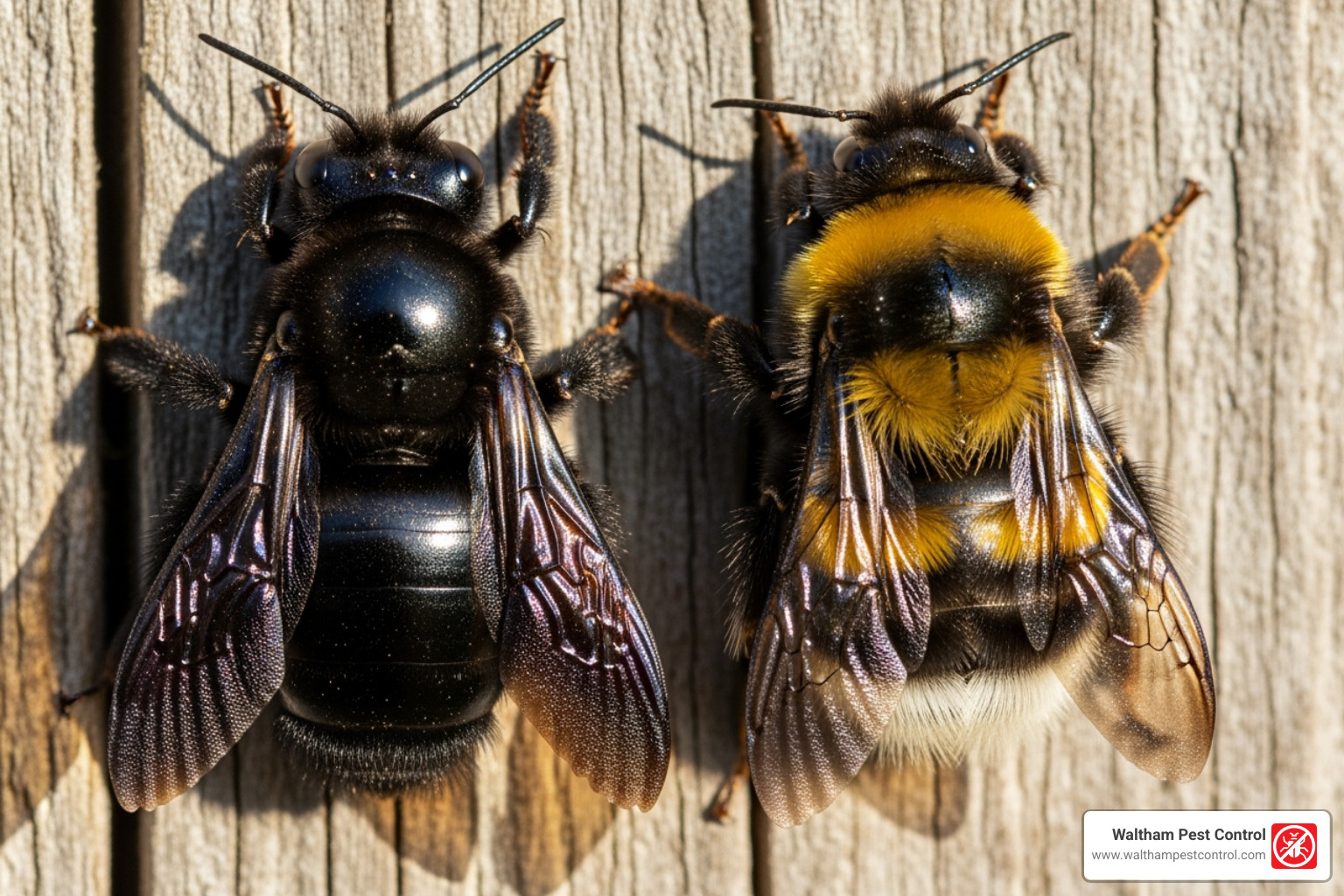
- Bumblebees: Large, very fuzzy, and docile pollinators. They nest underground and can sting multiple times but rarely do unless their nest is disturbed.
- Carpenter Bees: Resemble bumblebees but have a shiny, hairless black abdomen. They bore perfectly round, half-inch holes in wood (decks, eaves, fascia boards), causing structural damage over time.
Wasps: The Aggressive Cousins
- Yellow Jackets: The primary reason for bees pest control near me calls. They have bright yellow and black stripes, are highly aggressive, and build paper nests in hidden locations like underground burrows or wall voids. They are attracted to human food and can sting repeatedly.
- Paper Wasps: Slender, with reddish-brown or dark bodies. They build open, umbrella-shaped paper nests under eaves and porch ceilings and will defend them if threatened.
- Mud Daubers: Solitary, non-aggressive wasps that build mud tube nests in sheltered spots. They hunt spiders and rarely bother humans.
Hornets: The Intimidating Giants
- Bald-faced Hornets: Large, with black bodies and white facial markings. They build massive, football-shaped paper nests in trees or on buildings and are extremely territorial, known to chase threats for long distances.
- European Hornets: Large, reddish-brown and yellow hornets that are uniquely active at night and attracted to lights. They nest in hollow trees, attics, or wall voids.
| Feature | Bees (Honey Bee) | Wasps (Yellow Jacket) | Hornets (Bald-faced Hornet) |
|---|---|---|---|
| Appearance | Fuzzy, rounded body, black and yellow/brown | Sleek, defined waist, bright yellow/black stripes | Large, stout body, black with white markings |
| Aggressiveness | Docile, dies after single sting | Aggressive, multiple stings | Very aggressive, multiple stings, will chase threats |
| Nest Type | Wax combs in protected cavities | Paper nests (underground, walls, bushes) | Large football-shaped paper nests in trees/buildings |
| Diet | Nectar and pollen | Insects, sugary foods, proteins | Large insects, tree sap, sweet substances |
Common Stinging Pests in Massachusetts
In our four decades serving Eastern Massachusetts, a few species consistently cause problems. Eastern Yellow Jackets are the top offender, with hidden nests in yards from Burlington to Lexington, leading to most stinging incidents. The feared Bald-faced Hornets build large, gray paper nests on homes and in trees across Peabody and Concord, aggressively defending their territory. We also see European Hornets active at night around porch lights in towns like Acton and Sudbury. Carpenter Bees cause significant property damage to untreated wood on homes throughout Wellesley and Newton, while Paper Wasps build their umbrella-shaped nests under eaves from Arlington to Winchester. Finally, the large but docile Cicada Killer Wasps appear in late summer, burrowing in lawns across the region.
Signs of a Bee, Wasp, or Hornet Infestation
Recognizing an infestation early can prevent a dangerous situation. Look for these signs:
- Visible nests: Paper nests hanging from eaves, round holes in wood, or insects entering a hole in the ground.
- Unusual insect traffic: A steady stream of insects flying to and from a specific spot, like a crack in a wall or a vent, signals a hidden nest.
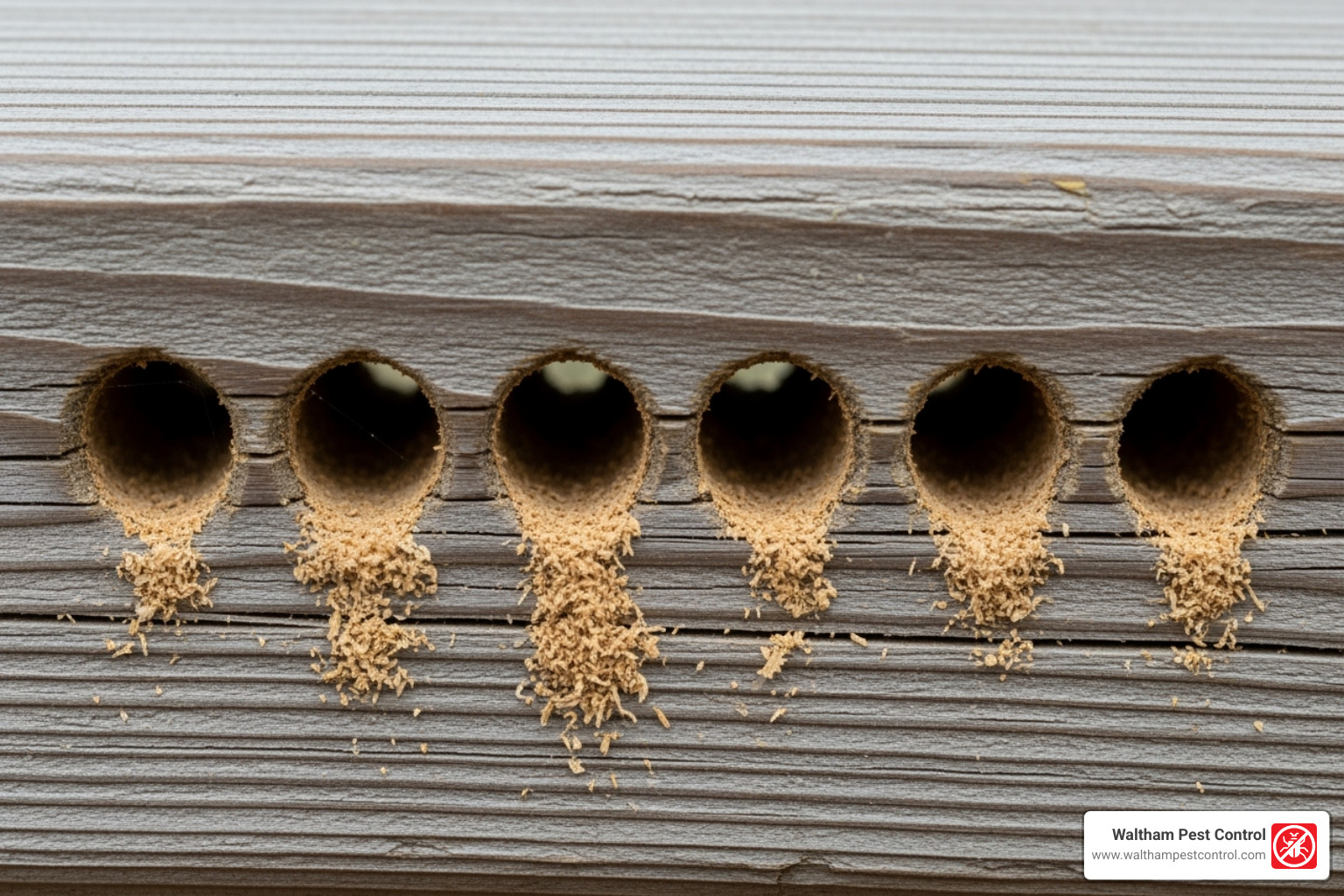
- Wood damage: Perfectly circular holes in wood with sawdust-like frass below are a clear sign of carpenter bees.
- Buzzing sounds within walls: This indicates a colony has moved into your home’s structure.
If you see these signs, especially aggressive behavior, it’s time to contact professionals. Our team has extensive experience with Hornet and Wasps Nest Removal and can safely resolve the issue.
The Dangers of Delay: Risks of a Stinging Insect Infestation
Waiting to see if a stinging insect problem goes away on its own is a risky gamble that almost always makes things worse.
Health risks escalate as colonies grow. A single sting can trigger anaphylaxis, a life-threatening allergic reaction, in susceptible individuals. Even for those without allergies, disturbing a nest can lead to dozens of painful stings requiring emergency medical care.
Property damage accumulates silently. Carpenter bees drill tunnels into your home’s wooden structures, causing damage that can cost thousands to repair. The sawdust they produce also attracts woodpeckers, leading to further destruction. Learn more about Structural damage from carpenter bees. A honey bee hive inside a wall is also problematic; fermenting honey can stain walls, attract other pests like ants and cockroaches, and lead to mold.
As the season progresses, colony growth makes removal more dangerous and expensive. A small nest in May can become a massive colony of aggressive defenders by August.
When to Search for “Bees Pest Control Near Me”
Some situations demand immediate professional help. Don’t try home remedies or wait for cooler weather if you notice:
- Large or hidden nests: Any nest larger than a softball or insects entering wall voids, attics, or the ground requires an expert. Disturbing these can release hundreds of angry insects.
- Aggressive behavior: If yellow jackets or hornets follow you or seem to attack without provocation, the colony is highly defensive and dangerous.
- Nests near high-traffic areas: A nest above a door or along a walkway is a ticking time bomb and a potential liability.
- Known allergies in the household: The risk of anaphylactic shock makes professional removal non-negotiable.
- Signs of structural damage: Carpenter bee activity worsens quickly and requires expert intervention to prevent further damage.
If you’re searching for “bees pest control near me,” you’re already past the point where delay is wise. Understand The Dangers of Removing Hornet and Wasp Nests Without Professional Help to see why DIY attempts often backfire.
Understanding the Professional Process for Bees Pest Control Near Me
When you call experts for bees pest control near me, you’re choosing a safe, efficient, and thorough solution. At Waltham Pest Control, our process is designed to solve the problem quickly with minimal disruption.
What to Expect from a “Bees Pest Control Near Me” Service
Here’s a breakdown of our professional process:
- Initial Consultation: We start with your call, gathering key information about what you’ve seen and where the nest is located.
- Thorough Property Inspection: A licensed technician inspects your property to locate all nests, identify the species, and assess the extent of the infestation.
- Customized Treatment Plan: We develop a specific plan for your situation. This may involve direct treatment, baits, or sealing entry points. For honey bees, we explore relocation with local beekeepers whenever possible. For aggressive species, extermination is often the safest route. We consider Natural and Eco-Friendly Methods for Hornet and Wasp Nest Removal when appropriate.
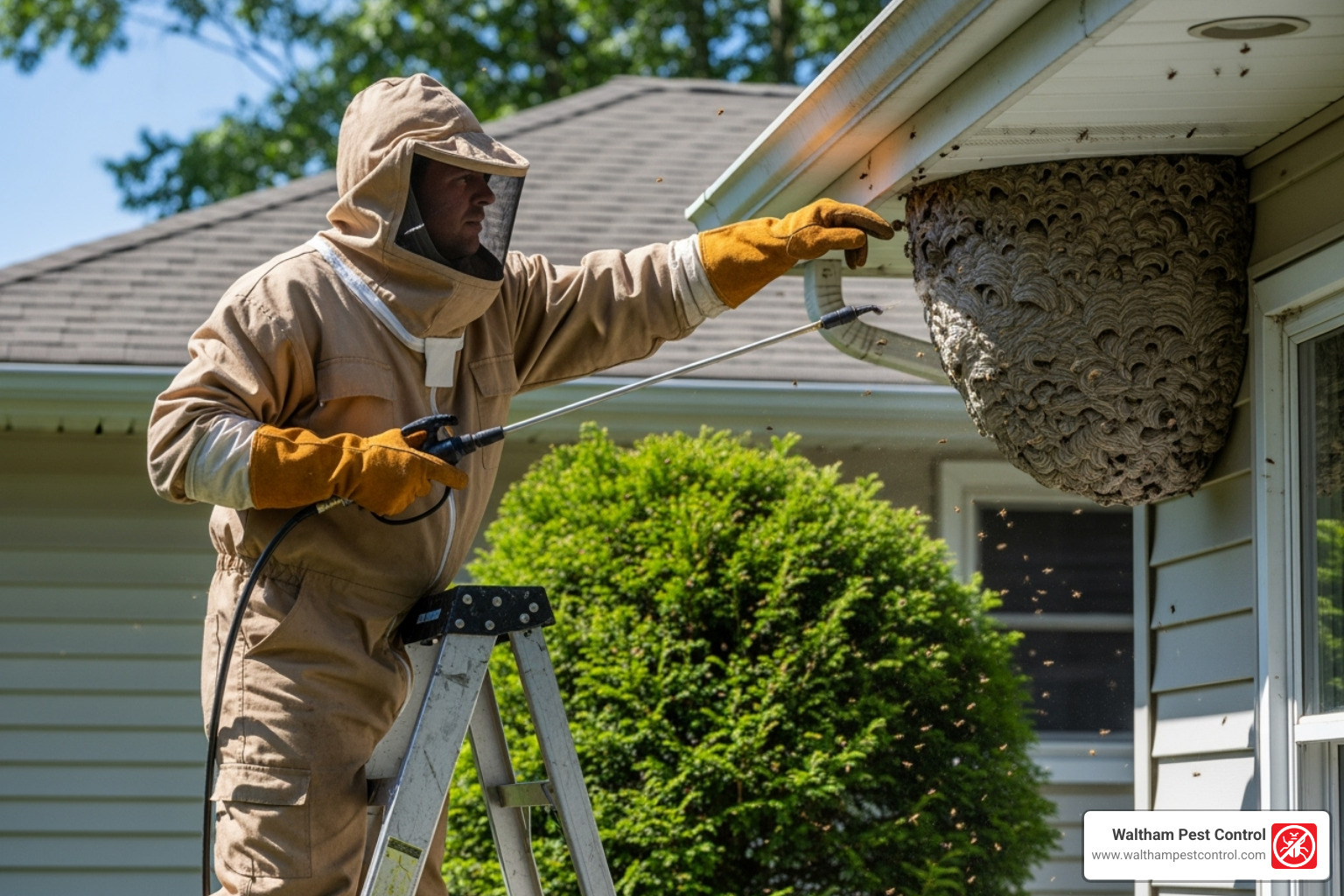
- Protective Gear and Safe Nest Removal: Our technicians use full protective suits and specialized equipment to safely treat and remove active nests, including those hidden in difficult-to-reach areas like wall voids.
- Post-Treatment Cleanup: We remove visible nest debris where possible and provide you with follow-up recommendations.
- Guarantees and Warranties: We stand by our work. If the problem returns within the warranty period, we’ll come back at no extra charge.
How Much Does Professional Bee and Wasp Control Cost?
Understanding the cost is an important step. While we can’t provide exact pricing for Waltham Pest Control without an assessment, we can share general figures based on internet data. These are average costs and not our actual prices.
On average, professional stinging insect control might be around $175, but the cost can vary widely, typically ranging from $100 to over $750. For complex infestations, it could exceed $2,000.
Several factors influence the final price:
- Infestation Size: A small, new nest is cheaper to handle than a large, mature colony.
- Nest Location: Easily accessible nests are less expensive to treat than those high up on a building or hidden inside walls, attics, or underground, which require more time and specialized equipment.
- Type of Insect: Different species require different methods. Honey bee relocation can have different cost considerations than hornet extermination.
- Number of Nests: Multiple nests will increase the total cost.
- Emergency Service: Immediate service may come with an additional fee.
- Damage Repair: The cost to repair structural damage, especially from carpenter bees, is separate from the pest control service.
Prevention is the Best Protection: How to Keep Stinging Insects Away
While professional bees pest control near me services are essential for active infestations, you can take proactive steps to make your property less attractive to stinging insects.
- Seal Entry Points: Your first line of defense is to seal cracks in the foundation, gaps around windows and utility lines, and repair torn screens. This blocks queen wasps from finding nesting sites inside your walls.
- Manage Garbage and Food: Keep outdoor garbage cans tightly sealed and clean them regularly. At picnics, cover food and sugary drinks that attract yellow jackets.
- Maintain Your Yard: Trim bushes and trees away from your house to eliminate nesting spots for paper wasps and hornets. Clear away woodpiles and debris where ground-nesting yellow jackets hide.
- Treat Exposed Wood: Carpenter bees prefer untreated, unpainted wood. Protect decks, fences, and sheds with paint, stain, or sealant to deter them. For more details, read about Carpenter Bees and Pressure Treated Wood.
- Eliminate Standing Water: Reducing standing water from leaky faucets or containers makes your yard a less attractive hunting ground for wasps and hornets.
- Conduct Regular Inspections: In spring and early summer, check common nesting spots like eaves, sheds, and fence lines. Catching a nest when it’s small is much safer and less expensive to handle.
These preventative strategies can save you from a future infestation, but they aren’t a guarantee. If you find an established nest, professional help is always the safest choice.
Frequently Asked Questions about Bee & Wasp Control
Over our 40+ years in business, we’ve answered countless questions from homeowners searching for “bees pest control near me”. Here are the most common ones.
What’s the difference between a bee sting and a wasp sting?
A honey bee has a barbed stinger that lodges in the skin, tearing away from the bee and killing it. This detached stinger continues to pump venom, so you must scrape it out immediately with a fingernail or credit card—don’t pinch it. Wasps and hornets have smooth stingers, allowing them to sting repeatedly. Their venom is often more potent.
For any sting, clean the area, apply ice, and take an antihistamine. Seek immediate emergency medical help for signs of a serious allergic reaction, such as difficulty breathing, facial swelling, or dizziness.
Are there any bees that should be protected?
Yes, honey bees are vital pollinators and should be protected. Whenever possible, we work with local beekeepers to safely relocate honey bee colonies. However, if a hive is deep within a home’s structure and poses a significant safety or damage risk, relocation may not be feasible, and extermination might be the only safe option. Carpenter bees, while also pollinators, are destructive, so treatment focuses on preventing property damage.
Why shouldn’t I just spray a store-bought can of insecticide on the nest?
Using a store-bought spray is extremely dangerous. It will likely fail to kill the entire colony and will instead trigger an immediate, aggressive attack from hundreds of angry insects. I’ve seen many homeowners get seriously stung this way. These sprays can also drive pests deeper into your walls, where they may emerge inside your living space, making the problem worse.
Professional technicians use full protective gear and products designed for complete colony elimination. For more information, you can read about Using Insecticides and Chemicals for Hornet and Wasp Nest Removal: Safety Precautions and Alternatives, but please leave the application to experts. Your safety is paramount.
Conclusion: Choose a Trusted Local Expert for Peace of Mind
When facing a stinging insect problem, you need more than just a quick fix—you need a trusted expert to protect your home and family. The risks, from painful stings to costly structural damage, make professional bees pest control near me a matter of safety and security.
Choosing a reliable, local company is key. You need technicians who can distinguish a beneficial honey bee from a dangerous hornet, and who will create a customized plan that works.
For over 40 years, Waltham Pest Control has provided licensed, insured, and effective solutions across Eastern Massachusetts. Our local expertise means we understand the specific pest pressures in communities from Burlington to Salem. Our experienced technicians know when relocation is possible and when extermination is necessary for safety. We don’t use one-size-fits-all solutions because your family’s well-being is our top priority.
Don’t let buzzing pests threaten your safety. Whether it’s an aggressive hornet nest or the telltale holes of carpenter bees, professional intervention is your safest choice.
If you’re looking for a trusted expert who has served Eastern Massachusetts for four decades, we’re here to help. Contact us today to learn more or to Get a professional pest inspection. Let us help you reclaim your home and yard safely and effectively.
