

How to Get Rid of Bed Bugs Fast: 5 Proven Powerful Solutions 2025
Why Fast Action is Critical for Bed Bug Elimination
How to get rid of bed bugs fast requires immediate action and the right combination of heat, containment, and targeted treatments. Here’s your quick action plan:
- Immediate Heat Treatment: Wash all bedding and clothing in hot water (120°F+) and dry on high heat for 30 minutes
- Steam Treatment: Use a steamer at 160-180°F on mattress seams, bed frames, and furniture cracks
- Containment: Vacuum thoroughly with HEPA filter, seal items in plastic bags, install mattress encasements
- Professional Heat Service: For severe infestations, whole-room heat treatment at 135-145°F eliminates all life stages in one day
- Chemical Backup: Apply EPA-registered bed bug sprays to cracks and crevices where heat can’t reach
Bed bugs multiply rapidly – a single female can lay up to 500 eggs in her lifetime, turning a small problem into a major infestation within weeks. These apple-seed-sized pests hide in mattress seams and bed frames during the day, then emerge at night to feed.
The key to success lies in understanding their biology. Bed bugs die when exposed to sustained heat of 118°F or higher, making thermal treatment your most reliable weapon.
I’m Waltham Pest Control, and in my 40+ years leading Waltham Pest Control, I’ve seen how quickly bed bugs can take over homes when homeowners delay action – that’s why knowing how to get rid of bed bugs fast is essential for every property owner.
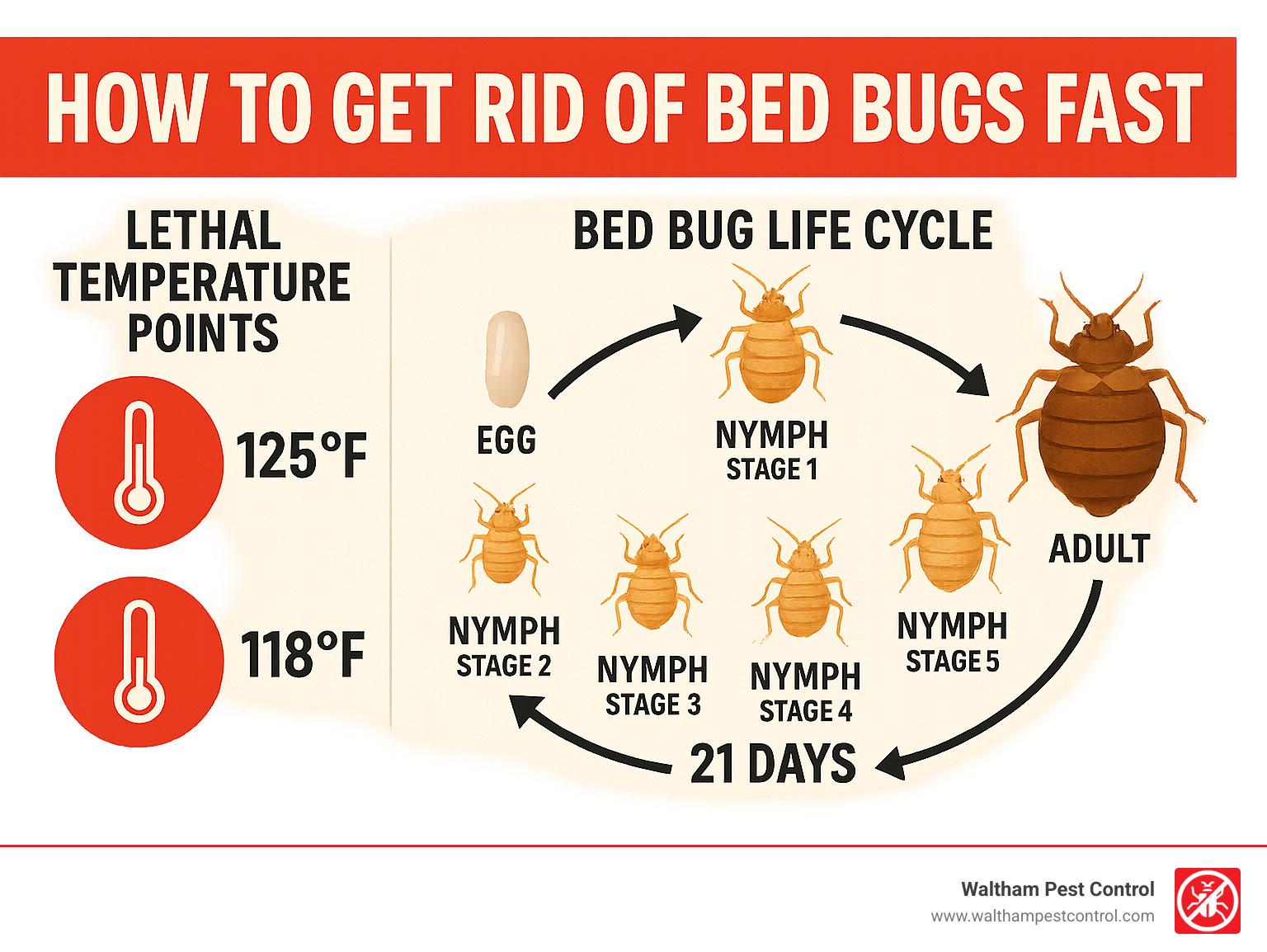
Simple how to get rid of bed bugs fast word guide:
Spot & Confirm the Culprit Fast
The first step to how to get rid of bed bugs fast is making absolutely sure you’re dealing with the right pest. Look for blood spots on your sheets – small, dark reddish-brown stains that appear when you roll over and crush a feeding bed bug. You might also notice black or rust-colored droppings that look like tiny ink spots.
Cast skins tell the real story of an active infestation. Bed bugs shed their shells five times as they grow, leaving behind translucent, empty husks in mattress seams and bed frame cracks.
If you notice a sweet, fruity odor in your bedroom, don’t ignore it. Heavy bed bug infestations produce a distinctive musty smell that gets stronger as the population grows.
Adult bed bugs are about the size of an apple seed – flat, oval, and rusty brown when they haven’t fed recently. After a blood meal, they become more rounded and darker.
Grab a flashlight and start your inspection at the most likely hiding spots. Mattress seams and box spring corners are bed bug headquarters – scientific research on identifying bed bugs confirms that over half of all bed bugs live in and around your bed. Don’t forget to check bed frame joints, baseboards near your bed, electrical outlets and picture frames on the wall.

Bed bug interceptors are your secret weapon for both detection and ongoing monitoring. These simple plastic traps go under each bed leg and catch bugs trying to climb up to reach you.
How to get rid of bed bugs fast starts with proper ID
Capture a live bug if possible – even a dead one works. Drop it in a small jar with a teaspoon of rubbing alcohol to preserve it for identification.
A magnifying glass reveals the details that separate bed bugs from other household pests. Look for an oval, flat body with six legs and antennae. Bed bugs have no wings, and their bodies are clearly segmented.
Early detection is your biggest advantage in winning the bed bug battle. A small population of 10-20 bugs can be eliminated in just a few days with the right approach. Wait too long, and you could be dealing with hundreds of bugs that take weeks or months to control.
Emergency Containment: Stop the Spread Today
Once you’ve confirmed these unwelcome guests, how to get rid of bed bugs fast depends on immediate containment to prevent them from spreading throughout your home.
Bed bugs are surprisingly lazy travelers, typically only spreading 20-100 feet from their original location. But they’re excellent hitchhikers who’ll climb aboard your clothing or furniture to establish new colonies.
Start with your bedding immediately. Strip everything – sheets, pillowcases, blankets, and mattress pads. Don’t shake them out (this can scatter bugs and eggs). Instead, carefully bundle everything and seal it in plastic bags right there on the spot.
Your washing machine and dryer become powerful weapons. Wash everything in hot water – at least 120°F if your water heater allows it. Then dry everything on high heat for a full 30 minutes. A loosely filled dryer set on high heat will eliminate all bed bug life stages and eggs in that half-hour.
HEPA vacuum treatment is your next critical step. Focus on mattress seams, box springs, bed frames, and the surrounding area. Pay special attention to cracks and crevices where these sneaky bugs love to hide.
Declutter aggressively – remove unnecessary items from the bedroom. Bed bugs view clutter as prime real estate. The cleaner your space, the easier it becomes to treat effectively.
Mattress encasements are like putting your bed in protective armor. These bed bug-proof covers trap any existing bugs inside where they’ll eventually starve, while the smooth surface prevents new bugs from finding hiding spots.
Create isolation zones around your bed. Move it at least 6 inches away from walls and remove bed skirts. This forces bed bugs to climb up bed legs where interceptors can catch them.
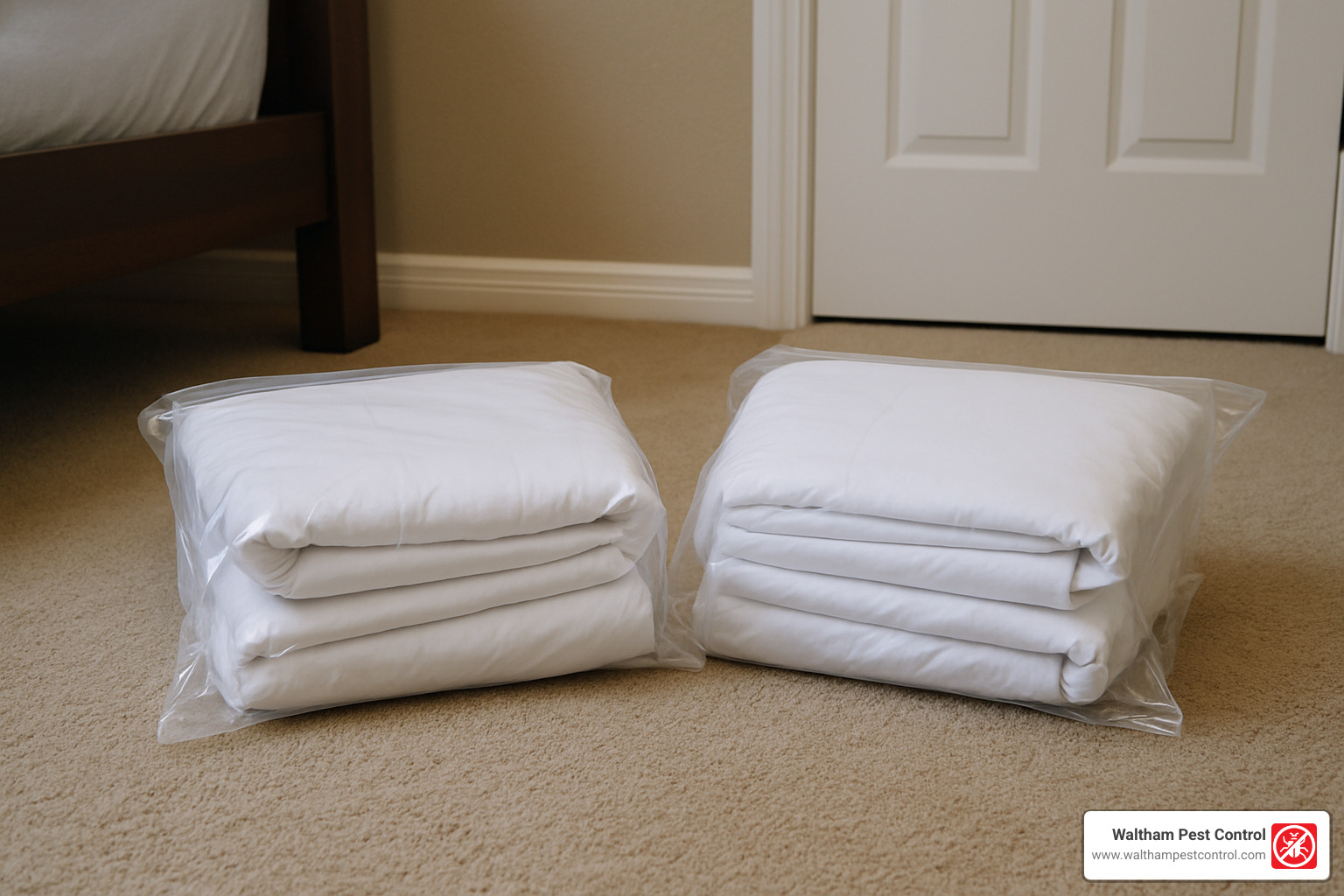
Proper vacuum bag disposal is crucial. Seal those vacuum bags in plastic and get them out of your house immediately. Bed bug eggs can survive in vacuum bags, potentially causing a re-infestation weeks later.
For items that can’t go through the washer, freeze them at 0°F for at least 4 days, use a portable heat chamber, or isolate them in sealed plastic bags for up to a year.
DIY containment vs professional prep
DIY containment works well when you’ve caught the problem early – maybe you’ve found a few bugs in just one room. Call in the professionals immediately when multiple rooms are affected, you’re dealing with an apartment building, or previous DIY attempts have failed.
| Aspect | DIY Containment | Professional Prep |
|---|---|---|
| Time Required | 2-4 hours | 1-2 hours |
| Success Rate | 60-70% for small infestations | 90-95% for all infestations |
| Cost | Materials and supplies | Service call |
| Effectiveness | Good for early detection | Excellent for established infestations |
Bed leg interceptors are crucial regardless of which approach you choose. These simple devices trap bed bugs attempting to climb up to reach you while you sleep.
Incomplete containment can cause bugs to scatter to new areas of your home. That’s why understanding when to tackle it yourself versus when to call professionals can make all the difference in how to get rid of bed bugs fast.
For more detailed information about mattress-specific treatment protocols, check out our guide on Bedbugs on Mattress.
How to Get Rid of Bed Bugs Fast: Heat, Steam, Cold & Targeted Chemistry
When you need to get rid of bed bugs fast, understanding their thermal death points becomes your greatest weapon. These resilient pests die when exposed to sustained temperatures of 118°F or higher. Bed bugs exposed to 113°F will die with constant exposure for 90 minutes, while they die within 20 minutes at 118°F. The eggs require 118°F for 90 minutes to reach 100% mortality.
Heat treatment works faster than any other method because it’s the one thing bed bugs cannot adapt to or resist. Unlike chemical treatments where populations can develop resistance, thermal death is absolute and immediate.
The most effective heat treatments include professional whole-room heat at 135-145°F (eliminates entire infestations in a single day), household dryer at 120°F+ (30-minute kill cycle for clothing and bedding), steam treatment at 160-180°F (kills on contact for mattress seams and furniture cracks), portable heat chambers (4-6 hour treatment cycles), and freezing at 0°F (minimum 4-day exposure).
Chemical options work best as backup to heat treatments. Desiccant dusts like diatomaceous earth dry out bugs over several weeks and can’t be resisted. Pyrethroid sprays provide fast knockdown but face resistance issues. Neonicotinoids offer systemic action with less resistance.
Based on internet research, DIY treatment costs typically range from $100-$2,500, while professional services can range from $300-$7,500 for average-sized homes, depending on severity and treatment method. These are general market ranges and don’t reflect specific pricing for any particular service.
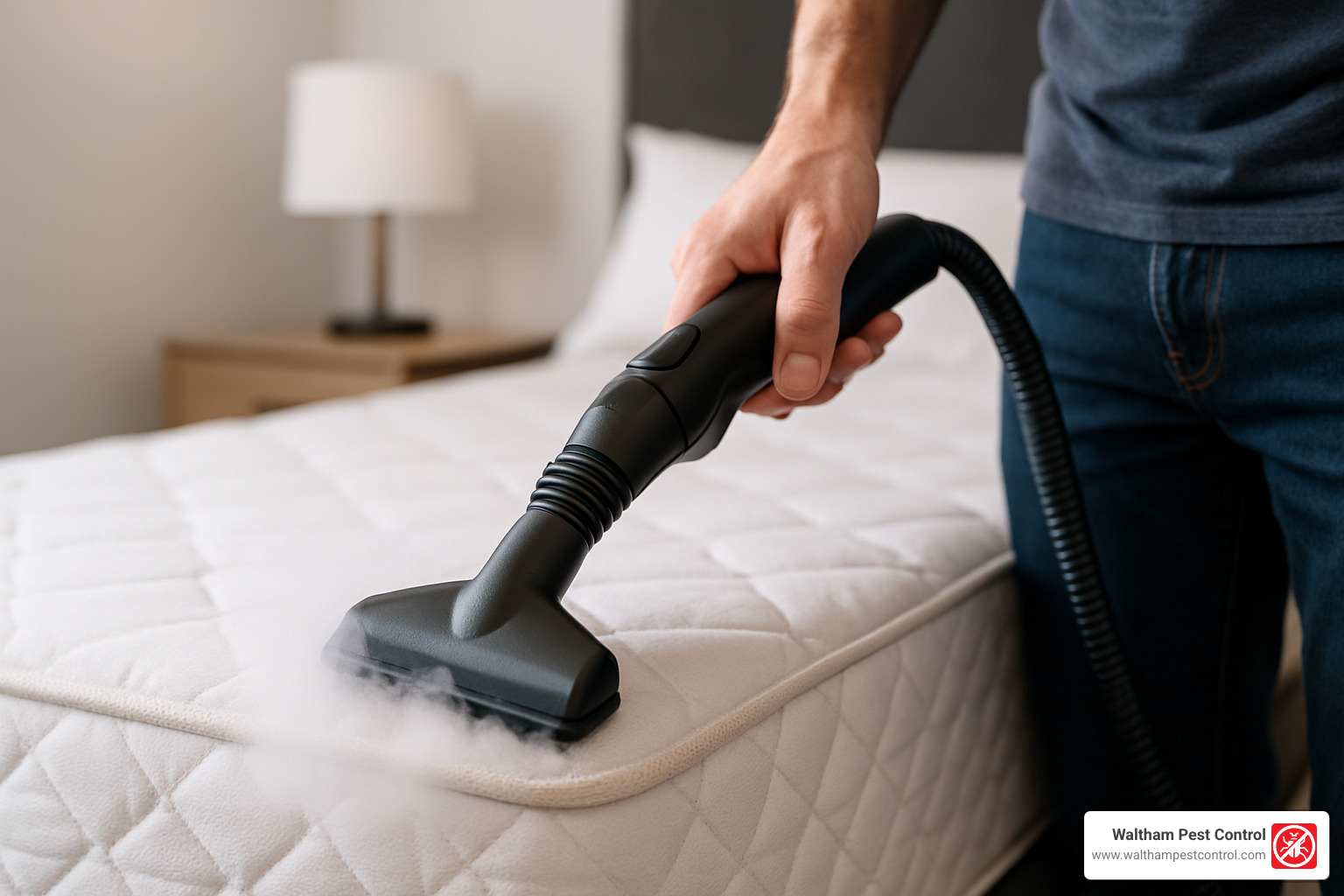
Safety equipment is essential: N95 respirator mask when applying dusts, gloves and long sleeves for chemical applications, eye protection when steaming, and proper ventilation during all treatments.
Using heat to get rid of bed bugs fast
Your household dryer becomes a powerful weapon when used correctly. Test your dryer’s actual temperature using an oven thermometer – ensure it reaches at least 120°F, then run loads for 40+ minutes on the highest heat setting.
Steam treatment technique requires patience and precision. Use steamers that produce 160-180°F vapor and move slowly – about 1 inch per 30 seconds. Focus on seams, cracks, and crevices, maintaining 12 inches distance to avoid blowing bugs away.
Portable heat chambers offer chemical-free treatment for items that can’t be washed. PackTite units reach 120°F+ in enclosed spaces, requiring 4-6 hours of treatment time.
Whole-room heat treatment by professionals raises temperatures to 135-145°F throughout the entire space for several hours, achieving nearly 100% kill rates when properly executed.
Chemical options when speed matters to get rid of bed bugs fast
EPA-registered pyrethroid options like permethrin provide fast knockdown effects but face common resistance issues. Neonicotinoids such as imidacloprid work slower but last longer, proving effective against resistant populations. Desiccant dusts like diatomaceous earth work through physical action, preventing resistance development entirely.
Application focuses on cracks, crevices, and void spaces where bugs travel and hide. Never use foggers or bug bombs – these don’t penetrate hiding spots and can scatter bugs to new areas.
Child and pet precautions require removing family and pets during application, allowing treated surfaces to dry completely, and storing pesticides in locked cabinets.
Bed Bugs Home Remedies explores additional natural treatment options, while Scientific research on heat treatments provides detailed technical information.
The most effective approach combines multiple methods: immediate heat treatment for quick knockdown, followed by residual chemical treatments for long-term protection, and ongoing monitoring to catch any survivors.
Call in the Pros & Prevent the Comeback
Sometimes the fastest path to bed bug elimination is professional intervention. We’ve seen homeowners spend weeks on DIY treatments that ultimately fail, when a single professional service could have solved the problem in days.
When to call professionals immediately:
- Multiple rooms affected
- Previous DIY attempts failed after 2-3 weeks
- Apartment or condo buildings (requires coordination)
- Pregnant women, infants, or elderly residents
- Severe allergic reactions to bites
Professional advantages include licensed technicians with access to professional-grade equipment and restricted-use pesticides. Integrated Pest Management (IPM) combines heat treatment for immediate kill, residual chemical barriers for long-term protection, and ongoing monitoring services.
Bed bug detection dogs can locate infestations with 95%+ accuracy, identifying problem areas that visual inspections miss. Multi-unit coordination is essential in apartments and condos where bed bugs easily travel between units through wall voids and shared systems.
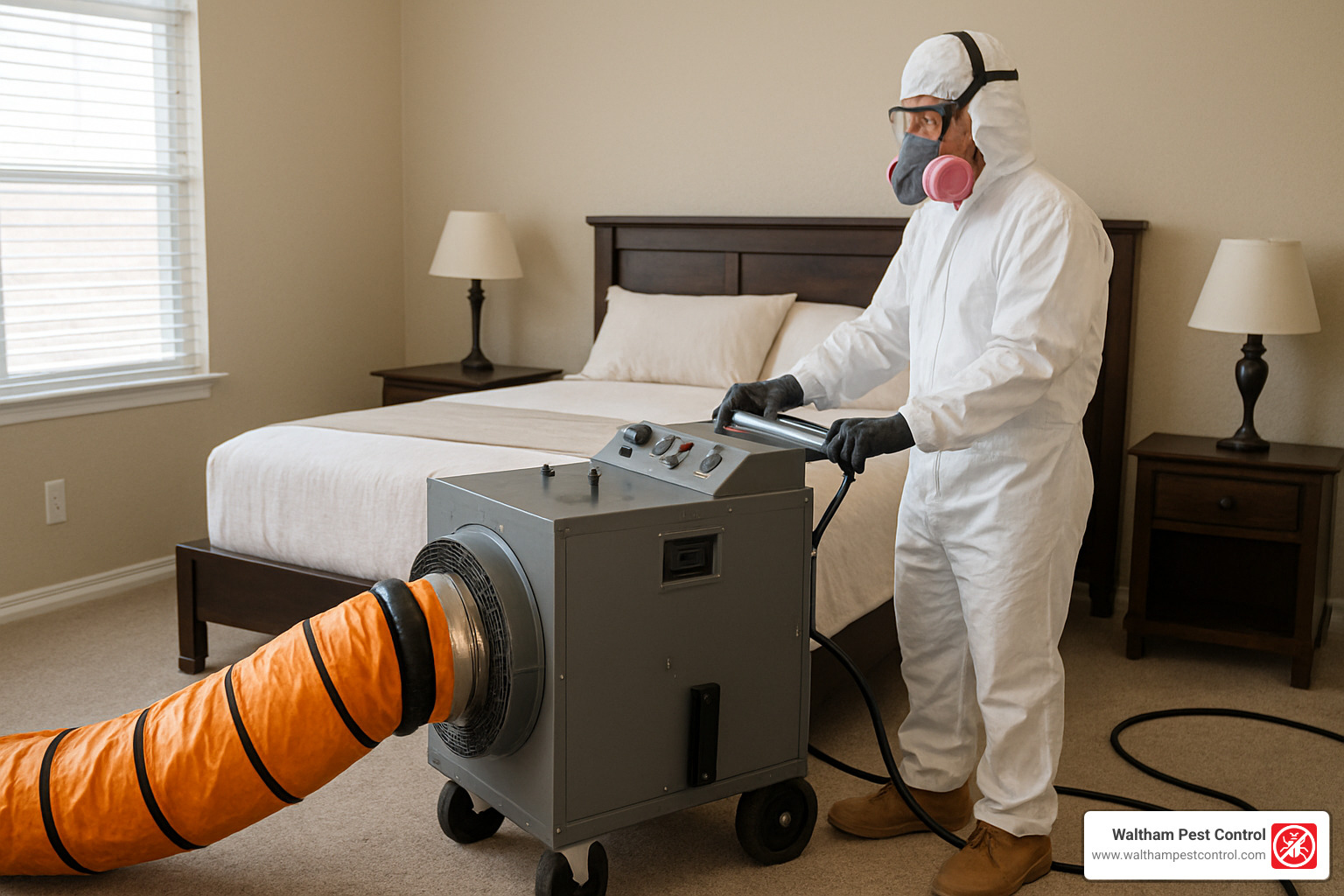
How to get rid of bed bugs fast with professional heat
Professional heat treatment represents the fastest single-day elimination method available. Whole-room heat treatment raises temperatures to 135-145°F throughout the entire structure for 4-6 hours, killing all bed bug life stages including eggs.
Process overview: Pre-treatment inspection, preparation (remove heat-sensitive items), equipment setup with industrial heaters, temperature monitoring with multiple sensors, treatment execution maintaining 135-145°F for 4+ hours, and cool-down with verification.
Advantages include single-day treatment, chemical-free process, penetrates everywhere, kills all life stages, and no resistance issues.
Based on internet research, professional heat treatment typically ranges from $1,200-$5,000 for average-sized homes, depending on infestation severity and home size. These represent general market ranges and don’t reflect specific pricing structures.
Long-term prevention checklist
Travel precautions: Inspect hotel rooms before settling in, keep luggage in bathroom during inspection, use hard-shell luggage when possible, heat-treat all clothing after travel.
Secondhand furniture protocols: Inspect all seams and joints before purchase, look for blood spots and cast skins, consider heat treatment before bringing items inside.
Home maintenance: Seal cracks in walls and baseboards, repair loose wallpaper, caulk gaps around electrical outlets, install door sweeps, maintain clutter-free bedrooms.
Ongoing monitoring: Keep bed bug interceptors under bed legs for 12+ months, inspect interceptors weekly, check mattress seams monthly, monitor for unexplained bite patterns.
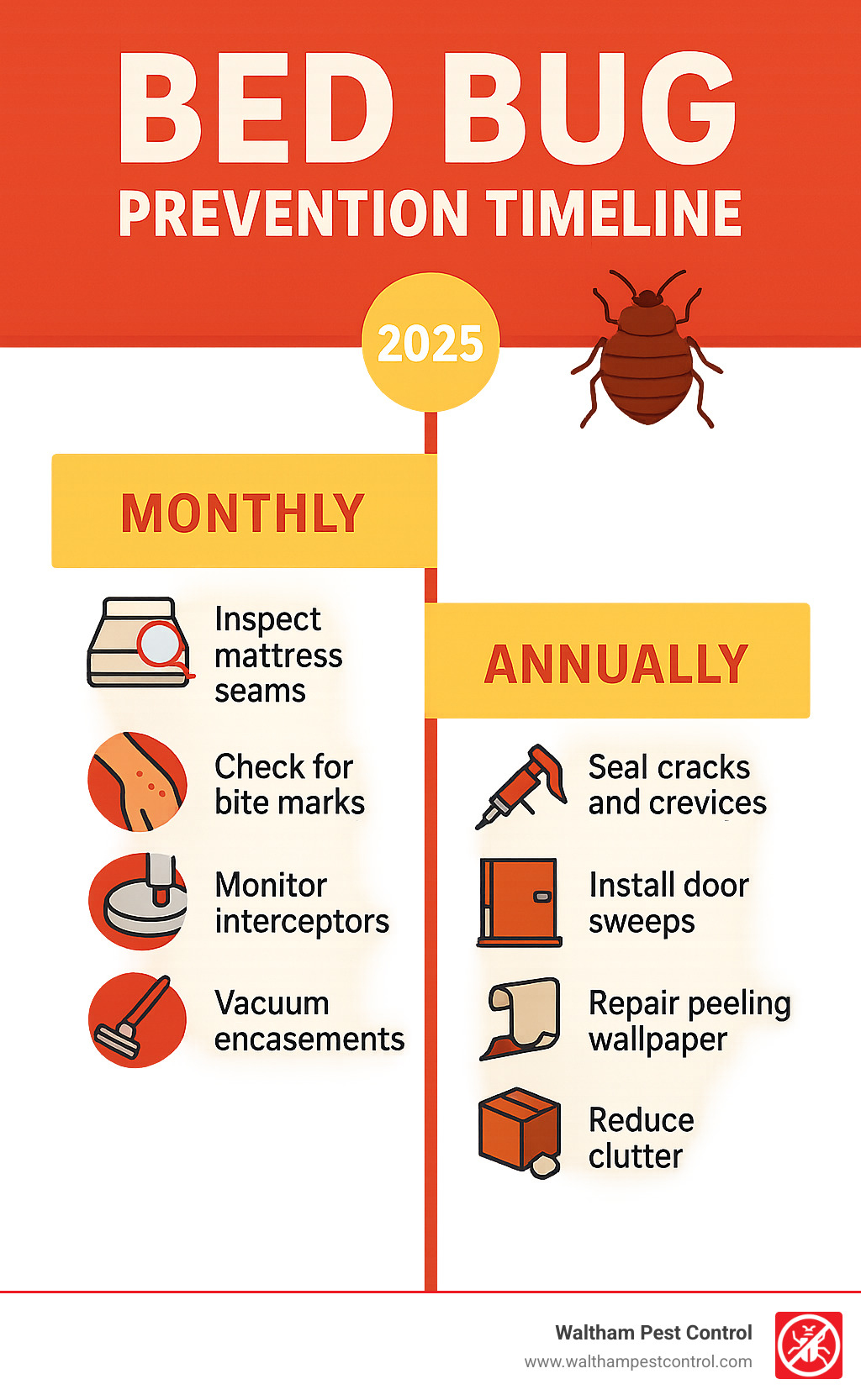
Encasement maintenance: Keep mattress and box spring covers sealed for at least one year, inspect monthly for tears, replace damaged encasements immediately.
Professional Pest Control Services details our comprehensive approach, while Bed Bug Exterminator explains our specific treatment protocols.
The True Cost of Bed Bug Extermination helps homeowners understand the full financial impact and make informed treatment decisions.
Frequently Asked Questions about Fast Bed Bug Removal
When you’re dealing with bed bugs, you want answers fast. After 40+ years in pest control, these are the questions we hear most often from homeowners who need to get rid of bed bugs fast.
How long does complete elimination take?
Professional heat treatment offers the fastest results – you can achieve elimination in a single day, though we recommend monitoring for 2-4 weeks afterward to ensure complete success. The beauty of whole-room heat treatment is that it kills all life stages simultaneously.
DIY approaches typically take longer. If you’re combining heat and chemical treatments yourself, plan for 2-4 weeks with treatments every 7-10 days. This timeline accounts for the bed bug life cycle – eggs hatch in 6-17 days, so you need multiple treatments to catch newly emerged nymphs.
Chemical-only treatments require the most patience, often taking 4-8 weeks with multiple applications. This extended timeline is necessary because chemicals rarely kill eggs.
Several factors affect your timeline: Large or established infestations take longer than small, newly found ones. Cluttered rooms provide more hiding spots and extend treatment time. Some bed bug populations have developed resistance to common pesticides, which can significantly extend chemical treatment timelines.
Can I sleep in my bed the same night after heat treatment?
After professional heat treatment, you can typically sleep in your bed the same night. Allow 2-4 hours for cooling and ventilation before re-entering. Open windows and run fans to help the space return to normal temperature.
After DIY heat treatment of bedding and mattresses, you can sleep in the bed once everything is completely dry and cool to the touch. If you’ve used steam treatment, make sure all moisture has evaporated to prevent mold growth.
After chemical applications, wait until all treated surfaces are completely dry – typically 4-6 hours. Always follow the product label directions exactly for re-entry times.
Before sleeping, verify that your mattress encasements are properly installed and that bed leg interceptors are in place with your bed isolated from walls and furniture.
Will homeowners insurance cover professional bed bug services?
Unfortunately, most standard homeowners insurance policies do not cover bed bug treatment. Insurance companies typically classify bed bugs as a maintenance issue rather than sudden, accidental damage covered under your policy.
Rare exceptions that might provide coverage include situations where bed bugs result from vandalism or malicious damage, bed bugs introduced through covered water damage, or policies with specific pest coverage endorsements (though these are uncommon).
Before assuming you’re not covered, check your specific policy for pest exclusion clauses and dwelling coverage definitions. Some policies cover temporary housing costs if your home becomes uninhabitable during treatment.
Alternative coverage options include renters insurance for personal belongings damaged by bed bugs, and some HSA or FSA accounts may cover pest control services when deemed medically necessary.
In rental properties, landlord responsibility often applies, especially in multi-unit buildings. Check your lease agreement and local tenant protection laws.
Conclusion
How to get rid of bed bugs fast comes down to taking swift action the moment you spot these unwelcome guests. The difference between a minor inconvenience and a major infestation often comes down to hours, not days.
Your success depends on combining the right methods at the right time. Heat treatment remains your most powerful weapon – whether that’s throwing everything washable into a hot dryer cycle, steam-treating your mattress seams, or calling in professionals for whole-room heat treatment. But heat alone isn’t enough. You need proper containment to prevent spread, chemical backup for areas heat can’t reach, and ongoing monitoring to catch any survivors.
The emotional toll of bed bugs often surprises people. It’s not just about the itchy bites – it’s about lying awake at night wondering if something is crawling on you. It’s about the embarrassment of having “bugs” in your home. It’s about the stress of wondering if you’ll ever get rid of them completely.
Speed matters because your peace of mind matters. Every day you delay treatment is another day these pests multiply and spread. A female bed bug can lay up to 500 eggs in her lifetime, turning your small problem into a nightmare scenario within weeks.
We’ve seen this cycle too many times during our 40+ years serving Eastern Massachusetts families. Homeowners who act quickly with the right combination of treatments get their lives back fast. Those who hesitate or try ineffective methods often struggle for months.
Don’t let bed bugs steal another night’s sleep. The methods we’ve shared work, but they require commitment and thoroughness. If you’re dealing with a widespread infestation or your initial efforts haven’t worked, professional intervention can save you weeks of frustration and sleepless nights.
Your home should be your sanctuary, not a source of stress and anxiety. Whether you tackle this challenge yourself or bring in experienced professionals, the most important step is starting today.
Ready to reclaim your bedroom? Get Your Free Estimate and let our licensed technicians create a customized elimination plan that fits your specific situation. After four decades of solving pest problems, we know exactly what it takes to get your life back to normal.
