

Are Paper Wasps Aggressive? 7 Shocking Facts for 2025
Understanding Paper Wasp Behavior: Friend or Foe?
Are paper wasps aggressive? The short answer is: they’re generally not aggressive when away from their nests, but will vigorously defend their colonies if threatened.
| Paper Wasp Aggression | Level of Risk |
|---|---|
| Away from nest | Low – typically docile |
| Near nest | Moderate to high – defensive |
| Late summer/fall | Higher – larger colonies |
| If swatted/threatened | High – will sting repeatedly |
| When undisturbed | Very low – prefer to avoid conflict |
Paper wasps are often misunderstood insects that play a beneficial role in our ecosystem. These slender, 1/2 to 3/4 inch wasps with their distinctive umbrella-shaped nests aren’t looking for trouble. Unlike their more aggressive cousins the yellow jackets, paper wasps generally mind their own business unless they feel their home is under attack.
Most homeowners spot paper wasps building their open-cell nests under eaves, porch ceilings, or in sheltered areas around their property. While the sight might trigger immediate concern, understanding their behavior can help you make informed decisions about whether intervention is necessary.
What makes paper wasps defensive?
- Vibrations near their nest (lawn mowers, power tools)
- Direct contact or nest disturbance
- Quick, sudden movements near the colony
- Late summer when colonies reach peak size
- Protection of developing larvae
I’m Waltham Pest Control, President of Waltham Pest Control with over 40 years of experience helping Massachusetts residents understand whether are paper wasps aggressive enough to warrant removal or if they can safely coexist on your property. Having personally assessed thousands of paper wasp nests, I’ve developed effective strategies to manage these insects when they pose genuine risks.
Are paper wasps aggressive terms simplified:
– are black and yellow wasps dangerous
– big black flying bug that looks like a wasp
– hornet nest removal
Are Paper Wasps Aggressive? Behavior Unpacked
Ever watched a paper wasp going about its business and wondered, “are paper wasps aggressive” or just misunderstood? The truth lies somewhere in between. These fascinating insects (genus Polistes) aren’t the angry attackers many people fear. They’re actually defensive creatures who only sting when they believe they’re in danger.
When a paper wasp does sting, something remarkable happens. That single wasp releases alarm pheromones—chemical signals that essentially shout “Danger!” to the rest of the colony. This explains why disturbing a nest can quickly turn into a multi-wasp defense situation.
Here’s something many homeowners in Arlington, Lexington, and other Eastern Massachusetts towns don’t realize: only female paper wasps can sting. That’s because the stinger is actually a modified egg-laying organ (ovipositor). So when a male paper wasp lands on you—looking just as intimidating as the females—he’s all buzz and no bite.
Colony size makes a big difference in how defensive paper wasps become. By late summer, a mature nest might contain up to 200 cells with dozens of wasps. These larger colonies tend to react more vigorously to threats than smaller, newly established nests.
Despite their defensive reputation, paper wasps are garden allies. They’re efficient predators that target caterpillars and other soft-bodied pests that damage plants. Many gardeners in Framingham, Newton, and surrounding communities actually appreciate having a few paper wasps around to provide natural pest control.
Scientific research on paper wasp behavior confirms what we’ve observed in the field: these insects generally mind their own business unless provoked.
Quick answer: are paper wasps aggressive when away from the nest?
When it comes to foraging paper wasps, the answer to “are paper wasps aggressive” is typically no. Away from their nests, these insects are single-minded workers focused entirely on gathering food and nest-building materials. They’re too busy to bother with humans unless you accidentally trap or squish one.
During these foraging trips, paper wasps collect nectar from flowers and hunt for caterpillars to feed their developing larvae. You’ve probably been near dozens of foraging paper wasps in your garden without even realizing it.
Remember those stinger-less males I mentioned? By late summer, they make up a good portion of the paper wasp population. Though they might land on you to investigate a food source or taste salt from your sweat, they physically cannot sting you.
Many of our clients in Waltham, Bedford, and Burlington are relieved to learn that the paper wasps visiting their garden flowers or gathering wood fibers from their deck aren’t interested in picking fights with humans during these activities.
“are paper wasps aggressive” around their nests?
This is where everything changes. When it comes to their nests, paper wasps transform from docile foragers to dedicated defenders. The nest represents everything to them—their offspring, their future, their colony’s survival.
The invisible defensive bubble around a paper wasp nest typically extends about 3-6 feet in all directions. Enter this zone, and you’re on their radar. The activities most likely to trigger a defensive response include:
Direct nest contact or jarring, vibrations from power tools or lawn mowers, quick movements near the nest, blocking flight paths, and even exhaling carbon dioxide near the nest (they can detect it!).
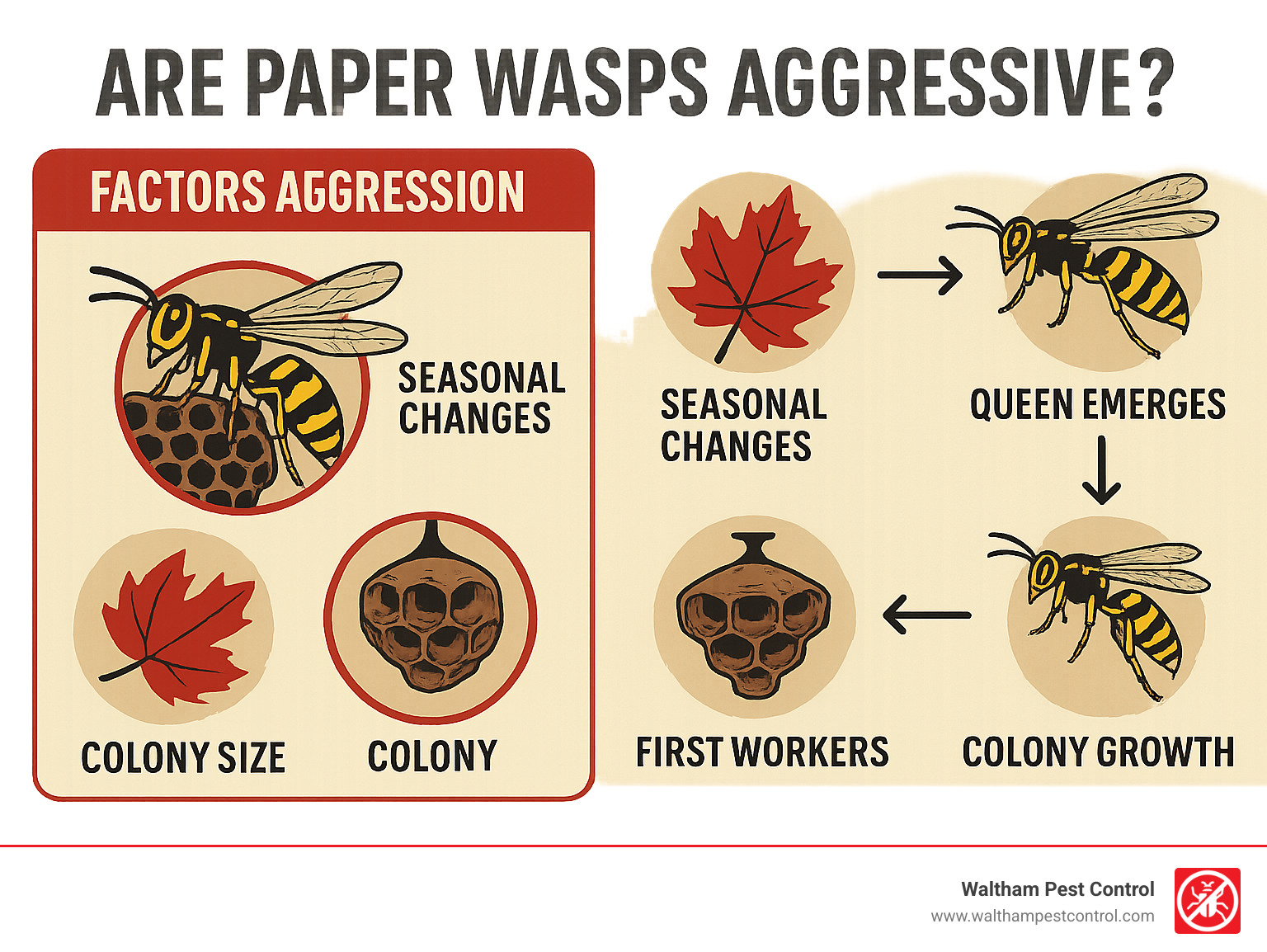
As summer progresses into fall, we see a definite uptick in defensive behavior. By August and September, paper wasp colonies in Eastern Massachusetts reach their maximum size, and their protective instincts intensify. The colony is preparing future queens for winter, and they’re not taking any chances with potential threats.
When & Why Aggression Peaks
Ever notice how paper wasps seem more defensive at certain times of the year? There’s actually a good reason for this. Paper wasp aggression follows a predictable seasonal pattern that mirrors their life cycle – something we’ve observed across countless homes in Eastern Massachusetts.
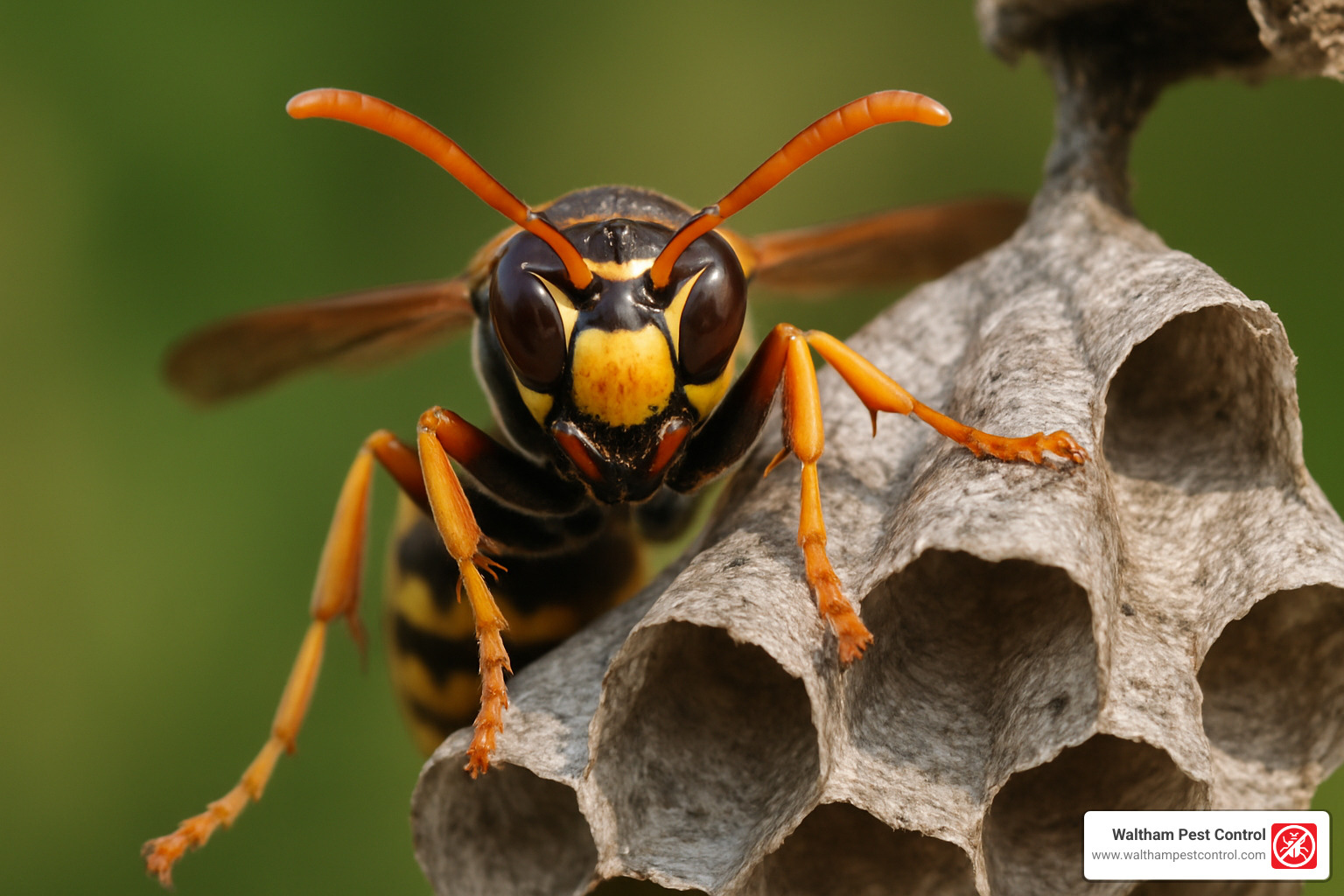
In spring (April-May), newly emerged queens are busy establishing nests and laying eggs. They’re typically too preoccupied with these tasks to be bothered with humans – aggression is minimal as they focus on getting their colonies started.
As we move into early summer (June-July), the first worker wasps emerge and begin foraging and expanding the nest. While defensive behavior increases, it remains relatively moderate since colonies are still small and developing.
Late summer (August-September) is when things really heat up. This is when you’ll most likely find yourself asking “are paper wasps aggressive?” – and the answer becomes a more definite yes. Colonies reach their maximum size, and workers become significantly more protective of nests that now contain the next generation of reproductive wasps.
By fall (October-November), you’ll notice a welcome decline in activity as temperatures drop. New queens mate and begin seeking protected spots to overwinter, while worker wasps become less defensive as they approach the end of their life cycle.
During winter (December-March), aggression is non-existent since active colonies no longer exist. Only fertilized queens survive the cold months, hibernating in sheltered locations until spring arrives again.
This seasonal pattern is particularly noticeable in colder Massachusetts communities like Lowell, Lawrence, and Methuen, where the contrast between summer activity and winter dormancy is quite stark.
Triggers that Make Paper Wasps Attack
After four decades of helping Eastern Massachusetts homeowners with wasp problems, we’ve identified several specific triggers that can turn normally docile paper wasps into defensive stingers:
Vibrations near the nest are perhaps the most common trigger. Your lawn mower, weed trimmer, or power tools create vibrations that paper wasps interpret as threats. We’ve helped countless homeowners in Sudbury, Wayland, and Weston who were stung while doing yard work near nests they didn’t even know existed.
Sudden movements near a nest will almost always trigger a defensive response. If you find yourself close to a paper wasp nest, the best approach is to move slowly and calmly away – no panicked swatting or running.
Believe it or not, your bright clothing might be part of the problem. Floral patterns and bright colors (especially blue, yellow, and white) can attract curious wasps since these colors resemble the flowers they visit for nectar.
Your scented products might also be sending the wrong message. Strong perfumes, colognes, and scented personal care products may attract paper wasps or trigger defensive behavior.
Trapped wasps will almost always sting defensively. This commonly happens when wasps fly into vehicles through open windows or land on towels or clothing that are then picked up. Always shake out items that have been sitting outside before bringing them in.
Paper Wasps vs Yellow Jackets: Who’s Meaner?
“Are paper wasps aggressive?” This question makes more sense when you compare them to their more notorious cousins. Here’s how paper wasps stack up against yellow jackets and hornets:
| Characteristic | Paper Wasps | Yellow Jackets | Hornets |
|---|---|---|---|
| Nest structure | Open-cell, umbrella-shaped | Enclosed with single entrance | Large enclosed with single entrance |
| Colony size | 50-200 wasps | 1,000-5,000 wasps | 300-1,000 hornets |
| Typical aggression level | Moderate, defensive | High, can be unprovoked | Very high, highly territorial |
| Sting pain (Schmidt Index) | 2-3 out of 4 | 2 out of 4 | 2-3 out of 4 |
| Multiple stings | Yes | Yes | Yes |
| Scavenging behavior | Minimal | Frequent | Occasional |
| Defensive perimeter | 3-6 feet from nest | 6-10+ feet from nest | 10+ feet from nest |
The good news? Paper wasps are generally less aggressive than both yellow jackets and hornets. While paper wasps primarily defend their immediate nest area, yellow jackets will actively scavenge around human food and garbage, creating more opportunities for unpleasant encounters. Yellow jackets also tend to be more easily provoked and will chase perceived threats for longer distances.
Scientific research on comparative aggression confirms what we’ve observed in the field: paper wasps rank lower on measures of unprovoked aggression than yellow jackets or hornets. This makes them relatively less dangerous to humans when properly understood and respected.
Paper Wasp Stings: Symptoms, Risks & First Aid
When it comes to paper wasp stings, knowing what to expect prevents panic and ensures proper care.
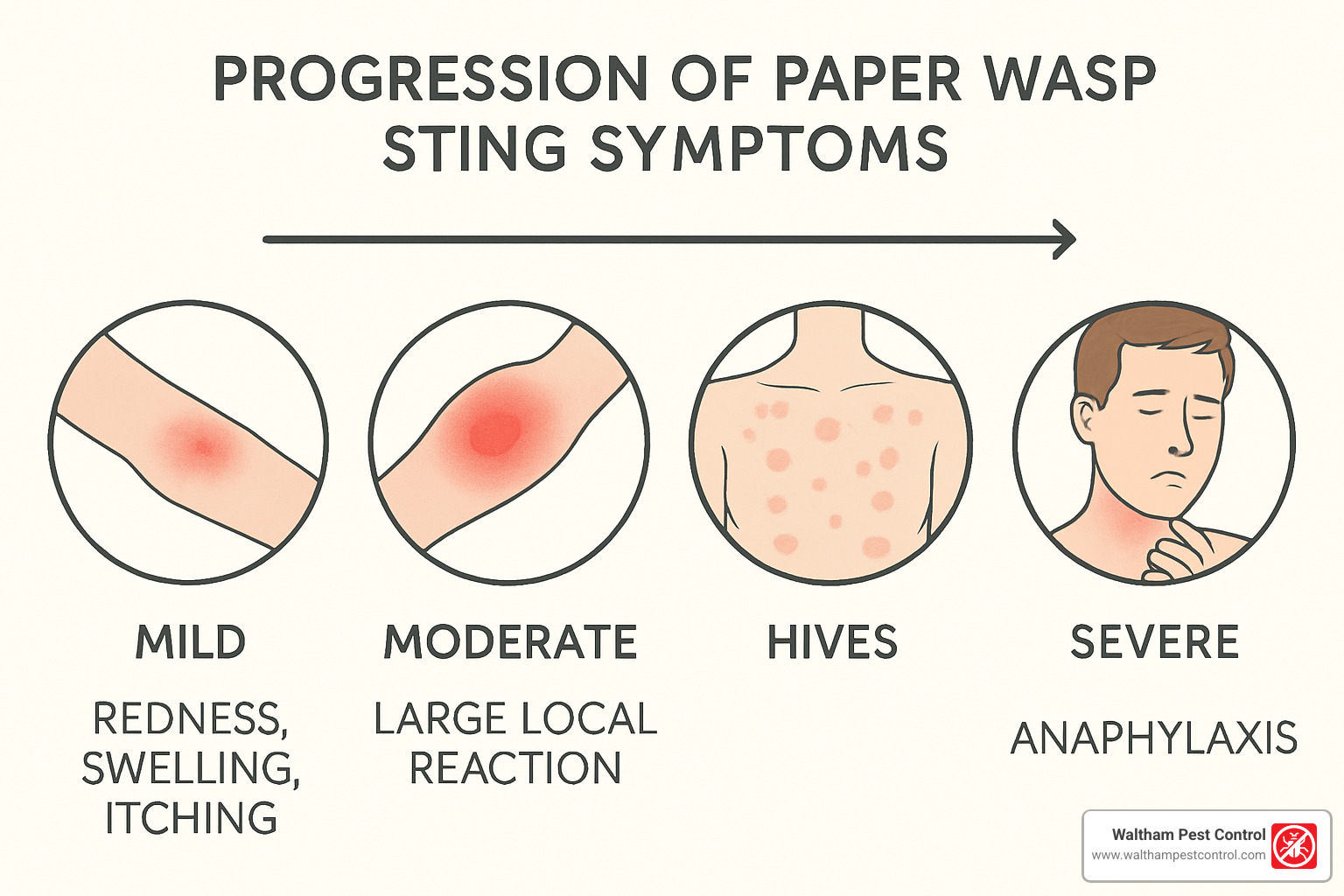
Paper wasp stings register a 2–3 on the four-point Schmidt Pain Index: an intense burn that subsides to itching over a day or two. Most reactions stay local—redness, swelling, and tenderness that clear within 2-5 days.
Roughly 10 % of people develop “large local reactions” (swelling extending more than 4 inches). They look scary but rarely need more than ice, an antihistamine like diphenhydramine, and patience.
Severe systemic allergy (anaphylaxis) is less common—about 3 % of adults—but demands urgent medical help. Watch for hives beyond the sting site, throat tightness, wheezing, dizziness, or a rapid pulse.
Scientific research on sting treatment guides these recommendations.
Fast First-Aid Checklist
- Wash with soap and water.
- Apply a cold compress 15–20 minutes.
- Lift the limb if possible.
- Use an OTC antihistamine for itching; ibuprofen for pain.
- Seek medical help immediately for any breathing trouble, swelling of lips/eyes, or multiple stings.
People with known allergies should carry an epinephrine auto-injector and ask their doctor about venom immunotherapy (80–95 % effective at preventing future severe reactions).
Pets can be stung too—especially curious dogs. Facial swelling or breathing issues warrant an immediate vet visit.
Keeping Paper Wasps Off Your Property (Without Losing Your Mind)
Prevention is the simplest, safest way to avoid wasp problems around your Eastern Massachusetts home.
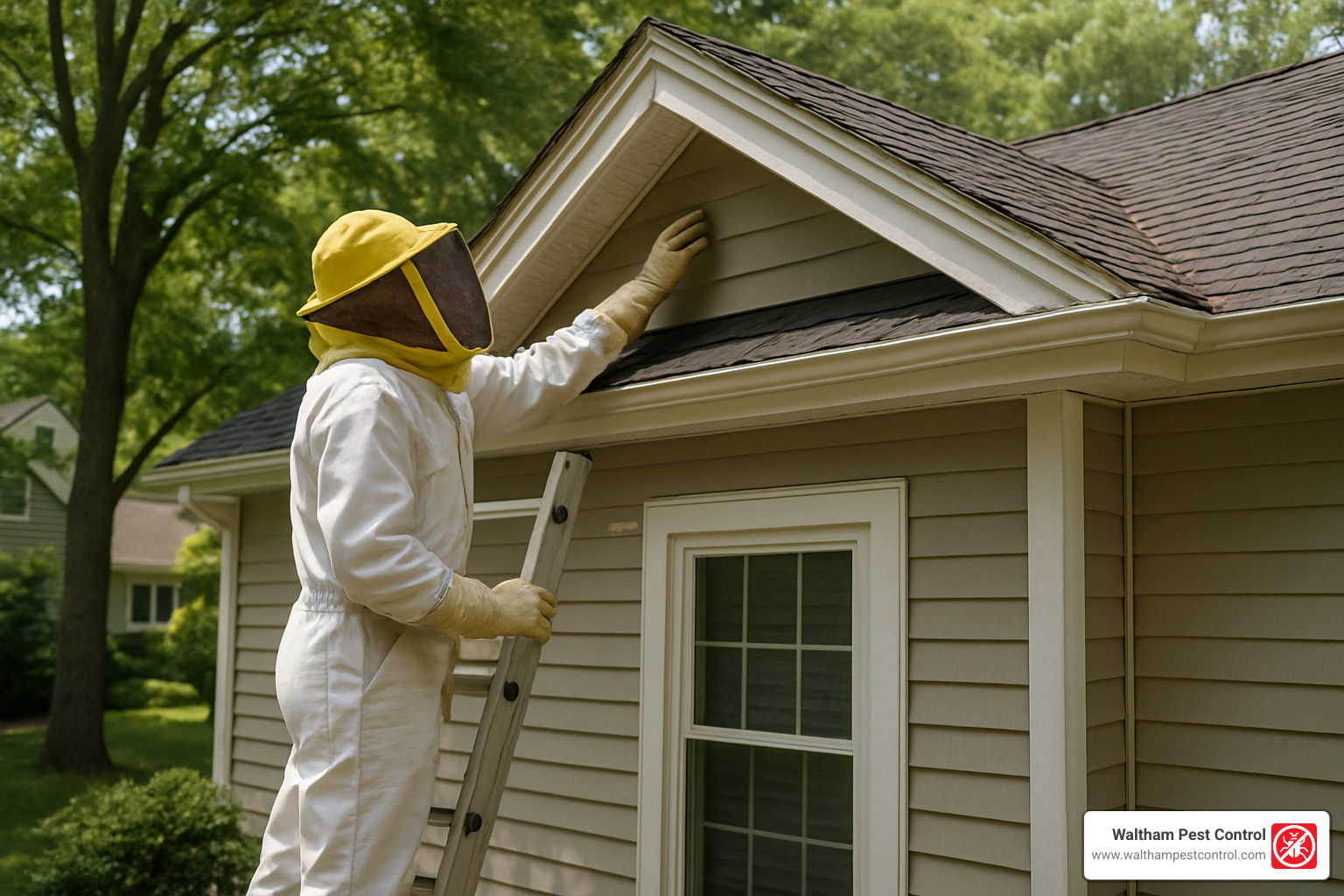
• Seal gaps around eaves, siding, and utility penetrations.
• Paint or varnish exposed wood—queens prefer raw, weathered surfaces for anchoring new nests.
• Trim shrubs and branches that touch the house to eliminate sheltered spots.
• Secure trash, clean up food spills, and dump standing water; fewer resources mean fewer wasps.
• Inspect monthly in spring so tiny starter nests can be scraped away with a long tool before colonies grow.
Some homeowners hang fake nests or use peppermint-oil sprays on rafters; results vary but they’re inexpensive, low-risk options.
DIY or Call a Pro?
Removing a nest the size of a golf ball in April is one thing; tackling a basketball-sized colony in July is quite another. Internet data show DIY sprays cost roughly $10–$50, while professional removal in our region averages $100–$500, with difficult jobs sometimes topping $1,500+. (These are broad ranges from public sources, not Waltham Pest Control pricing.)
If you have a known sting allergy, can’t reach the nest safely, or see heavy activity near doors or play areas, save yourself the risk and let the experts handle it. Our licensed team can treat at dusk, remove the nest, and advise on prevention so you can enjoy your yard sting-free.
Frequently Asked Questions About Paper Wasp Aggression
Over our 40+ years serving homeowners across Eastern Massachusetts, we’ve heard just about every question imaginable about paper wasps. These questions often come from concerned residents in Bedford, Lexington, and surrounding communities who want to understand these misunderstood insects better. Here are straightforward answers to the questions we hear most often:
are paper wasps aggressive in winter?
Are paper wasps aggressive during Massachusetts winters? Not at all. By late November, most worker wasps have already died after the first hard freeze. The only survivors are the fertilized queens, who enter a state of hibernation called diapause.
These overwintering queens seek out protected spots like attic corners, wall voids, under loose tree bark, or tucked into rock piles. They’re essentially dormant, conserving energy until spring temperatures consistently rise above 50°F. During this period, their metabolism slows dramatically, and they show virtually no aggressive behaviors.
If you happen to find a paper wasp inside your Woburn or Winchester home during winter, don’t panic! It’s almost certainly a queen that was hibernating somewhere nearby and became temporarily active due to your home’s heating. These winter wanderers are typically sluggish and focused solely on survival rather than defense.
Do paper wasps sting dogs and cats?
Yes, unfortunately, our furry family members can definitely receive paper wasp stings, though not because the wasps are targeting them specifically. Most pet stings happen because of natural curiosity – especially with dogs who might investigate or accidentally disturb a nest with their enthusiastic sniffing.
I’ve seen numerous cases across communities like Salem and Lynn where pets were stung after:
Investigating low-hanging nests in shrubs or under deck railings
Accidentally running through established flight paths
Pawing or sniffing at ground-level fallen nests
Trapping wasps against their bodies when a wasp lands on their fur
The reaction varies tremendously depending on the pet and sting location. Facial stings are particularly concerning, as swelling around the muzzle, mouth, or throat can potentially restrict breathing.
If your beloved pet gets stung, immediately move them away from the area, check for multiple stings, and apply a cold compress to reduce swelling. Watch closely for signs of allergic reaction like excessive drooling, difficulty breathing, or unusual lethargy. For multiple stings or any concerning symptoms, don’t hesitate to contact your vet right away.
Can paper wasps benefit my garden?
They absolutely can! This might surprise many homeowners, but paper wasps are actually valuable allies in maintaining a healthy garden ecosystem. When nests are located away from high-traffic areas, these insects provide several significant benefits:
Paper wasps are nature’s pest controllers. A single thriving colony can consume thousands of destructive caterpillars, aphids, and other soft-bodied pests throughout a season. Many of our clients in Concord and Lincoln have noticed noticeably healthier vegetable gardens after allowing paper wasps to nest in remote corners of their properties.
These natural predators help reduce the need for chemical pesticides, supporting a more balanced and organic approach to gardening. While hunting for their larvae, they carefully patrol your plants, removing harmful insects that would otherwise damage your carefully tended flowers and vegetables.
Adult paper wasps also contribute modestly to pollination as they visit flowers for nectar. Though they’re not as efficient as bees, every little bit helps in supporting your garden’s productivity.
Conclusion
So, are paper wasps aggressive? The truth is more nuanced than a simple yes or no. These misunderstood insects are primarily defensive rather than aggressive by nature. They’re not out looking for trouble – they’re simply protecting their homes and families, much like we would.
Throughout Eastern Massachusetts, from the busy streets of Boston to the quiet neighborhoods of Concord, paper wasps typically mind their own business unless they perceive a threat. When foraging for food or gathering nest-building materials, they’ll likely ignore you completely. It’s only when their nest is disturbed that their defensive instincts kick in.
I’ve spent decades observing these fascinating creatures across countless properties, and I’ve found that peaceful coexistence is often possible, especially when nests are located away from doorways, patios, and children’s play areas. Many gardeners even welcome paper wasps for their impressive appetite for caterpillars and other garden pests.
Remember these important truths about paper wasps:
They’re generally docile when away from their nests, focused entirely on foraging and survival. Their defensive behavior peaks in late summer when colonies reach maximum size. Compared to their cousins – yellow jackets and hornets – paper wasps are significantly less aggressive. While they can sting multiple times (and yes, it hurts!), they typically only do so when feeling threatened.
For most people, paper wasp stings cause temporary discomfort that resolves within a few days. However, for the approximately 3% of adults with allergies, a sting can trigger serious reactions requiring immediate medical attention. Always take stinging insects seriously if you have known allergies.
When paper wasp nests appear in high-traffic areas around your home, professional removal is the safest approach. At Waltham Pest Control, we’ve been helping Massachusetts families safely manage paper wasps for over four decades. Our trained technicians can assess the situation, determine the risk level, and safely remove problematic nests while preserving beneficial ones when possible.
We understand the delicate balance between maintaining a safe outdoor environment for your family and respecting the important ecological role these insects play. Our targeted, effective solutions reflect this balanced approach.
For professional assistance with paper wasp nests or other stinging insect concerns throughout Eastern Massachusetts, visit our hornet and wasp nest removal services page. We’re here to help you enjoy your outdoor spaces with confidence and peace of mind.
