

How to Get Rid of Raccoons: 5 Effective Strategies 2025

How to get rid of raccoons is a common query for Massachusetts homeowners who find themselves dealing with these clever but unwelcome visitors. Raccoons often venture too close for comfort, raiding trash cans, threatening pets, or even nesting in attics. The key to addressing these issues is to use a combination of strategies, such as:
- Secure trash cans with wildlife-proof lids or straps.
- Remove food sources by not feeding pets outdoors.
- Seal entry points around your home and garden.
- Deploy humane deterrents like motion-activated lights and sprinklers.
Raccoons adapt quickly, which means solutions might require persistent efforts and innovative thinking.
As Waltham Pest Control, with over 40 years in pest control, I’ve guided countless homeowners on how to get rid of raccoons effectively and humanely. My extensive experience ensures that I understand both the urgency and the sensitivity needed in dealing with these intelligent creatures.
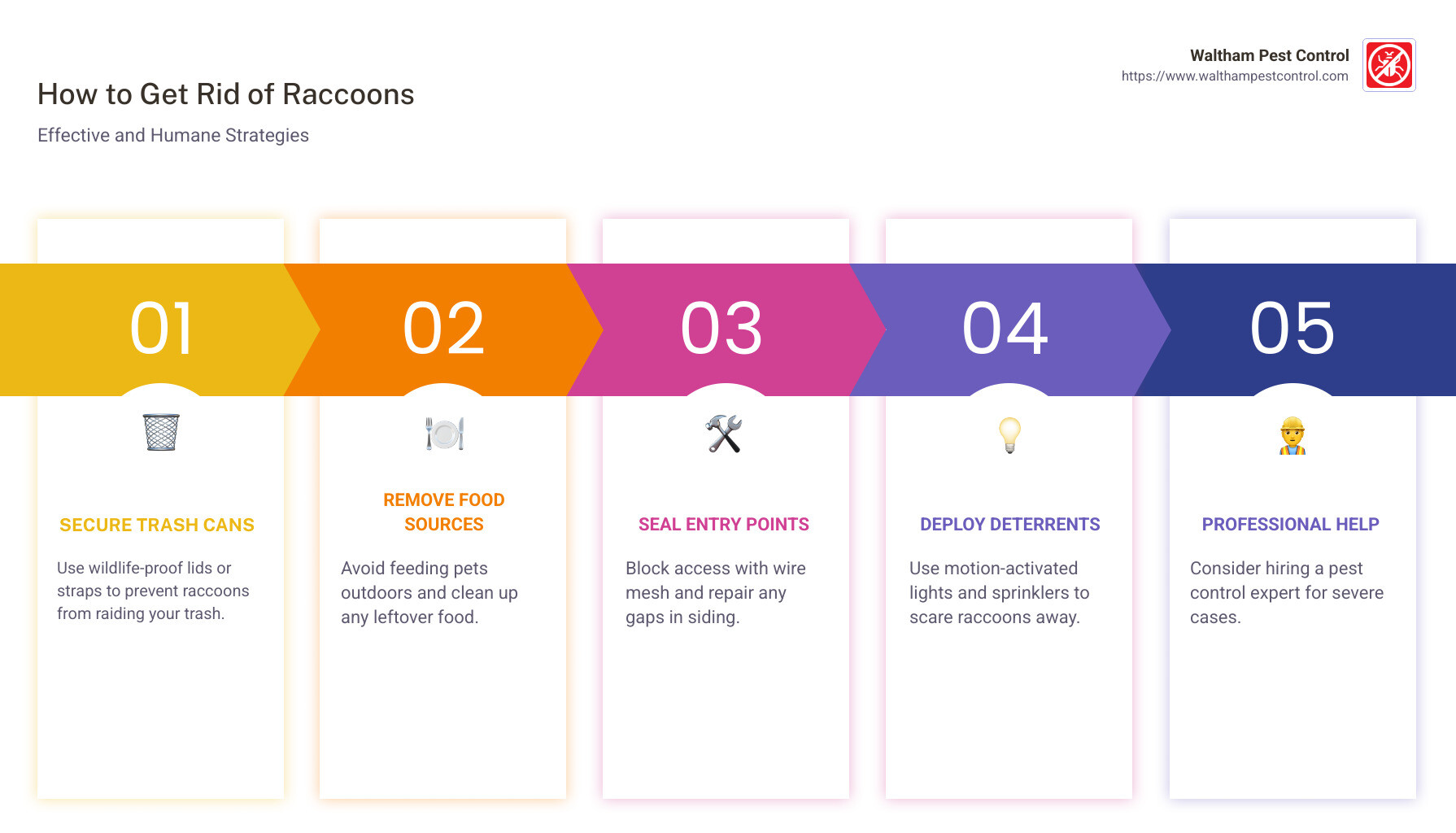
How to Get Rid of Raccoons
Dealing with raccoons can be challenging, but using a mix of deterrents and exclusion methods can help keep them at bay. Here’s how to handle these clever critters effectively:
Use Light and Sound
Raccoons are nocturnal, meaning they prefer the dark and quiet. Using motion-activated lights and sprinklers can startle them and make your yard less inviting.
- Radios: Set up a radio near their nesting area. A talk show or music can disrupt their peace and encourage them to move on.
- Sprinklers: Position them where raccoons are likely to roam. A sudden spray of water can be a great deterrent.
Remove Food and Water Sources
One of the primary reasons raccoons visit your property is to find food and water. By eliminating these, you can make your place less attractive.
- Secure Trash Cans: Use wildlife-proof lids or straps to prevent raccoons from accessing your garbage.
- Remove Pet Food: Feed pets indoors and remove any leftover food immediately.
- Cover Water Sources: Ensure ponds, pools, and water dishes are not easily accessible.
Seal Entry Points
Raccoons are excellent climbers and can squeeze through small openings. Securing your home is crucial.
- Wire Mesh and Fencing: Use these to block access to areas like attics or under decks.
- Repair Siding: Fix any holes or gaps in your home’s exterior to prevent raccoons from entering.
Natural Repellents
Raccoons have sensitive noses, making strong odors an effective deterrent.
- Hot Sauce and Garlic: Sprinkle these around the perimeter of your yard or garden.
- Ammonia: Soak rags in ammonia and place them near entry points.
- Predator Urine: The scent of natural predators like coyotes can scare raccoons away.
Using these methods, you can effectively manage raccoon problems while ensuring humane treatment. In cases where these strategies aren’t enough, consider seeking professional help. Pest control experts can provide more targeted solutions and even set up humane traps to safely relocate raccoons if necessary.
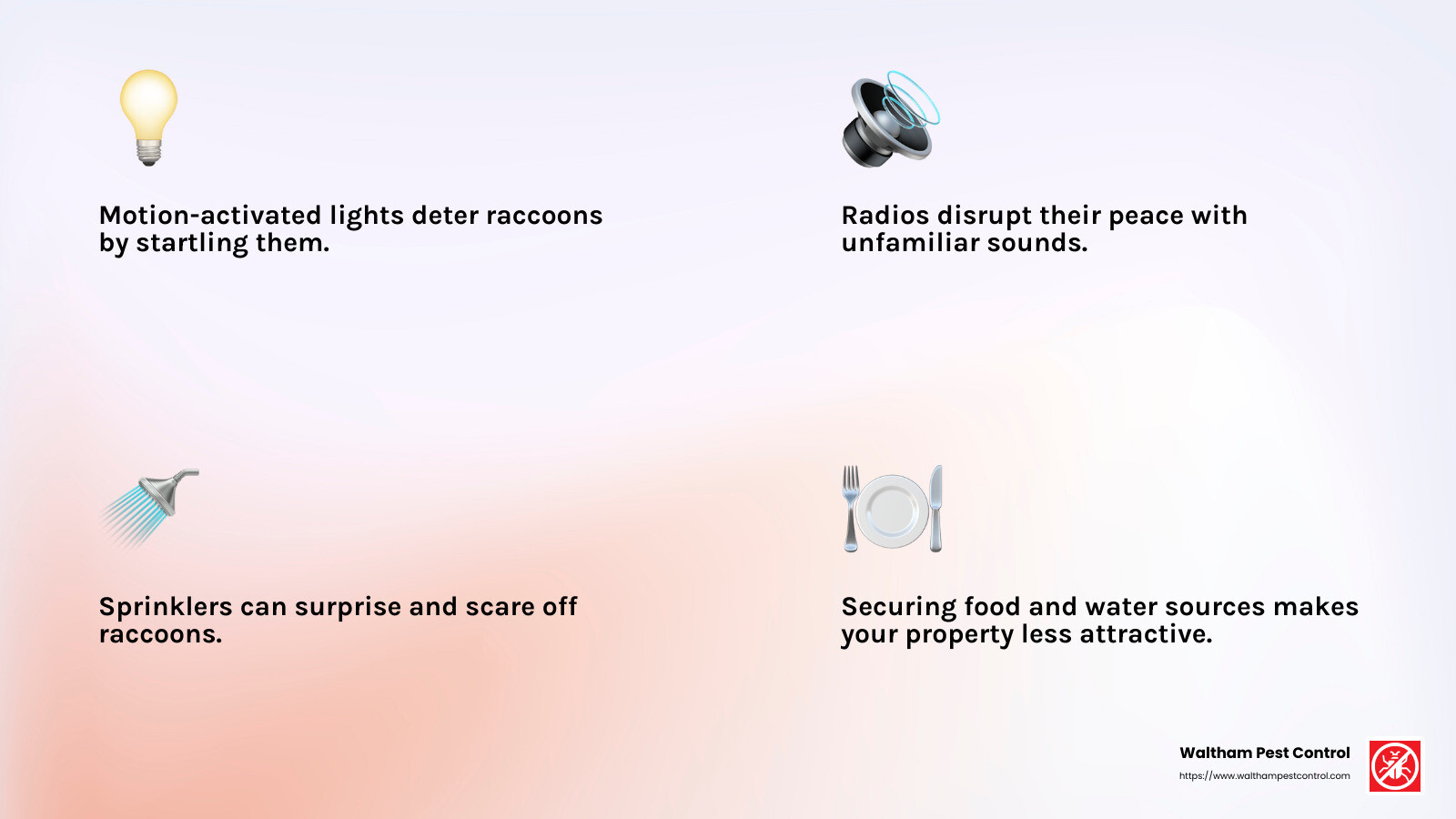
Each of these steps requires a bit of persistence, but with the right approach, you can reclaim your space from these pesky intruders.
Next, we’ll explore how to prevent raccoons from entering your property in the first place.
Preventing Raccoon Entry
Keeping raccoons away from your property starts with making your yard less appealing. Here’s how you can maintain your yard and secure structures to deter these clever critters.
Maintain Your Yard
Regular yard maintenance is key to preventing raccoons from seeing your property as an inviting habitat.
- Remove Excess Vegetation: Overgrown plants and bushes provide hiding spots for raccoons. Trim shrubs and clear out any dense vegetation regularly.
- Clean Up Fallen Fruit: If you have fruit trees, make it a habit to pick up fallen fruit daily. This prevents raccoons from having a free meal.
- Control Grubs: Raccoons love digging for grubs, which can damage your lawn. Use pest control methods to keep grubs at bay, reducing the raccoons’ food supply.
Secure Structures
Raccoons are resourceful and can find their way into unsecured structures. Here’s how to make sure your buildings are raccoon-proof:
- Secure Chicken Coops: Use hardware cloth instead of chicken wire, as raccoons can tear through the latter. Ensure all doors are locked at night.
- Decks and Sheds: Raccoons can nest under decks and sheds. Use wire mesh to block off these areas, preventing access. Regularly check for any signs of digging or attempts to enter.
- Repair Any Openings: Inspect your home, especially attics and basements, for any gaps or holes. Seal these with durable materials to prevent raccoon entry.
By maintaining your yard and securing structures, you can significantly reduce the chances of raccoons making themselves at home on your property. These steps not only deter raccoons but also improve the overall safety and appearance of your home.
In the next section, we’ll dig into handling raccoons that have already found their way into your home.
Handling Raccoons in Your Home
Sometimes, despite your best efforts, raccoons can find their way into your home. Whether it’s an accidental entry or they’ve made themselves comfortable in your attic or chimney, here’s how you can handle these situations humanely and effectively.
Raccoons in the Attic
If raccoons have taken up residence in your attic, it’s important to encourage them to leave without causing harm. Here are some strategies you can use:
- Lights: Raccoons prefer dark, quiet places. Installing bright lights in the attic can make the space less appealing to them.
- Radio: Play a loud radio tuned to a talk show or rock music. The noise can disturb raccoons and encourage them to move on.
- Vinegar: Place bowls of vinegar around the attic. The strong odor can be unpleasant for raccoons, prompting them to leave.
- One-Way Doors: These devices allow raccoons to exit but not re-enter. It’s best to have a professional install these to ensure no animals are trapped inside.
Raccoons in the Chimney
An uncapped chimney is an inviting spot for raccoons, especially for mothers looking to raise their young. If you find raccoons in your chimney, try these humane methods:
- Damper: Keep the damper closed to prevent raccoons from entering your home.
- Loud Radio: Similar to the attic, placing a loud radio in the fireplace can encourage raccoons to leave.
- Vinegar: A bowl of vinegar near the damper can also help deter raccoons with its strong smell.
- Chimney Cap: Once the raccoons have vacated, install a chimney cap to prevent future entries. Ensure all animals have left before sealing the chimney.
By using these methods, you can safely and humanely handle raccoons in your home. Patience and persistence are key. In the next section, we’ll address some frequently asked questions about raccoon removal.
Frequently Asked Questions about Raccoon Removal
What do raccoons hate the most?
Raccoons are known for their keen sense of smell, which can be used against them. They particularly dislike strong odors. Here are some scents that raccoons hate:
- Pepper and Garlic: Sprinkling crushed garlic or cayenne pepper around your yard or entry points can deter raccoons. The pungent smell is unpleasant to them and can keep them away.
- Ammonia: This strong chemical odor is another effective deterrent. Soaking rags in ammonia and placing them near raccoon entry points can drive them off.
- Predator Urine: Raccoons have many natural predators. You can buy predator urine, such as coyote or bobcat, and use it as a repellent. The scent tricks raccoons into thinking a predator is nearby.
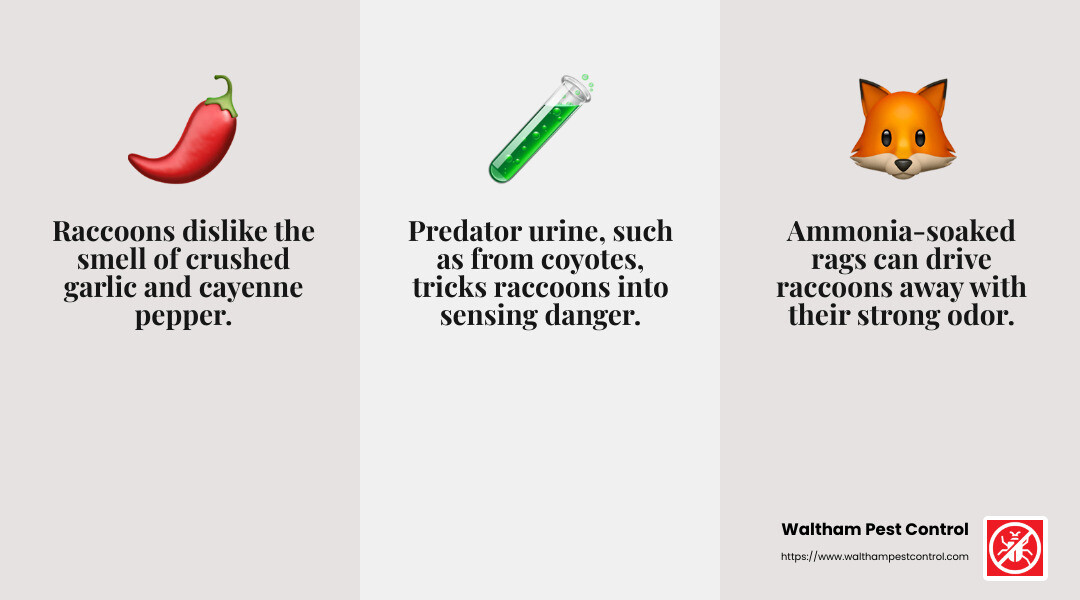
How to permanently get rid of raccoons?
To ensure raccoons don’t keep returning, it’s crucial to make your property unappealing to them. Here’s how:
- Secure Trash: Raccoons are notorious for rummaging through trash cans. Use trash cans with tight-fitting lids, and consider using bungee cords or weights to keep them secure.
- Remove Food Sources: Don’t leave pet food outside, and clean up any fallen fruits or nuts from trees. These are easy meals for raccoons.
- Seal Entry Points: Inspect your home for potential entry points. Use wire mesh, fencing, or caulk to seal gaps in your siding, roof, or foundation. This prevents raccoons from sneaking in.
Do raccoons have rabies or other diseases?
Yes, raccoons can carry several diseases that are harmful to humans and pets:
- Rabies: Raccoons are one of the primary carriers of rabies in the United States. It’s a serious virus that affects the nervous system and can be fatal if not treated promptly.
- Roundworm: Raccoon feces can contain roundworm eggs, which are dangerous if ingested or inhaled. Always wear gloves when cleaning areas where raccoons have been.
- Leptospirosis: This bacterial disease can be transmitted through contact with water or soil contaminated by raccoon urine. It can lead to serious health issues if not treated.
By understanding these risks and taking the necessary precautions, you can protect your family and pets from potential harm. In the next section, we’ll explore preventive measures to keep raccoons at bay.
Conclusion
Getting rid of raccoons from your property involves a mix of effective strategies and preventive measures. By using deterrents like motion-activated lights and removing food sources, you can make your property less appealing to these curious critters. Sealing entry points and using natural repellents further improve your defense against raccoon invasions.
However, raccoon removal can be tricky and sometimes dangerous, especially if they have already taken up residence in your home. That’s where professional help becomes invaluable. At Waltham Pest Control, we specialize in humane raccoon removal, ensuring the safety of both the animals and your family. Our team is experienced, licensed, and committed to providing effective pest management solutions custom to your needs.
If you’re facing a raccoon problem in Eastern Massachusetts, don’t hesitate to reach out. Our expert team is ready to assist you with safe and humane raccoon control methods. Professional help is just a call away, and it can save you time, stress, and potential hazards. Let us help you keep your home raccoon-free and ensure peace of mind.
