
What Do Pest Control Companies Use for Roaches: Top 5 Methods
If you’re wondering what do pest control companies use for roaches, you’re not alone. Cockroach infestations are a common problem many homeowners face. Fortunately, professional pest control services have effective strategies to tackle this persistent issue. These methods include:
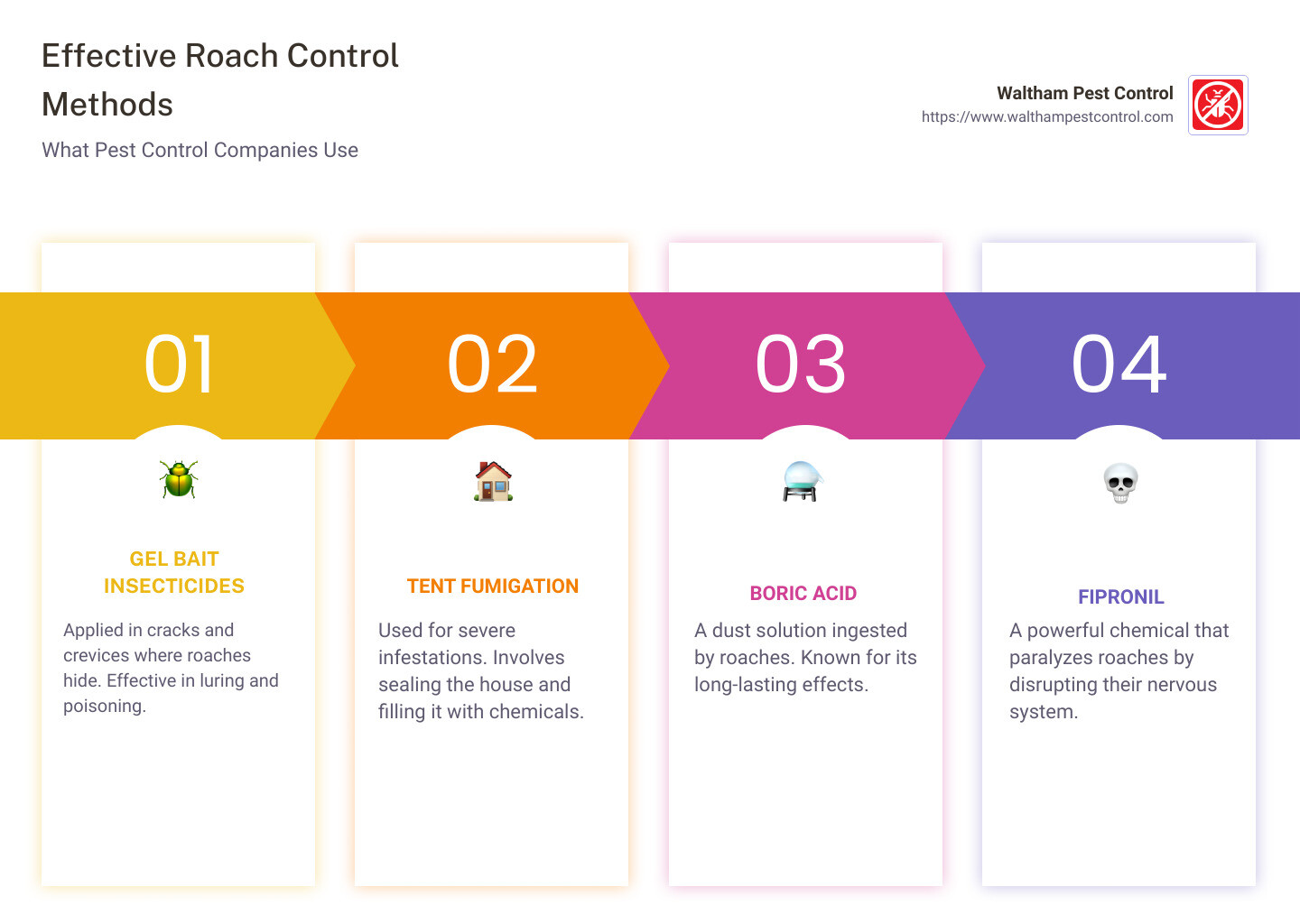
- Gel Bait Insecticides: Applied in cracks and crevices where roaches hide.
- Tent Fumigation: For severe infestations, sealing the house and filling it with chemicals.
- Boric Acid: A dust solution ingested by roaches.
- Hydramethylnon: Used in bait stations to infect colonies.
- Fipronil: A powerful chemical that paralyzes roaches.
We’ll dig into each method and explain how they work to get rid of these resilient pests.
My name is Waltham Pest Control, and with over 40 years of experience at Waltham Pest Control, I’ve seen how effective these treatments are in addressing cockroach problems. My team and I are dedicated to using the best products and techniques to ensure a pest-free environment for your home or business.
What do pest control companies use for roaches terms you need:
– what chemical do pest control companies use
– what do pest control companies use for mice
– what do pest control companies use for mosquitoes
Understanding Cockroach Behavior
Cockroaches are incredibly resilient creatures. They have been around for over 300 million years and can adapt to almost any environment. This adaptability makes them tough to eliminate once they invade your home.
Resilient Creatures
Cockroaches can survive extreme conditions. They can go without food for a month but only a week without water. They can withstand cold temperatures by slowing their metabolism and can even survive without their heads for a week!
Diverse Environments
Cockroaches thrive in a variety of environments. They are commonly found in:
- Kitchens and bathrooms: Areas with food and moisture are prime spots.
- Basements and storage areas: Dark and damp places are ideal for hiding.
- Sewers and drains: These areas provide ample food and water.
Common Species
In the United States, four main types of cockroaches cause problems:
- German Cockroach
- Size: About 1/2 inch
- Color: Light brown to tan with two dark stripes
- Habitat: Kitchens and bathrooms
- Reproduction: Fast breeders; a single female can produce up to 1,500 offspring in a year
- American Cockroach
- Size: Up to 2 inches
- Color: Reddish-brown with a yellow border on the back
- Habitat: Basements, sewers, and around bathtubs
- Oriental Cockroach
- Size: About 1 inch
- Color: Dark brown to black with a glossy body
- Habitat: Damp areas like basements and crawl spaces
- Asian Cockroach
- Size: Similar to the German cockroach
- Color: Lighter than the German cockroach
- Habitat: Typically found outdoors but can invade homes
Understanding these behaviors and habitats is crucial for effective pest control. Knowing where they hide and what attracts them can help you and professionals like us at Waltham Pest Control target them more effectively.

Next, we’ll explore what do pest control companies use for roaches and dig into the specific methods and chemicals that make professional treatments so effective.
What Do Pest Control Companies Use for Roaches?
When it comes to eliminating cockroaches, professional pest control companies have a variety of effective methods and chemicals at their disposal. Here are some of the most common techniques used:
Gel Bait Insecticides
Gel baits are one of the most popular methods for controlling cockroaches. These insecticides come in syringes, making it easy to apply them in cracks and crevices where roaches hide.
How it works:
– Attractant and poison: The gel contains a food attractant mixed with a slow-acting poison, such as hydramethylnon or fipronil.
– Delayed effect: Roaches consume the bait and return to their hiding spots, where they eventually die. Other roaches then feed on the dead ones, spreading the poison through the colony.
Advantages:
– Targeted application: Can be placed precisely where roaches are active.
– Effective in moist areas: Works well in places where water is present, unlike dry pesticides.
Tent Fumigation
For severe infestations, tent fumigation might be necessary. This method involves sealing the entire house and filling it with chemicals to kill roaches.
How it works:
– Sealing the home: All entry points are sealed, and any cracks are filled to prevent air from escaping.
– Fumigant release: Chemicals are pumped into the house, killing roaches as they fill the space.
Safety precautions:
– Health risks: Not safe for pregnant women or individuals with respiratory conditions.
– Post-fumigation: You can’t stay inside for a few days, and everything in your house gets exposed to the chemicals.
Disadvantages:
– Costly and disruptive: More expensive and inconvenient compared to other methods.
– Potential damage: Can harm electronics and furniture.
Boric Acid
Boric acid has been a trusted method for over a century. It’s a dust that roaches ingest, leading to their eventual death.
How it works:
– Dust application: Applied in areas where roaches travel, such as behind appliances and in cabinets.
– Ingestion: Roaches consume the boric acid, which disrupts their digestive system.
Advantages:
– Long-lasting effects: Remains effective as long as it stays dry.
– Low toxicity: Generally safe for humans and pets when used correctly.
Hydramethylnon
Hydramethylnon is a common chemical found in bait stations. It disrupts energy production in roaches, leading to starvation.
How it works:
– Bait stations: Placed in areas where roaches are active.
– Colony infection: Roaches consume the bait and spread the poison to others, effectively killing the colony.
Advantages:
– Effective for large infestations: Can eliminate entire colonies.
– Minimal risk: Safe when used as directed.
Fipronil
Fipronil is another powerful insecticide used in both gel baits and residual sprays. It disrupts the cockroach’s central nervous system, causing paralysis and death.
How it works:
– Paralyzing agent: Affects the brain-to-muscle connection, leading to hyperactivity and paralysis.
– Powdery substance: Often used in a powder form to treat cracks and crevices.
Advantages:
– Fast-acting: Quickly eliminates roaches.
– Effective in small quantities: A little goes a long way.
Next, we’ll explore common chemicals used in roach control and how they contribute to effective pest management.
Common Chemicals Used in Roach Control
Pyrethrin and Pyrethroids
Pyrethrin and pyrethroids are natural insecticides derived from chrysanthemum flowers. These chemicals are popular in pest control due to their effectiveness in paralyzing and killing roaches.
How it works:
– Paralysis: These compounds disrupt the nervous system of cockroaches, causing paralysis and eventual death.
– Natural origin: Pyrethrins come from chrysanthemum flowers, making them a more natural option compared to synthetic chemicals.
Safety measures:
– Non-toxic to humans: Generally safe for humans and pets, except for aquatic animals like fish.
– Minimal allergy risk: Does not trigger asthma or allergies, making it a safe option for indoor use.
Piperonyl Butoxide
Piperonyl butoxide is not an insecticide on its own but acts as a synergist. It is often combined with pyrethrin to improve its effectiveness.
How it works:
– Synergist: Boosts the potency of pyrethrin, making it more effective at lower doses.
– Inhibition: Prevents the breakdown of pyrethrin in the insect’s body, prolonging its lethal effects.
Safety measures:
– Controlled use: High exposure can be harmful, so exterminators take precautions to minimize risk to humans and pets.
Indoxacarb
Indoxacarb is a powerful insecticide commonly found in gel baits. It disrupts the cockroach’s ability to produce energy, leading to death.
How it works:
– Poison transfer: Roaches ingest the bait and transfer the poison to others through feces and dead bodies.
– Multi-generational impact: Can kill multiple generations of roaches, making it highly effective for long-term control.
Advantages:
– Effective in gel baits: Works well in targeted applications, reducing the overall chemical load in your home.
– Persistent: Continues to kill roaches even after initial application, thanks to its poison transfer mechanism.
By understanding these common chemicals used in roach control, you can better appreciate the strategies employed by professionals to keep your home roach-free.
Physical and Green Pest Control Methods
When it comes to cockroach control, professional pest control companies often use a combination of physical and green methods. These methods are effective and can be safer for your home and family.
Sticky Traps
Sticky traps are an essential tool in the fight against cockroaches. These traps help monitor and control roach populations without using chemicals.
How it works:
– Monitoring: Sticky traps are placed in areas where roach activity is suspected. This helps in identifying the extent of the infestation.
– Placement: Common spots include under sinks, behind appliances, and in cabinets. Proper placement is key to their effectiveness.
– Effectiveness: These traps capture roaches as they walk over them, preventing them from moving freely and reproducing.
Diatomaceous Earth
Diatomaceous Earth (DE) is a naturally occurring, abrasive powder used as a non-toxic insecticide.
How it works:
– Abrasive action: DE works by physically damaging the exoskeleton of cockroaches. The tiny, sharp particles pierce their outer layer.
– Dehydration: Once their exoskeleton is damaged, the roaches dehydrate and die.
Advantages:
– Long-lasting: DE remains effective as long as it stays dry.
– Safe for humans and pets: While it can irritate the respiratory tract if inhaled, it poses no significant health risks when used responsibly.
Essential Oils
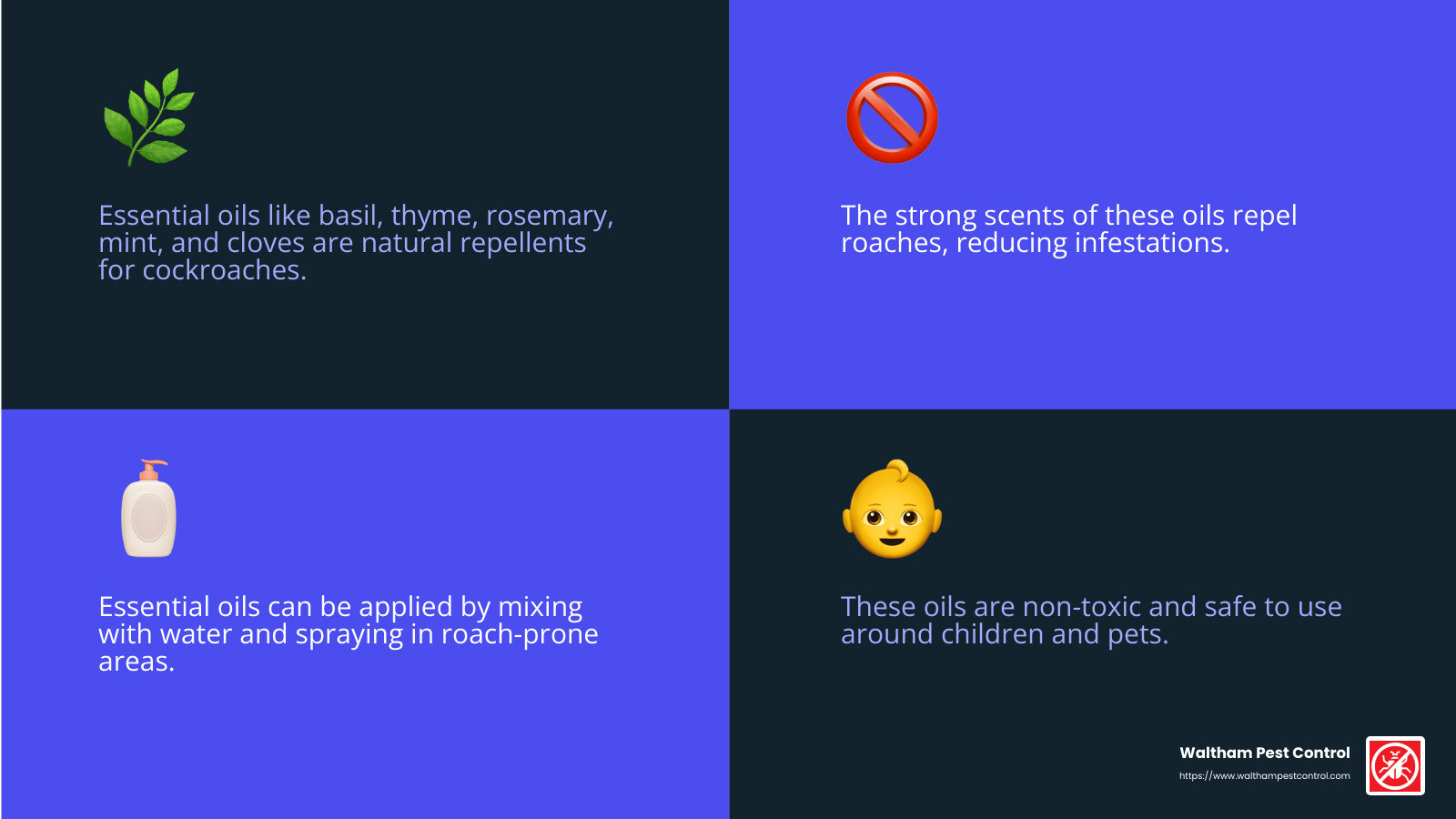
Essential oils are a green alternative for roach control. These natural repellents are derived from plants and are safe for humans and pets.
Popular essential oils:
– Basil
– Thyme
– Rosemary
– Mint
– Cloves
How it works:
– Natural repellents: The strong scents of these oils repel cockroaches. They are less likely to infest areas where these oils are applied.
– Application: Essential oils can be mixed with water and sprayed in areas prone to roach activity. They can also be used in diffusers or soaked in cotton balls placed around the home.
Effectiveness:
– Repellency: While not as potent as chemical insecticides, essential oils provide a natural barrier against roaches.
– Safety: These oils are non-toxic and safe to use around children and pets.
By incorporating physical and green pest control methods like sticky traps, diatomaceous earth, and essential oils, pest control professionals can effectively manage roach infestations while minimizing risks to your health and the environment.
Frequently Asked Questions about Roach Control
How long does it typically take for roach exterminators to completely eliminate a cockroach infestation?
The duration to fully eliminate a cockroach infestation depends on several factors, such as the severity of the infestation, the treatment methods used, and the specific conditions of your home.
Typically, you can expect to see a significant reduction in roach activity within days or weeks. However, complete elimination may require multiple treatments over several months. Your exterminator will provide a more accurate estimate based on your situation.
Can cockroaches come back after professional extermination, and if so, what should I do?
Yes, cockroaches can come back after professional extermination, especially if new infestations occur. If you suspect a resurgence, immediately contact your exterminator for follow-up treatments. Many pest control companies offer warranties or guarantees to address this situation.
What role does sanitation play in cockroach control, and how can homeowners contribute to the process?
Sanitation plays a crucial role in cockroach control. Even the best extermination efforts can fall short if your home provides ample food and water sources for roaches. Here’s how you can contribute:
- Food and Water Sources: Keep food sealed, clean up crumbs and spills immediately, and fix any leaky pipes. Roaches are attracted to food and moisture.
- Cleanliness: Regular cleaning reduces the chances of roach infestations. Make sure to clean under appliances, inside cabinets, and other hidden areas.
- Clutter Elimination: Roaches love to hide in clutter. Declutter your home to eliminate their hiding spots.
By maintaining a sanitary environment, you can significantly improve the effectiveness of professional treatments and help keep roaches at bay.
Conclusion
At Waltham Pest Control, we understand that dealing with a cockroach infestation is stressful and challenging. That’s why we use effective strategies custom to your specific situation to ensure long-lasting results.
Our team employs a range of methods, including gel bait insecticides, tent fumigation, and the use of boric acid. We also use advanced chemicals like pyrethrin, pyrethroids, and fipronil to target and eliminate roaches effectively.
We believe that informed decisions are crucial for successful pest control. Our experts will guide you through every step of the process, from initial inspection to follow-up treatments. We emphasize the importance of sanitation and home maintenance as key components in preventing future infestations.
By choosing Waltham Pest Control, you’re not just getting a service; you’re investing in a pest-free future. Our commitment to quality and customer satisfaction ensures that your home remains safe and comfortable.
For more information or to schedule a consultation, visit our service page.
Together, we can make your home roach-free.
